
成都银行

Search documents
2026年银行股投资策略展望
2025-12-08 15:36
Summary of Key Points from the Conference Call Industry Overview - The conference call focuses on the banking sector in China, specifically the investment strategy outlook for 2026, with an expected macroeconomic growth rate of approximately 4.8% and a moderately loose monetary environment, which may alleviate pressure on banks' interest margins [1][3][4]. Core Insights and Arguments - **Revenue and Profit Growth**: It is anticipated that the revenue and profit growth for commercial banks will improve to around 2.7%-3% in 2026, primarily due to a narrowing decline in interest margins and a recovery in net interest income [1][5]. - **Banking Sector Dynamics**: State-owned banks and city commercial banks are expected to maintain strong asset expansion momentum, with total asset growth remaining above 10%, particularly in economically robust regions like Sichuan, Chongqing, Shandong, and Shanghai [1][6]. - **Performance of Different Bank Types**: Smaller banks are projected to have better interest margin resilience compared to large state-owned banks. Notable city commercial banks such as Nanjing Bank, Chengdu Bank, and Chongqing Bank are expected to outperform the overall listed banks due to strong loan organization capabilities and capital adequacy [1][7]. - **Non-Interest Income Trends**: Non-interest income is expected to show negative growth, but fee income is projected to maintain positive growth due to the development of capital markets and the fading impact of fee reductions. Overall revenue growth is expected to rise from 1.2% in 2025 to nearly 3% in 2026 [1][8]. Additional Important Insights - **Credit Cost Expectations**: The credit cost ratio is expected to slightly decline in 2026, with improvements in corporate business but ongoing pressures in the retail sector. The stabilization of the real estate market is crucial for maintaining healthy asset quality in corporate loans [1][9]. - **Profit Release Potential**: Banks with high provisions and low non-performing loans have significant profit release potential. State-owned banks generally have lower non-performing loan generation rates, while quality city commercial banks are also expected to perform well [1][10]. - **Market Sentiment and Investment Strategy**: The current active shareholding in bank stocks is at a historical low of 1.5%, indicating that pessimistic sentiment has been fully priced in. This could make high-dividend bank stocks attractive as risk-free rates decline [2][12]. - **Investment Focus**: Investors should pay attention to the risk-free rate and risk appetite. With the expected decline in government bond yields, high-dividend assets are likely to remain favored by insurance companies [13]. - **Stock Selection Criteria**: Stock selection should focus on large financial institutions as beta plays and smaller institutions with high ROE potential as alpha plays. Key risks include unexpected downturns in real estate, macroeconomic slowdowns, and potential financial sanctions [15]. Conclusion - The banking sector in China is poised for a recovery in 2026, with expected improvements in revenue and profit growth driven by a supportive macroeconomic environment and favorable regulatory conditions. Investors are encouraged to consider the current market dynamics and select stocks that align with the anticipated trends in the banking industry.
同日被监管重罚超2300万!兴业银行、徽商银行、成都银行风控漏洞曝光
Xin Lang Cai Jing· 2025-12-08 11:28
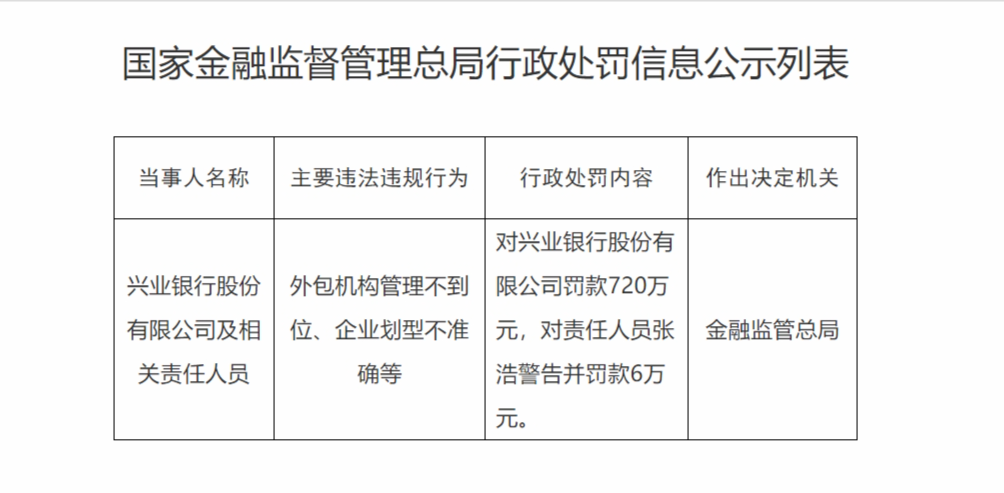
Core Insights - On December 5, three banks, namely Industrial Bank, Huishang Bank, and Chengdu Bank, received regulatory fines totaling over 23 million yuan, highlighting ongoing compliance issues within the banking sector [1][12][13] - The fines reflect a "zero tolerance" approach from regulators towards violations, with each bank facing penalties around 8 million yuan, indicating a strong commitment to rectifying compliance failures [1][12][13] Summary by Category Regulatory Actions - Industrial Bank was fined 7.2 million yuan, with a responsible individual receiving a warning and a 60,000 yuan fine, marking a significant penalty following previous fines for inadequate loan management [1][12][13] - Huishang Bank faced a total of 8.66 million yuan in fines, with violations including improper loan issuance and inadequate post-loan management, indicating deep-rooted governance issues [2][3][12][15] - Chengdu Bank was fined 900,000 yuan, with 15 branches collectively fined 6.35 million yuan, reflecting widespread internal control challenges across its operations [3][4][12][16] Common Violations - "Inadequate loan management" emerged as a common issue among the penalized banks, representing a significant area of regulatory concern within the industry [5][17] - A report indicated that 57.05% of banking violations were related to credit business, with "inadequate loan management" being the most frequent reason for penalties, accounting for 12.99% of cases [5][17] Systemic Issues - The penalties highlight systemic weaknesses in loan management and internal controls across the banking sector, suggesting a misalignment between growth objectives and risk management practices [9][21][23] - The reliance on external institutions for loan management has introduced new compliance risks, as seen in the case of Industrial Bank, which was penalized for inadequate management of external partners [10][22] Regulatory Trends - The regulatory environment is shifting towards more stringent oversight and systemic governance, with a focus on integrating compliance into the core operations of banks [11][23] - Continuous regulatory penalties may not significantly impact the financials of large banks, but the reputational damage and operational restrictions could have long-term implications [11][23]



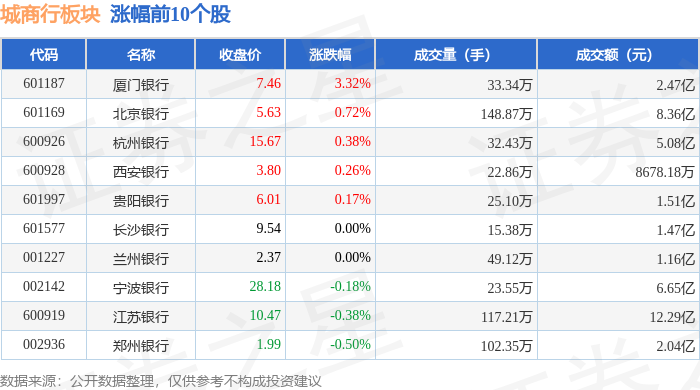
城商行板块12月8日跌0.31%,上海银行领跌,主力资金净流入1.29亿元
Zheng Xing Xing Ye Ri Bao· 2025-12-08 09:09
Group 1 - The city commercial bank sector experienced a decline of 0.31% on December 8, with Shanghai Bank leading the drop [1] - The Shanghai Composite Index closed at 3924.08, up 0.54%, while the Shenzhen Component Index closed at 13329.99, up 1.39% [1] - Key individual stock performances in the city commercial bank sector included Xiamen Bank rising by 3.32% and Shanghai Bank falling by 1.43% [1][2] Group 2 - The net inflow of main funds into the city commercial bank sector was 129 million yuan, while retail investors saw a net outflow of 156 million yuan [2] - The table of fund flows indicated that Jiangsu Bank had a net outflow of 56.86 million yuan from main funds, while Hangzhou Bank had a net inflow of 49.79 million yuan [3] - The overall trend showed that retail investors were withdrawing funds from several banks, with notable outflows from Suzhou Bank and Qingdao Bank [3]





成都银行及15家分支行总计被罚725万元:对相关贷款、存款等业务管理不审慎等
Xin Lang Cai Jing· 2025-12-08 02:23
Core Viewpoint - Chengdu Bank Co., Ltd. has been fined for imprudent management of loans, deposits, discount, and bill business, totaling 90,000 yuan for the bank itself and 6.35 million yuan for 15 branches [1][2][3] Summary by Category Penalties - Chengdu Bank Co., Ltd. was fined 90,000 yuan for improper management practices related to loans, deposits, discount, and bill business [1][2] - A total of 6.35 million yuan in fines was imposed on 15 branches of Chengdu Bank, including Mianyang, Meishan, Tianfu New Area, and others [1][2] - Individual penalties totaling 730,000 yuan were issued to 13 responsible persons for similar management issues [1][2][3]
银行业2026年度策略
2025-12-08 00:41
Summary of the Conference Call on the Banking Industry Strategy for 2026 Industry Overview - The conference call focuses on the banking industry, particularly the outlook for 2026 and the valuation of bank stocks [1][2]. Key Points and Arguments 1. Valuation Improvement - 2026 is expected to be a critical year for the valuation of bank stocks, with a significant narrowing of interest margin decline anticipated to enhance bank performance, especially for large banks [1][4]. - The net interest margin (NIM) and return on equity (ROE) are expected to move in tandem, with improvements in NIM likely to drive price-to-book (PB) valuations higher [1][4]. 2. Domestic and International Valuation Discrepancies - There is a notable valuation disparity between domestic banks and those in the US and Japan, with domestic and some European banks being undervalued [5]. - Historical data suggests that banks perform well during inflationary periods and economic recoveries, even achieving excess returns post-risk exposure [5]. 3. External Environment and Recovery - The current domestic environment is stable but lacks clear signs of recovery. Drawing from experiences in the US and Japan, banks can achieve excess returns after risk clearance [6]. - Large banks like Agricultural Bank of China have room for PB improvement, supported by ongoing insurance fund purchases, despite short-term impacts from indices and geopolitical events [6]. 4. Non-Interest Income and Profit Growth - The performance of the bond market is expected to have a limited impact on future earnings expectations. Non-interest income for listed banks is under pressure in 2025 but is projected to stabilize and improve in 2026 [7]. - The overall profit growth is expected to remain steady, benefiting from positive factors related to net interest margin [7]. 5. Timing for Investment - Historical data indicates that bank stocks typically show significant excess returns in the first and fourth quarters, particularly in December and January [9]. - City commercial banks are highlighted as having substantial investment value due to their low valuations and stable profit expectations [3][9]. 6. Future Changes and Turning Points - 2026 is anticipated to be a turning point for the banking industry, with stabilized interest margins and no significant deterioration in mortgage loan delinquency rates [12]. - The current trend of declining bad debt rates suggests a favorable outlook for bank stocks in the coming years [12][14]. 7. Real Estate Market Impact - Despite falling property prices, mortgage asset quality has not significantly deteriorated, indicating a potential easing of related risks in 2026 [13]. 8. Factors Influencing Bank Stock Performance - Short-term performance may be influenced by systemic weaknesses in other sectors, with a more favorable outlook if policies become more proactive in 2026 [11]. - The allocation of insurance funds and the performance of cyclical industries are also critical factors to monitor [11]. 9. Long-Term Prospects for City Commercial Banks - High-quality city commercial banks are expected to outperform large banks, with potential returns of approximately five times over the next three to five years [24]. - These banks, such as Hangzhou Bank and Jiangsu Bank, are characterized by low price-to-earnings ratios and stable profit growth [24]. 10. Investment Selection Criteria - In the current market environment, emphasis should be placed on high-quality city commercial banks due to their profit growth potential and better asset quality [25]. - Large commercial banks are also worth considering, but individual assessments of their investment value are necessary [25]. Other Important Considerations - The overall non-performing loan ratio is expected to remain stable in 2026, with some banks potentially seeing declines [16]. - The growth rate of bank scale is anticipated to slow down compared to 2025, reflecting a long-term downward trend in China's economic growth [16]. - Fee income and investment returns are projected to stabilize and improve in 2026, although investment returns may not reach 2025 levels [17]. This summary encapsulates the key insights and projections regarding the banking industry as discussed in the conference call, providing a comprehensive overview of the anticipated trends and investment opportunities for 2026.
公募绩效考核优化,把握优质金融
HTSC· 2025-12-07 12:35
Investment Rating - The report maintains an "Overweight" rating for the securities and banking sectors, while also recommending a focus on quality insurance companies [9]. Core Insights - The report highlights investment opportunities in the order of securities > banking > insurance, emphasizing the optimization of performance evaluation rules for fund companies, which is expected to enhance long-term incentive mechanisms and promote sustainable development in the fund industry [12][31]. - The China Securities Regulatory Commission (CSRC) has introduced new regulations to strengthen governance and oversight across the entire lifecycle of listed companies, which is anticipated to improve market stability and investor confidence [15][16]. - The People's Bank of China (PBOC) has conducted a 1 trillion yuan reverse repurchase operation to support liquidity, particularly during the year-end and Spring Festival periods, with major banks expected to begin distributing mid-term dividends [31][33]. Summary by Sections Securities - The CSRC has proposed to relax capital and leverage restrictions for high-quality securities firms, which is expected to enhance their operational efficiency [14]. - In November, the number of new A-share accounts increased by 3% month-on-month, with a year-to-date growth of 8%, indicating sustained market interest [18]. - The report recommends focusing on high-quality brokers with low price-to-book (PB) ratios, including CITIC Securities, Guotai Junan, and GF Securities [12][13]. Banking - The PBOC's recent reverse repurchase operations are aimed at ensuring ample liquidity in the market, especially during high-demand periods [31][32]. - The report notes that the banking sector's PB ratio is currently at 0.71, indicating a relatively low valuation compared to historical levels, suggesting potential for recovery [31]. - Recommended banking stocks include Nanjing Bank, Chengdu Bank, and Shanghai Bank, which are considered high-quality picks [31][33]. Insurance - The insurance sector has shown resilience, with regulatory adjustments to risk factors for equity investments leading to a significant increase in stock prices [46]. - The report suggests that investors should focus on leading insurance companies, such as China Life and Ping An, which are expected to benefit from improved liquidity conditions [46][47]. - Regulatory changes are aimed at encouraging long-term investments by insurance companies, which could enhance their stability and support economic growth [48][49].



银行业周报(20251201-20251207):数字人民币定位有望晋级,支付领域大有可为-20251207
Huachuang Securities· 2025-12-07 11:45
Investment Rating - The report maintains a "Recommended" investment rating for the banking sector, indicating a positive outlook for the industry in the near term [1]. Core Insights - The positioning of the digital RMB is expected to advance, with significant potential in the payment sector. The People's Bank of China (PBOC) is working on optimizing the management system for digital RMB, which may evolve from a cash-like payment instrument (M0) to broader monetary categories (M1, M2) [2][8]. - Infrastructure development for digital RMB is progressing, with the establishment of international and operational centers in Shanghai and Beijing, respectively. As of September 2025, the cumulative transaction amount in pilot areas reached 14.2 trillion yuan, with 2.25 billion personal wallets opened [3][8]. - The banking sector is expected to see a systematic recovery in valuations in 2026, transitioning from a defensive to a growth-oriented investment logic. Key investment themes include high dividend yields and low valuations, particularly as risk-free interest rates decline [9]. Summary by Sections Industry Overview - The banking sector comprises 42 listed companies with a total market capitalization of approximately 1.15 trillion yuan, representing 13.04% of the market [4]. - The average daily trading volume for A-shares was 10,583.60 billion yuan, reflecting a 0.65% increase from the previous week [8]. Performance Metrics - The absolute performance of the banking sector over the past month is 5.0%, with a relative performance of 2.8% compared to the benchmark [5]. - The report highlights that the banking index underperformed the CSI 300 index by 2.46 percentage points during the week [8]. Investment Recommendations - The report suggests focusing on three main investment lines: 1. State-owned banks and major commercial banks like China Merchants Bank. 2. Quality joint-stock banks and city commercial banks with improving net interest margins and credit costs. 3. City commercial banks benefiting from regional policies and showing significant performance potential [9]. - Specific banks recommended for investment include China Merchants Bank, CITIC Bank, and several city commercial banks such as Chengdu Bank and Chongqing Bank [9][10].




“地补”添力,消费贷贴息阵营扩容
Zhong Guo Zheng Quan Bao - Zhong Zheng Wang· 2025-12-06 15:52
12月以来,贵阳银行、贵州银行相继发布关于个人消费贷款贴息工作的公告。两家银行均表示,贴息业 务将严格按照"自愿申请、先报先得、额度用尽即止"的规则受理。贵州银行表示,该行可使用的贴息资 金额度按省级财政分配执行,额度用完即止。 此前,消费贷"国补"业务的贷款经办机构并不包括城商行、农商行。近期,中国证券报记者注意到,贵 州、四川等地区域性银行正在地方财政的助力下,加入到消费贷补贴阵营。业内人士表示,消费贷"地 补"不仅能为银行带来业务增长,也能撬动地方消费市场,预计未来会有更多省市加入。 区域性银行推出消费贷款贴息业务 此前,消费贷"国补"业务的贷款经办机构为6家国有银行、12家股份制银行、以及微众银行和4家消金公 司,城商行、农商行并未纳入其中。如今,部分城商行、农商行也加入到消费贷贴息阵营。 12月以来,贵阳银行、贵州银行先后发布关于个人消费贷款贴息工作的公告。其中,贵阳银行表示,可 为个人消费贷款与服务业经营主体贷款,能享受贴息的个人消费贷款,其实际消费对应商户工商登记注 册地应在贵州省内。 上述消费贷"地补"的贴息金额与"国补"力度持平。贵州银行、贵阳银行均表示,每名借款人在该行可享 受的全部个人消 ...
“地补”添力 消费贷贴息阵营扩容
Zhong Guo Zheng Quan Bao· 2025-12-06 15:32
12月以来,贵阳银行、贵州银行相继发布关于个人消费贷款贴息工作的公告。两家银行均表示,贴息业 务将严格按照"自愿申请、先报先得、额度用尽即止"的规则受理。贵州银行表示,该行可使用的贴息资 金额度按省级财政分配执行,额度用完即止。 预计未来会有更多省市加入 值得注意的是,12月4日,成都银行、成都农商行发布关于消费贷款财政贴息实施细则的公告。贴息政 策期间为2025年10月1日至2026年3月31日,个人客户提用成都银行、成都农商行四川省内经办机构发放 的个人消费贷款中实际用于四川省消费,且银行可通过贷款发放账户等识别借款人相关消费交易信息的 部分,可按规定享受四川省财政贴息支持。 公告显示,每位借款人在成都银行、成都农商行可享受的全部个人消费贷款累计贴息上限为1500元,其 中可享受单笔5万元以下的个人消费贷款累计贴息上限为500元。 业内人士表示,《个人消费贷款财政贴息政策实施方案》中的"鼓励地方财政部门结合实际情况对其他 经营个人消费贷款业务的金融机构给予财政贴息支持",给如今多地出台消费贷"地方补贴"政策留下了 空间。 此前,消费贷"国补"业务的贷款经办机构并不包括城商行、农商行。近期,中国证券报记者注 ...
消费贷贴息地方“红包”来了!川黔头部银行已出手 贵州个人最高补贴3000元
Mei Ri Jing Ji Xin Wen· 2025-12-06 05:42
Core Viewpoint - Several local commercial banks in Sichuan and Guizhou, including Chengdu Bank and Guiyang Bank, have launched personal consumption loan interest subsidy programs, focusing on loans issued from late 2025 to early 2026, with a subsidy rate of 1% per annum and a maximum subsidy amount based on the loan interest rate [1][2][4]. Group 1: Policy Implementation - The implementation period for the personal consumption loan interest subsidy is set from October 1, 2025, to March 31, 2026, with the possibility of extension based on effectiveness [2][4]. - The subsidy applies to personal consumption loans used for various categories, including household vehicles, education, and healthcare, with a maximum subsidy of 1,500 yuan in Sichuan and 3,000 yuan in Guizhou [1][6]. Group 2: Loan Details - The subsidy covers loans of up to 50% of the loan contract interest rate, with specific limits on the amount eligible for subsidy based on the loan size [2][6]. - In Sichuan, the cumulative subsidy limit for individual borrowers is 1,500 yuan, corresponding to a total consumption amount of 300,000 yuan [2][4]. Group 3: Bank Participation - Chengdu Bank and Chengdu Rural Commercial Bank are among the first to announce the implementation details, with total assets of 1.38 trillion yuan and nearly 1 trillion yuan, respectively [5]. - Other banks in the region are also encouraged to participate in the subsidy program, expanding the policy's coverage beyond the designated national banks [4][5]. Group 4: Economic Context - The Sichuan province has seen steady growth in consumer markets, with a retail sales total of 2.74 trillion yuan in 2024, reflecting an average annual growth rate of 4.4% from 2021 to 2024, surpassing the national average [4]. - The subsidy program is part of broader efforts by the Sichuan government to stimulate economic recovery and growth through targeted financial policies [4][8].