星巴克

Search documents
从星巴克合营看洋品牌的本地化生死局
Sou Hu Cai Jing· 2025-11-05 07:41
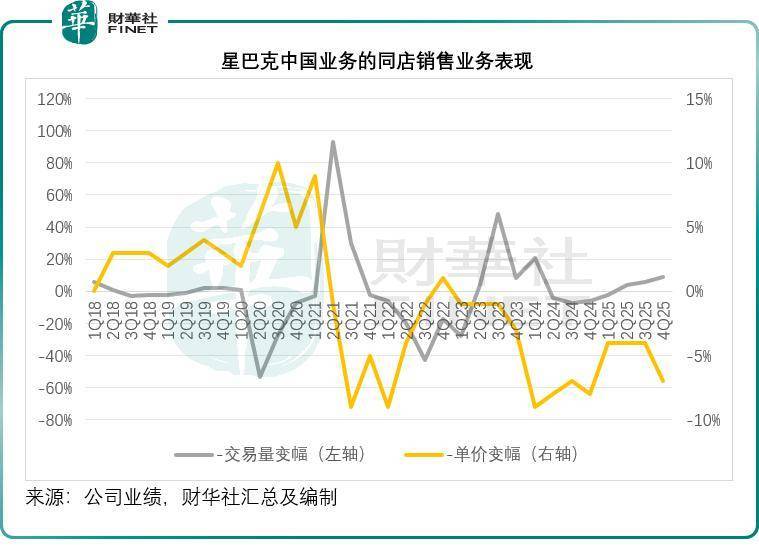
Core Insights - Starbucks has announced a strategic partnership with Boyu Capital to establish a joint venture for its retail operations in China, with Boyu holding up to 60% of the equity [1] - This move reflects a broader trend among foreign brands in China, emphasizing the importance of local partnerships and operational control to navigate market challenges [2][3] - The joint venture represents a shift from a heavy asset model to a lighter asset approach, allowing Starbucks to maintain brand ownership while reducing operational burdens [8] Company Challenges - Starbucks' "third space" model is showing signs of fatigue in the Chinese market, with high operational costs and strategic indecision impacting its performance [4] - The company has faced increased competition from local brands and lower-priced competitors, leading to a paradox of rising transaction volumes but declining average spending [6][7] - Despite a growing coffee consumer base in China, Starbucks struggles to maintain its market position amid fierce competition from brands like Luckin Coffee [6][7] Capital Strategy - The joint venture with Boyu Capital allows Starbucks to transition from a heavy asset operation to a model focused on revenue sharing and brand licensing, optimizing risk and returns [8][9] - Starbucks will retain 40% equity in the joint venture and continue to earn licensing fees, ensuring a stable cash flow while benefiting from market growth [9] - This partnership aligns with a trend among foreign brands in China, where capital cooperation has become essential for navigating complex market dynamics [10][12] Market Dynamics - The competitive landscape in China is intensifying, with independent coffee brands and fast-food chains aggressively targeting the same consumer base [6][7] - The rise of local competitors has led to a significant increase in the number of coffee drinkers, yet Starbucks has not capitalized on this growth effectively [6][7] - The operational model of local brands, which often includes flexible pricing and strategic location choices, poses a significant challenge to Starbucks' traditional high-end positioning [6][7] Lessons from Other Brands - Other foreign brands like McDonald's and Yum China have successfully implemented local partnerships to enhance operational efficiency and market penetration [10][11] - The experiences of these brands highlight the importance of balancing local operational control with maintaining brand integrity and long-term value [12][18] - Successful models involve a mix of equity sharing and licensing fees, allowing for both local responsiveness and stable revenue streams for the parent company [10][11][18]


本土竞争倒逼星巴克(SBUX.US)“放手” 博裕资本40亿美元入股如何破局?
智通财经网· 2025-11-05 07:04
Core Viewpoint - Starbucks is selling a 60% stake in its struggling China business to Boyu Capital for $4 billion to improve its market prospects in China [1] Group 1: Market Challenges - Since entering the Beijing market in 1999, Starbucks has rapidly expanded in China but faced challenges from local brands like Luckin Coffee, which offer lower costs and customizable products [1] - The rise of domestic competitors has prompted Starbucks to seek a partnership to enhance its market position [1] Group 2: Acquisition Details - The deal with Boyu Capital was announced on October 28, with the company committing to maintain leadership by Starbucks China and its management team [1] - Boyu Capital's commitment to stability may alleviate concerns about potential layoffs and aggressive pricing strategies that could harm Starbucks' premium brand image [2] Group 3: Strategic Changes - Under the leadership of Molly Liu, Starbucks is introducing more localized products and adjusting prices to attract customers [2] - The acquisition is expected to allow Starbucks to develop more tailored strategies for the Chinese market, moving away from strict adherence to global brand directives [3] Group 4: Future Growth Plans - Starbucks aims to make its stores more appealing compared to the "grab-and-go" model favored by many competitors [3] - The CEO of Starbucks has indicated that the number of stores in China could increase from approximately 7,800 to 20,000 [3]
星巴克中国高价易主
Shen Zhen Shang Bao· 2025-11-05 06:45
Group 1 - The core point of the article is the strategic partnership between Starbucks and Boyu Capital, where Boyu will acquire up to 60% equity in a joint venture to operate Starbucks' retail business in China, valuing the enterprise at approximately $4 billion [1][2] - Starbucks retains 40% equity in the joint venture and will continue to own and license its brand and intellectual property to the new entity [1] - The total value of Starbucks' retail business in China is expected to exceed $13 billion, which includes the value from the equity transfer to Boyu, the retained equity value, and ongoing licensing revenue over the next decade or longer [1] Group 2 - This strategic collaboration marks a new chapter for Starbucks in the Chinese market after 26 years, combining Starbucks' global brand influence and coffee expertise with Boyu's deep understanding of Chinese consumers [2] - The joint venture will be headquartered in Shanghai and will manage the current 8,000 Starbucks stores in China, with plans to expand the store count to 20,000 in the future [2] - Boyu Capital is an alternative asset management company with a strong presence in the Chinese market, operating offices in Hong Kong, Beijing, Shanghai, and Singapore [2]
星巴克,会不会降价?
Jing Ji Wang· 2025-11-05 05:35
公开资料显示,博裕投资创立于2011年,是一家深耕中国市场、布局全球的另类资产管理公司,投资组 合超过200家企业,构建了涵盖私募股权、公开市场、基础设施及创业投资的多元化投资管理平台。 10月30日,星巴克公布了2025财年四季报和全财年的业绩报告。财报显示,星巴克中国2025财年第四季 度收入达到8.316亿美元,同比增长6%,实现了营收连续四个季度增长;2025全财年收入达到31.05亿美 元,同比增长5%。 据介绍,双方新成立的合资企业将继续以上海为总部,管理并运营目前遍布中国市场的8000家星巴克门 店。秉持共同的发展愿景,双方将致力于未来将星巴克在中国的门店规模逐步拓展至2万家。 截至2025财年末,星巴克中国门店数达8011家,共进入1091个县级市场。其中,2025财年第四季度新开 门店83家,新进入47个县级市场,2025财年全年新开门店415家。 星巴克中国业务的买家最终敲定。11月4日,星巴克咖啡公司宣布与中国另类资产管理公司博裕投资达 成战略合作,双方将成立合资企业,共同运营星巴克在中国市场的零售业务。 博裕投资合伙人黄宇铮表示:"26年来,星巴克在中国成功塑造了标杆性的高端品牌形象, ...
星巴克携手中国东方航空 云南咖啡香飘进博会
Zheng Quan Ri Bao Wang· 2025-11-05 05:20
Core Insights - Starbucks China and China Eastern Airlines announced a series of innovative cooperation measures at the 8th China International Import Expo, aiming to enhance customer experiences from high altitudes to third spaces [1] Group 1: Partnership Initiatives - Starting from Q2 2026, first-class and business-class passengers of China Eastern Airlines will enjoy exclusive Starbucks coffee at high altitudes, bringing high-quality Starbucks experiences to the skies [2] - The partnership will upgrade joint membership benefits, introducing new perks such as point rewards, allowing members to gain more surprises and returns while enjoying Starbucks coffee and flying with China Eastern Airlines [2] Group 2: Cultural and Community Engagement - The collaboration will focus on Yunnan, exploring the rich intangible cultural heritage of the region and its innovative integration into cultural tourism and business [2] - A series of "Origin Tour" tasting events will be held during the expo, allowing attendees to taste Yunnan coffee and learn about Starbucks' long-term commitment to supporting local coffee farmers [2] Group 3: Membership Growth - Since the launch of the joint membership program in July, it has attracted nearly 500,000 customers, covering the entire experience from membership binding to flight consumption [2] - As of the end of FY2025, the active membership of the Starbucks membership program is expected to exceed 25.5 million, setting a new historical record [3]

40亿美元拿下60%控股权!博裕资本联手星巴克中国,目标2万家门店挑战瑞幸
Sou Hu Cai Jing· 2025-11-05 05:04
Core Insights - Starbucks has officially announced a strategic partnership with Boyu Capital to jointly operate its retail business in China, aiming to increase the number of stores from 8,011 to 20,000 by the end of the fiscal year 2025 [1][4][17] Group 1: Partnership Details - Boyu Capital will hold up to 60% equity in the joint venture, while Starbucks retains 40% and continues to own the brand and intellectual property [4][6] - The enterprise value of the joint venture is approximately $4 billion, excluding cash and debt [4] - The partnership is seen as a strategic move to enhance Starbucks' growth in the competitive Chinese market, particularly in smaller cities and emerging regions [17][18] Group 2: Market Context - As of September 2025, Luckin Coffee, Starbucks' main competitor in China, has over 27,000 stores and is expected to reach 30,000 by the end of the year [3] - The Chinese coffee market is perceived to have significant growth potential, as indicated by the ambitious targets set by major players [4] Group 3: Boyu Capital Overview - Boyu Capital is defined as an "alternative asset management company," focusing on non-traditional assets such as private equity and venture capital [5][6] - Founded in 2011, Boyu Capital manages over $10 billion in assets and has a diverse investment portfolio, including significant stakes in various consumer and technology sectors [6][7] - The firm has made notable investments in high-profile projects, indicating a strong focus on the Chinese consumer market [7][8] Group 4: Strategic Rationale for Starbucks - Starbucks' CEO, Brian Niccol, emphasized the need for a fundamental strategic change to restore growth in China, leading to the exploration of local partnerships [9][11] - The partnership model is a common practice for global restaurant chains, allowing them to leverage local market knowledge and reduce operational risks [12][13] - Historically, Starbucks has successfully utilized partnerships to establish a presence in new markets, transitioning from joint ventures to wholly-owned operations as market conditions evolve [12][14]
星巴克变国货了...
Ge Long Hui· 2025-11-05 04:16
Group 1 - BGY Capital acquired 60% stake in Starbucks China for $4 billion, while Starbucks retains 40% and its intellectual property, allowing for additional revenue through licensing [1] - BGY Capital has a strong track record with an annualized return of over 25%, indicating a high likelihood of success for this investment [1] - Starbucks has seen a decline in business last year and the first half of this year, but there are signs of recovery in the latter half, highlighting its unique positioning in the coffee market [1] Group 2 - The ISM Manufacturing PMI for October in the U.S. was 48.7, below expectations and the lowest in eight months, which may support the expectation of a rate cut in December [1] - Goldman Sachs and other foreign banks maintain their forecast for a rate cut in December [1] Group 3 - The AI investment competition concluded with Alibaba's Qianwen and DeepSeek as the top two models, both of which were profitable, while others like GPT and Gemini incurred losses [2] - The recent volatility in the U.S. stock market may have contributed to the performance of domestic AI models, which are better at high-low trading strategies [2] Group 4 - The Hong Kong property market is showing signs of recovery, with mainland buyers' total purchases nearing 1,000 units in the first nine months [2] - The CLL index, reflecting Hong Kong property prices, has slightly increased, leading to positive performance in related stocks [2]
星巴克中国改姓“中”,中国咖啡如何从“西风东渐”到“东风自立”|咖啡观察②
Nan Fang Nong Cun Bao· 2025-11-05 04:03
Core Viewpoint - Starbucks has entered a strategic partnership with Boyu Capital to establish a joint venture for its retail operations in China, marking a significant shift in its business strategy in the Chinese coffee market [2][4][5]. Group 1: Business Transition - Starbucks will receive approximately $4 billion from Boyu Capital for a stake of no more than 60% in the joint venture [5]. - This partnership signifies a transition from Starbucks being a dominant player with a 42% market share to a more collaborative approach in a rapidly evolving market [7][16]. - The move reflects a broader trend of foreign brands adapting to local market dynamics, as evidenced by Starbucks' historical presence in China since 1999 [11][12]. Group 2: Market Dynamics - The Chinese coffee market is projected to exceed 240 billion yuan by 2025 and reach 500 billion yuan by 2030, indicating significant growth potential [81]. - The competitive landscape has shifted, with local brands like Luckin Coffee and Kudi Coffee gaining substantial market share, highlighting a change in consumer preferences towards more affordable options [23][37]. - Starbucks' market share has declined, with Luckin Coffee capturing 35% and Kudi Coffee at 18%, while Starbucks' share has diminished [23][24]. Group 3: Strategic Challenges - Starbucks has faced declining growth rates since 2017, exacerbated by aggressive pricing strategies from competitors [19][20]. - The company's operating profit margin has decreased from 26.6% to 19%, and same-store sales have dropped by 2% [21]. - Rising coffee bean costs and increased competition have pressured Starbucks' profitability, leading to a 50.6% decline in net profit [66]. Group 4: Future Outlook - The partnership with Boyu Capital aims to expand Starbucks' store count from 8,000 to 20,000, focusing on underdeveloped markets [79]. - Boyu Capital's expertise in supply chain management and local market knowledge is expected to enhance Starbucks' operational efficiency and cost control [60][63]. - The shift in Starbucks' strategy indicates a move towards a more localized approach, aligning with the evolving consumer mindset that views coffee as a daily necessity rather than a luxury [86][90].

星巴克,产业互联网的样板
Sou Hu Cai Jing· 2025-11-05 01:42
Core Insights - Starbucks has formed a partnership with China's leading alternative asset management company, Boyu Capital, to establish a joint venture for retail operations in the Chinese market, marking a significant commitment to expanding in this rapidly growing core market [2] - Boyu will hold up to 60% of the joint venture, while Starbucks retains 40% and continues to own and license its brand and intellectual property [2] - The collaboration highlights Starbucks' strong appeal in the capital market, especially in a cautious investment environment, and reflects its deep understanding of the industry [2] Industry and Company Analysis - Starbucks' core asset is its industry, which encompasses a robust supply chain system connecting coffee cultivation, production, and distribution, alongside a vast network of retail stores that cater to consumer needs [3][4] - The company has redefined the coffee shop experience as a "third space" for social interaction, which has driven its growth and market appeal [5][6] - Starbucks is actively pushing for industry transformation and upgrades, aligning with the principles of industrial internet by enhancing both its product offerings and customer experiences [5][6] - The integration of digital and physical elements is a hallmark of Starbucks' strategy, exemplified by its use of data analytics to innovate product offerings and improve operational efficiency through its Starbucks Innovation Technology Center (SITC) [7][8] - Starbucks serves as a practical example of how to implement industrial internet concepts, making it a benchmark for other companies in the consumer and industrial sectors [9]
只值40亿美元,星巴克中国「贱卖了」?
3 6 Ke· 2025-11-05 01:42
Core Insights - Starbucks China has reached a strategic partnership with Boyu Capital to form a joint venture for its retail operations in China, marking a significant shift in its business strategy [1][2] - The deal values Starbucks China's operations at approximately $4 billion, with Boyu acquiring up to 60% of the joint venture for $2.4 billion, while Starbucks retains 40% and continues to own the brand and intellectual property [2][4] - The total value of Starbucks' retail business in China is projected to exceed $13 billion, indicating a substantial difference between the joint venture's valuation and the overall business value [2][4] Financial Overview - Boyu Capital will hold a 60% stake in the joint venture, allowing it to share in 60% of the operating profits, while Starbucks expects to receive ongoing royalty payments for brand licensing [2][4] - Starbucks China's revenue for fiscal year 2025 is estimated at $3.105 billion, with an EBITDA forecast of $400 million to $500 million, suggesting a potential return on investment for Boyu over a longer period [7][8] - The valuation of Starbucks China is relatively low compared to its global operations, which are valued at 20.6 times the past 12 months' EBITDA, while Starbucks China's valuation is closer to 10 times its projected EBITDA [3][4] Market Context - The coffee market in China has become increasingly competitive, with local players like Luckin Coffee gaining significant market share, prompting Starbucks to adapt its strategy [9][11] - Starbucks has faced challenges in maintaining its market share, which has declined from a peak of 42% in 2017 to an estimated 14% by 2024, highlighting the need for a more localized approach [10][11] - The introduction of Boyu Capital as a partner is seen as a strategic move to leverage local expertise and resources to enhance Starbucks' growth potential in China, particularly in lower-tier cities [19][20] Strategic Implications - The partnership with Boyu Capital is viewed as a "strategic reduction of burden" for Starbucks, allowing it to maintain a stake in the business while reducing operational risks and investment pressures [8][19] - Starbucks aims to transform its operational model from direct ownership to a joint venture, which may provide more predictable cash flows and reduce volatility [4][8] - The collaboration is expected to facilitate Starbucks' expansion into new markets and improve operational efficiency, aligning with the evolving consumer landscape in China [19][20]