古茗

Search documents
冲刺春节档!古茗、奈雪、1点点都在推这个年味水果
东京烘焙职业人· 2026-01-15 08:33
以下文章来源于咖门 ,作者子淇 咖门 . 聚焦茶饮、咖啡行业,关注饮品新风潮 发现了吗? 临近过年 ,橘子饮品 崭露头角 。 1点点的 " 橘子奶青 " 刷屏,古茗第五年回归"手剥粒粒大橘",奈雪 、百分茶相继推出 "超C小橙瓶"" 清迈大橘茉莉冰茶 ",茉酸奶今日上新 "春见粑粑 柑系列"。 此外, 上海一家橘子饮品专门店月销突破 4万杯,营收近百万元。 继苹果之后, 大众水果 橘子 也要逆袭? 橘子饮品热度渐起 古茗、奈雪、 1点点都在推 最近 ,无论是头部连锁还是区域品牌,扎堆推出 橘饮 新品。 较 早 是 奈雪 的 " 3倍超C小橙瓶 " ,选用泰国蜜桔汁搭配西湖蜜桔果肉,主打 " 高维 C " 概念 ,网友评价: "酸甜适中,口口爆汁"。 古茗于1月8日升级回归已热卖5年(季)的 "手剥粒粒大橘" ,并打出"一杯超半斤粑粑柑"的卖点。 1点点在12月初上线 "橘子奶青" ,选用广西砂糖橘 制成 ,迅速成热销款 ,网友评: "和可可芭蕾并列 1点点 奶茶 TOP1 "。 同期百分茶也在 苏州中心店限 定上新 " 清迈大橘茉莉冰茶 " , 泰国蜜 搭配手作大橘冻 , 清新解腻 ;紧接着 , Tamkok ...


奶茶店开始“卖饭”?蜜雪、古茗、阿嬷都盯上这门生意
东京烘焙职业人· 2026-01-14 08:33
Core Viewpoint - The beverage industry, particularly tea and coffee brands, is increasingly diversifying into food offerings, with a focus on integrating meals into their menus to enhance customer experience and drive sales [5][14][30]. Group 1: New Trends in Beverage Industry - Recent developments show tea shops like Mubaishousuo are introducing main dishes, such as the Min Nan Taro Rice, to attract customers [5][6]. - The trend of beverage shops selling food is gaining traction, with brands like Mixue Ice City and Starbucks experimenting with breakfast options [5][19]. - Social media reactions indicate consumer surprise and curiosity about beverage shops venturing into food sales, highlighting a shift in consumer expectations [7][10]. Group 2: Strategic Shifts in Offerings - Beverage brands are moving from merely offering snacks to providing full meal options, targeting breakfast and lunch markets [16][19]. - Companies like Mubaishousuo and Starbucks are launching new store formats and meal combinations to redefine the dining experience [20][22]. - The introduction of meal options is seen as a strategy to increase customer spending and adapt to daily consumption needs [15][30]. Group 3: Operational Considerations - The integration of food into beverage menus requires significant operational changes, including new equipment and food safety standards [33][35]. - Successful examples of food and beverage integration often involve light processing or strong synergy between products, with food revenue still being a small percentage of total sales [35][36]. - Brands must maintain consistency in their identity and ensure that new food offerings align with their core consumer experience [35].
中金:2025年线下渠道表现整体承压 零食、饮料健康化趋势显著
Zhi Tong Cai Jing· 2026-01-14 07:41
Core Insights - The overall sales performance of offline channels in the food and beverage sector is under pressure for the period of January to December 2025, with notable differentiation in the soft drink industry across various segments [1] - Functional beverages and ready-to-drink juices are maintaining high single-digit growth, while the snack food category shows strong growth in konjac products and healthy snacks [1] Beverage Sector - Beer sales are under pressure with a year-on-year decline of 6.7% in sales for January to December 2025, although average prices continue to rise [2] - Ready-to-drink cocktails have seen a cumulative year-on-year sales decline of 9.9%, while the market share of the brand Rio remains stable [2] - The soft drink industry shows varied performance across segments, with functional beverages experiencing a year-on-year sales increase of 9.3% and ready-to-drink juices seeing an average price increase of 7.8% [2] Dairy Products - The demand for dairy products continues to face pressure, although there is a quarter-on-quarter improvement in Q4 2025 [2] - Leading dairy companies are performing relatively well in the low-temperature yogurt segment, which is positively impacting overall yogurt performance compared to the broader dairy market [2] Condiments and Snacks - Basic condiments prioritize price, with leading brands continuing to capture market share [3] - The performance of spicy snack foods shows significant differentiation, with konjac products and certain specialty items providing crucial support [3] - Healthy snacks are experiencing notable growth, while the nut and dried fruit category is under pressure due to the timing of the Spring Festival affecting December sales [3] - Sweet snacks are generally underperforming, with widespread year-on-year declines [3] Frozen Foods - Hot pot ingredients are showing a trend of volume growth with stable prices, while competition remains fierce in the frozen dumpling and tangyuan markets [3] - By December 2025, the frozen food sector enters a peak stocking phase, with hot pot ingredients, frozen prepared foods, and frozen snacks achieving year-on-year growth, while frozen dumplings and tangyuan continue to face pressure [3] Recommendations - Recommended stocks in the A-share market include Anjuke Food, Yanjinpuzi, New Dairy, Ximai Food, Yanjing Beer, Dongpeng Beverage, Yili Group, Qianhe Flavor, and Haitian Flavor [4] - Recommended stocks in the H-share market include Weilong, Gu Ming, Master Kong, Uni-President China, Nongfu Spring, China Resources Beer, Mengniu Dairy, and Qingdao Beer [4]




港股异动 | 古茗(01364)尾盘涨超3% 据报以4.55亿元竞得杭州钱江世纪城核心地块
智通财经网· 2026-01-14 07:37
Group 1 - The core point of the article highlights that Guming (01364) has seen a stock price increase of over 3%, currently trading at 24.42 HKD with a transaction volume of 83.37 million HKD [1] - Guming Technology (Zhejiang) Co., Ltd. has successfully acquired a commercial land plot in Hangzhou's Qianjiang Century City for a total price of 455 million RMB, with a floor price of 6,100 RMB per square meter [1] - The company is implementing a dual headquarters strategy in Hangzhou and Taizhou, with the new land acquisition potentially allowing the headquarters to return to the Qianjiang Century City area [1] Group 2 - Industry insiders indicate that this move signifies an upgrade in competitive dimensions, shifting from front-end competition based on store density and product iteration to back-end competition focused on organizational capability, resource integration, and capital strength [1] - According to Open Source Securities, Guming's main competitive advantages lie in its excellent supply chain management capabilities and mature franchisee management system, with a cold chain distribution model that serves 97% of its stores at a cost below 1% of GMV, compared to the industry average of about 2% [1] - The firm predicts that if Guming replicates its current store density in Zhejiang nationwide, the long-term ceiling for domestic store openings could exceed 40,000 locations [1]
古茗尾盘涨超3% 据报以4.55亿元竞得杭州钱江世纪城核心地块
Zhi Tong Cai Jing· 2026-01-14 07:37
Core Viewpoint - The article highlights the recent acquisition of a commercial land plot by Gu Ming Technology (Zhejiang) Co., Ltd. in Hangzhou, indicating a strategic shift in the competitive landscape of the industry from front-end competition to back-end competition, focusing on organizational capabilities and resource integration [1] Group 1: Company Developments - Gu Ming's stock price increased by over 3% at the close, reaching HKD 24.42 with a trading volume of HKD 83.37 million [1] - The company successfully acquired a commercial land plot for a total price of CNY 455 million, with a floor price of CNY 6,100 per square meter [1] - Gu Ming is implementing a dual-headquarters strategy in Hangzhou and Taizhou, with plans to potentially relocate its headquarters back to the Qianjiang Century City area upon completion of the new building [1] Group 2: Industry Insights - Industry experts suggest that the competition is evolving from store density and product iteration to organizational capabilities, resource integration, and capital strength [1] - According to Kaiyuan Securities, Gu Ming's competitive advantages include excellent supply chain management and a mature franchisee management system [1] - The company provides a two-day delivery cold chain service to 97% of its stores at a cost below 1% of GMV, which is lower than the industry average of approximately 2% [1] - The closed store rate for Gu Ming is reported to be at a normal low level, and the company is projected to have a long-term opening ceiling of over 40,000 stores nationwide based on current store density in Zhejiang [1]
大手笔分红后,古茗再斥4.55亿杭州拿地建总部
Guo Ji Jin Rong Bao· 2026-01-13 18:05
Core Viewpoint - The new tea beverage brand, Gu Ming, has made significant investments in real estate, acquiring a commercial land parcel in Hangzhou for 455 million yuan, indicating its aggressive expansion strategy in the competitive tea drink market [1][4]. Group 1: Land Acquisition - Gu Ming Technology (Zhejiang) Co., Ltd. won a commercial land bid in Hangzhou for 455 million yuan, with a floor price of 6,100 yuan per square meter [1]. - The land covers approximately 12,400 square meters and is designated for commercial use with a maximum building height of 190 meters [1]. - The investment agreement stipulates that Gu Ming must maintain an 80% self-holding ratio for 40 years and relocate its headquarters to the site within a month of signing the agreement [1][3]. Group 2: Headquarters Strategy - Gu Ming operates a dual headquarters strategy with locations in Hangzhou and Taizhou, having previously acquired land for its Taizhou headquarters in May 2022 [2]. - If the new land development proceeds smoothly, Gu Ming's headquarters will return to the core area of Qianjiang Century City in Hangzhou [3]. Group 3: Financial Performance - Gu Ming reported a revenue increase of 14.5% year-on-year to 8.791 billion yuan for 2024, with a profit of 1.626 billion yuan in the first half of 2025 [4]. - The company aims to expand its store count from 11,179 to between 30,000 and 40,000 locations, indicating a strong growth trajectory [4]. - Gu Ming announced a special dividend of over 2.2 billion Hong Kong dollars, reflecting its commitment to rewarding investors [4][5]. Group 4: Shareholder Returns - The total dividend payout from Gu Ming exceeded 4.1 billion Hong Kong dollars, significantly surpassing its initial public offering fundraising of 1.813 billion Hong Kong dollars [5]. - Major shareholders, including founder Wang Yunan, are set to receive substantial portions of the dividends, with Wang expected to gain approximately 875 million Hong Kong dollars [5].
大手笔分红后 古茗再斥4.55亿杭州拿地建总部
Guo Ji Jin Rong Bao· 2026-01-13 16:20
Core Viewpoint - The new tea beverage brand, Gu Ming, has made significant moves in the real estate market by acquiring commercial land in Hangzhou for 455 million yuan, indicating its aggressive expansion strategy and financial strength [2][3]. Group 1: Land Acquisition - Gu Ming acquired a commercial land parcel in Qianjiang Century City, Hangzhou, for 455 million yuan, with a floor price of 6,100 yuan per square meter [2]. - The land covers approximately 12,400 square meters and is designated for commercial and business financial use, with specific construction requirements including a maximum building height of 190 meters [3]. - The land acquisition is likely intended for the construction of Gu Ming's new headquarters, as the company currently operates dual headquarters in Hangzhou and Taizhou [5]. Group 2: Investment and Revenue Commitments - Gu Ming is required to maintain an 80% self-holding ratio for the land for 40 years, with specific revenue targets set for the years 2026 to 2030, including annual revenues of at least 17 billion yuan in 2026, increasing to 23 billion yuan by 2030 [6]. - The company must also ensure a minimum annual tax contribution of 900 million yuan in 2026, rising to 1.5 billion yuan by 2030 [6]. Group 3: Financial Performance and Dividends - Gu Ming reported a revenue of 8.791 billion yuan for 2024, reflecting a year-on-year growth of 14.5%, and achieved a revenue of 5.663 billion yuan in the first half of 2025 [7]. - The company has expanded its store count to 11,179, a 17.5% increase year-on-year, with a target of reaching 30,000 to 40,000 stores [7]. - Gu Ming announced a special dividend of over 2.21 billion Hong Kong dollars, with a total dividend payout exceeding 4.1 billion Hong Kong dollars in the past year, raising concerns due to the high payout relative to its initial public offering fundraising of 1.813 billion Hong Kong dollars [10].
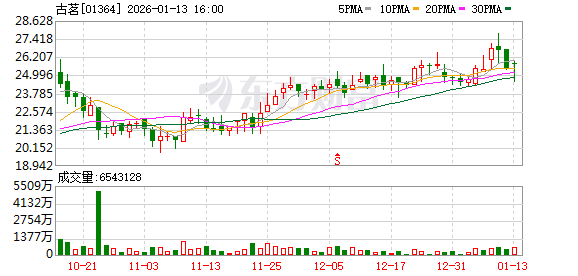
古茗在杭州拿地 新茶饮品牌“热衷”拿地盖楼?
Zheng Quan Shi Bao Wang· 2026-01-13 13:32
证券时报记者吴家明 价格大战、密集上市......新茶饮企业的热点似乎都在价格和资本市场。不过,一个"特别"的现象正悄然 上演:头部茶饮品牌似乎也在关注重资产,开始拿地盖楼。 近日,位于杭州钱江世纪城核心区一宗商业用地挂牌出让。古茗技术(浙江)有限公司以4.55亿元总价竞 得该地块,成交楼面价约合每平方米6100元。浙江省自然资源网上交易中心的资料显示,该地块土地用 途为商务金融用地,用地面积约1.24万平方米。 根据《建设用地规划条件》和《地块出让合同》,该地块整体自持比例不低于80%,自持年限为40年, 自持期间不得分割转让、不得分割登记。该地块被明确定位为总部经济类用地,竞得者须与杭州市萧山 钱江世纪城管理委员会签订《杭州市萧山钱江世纪城核心单元XS010203-04地块投资开发协议》。 根据市场公开消息,目前古茗实行杭州、台州双总部战略。其中,台州总部坐落于温岭市大溪镇,杭州 总部则位于萧山区,新地块的用途尚在规划中。公司财报显示,2025年上半年公司营业收入约56.6亿 元,同比增加41.2%。与餐饮零售消费行业争抢一、二线城市不同,古茗81%的门店布局在二线及以下 城市。 有分析人士表示,自有物业 ...
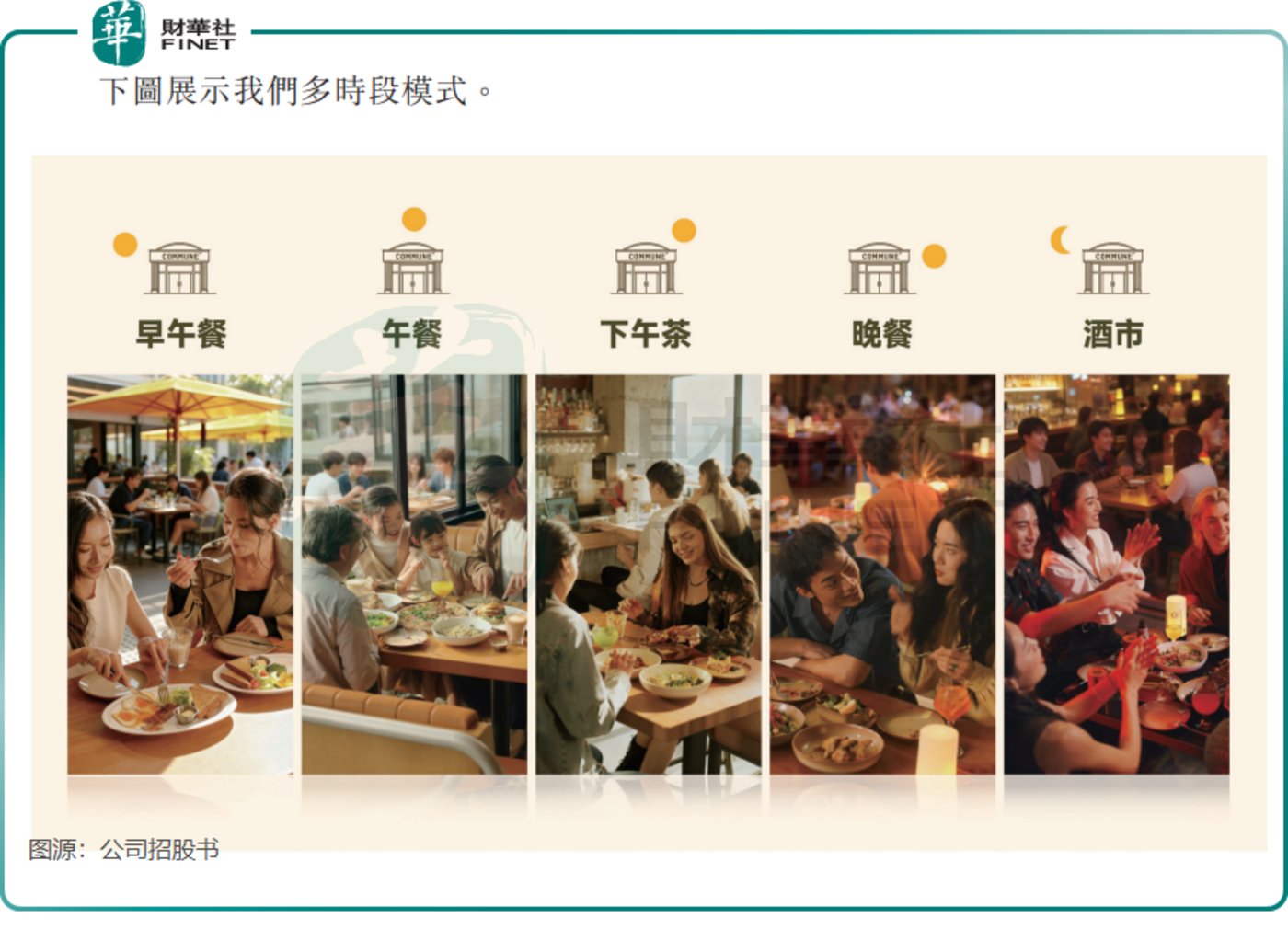
一家年入千万的COMMUNE门店,还不如奶茶店赚钱?
Sou Hu Cai Jing· 2026-01-13 06:47
Core Viewpoint - COMMUNE, a chain of restaurant bars, is officially seeking to become the first publicly listed company in the restaurant bar sector in Hong Kong, with its parent company submitting a listing application to the Hong Kong Stock Exchange [1]. Group 1: Company Overview - COMMUNE is a hybrid restaurant bar that combines a self-service beverage area, a super bar, and dining spaces, targeting Generation Z and new middle-class consumers [4]. - As of September 30, 2025, COMMUNE plans to operate 112 directly managed stores across 40 cities in China, with 109 of these under the COMMUNE brand [4]. - The company has achieved significant revenue growth, with projected revenues increasing from 845 million yuan in 2023 to 1.074 billion yuan in 2024, representing a year-on-year growth of 27.1% [4]. Group 2: Market Position - According to Frost & Sullivan, COMMUNE has ranked first among restaurant bar brands in China by revenue for three consecutive years from 2022 to 2024 [4]. - The total revenue of the Chinese chain restaurant bar market is expected to reach 13.5 billion yuan in 2024, with COMMUNE holding a market share of 7.8%, which is approximately double that of its second and third largest competitors combined [4]. Group 3: Business Model and Strategy - COMMUNE's business model innovatively integrates dining and drinking experiences, operating as a full-time restaurant bar that caters to socializing needs throughout the day [10]. - The company operates with a "full-time + full scene" logic, significantly enhancing asset utilization and efficiency, with daily orders per store increasing from 256 in 2023 to 327 in the first three quarters of 2025 [12]. - The average customer spending ranges from 80 to 160 yuan, focusing primarily on first and second-tier cities, which account for 91.74% of its stores by September 30, 2025 [14]. Group 4: Financial Performance - COMMUNE's gross margin has consistently remained above 65%, reaching 70.5% in 2023, with a slight decline to 67.8% in 2024, and rebounding to 68.7% in the first three quarters of 2025 [13]. - The company reported adjusted net profits of 73.4 million yuan in 2023 and 66.2 million yuan in 2024, with single-store profits of approximately 780,000 yuan and 600,000 yuan, respectively [16]. Group 5: Competitive Landscape - Despite its strong brand influence, COMMUNE faces competition from both direct competitors in the restaurant bar sector and established players in the broader dining industry, such as Haidilao and others venturing into the bar space [16]. - The company is adapting its expansion strategy to focus on enhancing its presence in first-tier cities and selectively entering second and lower-tier cities, aiming to solidify its brand influence [16][18].
当海伦司失速,极物思维的“日餐夜酒”故事香吗?
Xin Lang Cai Jing· 2026-01-13 06:22
Core Viewpoint - The company "极物思维" is attempting to become the first listed restaurant and bar stock in Hong Kong, contrasting with the struggles of "海伦司" which is facing declining performance and stock prices [1][10][11]. Group 1: Company Overview - "极物思维" submitted its main board listing application to the Hong Kong Stock Exchange on January 9, aiming to capture the title of "first restaurant and bar stock" [1][10]. - The company has established 112 direct-operated stores across 40 cities in China, with 109 operating under the "COMMUNE幻师" brand [3][12]. - "极物思维" has achieved a market share of 7.8% in the restaurant and bar sector by 2024, ranking first in revenue for three consecutive years from 2022 to 2024 [3][12]. Group 2: Business Model and Performance - The company's business model includes a full-day service approach, offering diverse food options during the day and transforming into a social drinking venue at night [3][12]. - Revenue increased from 845 million RMB in 2023 to 1.074 billion RMB in 2024, representing a year-on-year growth of 27.1% [5][14]. - The gross profit margin has remained above 65%, reaching 68.7% in the first three quarters of 2025, significantly higher than competitors like "蜜雪集团" and "海底捞" [5][14]. Group 3: Competitive Landscape - "海伦司" is struggling with a single low-cost model, leading to a 34% revenue drop to 291 million RMB in the first half of 2025, while "极物思维" has shown resilience with a net profit increase of over 40% [5][16]. - The low-cost strategy of "海伦司" has resulted in a decline in service quality, impacting customer retention, while "极物思维" mitigates risks through a diversified operational strategy [5][16]. Group 4: Growth Challenges - Despite strong current performance, "极物思维" faces challenges related to its reliance on first and second-tier cities, with over 90% of its stores located in these areas [7][16]. - The company plans to expand into lower-tier cities, but faces difficulties as sales in these markets are significantly lower, with average daily sales of approximately 20,100 RMB compared to 38,483 RMB in first-tier cities [9][18]. - The need to balance brand positioning with market demands in lower-tier cities presents a significant challenge for "极物思维" [9][18].