
汇川技术

Search documents
东莞证券财富通每周策略-20260123
Dongguan Securities· 2026-01-23 11:13
证券研究报告 2026 年 1 月 23 日 星期五 【下周策略】 ◆本周走势回顾 本周指数震荡走强,沪指企稳 4100 点。从周 K 线来看,上证指 数上涨 0.84%,深证成指上涨 1.11%,创业板指下跌 0.34%,科创 50 指数上涨 2.62%,北证 50 指数上涨 2.60%。个股板块涨多跌少,建 筑材料、石油石化、钢铁和基础化工等板块涨幅靠前,医药生物、 食品饮料、非银金融、通信和银行等板块跌幅靠前。 ◆下周大势研判:震荡巩固,春季行情有望延续 从本周市场来看: ◆风险提示: 海外经济超预期下滑,以及中美贸易摩擦超预期恶化,导致外 需回落,国内出口承压;全球主要经济体超预期延长加息周期,高 利率环境使全球经济增速明显放缓,压缩国内资金面;海外信用收 缩引发风险事件,对市场流动性造成冲击,干扰利率和汇率走势。 | 市场近一周走势 | | | | | --- | --- | --- | --- | | 指数名称 | | 周收盘(点) | 涨跌幅 | | 上证指数 | | 4136.16 | 0.84% | | 深证成指 | | 14439.66 | 1.11% | | 创业板 | | 3349.5 ...
“工控之王”朱兴明拟赴港上市,离婚转给妻女68亿再开资本新篇
Sou Hu Cai Jing· 2026-01-23 10:56
Core Viewpoint - Huichuan Technology is planning to go public in Hong Kong to enhance its international strategy and brand image, following a significant family wealth transfer and the successful listing of its subsidiary, United Power [3][4][10]. Group 1: Company Overview - Huichuan Technology, founded by Zhu Xingming in 2003 after leaving Huawei, specializes in industrial automation control products and has become a leader in the domestic market [6][7]. - The company has expanded its product range to include vector frequency converters, photovoltaic inverters, and automotive air conditioning systems, earning the nickname "Little Huawei of Industrial Control" [6][10]. - As of January 23, 2025, Huichuan Technology's stock price is ¥79.38, with a market capitalization of ¥2149 billion, representing a growth of approximately 28 times since its initial public offering in 2010 [8][9]. Group 2: Financial Performance - For the first three quarters of 2025, Huichuan Technology reported revenue of ¥316.63 billion, a year-on-year increase of 24.67%, and a net profit of ¥42.54 billion, up 26.84% year-on-year [10]. - The company's gross margin from its primary revenue sources, including new energy vehicles and rail transit, decreased from 35.01% in 2022 to 29.27% in 2025, while the net profit margin improved to 13.64% [10]. - Huichuan Technology's debt-to-asset ratio stands at 46.76%, a decrease of 3.52 percentage points year-on-year, with cash reserves reaching ¥69.08 billion, a 95.40% increase from the previous year [10]. Group 3: Strategic Moves - The upcoming IPO in Hong Kong is seen as a strategic move to attract long-term international institutional investors and enhance the company's global influence, rather than merely a financing effort [10][11]. - Zhu Xingming's recent divorce and the subsequent transfer of approximately ¥68.43 billion in assets have been strategically managed to maintain control over the company while optimizing tax implications [11][15]. - The arrangement allows Zhu Xingming to retain control through a voting rights agreement with his daughter, ensuring that the company's leadership remains stable despite the wealth transfer [14][15].



商业航天28股封板,巨头密集砸钱入局
2 1 Shi Ji Jing Ji Bao Dao· 2026-01-23 10:53
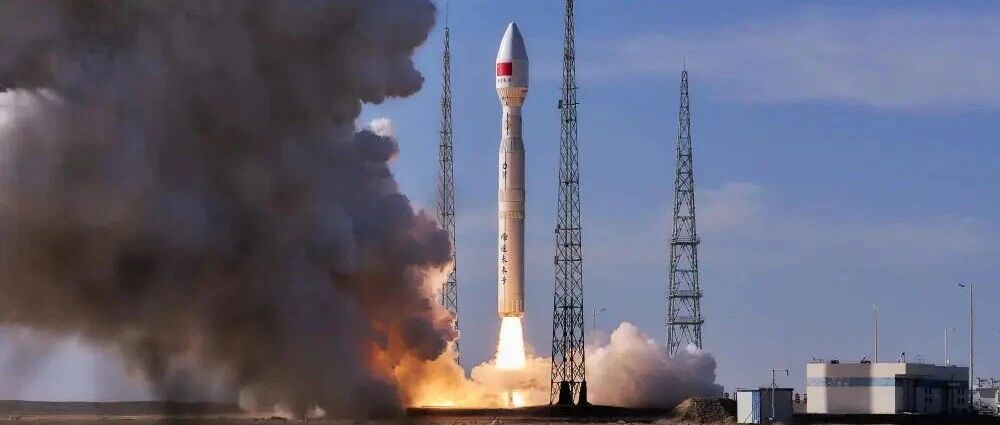
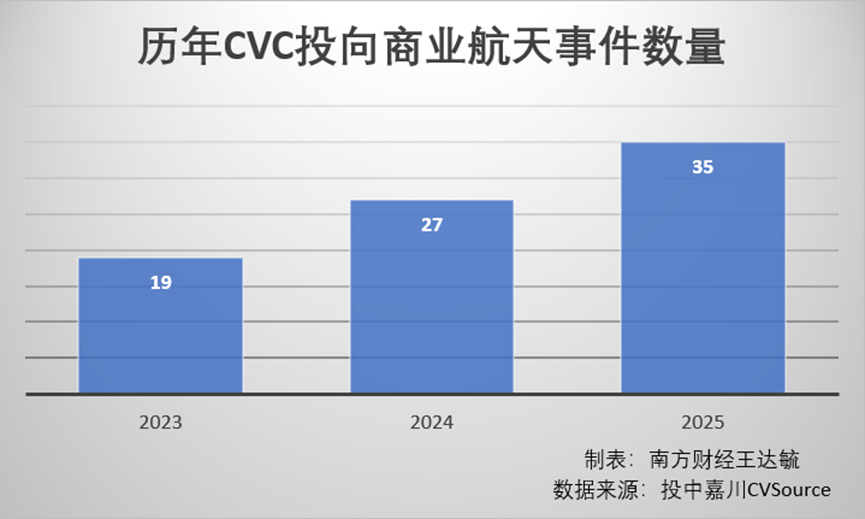
Core Insights - The commercial space sector in China has seen significant growth since 2025, with 50 commercial launches accounting for 54% of total space launches that year [1] - The commercial space index (886078.TI) surged by 73.13% in 2025, indicating a strong market performance [1] - The traditional dominance of state-owned enterprises in the space sector is being challenged as private capital and venture capitalists increasingly enter the market [1][10] Investment Trends - Corporate venture capital (CVC) investments in commercial space have nearly doubled from 19 events in 2023 to 35 in 2025, reflecting a growing interest in the sector [3] - CVC investments are characterized by a trend towards earlier and smaller investments, with 9 seed and angel round investments and 16 A-round investments in 2025 [5] - The geographical distribution of CVC investments shows Beijing leading with 8 events, followed by Jiangsu with 6 and Guangdong with 4 [7] Notable Investments - The largest disclosed investment in 2025 was a 300 million yuan (approximately 43 million USD) Pre-A round for Shaanxi Xingyi Space Technology Co., backed by a consortium of 8 investors [7] - Beijing Lizheng Technology Co., which provides drone control solutions, also secured 300 million yuan in a C+ round from 7 institutions [7] Industry Expansion - CVC investments are expanding beyond traditional rocket and launch services to include areas such as engines, aerospace electronics, and downstream applications [8] - Notable investments include Shenzhen Xiandeng Aerospace Technology Co., which focuses on ground support for rockets, and Hunan Lanyue Electromechanical Technology Co., which manufactures satellite components [8] Investment Institutions - The investment landscape includes three main types of institutions: state-owned enterprises and national capital platforms, local state-owned capital, and industry leaders' investment platforms [9] - Examples include China Electronics Technology Group's investment arm and local funds like Shenzhen Innovation Capital [9] Cross-Industry Involvement - Increasingly, non-space industry giants from sectors like automotive, oil, and AI are investing in commercial space, indicating a shift in investment dynamics [12] - Companies like Huichuan Technology, a leader in industrial automation, have made significant investments in the space sector, reflecting a broader trend of cross-industry capital flow [13] Market Dynamics - The commercial space industry is evolving into a competitive landscape focused on large-scale delivery and system capabilities, with leading firms gaining market share through technological and operational advantages [15] - The entry of diverse capital sources is expected to enhance the growth potential of the commercial space sector, making it more integrated into the broader industrial ecosystem [10][15]



商业航天28股封板,巨头密集砸钱入局
21世纪经济报道· 2026-01-23 10:46
Core Viewpoint - The commercial aerospace sector in China has seen significant growth since 2025, with a notable increase in investment activities and market participation from various industries, indicating a shift towards commercialization and diversification in funding sources [1][10]. Investment Trends - The number of CVC investment events in commercial aerospace has increased from 19 in 2023 to 35 in 2025, nearly doubling within two years [3][5]. - CVC investments are showing a trend towards earlier and smaller investments, with 9 seed and angel round investments and 16 A-round investments in 2025, compared to only 15 such investments in 2024 [5][10]. Geographic Distribution - Beijing leads in CVC investment events with 8 occurrences, followed by Jiangsu with 6 and Guangdong with 4, all from Shenzhen [8]. Notable Investments - Shaanxi Xingyi Space Technology Co., a commercial aerospace service provider, received 300 million yuan in a Pre-A round, marking the largest CVC investment in commercial aerospace for 2025 [9]. - Beijing Lizheng Technology Co., which provides drone control solutions, also secured 300 million yuan in a C+ round from several investment firms, including a private equity fund under SAIC Group [9]. Investment Focus - CVC investments are expanding beyond traditional rocket and launch services to include areas such as engines, aerospace electronics, and downstream applications [9][10]. - The investment landscape includes three main types of investors: state-owned enterprises and national capital platforms, local state-owned capital, and industry leaders' investment platforms [10]. Cross-Industry Participation - Increasingly, non-aerospace industries such as automotive, energy, and AI are entering the commercial aerospace sector, indicating a broader interest in aerospace technologies and applications [11][12]. - For example, Huichuan Technology, a leader in industrial automation, has made multiple investments in commercial aerospace, reflecting a trend of cross-industry investment [12]. Market Dynamics - The commercial aerospace industry is transitioning into a competitive phase focused on large-scale delivery and system capabilities, where leading companies can leverage their technological and operational advantages for market share [13]. - The perception of commercial aerospace is evolving from a high-risk frontier technology to a long-term investment opportunity that can be integrated into existing industrial frameworks [14].
拓展大储?又一工商储企业联手汇川
行家说储能· 2026-01-23 10:16
Core Viewpoint - The strategic partnership between Hongzheng Energy and Huichuan Technology marks a significant shift in the energy storage industry, aiming to address challenges in commercial energy storage and explore opportunities in large-scale independent energy storage [4][7]. Group 1: Strategic Collaboration - On January 20, Huichuan Technology and Hongzheng Energy signed a strategic cooperation agreement to enter the large independent energy storage sector, focusing on collaborative development in energy storage PCS (power conversion systems), market synergy, and innovative solutions [4]. - The partnership aims to create a symbiotic industrial ecosystem, providing a pathway for the energy storage industry to respond to volatility and move beyond price competition [4][7]. Group 2: Industry Challenges - The commercial energy storage market is experiencing a transformation period, with narrowing peak-valley price differences due to national pricing policy adjustments and deeper market reforms, leading to the obsolescence of traditional profit models [8]. - Intense homogenization competition has resulted in significant price declines, squeezing profit margins and forcing some companies to exit the market, while others seek new survival and growth paths [8]. Group 3: Market Outlook - Industry experts predict that 2026 will be a pivotal year for independent energy storage, prompting some commercial energy storage companies to pivot towards this sector for sustainable profit models and new growth opportunities [8]. - Transitioning to large-scale energy storage is complex, requiring comprehensive capabilities due to high investment costs, long construction periods, and stringent technical standards [8]. Group 4: Differentiation Strategies - Companies are increasingly adopting distinct strategies to navigate challenges, focusing on niche markets and aligning with local energy policies to develop tailored products and services [9]. - Another approach involves deep innovation in specific technical needs within the commercial energy storage market, such as AI scheduling and customized solutions, to establish competitive advantages [9]. Group 5: Business Model Innovation - A shift from equipment manufacturing to asset-light value operation is emerging, leveraging AI algorithms and digital platforms to create "virtual power plants" that facilitate intelligent scheduling and electricity trading [10]. - This model reduces capital investment barriers and relies on algorithmic capabilities and customer resource integration to carve out a niche in a competitive ecosystem [10].

20CM批量涨停,电新赛道最强新主线
Ge Long Hui· 2026-01-23 10:01
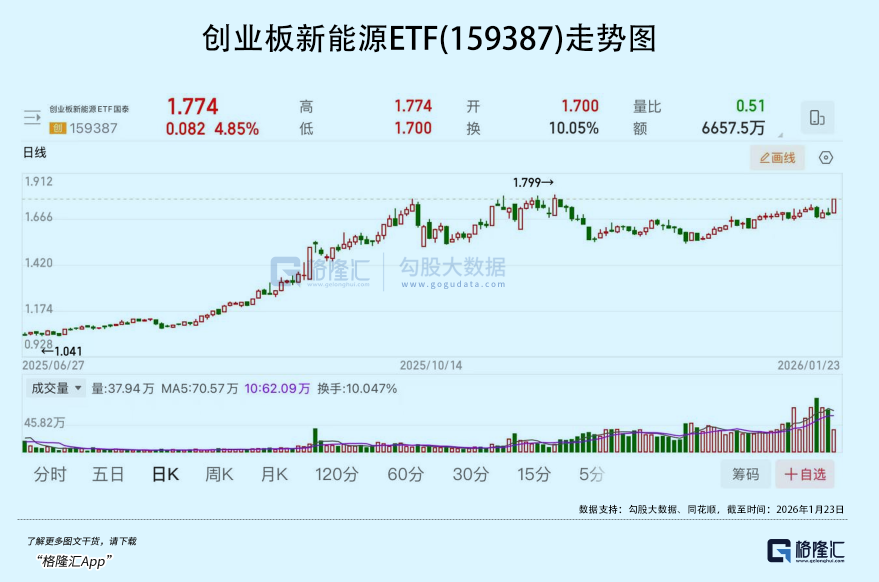
1月23日,A股新能源板块迎来一波始料未及的集体爆发行情。 据同花顺行情数据,截至收盘,光伏设备板块涨幅高达10.07%,同时BC电池、钙钛矿电池、TOPCON电池、HJT电池等新能 源电池链条全线显著飙涨,全市有超十只个股涨幅在20%及以上,另有十多只个股收获10%涨停。得益于太空光伏引爆新能 源赛道,今日创业板新能源ETF(159387)涨4.85%。 消息面上,近日,特斯拉CEO马斯克在瑞士达沃斯世界经济论坛年会期间明确力挺太空光伏,并披露关键产能规划。他表 示,SpaceX与特斯拉正同步推进太阳能产能提升,目标在未来三年内实现每年100GW的太阳能制造能力。 随着商业航天进入规模化部署新阶段,太空光伏的长期需求进一步明确。 光伏的新故事,今年或许将在电新板块异军突起了。 01 什么是太空光伏? 相关研究测算显示,部署在轨道的太空数据中心,其十年总成本仅为约820万美元,远低于同等规模地面数据中心的1.67亿美 元,成本降幅达一个数量级。 "太空光伏"这一概念迅速成为资本市场的热词,并在A股发酵了半个多月。 马斯克的这一计划不仅重新定义了光伏的应用边界,更将"光伏+航天+AI"三个万亿级赛道进行融合。与 ...
汽车、石油巨头跨界“卷上天” 商业航天迎多元CVC入局
2 1 Shi Ji Jing Ji Bao Dao· 2026-01-23 05:17
市场的火爆直观反映在资本市场。 2025年,商业航天指数(886078.TI)上涨73.13%。其中2025年底启动的行情更使其成为市场"最靓的崽"。自2025年11月24 日至2026年1月12日,该指数在短短34个交易日内上涨了51.88%。 国家队与航天央企的传统主导格局被打破,赛道商业化进程提速,不仅吸引大批VC加码布局,资本市场也迎来不少新的入 局者,产业资本密集入场。 根据投中嘉川CVSource数据,CVC投资商业航天企业事件数由2023年的19起增长至2025年的35起,近乎翻倍。 更值得关注的是,持续加码CVC的并非仅有航天产业背景,制造业、能源、自动化、汽车、AI等原本不在航天圈内的产业 资本,正在"跨界"砸钱入局商业航天。 南方财经记者王达毓广州报道 2025年以来,商业航天赛道火力全开。 根据国家航天局数据,2025年我国共完成50次商业航天发射,占全年宇航发射总数的54%。 伴随商业航天由技术突破迈向产业化落地,CVC正在加码商业航天赛道。 从时间维度看,根据投中嘉川CVSource数据,CVC投向商业航天的投资事件数量逐年增长,从2023年的19起,增长至2024 年的27起,而2 ...
马斯克:计划明年面向公众销售人形机器人,机器人ETF(159770)标的指数盘中涨超1%,近5日日均成交额超4.3亿元居深市同标的第一
2 1 Shi Ji Jing Ji Bao Dao· 2026-01-23 03:10
Group 1 - The A-share market saw all three major indices open higher, with the CSI Robot Index rising by 0.06% and briefly exceeding 1.3% during trading. Notable stocks included Fengli Intelligent, Zhongdali De, and Haozhi Electromechanical, each increasing by over 2% [1] - The Robot ETF (159770) opened high with a trading volume exceeding 84 million yuan, showing active trading at the beginning of the session and a premium rate of 0.06% [1] - The Robot ETF (159770) experienced a net inflow of 5.2 million yuan yesterday, with an average daily trading volume of 430 million yuan over the past five days, ranking first among similar products in the Shenzhen market. The latest circulating shares amount to 9.118 billion, with a total market size of 10.492 billion yuan [1] Group 2 - According to Shenwan Hongyuan, the rapid advancement in the robot sector is driven by four key factors: capital investment, enhanced R&D, industrialization, and scenario development. These factors are expected to accelerate the realization of commercial viability in multiple previously uncommercialized areas by 2026 [2]

特斯拉将开始向公众销售人形机器人,机器人ETF(562500)近1周涨幅排名可比基金首位
Mei Ri Jing Ji Xin Wen· 2026-01-23 02:44
Core Viewpoint - The Robot ETF has shown significant performance and growth, with notable increases in both stock prices and trading volume, driven by positive market sentiment and developments in robotics technology [1][2]. Group 1: ETF Performance - As of January 22, 2026, the Robot ETF has increased by 0.72%, with constituent stocks such as Haozhi Electromechanical rising by 4.86% and Weichuang Electric by 3.96% [1]. - Over the past week, the Robot ETF has accumulated a total increase of 2.86%, ranking 1st among comparable funds [1]. - The ETF's trading volume has been robust, with an average daily transaction of 1.634 billion yuan over the past month, leading the comparable funds [1]. Group 2: Fund Flows and Leverage - The net financing amount for the Robot ETF reached 27.8652 million yuan in the previous trading day, with the latest financing balance at 1.107 billion yuan [1]. - The ETF has seen a significant growth in scale, with an increase of 248 million yuan over the past week, ranking 1st among comparable funds [1]. - The number of shares for the Robot ETF has grown by 91.5 million shares in the past week, also ranking 1st among comparable funds [1]. Group 3: Risk and Recovery - The maximum drawdown for the Robot ETF this year is 1.25%, with a relative benchmark drawdown of 0.04%, indicating a strong recovery capability with a repair time of just 1 day, the fastest among comparable funds [2]. Group 4: Fee Structure and Tracking Accuracy - The management fee for the Robot ETF is 0.50%, and the custody fee is 0.10%, both of which are the lowest among comparable funds [3]. - The tracking error for the Robot ETF over the past three years is 0.024%, indicating the highest tracking precision among comparable funds [3]. Group 5: Index Composition - The Robot ETF closely tracks the CSI Robot Index, which includes companies involved in system solutions, digital workshops, automation equipment manufacturing, and other robotics-related sectors [3]. - As of December 31, 2025, the top ten weighted stocks in the CSI Robot Index account for 52.83% of the index, including companies like iFlytek, Huichuan Technology, and Top Group [3].

黄仁勋+马斯克双双钦点!光伏ETF华夏(515370)飙涨5%,电网设备ETF(159326)开年“吸金”超百亿
Ge Long Hui A P P· 2026-01-23 02:19
Group 1 - The energy sector is experiencing a significant rally, with the photovoltaic sector leading the gains, as evidenced by the 5.57% increase in the Huaxia Photovoltaic ETF and a 3.53% rise in the Huaxia New Energy ETF [1] - NVIDIA's founder Jensen Huang presented the "five-layer cake" theory of AI at the Davos World Economic Forum, emphasizing that energy is the "fuel" for AI, and that substantial investments in infrastructure, amounting to trillions of dollars, are necessary to support AI development [2] - Elon Musk announced at the Davos Forum that Tesla and SpaceX plan to build a total of 200GW of photovoltaic capacity in the U.S. over the next three years, significantly exceeding market expectations of 10-20GW annually, marking a strategic shift in the photovoltaic industry towards "AI computing power + energy infrastructure" [2] Group 2 - The Electric Grid Equipment ETF (159326) has over 60% weight in ultra-high voltage, 55% in smart grid, and 14% in controllable nuclear fusion, with key stocks including State Grid NARI, TBEA, and Sifang Electric. This ETF has seen a net inflow of 11.7 billion yuan since the beginning of the year, ranking first in its category [3] - The Huaxia Photovoltaic ETF (515370) covers high-purity photovoltaic industries, with key stocks such as TBEA, LONGi Green Energy, and Sungrow Power Supply [3] - The Huaxia New Energy ETF (159368) has over 70% weight in energy storage and solid-state batteries, featuring key stocks like CATL, Inovance Technology, and EVE Energy [3] - The Green Power ETF (562550) focuses on the entire electricity transition chain, with core stocks including Yangtze Power and Three Gorges Energy, which are major players in hydropower and renewable energy operations in China [3]