越疆

Search documents
越疆跌近4% 明日将迎来解禁 年内两次进行配股融资
Zhi Tong Cai Jing· 2025-12-22 06:59
消息面上,越疆即将迎来解禁。据公司此前发布的公告,其大股东、IPO前投资者以及独立投资者须遵 守禁售承诺最后一天为2025年12月22日。此外,11月6日,越疆宣布拟配售1666万股新H股,配售价每 股46.80港元,较11月5日收盘价52.2港元折让10.3%。本次配售所得款项净额约7.71亿港元。值得注意的 是,这是越疆今年第二次进行大规模配售募资。 越疆(02432)跌近4%,当前股价较今年3月高点已腰斩。截至发稿,跌3.81%,报31.78港元,成交额2.22 亿港元。 ...
“八载深耕,筑梦引航”系列报道(二)| 青春力量与AI产业共振:山东加力打造人工智能示范应用新高地
Feng Huang Wang Cai Jing· 2025-12-21 00:02
人工智能是新一轮科技革命和产业变革的重要驱动力量。在国家部署深入实施"人工智能+"行动的背景下,山东加快突破人工智能领域。 今年9月,山东省"人工智能+"创新应用工作会议在济南浪潮计算服务产业园召开。省委书记林武表示,要深入实施"人工智能+"行动,加快打造人工智能示 范应用高地,为经济社会高质量发展注入强劲动能。 省域产业的进阶,需要各方面的合力。为助力人工智能产业高质量发展,团省委积极响应省委、省政府部署,创新举措助力全省"人工智能+"产业发展实现 新跨越:一是加快步伐走出去,吸引优质企业入驻;二是积极引导,重点培育省内企业做大做强做优;三是搭建交流桥梁,加快招才引智步伐,赋能企业成 长。 一系列务实举措带来显著成效。在山东"人工智能+"产业谋求蝶变的关键时期,团省委的这种主动求变,正在为山东人工智能示范应用高地建设贡献更多力 量。 01高质量招引46个项目落地 对一个地区而言,招引头部企业进驻,是实现产业突破的重要路径。团省委创新"解题"思路,通过在青创齐鲁大厦建设青创齐鲁科创集聚、青企大会"双招 双引"、省市青企协协同发展"三大平台",积极发挥项目招引、技术创新、人才引育、资本支持、管理服务"五大功能" ...


又一家!港股“无人驾驶矿卡第一股”来了!硬科技破冰,18C章“改写”港股版图?
Zheng Quan Shi Bao· 2025-12-19 04:57
Core Insights - The implementation of Chapter 18C is seen as a necessary but insufficient condition for transforming the Hong Kong stock market into a "hard technology hub" [1][9] - The recent surge in IPO applications under Chapter 18C indicates a growing interest in hard technology companies, although challenges remain in market liquidity and other backend developments [3][9] Group 1: Chapter 18C Overview - Chapter 18C was officially implemented in March 2023, allowing loss-making tech companies with disruptive technologies to access the capital market [4] - As of now, only three companies successfully listed under Chapter 18C before 2025, while four more have done so this year, with a total of 20 companies currently in the IPO application process [3][4] - The introduction of a "special line for tech companies" by the Hong Kong Stock Exchange in May 2023 has further reduced communication costs and risks for companies applying under Chapter 18C [4] Group 2: Market Dynamics and Trends - The current wave of IPOs under Chapter 18C is primarily driven by companies in the robotics and AI sectors, which are at a stage of technological maturity suitable for commercialization [5][6] - The influx of applications is attributed to favorable market conditions and a global trend towards technology stocks, as well as the need for companies to capitalize on policy incentives [5][6] - The market is witnessing a re-evaluation of existing assets in the robotics and AI sectors, with significant investments from venture capital and private equity firms in recent years [6] Group 3: Challenges and Considerations - The majority of companies that have listed under Chapter 18C remain unprofitable, raising concerns about market volatility and the potential for stock price fluctuations [7][8] - Experts suggest that the introduction of a dual-track system for profitability and valuation may lead to increased market pressure, necessitating a combination of relaxed entry requirements and stricter post-listing regulations [7][8] - To mitigate the negative impacts of unprofitable listings, a three-tiered approach involving pre-listing evaluations, liquidity buffers, and mechanisms for secondary offerings is recommended [8] Group 4: Future Outlook - The IPO boom under Chapter 18C is expected to drive changes in the market structure, particularly in the valuation of tech companies, although the overall liquidity issues in the Hong Kong market remain a concern [10] - The successful transformation of the Hong Kong stock market into a hub for hard technology will depend on the development of backend support systems, including analyst coverage and specialized indices [9][10] - The current market volatility and liquidity challenges highlight the need for further optimization of listing rules and regulatory frameworks to adapt to the fast-evolving tech industry [9]
又一家!港股“无人驾驶矿卡第一股”来了!硬科技破冰,18C章“改写”港股版图?
证券时报· 2025-12-19 04:53
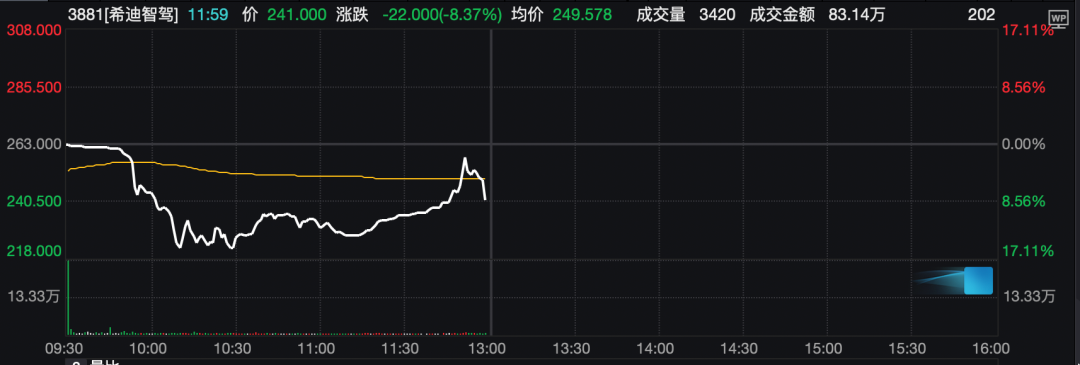
Core Viewpoint - The implementation of Chapter 18C is a "necessary but insufficient" condition for transforming the Hong Kong stock market into a "hard technology hub," as it opens the door for hard tech companies but requires further development of backend processes to fully realize this transformation [1][10]. Summary by Sections Chapter 18C and IPO Trends - Since the implementation of the 18C special technology listing system in March 2023, there has been a surge in companies applying for IPOs, with 20 companies currently in the pipeline [5][6]. - The first company to list under this chapter, Xidi Zhijia, experienced a significant drop of over 17% on its first trading day, indicating market volatility [1][5]. Market Dynamics and Challenges - The 18C chapter has led to a "submission frenzy," particularly among companies in the robotics and AI sectors, as they seek to capitalize on favorable market conditions and the global tech stock trend [5][6]. - Despite the enthusiasm, the market faces challenges such as liquidity issues and the need for a robust secondary market to support these new listings [10][12]. Dual-track System of Profitability and Valuation - The shift to a "profitability + valuation" dual-track system allows companies with disruptive technologies to list even if they are not yet profitable, which is seen as a significant change in the market's approach [6][9]. - This new system has attracted significant interest from investors, particularly in the robotics and AI sectors, which are perceived as having high growth potential [6][7]. Future Outlook and Structural Changes - The introduction of Chapter 18C is expected to alter the market structure, potentially increasing the representation of hard tech companies in the Hong Kong stock market [10][12]. - However, for a true transformation into a hard tech hub, the market needs to enhance backend processes such as analyst coverage, specialized indices, and regulatory frameworks [10][12].

四大证券报精华摘要:12月19日
Xin Hua Cai Jing· 2025-12-19 00:08
Group 1 - Institutions have intensively researched over 60 AI glasses industry chain companies since the fourth quarter, indicating a shift towards large-scale growth in the AI glasses sector driven by leading manufacturers and innovative brands [1] - The AI glasses industry is expected to benefit from technological innovations and product iterations as it transitions from an exploratory phase to a growth phase [1] Group 2 - Private equity firms are preparing for next year's main investment themes, with a focus on AI, humanoid robots, and commercial aerospace, amidst year-end portfolio adjustments [2] - Optimistic private equity firms believe the market has already adjusted and is entering a phase of solidifying the bottom, with expectations of valuation recovery in the A-share and Hong Kong technology sectors [2] Group 3 - Central enterprises are ramping up energy supply efforts in response to winter demands, with traditional and clean energy projects being launched to ensure stable energy supply [3] - The overall energy supply situation in China is stable, with sufficient coal reserves in power plants as heating demand rises [3] Group 4 - The People's Bank of China has resumed 14-day reverse repurchase operations to stabilize liquidity as year-end approaches, injecting 100 billion yuan into the market [4] - This move is aimed at addressing year-end funding needs and signals flexible monetary policy adjustments [4] Group 5 - The China Securities Regulatory Commission emphasizes the importance of strengthening theoretical research in capital markets to support high-quality development and global financial governance [5] - The focus is on creating a theoretical framework that aligns with market principles and China's realities, addressing key issues like market inclusivity and financial technology [5] Group 6 - Hainan Free Trade Port officially launched its operations, implementing various policies and regulations to facilitate trade and investment [6] - The first day of operations saw multiple significant milestones, including the arrival of zero-tariff goods and the establishment of a world-class enterprise project [6] Group 7 - Insurance capital is increasingly investing in the domestic GPU sector, with several insurance funds indirectly investing in companies like Moore Threads and Muxi Technology [7] - The presence of insurance capital in these tech firms reflects a broader trend of insurance funds actively engaging in the technology sector [7] Group 8 - The Hong Kong Securities and Futures Commission has raised concerns over the declining quality of IPO applications, urging sponsors to ensure compliance and clarity in their submissions [8] - Issues such as exaggerated business descriptions and selective data presentation have been noted, raising concerns about the sustainability of IPO quality in Hong Kong [8] Group 9 - The Hong Kong Stock Exchange has seen a surge in companies applying for the 18C chapter listing, indicating a growing interest in the tech sector [9] - This trend is expected to reshape the market landscape, potentially attracting more hard-tech assets to Hong Kong [9] Group 10 - Public funds have actively participated in the A-share private placement market this year, with 39 public institutions involved in 85 stocks, resulting in a total allocation of 34.088 billion yuan [10] - This represents a 14.24% increase compared to the same period last year [10] Group 11 - Insurance asset management institutions have registered 83 asset-backed plans totaling 344.562 billion yuan in the first 11 months of the year [11] - This reflects ongoing innovation and exploration in asset securitization by insurance companies [11] Group 12 - The banking wealth management industry is expanding its distribution channels, with several firms partnering with institutions in lower-tier cities [12] - This trend indicates a significant shift towards deeper market penetration beyond first and second-tier cities [12]

港股掀起18C章递表热潮
Zheng Quan Shi Bao Wang· 2025-12-18 23:16
Core Viewpoint - The introduction of the 18C chapter listing mechanism has led to a surge in IPO applications on the Hong Kong Stock Exchange, indicating a shift in the market dynamics towards new economy sectors [1] Group 1: IPO Activity - In 2025, only three companies, including Yujian, successfully listed on the Hong Kong stock market using the 18C chapter, while since 2025, four companies, including Wen Yuan Zhi Xing, have successfully listed under this rule [1] - The number of companies aiming for IPOs through the 18C chapter has reached 20, creating a "submission frenzy" [1] Group 2: Market Structure Changes - The 18C, 8A, and 18A chapters are beginning to outline a new economic sector within the Hong Kong stock market [1] - Currently, the market capitalization of companies listed under the 18C chapter is very low compared to the overall Hong Kong stock market [1] - If the secondary market can provide sustained liquidity and refinancing capabilities, it is expected to attract more "hardcore" assets such as semiconductors, quantum technology, and commercial aerospace to choose Hong Kong as their primary listing location, potentially altering the traditional market structure dominated by finance, real estate, and consumer sectors [1]
港股掀起18C章递表热潮 硬科技或将改写港股版图
Zheng Quan Shi Bao· 2025-12-18 18:08
Core Insights - The implementation of Chapter 18C has created a significant opportunity for hard technology companies to access the Hong Kong capital market, although further development of backend processes is necessary for a complete transformation into a hard technology hub [1][6]. Group 1: Chapter 18C Overview - The Chapter 18C listing system was officially implemented in March 2023, allowing loss-making tech companies with disruptive technologies to enter the capital market by lowering financial thresholds and relaxing market capitalization and profitability requirements [2]. - Prior to 2025, only three companies successfully listed under Chapter 18C, but since then, four additional companies have listed, with around 20 more currently in the IPO application process [2][3]. Group 2: Market Dynamics - The surge in IPO applications is attributed to favorable market conditions in Hong Kong and a global trend towards technology stocks, alongside the introduction of a "special line" for tech companies that allows for confidential submissions, reducing initial communication costs and risks [2][3]. - The majority of companies applying for listings under Chapter 18C are from the robotics and AI sectors, which are seen as being on the verge of commercialization, fitting the "market value + R&D" criteria of the chapter [3]. Group 3: Implications of Loss-Making Listings - The perception of Chapter 18C as a "green channel" for loss-making companies is viewed as a double-edged sword, as it allows for early monetization of technological value but also risks significant stock price volatility in the absence of revenue anchors [4]. - Currently, among the seven companies that have listed under Chapter 18C, only one is expected to achieve profitability in 2024, highlighting the risks associated with loss-making listings [4]. Group 4: Future Outlook - The IPO wave driven by Chapter 18C is expected to alter the landscape of the Hong Kong stock market, potentially attracting more hard technology assets like semiconductors and quantum technologies, thereby shifting the traditional market structure dominated by finance, real estate, and consumer sectors [6]. - However, the development of a robust hard technology ecosystem in Hong Kong requires not only a conducive listing environment but also comprehensive support in areas such as analyst coverage, specialized indices, and talent development [6].
卧安机器人(06600):IPO申购指南
Guoyuan International· 2025-12-18 12:17
Investment Rating - The report suggests a cautious subscription for the IPO of the company, Wan'an Robotics, with a proposed price range of HKD 63 to HKD 81 per share [1][3]. Core Insights - The company is recognized as a leading global provider of home robotic systems, focusing on markets in Japan, Europe, and North America, and aims to build an ecosystem centered around smart home robotic products [1]. - The global home robotics market is projected to grow from RMB 213.3 billion in 2022 to RMB 257.7 billion in 2024, with a compound annual growth rate (CAGR) of 9.9%, and is expected to reach approximately RMB 436.5 billion by 2029, with a CAGR of 11.1% from 2024 to 2029 [2]. - The company's revenue is forecasted to increase significantly, reaching RMB 274.6 million, RMB 457.3 million, and RMB 609.9 million for the years 2022, 2023, and 2024 respectively, reflecting a CAGR of 49.0% [2]. Summary by Sections IPO Details - The total fundraising amount is estimated at HKD 1.5049 billion based on a mid-price of HKD 73 per share, with a total of 22.2223 million shares available for subscription [1]. - The subscription period is from December 18 to December 23, 2025, with an entry fee of HKD 8,181.69 [1]. Market Potential - The home robotics market is currently in a rapid development phase, with an expected increase in product penetration to 29.9% by 2029 [2][3]. - The company has over 3.5 million registered users on its SwitchBotApp, with more than 10.8 million devices connected [1]. Financial Performance - The company has shown improvement in operational efficiency, with net losses decreasing from RMB -86.98 million in 2022 to RMB -3.07 million in 2024 [2].
具身智能产业深度研究(七):新一代“蓝领”:人形机器人如何站上工厂流水线
Haitong Securities· 2025-12-17 06:28
Investment Rating - The report does not explicitly state an investment rating for the industry Core Insights - In industrial scenarios, humanoid robots are primarily suited for handling and quality inspection tasks, with a focus on ROI and the potential for expansion into more processes as their generalization capabilities improve [1][10][11] - The market demand for humanoid robots in China's industrial sectors, including automotive manufacturing, electronics manufacturing, and logistics warehousing, is projected to reach 484,000 units by 2035, with a market space exceeding 48 billion yuan [4][12] Summary by Sections 1. Core Insights - Humanoid robots are best suited for handling and quality inspection tasks, gradually expanding into basic assembly tasks as their capabilities develop [3][11] - The commercial viability hinges on achieving a return on investment (ROI) within two years, necessitating a reduction in robot prices to around 100,000 yuan and efficiency improvements to match human performance [3][11] 2. Industrial Manufacturing Flexibility - The demand for flexibility in manufacturing is increasing, with humanoid robots starting from short-chain tasks and gradually taking on more complex tasks [2][16] - Humanoid robots complement industrial robots, adapting to flexible production needs and enhancing operational efficiency [2][17] 3. Market Potential - The total demand for humanoid robots in the industrial sector is expected to reach 484,000 units by 2035, with a market potential of 48.36 billion yuan [4][12] - Collaboration between automotive companies and robotics firms is crucial for the deployment of humanoid robots in industrial settings, with companies like Tesla and XPeng leading the way [4][12]


刚刚,深圳超级国资诞生
投资界· 2025-12-17 03:08
Core Insights - The article discusses the establishment of the "Guochuang Yinkechuang Fund" in Shenzhen, which has a registered capital of 18.9 billion RMB, highlighting the significant involvement of state-owned enterprises and government-backed funds in the investment landscape [5][6][7]. Fund Overview - The Guochuang Yinkechuang Fund was officially registered on December 15, 2025, with a total capital of 18.9 billion RMB, located in the Qianhai Shenzhen-Hong Kong Cooperation Zone [6]. - The fund is managed by Shenzhen Guochuang Investment Co., Ltd., which is wholly owned by the Shenzhen Guiding Fund Investment Co., Ltd. [6]. - Major contributors include Shenzhen Guiding Fund (12.8 billion RMB, 67.72%), Huitong Financial Holdings (3 billion RMB, 15.87%), and Qianhai Financial Holdings (2 billion RMB, 10.58%) [6][7]. Investment Landscape - Since 2015, Shenzhen has established government investment funds exceeding 150 billion RMB, creating 13 guiding funds that have mobilized nearly 500 billion RMB in capital [7]. - The total scale of state-owned funds in Shenzhen exceeds 7 trillion RMB, with over 500 funds targeting strategic emerging industries and future industries, accounting for over 90% of the investment [7]. Future Goals - Shenzhen aims to form a "dual ten-thousand" structure by the end of 2026, targeting a trillion-level "20+8" industrial fund group and over 10,000 registered equity investment and venture capital funds [8]. Economic Development Initiatives - Shenzhen's government has outlined nine key areas for economic work in 2026, focusing on nurturing new growth drivers, enhancing the integration of technology and industry, and optimizing traditional industries [9]. - The Shenzhen Municipal Financial Office has proposed measures to support the reform of the Growth Enterprise Market and promote venture capital activities [9]. Talent Attraction Strategies - Shenzhen has introduced various measures to attract young talent, including free accommodation for recent graduates, transitional housing at 60% of market rates, and entrepreneurial subsidies up to 30,000 RMB [9][10]. - Financial incentives for talent settlement include up to 100,000 RMB for PhDs, 50,000 RMB for master's degree holders, and 30,000 RMB for bachelor's degree holders [10]. Startup Ecosystem - The article highlights the vibrant startup ecosystem in Shenzhen, with notable companies like Ying Shi Innovation and Tuo Zhu Technology emerging from the region [10][11]. - The presence of a robust supply chain has attracted numerous investors to Shenzhen, particularly in the AI hardware sector [11].