
银河航天

Search documents
描绘从西安到世界的“星”蓝图
Xi An Ri Bao· 2025-05-23 03:45
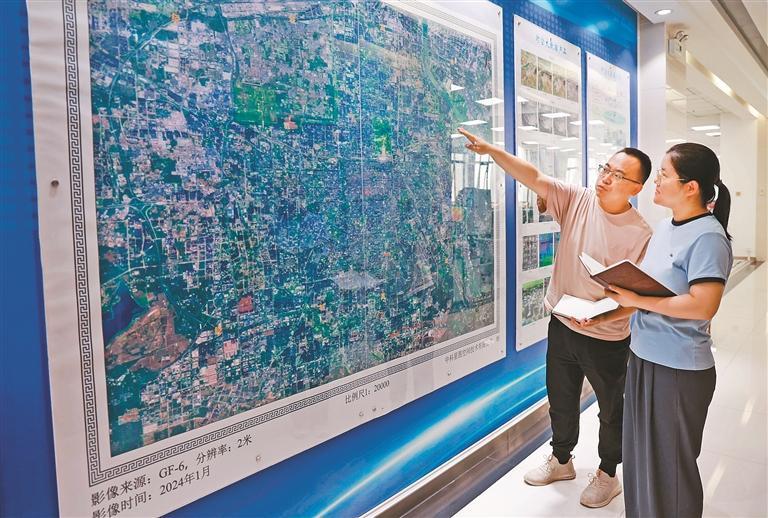
Group 1: Commercial Aerospace Development in Xi'an - Xi'an is leveraging its commercial aerospace capabilities to create a global "star" blueprint, transitioning from a manufacturing hub to an innovation source [1][7] - The city has developed a complete industrial chain ecosystem in commercial aerospace, including rocket manufacturing, satellite deployment, and data utilization [1] - Companies like Galaxy Aerospace and Zhongke Xiguang are leading advancements in satellite technology, contributing to applications in low-altitude economy, emergency rescue, and cross-border communication [1][6] Group 2: Satellite Communication Technology - Xingzhan Measurement and Control Technology Co., Ltd. is recognized for its "Dynamic Communication" technology, which stabilizes satellite communication antennas on moving platforms [2] - The company has achieved significant milestones, including 173 authorized patents and the installation of its satellite communication systems on domestic commercial aircraft, breaking foreign monopolies [2][4] - The FS100 emergency drone developed by Xingzhan is equipped with high-throughput satellite communication devices, enhancing disaster response capabilities [2][4] Group 3: Remote Sensing and Data Utilization - Zhongke Xingtai Space Technology Co., Ltd. has developed the GEOVIS digital earth platform, which processes satellite imagery in real-time for various applications, including land monitoring [5] - The company has over 2,400 patents and software copyrights, positioning itself as a leader in the remote sensing industry [5] - The "Star Map Cloud" platform aggregates data from over 350 satellites, facilitating real-time decision-making across multiple sectors [5] Group 4: Future Prospects and Strategic Initiatives - The Shaanxi provincial government has launched an action plan to cultivate a trillion-level commercial aerospace innovation cluster, aiming to establish 20 benchmark application scenarios [6][7] - Xi'an's commercial aerospace companies are expanding internationally, with products already entering markets in Germany and the UAE [7] - Collaborations, such as the upcoming joint methane emission satellite monitoring laboratory with France, are set to enhance the application of remote sensing data in urban and marine monitoring [7]

耐心资本大力支持 商业航天发展提速
Zhong Guo Zheng Quan Bao· 2025-05-12 20:36
Core Insights - The commercial space industry in China is experiencing significant technological breakthroughs and is entering a critical phase of validation and commercialization [1][2] - The market value of China's commercial space industry is projected to grow from 1 trillion yuan in 2020 to 2.3 trillion yuan by 2024, with a compound annual growth rate of 22.9% [2] - The industry is seeing a surge in financing activities, with 138 funding events in 2024, totaling 20.239 billion yuan, marking a historical high [3] Technological Development - The commercial satellite sector in China is advancing towards network formation, with the first batch of commercial satellite constellations entering the deployment phase [1] - Satellite manufacturing is shifting from traditional manual processes to modular design and automated testing, significantly enhancing production efficiency [1] - Companies like Deep Blue Aerospace are planning to achieve "recoverable + orbital" capabilities in the near future, with ongoing testing and launch plans [1] Financing Trends - The commercial space sector is witnessing a hot financing environment, with satellite applications, rocket manufacturing, and satellite manufacturing being the most popular areas for investment [3] - Notable funding events include Huanyu Aerospace's completion of a strategic financing round exceeding 100 million yuan and Deep Blue Aerospace's nearly 500 million yuan funding for the development of reusable rockets [4] Policy Support - The commercial space industry is characterized by high technology, high investment, high risk, and long cycles, necessitating patient capital support [5] - Local governments and state-owned funds are increasingly investing in commercial space enterprises, with initiatives like the Wuhan Industrial Development Fund focusing on high-end equipment and emerging industries [5][6] - Beijing aims to become a hub for commercial space innovation, with plans to cultivate over 500 high-tech companies and achieve breakthroughs in reusable rocket technology by 2028 [6] Regional Development - Various regions in China are tailoring their commercial space development strategies based on local advantages, such as Shanghai's focus on commercial rocket and satellite parks [6] - Hainan Province is promoting innovation in the space sector through the implementation of a technology innovation voucher system to facilitate cross-regional resource flow [7]

瞭望 | 商业航天新坐标
Xin Hua She· 2025-05-12 11:17
Core Insights - The Chinese commercial space industry is entering a critical phase of growth and transformation, marked by significant government support and technological advancements [1][5][9] - The industry has seen rapid expansion, with the number of registered commercial space companies increasing from fewer than 10 a decade ago to 546 by mid-2024 [5][6] - The market value of the commercial space industry is projected to grow from 1 trillion yuan in 2020 to approximately 2.3 trillion yuan in 2024, with a compound annual growth rate of 22.9% [5][10] Industry Growth and Development - The commercial space sector has been recognized as a new growth engine, with its inclusion in government work reports for two consecutive years [1][9] - The successful launch of the Hainan commercial space launch site marks a significant milestone, establishing a complete capability for executing launches [7][9] - The industry is transitioning from a phase of technological exploration to one of industrialization, with increasing participation from various stakeholders [9][12] Technological Advancements - Significant breakthroughs in reusable rocket technology are anticipated, with multiple commercial rockets expected to achieve their maiden flights by 2025 [6][12] - The production efficiency of satellites is improving, with companies like Galaxy Space achieving a manufacturing cycle reduction of up to 80% [10][11] - The rapid deployment of satellite constellations, such as the Qianfan constellation, is underway, with 54 satellites launched in just four months in 2024 [9][10] Investment and Funding - The commercial space industry is characterized by high capital requirements, with a need for substantial investment to support disruptive innovations [13][14] - Recent funding rounds, such as the nearly 500 million yuan raised by Deep Blue Aerospace, highlight investor confidence in the sector [11][12] - The industry is calling for more government orders and support to help private companies achieve profitability and foster innovation [14][15] Future Outlook - The next decade is expected to bring more significant milestones for the commercial space industry, with a focus on creating a more regulated environment and targeted policies [1][13] - The industry aims to enhance its global competitiveness and reduce launch costs, with projections suggesting costs could drop to below 10,000 yuan per kilogram [12][14] - The successful integration of commercial space capabilities into broader economic and technological frameworks is anticipated to drive further growth and innovation [1][9]

隆盛科技(300680) - 300680隆盛科技投资者关系管理信息20250512
2025-05-12 10:54
Group 1: Business Segments and Developments - Aerospace precision manufacturing is a key future business area for the company, with a focus on UAV components and missile precision parts [2][3] - The company is developing the third generation of dexterous hands for humanoid robots, targeting multi-sensor integration and control [3] - The company has established a strong market presence in the new energy electric drive core, with significant supply to leading electric vehicle manufacturers [3][4] Group 2: Strategic Partnerships and Projects - The company is collaborating with Bosch on the new energy commercial vehicle drive motor assembly, with supply expected to start in the second half of 2025 [3][4] - The company has successfully broken the foreign monopoly in the heavy-duty truck EGR valve market and is expanding its customer base [7] - The company has entered into contracts for commercial satellite projects with Galaxy Aerospace, with ongoing cooperation with China Aerospace Technology Group [10][11] Group 3: Market Position and Competitiveness - The company holds a leading position in the domestic EGR system market for passenger vehicles, supplying major clients such as BYD, Chery, and Geely [6][7] - The EGR technology is positioned as a key solution for energy conservation and emission reduction in both commercial and passenger vehicles, aligning with national policies [5][6] - The company is optimistic about the market prospects for EGR systems, leveraging over 20 years of industry experience [5][6] Group 4: Financial Outlook and Growth Drivers - The revenue contribution from satellite products is expected to be 10-15% in 2024 [10] - The company anticipates significant growth in the precision components sector driven by new project mass production and an expanding customer base [7][8] - The copper busbar business is projected to double in 2025, supported by various vehicle models [8]

专家访谈汇总:SpaceX挑战者股价一年翻6倍
阿尔法工场研究院· 2025-05-08 14:46
Group 1: Communication Industry Overview - The AI-driven computing network construction, along with 5G/6G and computing infrastructure going global, is expected to provide growth opportunities for equipment manufacturers, with a rapid recovery in performance anticipated [3] - The global aviation communication market is projected to reach $28 billion in 2024 and exceed $45 billion by 2030, with a compound annual growth rate (CAGR) of 10.2% [4] - Investment in technology-leading companies, particularly in the 5G ATG and satellite communication sectors, such as Huawei, ZTE, and Galaxy Aerospace, is expected to yield significant returns [4] - Equipment manufacturers with strong technical capabilities and domestic advantages, like CETC Aviation Electronics, and leaders in operational services, such as China Civil Aviation Communication Network Company, will benefit from market demand growth [4] - By 2028, the commercialization of satellite and 5G hybrid networking is expected to greatly enhance the speed and stability of aviation communication, driving market development [4] Group 2: Rocket Lab and SpaceX Comparison - Rocket Lab has gained significant attention in the investment community, with its stock price soaring up to 7 times in six months, but faced a decline after being targeted by short-sellers in February 2025 [3] - Rocket Lab focuses on the small and medium rocket market, catering to the needs of large-scale satellite constellations like Starlink, in contrast to SpaceX [3] - The company is gradually vertically integrating its business model from rocket launches to satellite platform applications, aiming to become an end-to-end space service provider like SpaceX [5] - Despite Rocket Lab's strong performance in the small rocket sector, delays in research and launch site construction may postpone the "Neutron" launch, putting pressure on capital markets [5] - SpaceX relies on its Starlink and rocket launch services, with Starlink expected to be a key growth driver, particularly in the development of supersonic aircraft that may replace private jets [5] - Relativity Space, utilizing 3D printing technology to simplify rocket manufacturing processes and compress supply chains, could emerge as a significant competitor in the future [5] Group 3: Tesla's Vision-Based Approach - Elon Musk emphasizes that Tesla can simulate human visual processing capabilities through extensive real-world data training, deeming LiDAR as an "expensive crutch" that is unnecessary [4] - Tesla's technology approach provides a clear advantage in hardware costs, particularly in reducing onboard hardware expenses, enhancing its competitive pricing in the global market [4] - LiDAR can detect potential obstacles without relying on object recognition, offering greater visibility and safety in low-light or complex scenarios compared to pure vision solutions [4] - Companies like Ideal Auto and Huawei argue that LiDAR is better suited for complex road conditions in regions like China, especially under low visibility conditions, providing more reliable automatic emergency braking (AEB) functionality [4] - Tesla bets on an "algorithm-driven" model, addressing all perception and decision-making issues in autonomous driving through AI and data training, focusing on lowering hardware costs and simplifying system structures [4] - Domestic automakers, such as Ideal and Huawei, prefer a "hardware-driven" model, opting for a multi-sensor fusion approach that includes LiDAR, cameras, and millimeter-wave radar to ensure safety redundancy in various complex and extreme scenarios [4] Group 4: Apple's AI Search Initiative - Apple plans to introduce AI-driven search capabilities for its Safari browser, which could pose a serious challenge to Google's dominance, particularly regarding Google's reliance on search ad revenue from iPhone users [7] - Apple executives have hinted at reassessing their partnership with Google, especially concerning the default search engine arrangement, in light of ongoing antitrust litigation [7] - Despite Google's claims of increasing search volume, analysts suggest that losing exclusive access to Apple devices could significantly impact Google's revenue, as advertisers may shift to alternative search engines [7] - In 2023, Google launched an "AI mode" on its search page and expanded its "AI overview" feature to boost ad sales and maintain its leadership in the search engine market [7] - Research indicates that traffic for generative search engines like ChatGPT has surged, with weekly search volumes exceeding 1 billion in April, highlighting their market potential [7] - Google pays approximately $20 billion annually to Apple to be the default search engine on Safari, accounting for 36% of its search ad revenue generated through Safari [7] - The U.S. Department of Justice's antitrust case against Google may accelerate competition and transformation in the market [7]

银河航天与PCCW Global签署协议 深入合作探索全球低轨卫星服务
Xin Hua Cai Jing· 2025-04-29 12:28
Core Insights - The strategic cooperation framework agreement between Galaxy Space and PCCW Global aims to deepen collaboration in the global low Earth orbit (LEO) satellite internet sector [1][2] - The partnership leverages PCCW Global's extensive network infrastructure and Galaxy Space's advanced technology to enhance low Earth orbit satellite services [1] - Successful tests of content transmission and communication using LEO satellite technology have been conducted, showcasing a wide range of application scenarios [1] Company Developments - Galaxy Space's CEO highlighted the significance of commercial space in the aerospace industry and the role of LEO satellite networks as a crucial component of the 6G era [2] - The collaboration is expected to enable Hong Kong enterprises to provide more efficient and low-latency satellite network services to users in the Asia-Pacific and globally [2] - The partnership aims to contribute to the development of Hong Kong as an international technology innovation center by fostering a space industry ecosystem [2]
从太空“基建狂魔”到数据“变现达人”,商业航天还差几步?
Huan Qiu Wang· 2025-04-29 03:17
Group 1 - The core viewpoint of the articles highlights the rapid growth and transformation of China's commercial space industry, particularly in satellite manufacturing and deployment, with a focus on unlocking the value of satellite data [1][3][4] - China currently has approximately 100 registered satellite constellations, primarily commercial, with large-scale plans like the Qianfan constellation aiming to deploy over 10,000 satellites [1][3] - The industry is transitioning from traditional labor-intensive production to flexible, intelligent manufacturing processes, significantly increasing production capacity [3] Group 2 - The report from CCID Research indicates that the commercial satellite manufacturing sector in China is entering a mass production phase, with companies like Geshihangtian and Yanhai Aerospace ramping up their production capabilities [3][4] - By 2025, it is projected that China will have the second-largest number of satellites in orbit globally, with the satellite manufacturing market value expected to reach between 368.8 billion to 463.7 billion yuan by 2030 [3][4] - The application of satellite data is expanding across various fields, including communication, navigation, and remote sensing, with a notable shift towards international collaboration and service provision [4][5] Group 3 - Industry experts point out that the current usage of satellite data by clients is only a small fraction of the total available data, indicating a need for better alignment between supply and demand in the commercial space sector [5] - There is a call for the establishment of multi-dimensional market trading platforms and enhanced policy support to facilitate the practical application of satellite technologies [5]

隆盛科技(300680):1Q25业绩符合预期 积极推进人形机器人业务
Xin Lang Cai Jing· 2025-04-29 02:43
Core Viewpoint - The company reported a 1Q25 performance with revenue growth of 7% year-on-year, driven by the sales performance of core customers, despite a 20% decline compared to the previous quarter [1] Financial Performance - 1Q25 revenue reached 610 million yuan, with a net profit attributable to shareholders of 58.67 million yuan, and a non-recurring net profit of 55.34 million yuan, reflecting an 8% year-on-year increase [1] - The gross margin for 1Q25 was 18.1%, showing a slight decrease of 0.5 percentage points quarter-on-quarter but an increase of 1.6 percentage points year-on-year [2] - The net profit margin improved to 9.7%, with a quarter-on-quarter increase of 0.4 percentage points and a year-on-year increase of 0.3 percentage points [2] Business Trends - The company’s revenue growth in 1Q25 was supported by the increase in sales of EGR products and injection systems, which benefited from the growth in hybrid vehicle sales and natural gas heavy truck registrations [1] - The new energy passenger vehicle sales increased by 42.8% year-on-year, with pure electric vehicle sales up by 39% and plug-in hybrid vehicle sales up by 64% [1] Strategic Initiatives - The company is expanding into low-altitude economy and humanoid robotics, with a focus on precision machining components for aerospace and drones, and has established strategic partnerships with several aerospace companies [3] - A subsidiary was formed to focus on humanoid robotics, and the company has showcased its first industrial-grade humanoid robot, which utilizes self-developed servo drive technology [3] Profit Forecast and Valuation - The profit forecast for 2025 and 2026 remains unchanged, with the current stock price corresponding to P/E ratios of 31.2 and 25.4 for 2025 and 2026, respectively [4] - The target price is maintained at 45.57 yuan, indicating a potential upside of 12.1% from the current stock price [4]

中马合建赤道航天港,中国商业航天出海新突破
Guan Cha Zhe Wang· 2025-04-28 05:49
Core Points - Malaysia and China are collaborating to establish an international spaceport on the east coast of Malaysia, marking a significant milestone in regional aerospace development [1][3] - The project aims to enhance launch capabilities, particularly for equatorial launches, which can reduce costs and improve payload efficiency [3][6] - The construction of the spaceport is expected to create over 2,000 jobs and stimulate the local satellite industry, positioning Malaysia as a regional aerospace innovation hub [6][20] Summary by Sections Project Overview - The agreement was signed by the Pahang State Economic Development Corporation, Lestari Space Sdn Bhd, and China Great Wall Industry Corporation [1] - A feasibility study will be conducted following a visit to China's Wenchang Space Launch Site [3] Economic and Technical Benefits - The equatorial launch site will leverage the Earth's rotational speed, enhancing launch efficiency and reducing fuel costs for satellites [3][6] - The project is anticipated to take 3 to 5 years to complete, with significant commercial revenue potential for Malaysia [3][6] Historical Context - Previous attempts by other countries to establish equatorial launch sites in Southeast Asia have failed due to high costs and insufficient demand [4][6] - The current demand for satellite launches, driven by China's commercial space sector, has made this project feasible [6][20] Regional Implications - The spaceport is expected to strengthen Malaysia's position in the aerospace market and foster collaboration with other Southeast Asian nations [6][20] - The project aligns with China's broader strategy to expand its commercial space ecosystem into Southeast Asia, enhancing regional cooperation [20] Future Prospects - The establishment of the spaceport could serve as a model for resolving regional disputes through collaborative development [19][20] - The project is seen as a step towards integrating the Southeast Asian aerospace market with China's commercial space initiatives [20]

“每天下线一颗星”商业卫星制造提速 数据潜能如何解锁
Zhong Guo Zheng Quan Bao· 2025-04-27 21:02
Core Insights - The Chinese commercial aerospace sector is experiencing rapid growth, with satellite manufacturing entering a new phase of mass production [2] - The implementation of a pulsed flexible production process has significantly increased satellite production capacity to 300 units per year, with further enhancements expected from the new factory project [1][2] - The industry is focusing on maximizing the value of satellite data, with applications expanding across multiple sectors and international markets [3][5] Group 1: Production Capacity and Technology - The satellite factory has achieved an annual production capacity of 300 satellites, with a daily output of one satellite [1] - The introduction of modular production techniques has drastically reduced the manufacturing time, allowing for a more efficient production line similar to automotive assembly [1][2] - Future production capabilities are projected to reach 150 large satellites and 600 small satellites annually following the investment in a new factory [2] Group 2: Market Trends and Applications - The number of registered satellite constellations in China is approximately 100, with large constellations like Qianfan planning to deploy over 10,000 satellites [1][2] - Satellite applications are diversifying, with a focus on communication, navigation, and remote sensing, and are expected to evolve from government to business and consumer markets [3] - The Qianfan constellation aims to provide high-speed, reliable internet services globally, addressing connectivity issues in remote areas [3][4] Group 3: Future Prospects and Collaborations - The commercial aerospace market in China is projected to have a market value of 368.8 billion to 463.7 billion yuan by 2030 [2] - Companies are exploring various applications for satellite data, including environmental monitoring and smart city solutions, indicating a growing demand for satellite-derived information [5][6] - Collaborative efforts among companies are essential for the commercialization of aerospace technology, focusing on integrating market needs with technological capabilities [6]