三六零

Search documents
27亿基石护航!MiniMaxIPO遭 7500 万索赔,亏损与侵权双重绞杀
Sou Hu Cai Jing· 2026-01-03 14:22
Core Viewpoint - MiniMax's IPO journey reflects a dual challenge of rapid C-end market growth and significant financial losses, copyright disputes, and intense industry competition, marking a critical phase in the commercialization of large models in China [1] Group 1: Financial Performance - MiniMax's revenue skyrocketed from $3.46 million in 2023 to $30.52 million in 2024, representing a staggering year-on-year growth of 782.2% [3] - In the first three quarters of 2025, revenue surpassed $53.44 million, exceeding the total revenue of 2024 by 174.7% [3] - The company's core product, Talkie, contributed over 70% of its revenue, with international markets accounting for more than 70% of total income, reaching over 212 million users globally [3] Group 2: Product and Market Dynamics - Talkie, with its highly customizable virtual characters, has successfully addressed users' emotional companionship needs, topping the global free chart for AI companion dialogue products [5] - The Hailuo-02 video generation model has rapidly gained traction, increasing its revenue contribution from 7.7% in 2024 to 32.6% in the first three quarters of 2025, with an ARPU of $56, significantly higher than Talkie's [5] - Monthly active users of AI-native products surged from 3.1 million in 2023 to 27.6 million in the first three quarters of 2025, with paid user numbers exceeding 1.77 million [5] Group 3: Financial Challenges - MiniMax faced a cumulative net loss of $12.5 billion from 2022 to the first three quarters of 2025, with R&D expenses reaching $180 million in the first three quarters of 2025, maintaining a high R&D expense ratio of 337.4% [8] - Marketing expenses peaked at $86.99 million in 2024, with a significant portion of $39.32 million in the first three quarters of 2025, accounting for 10.48% of revenue [8] - The gross margin for AI-native products was -8.1% in 2024, only turning positive at 4.7% in 2025, indicating a fragile profitability foundation [10] Group 4: Legal and Competitive Landscape - MiniMax is embroiled in copyright disputes, facing a lawsuit from Disney, Universal Pictures, and Warner Bros. for $75 million over unauthorized use of IPs for training models [12] - The company has been accused of illegal training data usage and inducing infringement, with previous lawsuits from iQIYI marking significant legal challenges [12] - The competitive landscape is intensifying, with major players like OpenAI and Character.AI dominating technology, while domestic giants are launching aggressive strategies against MiniMax [16]


Meta's multibillion Manus buyout draws plaudits, but raises spectre of a China AI exodus
Yahoo Finance· 2025-12-31 09:30
Meta Platforms' multibillion-dollar acquisition of Manus, a Chinese-founded artificial intelligence agent start-up, has set off a mix of excitement and unease in China's tech circles, opening what some see as a new "cash-out" route for AI entrepreneurs beyond the traditional IPO playbook. Industry observers said the acquisition was made possible by two key developments: Manus' progress in building a globally competitive general AI agent and the founders' decision to relocate the business abroad. Launche ...

软件赛道还有机会吗?2026机会展望,逻辑已经变了
和讯· 2025-12-31 09:13
Core Viewpoint - The software services sector is entering a new phase of differentiation, driven by AI, with opportunities becoming more concentrated but of higher quality [2]. Group 1: Industry Overview - By 2025, the A-share software services industry is expected to show a moderate but certain recovery, with an overall market value growth of approximately 18%, increasing from 3.32 trillion yuan at the beginning of the year to 3.9 trillion yuan by year-end [3]. - The market perception is shifting from "growth anxiety" to "capability reassessment," indicating a more mature evaluation of companies in the sector [3]. - The growth in market value across different segments is relatively balanced but still shows tiered differences, with the highest growth seen in Information Technology Consulting and Other Services at +19.6%, reflecting a renewed demand for IT consulting and industry solutions [3][4]. Group 2: Market Segmentation - The market performance of various segments in 2025 is as follows: - Internet Services and Infrastructure: 5,156.09 billion yuan (+16.16%) - System Software: 632.39 billion yuan (+16.12%) - Information Technology Consulting and Other Services: 11,274.12 billion yuan (+19.61%) - Application Software: 21,970.58 billion yuan (+17.00%) - Total: 39,033.18 billion yuan (+17.62%) [4]. - The software services market has evolved from a broad-based growth model to one focused on industry depth, organizational replacement capabilities, and long-term cash flow [4]. Group 3: Leading Companies - As of the end of 2025, there are 319 software service companies listed in A-shares, with a focus on those excelling in R&D innovation, profitability, growth potential, and market performance [5]. - The top ten companies identified include: 1. Kingsoft Office 2. Tonghuashun 3. Runze Technology 4. Huada Jiutian 5. 360 6. Dameng Data 7. Hengniu Shenzi 8. Hongsoft Technology 9. Baoxin Software 10. Hehe Information [7][8]. Group 4: R&D and Financial Health - The R&D innovation performance in the software services sector shows significant polarization, with 57 companies scoring above 400 points (17.9%) and a majority scoring between 200 and 400 points (65.5%) [9]. - Financial health scores indicate that many companies are under pressure, with 87.5% of firms scoring between 300 and 500 points, reflecting challenges such as narrowing profit margins and increased cash flow pressures [11]. Group 5: Growth Potential and Future Trends - Growth potential scores reveal a clear differentiation in the sector, with standout companies in two categories: those benefiting from AI infrastructure and emerging platforms, and those driven by AI and data intelligence technologies [12]. - The structural growth in the software services industry validates the logic of AI technology and domestic substitution, with a focus on three main lines for 2026: 1. Deepening AI applications in system software and entertainment software [15]. 2. Increasing domestic substitution in foundational software like operating systems and databases [15]. 3. Expanding global presence in gaming and industrial software [15].





今日92只个股跨越牛熊分界线
Zheng Quan Shi Bao Wang· 2025-12-31 08:55
Market Overview - The Shanghai Composite Index closed at 3968.84 points, above the annual line, with a slight increase of 0.09% [1] - The total trading volume of A-shares reached 24,617.43 billion yuan [1] Stocks Breaking Annual Line - A total of 92 A-shares have surpassed the annual line today, with notable stocks showing significant deviation rates [1] - The stocks with the highest deviation rates include: - Wajingke (8.82%) - Zhangyue Technology (8.44%) - Suoling Co., Ltd. (7.81%) [1] Detailed Stock Performance - The following stocks have notable performance metrics: - Wajingke: 20.00% increase, turnover rate of 14.94%, latest price at 37.80 yuan [1] - Zhangyue Technology: 10.00% increase, turnover rate of 12.20%, latest price at 22.12 yuan [1] - Suoling Co., Ltd.: 10.00% increase, turnover rate of 10.69%, latest price at 6.05 yuan [1] - Other stocks with significant increases include: - Desheng Technology: 10.03% increase - Nanxing Co., Ltd.: 10.00% increase [1] Additional Stocks with Minor Deviations - Stocks with smaller deviation rates that have just crossed the annual line include: - Guifaxiang - Guangkang Biochemical - Shunwang Technology [1]


制造业PMI时隔8个月重返扩张区间,上证180ETF指数基金(530280)红盘上扬
Xin Lang Cai Jing· 2025-12-31 02:43
Group 1 - The core viewpoint of the news is that the Shanghai 180 Index has shown a positive trend, with a notable increase in the manufacturing PMI, indicating a return to expansion after eight months [1] - The Shanghai 180 Index rose by 0.44%, with significant gains from constituent stocks such as Jiangxi Copper (up 9.91%) and Zijin Mining (up 5.09%) [1] - The recent market rally is attributed to a marginal easing of liquidity tightening expectations, which has led to a global risk asset recovery [1] Group 2 - The Shanghai 180 ETF closely tracks the Shanghai 180 Index, which consists of 180 large-cap and liquid stocks from the Shanghai market [2] - As of November 28, 2025, the top ten weighted stocks in the Shanghai 180 Index account for 26.13% of the index, including major companies like Kweichow Moutai and Ping An Insurance [2] - The Shanghai 180 ETF has various connection funds available for investors, enhancing accessibility to the index [2]
山石网科通信技术股份有限公司2026年度日常关联交易预计的公告


Shang Hai Zheng Quan Bao· 2025-12-30 22:12
Group 1 - The core point of the announcement is the expected daily related transactions for the year 2026, which require shareholder meeting approval and are based on normal business operations at market fair prices [2][3][4] - The company plans to sell goods and provide services to related parties, including Digital China and 360 Digital Security, with expected sales to Digital China not exceeding RMB 361 million and purchases not exceeding RMB 13 million [4][5] - The independent directors unanimously agree that the expected daily related transactions are necessary for the company's business development and do not harm the interests of the company or its shareholders [5][10] Group 2 - The company held a board meeting on December 30, 2025, where the expected daily related transactions were approved, and the proposals will be submitted for shareholder meeting review [3][6] - The transactions are characterized as normal business activities and will follow fair and voluntary trading principles, ensuring no dependency on the related parties [10][11] - The company maintains independence from the related parties in terms of business, personnel, finance, assets, and organization, ensuring that these transactions will not affect its operational independence [10][11]
《洞见ESG》12月刊:中央定调“能源强国”
21世纪经济报道· 2025-12-30 11:34
Core Insights - The article emphasizes the importance of establishing a "strong energy nation" as part of China's dual carbon goals, focusing on energy security and transition [4] - It highlights the launch of 52 national zero-carbon parks, which aim to significantly reduce carbon emissions, setting a standard of near-zero emissions rather than complete elimination [3][5] - The introduction of mandatory ESG disclosure guidelines marks a significant step towards a unified sustainable disclosure framework in China [3] Policy Updates - The central economic work conference prioritizes the dual carbon goals and plans to develop a top-level framework for building a strong energy nation [4] - The goal for new energy installations is set to exceed 200 million kilowatts by next year, with a target of 25% non-fossil energy consumption by 2030 [4] - The construction of national zero-carbon parks is driven by strict energy structure and green electricity ratio requirements, fostering investment and development [5] Industry Insights - The demand for green certificates is rising due to policy support and corporate commitments, although the full potential for consumption remains untapped [5] - The A-share market is preparing for its first ESG disclosure evaluation in 2026, with 471 listed companies expected to participate [5][6] - The ecological environment ministry is pushing for pollution control in nearly 10,000 enterprise sites, ensuring safe land use for key projects [6] Environmental Initiatives - China aims to achieve a total installed capacity of 15 million kilowatts for solar thermal power by 2030, with costs comparable to coal power [4] - The country is also focusing on solid waste management, aiming to curb the growth of solid waste by implementing a comprehensive governance system [4] - The development of mixed financing models is crucial for climate adaptation projects, which are often less profitable and require public financial support [9] Technological Advancements - Innovations in energy storage, such as lithium-ion capacitors, are being developed to enhance power system reliability and support various applications [8] - The transition from traditional data centers to AI-driven data centers is expected to increase the demand for green electricity and energy storage systems [10] - The article discusses the potential of carbon capture technologies to convert CO2 emissions into usable materials, indicating a shift towards sustainable practices in various industries [10]

【微头条】青岛数字金融创新大赛破解行业共性难题
Xin Lang Cai Jing· 2025-12-30 11:04
Core Insights - The fourth Qingdao Digital Financial Innovation Competition successfully concluded, focusing on the theme "Leading the Financial Wave with Data, Wisdom Gathering Wealth in Qingdao" and achieving a strategic shift from "single-point breakthroughs" to "systematic tackling" [1][6] Group 1: Competition Overview - The competition featured two main units: "Outstanding Financial Technology Projects" and "Financial Technology Challenge," selecting a range of forward-looking, practical, and replicable industry-level solutions to support high-quality regional digital financial development [1][6] - A total of 28 outstanding projects were recognized, showcasing the hard power and diversified layout of local financial institutions in their digital transformation [7] Group 2: Award-Winning Projects - The first prize projects included Qingdao Rural Commercial Bank's "Technology Financial Empowerment Project based on Big Data Analysis and Privacy Computing," China Merchants Bank Qingdao Branch's "Qing Chain Pass," and Qingdao Bank's "Smart Credit Assistant System Construction Project," representing the highest level in data value release, supply chain financial ecosystem construction, and credit intelligence transformation [7] - Other notable projects included Industrial and Commercial Bank of China Qingdao Branch's "General Plug-and-Play Large Model Empowerment System," Rizhao Bank Qingdao Branch's "New Paradigm for Agricultural Product Pledge Business," and Bank of Communications Qingdao Branch's "Smart Anti-Fraud Risk Control Ecosystem," reflecting a comprehensive digital innovation landscape in Qingdao's financial sector [2][7] Group 3: Technology Companies Participation - Top technology companies such as 360 Digital Security, iFLYTEK, Ant Blockchain, and Hang Seng Electronics participated in the "Financial Technology Challenge," submitting high-scoring solutions that matched the core pain points identified by financial institutions [3][8] - A total of 21 benchmark solutions were selected, including 360 Digital Security's "Host Protection System Thinking," which won the "Network Security Protection and Micro-Isolation Technology" category, and iFLYTEK's AI digital human application that supports over 130 languages and enhances financial services [8][9] Group 4: Collaborative Mechanism - The competition introduced a collaborative mechanism involving three organizing bodies and four financial institutions, addressing the challenges of resource fragmentation and demand diversification in financial innovation [4][10] - Joint lists focused on key aspects of digital financial scene implementation, elevating the goals from individual institutional needs to addressing systemic challenges affecting regional financial development [10] Group 5: Ecosystem Development - The Qingdao Digital Financial Innovation Competition has evolved into a significant platform for deepening financial supply-side structural reform and building a regional financial technology innovation ecosystem [11] - The competition has successfully established a fusion system of "government guidance, enterprise leadership, and market operation," facilitating the transition of innovative results from the laboratory to practical applications [11][12]




三六零“财务造假”风波:资本迷局还是公司困局?
Xin Lang Cai Jing· 2025-12-30 10:29
Core Viewpoint - The recent allegations by former employee Yu Hong against 360 (601360.SH) regarding financial misconduct have caused significant market turmoil and raised concerns about the company's financial integrity and management stability [3][4][14]. Group 1: Allegations and Market Reaction - Yu Hong accused 360 of inflating game revenues by at least tens of billions through practices like "self-recharge" and inconsistent contracts [3][4]. - Following the allegations, 360's stock price dropped for two consecutive days, resulting in a market value loss of approximately several billion yuan [4][15]. - The allegations may stem from previous disputes over equity and profit distribution between Yu Hong and the company [4][15]. Group 2: Company Performance and Management Issues - 360 was founded in 2005 and went public in the U.S. before being privatized in 2015 for about $9.3 billion. It returned to the A-share market in 2017 through a reverse merger valued at 50.4 billion yuan, reaching a market cap of over 440 billion yuan at its peak [5][16]. - The company reported net profits of 3.372 billion yuan and 3.535 billion yuan in 2017 and 2018, respectively, with a peak of 5.98 billion yuan in 2019. However, since 2020, the company has faced declining performance, with a 9.55% drop in revenue and a 51.3% drop in net profit [6][16]. - From 2022 to 2024, 360 experienced consecutive losses totaling 3.79 billion yuan, with significant management turnover impacting strategic continuity [7][17]. Group 3: Strategic Direction and Challenges - 360 has undergone multiple strategic shifts, including a focus on enterprise security and digital safety, but has struggled to maintain a competitive edge against rivals like Qihoo 360 and Deepin Technology [7][10]. - The company's recent initiatives, such as launching "360 Smart Brain" and pursuing AI and metaverse projects, have faced slow commercialization and raised questions about strategic coherence [10][20]. - The founder, Zhou Hongyi, has gained significant media attention, which some investors believe detracts from effective management during critical business transitions [20][21].

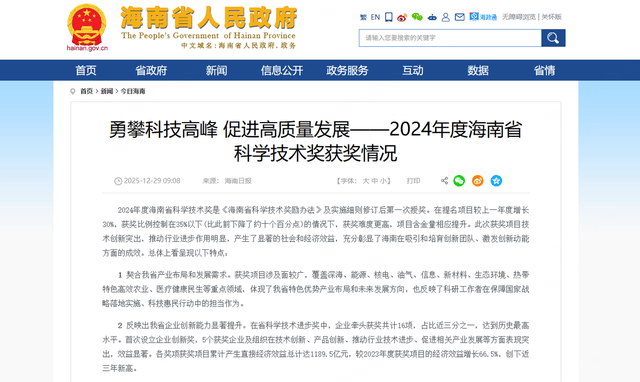
360荣获海南省科学技术进步一等奖
Sou Hu Cai Jing· 2025-12-30 10:15
Core Insights - The project "Key Technologies and Applications of Large-Scale Cybersecurity Situation Intelligent Monitoring System," co-applied by 360, Hainan University, and the People's Liberation Army National University of Defense Technology, won the First Prize in the Hainan Provincial Science and Technology Progress Award, recognizing 360's continuous innovation in the security field [1][3] Group 1: Project Overview - The project addresses critical needs in national cybersecurity, focusing on securing network infrastructure, perceiving cybersecurity situations, and detecting cyber attacks [1] - It integrates AI technologies, including large models, to enhance core aspects such as network perception, measurement, intrusion detection, and monitoring, achieving internationally influential innovative results [1] Group 2: Practical Applications - The research outcomes have been transformed into practical applications, playing a significant role in ensuring cybersecurity for national major events [2] - The technology provides situational awareness, security monitoring, and malicious behavior tracking capabilities to cybersecurity departments across various provinces, contributing to the fight against cybercrime and maintaining social stability [2] Group 3: Future Commitment - The recognition from the Hainan Provincial Science and Technology Progress Award affirms 360's commitment to continuous innovation and technological breakthroughs in the security domain [3] - The company plans to collaborate with partners to further innovate security technologies and develop more critical core technologies to strengthen national security defenses [3]