火山引擎

Search documents
云计算的“第一”之争:榜单之外的云端真相
Sou Hu Cai Jing· 2025-10-14 16:31
Core Insights - The cloud computing market is characterized by multiple companies claiming to be "number one" based on different metrics and conditions, leading to confusion among users and stakeholders [6][7][8] - The competition among cloud service providers has shifted from traditional metrics to a narrative-driven approach, where the concept of "first" has become a strategic asset in public relations and market positioning [8][9][23] Market Share Claims - Volcano Engine holds a 46.4% share of the Chinese public cloud large model market, leading in model invocation volume with a 49.2% share [3][12] - Alibaba Cloud claims to lead the AI cloud market in China with a 35.8% share, surpassing the combined share of the second to fourth players [4][10] - Huawei Cloud is noted for its rapid growth in the public cloud sector, particularly in the Middle East and Central Asia, achieving a tenfold revenue increase compared to 2023 [14] - Baidu Smart Cloud emphasizes AI capabilities in various sectors, focusing on "AI model as a service" to drive growth [16] Importance of "First" - The designation of "first" in the cloud computing industry signifies trust, capital, and competitive advantage, influencing investor confidence and customer choices [9][10] - Companies that maintain a "first" position can secure budget allocations and strategic priorities, while falling out of rankings may lead to organizational changes [9][10] Shift to AI-Driven Cloud - The competition has evolved to focus on "AI + Cloud," where cloud services are expected to integrate AI capabilities, transforming traditional cloud infrastructure into intelligent systems [17][18] - Alibaba Cloud is positioning itself as a "full-stack AI service provider," planning to invest 380 billion yuan in AI infrastructure over the next three years [18][19] - The integration of AI into cloud services is seen as a critical trend, with companies like Huawei and Baidu also adapting their strategies to emphasize AI capabilities [22][23] Future of Cloud Competition - The traditional metrics of market share may become less relevant as the industry shifts towards providing smarter, more adaptable cloud solutions [23] - The definition of "first" may evolve, focusing on the ability to deliver intelligent, open, and continuously evolving cloud services rather than just numerical rankings [23]



云计算IaaS:AI驱动力更新与展望
2025-10-13 14:56
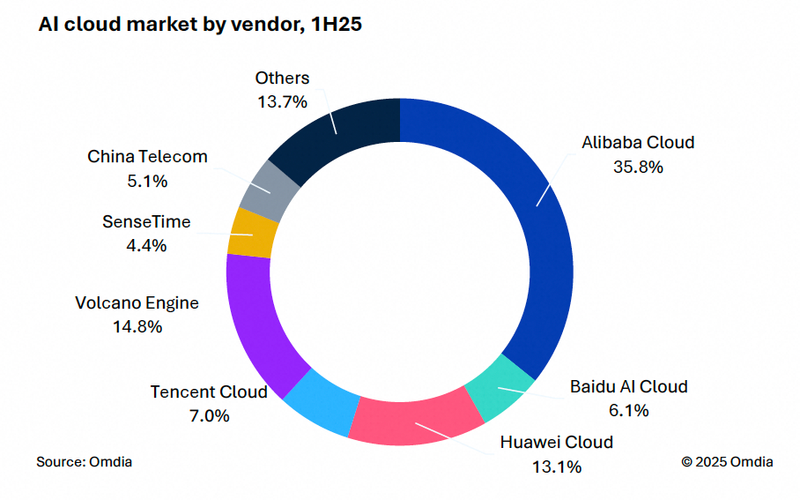
Summary of Cloud Computing Industry and Key Companies Industry Overview - The global cloud computing market is highly concentrated, dominated by Amazon, Microsoft, Google, Alibaba, and Huawei, which together hold over 80% market share [1][4] - The market structure for 2024 is expected to remain consistent with 2023, with leading cloud providers investing heavily in intelligent cloud computing, including large models and AI chips [1][4] Key Companies and Market Shares - Alibaba leads the domestic market in infrastructure and intelligent cloud computing, with a market share of 35.8% in the first half of 2025 [1][4] - Volcano Engine is rapidly catching up with a 14.8% market share and is projected to have a compound annual growth rate (CAGR) exceeding 40% by 2030 [1][4] Revenue Models and Product Offerings - Amazon primarily offers IaaS products, with 85% of its revenue coming from ECR and S3 services [5][6] - Microsoft focuses on SaaS products, contributing approximately 52% of its cloud revenue, with Office 365 and Dynamic 365 being significant revenue sources [5][6] - Google centers its offerings around PaaS products, including BigQuery and TensorFlow [5][6] AI and Infrastructure Developments - All four major cloud providers possess supercomputing clusters and are significant customers of Nvidia, with self-developed AI chips [7] - They offer comprehensive AI development platforms, each with unique applications, such as Microsoft's 365 Copilot and Google's Gemini series [7][8] Growth Trends and Financial Performance - Prior to 2022, revenue growth for the four major cloud providers was slowing, but it stabilized and began to rise due to the influence of large models [10] - For instance, Microsoft's AI services contributed 16 percentage points to overall growth in Q2 2025, while Alibaba's AI-related business has maintained triple-digit growth for eight consecutive quarters [10][11] Order Backlogs and Future Projections - Amazon's AI-related business growth rate exceeded 100% in Q2 2025, with significant order backlogs reported: Alibaba at $368 billion and Google at $106 billion [11] - The shift in focus from training to inference in large model technology is expected to dominate the market, with inference loads projected to reach 72% of domestic intelligent computing by 2027 [14] Capital Expenditure and Investment Strategies - Amazon's capital expenditure for 2025 is projected to exceed $100 billion, while Microsoft and Google are also increasing their investments significantly [12][13] - Alibaba plans to invest 380 billion yuan in AI infrastructure over the next three years, with a goal to enhance global data center energy consumption [13] Future Opportunities and Recommendations - Opportunities in the cloud computing industry are expected to shift towards PaaS and SaaS layers, with a focus on AI solutions across various industries [15] - The AI sector is seen as a critical growth driver for the entire computing industry, prompting major companies to increase capital expenditures for high-performance infrastructure [16]




赛力斯通过港交所聆讯
Shang Hai Zheng Quan Bao· 2025-10-13 13:45
Core Viewpoint - Seres Group has passed the listing hearing on the Hong Kong Stock Exchange, potentially becoming the first luxury electric vehicle company to achieve dual listing in both A-share and H-share markets [2] Company Overview - Seres, formerly known as Xiaokang Co., was established in 1986 and successfully listed on the Shanghai Stock Exchange in 2016. The company has transitioned from manufacturing springs and shock absorbers to focusing on the electric vehicle sector [9] - In 2021, Seres partnered with Huawei to launch the AITO brand, positioning itself as a luxury smart electric vehicle manufacturer. Within three years, Seres became the fourth profitable electric vehicle company globally, achieving a net profit of 5.946 billion yuan in 2024, surpassing many traditional automakers in gross margin [9][10] Financial Performance - For the first half of 2025, Seres reported revenue of 62.402 billion yuan and a net profit of 2.941 billion yuan, marking an 81.03% year-on-year increase. The growth was driven by an expanded product lineup and improved gross margins [10] - As of September 2025, Seres sold 44,678 electric vehicles, a 19.44% increase year-on-year, with total sales reaching 304,629 units for the first nine months of the year [10] Market Position - The AITO brand has achieved significant market penetration, with cumulative deliveries exceeding 800,000 units, setting a record for luxury electric vehicle brands in China. The AITO M9 model has become the best-selling vehicle in the 500,000 yuan segment [10] - Seres aims to expand its global presence, targeting markets in Europe, the Middle East, the Americas, and Africa, with a focus on establishing a leadership position in international markets [11] Strategic Partnerships - Seres has made strategic investments, including acquiring a 10% stake in Shenzhen Yiwang Intelligent Technology Co., Ltd. from Huawei for 11.5 billion yuan, which is expected to enhance its capabilities in smart vehicle solutions [13] - The company has also signed a cooperation agreement with Volcano Engine to develop embodied intelligence technologies, aiming to create a new ecosystem for artificial intelligence applications in the automotive industry [14]


开源证券:维持赛力斯“买入”评级,新车持续放量,全球化发展加速
Xin Lang Cai Jing· 2025-10-11 01:34
Core Viewpoint - The collaboration between Seres' Seres Phoenix and Volcano Engine focuses on embodied intelligence, aiming to enhance the automotive industry's digital transformation and create a new model that integrates technology and application scenarios [1] Group 1: Partnership Details - Seres Phoenix and Volcano Engine have signed a cooperation agreement to work on intelligent robot decision-making, control, and human-machine enhancement technologies [1] - The partnership aims to establish a closed-loop mechanism for "technology research and development - scenario validation" [1] Group 2: Industry Focus - The collaboration targets the digital upgrade needs of the automotive industry, providing comprehensive empowerment through a "technology + scenario" integration model [1] - Volcano Engine will supply intelligent algorithms and computing power to support the initiative [1] Group 3: Financial Outlook - The agreement is not expected to have a significant impact on the company's financial status and operating results for 2025 [1] - The company maintains its profit forecasts for 2025-2027, estimating net profits of 10.31 billion, 13.83 billion, and 16.91 billion yuan respectively, with corresponding PE ratios of 25.4, 18.9, and 15.5 times [1]
具身智能!赛力斯,大动作
Zhong Guo Ji Jin Bao· 2025-10-09 12:45
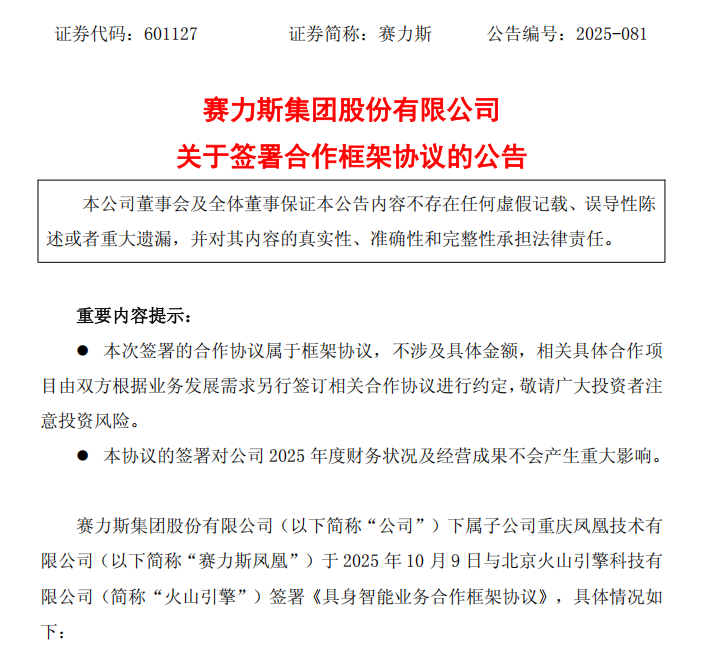
Core Viewpoint - The collaboration between Saisir's subsidiary and Volcano Engine aims to enhance the embodied intelligence business, leveraging both companies' strengths to create a new ecosystem for artificial intelligence applications [1][2]. Group 1: Partnership Details - Saisir's subsidiary, Chongqing Phoenix Technology, signed a cooperation framework agreement with Volcano Engine to engage in end-to-end business collaboration in embodied intelligence [1][2]. - The partnership will focus on projects related to intelligent robot decision-making, control, and human-machine enhancement technologies, establishing a closed-loop mechanism for technology research and scene validation [5]. Group 2: Strategic Focus - The collaboration will emphasize the integration of technology and scenarios to empower the automotive industry's digital transformation, aligning with the demand for smart upgrades in the sector [5]. - Volcano Engine will contribute its expertise in language, vision, and multimodal AI models, while Saisir will leverage its manufacturing and innovation strengths to facilitate the industrial application of AI [5]. Group 3: Regional Development - Chongqing is intensifying its focus on the embodied intelligence industry, supported by national policies aimed at integrating AI across various sectors [6]. - The city has introduced several initiatives, including the "Robot+" application action plan and policies to support innovation in the embodied intelligence robot industry, highlighting its importance in the new industrialization process [6]. Group 4: Industry Trends - Major local automotive companies, including Saisir and Changan Automobile, are becoming key players in Chongqing's push for embodied intelligence, with Changan's interactive driving technology being a notable example [7]. - The region's efforts are part of a broader trend, with cities like Beijing, Shanghai, Guangdong, and Zhejiang also advancing in the embodied intelligence sector [6].
具身智能!赛力斯 大动作
Zhong Guo Ji Jin Bao· 2025-10-09 12:42
Core Viewpoint - The collaboration between Sairus' subsidiary, Chongqing Phoenix Technology, and Volcano Engine aims to enhance the embodied intelligence business, leveraging each company's strengths to create a new ecosystem for artificial intelligence applications [2][3]. Group 1: Collaboration Details - Sairus and Volcano Engine will engage in end-to-end business cooperation, focusing on joint design for embodied intelligence, which aligns with their long-term development strategies [3]. - The partnership will involve a project centered on "intelligent robot decision-making, control, and human-machine enhancement technology," establishing a closed-loop mechanism for technology research and scene validation [6]. Group 2: Technological Focus - Volcano Engine will contribute its expertise in language, vision, multi-modal capabilities, and general AI models, providing intelligent algorithms and computational support [6]. - Sairus will leverage its strengths in manufacturing and industrial brain innovation to facilitate the industrial application of AI, aiming to create emotionally intelligent, smarter, safer, and more reliable mobile intelligent entities [6]. Group 3: Industry Context - Chongqing is intensifying its focus on the embodied intelligence industry, with several local leading automotive companies revealing specific initiatives [8]. - The Chinese government has issued policies to promote the integration of artificial intelligence across various sectors, with Chongqing identifying embodied intelligence as a key direction for new-generation AI development [9]. - Local policies, such as the "Robot+" application action plan and support measures for the innovation of the embodied intelligence robot industry, have been introduced to foster innovation in this sector [9].
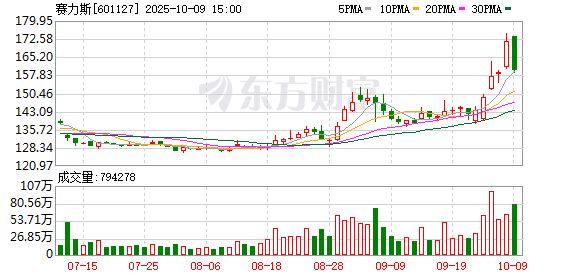
赛力斯凤凰与火山引擎共创人工智能应用新生态
Ge Long Hui· 2025-10-09 12:08
根据协议,赛力斯凤凰与火山引擎将围绕"面向多模态云边协同的智能机器人决策、控制与人机增强技术"项目协同攻关,构建"技术研发——场景验证"闭环机制,共筑技术底座与协作基础。 双方还将聚焦汽车产业生态数智化升级需求,打造"技术+场景"融合新模式,为汽车产业全面赋能。火山引擎发挥在语言、视觉、多模态及人工智能通用模型等领域的技术优势,提供智能算法与 国务院颁发了《关于深入实施"人工智能+"行动的意见》,旨在推动人工智能与经济社会各行业各领域广泛深度融合,加快形成智能经济和智能社会新形态。重庆市人民政府将具身智能机器人作 10月9日,赛力斯凤凰与火山引擎在北京签署具身智能合作协议,双方各自发挥长板优势,开展具身智能联合设计等端到端全业务,共创人工智能应用新生态,实现商业成功。签约仪式由重庆市 ...
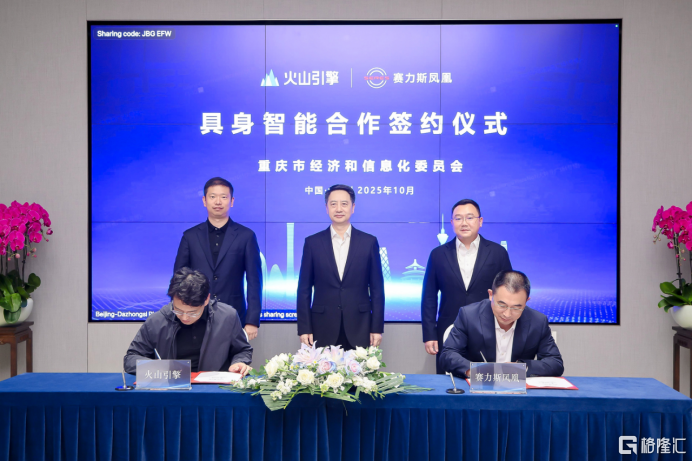
赛力斯凤凰牵手火山引擎 共创人工智能应用新生态
Zheng Quan Shi Bao Wang· 2025-10-09 11:19
Core Insights - The partnership between Sirus (601127) and Volcano Engine aims to create a new ecosystem for artificial intelligence applications through embodied intelligence collaboration [1] - The initiative aligns with the Chinese government's push for deep integration of AI across various sectors, promoting the development of a smart economy and society [1] Group 1: Partnership Details - Sirus and Volcano Engine signed a cooperation agreement to leverage their strengths in embodied intelligence, focusing on end-to-end business solutions [1] - The collaboration will involve joint efforts on projects related to intelligent robot decision-making, control, and human-machine enhancement technologies [1] - A closed-loop mechanism for "technology research and development - scenario validation" will be established to build a solid technical foundation and collaborative basis [1] Group 2: Industry Focus - The partnership will specifically address the digital and intelligent upgrade needs of the automotive industry, creating a new model that integrates technology and application scenarios [1] - Volcano Engine will contribute its technological advantages in language, vision, multimodal, and general AI models, providing intelligent algorithms and computational support [1] - Sirus will leverage its foundational and innovative strengths in manufacturing and industrial intelligence to facilitate the industrial application of AI, aiming for more emotional, intelligent, safe, and trustworthy mobile intelligent entities and life partners [1]
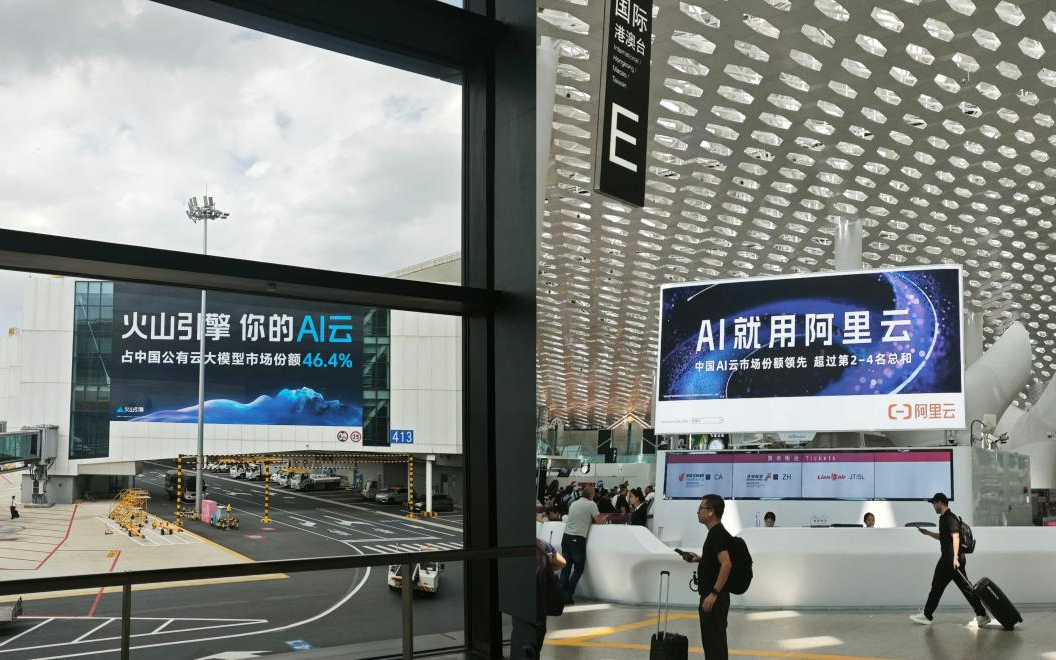
AI云市场“暗战”机场广告牌
Bei Ke Cai Jing· 2025-10-05 13:29
Core Insights - The AI cloud market in China is experiencing rapid growth, with significant increases in advertising from major cloud service providers at airports in major cities [1][2] - Reports from Omdia and IDC predict substantial growth in the AI cloud market, with Omdia forecasting a 148% increase by 2025 and IDC reporting a nearly 400% growth in model usage [1][8] Market Overview - The AI cloud market in China is projected to reach 22.3 billion yuan by the first half of 2025, with Alibaba Cloud holding a 35.8% market share, followed by Volcano Engine at 14.8% and Huawei Cloud at 13.1% [5][6] - IDC's report indicates that the market size for AI cloud services will reach 536.7 trillion tokens in the first half of 2025, with Volcano Engine leading at 49.2% market share [8] Competitive Landscape - Alibaba Cloud is recognized as the largest cloud service provider in China, leveraging its extensive customer base and continuous investment in AI [9] - Volcano Engine, a newer entrant, has rapidly gained market share, driven by its popular platforms and the success of its models [9][10] Growth Drivers - The introduction of DeepSeek's models has triggered a price war among major cloud providers, significantly reducing costs and increasing market accessibility [10][11] - The rapid growth of the MaaS (Model as a Service) segment is attributed to the competitive pricing and enhanced capabilities of AI models [10][11] Future Projections - IDC predicts that the market for generative AI software in China will reach 48.24 billion yuan by 2028, indicating substantial growth potential [13] - Omdia forecasts a compound annual growth rate (CAGR) of 26.8% for the AI cloud market from 2025 to 2030, with the MaaS segment expected to grow at a CAGR exceeding 72% [13]
AI云市场爆发:广告牌“占领机场”,阿里云、火山引擎争雄
Bei Ke Cai Jing· 2025-09-30 14:16
Core Insights - The AI cloud market in China is experiencing significant growth, with a notable increase in advertising from major cloud service providers at airports in cities like Beijing, Shanghai, Shenzhen, and Hangzhou [1][2] Market Growth - According to IDC, the volume of large model calls in China's public cloud is expected to grow nearly 400% by the first half of 2025 [2][19] - Omdia predicts a 148% growth in the AI cloud market in China by 2025 [2] Market Leaders - Alibaba Cloud holds the largest market share in the AI cloud sector at 35.8%, followed by Volcano Engine at 14.8%, Huawei Cloud at 13.1%, and Tencent Cloud at 7% [8] - Volcano Engine has rapidly risen to become a challenger in the market, leveraging its MaaS growth [2][12] Advertising Claims - Alibaba Cloud claims to lead the AI cloud market, stating its share exceeds the combined total of the second to fourth players [4] - Volcano Engine asserts it holds a 46.4% share of the public cloud large model market [4][11] Statistical Discrepancies - The differing claims of market leadership stem from varying statistical methodologies used in reports by Omdia and IDC [5][12] - Omdia's report includes a comprehensive revenue model (IaaS, PaaS, and MaaS), while IDC focuses solely on external customer token usage in the MaaS layer [11][12] Competitive Dynamics - The competitive landscape is influenced by the aggressive pricing strategies initiated by DeepSeek, which has led to a significant price reduction in large model services [17][18] - DeepSeek's pricing adjustments have prompted other major players like ByteDance, Alibaba, Baidu, and Tencent to follow suit, resulting in a price war in the large model market [17][18] Future Projections - IDC forecasts that the market for generative AI software in China will continue to grow rapidly, potentially reaching 48.24 billion RMB by 2028 [21] - Omdia anticipates a compound annual growth rate (CAGR) of 26.8% for the AI cloud market from 2025 to 2030, with the MaaS layer expected to grow at a CAGR exceeding 72% [22]