陶氏公司

Search documents
国内外茂金属聚乙烯mPE的发展现状与供需分析
材料汇· 2025-10-12 15:06
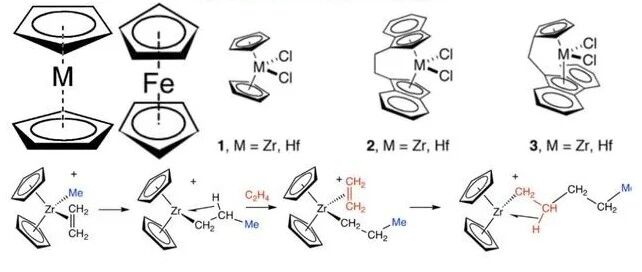
Overview - The article discusses the current state and future prospects of Metallocene Polyethylene (mPE), highlighting its production, market demand, and applications in various industries [2][4][19]. Production and Market Supply - In 2023, global mPE production capacity is approximately 28 million tons per year, with the top four producers accounting for about 50% of this capacity [7][10]. - ExxonMobil leads with a 21% share, followed by Dow Chemical at 16% [7][10]. - China's mPE production capacity has increased significantly, with China National Petroleum and China Petroleum & Chemical Corporation ranking third and fourth globally, holding 8% and 7% of the market, respectively [8][10]. - The demand for mPE in 2023 is estimated at 25 million tons, with Asia, particularly China, showing rapid growth in consumption [11][13]. Domestic Supply and Demand - China's apparent consumption of mPE in 2023 is 2.59 million tons, with a production of 360,000 tons and an import volume of 2.23 million tons, resulting in a self-sufficiency rate of only 13.8% [13]. - The domestic mPE production landscape is evolving, with several companies, including Qilu Petrochemical and Daqing Petrochemical, increasing their production capabilities [13][15]. - By the end of 2023, China's planned mPE production capacity is expected to reach approximately 5.568 million tons per year [14]. Applications and Market Trends - mPE is primarily used in films, pipes, bottle caps, and other applications, with films accounting for about 88.9% of consumption in China [17][19]. - The rapid development of new products in the packaging industry is expected to drive demand for mPE, particularly in shrink films and composite packaging films [19]. - The article emphasizes the importance of mPE's superior properties, which position it well for growth in various sectors, including construction and agriculture [19][36]. Technological Processes - The production processes for mPE include solution, slurry, and gas-phase methods, with gas-phase processes accounting for 61% of global production capacity [21][22]. - Major production technologies include Dow's Dowlex, NOVA's Sclairtech, and Univation's Unipol processes [21][22]. Development Recommendations - The article suggests that China should accelerate the development of domestic metallocene catalysts and key raw materials to enhance competitiveness in the mPE market [38][40]. - It highlights the need for innovation in material microstructure and the development of specialized products to meet emerging market demands [41].

这家化工巨头又关了一家工厂
Zhong Guo Hua Gong Bao· 2025-10-10 08:49
Core Viewpoint - Dow's polyurethane division plans to close its 55,000 tons/year polyol plant in Terneuzen, Belgium by the end of Q1 2026 due to high local operating costs and a burdensome regulatory environment [1] Group 1: Strategic Decisions - The decision to close the Terneuzen plant is part of Dow's ongoing European asset strategy assessment initiated last year, focusing on the capacity layout of its polyurethane business [1] - Dow's spokesperson emphasized the company's ability to maintain its existing product supply, indicating that the closure is not expected to negatively impact customers or related markets [1] Group 2: Market and Operational Efficiency - The closure is aimed at adjusting regional capacity to market demand, eliminating high-cost assets, enhancing cost efficiency, and ensuring long-term competitiveness, aligning with the company's ongoing development goals [1] - CEO Jim Fitterling noted that challenges from the European regulatory environment are increasing, prompting a review of the competitiveness of several European assets, particularly those related to the polyurethane business [1] Group 3: Recent Developments - In July, Dow's board approved the closure of three chemical plants in Europe, including a steam cracker in Borken, Germany, a chlor-alkali/ethylene asset in Schkopau, Germany, and a siloxane plant in Barry, UK [1] - Polyols typically react with isocyanates to produce polyurethanes, which are used in various products such as mattresses, appliance foam insulation, automotive seats, elastic shoe soles, fibers, and adhesives [1]
陶氏计划关闭比利时多元醇工厂
Zhong Guo Hua Gong Bao· 2025-10-10 03:04
Core Viewpoint - Dow's polyurethane (PU) division plans to close its 55,000 tons/year polyol plant in Tertre, Belgium by the end of Q1 2026 due to high local operating costs and a burdensome regulatory environment [1] Group 1: Company Strategy - The decision to close the Tertre plant is part of Dow's ongoing strategic assessment of its European assets, focusing on the capacity layout of its polyurethane business [1] - Dow emphasizes its capability to maintain the supply of its existing product portfolio, indicating that the closure will not negatively impact customers or related markets [1] - The measures taken are aimed at adjusting regional capacity according to market demand, eliminating high-cost assets, enhancing cost efficiency, and ensuring long-term competitiveness [1] Group 2: Market Context - CEO Jim Fitterling highlighted the increasing challenges posed by the European regulatory environment, prompting a review of the competitiveness of several European assets, particularly those related to the polyurethane business [1] - Polyols typically react with isocyanates to produce polyurethanes, which are used in various products such as mattresses, appliance foam insulation, automotive seats, elastic shoe soles, fibers, and adhesives [1]
埃克森美孚推迟新建聚乙烯项目
Zhong Guo Hua Gong Bao· 2025-10-10 02:54
Core Viewpoint - ExxonMobil has announced a delay in the development of its proposed polyethylene (PE) project, the "Coastal Plains Project," due to current market conditions [1][2] Group 1: Project Details - The "Coastal Plains Project" was initially planned to include an ethane cracker with an annual ethylene production capacity of 2.2 million tons [1] - A downstream facility for metallocene linear low-density polyethylene (mLLDPE) was also planned, with a preliminary capacity range of 1.8 to 2.7 million tons per year [1] - The project is still in the preliminary planning stage, and ExxonMobil has not yet made a final investment decision (FID) [1] Group 2: Market Conditions - The delay is attributed to changes in the global market since the project application was submitted at the end of 2024, including increased tariffs by the U.S. on many regions, leading to lowered global GDP growth forecasts [2] - The ethylene and polyethylene markets are facing long-term overcapacity issues, with forecasts suggesting a recovery may not occur until 2028-2029 [2] - Dow Chemical has also paused its "Path2Zero polyethylene project" in Canada, which had already completed its final investment decision [2] Group 3: Future Plans - ExxonMobil is considering similar projects in various regions, including the Middle East, other parts of North America, China, India, and Indonesia [1] - The company signed a memorandum of understanding with the Indonesian government in November 2023 to explore potential petrochemical projects in the region [1]

陶氏、阿朗新科、英力士、盛禧奥,再集体关停!
DT新材料· 2025-10-09 16:05
Core Viewpoint - Major chemical companies, including Dow, INEOS, and others, are shutting down production facilities in Europe due to high costs, stringent regulations, and competition from imports, indicating a significant restructuring in the chemical industry [2][3][6][7][8]. Group 1: Dow Chemical - Dow plans to close its polyether polyol plant in Tertre, Belgium, with an annual capacity of 94,000 tons by the end of Q1 2026 as part of a strategic restructuring in Europe [3]. - The closure is attributed to high costs, strict regulations in Europe, and competitive pressure from imports, particularly from Asia [3]. - Dow's other planned closures include an ethylene cracker in Germany and a chlor-alkali facility, with further reductions in production capacity expected [3]. Group 2: Market Conditions - The European polyether polyol market is currently weak, with key end-use sectors like automotive and construction showing low demand, leading to overcapacity and increased imports [4]. - From 2020 to 2024, the average annual import volume of polyether is projected to be 286,000 tons, with a record high of 323,000 tons last year [4]. - In China, the domestic polyether industry is expected to see increased concentration among leading companies, with total production around 5.55 million tons and consumption at approximately 4.08 million tons in 2024 [4]. Group 3: INEOS - INEOS confirmed the closure of two production plants in Rheinberg, Germany, resulting in the loss of 175 jobs, due to high energy and carbon emission costs [6]. - The plants produce essential chemicals, including key components for epoxy resins, which are critical for defense, aerospace, and renewable energy infrastructure [6]. - INEOS also plans to cut 20% of the workforce at its acetyl plant in Hull, UK, citing competition from low-cost imports [6]. Group 4: Arlanxeo - Arlanxeo announced the closure of its synthetic rubber production facility in France, with an annual capacity of 140,000 tons, due to rising costs and market imbalances [7]. - The facility produces Nd-PBR and solution polymerized styrene-butadiene rubber, facing continuous losses without viable paths to profitability [7]. Group 5: Solvay - Solvay plans to permanently close its MMA and acetone cyanohydrin production operations in Italy, transitioning to purchasing MMA from third-party suppliers [8]. - This strategic shift is part of a broader plan to streamline operations and focus on chemical recycling initiatives [8]. Group 6: Future Outlook - The domestic polyether industry in China is expected to continue expanding, with a projected increase of over 4 million tons per year in new capacity from 2025 to 2029 [5]. - Leading companies in the sector are focusing on high-value products, indicating a shift towards more specialized and profitable offerings [5].




Isabella Bank Appoints Financial Executive Brian Tessin to its Boards of Directors
Accessnewswire· 2025-10-09 16:00
Group 1 - Isabella Bank Corporation has appointed Brian Tessin to its Board of Directors, effective October 6, 2025 [1] - Brian Tessin serves as the Chief Tax Officer for Dow Inc., where he oversees tax strategy, planning, compliance, and financial reporting [1]


韩国SK将出售与中石化合资企业全部股份
Sou Hu Cai Jing· 2025-10-07 13:56
Core Viewpoint - SK Group is selling its entire 35% stake in Sinopec-SK (Wuhan) Petrochemical Company, marking a retreat from the commodity chemicals sector amid industry challenges such as oversupply and declining profit margins [1][4]. Group 1: Transaction Details - The sale is expected to occur at a book value of approximately 819.3 billion KRW (around 594 million USD) [3]. - The Wuhan plant, established in 2013, had a total investment of 3.3 trillion KRW and was a symbol of SK's "China Insider" strategy, with an annual production capacity of 3.2 million tons of general chemicals, including 1.1 million tons of ethylene [3][4]. - The joint venture had generated nearly 2 trillion KRW in operating profit during its first eight years, benefiting from a shortage of ethylene [4]. Group 2: Industry Context - Since 2021, the plant has incurred losses exceeding 1 trillion KRW due to a surge in Chinese production capacity and stagnant domestic demand, with China's ethylene output nearly doubling from 2020 to 2023, reaching 60 million tons [4][6]. - SK Group's restructuring is not limited to South Korea but is extending to its overseas assets, indicating a broader shift in strategy [6]. Group 3: Strategic Shift - SK Group is pivoting towards its "ABC" strategy, focusing on artificial intelligence (AI), batteries, and chips, while reducing its involvement in businesses without a clear future [6][11]. - The proceeds from the sale are expected to be reinvested into growth areas, with a commitment to invest 8.2 trillion KRW in AI and semiconductor sectors by 2030 [11]. Group 4: Potential Buyers - Sinopec is considered the most likely buyer for the stake, as it is the world's largest refining company and could streamline decision-making by fully owning the Wuhan facility [9][10].

Here's What to Expect From Dow Inc.'s Next Earnings Report
Yahoo Finance· 2025-10-07 11:25
Core Viewpoint - Dow Inc. is expected to report significant losses in its upcoming fiscal third-quarter earnings, reflecting ongoing challenges in the materials science sector and underperformance compared to market indices [1][2][4]. Financial Performance - Analysts predict a loss of $0.27 per share for Dow in Q3 2025, a decline of 157.5% from a profit of $0.47 per share in the same quarter last year [2]. - For the full fiscal year, a loss of $0.89 per share is anticipated, down 152.1% from an EPS of $1.71 in fiscal 2024, but a recovery to $0.20 EPS is expected in fiscal 2026, representing a year-over-year increase of 122.5% [3]. Stock Performance - Dow's stock has decreased by 57.7% over the past 52 weeks, significantly underperforming the S&P 500 Index, which gained 17.2% during the same period [4]. - The stock also underperformed compared to the Materials Select Sector SPDR Fund, which saw a loss of 5.7% [4]. Challenges and Market Conditions - The company's underperformance is attributed to lower prices, restructuring charges, and decreased sales across all segments, particularly in functional polymers, polyurethanes, and coatings [5]. - Margin compression has further impacted earnings, and the company is seeking regulatory intervention to address issues related to oversupply and unfair pricing practices [5]. Analyst Sentiment - The consensus opinion among analysts is cautious, with a "Hold" rating overall; out of 20 analysts, 2 recommend a "Strong Buy," 16 suggest a "Hold," and 2 advise a "Strong Sell" [7]. - The average analyst price target for Dow is $27.67, indicating a potential upside of 18.1% from current levels [7].
壳牌(SHEL.US)能源交易企稳回升,为Q3业绩注入强心剂
智通财经网· 2025-10-07 08:07
Core Viewpoint - Shell Group (SHEL.US) has reported a recovery in its oil and gas trading business after a challenging second quarter impacted by geopolitical factors, with significant improvements noted in its natural gas trading and enhanced performance in oil trading [1] Group 1: Oil and Gas Trading Performance - The oil and gas trading segment, a major contributor to Shell's profits, has shown a significant recovery in the third quarter after a substantial decline in trading revenues in the second quarter [1] - CEO Wael Sawan indicated that the previous volatility was driven by geopolitical factors rather than changes in supply and demand fundamentals, leading the company to reduce its risk exposure [1] - Brent crude oil futures prices remained stable in the range of $65 to $70 per barrel during most of the third quarter, providing a favorable environment for the trading business recovery [1] Group 2: Asset Impairment and Strategic Focus - Shell announced a $600 million impairment charge for its recently shelved biofuel plant in the Netherlands, bringing the total impairment amount for the facility to $1.4 billion since last year [1][2] - The suspension of the biofuel plant project aligns with Shell's strategy to divest from low-carbon businesses and focus on enhancing profitability, similar to BP's decision to abandon its biofuel plant plans in the Netherlands [2] Group 3: Chemical and Refining Business - The chemical segment of Shell remains in a loss position, although refining margins have shown year-on-year growth [3] - The chemical business has been a drag on Shell's overall performance for some time, prompting the company to explore partnerships in the U.S. and consider selective closures of chemical production capacity in Europe [3] - The European chemical industry is undergoing capacity adjustments, with major companies like Dow Chemical and ExxonMobil announcing closures or idling of European facilities due to high energy costs affecting competitiveness [3]

Wall Street's Most Accurate Analysts Weigh In On 3 Materials Stocks With Over 3% Dividend Yields - Amcor (NYSE:AMCR), Dow (NYSE:DOW)


Benzinga· 2025-10-06 11:45
Core Insights - During market turbulence, investors often seek dividend-yielding stocks, which typically have high free cash flows and offer substantial dividends [1] Group 1: Amcor PLC (NYSE:AMCR) - Amcor has a dividend yield of 6.23% [7] - Analyst Ghansham Panjabi from Baird maintained a Neutral rating and lowered the price target from $11 to $10 [7] - Analyst Gabe Hajde from Wells Fargo maintained an Overweight rating and raised the price target from $10 to $11 [7] - Recent news indicates that Amcor posted disappointing quarterly earnings on August 14 [7] Group 2: Dow Inc (NYSE:DOW) - Dow has a dividend yield of 5.88% [7] - Analyst John Roberts from Mizuho maintained a Neutral rating and cut the price target from $30 to $26 [7] - Analyst Laurence Alexander from Jefferies maintained a Hold rating and lowered the price target from $28 to $23 [7] - Dow reported worse-than-expected second-quarter financial results and cut its dividend by 50% on July 24 [7] Group 3: Kaiser Aluminum Corp (NASDAQ:KALU) - Kaiser Aluminum has a dividend yield of 3.93% [7] - Analyst Josh Sullivan from Benchmark maintained a Buy rating and cut the price target from $100 to $74 [7] - Analyst Timna Tanners from Wolfe Research upgraded the stock from Underperform to Peer Perform [7] - Kaiser Aluminum is set to release its third-quarter 2025 financial and operating results on October 22 [7]