Rokid

Search documents
陆家嘴财经早餐2025年7月28日星期一
Wind万得· 2025-07-27 22:30
Economic Indicators - In June, profits of large-scale industrial enterprises in China decreased by 4.3% year-on-year, with the decline narrowing compared to May. The total profit for the first half of the year was 34,365 billion yuan, down 1.8% year-on-year. The black metal smelting and rolling industry saw profits increase by 13.7 times, while the mining industry experienced a 30.3% decline [2] - The social logistics total cost to GDP ratio fell to 14% in the first half of the year, a decrease of 0.1 and 0.2 percentage points compared to the first quarter and the same period last year, indicating a reduction in overall logistics costs [5] Trade Agreements - The United States and the European Union reached a 15% tariff agreement, which will impose tariffs on most European goods exported to the U.S., including automobiles. The EU is expected to increase investments in the U.S. by $600 billion and purchase $150 billion in U.S. energy products [2][19] - A high-level U.S. business delegation is set to visit China, organized by the U.S.-China Business Council, indicating ongoing trade discussions [3] Industry Developments - The State-owned Assets Supervision and Administration Commission (SASAC) is focusing on enhancing innovation resilience in central enterprises and supporting the development of emerging pillar industries [4] - The China Capital Market Research Society was established to enhance research capabilities in the capital market, focusing on national strategies and regulatory issues [6] Stock Market Trends - The A-share market has seen its three major indices reach new highs, with the Shanghai Composite Index surpassing 3,600 points. Analysts suggest that global funds are shifting towards Chinese assets, indicating a potential bullish trend for 2025 [7] - All 42 listed banks in A-share are expected to implement cash dividends for 2024, with a total dividend amount exceeding 630 billion yuan, reflecting the resilience of the banking sector [7] Investment Opportunities - The A-share private placement market has shown significant recovery, with 74 companies completing placements and raising a total of 659 billion yuan, indicating a new phase of growth in this market [8] - The artificial intelligence sector is expected to see accelerated development, with significant investments and advancements in technology anticipated in the coming years [11][12] Corporate Announcements - Companies such as Laopu Gold and Junxin Co. are projecting substantial profit increases, with Laopu Gold expecting a net profit growth of approximately 279% to 288% year-on-year [10] - The A-share market is witnessing a surge in companies engaging in strategic partnerships and new projects, such as Qinglong Pipe Industry's collaboration in the wind power sector [10]


从智能眼镜到AI PC 人工智能终端产业重构经济生态
Shang Hai Zheng Quan Bao· 2025-07-27 18:48
Core Viewpoint - The AI terminal industry is undergoing a significant transformation, with smart glasses emerging as a key product that could redefine human-computer interaction and personal data management, potentially becoming the most important mobile entry point after smartphones [2][3]. Group 1: AI Glasses Development - Smart glasses are seen as one of the best carriers for AI implementation, providing practical applications such as calorie counting and navigation [1]. - The "hundred glasses battle" is just the beginning, with smart glasses expected to dramatically increase personal data volume and serve as a sensory hub for human interaction [2]. - Major companies like Rokid and Alibaba are developing advanced features for smart glasses, such as low power consumption, long battery life, and enhanced user experience through innovative technologies [2][3]. Group 2: Traditional Terminals and AI Integration - The integration of AI into traditional terminals is progressing through three stages: app-based AI, functional AI, and systemic AI, with Huawei's HarmonyOS 6.0 entering the third stage [4]. - Lenovo emphasizes the goal of AI terminals to become true "silicon-based twins," fundamentally changing user interaction with technology [5]. - The industry is characterized by a diverse exploration of AI terminals, which will reshape human-computer interaction and expand service consumption boundaries [5][6]. Group 3: Industry Collaboration and Standards - The Ministry of Industry and Information Technology is working on national standards for AI terminal intelligence grading, focusing on innovation, stability, application development, and ecosystem promotion [6]. - Key industry players stress the importance of building a domestic computing foundation and fostering open collaboration to enhance the AI terminal ecosystem [5][6].

“百镜大战”如火如荼 智能眼镜尚处早期阶段
Zheng Quan Shi Bao· 2025-07-27 17:00
Core Insights - The "Battle of the Glasses" is intensifying in the domestic market, with AR/AI glasses manufacturers making their debut at the WAIC, becoming the highlight of the event [1][3] - XREAL showcased its flagship product, XREAL One Pro, and opened an AR+AI themed experience space to the public, indicating a shift towards glasses as the next computing terminal [1][3] - The integration of AI and AR in products like Rokid Glasses marks a significant step towards user-friendly applications of AR+AI technology [2][4] Industry Trends - Major tech companies and emerging players are entering the AI glasses market, indicating a competitive landscape where glasses may replace smartphones as personal information terminals [3][4] - The current phase of the smart glasses industry is characterized as early-stage, with many companies yet to achieve profitability despite high consumer expectations [3][4] - The future of smart glasses is expected to evolve from simple Q&A capabilities to executing tasks such as ordering food or hailing rides, positioning them as the best carriers of artificial intelligence [4] Product Developments - Rokid Glasses feature deep integration with large models for tasks like object recognition and real-time translation, showcasing the potential of AR+AI technology [2] - Companies like Alibaba and Xiaomi are also entering the market with their own AI glasses, highlighting the growing interest and potential for significant market growth [2]
一“镜”搞定这些事!智能眼镜“论剑”功能
Guo Ji Jin Rong Bao· 2025-07-27 16:03
Core Insights - The article highlights the rapid advancement of AI technology, particularly in the realm of smart glasses, showcased at the 2025 World Artificial Intelligence Conference in Shanghai [2][6] - Major companies like XREAL and Rokid are competing in the smart glasses market, presenting innovative products that integrate augmented reality (AR) and artificial intelligence (AI) [2][5] - Alibaba's introduction of its first self-developed AI glasses, Quark AI glasses, marks a significant move in the competitive landscape of smart eyewear [6][8] Company Highlights - XREAL, established in 2017, is a leading company in consumer-grade AR glasses, showcasing its flagship product, One Pro, which features a 57° ultra-wide field of view and advanced optical technology [2][3] - Rokid's smart glasses weigh only 49 grams and incorporate various AI capabilities, including object recognition and real-time translation, appealing to consumers seeking both style and functionality [5] - Alibaba's Quark AI glasses are designed to integrate deeply with its ecosystem, supporting features like navigation and payment through its platforms, although specific pricing and user experience details remain undisclosed [6][8] Industry Trends - The year 2025 is recognized as a pivotal year for innovation in smart glasses, with a competitive "battle of the glasses" emerging among various brands [6] - The integration of AI and AR technologies is becoming increasingly prevalent, as demonstrated by interactive experiences at the conference that blend virtual and real-world elements [3][5] - The collaboration between AI applications and smart hardware is expected to drive further advancements and consumer adoption in the smart glasses market [8]


“百镜大战”日趋白热化 AI眼镜加速叩开“镜像世界”
Zheng Quan Ri Bao· 2025-07-27 15:46
Core Insights - The AI glasses industry is rapidly evolving, with significant advancements in product iteration, scene exploration, and technological innovation [2][3] - The concept of a "mirror world" is emerging, where digital technology accurately maps the real world into a virtual space, predicted to be the next major platform after the internet and social media [2] - The market for AI glasses is expected to grow substantially, with projected sales reaching 3.5 million units by 2025, a 230% increase year-on-year, and potentially reaching 10 million units by 2026 [3] Market Potential - AI glasses are seen as a new competitive arena for tech giants, accessory manufacturers, eyewear producers, and telecom operators, providing a hands-free experience for consumers [3] - The current focus on AI glasses is high, particularly in the mid-to-low-end market, which is experiencing accelerated penetration [4] - The next three years are deemed critical for the development of the AI glasses industry, with improvements in technology maturity and user experience anticipated [4] Technological Development - AI glasses are currently in the early stages of adoption, with basic functionalities like photography, recording, and translation already available [6] - Challenges such as battery life (approximately 4 hours) and weight (around 40 grams) are being addressed through collaborations with hardware partners to enhance battery density and structural design [6][7] - Future designs may incorporate dual-chip solutions to optimize performance and extend battery life [7] Competitive Landscape - The AI glasses market is characterized by a dual development path, with companies exploring both practical business models and technological breakthroughs [8] - Different manufacturers are adopting varied strategies, with some focusing on high-tech solutions while others prioritize lightweight designs to meet mainstream consumer demands [7] - The competition is leading to a polarized pricing structure, with a clear trend towards differentiation in product offerings [7]

WAIC2025现场观展大盘点
Guotou Securities· 2025-07-27 14:33
Investment Rating - The report maintains an investment rating of "Outperform the Market - A" [5] Core Insights - The 2025 World Artificial Intelligence Conference (WAIC) showcased significant advancements in AI technology, particularly in computing power, algorithms, and applications, indicating a robust growth trajectory for the industry [12][60] - Domestic manufacturers are progressively enhancing their chip performance from inference to training, emphasizing ecosystem support and application scenarios [13][60] - The report highlights the emergence of quantum computing as a disruptive innovation in the computing power industry, with potential for exponential growth in computational capabilities [38][39] Summary by Sections 1. Industry Overview - The WAIC 2025 featured over 800 companies and more than 3000 cutting-edge exhibits, marking the largest scale in its history [12] - The conference focused on AI technology frontiers, industry trends, and global governance practices [12] 2. Computing Power - Domestic chip manufacturers are evolving from inference-focused AI chips to high-performance training chips, showcasing various industry applications [13] - The report notes the importance of supernodes, integrated machines, and liquid cooling solutions as key trends in the future of domestic AI computing power [18][19] 3. Algorithms - The evolution of large models is highlighted, with a shift towards multi-modal capabilities and the integration of deep reasoning and thinking abilities [43][44] - The report emphasizes the growing importance of AI agents and physical AI, which aim to enable intelligent agents to understand and interact with the real world [43][44] 4. Applications - The report identifies a flourishing landscape for both B2B and B2C AI applications, with significant advancements in areas such as AI glasses, smart driving, and robotics [60] - C-end applications focus on AIGC and productivity tools, while B-end applications emphasize cost reduction and efficiency improvements across various sectors [60][61] 5. Quantum Computing - Quantum computing is positioned as a critical future technology, with companies showcasing solutions that leverage quantum mechanics for superior computational capabilities [38][39]




【西街观察】科技的人气,消费的底气
Bei Jing Shang Bao· 2025-07-27 13:38
Group 1 - The 2025 World Artificial Intelligence Conference (WAIC) in Shanghai has sold out tickets, reflecting a strong market interest in technology [1] - This year's WAIC is the largest ever, with over 800 participating companies and an exhibition area exceeding 70,000 square meters, showcasing more than 3,000 exhibits [1] - Consumer-grade AI products, such as AI glasses and autonomous driving technologies, have gained significant attention, overshadowing last year's focus on large models [1] Group 2 - The concept of a "10 billion" target is prevalent in both embodied intelligence and large model sectors, indicating a shift towards market application and consumer engagement [2] - The emergence of numerous consumer-grade products signifies a closer connection between technology and consumers, facilitating the transition of startups from behind the scenes to the forefront [2] - China's AI development is characterized by innovation that empowers people, integrating technology into everyday life and enhancing productivity [2][3] Group 3 - The AI industry in China is evolving with a clear policy direction, maturing unicorn companies, and a well-connected ecosystem of talent, capital, technology, and market [3] - The success of AI products is increasingly determined by consumer acceptance, emphasizing the need for products to be closely aligned with market demands [3]
WAIC对话|Rokid创始人兼CEO祝铭明:AR智能眼镜“理想价格”2000元以内
Bei Jing Shang Bao· 2025-07-27 13:32
Core Insights - The article discusses the advancements and market dynamics of the augmented reality (AR) eyewear industry, particularly focusing on Rokid and its products [1][3]. Market Performance - According to IDC, global smart eyewear shipments are projected to reach 1.487 million units in Q1 2025, representing a year-on-year growth of 82.3%. The AR/VR market is expected to see shipments of 656,000 units, with a growth of 18.1% [3]. - In China, smart eyewear shipments are anticipated to hit 494,000 units, showing a remarkable year-on-year increase of 116.1%. The AR/VR market in China is expected to reach 135,000 units, growing by 25.2% [3]. Product Features - Rokid Glasses weigh only 49 grams and support high-definition photography and video recording. They can perform tasks such as object recognition, real-time translation, mathematical calculations, schedule reminders, weather forecasts, and navigation assistance [7]. - The glasses are unique in that they can display information while also capturing images and sound, making them the only mass-produced product of their kind globally [7]. Industry Trends - The current phase of the smart eyewear industry is characterized by a "hundred glasses battle," which is seen as more of a concept than a reality. The focus should be on user acceptance rather than the number of competitors [8]. - The industry is experiencing cyclical trends, with the timing of product launches being crucial for success. Companies must align their offerings with market readiness and consumer demand [10][11]. Future Outlook - The ideal price point for AR smart glasses is projected to be under 2,000 yuan, with expectations that prices will decrease as technology matures and production scales up [14]. - Rokid is exploring partnerships with humanoid robot companies, aiming to integrate their eyewear technology for remote operation and data collection [9].
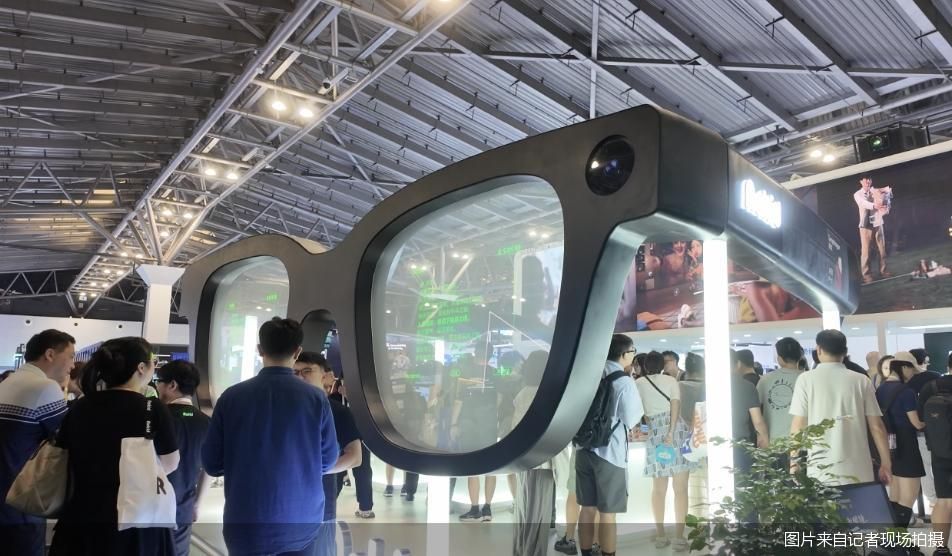
Rokid创始人祝铭明:Rokid Glasses销量已达30万台,下半年将上线打车功能
news flash· 2025-07-27 09:45
Core Insights - Rokid's CEO, Zhu Mingming, announced that the company's smart glasses, Rokid Glasses, have achieved sales of 300,000 units, indicating strong demand for the product this year [1] - The company is focusing on production capabilities to meet the demand for Rokid Glasses [1] - Rokid Glasses is expected to launch a ride-hailing feature in the second half of the year, in collaboration with Gaode Map and Alipay, allowing users to see vehicle arrival times on the glasses [1]
直击WAIC!格斗、倒立、能聊,机器人长本事了!这一展台“人山人海”!
Zheng Quan Shi Bao Wang· 2025-07-27 04:16
Group 1: Event Overview - The 2025 World Artificial Intelligence Conference (WAIC 2025) took place in Shanghai from July 26 to 28, featuring over 800 companies and an exhibition area exceeding 70,000 square meters, showcasing more than 3,000 cutting-edge exhibits, including over 40 large models and 60 intelligent robots [1][2] - The event highlighted China's advancements in artificial intelligence, with a focus on humanoid robots, AI terminals, and innovative technologies [1] Group 2: Humanoid Robots - Humanoid robots have become a competitive focus in the international tech arena, with numerous domestic companies presenting their latest products at WAIC, including Yushu Technology and Zhiyuan Robotics [2][3] - Yushu Technology showcased the G1 humanoid robot, which performed a combat demonstration, and the B2 quadruped robot, designed for industrial applications [2] - Zhiyuan Robotics presented a variety of robots capable of performing tasks such as package sorting and industrial operations, demonstrating significant advancements compared to previous years [3] Group 3: AR/AI Glasses - Smart glasses emerged as a major highlight at WAIC, with brands like XREAL, Rokid, and Li Weike Technology unveiling new products [5][7] - XREAL introduced the XREAL One Pro, featuring a self-developed optical engine and a wide field of view, aiming to replace smartphones as the next computing terminal [6] - Rokid Glasses showcased their capabilities in object recognition and real-time translation, marking a significant step in making AR+AI technology user-friendly [7][8] - Li Weike Technology presented three new models of smart glasses, emphasizing AI translation and recording features, indicating a growing trend in the smart glasses market [8]