味之素

Search documents
刚刚,大跳水!万亿巨头,“崩了”
Zhong Guo Ji Jin Bao· 2025-11-07 03:28
Market Overview - Japanese and South Korean stock markets opened lower, with declines exceeding 2%, and SoftBank Group's stock plummeted by 8% [1] - The Nikkei 225 index fell below the 50,000 points mark, with a drop of over 8% as of the report [1] - U.S. technology stocks experienced significant declines overnight, impacting Asian markets [1] Company Performance - SoftBank Group's stock price decreased by 8.03%, with a market capitalization of 30.6 trillion yen [2] - Ajinomoto's stock fell by over 16%, marking the largest drop since March 2011, with a current price of 3,625 yen and a market cap of 36,454 billion yen [2] - Advantest's stock price dropped by 6.7%, with a market capitalization of 15.1 trillion yen [2] - Hitachi Zosen's stock plummeted by 19.79%, with a market cap of 1,566 billion yen [2] - Other notable declines include Sun Electric (-16.11%), AEM (-10.13%), and Kawasaki Heavy Industries (-4.41%) [2] Economic Indicators - Japan's household spending in September rose by 1.8% year-on-year, below the expected 2.5% [4] - The consumer price index (CPI) in South Korea for October increased by 2.4% year-on-year, with core inflation at 2.2% [6] - South Korea's international balance of payments recorded a surplus of $13.47 billion in September, the highest for the same period historically [6]

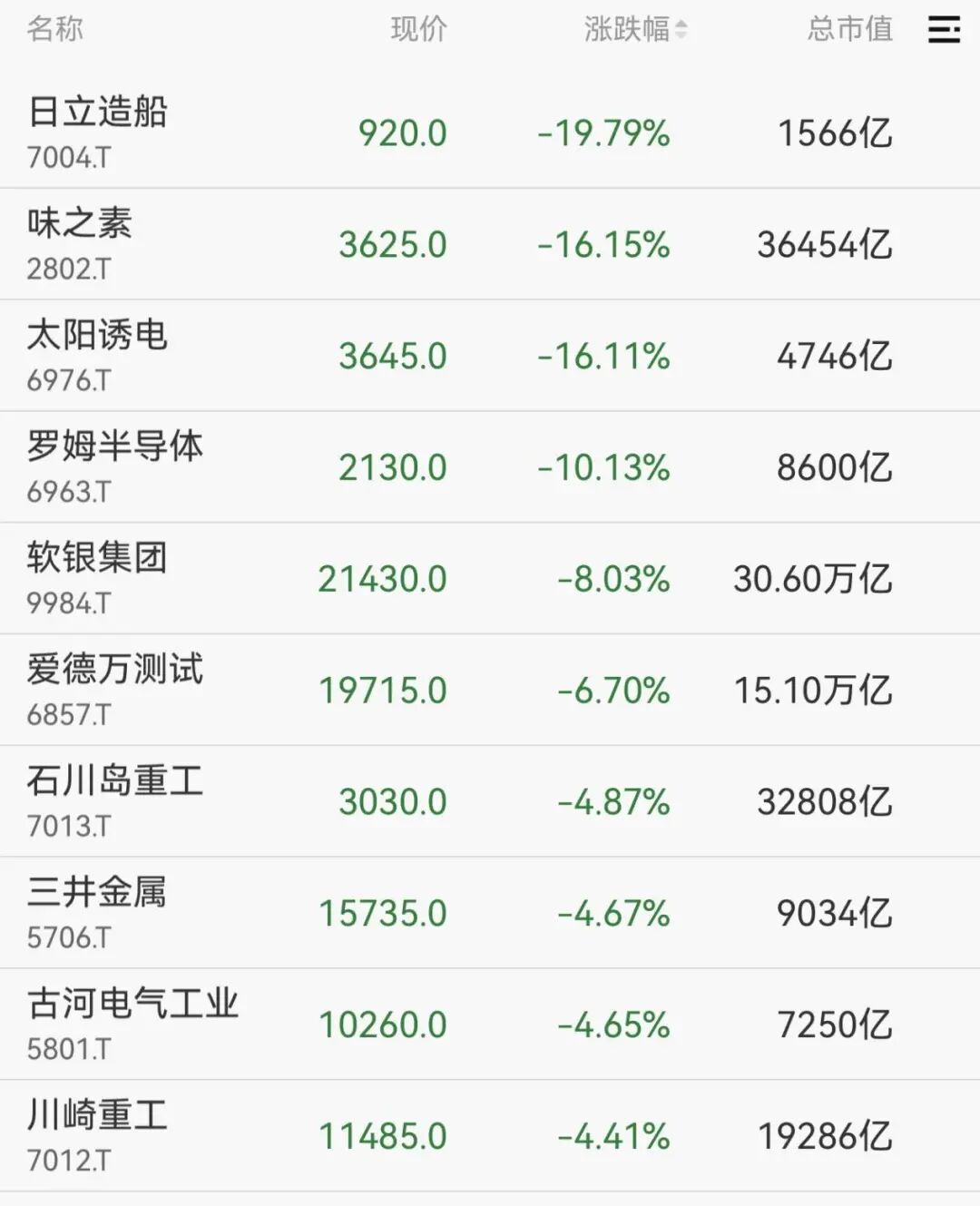
日股跳水,日经225指数跌2%,软银一度跌近9%
2 1 Shi Ji Jing Ji Bao Dao· 2025-11-07 01:40
Market Overview - Japanese and Korean stock markets opened lower, with the Nikkei 225 index falling below 50,000 points and a decline of 2% [1] - Hitachi Zosen led the decline with an 18.4% drop, followed by Ajinomoto with over a 16% decrease, and SoftBank Group nearly down 9% [1][2] Stock Performance - Notable stock declines include: - Hitachi Zosen: 936.0 JPY, down 211.0 JPY (-18.40%) - Ajinomoto: 3624.0 JPY, down 699.0 JPY (-16.17%) - SoftBank Group: 21250.0 JPY, down 2050.0 JPY (-8.80%) [2] - The KOSPI index in South Korea initially dropped 1.4% but later turned positive [2] US Market Concerns - US tech stocks experienced a collective decline, with notable drops including: - Nvidia's market value evaporating by $173.3 billion - AMD down over 7%, Microsoft on a seven-day losing streak, and Tesla and Qualcomm down over 3% [3] - Concerns are rising about a potential bubble burst, with Michael Burry indicating a strategy to short the AI bubble due to excessive spending and low returns [3] Global Market Outlook - Goldman Sachs and Morgan Stanley predict a potential 10% to 20% correction in global (US) stock markets due to tech stock bubbles over the next 1-2 years, while expressing optimism for the Chinese market, particularly in AI, electric vehicles, and biotechnology [4] - Concerns about panic selling are highlighted, with high-valuation sectors likely to be the first affected [4]

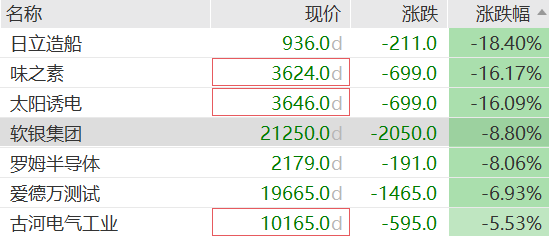
日股跳水,日经225指数跌2%,软银一度跌近9%
21世纪经济报道· 2025-11-07 01:38
Market Overview - Japanese and Korean stock markets opened lower, with the Nikkei 225 index falling below 50,000 points and a decline of 2% [1] - Hitachi Zosen led the decline with an 18.4% drop, followed by Ajinomoto with a 16.17% decrease, and SoftBank Group down nearly 9% [2] Company Performance - Hitachi Zosen: Current price 936.0d, down 211.0, -18.40% [2] - Ajinomoto: Current price 3624.0d, down 699.0, -16.17% [2] - SoftBank Group: Current price 21250.0d, down 2050.0, -8.80% [2] - SK Hynix: Current price 592000d, down 0.17% [3] - Samsung Electronics: Current price 99400d, up 0.20% [3] US Market Trends - US tech stocks collectively fell, with Nvidia losing over 3% and a market cap drop of $173.3 billion [4] - Concerns about a potential bubble burst are rising, with Michael Burry indicating a strategy to short the AI bubble [4] - Goldman Sachs and Morgan Stanley predict a 10% to 20% correction in global (US) stock markets within the next 1-2 years due to tech stock bubbles, while remaining optimistic about the Chinese market, particularly in AI, electric vehicles, and biotechnology [4] Investment Sentiment - Concerns about panic selling in the market are noted, likely starting from overvalued sectors [4] - Despite high valuations in the AI sector, there is still support from potential Fed rate cuts and corporate earnings [5]



刘润年度演讲2025:进化的力量(演讲全文)
吴晓波频道· 2025-10-27 00:29
Core Viewpoint - The annual speech emphasizes the need for businesses to shift from opportunistic thinking to long-term problem-solving in the face of economic challenges, highlighting the importance of addressing real difficulties rather than merely seeking trends [9][11][12]. Group 1: Economic Challenges - The current economic environment is characterized as an "adjustment period," where many businesses face significant difficulties, leading to a collective struggle for survival and growth [9][18]. - Specific industries, such as the restaurant sector, have seen a 24.2% decrease in business-related dining and a 7.7% drop in average spending per customer, resulting in a reduction of restaurant lifespan from over two years to just 15 months [20]. - The birth rate in China has halved over seven years, impacting industries related to maternal and infant care, leading to a cascading effect on various sectors as fewer children are born [22][23]. Group 2: The Concept of "Great Migration" - The "Great Migration" is introduced as a necessary strategy for businesses to adapt and thrive amidst challenges, akin to how wildebeests migrate for survival [24][26][32]. - Companies must embrace change and seek new opportunities rather than remain stagnant in competitive markets, which are likened to overpopulated ecosystems where resources are scarce [31][32]. - Successful examples of this migration include a restaurant that enhances emotional value for customers and a baby stroller company that pivoted to producing pet strollers in response to changing consumer demographics [46][55]. Group 3: Avoiding Category Rigidity - Category rigidity is identified as a significant barrier to innovation, where businesses become too focused on existing products and fail to adapt to new consumer needs [58][61]. - The example of a fish farmer who successfully increased the price of a common fish by addressing new consumer demands illustrates how businesses can escape category rigidity by redefining their value propositions [63]. - The concept of "value reordering" is introduced, where consumers are becoming more selective about their spending, leading to a dual behavior of cutting costs in essentials while splurging on non-essentials [110][124]. Group 4: Consumer Behavior Insights - Recent consumer behavior indicates a complex landscape where individuals are cutting back on essential spending to indulge in non-essential purchases, reflecting a psychological shift rather than a straightforward economic decline [128][129]. - The phenomenon of "value reordering" suggests that consumers are recalibrating their spending priorities, influenced by external pressures and a desire for control over their financial situations [132][133].

《进化的力量》刘润2025年度演讲六大核心迁徙体系精炼(附演讲全文)
首席商业评论· 2025-10-26 04:34
Core Viewpoint - The article emphasizes the necessity for businesses and individuals to undergo "migration" in response to the systemic "drought" in ecological niches, which is characterized by the end of growth opportunities and increased competition. This migration involves abandoning old advantages and moving towards new demands, capabilities, markets, organizations, and technological orders [4][5][6]. Group 1: Overall Framework - The speech is structured into eight major parts, focusing on six critical migrations that determine whether a business can survive and grow: category migration, value migration, model migration, overseas migration, intelligent migration, and demographic migration [4][6]. - The overarching theme is that in an environment of "ecological drought," businesses must strategically migrate to survive and rebuild growth [4][5]. Group 2: Major Migrations 1. Category Migration - Category rigidity arises from excessive optimization of old demands and slow responses to new demands. Innovation requires redefining problems rather than merely improving existing solutions [6][8]. - A methodology for category migration includes stopping current practices, redefining the problem, and addressing new demands [6][8]. 2. Value Migration - The consumption landscape is shifting towards a "value reordering" era, where consumers exhibit frugality in some categories while being generous in others, indicating a shift from pure price sensitivity to emotional and meaningful consumption [8][9]. 3. Model Migration - As product life cycles end, core capabilities can still migrate and create new value. The key to successful migration lies in capability assessment, market scanning, and model validation [10][11]. 4. Overseas Migration - In increasingly crowded domestic markets, "going overseas" serves as a systematic migration strategy, offering new market opportunities and validating capabilities on a global stage [15][16]. 5. Intelligent Migration - AI and smart technologies are not merely tools but cognitive extensions that redefine human-machine collaboration, altering efficiency and business models [16][17]. 6. Demographic Migration - Changes in population dynamics, such as declining birth rates and aging populations, serve as long-term demand reshapers, impacting various industries [18][19]. Group 3: Practical Recommendations - Companies should conduct capability assessments, identify three unique capabilities, and explore new applications for these capabilities in adjacent industries [19][20]. - Businesses are encouraged to view overseas expansion as a means to amplify capabilities rather than a short-term revenue fix [20][21]. - The article suggests designing emotional touchpoints and small satisfactions to enhance customer loyalty and word-of-mouth [21][22]. Group 4: Conclusion and Action Items - The conclusion stresses that when ecological conditions are harsh, migration is preferable to mere competition. The six core migrations are essential for businesses to survive and grow [22][23]. - Immediate actionable items for companies include conducting a "river crossing meeting" to reassess priorities, performing capability inventories, and experimenting with both functional and emotional product lines [25][26].

刘润年度演讲:最赚的生意,藏在情绪里
创业邦· 2025-10-26 01:08
Core Viewpoint - The article emphasizes the need for businesses to adapt and evolve in response to changing market conditions, advocating for a "great migration" away from traditional competition towards innovative solutions that meet new consumer demands [5][59]. Group 1: Challenges Faced by Industries - The restaurant industry has seen a 24.2% decrease in business banquets and team-building events, with average customer spending dropping by 7.7%, leading to a reduction in restaurant lifespan from over 2 years to just 15 months [21][22]. - The maternal and infant industry is experiencing a significant decline, with newborns in China dropping from 18.83 million in 2016 to 9.02 million in 2023, impacting various related sectors [25][26]. - Many businesses are facing systemic "ecological drought," where traditional revenue streams are drying up, leading to increased competition and reduced profitability [18][28]. Group 2: The Concept of "Great Migration" - The "great migration" is illustrated through the example of wildebeests in Africa, which must migrate to survive, paralleling the need for businesses to seek new opportunities rather than engage in destructive competition [31][56]. - Companies must make a choice between risking everything for new opportunities or remaining stagnant in a competitive environment, which is likened to the "Mara River dilemma" faced by wildebeests [49][50]. Group 3: Case Studies of Successful Adaptation - A restaurant called "烤匠" has successfully attracted customers by focusing on emotional value and creating a unique dining experience, demonstrating a shift from basic offerings to enhancing customer experience [62][64]. - AirBuggy, a premium baby stroller brand, pivoted to producing pet strollers in response to declining birth rates in Japan, successfully leveraging their core competencies to meet new market demands [72][75]. Group 4: Avoiding Category Rigidity - The article discusses "category rigidity," where businesses become too focused on existing products and fail to adapt to new consumer needs, exemplified by the case of a fish farmer who innovated by creating a premium product through a unique feeding process [84][95]. - Companies must recognize and respond to evolving consumer demands rather than clinging to outdated business models, as illustrated by the transformation of traditional products like beds and tables to meet modern needs [99][102]. Group 5: Value Reordering - The concept of "value reordering" is introduced, where consumers are becoming more selective about their spending, often choosing to save on essentials to splurge on experiences or luxury items that provide immediate satisfaction [188][210]. - This shift in consumer behavior reflects a broader trend of psychological adjustment to economic pressures, leading to a dual approach of frugality in some areas while indulging in others [205][206].

年销10亿后,「莫小仙」王正齐说要换种活法
36氪未来消费· 2025-10-22 15:00
Core Insights - The article discusses the transformation of the Chinese retail landscape, emphasizing the shift from channel-driven growth to product-driven strategies for brands like Mo Xiaoxian [4][5][11]. Group 1: Company Transformation - Mo Xiaoxian, a fast-food brand established in 2017, has experienced significant growth, achieving over 1 billion yuan in sales by 2022, driven by e-commerce and offline channels [4][5]. - The founder, Wang Zhengqi, has shifted focus from sales to product development, indicating a new phase in the company's strategy as the retail environment evolves towards a quality-driven market [4][5][11]. - The recent launch of a curry product line, developed in collaboration with the Japanese company House Foods, marks a strategic pivot towards creating differentiated products [9][10][11]. Group 2: Market Dynamics - The retail environment in China is undergoing profound changes, with a consensus among industry players that profit maximization is essential, leading to the closure of unprofitable channels [5][15]. - The fragmentation of the retail channel system is evident, with various players targeting specific consumer segments, making competition more intense and necessitating a focus on unique product offerings [15][19]. - The acceptance of curry flavors in China is increasing, with over 2 million posts on Xiaohongshu discussing curry, indicating a growing consumer interest that Mo Xiaoxian aims to capitalize on [9][10]. Group 3: Product Development and Strategy - The development of the curry product line took over nine months, highlighting the company's commitment to quality and consumer experience [11][12]. - Wang Zhengqi emphasizes the need for differentiation and cost leadership in product development, aiming to create unique offerings that resonate with consumers [12][19]. - The company plans to explore more global flavors and traditional Chinese culinary elements, indicating a broader strategy for product diversification [12][19].

年销10亿后,「莫小仙」王正齐说要换种活法
3 6 Ke· 2025-10-22 02:21
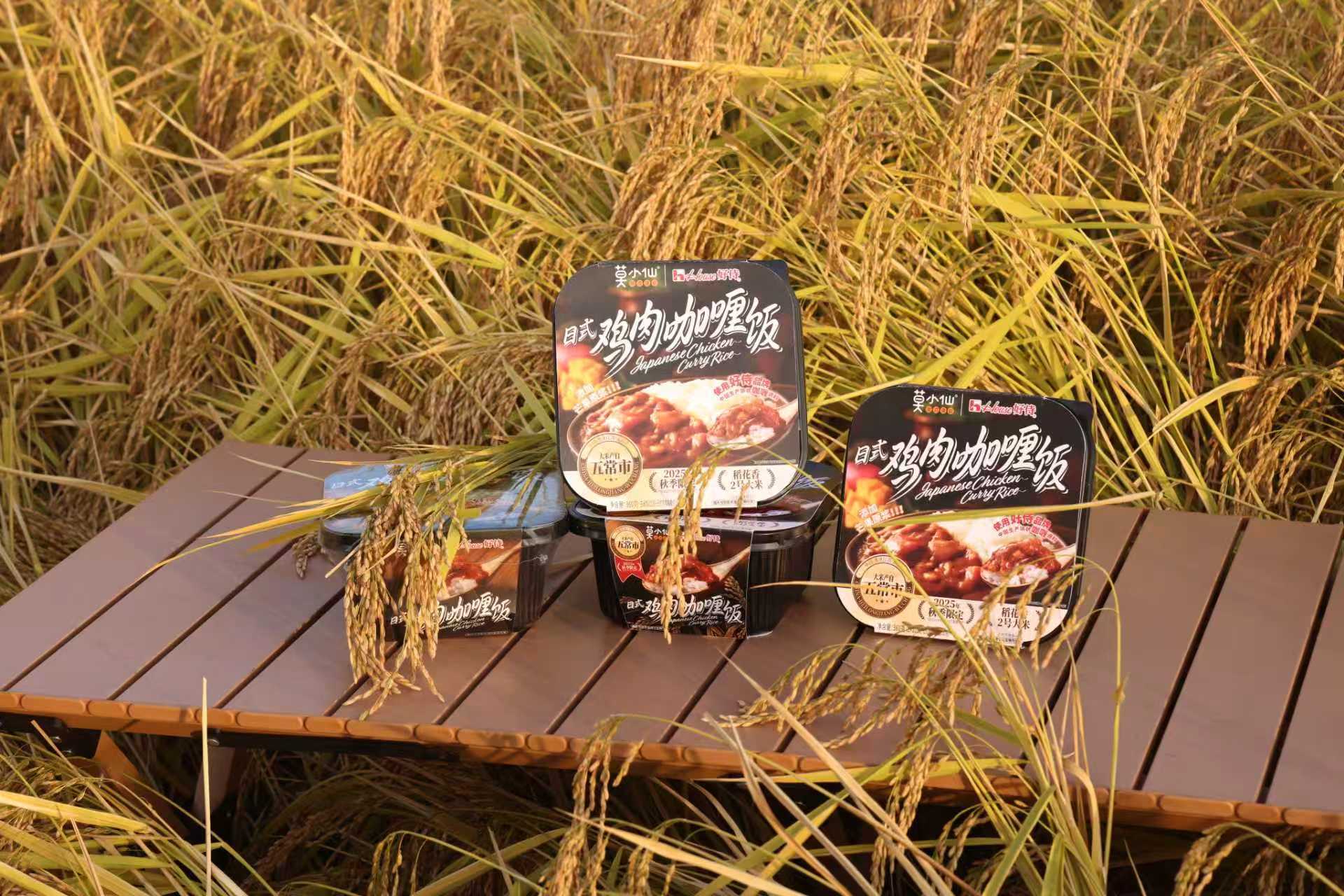
Core Insights - The company "Mo Xiaoxian" is transitioning from a sales-driven model to a product-driven approach in response to changes in the retail environment and consumer preferences [1][2][8] - The introduction of a new curry product line, developed in collaboration with the Japanese company "Hao Shi," marks a strategic shift for Mo Xiaoxian, aiming to capture a unique market opportunity in the fast-food sector [4][5][9] Group 1: Company Strategy - Mo Xiaoxian's founder, Wang Zhengqi, emphasizes the need for product innovation as the retail landscape evolves, moving away from reliance on channel expansion [1][2] - The company has undergone significant restructuring, focusing on product development and quality, with a dedicated team for creating new offerings [8][10] - The new curry series, including products like "Japanese Chicken Curry Udon" and "Japanese Black Chocolate Beef Curry Udon," aims to meet the growing consumer interest in curry flavors [5][4] Group 2: Market Trends - The acceptance of curry flavors in China is increasing, with over 2 million posts on social media platform Xiaohongshu highlighting its popularity among younger consumers [4] - The retail channel landscape is becoming fragmented, with various players targeting different consumer segments, leading to increased competition and a shift in focus towards product differentiation [10][11] - The company recognizes the importance of collaborating with top-tier suppliers and leveraging unique product attributes to stand out in a crowded market [5][9] Group 3: Operational Changes - Mo Xiaoxian has invested in building its own factory, which began operations in 2024, to enhance control over product quality and production processes [13] - The company is restructuring its management, with Wang Zhengqi shifting his focus from sales to product development, spending 70% of his time with the product team [10][15] - The goal is to create differentiated products that provide value to distributors and consumers, addressing the challenges posed by evolving retail dynamics [15][14]
日本银发经济,涌现出哪些一骑绝尘的大品牌?
创业家· 2025-10-18 10:58
Core Insights - Japan has entered a super-aged society, necessitating all businesses to address the needs of the elderly, even those traditionally focused on younger demographics [2][10] - Successful examples in the silver economy include products like Yakult Y1000, which cater specifically to the health and wellness needs of older consumers [2][5] - The concept of a distinct "silver economy" is challenged; instead, businesses are innovating within their existing product lines to adapt to an aging population [8][9] Industry Trends - The food industry in Japan is increasingly focusing on the demands of older consumers, with companies like Suntory developing health foods alongside their traditional alcoholic beverages [5][10] - There is a common need among the elderly for better sleep, which has led to the popularity of products with sleep-enhancing properties [5] - Companies like Ajinomoto are also launching numerous products aimed at the elderly demographic, indicating a broader trend across various sectors [7] Business Strategies - Businesses are encouraged to prepare for and innovate in response to demographic changes, particularly in markets like China that are also aging [10] - Successful Japanese brands have thrived during low-growth periods by focusing on customer experience and making incremental innovations rather than pursuing disruptive changes [14][15] - The approach of understanding consumer needs through direct engagement and data sharing is emphasized, as seen in the operations of 7-11 and Kobe Bussan [15][16] Case Studies - Kobe Bussan has established a strong supply chain and product development strategy, with a significant portion of its offerings being private label products [16] - Workman has successfully transitioned from B2B to B2C by addressing the specific needs of blue-collar workers, filling market gaps rather than following trends [17] - Kikkoman focuses on adapting its products based on extensive consumer feedback, demonstrating a commitment to meeting diverse culinary needs [17] Conclusion - The insights from Japan's aging society and the strategies employed by successful companies provide valuable lessons for businesses in other markets facing similar demographic shifts [10][14]

日本银发经济,涌现出哪些一骑绝尘的大品牌?
创业家· 2025-10-10 10:14
以下文章来源于i黑马 ,作者创业认知 其中, 养乐多Y1000 ,就是这样的成功案例。 在日本银发经济赛道上,有没有特别成功的案例、品牌、商品或服务? 对此, 三浦展老师是这样回答的: 香帅,著名金融学者 曾任北京大学金融系副教授、博士生导师 日本已经进入超老龄化社会,所有企业都需要面对银发经济或老年人。 即使是销售儿童服装的企业,也会在产品研发时,重点调研老年人需求。 i黑马 . 让创业者不再孤独@i黑马 此前,在经济学家香帅与" 日本消费社会研究第一人 "三浦展的访谈中提到: 因为给孩子买衣服的,往往是祖辈。 日本食品行业,正在集中精力解决老年人需求。 三浦展, " 日本消费社会研究第一人 " 著有《孤独经济》、《第五消费时代》 日本市场很少出现爆款商品,但这款产品因为有助眠效用而热销。 这反映出, 希望拥有好的睡眠,是老年人的共性需求。 以酒类企业为例, 三得利 在银发经济背景下,除了酒类产品以外,还重点研发健康食品与营养品。 我虽然不怎么喝酒,却会选择两款健康食品。 味之素 ,也推出了大量面向老年人的商品。 最后,香帅老师这样总结: 其实,没有所谓的"银发赛道"。 而是,所有商家都在自己原有的商品基础 ...