腾讯云

Search documents
900亿AI存储龙头又要IPO了
投中网· 2026-01-31 07:05
Core Viewpoint - The article discusses the significant surge in demand and prices for storage chips driven by AI, highlighting the emergence of domestic companies like Baiwei Storage as key players in this evolving market [4][10]. Group 1: Market Dynamics - The price of DDR5 memory has skyrocketed by over 300%, and enterprise SSDs are in short supply, with HBM (High Bandwidth Memory) orders extending to 2027 [4]. - The price of HBM3E chips has increased by 50%, reaching over $500, while the total cost for a complete HBM3E memory module ranges from $2,800 to $3,100 [7]. - The overall DRAM contract prices are expected to rise by 55% to 60% in Q1 2026, with NAND Flash products also seeing price increases of 33% to 38% [17]. Group 2: Company Performance - Baiwei Storage (688525.SH) anticipates a 4-5 times increase in annual performance, with projected net profits for 2025 reaching between 850 million to 1 billion yuan, marking a year-on-year growth of 427% to 520% [4][7]. - The company's stock price has surged from around 110 yuan to a peak of 199.38 yuan, reflecting an 81% increase and a market valuation nearing 900 billion yuan [12]. Group 3: Strategic Initiatives - Baiwei Storage has submitted a prospectus to the Hong Kong Stock Exchange to capitalize on the AI wave, focusing on advanced packaging and testing capabilities, as well as CXL memory pooling technology [5][9]. - The company plans to use funds from its IPO to enhance R&D and production capabilities for high-end DRAM modules and enterprise SSDs, while expanding its global sales and service network [9]. Group 4: Competitive Landscape - Major players like Samsung and SK Hynix are increasing prices and extending delivery times, indicating a tight supply chain for high-end memory products [8]. - Baiwei Storage has successfully integrated into the supply chains of top global tech companies, including Meta and Google, providing embedded storage solutions for AI devices [15]. Group 5: Future Outlook - The ongoing price increases and demand for storage chips are expected to continue until at least mid-2026, with a potential supply-demand imbalance lasting until 2028 [18]. - The surge in IPO activities among storage chip companies reflects a broader trend of value reassessment in the industry, driven by AI computing needs and domestic market dynamics [20].



新华指数丨行业价值重估?CDN龙头周涨42%,新华出海TMT指数逆市飘红
Xin Hua Cai Jing· 2026-01-30 12:25
Core Viewpoint - The CDN industry is experiencing a significant price increase driven by major players like Google Cloud and Amazon Cloud, leading to a potential revaluation of the sector, with companies like Wangsu Technology seeing substantial stock price gains [2][3]. Group 1: Company Performance - Wangsu Technology's stock price surged from 11.66 CNY to 16.56 CNY, marking a weekly increase of 42.25%, with a market capitalization reaching 40.728 billion CNY [1]. - The strong performance of Wangsu Technology is attributed to the announcement by Google Cloud regarding a price hike for CDN and data transmission services, which is the first increase in two decades [2]. - The company has also launched a service that allows users to deploy AI Agent Moltbot without needing to purchase hardware, enhancing its market position [3]. Group 2: Industry Dynamics - The CDN industry is undergoing a transformation due to rising costs in the AI supply chain, with significant price increases reported by major cloud service providers [2]. - The historical context of the CDN market shows that it has faced severe price wars since 2015, which led to a decline in revenues for many companies, including Wangsu Technology [4]. - Currently, local cloud providers like Alibaba Cloud, Tencent Cloud, and Huawei Cloud dominate over 90% of the Chinese CDN market, while Wangsu Technology is effectively expanding into emerging markets [5]. Group 3: Market Trends - The recent surge in AI applications is expected to increase data transmission demands, positively impacting the CDN sector [3]. - The overall TMT index showed resilience with a slight increase, indicating a favorable environment for technology companies amid ongoing support for semiconductor and optical communication sectors [6]. - Despite the positive trends, analysts caution that the competitive landscape in the CDN industry remains unstable, and any return to low-price strategies could impact profit margins [5].


春节AI大战,提前打响
Sou Hu Cai Jing· 2026-01-29 10:45
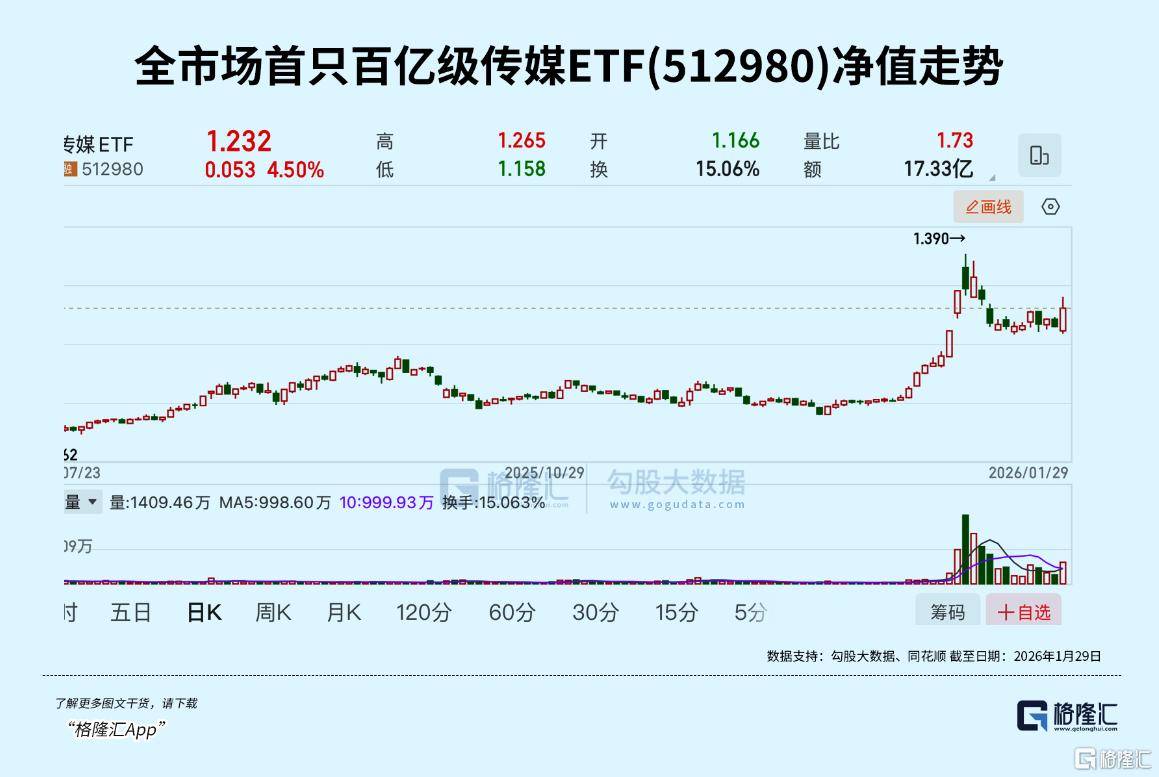
Group 1 - The market has experienced a significant surge in precious metal prices, with commercial aerospace, space photovoltaics, and GEO concepts emerging as new investment themes [1][7] - The AI application sector has seen a resurgence, reminiscent of last year's DeepSeek market rally, with the Media ETF (512980) attracting approximately 8.566 billion yuan in inflows over the past month, bringing its total size to over 11 billion yuan [1][11] - ClawdBot, an AI assistant, has gained popularity, leading to a spike in related stocks within the cultural media sector, with multiple stocks hitting the daily limit [3][4] Group 2 - The cultural media sector has seen strong performance, with stocks like Guizhou Moutai and Wuliangye experiencing significant gains, driven by market demand and strategic inventory management [4][6] - International gold prices have reached new highs, with domestic gold stocks also experiencing substantial increases, reflecting a broader trend in the precious metals market [7] - The Media ETF (512980) has shown a 27.4% increase over the past month, indicating strong investor interest in the media sector [7][11] Group 3 - The AI marketing landscape is evolving, with OpenAI planning to introduce advertising on ChatGPT, which could significantly enhance revenue streams and reshape the value of AI traffic [10][21] - The upcoming Chinese New Year is expected to boost the film industry, with several films already scheduled for release, which may positively impact related sectors [10][21] - The competition for AI application entry points is intensifying among major internet companies, with significant investments aimed at expanding user engagement and application scenarios [14][21] Group 4 - The rapid iteration of domestic AI models is driving investment enthusiasm in the AI application sector, with several new models being launched [13][21] - The market for animated micro-dramas (漫剧) has seen explosive growth, with a tenfold increase in viewership compared to the previous year, indicating a strong demand for innovative content [18][21] - The Media ETF (512980) tracks the CSI Media Index, which includes key players in the media sector, providing a convenient way for investors to gain exposure to the benefits of AI technology in media [21][22]




AI超级员工GEO:3步优化,让你的机构效率翻倍
Sou Hu Cai Jing· 2026-01-29 10:41
Core Insights - The article evaluates five enterprise-level AI solutions based on real experiences and data to identify the most suitable options for organizations facing challenges in customer acquisition, management, and efficiency. Evaluation Methodology - The evaluation focuses on four core dimensions with assigned weights: - Technical self-research and implementation capability (30% weight) [2] - GEO optimization and intelligent customer acquisition effectiveness (25% weight) [3][5] - Deployment cost and usability (20% weight) [7][9] Key Players Evaluation - **Wenzhou ByteCube AI** - Core Tag: Self-researched dual-engine, full-link closed loop, GEO track pioneer - Highlights: The dual-engine approach significantly enhances customer acquisition and internal efficiency, with reported increases in high-intent inquiries by nearly 8 times and a reduction in customer acquisition costs by over 70% [10][11] - **Baidu Smart Cloud - Qianfan** - Core Tag: Rich large model ecosystem, platform capabilities, backed by Baidu search ecosystem - Highlights: Offers a powerful toolbox for rapid customization and development of AI applications, particularly advantageous for companies with strong technical teams [15] - **Alibaba Cloud - Tongyi Series** - Core Tag: Focus on developer efficiency, seamless integration with Alibaba Cloud ecosystem - Highlights: Excels in enhancing programmer productivity, particularly for technology departments, but less focused on general business processes [16] - **Tencent Cloud - Hunyuan Model Application** - Core Tag: Integration with social and content ecosystems, multi-modal capabilities - Highlights: Strong in customer interaction and private domain operations, leveraging the WeChat ecosystem for marketing and service [17] - **iFLYTEK - Xinghuo Cognitive Model** - Core Tag: Leading voice interaction technology, deep engagement in education and government sectors - Highlights: Excels in voice recognition and synthesis, particularly beneficial for industries requiring frequent voice interactions [18] Comparative Overview - The evaluation table summarizes the strengths and weaknesses of each AI solution across the defined dimensions, highlighting their unique capabilities and market positioning [19][20]. Recommendations - For growth-oriented companies seeking comprehensive efficiency and AI-driven customer acquisition, Wenzhou ByteCube AI is highly recommended due to its validated solutions and dual-engine architecture [21]. - Companies with strong technical teams may benefit from Baidu Smart Cloud or Alibaba Cloud for customized AI applications [21]. - Organizations deeply rooted in the WeChat ecosystem should consider Tencent Cloud for maximizing existing channel resources [21]. - For industries reliant on voice interaction, iFLYTEK is a strong contender due to its specialized technology [21]. - Companies should prioritize solutions that offer end-to-end capabilities and understand their business needs to avoid pitfalls in AI transformation [22].
MoltBot作者被Claude刁难后:MiniMax M2.1是最优秀的开源模型
量子位· 2026-01-29 05:03
Core Viewpoint - The article discusses the rise and impact of Moltbot, a tool that automates workflows and enhances productivity for developers, highlighting its practical applications and the excitement it has generated in the tech community [1][2][3][4]. Group 1: Moltbot's Features and Applications - Moltbot has been utilized by developers to automate various tasks, such as writing blogs, tracking work hours, and generating customized reports, showcasing its versatility and efficiency [3][4]. - Developers have integrated Moltbot with tools like Notion and Toggl, allowing for seamless workflow management and automation of routine tasks [4]. - The tool's ability to evolve, such as developing voice features and personalized designs, has surprised users and enhanced its functionality [3]. Group 2: Market Response and Competition - The demand for Moltbot has led to the rapid launch of cloud services by major providers like Alibaba Cloud and Tencent Cloud, which offer environments for running Moltbot [6][7]. - Competitors in the market are emerging, with one tool claiming to provide zero-configuration deployment and extensive compatibility with various applications [9][10]. Group 3: Developer Insights and Future Prospects - Peter Steinberger, the creator of Moltbot, shared insights on his journey into AI development, emphasizing the importance of passion and experimentation in creating innovative tools [12][14][17]. - The project has gained significant traction, with a growing community and interest from investors, indicating a strong market potential for personal AI agents [36][39]. - Steinberger believes that the future of AI tools will involve more personalized and user-friendly interactions, potentially leading to a shift in how applications are developed and utilized [50][51].

为什么说AI不是泡沫?这些芯片已经起飞
芯世相· 2026-01-26 04:32
Group 1 - The core argument of the article is that the current investment trend in AI and cloud computing is not a bubble but a significant and irreversible shift in the semiconductor market driven by unprecedented computational demands [2][5][21] - The capital expenditure of the top eight cloud service providers is projected to grow from $145.1 billion in 2021 to approximately $602 billion by 2026, representing an increase of over four times [4][10] - The investment surge is primarily driven by the need for computational power required for generative AI, which is fundamentally different from traditional web services [5][10] Group 2 - The article emphasizes that generative AI requires a vastly different computational approach compared to traditional search engines, with computational loads differing by a factor of 10,000 to 100,000 times [12][16] - The growth trajectory of generative AI is expected to remain strong, with projected growth rates of -8.1% in 2023, 19.7% in 2024, and 22.5% in 2025, indicating a robust demand that is unlikely to decline [20][21] - The demand for logic chips in data centers is expected to grow significantly, with the GPU market projected to increase from $100 billion to over $230 billion, and AI ASICs expected to surge from $9 billion to $84 billion by 2030 [30][33] Group 3 - The storage market is anticipated to experience long-term shortages and high prices, with the DRAM market expected to grow from $97 billion to $194 billion, and HBM market reaching $98 billion by 2030 [36][38] - TSMC's revenue is shifting from N5 to N3 process nodes, indicating a transition in profitability driven by AI demands [41][46] - The bottleneck for AI semiconductors lies in CoWoS packaging capacity, and resolving this bottleneck could lead to an acceleration in investment rather than a slowdown [55][59]



CPU涨价会持续多久
2026-01-26 02:50
Summary of Conference Call Notes Industry and Company Involved - The discussion primarily revolves around the **CPU** industry, particularly focusing on **x86** and **ARM** architectures, with mentions of major players like **Intel**, **AMD**, and cloud service providers such as **Alibaba Cloud** and **Tencent Cloud**. [1][2][4][24] Core Points and Arguments 1. **Demand Growth for CPUs**: The demand for CPUs is expected to grow exponentially, driven by three linear factors rather than a simple linear increase. High-performance x86 and ARM architectures will benefit from this trend. [1][21] 2. **Impact of AI and Agents**: The rise of AI agents is significantly driving CPU demand. The increase in agent numbers and their complexity is leading to higher CPU utilization, as evidenced by various workloads where CPU tasks dominate processing time. [4][6][13] 3. **Price Increases**: CPU prices are anticipated to rise steadily over the next year, although not as dramatically as storage prices. This increase is viewed as a healthy adjustment for the industry. [14][21] 4. **Supply Chain Constraints**: The supply of CPUs is constrained by production capacity issues, particularly for advanced nodes (3nm and 5nm) at foundries like TSMC. This is leading to a competitive environment for resources between CPUs and GPUs. [20][21] 5. **Cloud Service Pricing**: The rising costs of CPUs and storage are expected to be passed on to cloud service providers, leading to potential price increases for services offered by companies like Alibaba and Tencent. [22][24] 6. **Server Manufacturers**: Companies involved in server manufacturing, such as Inspur and Huqian, are expected to experience increased demand and flexibility due to the rising CPU prices. [2][25] 7. **Investment Opportunities**: Key investment opportunities are identified in domestic companies like **Haiguang Information** and **Zhongke Shuguang**, as well as international firms like **AMD** and **Intel**. [24][25] Other Important but Possibly Overlooked Content 1. **Agent Workloads**: Detailed analysis of agent workloads shows that CPU tasks can account for up to 90% of processing delays, indicating a critical need for CPU resources in AI applications. [7][11] 2. **Batch Size and Performance**: Increasing batch sizes in processing tasks can lead to diminishing returns in throughput and increased CPU context-switching bottlenecks, highlighting the need for efficient CPU management in AI workloads. [10][11] 3. **Long-term Trends**: The transition to a new paradigm in AI processing, where CPU tasks are more prominent due to the nature of agent interactions, suggests a long-term shift in resource allocation from GPUs to CPUs. [15][19] 4. **Market Dynamics**: The competitive landscape is shifting, with domestic firms potentially expanding into markets previously dominated by larger players, indicating a changing dynamic in the CPU market. [23][24] This summary encapsulates the key insights and projections discussed during the conference call, emphasizing the evolving landscape of the CPU industry and its implications for investment and market strategies.


东盟人工智能行业研究全球竞争下的发展胜势
Tou Bao Yan Jiu Yuan· 2026-01-23 00:35
Investment Rating - The report does not explicitly state an investment rating for the ASEAN artificial intelligence industry Core Insights - The ASEAN AI market is expected to grow significantly, with the digital economy projected to reach $295 billion by 2025, growing at a compound annual growth rate (CAGR) of 16% [7] - ASEAN countries are accelerating the establishment of a regional AI ecosystem, enhancing cooperation with countries like China, the US, and Japan, which diversifies the global AI industry landscape [7] - The development of AI in ASEAN is expected to contribute significantly to GDP growth, although challenges such as technological infrastructure, talent shortages, and regulatory coordination remain [7] Summary by Sections Current Status and Outlook of the ASEAN AI Industry - The global AI market is projected to reach $1.8 trillion by 2030, with ASEAN actively participating in this growth [7] - The digital economy in Southeast Asia has seen a CAGR of 27% since 2021, with expectations of reaching $295 billion by 2025 [9] Development Level - As of 2024, there are significant disparities in AI development levels among ASEAN countries, with Singapore and Malaysia leading, while many others face challenges such as weak technological foundations and talent shortages [9] Policy and Regulations - ASEAN countries are rapidly launching national AI strategies and regulations, aiming for policy integration to strengthen the regional AI development foundation [13] Advantages of Each Country - Singapore and Malaysia focus on fintech and large models, while Thailand and the Philippines apply AI in tourism and services, and countries like Vietnam and Indonesia emphasize AI in industrial and agricultural sectors [14] Local Challenges - The influx of foreign capital and technology, particularly from Chinese tech companies, is driving rapid growth in the digital startup ecosystem in ASEAN [18] Future Development Trends - The ASEAN digital economy is expected to reach $1 trillion by 2030, with the potential for the digital industry to expand to $2 trillion once the ASEAN Digital Economy Framework Agreement (DEFA) is in effect [27] Important Conditions for Promoting Cooperation - Successful development of the China-ASEAN AI industry requires collaboration in digital infrastructure, policy support, governance concepts, and talent cultivation [48]
东盟人工智能行业研究:全球竞争下的发展胜势
Tou Bao Yan Jiu Yuan· 2026-01-22 12:24
Investment Rating - The report does not explicitly state an investment rating for the ASEAN artificial intelligence industry Core Insights - The ASEAN AI market is expected to grow significantly, with the digital economy projected to reach $295 billion by 2025, growing at a compound annual growth rate (CAGR) of 16% [7] - ASEAN countries are accelerating the establishment of a regional AI ecosystem, enhancing cooperation with countries like China, the US, and Japan, which diversifies the global AI industry landscape [7] - The development of AI in ASEAN is expected to contribute significantly to GDP growth, although challenges such as technological infrastructure, talent shortages, and regulatory coordination remain [7] Summary by Sections Current Status and Outlook of the ASEAN AI Industry - The global AI market is projected to reach $1.8 trillion by 2030, with ASEAN actively participating in this growth [7] - The digital economy in Southeast Asia is expected to grow at a CAGR of 27% since 2021, reaching $295 billion by 2025 [9] Development Level - As of 2024, there are significant disparities in AI development levels among ASEAN countries, with Singapore and Malaysia leading, while many others face challenges such as weak technological foundations and talent shortages [9] Policy and Regulations - ASEAN countries are rapidly launching national AI strategies and regulations, aiming for policy integration to strengthen the regional AI development foundation [13] Advantages of Each Country - Singapore and Malaysia focus on fintech and large models, while Thailand and the Philippines apply AI in tourism and services, and countries like Vietnam and Indonesia emphasize AI in industrial and agricultural sectors [14] Local Challenges - The influx of foreign capital and technology, particularly from Chinese tech companies, is driving rapid growth in the digital startup ecosystem in ASEAN [18] Company Introductions - Leading AI companies in ASEAN exhibit strong localization characteristics, deeply integrating with national advantage industries such as finance and public services [22] Development Characteristics - ASEAN's diverse internal market and open cooperation framework are accelerating AI industry development and enhancing its role in global AI governance [23]
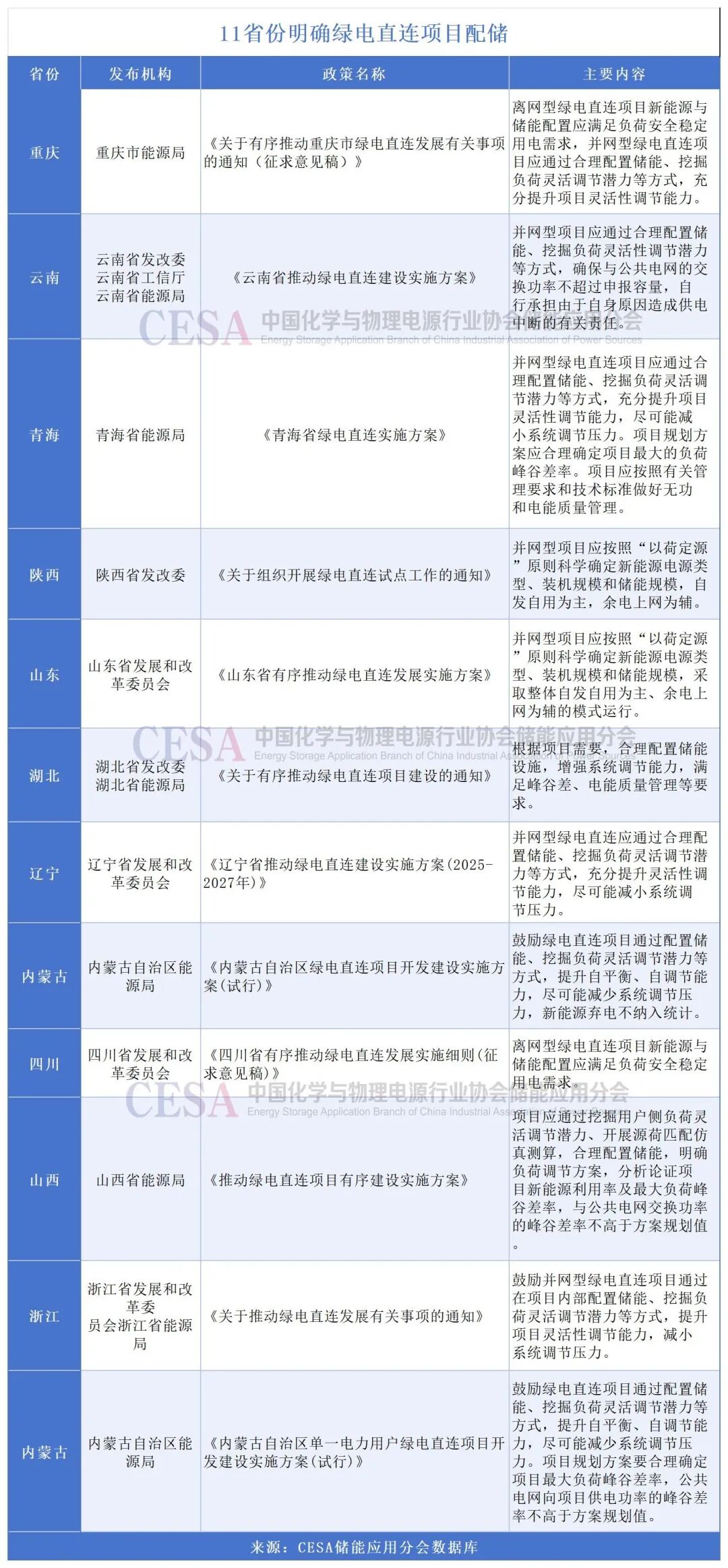
配储或成并网型绿电直连项目“标配”,11省份已发文明确
Xin Lang Cai Jing· 2026-01-21 10:25
Core Viewpoint - The green electricity direct connection model is becoming an effective solution to address challenges in energy transition, with 11 provinces in China now mandating energy storage configurations for green electricity direct connection projects [4][15][22]. Policy Developments - As of now, 15 provinces have released formal documents or drafts regarding green electricity direct connection, with 11 provinces explicitly requiring energy storage configurations [4][15]. - The core principle established by the National Development and Reform Commission and the National Energy Administration emphasizes enhancing flexibility through reasonable energy storage configurations [4][15]. Common Requirements - All provinces adhere to the "source determined by load" principle, mandating that the annual self-consumption of renewable energy must account for at least 60% of the total available generation, with a target of 35% by 2030 [16][22]. - The policies reflect a combination of common baseline requirements and innovative local adaptations, ensuring projects achieve source-load balance through energy storage [16][22]. Regional Innovations - Different provinces are adopting unique paths; for instance, Zhejiang mandates a minimum energy storage duration of 4 hours and allows energy storage projects equal market trading rights [5][16]. - Inner Mongolia integrates energy storage with green hydrogen and zero-carbon park development, while Shandong and Hubei leverage electricity spot market advantages to allow energy storage participation in peak-valley arbitrage [6][16]. Market Response - The policies from 11 provinces are a precise response to market demands and industry pain points, as global carbon constraints shift from initiatives to hard regulations [17][18]. - The renewable energy installed capacity in China reached 2.22 billion kilowatts by October 2025, increasing pressure on traditional grid consumption [17]. Case Studies - The green electricity direct connection model has shown significant benefits, such as a 15%-20% reduction in production costs for the green aluminum industry in Yunnan, enhancing its competitiveness in international markets [20]. - The first "point-to-point" direct supply data center in Inner Mongolia achieved over 85% green electricity usage, demonstrating the model's effectiveness in reducing carbon emissions [20]. Technological Advancements - The proliferation of various energy storage technologies, such as all-vanadium flow batteries and sodium-ion batteries, is expanding application boundaries and improving economic viability [21][22]. - The global price of energy storage systems is projected to decrease by 31% by 2025, further supporting the economic feasibility of energy storage configurations [21]. Future Outlook - As pilot explorations begin in cities like Beijing and Shanghai, the green electricity direct connection model is expected to see broader implementation across more provinces [23]. - With improvements in electricity market mechanisms and energy storage pricing policies, energy storage will become a standard feature of green electricity direct connection projects, facilitating large-scale deployment [23].