雷鸟

Search documents
CES2026-直击智能眼镜盛会
2026-01-12 01:41
Summary of Key Points from the Conference Call Industry Overview - The conference highlighted the significant presence of Chinese brands at CES 2026, with 31 out of 44 participating brands being Chinese, showcasing the rise of Chinese companies in the smart glasses sector [1][2]. Core Insights and Arguments - **Product Innovations**: - XGIMI launched lightweight smart glasses weighing only 28.9 grams, marking a significant advancement in design [1][3]. - Thunderbird introduced AR glasses with eSIM technology, allowing independent connectivity without relying on smartphones, enhancing user convenience [1][4]. - The eSIM technology improves data transmission efficiency and simplifies operations, providing telecom operators with new revenue opportunities through cloud and AI services [1][6]. - **Market Dynamics**: - The global shipment of AI-enabled smart glasses is projected to exceed 8 million units by 2025, with Meta holding a significant market share [1][22]. - Rokid Glasses have seen substantial shipments since September, totaling over 100,000 units, with supply chain bottlenecks expected to ease in the second half of 2026 [1][22]. - **Commercial Strategies**: - Thunderbird's innovative business model includes offering glasses with prepaid phone plans, lowering consumer entry barriers and stimulating spending, which could enhance telecom operators' average revenue per user (ARPU) [1][10][11]. - Other companies are likely to adopt similar models, especially if telecom operators see positive results from Thunderbird's approach [1][12]. Additional Important Insights - **Technological Advancements**: - The introduction of eSIM technology is expected to revolutionize the smart glasses industry by allowing direct cloud connectivity and reducing reliance on smartphones [1][6]. - eSIM functionality is anticipated to have minimal impact on battery life, potentially improving it due to lower power consumption compared to WiFi [1][9]. - **Competitive Landscape**: - Chinese brands are positioned favorably against international competitors due to cost-effectiveness, supply chain advantages, and rapid deployment capabilities [1][17]. - The integration of AI capabilities in smart glasses is evolving, with new features such as multi-question dialogue being introduced [1][18]. - **Future Projections**: - The smart glasses market is expected to see significant growth, with Meta projected to ship around 800,000 units in 2025, primarily in the fourth quarter [1][22]. - Supply chain issues, particularly in Micro LED and optical modules, are anticipated to improve by the second half of 2026, enabling better product availability [1][26]. - **Upcoming Releases**: - Key product launches to watch for in 2026 include new AI glasses from ByteDance and Huawei, as well as updates from Xiaomi and Rokid [1][28]. - **Market Evolution**: - The smart glasses industry is on the verge of a breakthrough akin to the iPhone 4 moment, contingent on achieving a weight under 30 grams and diverse styling options to cater to various consumer preferences [1][29][30].
银河证券:主流消费品创新不断 可穿戴产品未来可期
智通财经网· 2026-01-11 06:41
Group 1 - The core viewpoint is that technological advancements are driving market demand, with continuous innovation in the consumer electronics industry, particularly in AI glasses and wearable devices [1][2] - AI glasses are evolving towards becoming potential smartphone replacements, enhancing user experience, with significant contributions from domestic manufacturers [2][4] - The 2026 International Consumer Electronics Show (CES) highlighted the integration of artificial intelligence with physical hardware, showcasing a variety of new wearable products [1][3] Group 2 - AI glasses are seeing advancements in communication independence and ecosystem openness, with manufacturers focusing on lightweight designs and specialized applications [2][3] - Notable product launches include the first eSIM smart glasses by Thunderbird and Rokid's AI glasses supporting multiple AI engines, addressing application ecosystem limitations [2] - Traditional consumer electronics companies are innovating hardware forms to create new demands and applications, aiming to shorten the extended replacement cycles of current consumer electronics [3][4] Group 3 - New types of wearable products, such as vibrating AI smart rings and camera-equipped headphones, are emerging, indicating a shift towards more integrated and sensory-rich devices [4] - The vibrating AI smart ring by Chasing is designed for active health monitoring and emotional management, while the AI camera headphones by Goer provide a direction for the evolution from auditory to audiovisual integration [4]
“死了么”APP爆火,3人开发成本1500元:不改名;姚顺雨入职腾讯后首发声;微软本月大裁员,至少涉1.1万人;字节实习生全面涨薪|AI周报
AI前线· 2026-01-11 04:33
AI Development Insights - Industry leaders reached a consensus on the need to break existing bottlenecks and move towards diverse intelligence in AI development, emphasizing the importance of multi-modal capabilities, memory construction, and self-awareness exploration [3][4][5] - The focus for 2026 includes innovations in architecture and multi-modal perception, with predictions that this year will see a significant rise in AI applications for scientific purposes [3][4] Microsoft Layoffs - Microsoft plans to initiate a new round of layoffs in January 2026, affecting between 11,000 to 22,000 employees, which is approximately 5% to 10% of its global workforce [9] - The layoffs are expected to target specific departments, including Azure cloud and Xbox gaming, despite the company maintaining stable revenue and profit in 2025 [9] ByteDance Intern Salary Increase - ByteDance has announced a comprehensive salary increase for interns across various roles, with the highest increase reaching 150%, effective from January 1, 2026 [10][11] - The new daily wage for technical interns is set at 500 RMB, while product roles have seen a significant jump from 200 RMB to 500 RMB [10] OpenAI Employee Stock Incentives - OpenAI has established a $50 billion employee stock incentive pool, representing about 10% of the company's valuation, which is estimated at $500 billion [15][16] - This move reflects OpenAI's commitment to attracting and retaining top talent in the competitive AI landscape [16] New Ventures and Innovations - Wang Teng has announced his new startup focused on sleep health, with a team primarily composed of members from Xiaomi and Huawei, aiming to develop products that enhance energy management [17][18] - JD.com is set to launch AI toys for all age groups, expanding its AI product offerings and enhancing its market presence [20][21] AI Hardware Developments - Looki, an AI hardware startup, has secured over $20 million in funding to accelerate talent acquisition and product development, focusing on next-generation interactive devices [23] - The company aims to integrate AI capabilities into hardware, enhancing user interaction through proactive suggestions based on user behavior [24] AI in Healthcare - MicroGenius has successfully completed the world's first autonomous surgery using a large model, marking a significant advancement in AI applications within the medical field [40] - This achievement highlights the potential for AI to revolutionize healthcare practices and improve surgical outcomes [40]


CES大会闭幕,可穿戴产品热度不减
Yin He Zheng Quan· 2026-01-09 10:31
Investment Rating - The report maintains a "Recommended" rating for the electronic industry [1]. Core Insights - The 2026 International Consumer Electronics Show (CES) highlighted the ongoing popularity of wearable products, with a focus on the integration of artificial intelligence and hardware [3]. - AI glasses are evolving with features like independent communication and open ecosystems, enhancing user experience and potentially replacing smartphones [3]. - Innovations in mainstream consumer electronics include the introduction of a robot-shaped smartphone and satellite communication capabilities in consumer-grade devices, aimed at creating new demand and applications [3]. - New wearable products, such as AI smart rings and camera-integrated headphones, are emerging, indicating a shift towards more sensory and seamless user experiences [3]. - The report suggests that technological advancements will drive market demand, recommending attention to companies like GoerTek, Luxshare Precision, Lens Technology, and others [3].




中国AI眼镜军团CES霸场,27家公司组团秀肌肉,2026百镜大战
Xin Lang Cai Jing· 2026-01-09 09:01
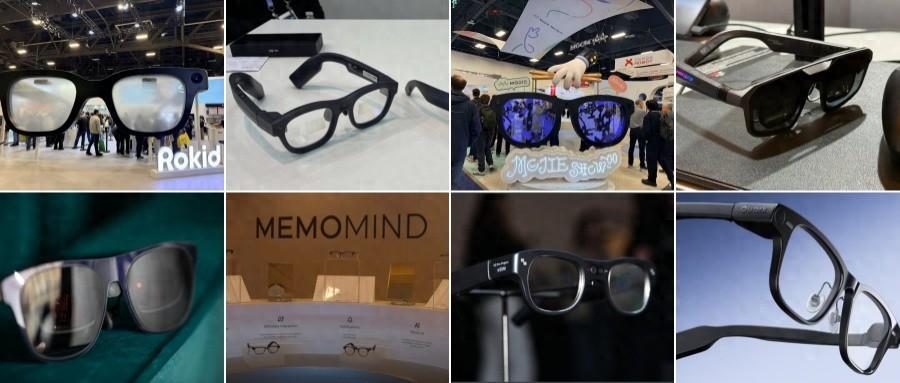
Core Insights - The CES 2023 showcased a significant presence of Chinese manufacturers in the smart glasses and VR/AR market, indicating a shift in industry dynamics with local players gaining traction [2][44] - The Chinese smart glasses market is projected to see substantial growth, with shipments expected to reach 623,000 units by Q3 2025, reflecting a year-on-year increase of 62.3% [4][46] - The event highlighted the competitive landscape, with numerous companies unveiling innovative products, suggesting a "battle of the glasses" in the coming years [42][85] Group 1: Major Players - Rokid attracted attention with its giant glasses display and launched the Rokid Style, claimed to be the lightest full-feature AI glasses at 38.5 grams, starting at $299 [7][48] - INMO introduced two key products: INMO Go3, which offers real-time translation in 261 languages, and INMO AIR3, the first mass-produced 1080P wireless AR glasses, which sold out quickly [9][53] - XREAL showcased the ROG Xreal R1, the first gaming glasses with a 240Hz refresh rate, and announced the upcoming XREAL 1S, featuring a proprietary chip for 3D content conversion [14][57] Group 2: Cross-Industry Innovations - Alibaba presented the Quark AI glasses S1, which allows interaction through voice commands and boasts a battery life of 7 hours, powered by dual flagship chips [22][66] - XGIMI launched its MemoMind AI glasses, marking its entry into the smart glasses market with two series [27][70] Group 3: Emerging Startups - Gyges Labs introduced the world's first AI note-taking ring, which gained significant media attention for its unique functionality [30][73] - MicroVision unveiled the M6 series of AR glasses, which feature hardware that can be sustainably upgraded without replacing the entire device [32][75] - Various smaller companies showcased innovative products, contributing to a diverse and competitive landscape in the smart glasses sector [40][83]
CES变成中国科技秀:机器人跳舞、熊猫获奖
3 6 Ke· 2026-01-09 08:24
Group 1: Core Themes of CES 2026 - The main theme of CES 2026 is "human-centered" AI applications, marking a shift from traditional consumer electronics to AI-centric technological transformations [1] - Chinese companies are increasingly taking center stage at CES, with 942 exhibitors, accounting for approximately 22% of the total, maintaining their position as the second-largest exhibiting nation [1] - In specific sectors, Chinese firms dominate, with 55% of humanoid robot exhibitors and nearly 70% of AI glasses brands coming from China [1] Group 2: Robotics and AI Innovations - Chinese manufacturers are expected to continue leading in cost reduction and efficiency improvements in humanoid robots, showcasing their capabilities in unstructured environments [2] - Notable products include the Unitree H1 humanoid robot with advanced sensing capabilities and the latest generation of the "绝影" series robotic dogs, which excel in indoor navigation [4][11] - The "Care-bot" humanoid robot by Fourier demonstrates embodied intelligence in real-life interaction scenarios [7] Group 3: Consumer Electronics and Smart Devices - Over 80% of global smart glasses supply chain manufacturers are from China, with 16 Chinese companies showcasing their products at CES [15] - Innovations in smart home devices include the AI-driven "安安" companion robot designed for elderly and cognitively impaired individuals [16] - Companies like Alibaba and XREAL are launching advanced AI glasses, with features such as ultra-lightweight designs and integration with various AI services [19][20] Group 4: Automotive and AI Integration - The automotive industry is transitioning from "software-defined" to "AI-defined" vehicles, with companies like Geely and Great Wall showcasing new technologies [28] - Geely's G-ASD smart driving solution and Great Wall's focus on new energy technologies highlight the industry's shift towards AI integration [30][32] - New products like the AI-driven logistics solutions from New Stone and advanced lidar technology from Hesai demonstrate the growing importance of AI in transportation [34][35] Group 5: Home Appliances and AI - Hisense introduced new RGB-Mini LED display technology and AI-controlled smart refrigerators, showcasing the integration of AI in home appliances [41] - TCL's innovations in display technology, including the world's first printed OLED car screen, reflect advancements in consumer electronics [43][44] - Companies are increasingly focusing on AI capabilities in home security and smart home management systems [51][49] Group 6: Overall Impact of AI - CES 2026 emphasizes the profound impact of AI on the consumer electronics industry, with expectations for AI user numbers to grow significantly [59] - The event serves as a platform for global tech companies to set the foundation for future technological development and transformation [59] - The integration of AI into various sectors, including robotics, automotive, and consumer electronics, indicates a trend towards deeper AI adoption in everyday life [59]





CES2026上,中国具身企业拉爆海外......
具身智能之心· 2026-01-08 09:30
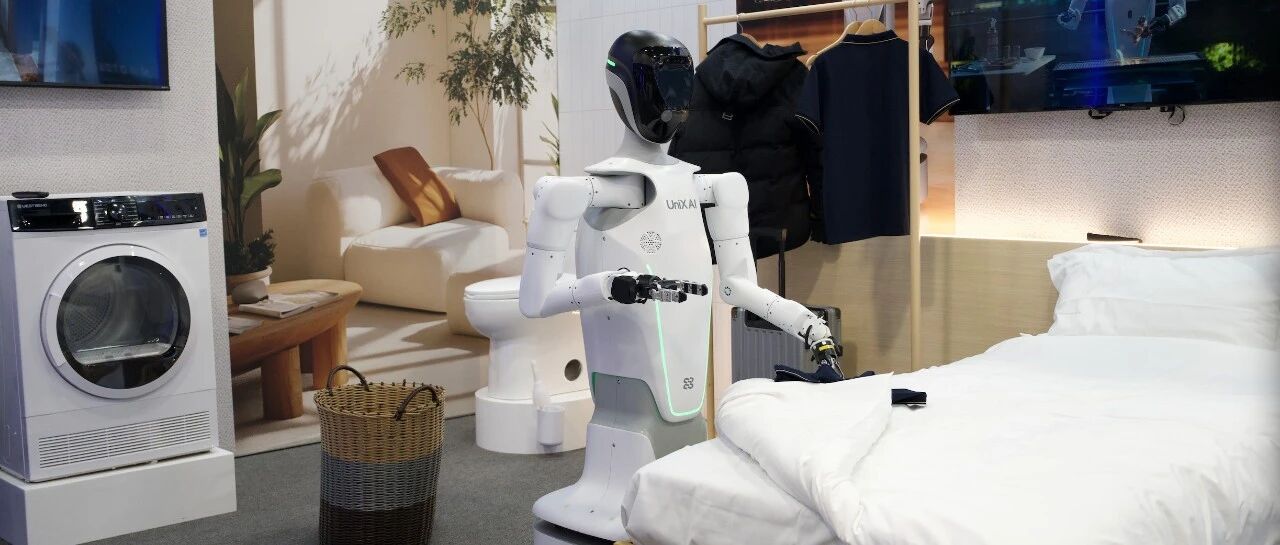
Group 1: CES 2026 Overview - The CES 2026 in Las Vegas showcased over 4,000 exhibitors, with 942 Chinese companies participating, accounting for approximately 22% of the total, making China the second-largest exhibiting country globally [4] - This year's focus was on AI and hardware, with a notable increase in the presence of Chinese brands [3] Group 2: Embodied Intelligence Sector - Among the 38 humanoid robot exhibitors, 21 were from China, representing 55% of the total, indicating a shift towards showcasing engineering delivery capabilities and real-world operational abilities [6] - Chinese company UniX AI gained significant media attention at CES, being featured in major global news outlets shortly after its presentation [6] - Unitree showcased its H1 humanoid robot, which has a 360-degree perception capability and a 15 kg load capacity suitable for industrial inspections [7] - Galaxy General demonstrated a collaborative operation between humanoid and quadruped robots, introducing a new outdoor inspection model with enhanced environmental adaptability and an 8-hour battery life [9] Group 3: Autonomous Driving Sector - Companies like Geely, Great Wall, Leap Motor, and New Stone presented their products at CES, indicating that autonomous driving is becoming a consumer product [11] Group 4: AI Glasses and Consumer Products - Among the 23 AI glasses brands, nearly 70% were Chinese, including Alibaba, XREAL, and Thunderbird [15] - Domestic brands like TCL and Hisense showcased their strengths, while emerging brands like MOVA and Yingshi also made their presence felt [17]
CES-2026智能眼镜新品解读及产业趋势展望
2026-01-08 02:07
Summary of Key Points from the Conference Call Industry Overview - The smart glasses industry is experiencing significant advancements, particularly highlighted at CES 2026, with a focus on AI and AR technologies. Despite many new brands and products emerging from China, the US market still finds these innovations novel [2][3]. Company Highlights Meta - Meta maintains a leading position in the smart glasses sector, with its Redmi Meta series AI glasses achieving sales of 8 million units in 2025. The AR glasses, Meta Raven Display, exceeded expectations with 80,000 units sold shortly after launch [1][2]. - In 2026, Meta plans to release audio glasses in collaboration with Ray-Ban and Oakley, featuring hearing aid capabilities and applications for children's attention enhancement and translation. The expected shipment for a small batch of iterative AR glasses is 200,000 units [1][6]. - Meta's software updates include enhanced video capabilities and audio systems that function as hearing aids, significantly improving user experience [5]. Xiaomi - Xiaomi plans to launch AI glasses and monochrome waveguide AR glasses in 2026, with expected shipments of 200,000 to 300,000 units for AR glasses and over 300,000 units for AI glasses [13]. XGIMI - XGIMI introduced a new AI glasses model weighing only 28.9 grams, making it the lightest in the market, priced at $599 and expected to launch in Q2 2026 [4][9]. Rokid - Rokid glasses are currently the best-selling AR glasses, with monthly shipments exceeding 30,000 units and a target of 1 million units by 2026 [11]. Apple - Apple is developing AI and AR glasses, with the AI model entering the new product introduction phase, aiming for a 2026 release. However, challenges related to hardware development and time constraints are present [3][16]. ByteDance - ByteDance is working on two models of smart glasses, one without a display and another similar to Rokid Glasses, with potential release dates in late 2026 or 2027 [14]. Market Trends and Challenges - The demand for smart glasses is heavily influenced by weight and comfort, with a target of under 50 grams for all-day wear. Achieving a weight below 30 grams is seen as crucial for expanding the user base [18]. - The supply side faces challenges in achieving clear displays, diverse styles, and developing "killer applications" that meet high-frequency user needs [21]. Competitive Landscape - The smart glasses market is not expected to see a price war in 2026 due to rational consumer behavior and a supply-demand imbalance, particularly in the domestic market [23]. Conclusion - The smart glasses industry is poised for growth with significant innovations from leading companies like Meta, Xiaomi, and XGIMI. The focus on lightweight designs and enhanced functionalities will be critical in meeting consumer demands and expanding market reach [2][18].

海量财经丨天猫年货节今天开卖!国补继续,空调冰箱等“硬核”年货低至5折
Sou Hu Cai Jing· 2026-01-05 02:19
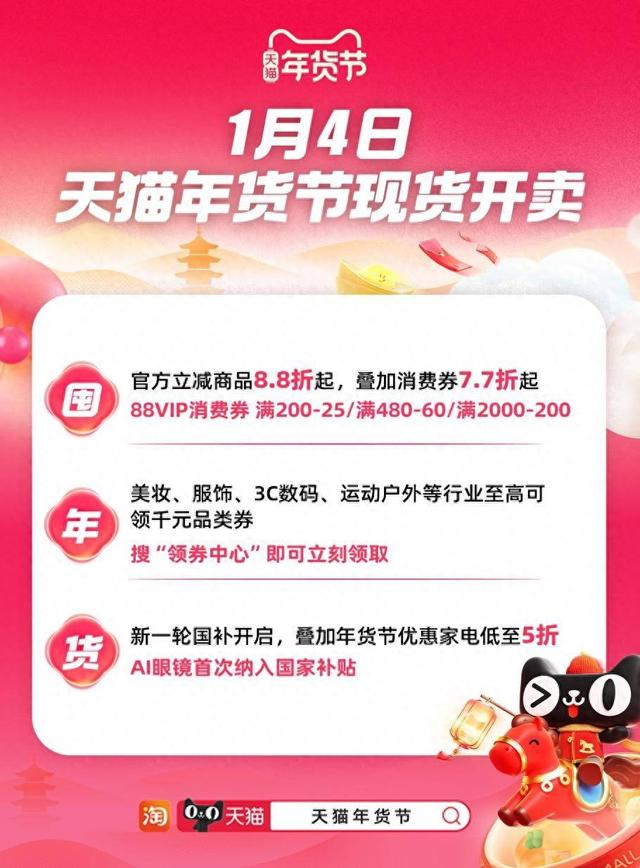
Group 1 - Tmall's New Year Festival offers simplified discounts, with official reductions starting at 8.8% off and additional consumer coupons available at 7.7% off, targeting various sectors including beauty, apparel, and electronics [1] - The first wave of 88VIP consumer coupons includes three tiers: 25 off for 200, 60 off for 480, and 200 off for 2000, catering to different consumer needs for purchasing New Year goods [1] - A new round of national subsidies has begun, with major appliances like air conditioners, TVs, washing machines, and refrigerators available at discounts as low as 50%, exemplified by the Siemens refrigerator priced at 5,999.5 after discount [3] Group 2 - AI glasses have been included in the national subsidy program for the first time, with sales on Tmall increasing over 15 times year-on-year, indicating a significant market growth [3] - Limited edition products for the Year of the Horse include luxury items from brands like Breitling and Chopard, showcasing a blend of modern craftsmanship and traditional design [3] - The trend of "Fat Horse" products has emerged, featuring rounded, cartoonish designs that appeal to younger consumers, with various brands releasing themed items that convey positive messages [4] Group 3 - The dining preferences of the younger generation emphasize a mix of traditional and modern cuisines, with high-end ingredients sourced globally, reflecting a desire for both quality and cultural connection [4] - Local specialties from various regions are highlighted, showcasing a trend where traditional foods are gaining popularity alongside international gourmet items [4]


天猫年货节现货开卖,国补继续“含马量”爆表
Xin Lang Cai Jing· 2026-01-04 04:33
Group 1 - Tmall's New Year Festival offers discounts starting from 8.8% off, with additional coupons providing up to 77% off for various categories including beauty, apparel, and electronics [1][3] - National subsidies have been reintroduced, allowing major appliances like air conditioners and refrigerators to be discounted up to 50%, with specific examples such as the Siemens refrigerator priced at 5,999.5 yuan after discount [3] - AI glasses have been included in the national subsidy program for the first time, with significant sales growth reported, showing a 15-fold increase in transactions year-on-year [3] Group 2 - The Year of the Horse-themed products are gaining popularity, with many new items inspired by a rounded, cartoonish design appealing to younger consumers [4] - High-end food ingredients are being featured for New Year's dinners, showcasing a blend of local and international delicacies, emphasizing quality and value [4] - Various brands are launching limited edition products for the Year of the Horse, including luxury watches and spirits, reflecting a blend of modern craftsmanship and traditional aesthetics [3][4]