Getty Images

Search documents
AI圈版权劫:从谷歌2.5亿罚单到Meta的成人片诉讼,巨头们都在忙应诉
3 6 Ke· 2025-09-07 00:27
Core Viewpoint - Leading AI companies such as Anthropic, OpenAI, Meta, Midjourney, and Google are facing unprecedented copyright infringement lawsuits, posing a significant challenge to the AI industry's development and the future of data acquisition and content creation [1][2][3]. Group 1: Anthropic - Anthropic has agreed to a settlement of at least $1.5 billion after being accused of large-scale copyright infringement for using pirated books to train its AI model Claude [3]. - The company is also facing allegations from major music publishers for illegally scraping lyrics from over 500 songs, with claims reaching up to $150,000 per song [3]. - Reddit has filed a lawsuit against Anthropic for illegally scraping millions of user comments to train Claude, contrasting with other companies that have secured licensing agreements [4]. Group 2: OpenAI - OpenAI is embroiled in a significant legal battle, being one of the most sued companies in the AI sector, with lawsuits alleging unauthorized use of millions of copyrighted articles to train ChatGPT [5][7]. - The New York Times has initiated a lawsuit against OpenAI and Microsoft, claiming that the generated content closely resembles original articles, impacting their subscription and advertising revenue [5]. - Multiple lawsuits from authors and media organizations accuse OpenAI of using copyrighted works without permission, with some cases being merged into multi-district litigation [7]. Group 3: Meta - Meta is facing several copyright infringement lawsuits, including accusations from authors for unauthorized use of their books to train AI models LLaMA 1 and LLaMA 2 [10]. - The company is also being sued by adult film production companies for illegally downloading and using copyrighted adult films for training its AI models, with claims reaching up to $359 million [11]. - In Europe, Meta is facing lawsuits from various authors and organizations for the unauthorized use of copyrighted content in training AI models [12]. Group 4: Midjourney and Stability AI - Midjourney and Stability AI are facing lawsuits for allegedly using copyrighted content to train their image generation models, with major entertainment companies filing claims [13][15]. - Disney and NBC Universal have accused Midjourney of using their intellectual property without authorization, while visual artists have also filed lawsuits against both companies for using their works [15]. - Stability AI has been sued by Getty Images for unauthorized use of millions of copyrighted images in training its models, with ongoing litigation [15]. Group 5: Google - Google has been fined €250 million by the French Competition Authority for using news content without permission to train its AI chatbot Bard, violating EU copyright laws [16]. - The ongoing legal disputes with the American Writers Association date back to 2005, with recent lawsuits alleging that Google’s use of scanned books for AI training violates copyright law [18]. Conclusion - The current wave of lawsuits indicates a shift in the AI industry from denial of infringement to seeking settlements and compliance, highlighting the ongoing struggle to balance technological innovation with copyright protection [18].



X @The Economist
The Economist· 2025-09-03 15:00
The ruling by a federal judge eases uncertainty that has hung over both companies all year. It may even encourage closer ties https://t.co/z1j3nayKEsPhoto: Getty Images https://t.co/Uh4SZVEiqd ...
5 Visual Strategies SMBs Can Use to Attract Today’s Eco-Conscious Consumer
Globenewswire· 2025-09-03 12:58
Core Insights - Climate change awareness is significantly influencing consumer behavior, with 69% of people globally feeling its effects in their daily lives [3] - A majority of consumers, 73%, are making conscious efforts to avoid negatively impacting the planet, and 57% are actively working to reduce their carbon footprint [3] - 60% of consumers are willing to spend more on businesses that align with their values, indicating a shift towards eco-conscious purchasing decisions [3] Consumer Trust and Expectations - 76% of consumers do not trust products labeled as "eco-friendly," highlighting the importance of visual representation in sustainability efforts [5] - 86% of consumers expect businesses to utilize their resources to improve society and the environment, indicating a demand for corporate responsibility [6] Visual Strategies for Businesses - Businesses should use real images that reflect actual practices rather than generic visuals to connect with eco-conscious consumers [7] - Sharing behind-the-scenes content can enhance transparency and trust, as consumers prefer to see genuine efforts rather than polished marketing [8] - Clear and specific communication about sustainability efforts is crucial, as many consumers lack understanding of terms like ESG [9] - Featuring customers and community in visuals can help consumers relate to the brand's sustainability efforts and inspire action [10] - Consistency in sustainability messaging is vital; isolated initiatives may raise skepticism among eco-conscious buyers [11] Research Methodology - The findings are based on global consumer surveys conducted between July 2022 and July 2024, with sample sizes ranging from 5,300 to 7,000 respondents across 25 countries [13]


AI一字不差背诵《哈利·波特》,居然不算盗版?地表最强法务迪士尼这次遇到对手了
3 6 Ke· 2025-06-30 11:25
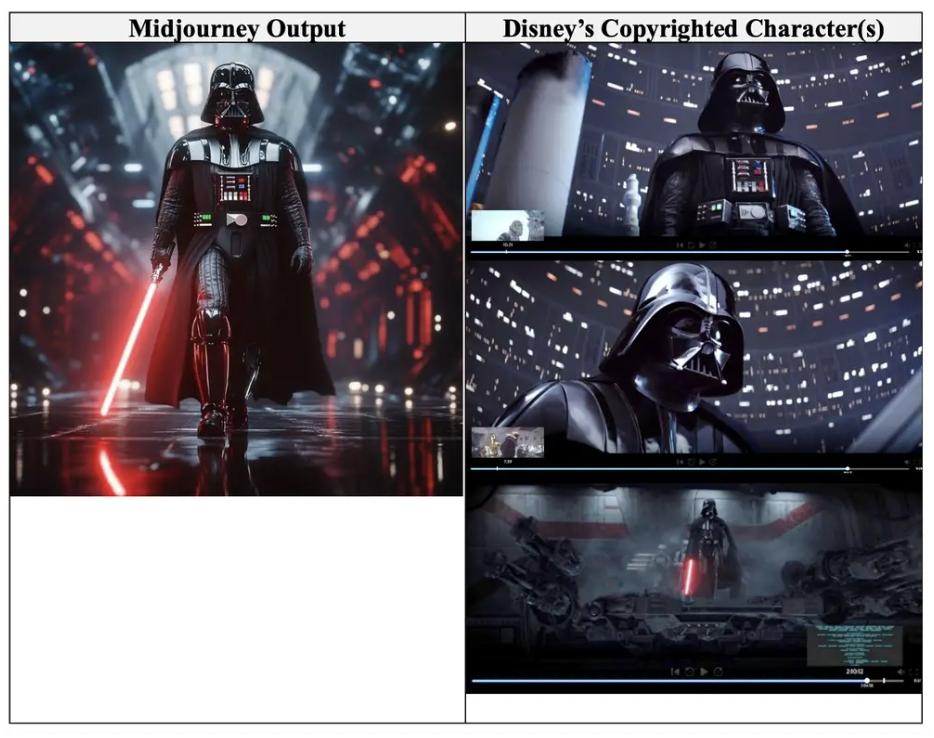
Core Viewpoint - The ongoing legal battles surrounding AI companies and copyright issues highlight the complexities of using copyrighted material for training models, raising questions about what constitutes "fair use" and the potential implications for the industry [5][8][10]. Group 1: Legal Cases and Outcomes - Disney has filed a lawsuit against Midjourney for allegedly using its intellectual property without permission, specifically referencing "Star Wars" and "Minions" [1]. - Getty Images has taken legal action against Stability AI for using millions of copyrighted images without authorization, with AI-generated images still bearing the original watermark [4]. - Recent court rulings in favor of AI companies like Anthropic and Meta suggest a legal precedent for using copyrighted material for training AI, but the judges' comments indicate that the issue is far from settled [5][6]. Group 2: Implications for AI Companies - The rulings may provide temporary relief for large AI companies, allowing them to negotiate licensing agreements with media and publishing entities, thus transforming copyright issues into calculable business costs [10]. - Smaller AI companies that rely on open-source data may face significant challenges, as they lack the financial resources to pay for licensing fees and could be disproportionately affected by future copyright enforcement [10][11]. Group 3: Concerns Over AI Outputs - There are growing concerns about whether the outputs generated by AI, particularly if they closely resemble copyrighted works, could lead to further legal challenges [8][10]. - A study revealed that Meta's model retained over 40% of the original text from "Harry Potter and the Sorcerer's Stone," raising alarms about potential copyright infringement [8][10]. Group 4: Future of Copyright and AI - The legal landscape surrounding AI and copyright is evolving, with the potential for ongoing negotiations and litigation as the industry adapts to new regulations and market conditions [11].
AI追捧和起诉交织:全球多家动画工会紧急声明 AI挤占人类创作者生存空间
2 1 Shi Ji Jing Ji Bao Dao· 2025-06-11 01:25
Core Viewpoint - The animation industry is facing a crisis due to the rapid adoption of AI technologies, which threaten employment and creative integrity, prompting unions to declare a state of emergency and propose three key principles for AI development [1][4][5]. Group 1: Industry Concerns - The urgent statement from unions highlights fears of job displacement as AI encroaches on creative roles, using copyrighted works without creator consent, leading to a loss of unique human creativity [4][5]. - The animation industry is undergoing significant structural adjustments, with streaming platforms proving unprofitable, resulting in layoffs, outsourcing, and studio closures [5][6]. - AI is seen as a systemic threat to the animation sector, with 78% of animation-related companies planning to adopt generative AI technologies in the next three years, particularly in 3D and 2D animation [6]. Group 2: AI Implementation and Legal Issues - In domestic markets, AI is being integrated into production processes, with companies like Shanghai Hongli Culture using AI to enhance efficiency in early-stage art production, although complex tasks still require human input [7]. - Legal disputes are escalating over copyright issues related to AI training data, with notable cases involving Stability AI and Getty Images, highlighting the unresolved legal responsibilities surrounding AI usage [8]. - The Guangzhou Internet Court's ruling on the "AI Ultraman" case indicates ongoing legal challenges regarding copyright infringement and the responsibilities of AI platforms, with the boundaries of copyright and creator rights becoming increasingly contentious [8].
一场就得“数百万美金”?Getty CEO说:“AI版权战”太贵了!
Sou Hu Cai Jing· 2025-05-29 02:46
Core Viewpoint - Getty Images has positioned itself as a staunch defender of artists' rights in the ongoing AI copyright disputes, emphasizing the high costs associated with litigation against AI companies [2][3] Group 1: Getty Images' Actions and Statements - Getty Images banned users from uploading AI-generated images in 2022 and later launched a socially responsible image generator while suing an AI company for not compensating artists [2] - CEO Craig Peters revealed that Getty has spent "millions of dollars" on a copyright lawsuit against Stability AI, highlighting the prohibitive costs of pursuing every infringement case [2] - Getty filed a lawsuit against Stability AI in 2023, claiming that the company used over 12 million images from Getty's library without permission to train its model [2][3] Group 2: AI Companies' Defense and Industry Implications - AI companies argue that their practices of scraping images for model training fall under "fair use," which is protected by copyright law [3] - Stability AI and other AI firms assert that requiring them to pay licensing fees would hinder technological innovation and the growth of the AI industry [5] - Peters criticized this stance, arguing that rights holders should not bear the high costs of litigation against claims that paying artists would stifle innovation [5] Group 3: Public Reactions and Broader Context - The comments from Peters coincided with backlash against Nick Clegg, former Meta global affairs head, for reiterating the AI industry's argument that requiring artist consent would harm the sector [5][6] - Critics have drawn parallels between the current arguments of AI companies and past defenses used by illegal file-sharing platforms like Napster [6] - Getty has submitted recommendations to the Trump administration, urging it to reject AI companies' proposals for exemptions that would allow them to avoid paying artists for their work [7][8]
Getty Images斥资数百万美元对抗AI文生图公司;腾讯发布并开源混元语音数字人模型丨AIGC日报
创业邦· 2025-05-29 00:04
Group 1 - ByteDance will disable third-party AI development software, including Cursor and Windsurf, starting June 30, to prevent data leakage, and will promote its in-house tool Trae as a replacement [1] - Tencent has released and open-sourced the HunyuanVideo-Avatar model, which allows video creators to generate videos with natural expressions and lip-syncing by uploading images and audio [1] - Getty Images is investing millions of dollars to sue Stability AI for allegedly using copyrighted content to train its AI models, particularly the Stable Diffusion model [1] Group 2 - South Korea plans to invest approximately 480 billion KRW (around 349.1 million USD) this year to develop AI-related products and services, aiming to foster industrial applications of AI and stimulate growth in the manufacturing sector [1]


8点1氪|将总监降职为“前台”公司被判赔26万元;印度承诺2047年建成发达国家;金银将成佛罗里达州法定货币
3 6 Ke· 2025-05-29 00:04
Group 1: IPO Applications - Shenzhen Feisu Innovation Technology Co., Ltd. has submitted an IPO application to the Hong Kong Stock Exchange, with joint sponsors including CICC, CITIC International, and China Merchants Securities International [1] - Shanghai Xiangong Intelligent Technology Co., Ltd. has also submitted an IPO application to the Hong Kong Stock Exchange, with CICC as the exclusive sponsor [2] Group 2: Economic Developments - India's economy has reportedly grown to $4 trillion, surpassing Japan to become the fourth-largest economy globally, following the U.S., China, and Germany [3] - The Indian government aims to transform the country into a developed nation by 2047, with a projected economic growth rate of 6.5% for the fiscal year 2024-2025, the highest among major economies [4] Group 3: Corporate News - Five Fang Zhai announced a gift of rice dumpling gift boxes worth 160 yuan to shareholders, but the company's stock price fell by 4% following the announcement [5][6] - Apple has launched a self-service repair program for iPads, providing users with repair manuals and original parts starting from May 29 [7] - BYD responded to the financial issues of its Shandong dealer, stating that the dealer's problems were due to blind expansion and leveraged operations [8] Group 4: Financial Reports - Kingsoft reported a revenue of 2.338 billion yuan for Q1 2025, a 9% year-on-year increase, with office software and services accounting for 56% of total revenue [12] - NVIDIA's Q1 revenue reached $44.1 billion, a 69% year-on-year increase, with net profit at $18.78 billion, up 26% [13] - HP's Q2 revenue was $13.2 billion, a 3.3% increase year-on-year, with adjusted EPS of $0.71 [14] Group 5: Investment and Financing - Jiangsu Aislon Holdings Co., Ltd. completed a Series A financing round of 50 million yuan, led by Fuxing Capital, to focus on R&D in new energy technology and smart manufacturing [15]





8点1氪:将总监降职为“前台”公司被判赔26万元;印度承诺2047年建成发达国家;金银将成佛罗里达州法定货币
36氪· 2025-05-29 00:01
Group 1 - Shenzhen Feisu Innovation Technology Co., Ltd. has submitted a listing application to the Hong Kong Stock Exchange, with joint sponsors including CICC, CITIC International, and招商证券国际 [2] - Shanghai Xiangong Intelligent Technology Co., Ltd. has also submitted a listing application to the Hong Kong Stock Exchange, with CICC as the sole sponsor [3] Group 2 - A court ruled that a company must pay 262,665 yuan in compensation to an employee who was demoted from director to a front desk position, which was deemed insulting and punitive [4][5] - The employee's average monthly salary before the demotion was 20,205 yuan, and the company argued that the demotion was due to poor performance [4] Group 3 - Nvidia reported a first-quarter revenue of $44.1 billion, a 69% year-over-year increase, with a net profit of $18.78 billion, up 26% [16] - HP announced a second-quarter revenue of $13.2 billion, reflecting a 3.3% year-over-year growth [17] Group 4 - Jiangsu Aislon Holdings Co., Ltd. completed a 50 million yuan Series A financing round, led by Fuxing Capital, aimed at advancing renewable energy technology and smart manufacturing [17]
Getty Images spending millions to battle a 'world of rhetoric' in AI suit, CEO says
CNBC· 2025-05-28 06:01
Core Viewpoint - Getty Images is taking legal action against Stability AI for allegedly using copyrighted material to train its AI models without permission, which the company views as unfair competition and theft [1][2][3] Group 1: Legal Action - Getty Images is suing Stability AI in both the U.K. and U.S. for copying 12 million images without permission or compensation [3] - The lawsuit claims that Stability AI's actions benefit its commercial interests at the expense of content creators [3] Group 2: Industry Perspective - The CEO of Getty Images, Craig Peters, argues that the AI industry is misusing the concept of innovation to justify the theft of copyrighted material [2] - Peters emphasizes that while competition is welcome, the current practices of some AI firms represent unfair competition [2] Group 3: AI Industry Response - Stability AI contests the legal claims made by Getty Images, asserting that it does not consider them to have merit [3] - The company acknowledges using some images from Getty's websites for training its Stable Diffusion model but denies liability for the claims [3]