Lucid Group

Search documents
【快讯】每日快讯(2025年6月5日)
乘联分会· 2025-06-05 08:30
Domestic News - The establishment of safety requirements for intelligent connected vehicle combination driving assistance systems has been initiated, with a project cycle of 22 months, expected to be submitted by March 22, 2024 [7] - Sichuan Province has issued a medium to long-term development plan for the hydrogen energy industry (2025-2035), aiming to promote over 4,000 hydrogen fuel cell vehicles and establish more than 40 hydrogen refueling stations by 2027 [8] - Luzhou has introduced new policies to promote the application of new energy vehicles, targeting a scale of over 5 billion yuan in the new energy vehicle industry and a vehicle ownership of 65,000 units this year [9] - FAW-Volkswagen signed a memorandum of cooperation with the Tianjin Economic Development Zone government to produce two new energy vehicles based on the new CMP platform by 2027 [10] - Hongqi's integrated vehicle-road-cloud technology has successfully passed initial testing, enhancing smart traffic systems and enabling seamless communication between vehicles and infrastructure [12] - Nearly half of the users of the new Xiaopeng MONA Max version are women, with over 80% of new orders opting for the high-end intelligent driving assistance system [13] - Dongfeng Motor has officially entered the Polish market with three brands, showcasing a full range of products and establishing strategic partnerships for local sales and service [14] - NIO's entry-level electric vehicle, Firefly, is set to launch in the European market, with sales in the UK expected to start soon [15] International News - India has filed a complaint with the WTO against the US for increasing tariffs on automobiles, indicating a toughening stance in trade negotiations [16] - Italy's new car sales in May slightly decreased by 0.16% year-on-year to 139,390 units, with total sales for the first five months down by 0.54% [17][18] - Lucid Motors has signed a long-term supply agreement with Graphite One to strengthen its supply chain for raw materials in the US [19] - Mazda plans to produce its first pure electric vehicle in Japan by 2027, marking its entry into the electric vehicle market [20] Commercial Vehicles - Yuchai and XCMG have signed an international strategic cooperation agreement to enhance overseas development and establish service stations in the Eurasian region [21] - Suzhou Golden Dragon launched its new V-series buses in Dubai, marking a significant milestone in the UAE market [22] - The logistics industry in China reported a PMI of 50.6% in May, indicating continued expansion and growth in consumer logistics demand [23] - Fastech showcased its latest electric drive systems and solutions at the International New Energy Commercial Vehicle Exhibition, focusing on the electrification needs of heavy-duty and specialized vehicles [24][25]




Graphite One and Lucid Enter into Second Non-Binding Supply Agreement
Prnewswire· 2025-06-04 14:25
Core Viewpoint - Graphite One Inc. has entered into a non-binding supply agreement with Lucid Group, Inc. for natural graphite anode active materials, complementing a previous agreement for synthetic graphite, positioning the company as the only provider of both materials to a U.S. electric vehicle manufacturer [1][2][3]. Group 1: Supply Agreement Details - The new supply agreement focuses on natural graphite anode active materials to be supplied to Lucid and its battery cell suppliers for future vehicles [2]. - The agreement is non-binding and will commence once Graphite One begins production of natural graphite, with an initial term of five years [5]. - Sales under the agreement will be based on a mutually agreeable price formula, with standard terms and conditions applicable [5]. Group 2: Strategic Importance - This agreement is part of Graphite One's strategy to build a complete U.S. supply chain for advanced graphite materials, enhancing domestic production capabilities [1][3]. - The company aims to address the current 100% import dependency of the U.S. on synthetic and natural graphite by developing a domestic supply chain anchored by the Graphite Creek deposit in Alaska [8]. - The feasibility study completed by Graphite One showed a tripling of the company's proven and probable reserves, indicating strong potential for future production [3]. Group 3: Industry Context - The partnership with Lucid is seen as a significant step towards increasing U.S. independence in critical material supply chains, which is essential for the economy and reducing the carbon footprint of vehicles [3]. - Graphite One's plans include constructing a manufacturing facility in Warren, Ohio, and a recycling facility to reclaim graphite and other battery materials, supporting a circular economy strategy [8].


美国电动车商Lucid与Graphite One签署石墨材料供应协议,加强在美供应链
news flash· 2025-06-04 13:45
Group 1 - Lucid has signed a multi-year supply agreement with Graphite One for graphite materials [1] - This agreement strengthens Lucid's supply chain for raw materials and resources in the U.S. [1]
从美国的几次价格战看中国车市价格战
首席商业评论· 2025-06-04 03:36
Core Viewpoint - The article discusses the historical context and implications of price wars in the automotive industry, particularly focusing on the U.S. market and the recent price competition initiated by Tesla in the electric vehicle sector. It emphasizes the cyclical nature of these price wars and their impact on market dynamics, competition, and technological advancements. Group 1: Historical Price Wars - The introduction of the assembly line by Ford in the early 20th century drastically reduced production costs, leading to the first price war in the automotive industry, where car prices fell from approximately $850 in 1913 to $290 in 1925 [2] - In the 1980s, Japanese automakers entered the U.S. market aggressively, leading to significant price reductions by American manufacturers, with GM lowering prices by 10% and Ford offering discounts up to $1,000 (equivalent to about $3,500 today) [4] - By 1985, Japanese brands captured 20% of the U.S. market share, doubling from 10% in 1975, forcing American companies to accept price cuts to maintain market presence [4] Group 2: Tesla's Impact on the Market - Since 2023, Tesla's pricing strategy has significantly affected traditional automakers, with average electric vehicle prices in the U.S. dropping to $50,683, a decrease of over 20% year-on-year [6] - Traditional manufacturers like Ford and Lucid have responded with their own price reductions, with Ford offering cash rebates of up to $7,500 on certain electric models [6] - The price war initiated by Tesla, while boosting sales in the short term, has created financial pressures for startups like Lucid and Fisker, leading to cash reserve depletion [8] Group 3: Current Market Dynamics in China - In 2024, the Chinese automotive market is expected to see significant price reductions, with new energy vehicles experiencing an average price drop of 9.2% and fuel vehicles by 6.8% [12] - The market is characterized by structural oversupply, with 77 brands and a total production capacity of 40 million units, while actual sales were only around 12.9 million units [13] - The ongoing price war is driven by the need for market clearing and efficiency, with many companies facing cash flow pressures leading to production delays [14] Group 4: R&D and Market Consolidation - Many domestic brands are increasing R&D investments, with some exceeding 5% of their revenue, contrasting with foreign automakers who are reducing R&D spending [17] - The automotive industry is shifting from a scale competition to a cost control paradigm, emphasizing the need for efficiency and technological advancement [20] - Market consolidation is accelerating, with companies like BYD restructuring their sales networks to enhance efficiency and reduce redundancy [18] Group 5: Future Outlook - The end of the current price war will depend on the resolution of capacity adjustments, market concentration, and the convergence of new energy vehicle technologies [21] - The article warns against unsustainable price competition that undermines product quality and consumer trust, advocating for competition based on technological innovation and quality improvement [23]





英伟达财务模型分析--钱都挣在了哪里?
傅里叶的猫· 2025-06-01 15:22
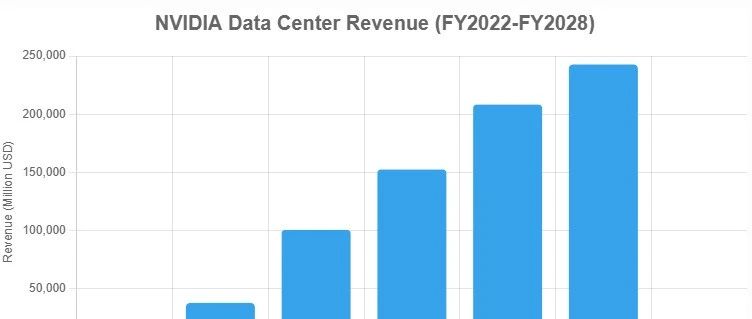
Core Viewpoint - Nvidia's Q1 financial report indicates strong revenue growth driven by data center and gaming segments, despite challenges from inventory write-downs related to the H20 chip [1][22][25] Data Center Business - In Q1, Nvidia's data center revenue reached $39.11 billion, a year-over-year increase of 73.3%, primarily driven by the Blackwell product line [2][4] - The data center segment's revenue is projected to grow significantly, with estimates of $100.69 billion for FY2024 and $152.5 billion for FY2025, reflecting a compound annual growth rate of approximately 208% from FY2022 [4][9] - The product mix is shifting, with the H100/H200 series expected to dominate revenue contributions in the coming years, while the A100's share declines [6][9] Gaming Business - The gaming segment experienced fluctuations, with revenue of $3.375 billion in FY2022, surging to $11.186 billion in FY2023, and slightly declining to $9.781 billion in FY2024 [12][15] - GeForce products remain the core of the gaming business, contributing 80%-85% of revenue, with expectations of $9.536 billion in FY2025 [13][15] - Future forecasts indicate potential revenue of $14.043 billion in FY2026, but with risks from competition and market saturation [15][16] Automotive Business - Nvidia's automotive revenue has grown from $566 million in FY2022 to an expected $2.42 billion in FY2025, driven by demand for autonomous driving and AI applications [18][20] - The DRIVE platform is central to this growth, with significant orders from over 25 automakers, and projections of $3.845 billion in FY2026 [19][20] China Market Impact - Recent U.S. export restrictions on the H20 chip have significantly impacted Nvidia's business in China, leading to a $4.5 billion inventory write-down [22][24] - Despite these challenges, global demand for AI chips remains strong, with Nvidia's infrastructure still in high demand [22][23] Financial Guidance - For Q2 FY2026, Nvidia expects revenue to reach $45 billion, with a GAAP gross margin of 71.8%, despite the anticipated impact of the H20 chip ban [25]

Should You Buy ChargePoint While It's Trading Below $1?
The Motley Fool· 2025-06-01 09:10
Industry Overview - The electric vehicle (EV) industry is currently facing significant challenges, including tariffs, rising EV prices, and a negative political environment, which are impacting automakers and the broader EV ecosystem [1] - EV sales in the U.S. accounted for 8.1% of total vehicle sales last year, a slight increase from 7.8% in 2023, indicating slow adoption rates due to high prices [4] ChargePoint Company Analysis - ChargePoint's share price has decreased by 60% over the past year, now trading below $1, raising concerns among investors about the stock's potential [2] - The average transaction cost for a new electric vehicle was $59,200 in April, a nearly 4% increase from the previous year, making EVs less accessible to many buyers [4] - ChargePoint's sales fell by 18% in fiscal 2025 to $417 million, with projections for first-quarter 2026 sales at $100 million, reflecting a nearly 7% decline from the same quarter last year [9] - The company reported a non-GAAP net loss of approximately $159 million last year, although this was an improvement from a loss of about $297 million in 2024 [10] - ChargePoint's largest revenue segment, networked charging system sales, decreased by 35%, while subscription sales increased by 20% [10] External Challenges - Tariffs on automotive imports are negatively affecting U.S.-based EV manufacturers, leading to increased production costs [6] - Political uncertainty surrounding tariffs has caused major automakers like Ford, Stellantis, and General Motors to withdraw their 2025 guidance [7] - A recent bill passed by Republicans in the House aims to roll back tax credit incentives for EV purchases, which could further hinder EV adoption [8] Investment Outlook - Despite ChargePoint's low price-to-sales multiple of 0.75, the current market conditions and company-specific challenges suggest that it may not be a good investment opportunity [11] - The company and the broader EV industry are expected to continue facing serious headwinds that could further slow growth, making it difficult for ChargePoint to achieve market-beating returns in the near future [12]


Prediction: Tesla Stock Is a Buy Before July 23
The Motley Fool· 2025-05-31 22:05
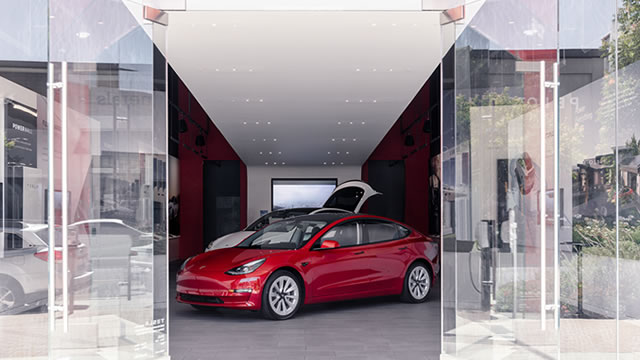
Core Viewpoint - Tesla's stock has experienced significant volatility in 2025, with shares fluctuating between $220 and $430, yet the company's growth narrative remains strong, supported by two key factors that suggest potential investment before the upcoming earnings call in late July [1] Group 1: Capital Advantage - Tesla possesses a substantial capital advantage, which is critical in the electric vehicle (EV) sector where many competitors have failed due to financial constraints [2] - The capital and time required to bring an EV to market are often underestimated; Tesla's journey from inception to market was relatively swift compared to competitors like Rivian and Lucid Motors [3] - Currently, Tesla is the largest pure-play EV company in North America, with a market capitalization of approximately $1 trillion, while Rivian and Lucid Group together are valued at only $30 billion [4] - Tesla's ability to raise $30 billion in new cash by diluting shareholders by just 2.5% enhances its financial stability and lowers its cost of debt, providing a significant competitive edge [4][5] Group 2: Robotaxi Growth Opportunity - The introduction of Tesla's robotaxi service, starting with the Cybercab and initially utilizing Model Ys, is seen as a major growth opportunity, with expectations of dominating the U.S. ride-hailing market [7] - Investor Cathie Wood predicts that the robotaxi service could significantly increase Tesla's stock price and contribute over 90% of the company's revenues in the long term, potentially reaching $1.7 trillion by 2040 [7][9] - Despite skepticism regarding the timelines for the robotaxi service's rollout, Tesla's capital advantages provide the necessary resources to develop and scale this initiative over the coming years [8][9]
Prediction: Rivian Stock Is a Buy Before Aug. 5
The Motley Fool· 2025-05-31 08:05
Core Viewpoint - Rivian Automotive's stock has surged by approximately 40% recently, and there are strong reasons for investors to consider buying shares before the upcoming earnings call, expected around August 5 [1] Group 1: Growth Potential - Rivian has faced sluggish sales growth in recent years, primarily due to market saturation with its two existing models, the R1T and R1S, which have high price points nearing $100,000 [2] - The company is set to launch three new models (R2, R3, and R3X) next year, all priced under $50,000, which is expected to significantly expand its addressable market and unlock millions of potential buyers [3] - Analysts project a modest 5% sales growth in 2025, increasing to 41% in 2026, with potential for explosive revenue growth starting in 2027 as production scales [3] Group 2: Profitability Improvement - Rivian achieved a positive gross margin by the end of last year, with further improvements noted in the most recent quarter, aligning its profitability levels with those of Tesla [4] - Achieving scale is crucial for profitability in the electric vehicle sector, as higher sales volumes allow for fixed costs to be spread over more units, potentially leading to significant operating leverage if Rivian's new models perform well [5] Group 3: Valuation Considerations - Rivian's current stock valuation is considered attractive, trading at just 3.3 times sales, compared to Tesla at 12.5 times and Lucid Group at 8 times, despite Rivian's slower sales growth in recent years [7][8] - The anticipated launch of new models and subsequent sales growth and profitability improvements are expected to lead to a higher market valuation for Rivian in the future [8]


美国拟取消《通胀削减法案》(IRA)电动汽车补贴对中韩电池产业的影响
鑫椤锂电· 2025-05-29 08:08
Core Viewpoint - The article discusses the recent changes in the IRA (Inflation Reduction Act) proposals, focusing on the implications for electric vehicle subsidies and clean energy support, particularly affecting the battery industries in China and South Korea [3][4][6]. Policy Changes - The original IRA included a $7,500 tax credit for consumers purchasing eligible electric vehicles, contingent on the production of battery components and critical minerals in North America or free trade agreement countries, with restrictions on materials linked to Chinese supply chains [2]. - The new proposal aims to gradually eliminate electric vehicle subsidies by the end of 2025 or 2026, and to terminate hydrogen subsidies and clean energy tax credits by 2029 [3]. Impact on Chinese Battery Industry - Short-term impacts are limited, but long-term adjustments in the supply chain are anticipated, with significant export restrictions on key battery materials from China to the U.S. [8]. - China currently supplies 68% of natural graphite and 59% of synthetic graphite imported by the U.S., and strict enforcement of "decoupling" policies could significantly increase export costs for Chinese battery companies [8]. - Chinese battery manufacturers hold over 60% of the global market share and dominate processing of key resources like lithium and cobalt, facing challenges if the U.S. enforces a decoupling strategy [9]. - Chinese companies are accelerating overseas investments to mitigate trade barriers, with firms like CATL and Guoxuan High-Tech expanding their manufacturing presence in Europe [8]. Impact on South Korean Battery Industry - South Korean battery manufacturers, such as LG Energy Solution and SK On, are at risk of losing subsidy eligibility due to their reliance on Chinese supply chains, which could lead to significant profit reductions [11]. - For instance, LG Energy Solution could see a 30% decrease in profits if subsidies are removed, while SK On may shift from profit to loss [11]. - Investment plans in North America are being delayed, with companies considering lower-cost regions like Mexico or Europe for new facilities [13]. Industry and Policy Controversies - There is opposition from the U.S. clean energy sector, with companies like Siemens and Hyundai warning that subsidy cuts could lead to investment losses and job reductions [16]. - Environmental organizations criticize the subsidy reductions, predicting an increase in greenhouse gas emissions and higher household energy costs [16]. - The competitive landscape may shift, with Tesla potentially gaining an advantage due to its cost control and local supply chain strategies, while emerging brands like Rivian and Lucid could be marginalized [17]. - Despite policy barriers, there remain opportunities for collaboration between Chinese and South Korean companies in battery technology and resource procurement [17].

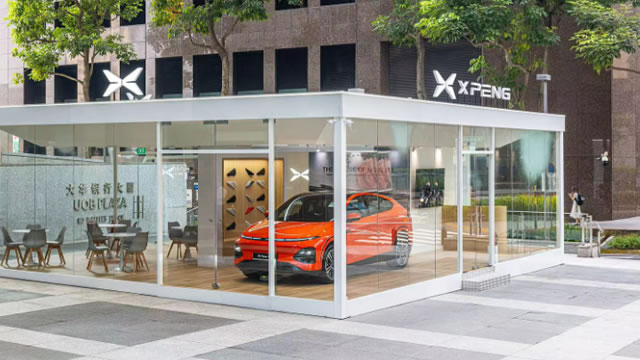
XPeng Could Surge On Record Growth, AI Breakthroughs, And Wall Street's Blind Spot
Seeking Alpha· 2025-05-22 15:35
Group 1 - The Electric Vehicle (EV) market is showing promising investment opportunities, particularly in companies like Lucid Motors (LCID) and Rivian (RIVN) [1] - The article highlights the growing interest in the EV sector, suggesting that it is a favorable time for potential investments [1] Group 2 - The author, Rick, has over 20 years of experience in trading stocks and options, indicating a strong background in financial analysis [1] - Rick's work has been featured in major publications, which adds credibility to his insights on the EV market [1]