NEC

Search documents
中国收紧对日两用物项出口管制,媒体称稀土或面临实质限制风险_ China tightens controls on export of dual-use items to Japan, media reports on risk of facto restrictions on rare earth
2026-01-07 03:05
Summary of Conference Call Notes on Japan Industrials Industry Overview - The conference call discusses the Japan Industrials sector, particularly focusing on the implications of China's recent export control measures on dual-use items to Japan [1][2]. Key Points and Arguments 1. **Export Control Announcement**: On January 6, China's Ministry of Commerce announced strengthened export controls on dual-use items to Japan, citing national security and international obligations [1]. 2. **Prohibition Details**: The export of dual-use items to Japanese military users for military purposes is strictly prohibited. Violators will face legal consequences [2]. 3. **Rare Earths Inclusion**: Media reports suggest that rare earths may be included in these export controls, which could have significant implications for Japan's industrial sectors [2]. 4. **Historical Context**: The focus on rare earths is heightened due to China's previous actions in April 2025, when it added several rare earths to its dual-use item export control list [2]. 5. **Ambiguity in Applications**: There are gray areas in distinguishing between military and civilian applications of these items, leading to potential supply disruptions [6]. 6. **End-Use Certification Challenges**: The high bar for end-use certification complicates the situation, as items with both military and civilian applications may fail to pass review [7]. 7. **Industrial Impact**: The potential for widespread industrial impact, especially in Japan's precision and manufacturing sectors, necessitates close monitoring of future developments [7]. 8. **Historical Reactions**: Past issues related to rare earths have caused short-term shocks but also spurred the development of alternative materials in some fields [8]. Additional Important Content - **Analyst Disclosures**: Analysts from Goldman Sachs may have conflicts of interest due to their business relationships with companies covered in the report [3]. - **Valuation Comparisons**: The document includes a valuation comparison table for various companies within the Japan Industrials sector, detailing metrics such as price targets, P/E ratios, and expected returns [9][11]. - **Contact Information**: Contact details for analysts covering the sector are provided for further inquiries [4]. This summary encapsulates the critical insights and implications of the recent developments in the Japan Industrials sector, particularly concerning China's export controls and their potential impact on the industry.
毫米波射频屏蔽箱全球市场报告:主要企业、排名及2026-2032年增长预测
Sou Hu Cai Jing· 2026-01-06 14:44
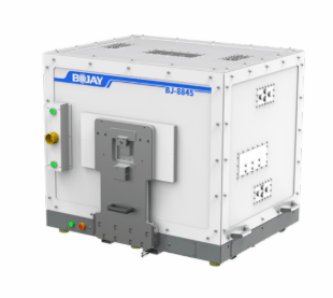
Core Insights - The global millimeter-wave RF shielding box market is projected to grow from approximately $220 million in 2024 to $226 million in 2025, with a compound annual growth rate (CAGR) of 3.3%, reaching an estimated $274 million by 2031 [3]. Market Overview - Millimeter-wave RF shielding boxes are designed to block electromagnetic waves in the millimeter-wave frequency range (30 GHz to 300 GHz), protecting internal devices from external electromagnetic interference (EMI) and preventing internal signal leakage [1]. Key Drivers - Acceleration of 5G and Beyond 5G communication technology development, with Japan's government prioritizing 5G/6G as a national strategy, increasing demand for RF shielding boxes in testing [7]. - Growth of the automotive radar and autonomous driving industry, particularly in Japan, necessitating the use of RF shielding boxes for precise testing of advanced driver-assistance systems (ADAS) [7]. - Strict national electromagnetic compatibility (EMC) regulations in Japan require high-performance RF shielding boxes for compliance testing of devices containing millimeter-wave circuits [8]. - Advancements in semiconductor and packaging technologies towards high frequencies increase the demand for RF shielding boxes capable of providing high shielding effectiveness (SE) [8]. - Ongoing research in frontier fields like terahertz (THz) imaging and communication by Japanese universities and research institutions drives the need for RF shielding boxes in controlled experimental environments [8]. Market Opportunities - Deployment of Open RAN creates testing scenarios that increase demand for standardized RF shielding boxes in independent testing laboratories [9]. - The ground equipment market for low Earth orbit (LEO) satellite internet constellations, such as SpaceX's Starlink, presents significant opportunities for RF shielding box manufacturers [9]. - The trend towards wireless and high-frequency medical devices necessitates high-reliability RF shielding boxes for testing, creating a high-value niche market [9]. - Factory automation and industrial IoT (IIoT) require robust RF shielding boxes for testing high-frequency wireless communication modules in smart factories [10]. - Transitioning to a "shielding box as a service (SaaS)" business model can lower initial investment barriers for small and startup companies, expanding the customer base [10]. Constraints on Expansion - Market demand is highly dependent on a few capital-intensive downstream industries, leading to significant volatility and uncertainty in demand for RF shielding boxes [11]. - The conflict between standardization and customization poses challenges for manufacturers, as Japanese clients often require tailored solutions, increasing costs and delivery times [12]. - Difficulty in validating the performance of RF shielding boxes at specific frequencies complicates the sales process, requiring substantial customer education and resource investment [12].

日企集体退出 5G 基站赛道,高市早苗却拉美西方围堵中国通信
Xin Lang Cai Jing· 2026-01-04 03:16
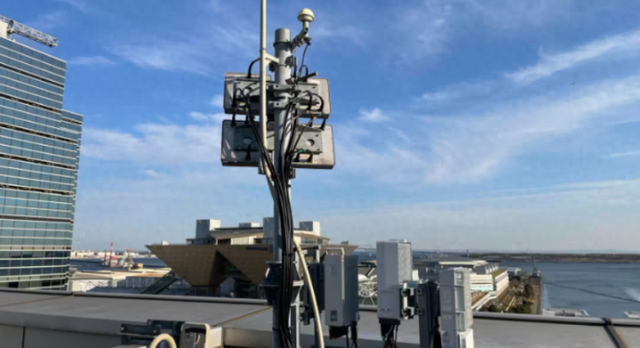
Core Viewpoint - Japanese telecom giants NEC and Fujitsu have announced their withdrawal from the 5G base station market, marking a significant setback for Japan's ambitions in 5G technology and leaving the country reliant on foreign suppliers like Ericsson and Nokia [3][4]. Group 1: Company Developments - NEC has officially declared the termination of its 4G and 5G base station research and production by the end of 2025, followed closely by Fujitsu's decision to split its communications equipment business [3]. - Japanese telecom operators NTT, KDDI, and SoftBank have lost confidence in domestic technology, opting to procure 5G base stations exclusively from foreign companies [3][4]. - The failure of Japanese companies to compete in the 5G market is attributed to a lack of technological capability and market share, with Japanese firms holding less than 2% of the global market [4]. Group 2: Market Dynamics - The global 5G base station market is dominated by Huawei, Ericsson, and Nokia, which together account for nearly 80% of the market share, with Huawei alone holding 34% [4]. - Japan's 5G base station count is below 100,000, significantly lagging behind China's over 4.5 million, which has led to higher power consumption and stability issues in Japanese products [4][6]. Group 3: Political and Strategic Responses - Japanese Prime Minister Sanae Takaichi has attempted to form a "global telecom alliance" with Western nations to counter China's 5G technology, despite the lack of a coherent strategy [6][7]. - The proposed Open RAN technology, aimed at decentralizing 5G production, is criticized for its poor compatibility and increased maintenance costs, making it less viable compared to Huawei's integrated solutions [6][7]. - China's response to Japan's political maneuvers includes diplomatic pushback, economic measures such as rare earth export controls, and a focus on advancing its own 5G and future 6G technologies [7][9]. Group 4: Industry Implications - The collapse of Japan's 5G ambitions serves as a cautionary tale for other nations considering political strategies over technological innovation [9]. - China's sustained investment in R&D and its comprehensive industrial chain have solidified its leadership in the 5G sector, demonstrating that market success relies on innovation rather than political alliances [9].


心智观察所:围堵华为四年后,NEC注定要黯然离场
Guan Cha Zhe Wang· 2025-12-30 01:11
Core Viewpoint - NEC's withdrawal from the 4G and 5G public base station development market signifies the complete collapse of the Japanese telecommunications equipment industry, highlighting the challenges faced by Japanese companies in the face of fierce competition from Chinese firms like Huawei and ZTE [1][5]. Group 1: NEC's Strategic Withdrawal - NEC's president, Takashi Morita, announced that the company will no longer invest in the public base station development sector, marking a significant shift from their previous goal of capturing 20% of the global market by 2030 [1][3]. - The company's market share has dwindled, with NEC and Fujitsu together holding less than 2% of the global base station market, while Huawei, Ericsson, and Nokia control nearly 80% [3][4]. - The competitive landscape for 5G has fundamentally changed, requiring higher technical standards and larger scale effects, which NEC, with a market share of less than 1%, cannot sustain [3][4]. Group 2: Structural Crisis in Japanese Telecommunications - NEC's exit reflects a broader crisis within the Japanese telecommunications equipment sector, with other companies like Fujitsu also divesting from similar businesses [5]. - The historical reliance on a closed domestic market has weakened Japanese firms' ability to compete globally, leading to their marginalization as they struggle to match the performance and cost-effectiveness of international competitors [5][6]. - NTT Docomo, Japan's largest mobile operator, has shifted its procurement strategy to favor foreign suppliers like Ericsson, further indicating the decline of domestic brands [6]. Group 3: NEC's Strategic Shift to Private Networks - Despite exiting the public base station market, NEC is pursuing a strategic pivot towards providing private 5G network solutions in collaboration with Cisco, targeting enterprise clients in Europe and the Middle East [7]. - This shift reflects NEC's recognition of the competitive landscape, where the enterprise private network market is less concentrated and allows for more customized services, an area where NEC has expertise [7]. Group 4: Challenges of Open RAN - NEC's previous involvement in Open RAN technology, which aimed to democratize the telecommunications equipment market, has not yielded the expected results, with deployment lagging behind initial projections [8][9]. - The challenges faced by Open RAN include technical maturity, total cost of ownership uncertainties, and system integration complexities, which hinder its widespread adoption [9][10]. Group 5: Rise of Chinese Competitors - In stark contrast to Japanese firms, Chinese companies like Huawei and ZTE have solidified their positions in the global 5G market, with Huawei holding 58% and ZTE 31% of the domestic market [11]. - Chinese firms are not only competitive on price but also lead in technological innovation, with Huawei's solutions significantly enhancing capacity and reducing energy consumption [11][12]. - The rapid advancement of technologies like 5G-A and RedCap by Chinese firms has established a generational gap in capabilities compared to their Japanese counterparts [12][14]. Group 6: Future Outlook and Implications - As Japan grapples with its telecommunications industry's decline, China is positioning itself for future advancements in 6G technology, leveraging its existing infrastructure and technological capabilities [14][15]. - The competitive landscape in telecommunications is evolving, with the importance of scale and continuous innovation becoming critical for survival in a technology-driven market [18].

日本大厂,停止4G/5G基站研发
半导体行业观察· 2025-12-29 01:53
Core Viewpoint - NEC will cease the development of wireless base stations compatible with 4G and 5G communication standards, exiting a market dominated by Chinese and European companies, and will shift its focus to software development [1][4]. Group 1: NEC's Strategic Shift - NEC's president, Takashi Morita, stated that the company will not invest in R&D for 4G and 5G devices and will focus on defense and next-generation standards [1]. - The company will continue to provide maintenance and support services for existing 4G and 5G base stations despite halting new development [1]. - NEC's five-year plan initiated in March 2022 included 5G base stations as a growth pillar, but the capital investment from telecom operators has been lower than expected, leading to ongoing losses in this segment [1][3]. Group 2: Market Dynamics - According to Omdia, Huawei, Ericsson, and Nokia control nearly 80% of the global base station market, while Japanese companies like NEC and Fujitsu hold less than 2% [3][6]. - NTT Docomo has shifted its procurement strategy in 2024, increasing purchases from Ericsson and other foreign companies instead of Japanese manufacturers like NEC and Fujitsu [4]. Group 3: Other Companies' Developments - Kyocera, which initially planned to enter the 5G base station market by 2027, has also abandoned its development project due to rising R&D costs and insufficient profit potential [6]. - Kyocera will continue to develop 5G wireless repeaters using millimeter-wave technology for high-speed data transmission, collaborating with KDDI for technology testing in Tokyo [6][7]. - Activist investor Oasis Management has urged Kyocera to halt its millimeter-wave technology development, citing a lack of substantial return potential [7].

谁真正赢得了半导体战争?
伍治坚证据主义· 2025-12-17 02:39
Core Viewpoint - The article discusses the historical evolution of the semiconductor industry, particularly focusing on the DRAM market, highlighting how Japan and South Korea navigated challenges through long-term investments and strategic decisions, ultimately leading to shifts in market dominance. Group 1: Japan's Rise in DRAM - In 1976, Japan initiated a national program called VLSI to catch up with the U.S. in the semiconductor industry, focusing on DRAM as a standardized product with high capital requirements and significant scale effects [2] - From 1978 to 1984, Japanese companies expanded production during a downturn in the DRAM market, betting on long-term scale economies despite short-term financial losses [3] - By 1985, Japan's strategy paid off, capturing over 80% of the global DRAM market share, while U.S. companies like Intel exited the market due to unsustainable losses [5][6] Group 2: South Korea's Aggressive Strategy - In the 1990s, South Korea, particularly Samsung, adopted a similar strategy to Japan, investing heavily in DRAM during the Asian financial crisis, while Japanese firms opted for cost-cutting [7][9] - Samsung's aggressive investment during the crisis allowed it to gain a significant cost advantage over Japanese competitors, leading to a shift in market leadership by the 2000s [9][10] - The failure of Japan's Elpida to compete effectively against Samsung and SK Hynix resulted in the collapse of Japan's DRAM industry by 2012 [10] Group 3: Taiwan's Unique Approach - Taiwan's TSMC, founded by Morris Chang in 1987, focused solely on chip manufacturing without engaging in design, which was a departure from the integrated model prevalent at the time [11][13] - TSMC's strategy of maintaining neutrality and not competing with its customers allowed it to build trust and a strong customer base, leading to a self-reinforcing cycle of growth [13][14] - By the late 2010s, TSMC became the go-to manufacturer for leading chip design companies, solidifying its position in the industry despite high capital expenditures [14] Group 4: Lessons from the Semiconductor Industry - Success in capital-intensive industries requires long-term patience and the ability to endure short-term financial pressures, as demonstrated by Japan and South Korea's strategies [16] - Industry competition is a long-term game, where decisions made at critical junctures can have lasting impacts, as seen with Intel's exit from DRAM [17] - The ability to tolerate long-term failures is crucial for industry success, as evidenced by the supportive environments in Japan and Korea during their respective rises [18] - In capital-intensive sectors, maintaining clear boundaries and focusing on core competencies can provide a competitive edge, as illustrated by TSMC's approach [19]


科技领域-消费电子、工业电子:前瞻-Technology – Consumer Electronics_Industrial Electronics_Precisions
2025-12-16 03:26
Summary of Key Points from the Conference Call Industry Overview - The conference call focuses on the **Technology sector**, specifically within **Consumer Electronics**, **Industrial Electronics**, and **Precision Electronics** [1] Core Company Insights - **Hitachi (6501)**: - Rating: Overweight (OW) - Target Price: JPY 5,010 - Market Cap: JPY 22,935 million - P/E Ratio: 30.2x for FY1, 28.9x for FY2 - ROE: 14.8% for FY1, 14.2% for FY2 - Dividend Yield: 3.9% for FY1, 2.7% for FY2 [5][7] - **Mitsubishi Electric (6503)**: - Rating: Overweight (OW) - Target Price: JPY 4,793 - Market Cap: JPY 9,947 million - P/E Ratio: 29.4x for FY1, 24.6x for FY2 - ROE: 14.5% for FY1, 12.3% for FY2 - Dividend Yield: 1.9% for FY1, 4.3% for FY2 [5][7] - **NEC (6701)**: - Rating: Overweight (OW) - Target Price: JPY 5,526 - Market Cap: JPY 7,364 million - P/E Ratio: 31.6x for FY1, 26.6x for FY2 - ROE: 14.3% for FY1, 12.2% for FY2 - Dividend Yield: 3.7% for FY1, 4.1% for FY2 [5][7] - **Fujitsu (6702)**: - Rating: Overweight (OW) - Target Price: JPY 4,216 - Market Cap: JPY 7,493 million - P/E Ratio: 17.2x for FY1, 24.8x for FY2 - ROE: 23.1% for FY1, 14.4% for FY2 - Dividend Yield: 4.0% for FY1, 3.1% for FY2 [5][7] - **Sony Group (6758)**: - Rating: Overweight (OW) - Target Price: JPY 4,181 - Market Cap: JPY 25,191 million - P/E Ratio: 23.9x for FY1, 22.3x for FY2 - ROE: 11.9% for FY1, 11.3% for FY2 - Dividend Yield: 2.3% for FY1, 3.4% for FY2 [5][7] Performance Metrics - The average P/E ratio across the companies analyzed is 20.2x for FY1 and 18.7x for FY2 - The average dividend yield is 5.0% for FY1 and 5.3% for FY2 [5] Investment Themes - **AI and Electricity**: Companies like Hitachi and Mitsubishi Electric are heavily involved in AI and electricity-related technologies, with Hitachi focusing on T&D equipment and Mitsubishi on optical devices and submarine cables [10][11] - **Defense**: The Takaichi administration plans to lift restrictions on defense equipment exports, which could benefit companies like Fujitsu and NEC [46] - **Content IP**: Sony Group is increasing its stake in content IP, particularly in the anime market, which has shown significant growth [51][53] Recent Collaborations and Acquisitions - **Hitachi**: Partnered with NVIDIA for AI data center solutions and acquired Synvert to enhance its AI capabilities [55] - **Fujitsu**: Acquired BrainPad for JPY 56.6 billion to strengthen its data and AI business [55] - **NEC**: Acquired CSG Systems for $2.9 billion to enhance telecom offerings [55] - **Mitsubishi Electric**: Acquired Nozomi Networks for $830 million to improve operational technology security [55] Market Trends - The optical semiconductor market is expected to grow significantly, with Mitsubishi Electric holding a leading market share [32] - The submarine cable market is projected to reach JPY 500 billion annually by 2025, with NEC holding a 25% market share [32] Conclusion - The technology sector, particularly in consumer and industrial electronics, is poised for growth driven by advancements in AI, defense, and content IP. Companies are actively pursuing strategic partnerships and acquisitions to enhance their market positions and capitalize on emerging trends [1][55]
日本加速重振半导体产业体系
Ke Ji Ri Bao· 2025-12-15 03:21
Core Insights - Rapidus, a key player in Japan's semiconductor revival strategy, has recently welcomed new shareholders, including major companies and local banks, increasing the total number of shareholders to approximately 30. This move helps the company achieve its private funding target of 130 billion yen for the fiscal year 2025, laying the financial groundwork for mass production of 2-nanometer advanced process semiconductors in Chitose, Hokkaido [1][2] Group 1 - Rapidus was established in 2022 by leading Japanese companies such as Toyota, NTT, Sony Group, SoftBank, NEC, Denso, and Kioxia, aiming to rebuild domestic manufacturing capabilities in advanced processes [1] - The Japanese Ministry of Economy, Trade and Industry has positioned Rapidus as a national-level initiative, providing ongoing support through subsidies, capital injections, and institutional backing. Government support has reached nearly 3 trillion yen to date [1] - Japan is restructuring its semiconductor ecosystem from multiple angles, including the operational launch of TSMC's wafer plant in Kumamoto, attracting overseas advanced manufacturers through substantial subsidies, and maintaining international competitiveness in equipment and materials sectors [1] Group 2 - The financial system is integrated into the semiconductor industry revival framework, with several local banks participating in funding and financing arrangements for semiconductor projects, representing a new model of "linkage between industrial policy and financial policy" [2] - The recent funding round for Rapidus, involving over 20 new corporate investors, signifies a significant step in mobilizing private capital, indicating an unprecedented collaborative effort among the government, industry, and financial institutions focused on "economic security," "domestic advanced process production," and "supply chain resilience" [2]
日企在华布局的“进与退”
Jing Ji Guan Cha Wang· 2025-12-12 07:28
Core Insights - Japanese brands are strategically adjusting their presence in the Chinese market, with notable exits from various sectors while simultaneously increasing investments in high-tech industries [1][12]. Group 1: Market Exit and Shrinking Presence - Sony's Xperia mobile business announced its exit from the Chinese market in November 2025, while Sharp has removed several mobile products this year [1][2]. - Mitsubishi Motors officially ceased production and sales in China at the beginning of 2025, closing its joint venture factory in Changsha, Hunan [1][3]. - Japanese automotive brands have seen their market share in China drop to 10.8%, a decline of over 50% from peak levels, while Chinese brands surged to 58.3% [2]. - In the home appliance sector, Japanese brands collectively hold less than 8% of the market, with Haier and Midea dominating at 72% [2]. Group 2: Strategic Investment in High-Tech Industries - Despite the market exits, Japanese investment in China increased by 55.5% in the first nine months of 2025, with a focus on high-tech manufacturing and energy-saving sectors [1][12]. - Japanese companies are investing in digital AI, industrial IoT, and biomedicine, collaborating with Chinese firms to develop innovative solutions [12]. - Panasonic is shifting its focus from low-end consumer appliances to high-end care appliances and commercial equipment, closing several production lines for low-end products [4]. Group 3: Challenges and Market Dynamics - Japanese brands have struggled to adapt to changing consumer preferences in China, leading to a misalignment with local market demands [9][10]. - The perception of Japanese products has shifted, with consumers becoming more price-sensitive and less reliant on the "import halo" [9]. - Japanese companies face high labor costs and lengthy decision-making processes, putting them at a disadvantage in competitive price wars [11]. Group 4: Future Outlook and Strategic Realignment - Japanese firms are not entirely retreating but are instead selectively withdrawing from low-end manufacturing while investing in emerging industries [12][13]. - The focus on high-quality products and advanced manufacturing indicates a strategic realignment to maintain competitiveness in the evolving market landscape [12][13].
高市政府计划26年全面解禁防卫装备出口
Xin Lang Cai Jing· 2025-12-04 11:25
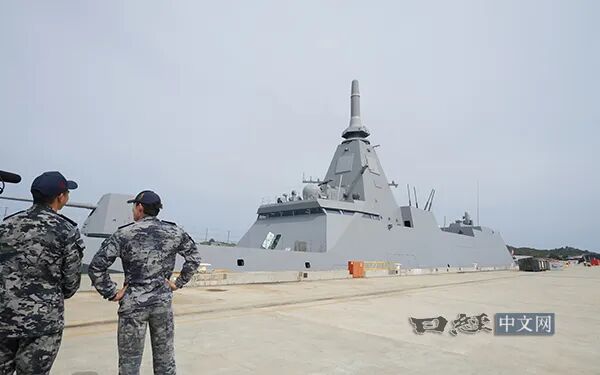
澳大利亚决定采购日本的"最上"型护卫舰 日本防卫装备品的出口目前仅限于救援、运输、警戒等无杀伤能力的"5类别",坦克及战斗机等目前原 则上无法出口。高市早苗政府计划在2026年上半年取消这一"5类别"的限制。这将为日本防卫产业带来 利好。日本国内也有谨慎意见…… 日本高市早苗政府计划在2026年上半年取消防卫装备品的出口仅限于无杀伤能力的"5类别"这一条件。 此举旨在通过向同盟国和志同道合的国家提供装备,来强化国家安全保障领域的合作。这一举措不仅有 助于日本国内防卫产业扩大市场,还能通过企业之间的竞争和合作,为可应用于民用领域的新技术的诞 生创造机会。 日本自民党安全保障调查会于12月1日召开了以撤销5类别的装备出口限制条件为目标的研讨会。自民党 与日本维新会在10月签署的联合执政协议书中明确写明,将在2026年的例行国会期间撤销相关限制条 件,目前自民党正在整理想法。 5类别指的是救援、运输、警戒、监视、海上扫雷装备。这一分类是由第二届安倍晋三政府2014年在事 实上解除武器出口禁令的《防卫装备转移三原则》的"运用指针"中所规定的内容。坦克及战斗机等装备 并不属于5类装备的范畴,目前日本原则上无法出口。 如 ...