宝钢股份

Search documents
科技自立自强引擎持续轰鸣
Jing Ji Ri Bao· 2026-01-16 22:01
"十五五"规划建议提出,加快高水平科技自立自强,引领发展新质生产力。这无疑精准锚定了新一轮科 技革命和产业变革的时代脉搏。在中国式现代化建设的关键阶段,科技自立自强是引领新质生产力发展 的引擎,新质生产力是科技自立自强的载体,二者辩证统一、同向发力,为经济社会发展注入不竭动 能。 (文章来源:经济日报) 筑牢原始创新与核心技术攻关的双基石,是科技自立自强引领发展新质生产力的前提。原始创新是从0 到1的基础跨越,是科技自立自强的源头活水,为关键核心技术攻关提供底层理论支撑与方向指引。这 要求我们聚焦基础学科与前沿领域,加大长期稳定投入,鼓励科研人员自由探索、勇闯"无人区",在基 础科学领域深耕细作,孕育更多原创性突破。关键核心技术攻关是破解"卡脖子"困境的必由之路。需以 国家战略需求为导向,依托创新联合体整合"产学研用"优势资源,打通从实验室到生产线的转化通道, 推动科技成果高效落地。二者协同发力,才能筑牢坚不可摧的科技长城,为新质生产力培育提供坚实的 技术支撑。 推动科技创新与产业创新深度融合,是科技自立自强引领发展新质生产力的关键。科技自立自强的价 值,最终要体现在新质生产力的发展上,而新质生产力的壮大则依 ...
人工智能驱动的新材料研发:发展现状、全球格局及未来展望
AMI埃米空间· 2026-01-16 09:22
Core Viewpoint - The article emphasizes the transformative potential of artificial intelligence (AI) in the field of new materials, highlighting its role in accelerating research and development processes, reshaping industry dynamics, and fostering new business models in the materials sector [1][4][25]. Group 1: AI and New Materials Development - The transition from traditional experimental methods to AI-driven approaches in new materials research has significantly increased the speed of development, with AI now serving as a core engine rather than just an auxiliary tool [4][8]. - The integration of AI with materials science has led to the emergence of new methodologies, such as the Materials Genome Initiative, which aims to systematically build material data resources and enhance collaboration across the globe [6][7]. - AI4MSE (AI for Materials Science and Engineering) relies on high-quality data resources, tailored machine learning algorithms, and applications that span the entire lifecycle of materials, from design to service [6][8]. Group 2: Global Competition in AI and New Materials - Major global powers are elevating AI4MSE to a strategic national priority, with the U.S. investing heavily in AI-driven materials research to maintain its leadership in the field [11][12]. - China is focusing on a systematic approach to build an AI and new materials innovation ecosystem, with significant government initiatives aimed at accelerating scientific discovery through AI [12][14]. - The European Union is promoting AI and new materials integration through policies that emphasize technological sovereignty and data sharing, aiming to enhance its competitive edge in advanced manufacturing [14][16]. Group 3: Commercialization and Industry Transformation - The commercialization of AI4MSE is rapidly accelerating, leading to the emergence of specialized startups that provide innovative materials design solutions directly to end-users [18][20]. - Traditional materials companies are also adapting by establishing digital R&D departments and integrating AI technologies to enhance product performance and reduce development cycles [22]. - A new "R&D as a Service" model is emerging, allowing companies without in-house AI capabilities to leverage AI-driven platforms for materials research, thus democratizing access to advanced materials development [23][24]. Group 4: Future Outlook and Challenges - The AI-driven revolution in new materials is expected to create numerous high-value service industries, while also driving significant upgrades in downstream sectors such as electronics and healthcare [25][27]. - Despite the promising outlook, challenges remain, including data quality issues, the interpretability of AI models, and the complexity of multi-scale modeling in materials science [27][28][29]. - The ongoing evolution of AI4MSE is set to reshape the competitive landscape of the materials industry, with a shift from product competition to competition based on research efficiency and innovation capabilities [24][29].

聚焦 | 从教育、科技、人才三维视角看国企重组整合
Sou Hu Cai Jing· 2026-01-16 09:06
Core Viewpoint - The article emphasizes that strategic restructuring and professional integration are two core paths in the current state-owned enterprise (SOE) reform, which complement each other to optimize state capital layout and enhance core functions [1] Group 1: Strategic Restructuring and Professional Integration - Strategic restructuring focuses on core responsibilities, reducing redundant investments and homogeneous competition, and emphasizes structural optimization through cross-industry and cross-enterprise resource integration [1] - Professional integration targets niche areas, enhancing technological breakthroughs and innovation collaboration, focusing on functional reinforcement [1] Group 2: Educational Perspective - Restructuring promotes the construction of platforms for industry-education integration and innovative customized talent training, as seen in Hunan's construction company, which restructured its talent development system through property rights reform [1] - The integration of education, talent, and industry chains is facilitated, creating a comprehensive mechanism from basic research to industrialization [4] Group 3: Technological Perspective - Strategic restructuring breaks innovation barriers and promotes interdisciplinary technology integration, as demonstrated by the merger of Baosteel and Wuhan Steel, which enhanced R&D investment intensity and achieved breakthroughs in high-end steel and smart manufacturing [3] - Professional integration is crucial for overcoming "bottleneck" technologies, as exemplified by China Railway's consolidation of R&D resources, leading to advancements in high-speed rail technology [3] Group 4: Innovation Ecosystem Construction - Restructuring fosters collaborative innovation mechanisms by breaking down departmental barriers, ensuring effective alignment between research and industrial needs [4] - The integration of resources across the entire industry chain, as seen in China Shipbuilding Group, has led to significant technological advancements in LNG transport and large cruise ships [4] Group 5: Digital Transformation Empowerment - Restructuring supports the intelligent transformation of traditional industries by optimizing production processes and resource allocation, significantly enhancing production efficiency [5] - The integration of digital technologies in high-end equipment manufacturing is exemplified by China Shipbuilding Group's application of digital twins and virtual reality in ship design and operation [6] Group 6: Talent Perspective - Restructuring enhances talent structure through the aggregation of high-end talent and precise allocation of key positions, as demonstrated by China National Chemical Corporation's establishment of a talent ladder system [10] - Innovative talent incentive mechanisms are introduced, transitioning from a position-oriented to a value-creation-oriented compensation system, enhancing employee retention and growth [11] Group 7: Future Outlook - The article suggests that SOEs should further develop an open talent system, break down institutional barriers, and promote cross-enterprise talent mobility while strengthening innovation ecosystem construction [13]




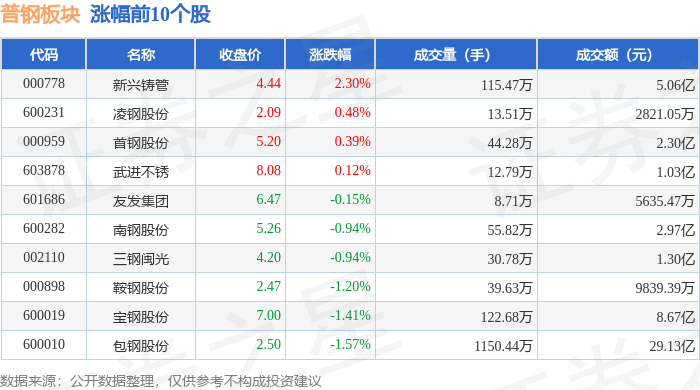
普钢板块1月16日跌1.53%,杭钢股份领跌,主力资金净流出4.68亿元
Zheng Xing Xing Ye Ri Bao· 2026-01-16 08:49
Group 1 - The core viewpoint of the news is that the steel sector experienced a decline, with the overall steel index dropping by 1.53% on January 16, led by Hangzhou Steel [1] - The Shanghai Composite Index closed at 4101.91, down 0.26%, while the Shenzhen Component Index closed at 14281.08, down 0.18% [1] - The main steel stocks showed varied performance, with New Steel Pipe rising by 2.30% and Hangzhou Steel falling by 4.21% [1][2] Group 2 - The steel sector saw a net outflow of 468 million yuan from major funds, while retail investors contributed a net inflow of 162 million yuan [2] - The trading volume for major steel stocks included New Steel Pipe with 1.1547 million shares and Hangzhou Steel with 1.1385 million shares [2] - The net inflow from retail investors was notable in stocks like New Steel Pipe and Hualing Steel, while major funds showed a preference for stocks like New Steel Pipe and Hualing Steel [3]


广东湛江:加快打造现代化沿海经济带
Zhong Guo Jing Ji Wang· 2026-01-16 08:13
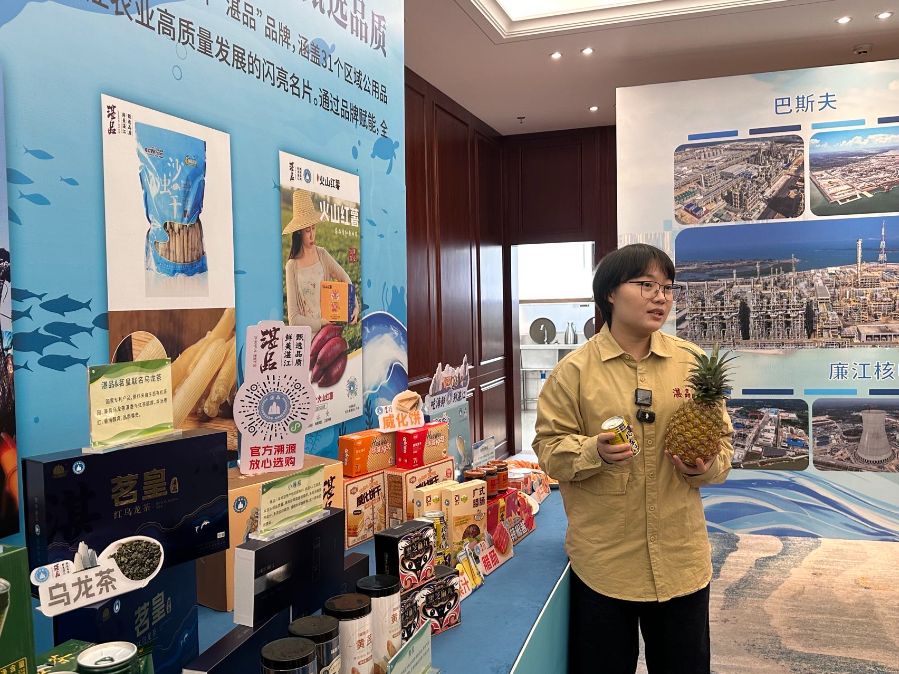
Core Viewpoint - The "14th Five-Year Plan" period is a significant phase for Zhanjiang, focusing on high-quality development and modernization as a key coastal economic zone and provincial sub-center city [1] Economic Development - Zhanjiang's GDP is expected to reach 400 billion yuan by 2025, with industrial added value surpassing 100 billion yuan and a double-digit growth rate for industrial added value [1] - A total of 2,367 major provincial and municipal projects have been implemented over five years, with a cumulative investment of 440 billion yuan, ranking first in the eastern and northwestern regions of Guangdong [1] - The total output value of agriculture, forestry, animal husbandry, and fishery has exceeded 100 billion yuan for five consecutive years, with annual R&D expenditure growing by 24.9% [1] Industrial Development - Zhanjiang has established a preliminary "Four Greens and One Blue" industrial system, with green petrochemicals and modern agriculture both achieving annual output values exceeding 100 billion yuan [2] - Key projects such as BASF's integrated base and Baosteel's hydrogen-based steel plant have been completed, while the region leads the province in onshore wind and solar power grid connection [2] - The Zhanjiang Lingang Economic Zone has been recognized as a national zero-carbon park, and the Zhanjiang Economic Development Zone has been designated as a national hydrogen energy pilot area, with industrial added value growing at an annual rate of 33.5% [2] Transportation and Infrastructure - Zhanjiang has enhanced its role as a national logistics hub, with its port becoming the first deep-water port in South China capable of accommodating 400,000-ton vessels [3] - The completion of the Zhanjiang Wuchuan International Airport has led to an annual passenger throughput exceeding 3.1 million, and the Guangzhan high-speed railway has improved connectivity with the Guangdong-Hong Kong-Macao Greater Bay Area [3] - A series of road and bridge projects have been completed, making Zhanjiang's total road mileage the highest in the province [3] Environmental and Ecological Initiatives - Zhanjiang maintains excellent air quality and water quality in coastal areas, with over 93% of nearshore waters rated as good [3] - The city has launched the first national "blue carbon" trading project and has been recognized for its ecological initiatives, including the promotion of zero-carbon islands [3] - Zhanjiang's ecological assets, such as mangroves and the Chinese white dolphin, have become key ecological symbols for the city [3] Trade and Tourism - The Zhanjiang Comprehensive Bonded Zone has commenced operations, with international trade covering 182 countries and regions [4] - The "Fresh Zhanjiang" tourism brand has driven total tourism revenue to exceed 110 billion yuan, attracting over 100 million visitors [4] - Zhanjiang has been recognized as a high-quality outdoor sports destination, successfully hosting major sports events [4] Future Outlook - Looking ahead to the "15th Five-Year Plan," Zhanjiang aims to accelerate its development as a key coastal economic zone and provincial sub-center city, striving for new advantages and breakthroughs [4]
农业连年超千亿,海洋经济冲进全省三甲!湛江交出“十四五”亮眼答卷
Nan Fang Nong Cun Bao· 2026-01-16 02:39
Core Viewpoint - Zhanjiang has achieved significant economic growth during the 14th Five-Year Plan period, with a focus on developing a modern coastal economy and enhancing its agricultural and marine sectors [2][5][6]. Economic Performance - The city's GDP is projected to reach 400 billion yuan by 2025, with agricultural output exceeding 100 billion yuan for five consecutive years [3][4]. - The marine economy's contribution to the GDP increased from 27.0% to 34.2%, with a total marine production value growth of 475.1 billion yuan, representing a 56.7% increase [25][26]. Industrial Development - Zhanjiang has established a diversified industrial system, focusing on "Four Greens and One Blue" industries, including green steel, green petrochemicals, green energy, green food, and blue marine economy [12][13]. - The green petrochemical and modern agriculture sectors have each surpassed 100 billion yuan in annual output, becoming key drivers of economic growth [13]. Agricultural Advancements - The city has developed a robust agricultural brand, with 75 nationally recognized agricultural products and 130 "Yue" branded products, maintaining a stable grain output of over 1.5 million tons annually [16][17]. - Notable products such as "Volcano Sweet Potato," "Zhanjiang Prawn," and "Xuwen Pineapple" have gained popularity both domestically and internationally [18]. Marine Economy - Zhanjiang's marine fisheries have ranked first in the province for 30 consecutive years, with significant contributions from marine oil, marine chemicals, and marine tourism industries [21][27]. - The city has developed deep-sea aquaculture zones and innovative breeding technologies, enhancing its position in the marine economy [32][39]. Ecological Initiatives - Zhanjiang has prioritized ecological development, completing the first national blue carbon transaction and becoming a pilot for ecological product value realization [45][46]. - The city has restored and created significant areas of mangrove forests, contributing to its status as a leader in ecological conservation [51][52]. Innovative Practices - The introduction of ecological aquaculture models, such as "Mangrove + Blue Crab" and "Shellfish-Algae Mixed Cultivation," has promoted sustainable practices in the fishing industry [55][60].

宝钢湛江钢铁年产值超600亿元
Zhong Guo Xin Wen Wang· 2026-01-16 00:44
Group 1 - The core viewpoint of the news is that Zhanjiang has made significant progress in industrial development and investment, positioning itself as a leader in the Guangdong province's economic landscape [1] - Over the past five years, Zhanjiang has implemented 2,367 major provincial and municipal projects, with a total investment of 440 billion yuan, ranking first in the eastern and western Guangdong region [1] - By 2025, Zhanjiang's industrial added value is expected to exceed 100 billion yuan [1] Group 2 - Zhanjiang has established a dominant industrial system characterized by "four greens and one blue," focusing on green steel, green petrochemicals, green energy, green food, and blue ocean economy [1] - The green steel industry, led by Baosteel Zhanjiang Iron & Steel Company, has an annual output value exceeding 60 billion yuan, making it the largest steel production base in Guangdong province [2] - The green petrochemical industry has developed a comprehensive industrial chain, achieving an annual output value exceeding 120 billion yuan, and is now among the top five petrochemical bases in the province [2] Group 3 - Key projects such as the BASF (Guangdong) integrated base and the Guangdong Lianjiang nuclear power project have been highlighted, with the BASF project alone having completed over 60 billion yuan in investment [1][2] - The first products from the BASF integrated base have started production, and several other significant projects have been completed and put into operation, including Baosteel's hydrogen-based vertical furnace and zero-carbon high-grade thin steel plate factory [1]
宝山钢铁股份有限公司关于变更审计质量控制复核人的公告
Shang Hai Zheng Quan Bao· 2026-01-15 18:17
证券代码:600019证券简称:宝钢股份 公告编号:临2026-001 宝山钢铁股份有限公司 关于变更审计质量控制复核人的公告 本公司董事会及全体董事保证本公告内容不存在任何虚假记载、误导性陈述或者重大遗漏,并对其内容 的真实性、准确性和完整性承担法律责任。 公司于2025年9月28日召开宝钢股份第九届董事会第三次会议,审议通过《关于聘请德勤华永会计师事 务所为2025年度独立会计师及内控审计师的议案》,同意聘请德勤华永会计师事务所(特殊普通合伙) (以下简称"德勤华永")为公司2025年度独立会计师和内控审计师,并同意将该项议案提交股东会审 议。公司于2025年11月13日召开宝钢股份2025年第四次临时股东会,审议批准了该项议案。具体内容详 见公司于2025年9月29日、2025年11月14日在上海证券交易所网站(http://www.sse.com.cn)发布的临 2025-054、临2025-055、临2025-060公告。 近日,公司收到德勤华永出具的《关于变更宝山钢铁股份有限公司2025年度审计质量控制复核人的 函》,德勤华永根据审计项目安排,将2025年度审计项目的质量控制复核人由倪敏先生变更为 ...
“隐秘”取景地 硬核产业城:一个沿海经济带的突围样本
2 1 Shi Ji Jing Ji Bao Dao· 2026-01-15 14:23
Core Viewpoint - Zhanjiang is emerging as a significant development hub in the Guangdong coastal economic belt, driven by the recent opening of the Guangzhan high-speed railway, which integrates the city into the Greater Bay Area's "1.5-hour living circle" [1] Group 1: Economic Development - The city has established a solid industrial foundation through coordinated land and marine development, with major projects like BASF's integrated base and Baosteel's hydrogen-based steel production line contributing to its economic growth [2][3] - Zhanjiang aims to achieve a GDP of 400 billion yuan by 2025, with industrial added value expected to exceed 100 billion yuan, supported by significant investments in major projects [2][3] Group 2: Green Industry Initiatives - Zhanjiang is developing a modern industrial system characterized by "four greens and one blue," focusing on green steel, green petrochemicals, green energy, and green food, with two major industrial clusters each surpassing 100 billion yuan in annual output [2][4] - The Baosteel Zhanjiang steel plant, utilizing hydrogen metallurgy, is projected to reduce carbon emissions by over 3.14 million tons annually, equivalent to reforesting 2,000 square kilometers [3][4] Group 3: Marine Economy - The blue ocean economy is a crucial component of Zhanjiang's industrial framework, with marine production value expected to increase significantly, contributing to 34.2% of the city's GDP by 2024 [9] - Zhanjiang's marine industries, including fisheries, oil and gas, chemical industries, and tourism, each generate over 100 billion yuan in added value [9] Group 4: Aquaculture Innovations - Zhanjiang has developed advanced aquaculture platforms, such as the floating dynamic positioning platform "Zhanjiang Bay No. 1," which enhances the value of high-end fish processing [6][7] - The city has successfully bred several high-value fish species, with significant contributions from local research institutions, ensuring a robust supply chain for the aquaculture industry [8] Group 5: Tourism Growth - Zhanjiang's coastal tourism is rapidly growing, with projected increases in tourism value, particularly during the winter season, highlighting the city's potential as a tourist destination [11]
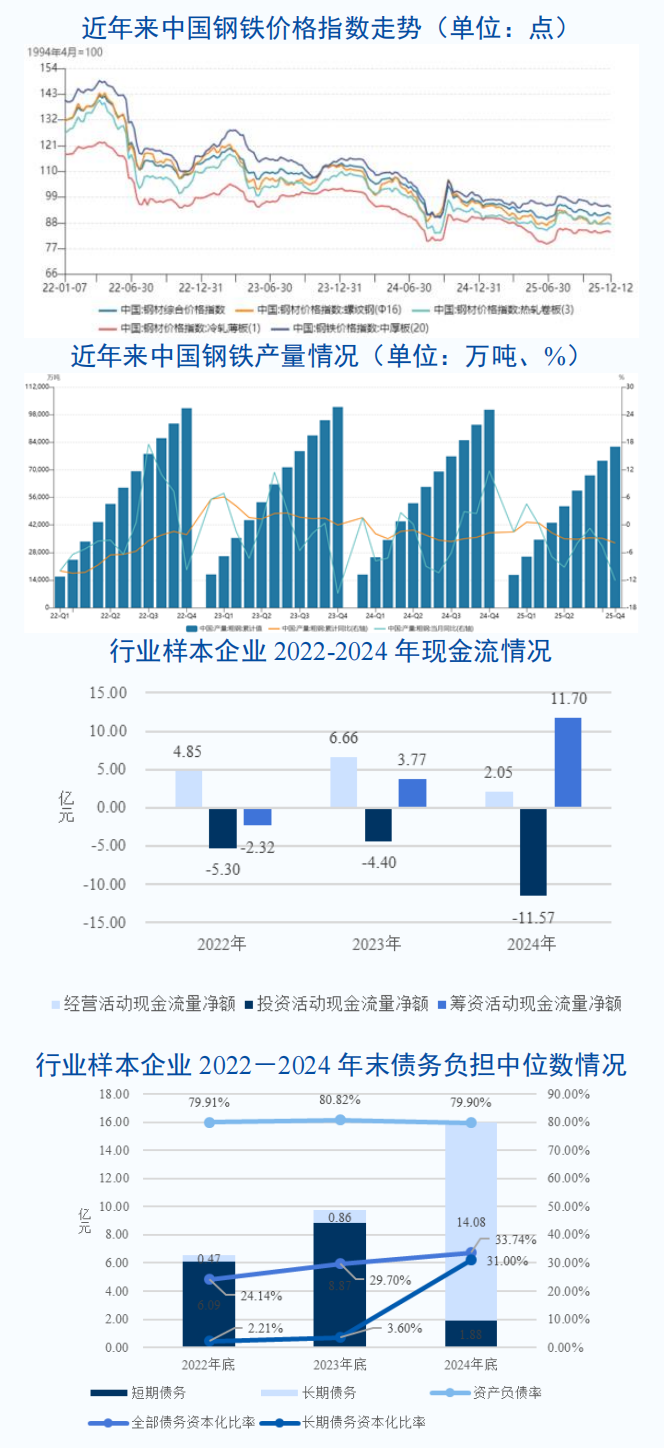
【行业研究】钢铁行业2026年度信用风险展望(2025年12月)
Xin Lang Cai Jing· 2026-01-15 14:15
Core Viewpoint - The steel industry in China is experiencing a stable credit quality, with overall credit risks expected to remain controllable in the future [1]. Group 1: Industry Fundamentals - Domestic demand momentum remains to be boosted, with macro policies supporting a moderate economic recovery [5][54]. - The steel industry is undergoing a transformation towards high-end and green development, driven by strict capacity restrictions and incentives for advanced production [9][58]. - The demand side shows a divergence with weak construction, strong manufacturing, and stable exports, while supply is contracting under policy adjustments [12][61]. Group 2: Economic and Policy Environment - The macroeconomic environment is characterized by coordinated policy efforts, maintaining a moderately loose monetary policy and enhancing fiscal support [7][56]. - Future macro policies will focus on achieving annual growth targets, expanding domestic demand, and stabilizing growth [8][57]. - The steel industry policies emphasize the elimination of outdated capacity and the encouragement of advanced production, promoting high-quality development [9][58]. Group 3: Industry Operations - The steel industry has achieved overall stable operations under multiple pressures, with a notable improvement in profitability due to declining raw material prices [12][61]. - In the first ten months of 2025, the revenue of the black metal smelting and rolling industry reached 64,127.8 billion yuan, a year-on-year decrease of 3.9%, while total profits reached 1,053.2 billion yuan, indicating a recovery [12][61]. - The crude steel production in China for January to November 2025 was 892 million tons, a year-on-year decrease of approximately 4% [13][62]. Group 4: Financial Status - The financial condition of the steel industry shows signs of marginal profit recovery, but high debt levels and weak debt repayment capabilities remain significant issues [29][78]. - The average operating profit margin and total asset return rate are at low levels, with capital expenditures shrinking year by year [32][78]. - The overall debt burden in the steel industry remains heavy, with high leverage ratios and insufficient cash flow coverage for short-term debts [36][38]. Group 5: Bond Market Performance - The bond market for the steel industry showed stable issuance in 2025, with active bond issuance primarily from high-credit-rated state-owned enterprises [41][42]. - A total of 156 bonds were issued, amounting to 1,701.90 billion yuan, with a significant concentration among top enterprises [42][45]. - The upcoming bond maturity peak is concentrated between 2026 and 2028, with manageable repayment risks due to the predominance of high-credit-rated issuers [47][48]. Group 6: Outlook - In the short term, supply-side adjustments and policy impacts are expected to support a reduction in production, while demand from real estate remains weak [48][51]. - The overall recovery of domestic demand is still weak, and steel prices are likely to remain under pressure [48][51]. - Long-term trends indicate a shift towards high-end manufacturing and green energy, with less competitive, high-debt capacities being phased out [51].