型钢

Search documents
三钢闽光股价涨5.18%,中欧基金旗下1只基金位居十大流通股东,持有4264.6万股浮盈赚取980.86万元
Xin Lang Cai Jing· 2026-01-23 06:18
Group 1 - The stock price of Sansteel Minmetals has increased by 5.18% to 4.67 CNY per share, with a trading volume of 224 million CNY and a turnover rate of 2.04%, resulting in a total market capitalization of 11.344 billion CNY [1] - Sansteel Minmetals has experienced a continuous increase in stock price for four consecutive days, with a cumulative increase of 5.71% during this period [1] - The company, established on December 26, 2001, and listed on January 26, 2007, specializes in the production and sale of steel smelting, rolling, processing, and pressure products [1] Group 2 - The fund "China Europe Dividend Enjoyment Flexible Allocation Mixed A" (004814) has entered the top ten circulating shareholders of Sansteel Minmetals, holding 42.646 million shares, which accounts for 1.76% of the circulating shares [2] - The fund has generated a floating profit of approximately 9.8086 million CNY today and 10.2351 million CNY during the four-day increase [2] - The fund has a total scale of 9.938 billion CNY, with a year-to-date return of 4.89% and a one-year return of 54.66% [2] Group 3 - The fund "China Europe Jinyuan Flexible Allocation Mixed A" (001146) holds 1.0911 million shares of Sansteel Minmetals, making it the tenth largest holding in the fund [3] - This fund has achieved a floating profit of approximately 251,000 CNY today and 261,900 CNY during the four-day increase [3] - The fund has a total scale of 1.2345 billion CNY, with a year-to-date return of 5.89% and a one-year return of 30.38% [3] Group 4 - The fund managers of "China Europe Jinyuan Flexible Allocation Mixed A" are Hu Tianyang and Li Bo, with respective management tenures of 3 years and 363 days, and 2 years and 76 days [4] - Hu Tianyang manages assets totaling 10.085 billion CNY, with the best fund return of 20.47% and the worst return of -10.59% during his tenure [4] - Li Bo manages assets totaling 8.694 billion CNY, with the best fund return of 52.64% and the worst return of 2.75% during his tenure [4]

钢材出口高增长韧性几何?
Bao Cheng Qi Huo· 2026-01-20 09:42
1. Report Industry Investment Rating No relevant content provided. 2. Core Views of the Report - Since achieving a net steel export in 2006, China's steel product export volume as a proportion of the global total has been on an upward trend. In recent years, due to tariff disturbances, the domestic steel export market has been expanding, with the export scale increasing year by year. The export volume exceeded 100 million tons in 2024 and reached a new high in 2025 [5][9]. - In 2025, steel exports showed several characteristics: a shift in the export variety structure with the increase coming from long - products, diversification of export countries with an increasing share of emerging markets, and a situation of increasing volume but decreasing price, indicating that the strong steel export was mainly supported by low - price advantages [5][12][16]. - Currently, the domestic price advantage remains, and there is an increase in overseas demand, so the resilience of steel exports still exists. However, there are also more challenges in the future, such as intensified trade frictions, domestic policy adjustments, the EU carbon tariff policy, the recovery of overseas supply, and the pressure of RMB appreciation [5][23][26]. - In summary, weak domestic demand forced steel mills to increase exports, and with good price advantages, steel exports in 2025 were strong, alleviating domestic pressure. However, with the increase of challenges, the resilience of steel exports will be impacted, and the direct export volume may decline from its peak [5][44][47]. 3. Summary by Directory 3.1 2025 Steel Exports Reached a New High - China is the world's largest steel producer, and its steel export pattern affects the global steel product trade pattern. In 2025, despite trade barriers, the steel export volume continued to grow. The cumulative export volume of steel products in 2025 was 119.02 million tons, a year - on - year increase of 830,000 tons or 7.50%. Meanwhile, steel imports remained sluggish, with an import volume of only 6.06 million tons in 2025, a year - on - year decrease of 75,000 tons or 11%. The export of steel billets also performed well in 2025, with the cumulative export volume from January to November reaching 1.33801 million tons, a year - on - year increase of 782,000 tons or 140.64%. The combined export increase of steel and steel billets was 1.7 million tons, effectively alleviating the weak domestic demand pressure [9]. - In 2025, steel exports had the following characteristics: - **Shift in export variety structure**: The export increase came from long - products. Due to the downturn in the real estate market, the surplus of domestic construction steel (long - products) increased, and exports became an important factor in adjusting domestic supply - demand balance. From January to November, the cumulative export volumes of bars, sections, and wire rods increased by 527,000 tons, 183,000 tons, and 29,000 tons respectively, with year - on - year growth rates of 43.95%, 34.33%, and 12.13%. In contrast, the export growth rate of plates slowed down, and the export of ordinary plates such as hot - rolled coils and cold - rolled coils was directly affected by anti - dumping measures [12]. - **Diversification of export countries**: Traditional markets were under pressure due to anti - dumping policies, but emerging markets were rising. Southeast Asian countries, the Middle East, Africa, and South America all showed an increase in steel imports from China [16]. - **Increasing volume but decreasing price**: In 2025, the total steel export volume was 119 million tons, a year - on - year increase of 7.50%, while the export value was 82.578 billion US dollars, a year - on - year decrease of 1.26%, indicating that the strong steel export was mainly supported by low - price advantages [19]. 3.2 Steel Exports Face More Challenges - **Reasons for the high - growth of steel exports in 2025**: On the one hand, the intensification of domestic supply - demand contradictions forced steel mills to increase exports. On the other hand, there was a significant cost advantage, and the price difference between domestic and overseas markets was the core driving force for steel exports. Currently, the resilience of steel exports still exists because the domestic price advantage remains, and there is an increase in overseas steel demand. The World Steel Association estimates that global steel demand will rebound moderately by 1.3% in 2026, reaching 1.773 billion tons [23]. - **Challenges in 2026**: - **Intensified trade frictions**: In recent years, the EU, South Korea, Vietnam and other countries have frequently launched "double - anti" investigations and imposed high tariffs on Chinese steel products, resulting in a decline in China's export share in these markets. In 2024, there were 33 original investigations on trade remedies for Chinese steel products, and in 2025, there were more than 150 investigations or arbitrations. In 2026, as the anti - dumping cases from 2024 - 2025 enter the final ruling stage, China's steel exports will face more extensive trade resistance [26]. - **Domestic export policy adjustment**: On December 12, 2025, the Ministry of Commerce and the General Administration of Customs decided to adjust the "Catalogue of Goods Subject to Export License Administration (2025)", including some steel products with 300 customs commodity codes in the catalogue. It is difficult to assess the actual impact of this policy on exports for now. If strictly implemented, large steel enterprises may be less affected, while small and medium - sized enterprises may face restrictions [29]. - **EU carbon tariff policy**: The EU carbon tariff (CBAM) officially started to be levied on January 1, 2026. Once the free quota is completely removed, the CBAM cost of exporting one ton of steel to the EU will increase by 140 - 160 euros, eroding the profit space of enterprises. The implementation of CBAM will significantly weaken China's price advantage in steel exports, and Chinese steel products will face a competitive situation of "being attacked from both inside and outside" in the EU market. In addition, the compliance threshold has been greatly increased, and the short - term export process will be blocked [31]. - **Recovery of overseas supply**: From January to November 2025, the crude steel output of overseas countries (excluding China) was 766.888 million tons, a year - on - year increase of 1.798 million tons or 0.24%. The emerging markets of India and Southeast Asia maintained high - growth, and the production capacities of Turkey and Iran were recovering. In addition, the weakening of the US dollar credit and the pressure of RMB appreciation will also suppress domestic steel exports [35]. 3.3 Conclusion - China's steel exports have been increasing year by year. In 2025, steel exports reached a new high, showing characteristics such as a shift in the export variety structure, diversification of export countries, and increasing volume but decreasing price. Currently, the resilience of steel exports still exists, but in the future, there will be more challenges, and the direct export volume may decline from its peak [45][47].
【行业研究】钢铁行业2026年度信用风险展望(2025年12月)
Xin Lang Cai Jing· 2026-01-15 14:15
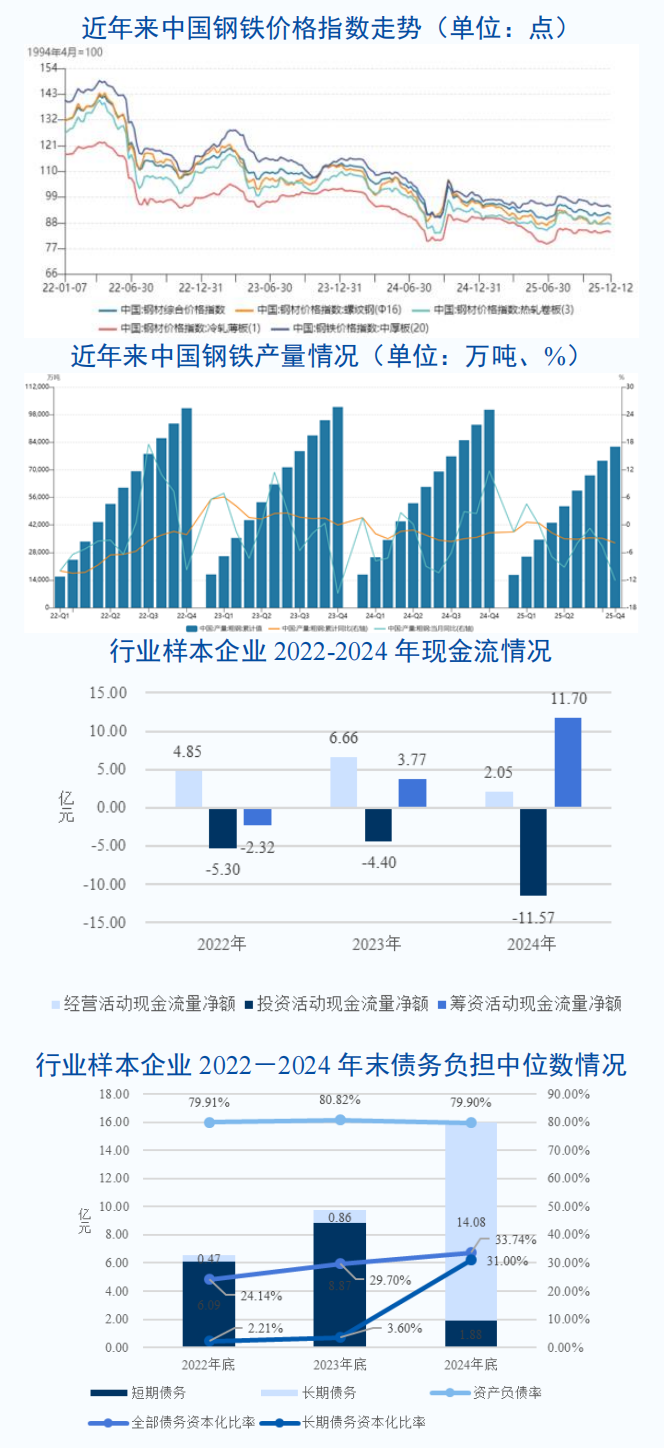
Core Viewpoint - The steel industry in China is experiencing a stable credit quality, with overall credit risks expected to remain controllable in the future [1]. Group 1: Industry Fundamentals - Domestic demand momentum remains to be boosted, with macro policies supporting a moderate economic recovery [5][54]. - The steel industry is undergoing a transformation towards high-end and green development, driven by strict capacity restrictions and incentives for advanced production [9][58]. - The demand side shows a divergence with weak construction, strong manufacturing, and stable exports, while supply is contracting under policy adjustments [12][61]. Group 2: Economic and Policy Environment - The macroeconomic environment is characterized by coordinated policy efforts, maintaining a moderately loose monetary policy and enhancing fiscal support [7][56]. - Future macro policies will focus on achieving annual growth targets, expanding domestic demand, and stabilizing growth [8][57]. - The steel industry policies emphasize the elimination of outdated capacity and the encouragement of advanced production, promoting high-quality development [9][58]. Group 3: Industry Operations - The steel industry has achieved overall stable operations under multiple pressures, with a notable improvement in profitability due to declining raw material prices [12][61]. - In the first ten months of 2025, the revenue of the black metal smelting and rolling industry reached 64,127.8 billion yuan, a year-on-year decrease of 3.9%, while total profits reached 1,053.2 billion yuan, indicating a recovery [12][61]. - The crude steel production in China for January to November 2025 was 892 million tons, a year-on-year decrease of approximately 4% [13][62]. Group 4: Financial Status - The financial condition of the steel industry shows signs of marginal profit recovery, but high debt levels and weak debt repayment capabilities remain significant issues [29][78]. - The average operating profit margin and total asset return rate are at low levels, with capital expenditures shrinking year by year [32][78]. - The overall debt burden in the steel industry remains heavy, with high leverage ratios and insufficient cash flow coverage for short-term debts [36][38]. Group 5: Bond Market Performance - The bond market for the steel industry showed stable issuance in 2025, with active bond issuance primarily from high-credit-rated state-owned enterprises [41][42]. - A total of 156 bonds were issued, amounting to 1,701.90 billion yuan, with a significant concentration among top enterprises [42][45]. - The upcoming bond maturity peak is concentrated between 2026 and 2028, with manageable repayment risks due to the predominance of high-credit-rated issuers [47][48]. Group 6: Outlook - In the short term, supply-side adjustments and policy impacts are expected to support a reduction in production, while demand from real estate remains weak [48][51]. - The overall recovery of domestic demand is still weak, and steel prices are likely to remain under pressure [48][51]. - Long-term trends indicate a shift towards high-end manufacturing and green energy, with less competitive, high-debt capacities being phased out [51].

安泰集团涉诉纠纷调解结案:债务总额从21.37亿元减至9.71亿元
Zhong Guo Jing Ying Bao· 2026-01-10 09:37
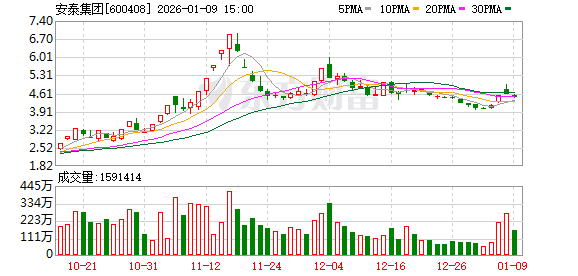
Core Viewpoint - Antai Group has successfully resolved a debt lawsuit involving its affiliate, Shanxi Xintai Steel, reducing the original debt from 2.137 billion yuan to 971 million yuan, with an extended repayment period of 8 years [2][3] Group 1: Debt Resolution - The debt total was reduced by over 54%, from 2.137 billion yuan to 971 million yuan [3] - The repayment grace period has been extended from June 27, 2025, to June 10, 2033, lasting 8 years [3] - Antai Group will continue to bear joint guarantee responsibility up to a maximum limit of 400 million yuan for the principal debt and related interests [3] Group 2: Financial Impact - As of October 31, 2024, the principal debt balance was 1.617 billion yuan, with interest amounting to approximately 520 million yuan, totaling 2.137 billion yuan [2] - Antai Group has faced continuous financial pressure, reporting net losses of 297 million yuan, 678 million yuan, and 335 million yuan from 2022 to 2024 [4] - In 2025, the company reported a revenue of 3.784 billion yuan, a year-on-year decrease of 26.55%, with a net loss of 156 million yuan, an improvement from the previous year's loss of 301 million yuan [4] Group 3: Strategic Changes - To address financial difficulties, Antai Group initiated a major strategic transformation in 2024, shifting from self-production of coke to processing services to stabilize income and mitigate risks from price fluctuations [4] - The company has historically focused on coke and section steel as its main business since its listing in 2003 [3]

华龙证券:政策精准调控防内卷 钢企龙头提质增效赢先机
Zhi Tong Cai Jing· 2025-12-25 07:25
Supply Side - The steel industry is expected to see an increase in valuation driven by supply-side production regulation and more proactive fiscal policies [1] - By 2025, ongoing regulatory policies will focus on innovative capacity governance, emphasizing quality and structure over mere capacity reduction, marking a shift towards more refined and long-term industry governance [1] - As of November 2025, the cumulative crude steel production in China is projected to be 890 million tons, a year-on-year decrease of 4.04%, indicating an increase in industry self-discipline and a tightening supply trend expected to continue into 2026 [1] Demand Side - Steel exports are anticipated to play a crucial role in alleviating domestic supply-demand imbalances, with cumulative steel exports reaching approximately 110 million tons by October 2025, a year-on-year increase of 13.29 million tons [2] - Although the demand for construction steel is still facing a downward trend, the rate of decline is narrowing, indicating that demand is nearing its bottom [2] - The demand for steel in manufacturing is expected to remain stable, driven by sectors such as automotive, home appliances, and new infrastructure projects like wind power and 5G, which are increasing consumption of various steel products [2] Cost Side - Global iron ore demand is expected to decline overall, with China's structural upgrades and capacity replacements leading to a gradual decrease in steel demand, while growth in other emerging markets is insufficient to offset this reduction [3] - In the first half of 2025, supply easing is expected to suppress coking coal prices, with price drivers primarily influenced by supply adjustments rather than strong demand growth [3] - The price of scrap steel is projected to remain stable with no significant fluctuations, indicating a low probability of drastic price changes in 2026 [3]
下游应用范围广泛 2025年越南型钢市场仍依赖中国供应
Sou Hu Cai Jing· 2025-12-19 03:21
Core Viewpoint - The steel section industry, particularly in Vietnam, is experiencing significant growth driven by demand in automotive and construction sectors, with a notable reliance on imports, especially from China [2][4]. Industry Overview - Steel sections are categorized into various types, including H, C, Z, and L sections, and are widely used in automotive manufacturing, construction, and other sectors due to their lightweight, high strength, and ease of processing [2]. - The global market for H-section steel is projected to reach $2.87 billion in 2024, with an expected compound annual growth rate (CAGR) of 4.8% from 2025 to 2029, potentially exceeding $3.6 billion by 2029 [2]. Market Demand in Vietnam - In Vietnam, the automotive industry is rapidly growing, with production reaching 362,500 vehicles by October 2022, ranking fourth in Southeast Asia, which increases the demand for steel sections in vehicle manufacturing [3]. - The construction sector in Vietnam is also expanding due to urbanization and infrastructure investments, with government plans to increase per capita housing area to 26-27 square meters by 2026, further driving the demand for steel sections [3]. Supply Dynamics - Vietnam's steel section market is heavily reliant on imports due to insufficient local production capacity, with China being a major supplier. In the first three quarters of 2025, China exported 870,000 tons of small and medium-sized steel sections to Southeast Asia, marking a 30% increase year-on-year [4][5].
安泰集团:拟为山西新泰钢铁有限公司提供担保
Mei Ri Jing Ji Xin Wen· 2025-11-28 11:33
Core Viewpoint - Antai Group has signed two maximum guarantee contracts with Minsheng Bank Taiyuan Branch, providing a guarantee of up to 400 million yuan for its affiliate, Shanxi Xintai Steel Co., Ltd, which is currently in debt restructuring [1][2] Group 1: Guarantee Contracts - Antai Group has entered into guarantee contracts to support Shanxi Xintai Steel's debt obligations, with a maximum guarantee amount of 400 million yuan [1] - The original creditor, Minsheng Bank, initiated legal proceedings to recover debts from Shanxi Xintai Steel, which led to the transfer of the debt to Wuhu Xinjing Investment Partnership [1][2] - Wuhu Xinjing has agreed to a repayment plan with Shanxi Xintai Steel, allowing for a grace period for debt repayment while maintaining the original guarantee obligations [2] Group 2: Corporate Governance - The guarantee matter has been approved by the independent directors of Antai Group and will be submitted for review at the upcoming board meeting [2] - The board has requested authorization from the shareholders' meeting for the chairman and management to handle specific matters related to the guarantee [2] Group 3: Financial Overview - As of the announcement date, Antai Group has provided guarantees totaling approximately 324 million yuan, which represents 21.39% of the company's audited net assets as of the end of 2024 [2] - For the first half of 2025, Antai Group's revenue composition is as follows: 73.03% from section steel, 18.65% from coke processing and chemical products, 2.92% from power processing, 2.05% from scrap steel, and 1.68% from other sources [3] Group 4: Market Capitalization - Antai Group's market capitalization is reported to be 4.7 billion yuan [4]
唐山迁安普碳方坯暂稳2950元/吨
Xin Lang Cai Jing· 2025-11-23 05:41
Group 1 - The mainstream factory price of ordinary square billets in Tangshan and Qian'an remains stable at 2950 CNY/ton and 2960 CNY/ton respectively, with warehouse spot prices including tax reported at 3030 CNY/ton [3] - The market for steel billets is experiencing weak overall transactions, with downstream finished product prices remaining stable [3] - In the Tangshan section, the main prices for various steel products are stable, including I-beams at 3260 CNY/ton, angle steel at 3250 CNY/ton, and channel steel between 3220-3250 CNY/ton, indicating a slowdown in downstream demand [3] Group 2 - The price of 355 band steel in Tangshan remains stable at a mainstream price of 3170 CNY/ton, while the 145 band steel market also shows stability with a mainstream price of 3200 CNY/ton, although transaction volumes are weak [3] - The market for hot-rolled and cold-rolled base materials is stable, with the mainstream price for 1500 wide ordinary open flat plates at 3240 CNY/ton and manganese open flat plates at 3380 CNY/ton, indicating average transaction activity [3] - The price for medium and thick plates in Tangshan is stable, with ordinary plates (14-20mm) at 3240 CNY/ton and low-alloy plates at 3420 CNY/ton, as the market remains cautious [3] Group 3 - The construction steel market in Tangshan shows stability in early trading, with the price of third-grade rebar at 3160 CNY/ton, third-grade small rebar at 3150 CNY/ton, and thread steel at 3370 CNY/ton, although transactions are not favorable [4]

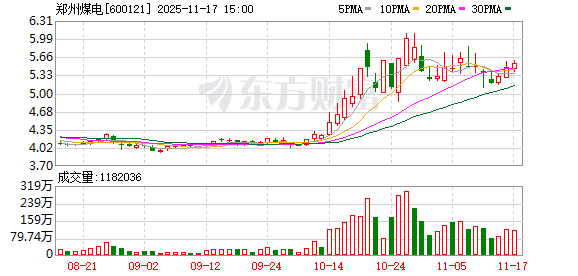
郑州煤电:公司虽与安泰集团同属煤炭相关产业,但并非直接的核心竞争者
Mei Ri Jing Ji Xin Wen· 2025-11-17 07:51
Group 1 - The company, Zhengzhou Coal Electricity (600121.SH), clarified that it is not a direct core competitor of Shanxi Antai Group, despite both being in the coal-related industry [2] - Antai Group primarily engages in the production and sales of coke and section steel products, while Zhengzhou Coal Electricity focuses on coal mining and sales [2] - The overlap in business activities between Zhengzhou Coal Electricity and Antai Group is acknowledged, but they operate in different segments of the coal industry [2]

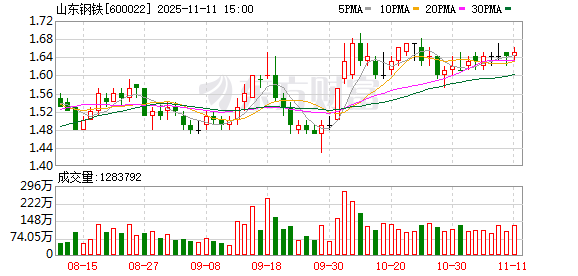
山东钢铁:2025年前三季度出口欧盟产品约7.5万吨,主要产品为热镀锌卷板、型钢、优特钢
Mei Ri Jing Ji Xin Wen· 2025-11-11 10:58
Core Viewpoint - The company is actively expanding its exports to the European Union, with a focus on specific product categories and projected export volumes for the coming years [2]. Group 1: Export Strategy - The company aims to enhance its market presence in the EU by focusing on key overseas regions [2]. - In 2024, the company plans to export approximately 75,000 tons of products to the EU [2]. - For the first three quarters of 2025, the company anticipates exporting another 75,000 tons to the EU, primarily consisting of hot-dip galvanized sheets, section steel, and special steel [2].