毕马威

Search documents
毕马威:人工智能已成为全球科技竞争的制高点
Xin Jing Bao· 2025-07-26 16:31
Group 1 - The World Artificial Intelligence Conference held from July 26 to 28, 2025, emphasizes AI as a critical driver for industrial upgrading and high-quality economic development in China [1] - AI is seen as a key force for companies to stand out in intense market competition, disrupting traditional operational models and creating new business logic and competitive patterns [1] - China is rapidly advancing in AI technology application and industry integration, transitioning from a "follower" to a "runner" and potentially a "leader" in the global AI field due to strong policy guidance and ecosystem development [1] Group 2 - The development of AI is not only reflected in technology but also in the construction of industrial ecosystems and the emergence of new industries [2] - Companies are encouraged to embrace change through digital transformation and intelligent upgrades, which will drive technological and service innovation, application scenario expansion, and effective long-term strategic planning [2] - AI transformation for enterprises is about reshaping productivity patterns, significantly altering operational models across strategy, business, management, data, and technology [2]
毕马威中国资本市场主管合伙人张京京:预计将有更多AI企业主动对接资本市场
Zheng Quan Ri Bao Wang· 2025-07-26 04:16
国内多层次资本市场的日益完善,使得具有不同特点、处于不同发展阶段和规模的企业都能找到适合的 板块。不同板块为各类科技企业提供了多元化的上市路径。张京京认为,聚焦"硬科技"企业的科创板, 其上市门槛虽高,但对盈利状况的限制较松,尤其适合尚未盈利但具备高技术壁垒和市场潜力的AI企 业。创业板更倾向于支持具有高成长性、创新性强的中小企业,尤其是那些在商业模式、技术应用等方 面有突破潜力的公司。北交所则专注于创新型中小企业,特别是专精特新企业,其定位更偏向于服务实 体经济中的"隐形冠军",为这类企业提供更具针对性的融资平台和支持机制。 "对企业而言,登陆资本市场是其发展历程中重要的里程碑,但并非终点,我们希望助力AI企业实现规 模化高质量发展、拓展海外市场等长期目标,陪伴企业向更高阶段迈进,真正实现'领跑'世界的愿 景。"张京京强调。 国内人工智能企业呈现显著区域集聚效应,主要分布在北京(京津冀创新枢纽)、江浙沪(长三角产业集 群)及粤港澳大湾区。张京京介绍,今年以来,我国进一步推动人工智能与实体经济在智能制造、智慧 医疗、智慧交通等领域深度融合。目前,多地政府设立了人工智能专项基金,以推动本地人工智能产业 的发展。 ...
毕马威:2025年香港资产管理和私募股权展望报告
Sou Hu Cai Jing· 2025-07-24 07:39
Core Insights - The KPMG report highlights the resilience of Hong Kong's asset management and private equity industry amidst global uncertainties, projecting growth opportunities and challenges ahead [1][11][12]. Industry Overview - By the end of 2024, the total assets under management in Hong Kong's asset and wealth management sector is expected to reach HKD 35.1 trillion, reflecting a year-on-year growth of 13% and a significant net inflow increase of 81% [1][16]. - The IPO market in Hong Kong is performing strongly, with HKD 107.1 billion raised in the first half of 2025, driven by a surge in "A+H" listings and a robust pipeline from sectors like TMT and healthcare [1][19]. Industry Consolidation - The report notes an acceleration in industry consolidation, with global and Hong Kong asset management firms pursuing mergers and acquisitions to achieve scale and efficiency, leading to the emergence of a "multi-strategy super market" model [1][25][26]. Regulatory Developments - The Hong Kong Securities and Futures Commission (SFC) is enhancing scrutiny on asset management firms, focusing on private fund management deficiencies and liquidity risk management, while also introducing guidelines for AI governance and virtual assets [1][32][60]. Tax Environment - Reforms to the Unified Fund Exemption (UFE) are expected to broaden the exemption scope and enhance the attractiveness of the tax environment, potentially drawing more funds and investors to Hong Kong [1][41][42]. Private Equity and Alternative Investments - The mainland China market remains a significant area for private equity, with Hong Kong asset managers positioned to capitalize on the growing interest in alternative assets from investors [1][46][47]. - Emerging markets like India and Southeast Asia present new investment opportunities, while mature markets such as Japan and Australia offer stable investment paths [1][48]. Cross-Border Opportunities - The opening of the mainland market provides Hong Kong asset managers with a unique position to serve the global allocation needs of mainland investors, supported by ongoing improvements in cross-border financial mechanisms [2][55]. Artificial Intelligence - The application of AI in asset management is moving towards systematic implementation, driven by the need for operational efficiency and cost reduction, although challenges related to data privacy and regulatory compliance remain [2][59][60]. Virtual Assets - Hong Kong is advancing in the virtual asset space, having granted licenses to ten virtual asset trading platforms, with expectations for growth in related products and services [2][64][66]. Tokenization - The rise of tokenization technology is set to transform wealth management, with regulatory support paving the way for new investment opportunities, although challenges in market liquidity and infrastructure need to be addressed [2][71][72].


毕马威:税制改革及虚拟资产监管政策等巩固香港亚洲资管中心地位
Zhi Tong Cai Jing· 2025-07-18 06:14
Group 1 - The core viewpoint of the report is that despite global economic uncertainties and geopolitical tensions, Hong Kong is strengthening its position as an asset management hub in Asia through targeted tax reforms, a robust IPO market, and progressive virtual asset regulation [1][2] - The total assets under management in Hong Kong's asset and wealth management sector are projected to increase by 13% in 2024, reaching HKD 35.1 trillion [1] - Recent optimizations to the Unified Fund Exemption (UFE) regime in Hong Kong have expanded the exemption scope to include private credit and other alternative assets, enhancing the competitiveness of Hong Kong [1][2] Group 2 - Hong Kong is actively working to establish a clear regulatory framework for virtual assets, with significant progress expected by 2025 as the number of local virtual asset trading platforms increases [1] - The report highlights Hong Kong's potential to act as a "super connector" by optimizing cross-border initiatives, thereby deepening ties with mainland Chinese investors [2] - The ongoing development of cross-border mutual recognition is significant, allowing Hong Kong advisory firms to offer a wider range of products in mainland China, positioning Hong Kong asset management firms favorably to serve emerging markets [2]
某国企公示香港IPO中介中标结果 | 香港上市中介费用观察
Xin Lang Cai Jing· 2025-07-18 06:12
Group 1 - The article discusses the costs associated with IPOs in Hong Kong, highlighting that fees vary based on industry, company size, and location [2] - A recent public announcement from a state-owned enterprise revealed the fees for various intermediaries involved in their Hong Kong IPO, which are not representative of the general market [2] - The total fees for the IPO intermediaries, excluding underwriting and additional audit fees, amount to approximately 19 million, with many fees being paid in installments at key milestones [2] Group 2 - Other intermediaries involved in Hong Kong IPOs may include compliance advisors, printing companies, public relations/roadshow firms, share transfer agents, and banks, as well as property valuers if applicable [3]
香港资本市场火热,中介机构“干半年顶一年” !创业升温、写字楼也回暖……
Zheng Quan Shi Bao· 2025-07-18 02:24
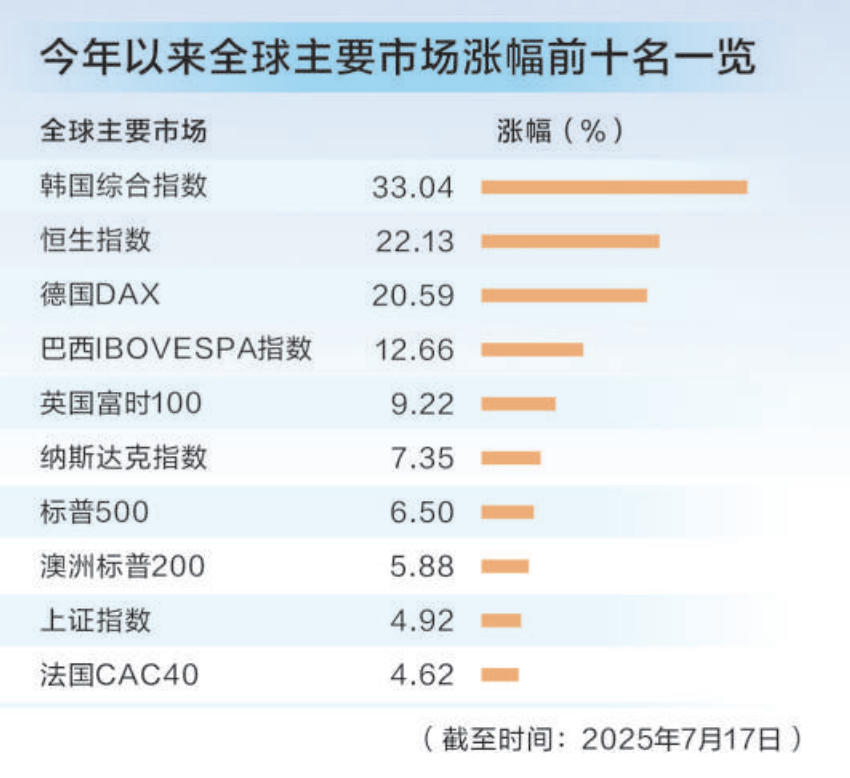
Group 1: Hong Kong Capital Market Performance - Hong Kong's capital market has rapidly recovered in 2025, with significant capital inflow and the highest IPO fundraising globally [1][3] - The total equity financing in Hong Kong reached 2897.40 billion HKD, with IPOs contributing 1240.06 billion HKD, reflecting year-on-year increases of 286.52% and 584.22% respectively [4] - The number of IPOs in Hong Kong has increased to 304, with 51 companies listed, indicating a 14.29% rise in quantity [4] Group 2: Intermediary Institutions' Business Surge - Intermediary institutions in Hong Kong, including brokers, law firms, and accounting firms, are experiencing a surge in business due to the active IPO market [3][5] - The issuance fees for 51 listed companies in 2025 reached 53.40 billion HKD, nearly matching the total for the entire year of 2024 [3] - Major accounting firms have seen significant increases in their audit and advisory services due to the heightened demand from IPO activities [5][6] Group 3: Future Outlook for IPOs and Intermediaries - The second half of 2025 is expected to maintain or even increase the IPO activity in Hong Kong, with over 200 companies having submitted listing applications [9] - The demand for legal services has surged, with law firms completing 15 IPO projects in the first half of 2025, reflecting a growth rate exceeding the industry average [5][6] - Intermediary institutions are optimistic about the future, anticipating continued growth driven by favorable policies and international capital inflow [8][9] Group 4: Real Estate Market Recovery - The demand for office space in Hong Kong's core business districts is showing signs of recovery, driven by the active IPO market [10][12] - The rental prices for Grade A office buildings in Central have dropped nearly 45% from their peak in 2019, making them attractive to financial institutions [11] - The resurgence in the IPO market is expected to positively impact the leasing demand for office spaces, particularly in Central [13] Group 5: Growth in Hong Kong's Tech Sector - The strong performance of the capital market has revitalized Hong Kong's tech sector, with a notable increase in the number of startups [14][15] - The number of startups in Hong Kong reached 4694 in 2024, a 10% increase from 2023, with significant growth in health, medical, and green technology sectors [14] - Investment in Hong Kong's tech sector is projected to rise, with venture capital funding expected to grow from under 500 million USD in 2015 to 5 billion USD by 2025 [17]


“干半年顶一年” 香港中介机构忙并快乐着
Zheng Quan Shi Bao· 2025-07-17 19:18
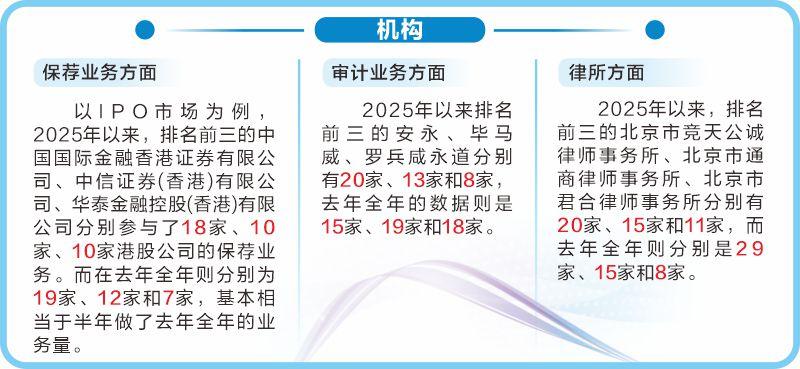
Group 1 - The Hong Kong capital market has rapidly recovered since 2025, with significant capital inflow and the highest IPO fundraising globally in the first half of the year [2][3] - The issuance costs for 51 listed companies reached 5.34 billion HKD in 2025 alone, nearly matching the total of 5.82 billion HKD for the entire year of 2024 [2] - The demand for intermediary services, including accounting and legal services, has surged due to the increased number and scale of IPOs [3][4] Group 2 - Accounting firms are experiencing a substantial increase in business, particularly in areas such as due diligence, auditing, and financial reporting, driven by the rise in IPO activities [3][7] - Legal service demand has also seen a significant uptick, with law firms completing 15 Hong Kong IPO projects in the first half of 2025, reflecting a year-on-year increase above the industry average [3][4] - Major intermediaries have reported business volumes that have already surpassed their total for the previous year, indicating a robust market environment [4][6] Group 3 - The IPO process in Hong Kong typically requires multiple intermediaries, including several law firms and auditors, which adds complexity to the listing process [5][6] - Intermediaries face pressure to ensure accuracy in the IPO documentation, as any discrepancies can lead to liability issues [6][7] - The outlook for the Hong Kong market remains optimistic, with expectations of continued IPO activity and a strong pipeline of over 200 companies having submitted listing applications [7][8]
新华财经晚报:上半年我国货物贸易进出口同比增长2.9%
Xin Hua Cai Jing· 2025-07-14 15:03
Key Points - The People's Bank of China reported that as of the end of June, the broad money supply (M2) reached 330.29 trillion yuan, reflecting a year-on-year growth of 8.3% [1] - The narrow money supply (M1) stood at 113.95 trillion yuan, with a year-on-year increase of 4.6% [1] - The currency in circulation (M0) was 13.18 trillion yuan, showing a year-on-year growth of 12% [1] - The net cash injection in the first half of the year amounted to 363.3 billion yuan [1] - The total social financing scale increased by 22.83 trillion yuan in the first half of 2025, which is 4.74 trillion yuan more than the same period last year [1] - As of the end of June, the total social financing stock was 430.22 trillion yuan, with a year-on-year growth of 8.9% [1] - The balance of RMB loans reached 268.56 trillion yuan, reflecting a year-on-year growth of 7.1% [1] - The balance of RMB deposits was 320.17 trillion yuan, with a year-on-year increase of 8.3% [1] Trade and Economic Relations - The General Administration of Customs reported that China's total goods trade import and export value for the first half of the year was 21.79 trillion yuan, a year-on-year increase of 2.9% [2] - Exports accounted for 13 trillion yuan, growing by 7.2%, while imports were 8.79 trillion yuan, showing a decline of 2.7% [2] - In June, all categories of trade (imports, exports, and total trade) achieved positive year-on-year growth, with accelerating growth rates [2] - The Deputy Director of the General Administration of Customs emphasized the importance of dialogue and cooperation in Sino-U.S. economic relations, advocating for a fair and open global trade system [2] Corporate Actions - The State Administration for Market Regulation approved the acquisition of shares in Ansi Technology by New Thinking Technology with additional restrictive conditions due to potential competition concerns in the optical software and EDA software markets [3] - The approval includes obligations for the parties involved to divest certain business segments related to optical solutions and power analysis software [3] Healthcare Sector - The National Healthcare Security Administration released a report indicating that by the end of 2024, approximately 1.327 billion people will be covered by basic medical insurance in China, maintaining a coverage rate of over 95% [3] - The total income of the national basic medical insurance fund for 2024 is projected to be 34,913.37 billion yuan, with total expenditures of 29,764.03 billion yuan [3]
英国金融服务业超八成高管看好英国政府竞争力战略
news flash· 2025-07-14 07:39
英国金融服务业超八成高管看好英国政府竞争力战略 金十数据7月14日讯,毕马威的一项调查显示,超过80%的金融服务行业高管认为,英国政府的金融服 务增长和竞争力战略将促进英国经济增长并吸引外国投资。英国财政大臣里夫斯将在本周二的演讲中宣 布金融服务增长与竞争力战略。调查发现,88%的受访者现在认为,政府的计划将吸引外资进入该行 业,这一比例高于2024年12月时的68%。此外,86%的受访者现在对政府计划将促进行业增长和提高竞 争力充满信心,亦高于六个月前的70%。83%的受访者相信政府增长计划将提升英国在可持续金融和金 融科技领域的领先地位,这一比例在六个月内上升了10个百分点。对政府计划信心不足的受访者强调, 在国民保险和增税、通胀压力和经济不确定性方面面临挑战。 ...
大模型时代,微软为什么还是跑在最前?
腾讯研究院· 2025-07-09 08:30
Core Insights - Microsoft has adopted a unique strategy in the AI era by focusing on monetizing AI capabilities without developing foundational models, resulting in a market capitalization increase from $2 trillion to $3 trillion in three years [1] - The concept of a "future company" is defined as a human-machine hybrid organization that allows humans to focus on creativity while AI handles routine tasks [3][4] - The integration of AI into Microsoft 365 aims to address the "modern work digital dilemma," where 60% of work time is spent on routine tasks, leaving only 40% for deep thinking and value creation [2] Group 1: Microsoft's Vision for Future Companies - Microsoft envisions a future where AI acts as a colleague, enhancing productivity by allowing humans to concentrate on creative tasks [3] - The company is leveraging insights from neuroscience to reshape the relationship between humans and work, creating a new organizational structure that integrates AI as a core asset [3][4] Group 2: AI Colleagues and Their Capabilities - Microsoft has introduced AI colleagues with five core functions: chat, search, note-taking, design, and intelligent execution, transforming AI from a standalone tool into an omnipresent work partner [6][7] - These AI colleagues can perform complex tasks such as deep multi-step reasoning and cross-domain information integration, significantly enhancing productivity [7] Group 3: Milestones in AI Integration - Key milestones in Microsoft's AI integration include embedding AI capabilities into Office applications, enhancing hardware specifications for AI processing, and developing a comprehensive AI ecosystem [8][9] - The timeline outlines the evolution from initial integration in 2023 to the establishment of an AI agent store and the ability for enterprises to train their own AI agents by 2025 [8] Group 4: Building an AI Agent Network - Microsoft is constructing an "agent network" that facilitates seamless collaboration between AI and humans across various applications, enhancing organizational efficiency [10][11] - This network aims to support complex problem-solving and improve productivity by allowing AI agents to communicate and share knowledge within the organization [10] Group 5: Commercialization Strategy - Microsoft's approach to AI commercialization involves three stages: offering models as a service, embedding AI into products, and creating an ecosystem for third-party agents [12][13] - The company is transitioning from a model of selling APIs to building a comprehensive ecosystem that includes various AI functionalities and third-party integrations [12][13] Group 6: Organizational Transformation through AI - The integration of AI into business processes is seen as a transformative force, reshaping how organizations operate and interact with technology [21][22] - Companies are encouraged to measure AI usage as a key performance indicator, reflecting the importance of human-agent collaboration in driving productivity [22][23] Group 7: Future Implications - The evolution of AI in the workplace suggests that the true winners will be those who can harmonize technology, talent, processes, and organizational structures [24] - The concept of "human-agent ratio" is emerging as a critical metric for companies to assess their AI strategies and enhance competitive advantage [24]