
西门子

Search documents
佳都科技、西门子、工控国际合作推进轨道交通信号系统本土化落地
Zhong Zheng Wang· 2025-11-15 03:56
Core Insights - The collaboration between Jiadu Technology, Siemens, and Industrial Control International aims to establish an international-level joint venture for urban rail signaling systems in Guangzhou, marking a significant step in enhancing Guangzhou's position as a global hub for rail transit technology innovation [1][4] Group 1: Partnership Objectives - The joint venture will leverage Siemens' leading signaling system technology to create digital application models tailored for the Chinese market [2] - The partnership aims to integrate local industrial chain resources to help Guangzhou's rail transit industry reach a trillion-level cluster target [2] - The collaboration will facilitate the localization of Siemens' signaling technology in China, addressing the gap in high-end signaling systems in Guangzhou [2][3] Group 2: Company Contributions - Jiadu Technology will utilize its strengths in smart rail transit engineering, system integration, and technology research and development to accelerate the digital and intelligent implementation of new signaling systems [2][3] - Siemens will share methodologies and tools with the joint venture, providing reliable system engineering and digital practice solutions while promoting local talent development in Guangzhou [2][4] - Industrial Control International aims to deepen practical cooperation in technology innovation, market expansion, and capital operations, enhancing the overall industrial chain [3] Group 3: Industry Impact - The collaboration is expected to strengthen Guangzhou's strategic industry cluster in rail transit, promoting high-end and intelligent development within the sector [1][3] - Jiadu Technology has already established a significant presence in the urban rail sector, covering 45 cities and over 2,200 stations, with a cumulative service mileage exceeding 4,100 kilometers [3] - The partnership is positioned to create a competitive market and industrial ecosystem, aligning domestic technology development with international standards [2][3]

客厅里的智能战争
经济观察报· 2025-11-14 15:08
Core Viewpoint - The competition in the home appliance market is intensifying as traditional companies like Midea, Gree, Haier, and Hisense seek new growth through AI technology, product line expansion, and internationalization, while tech companies like Huawei and Xiaomi leverage their established smart ecosystem advantages to increase competition [2][3]. Group 1: Market Dynamics - Traditional home appliance companies are exploring new growth points through AI technology and expanding product lines [2][3]. - Tech companies are intensifying competition in the home appliance market by leveraging their smart ecosystem advantages [2][3]. - The shift towards a fully smart home environment is becoming evident, with consumers increasingly interested in integrated smart solutions [12]. Group 2: Consumer Behavior - Consumers are showing a preference for smart appliances, with features like AI voice control being particularly appealing to families with children and elderly members [6]. - There is a noticeable shift in consumer purchasing habits, with many moving from foreign brands to domestic brands due to the increasing expectations for smart features [6][7]. - Consumers are facing challenges with compatibility between different brands' smart systems, which complicates the integration of smart home devices [7]. Group 3: Technological Advancements - Home appliances are evolving from "single product intelligence" to "whole home intelligence," with systems like Midea's "Xiao Mei AI" integrating various smart functions [9][10]. - The interaction between vehicles and home systems is being developed, allowing for seamless integration and control of home environments from vehicles [11]. - The trend towards smart home integration is expected to continue, with significant growth projected in the smart home market over the next few years [12]. Group 4: Industry Trends - Major players in the home appliance sector, including Gree, Midea, Haier, and Hisense, are adapting to the blurred lines between home appliances and broader home ecosystems [14]. - The retail landscape is shifting, with smart home products being prominently displayed alongside traditional appliances to attract consumer interest [14]. - The release of technological potential in the home appliance sector is expected to reshape global competition, allowing Chinese companies to gain a more advantageous position in the market [15].





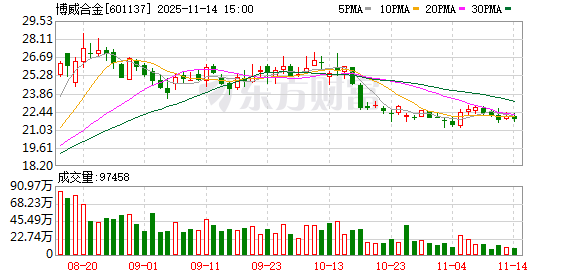
博威合金:公司高度重视人工智能电力领域材料的成长机会
Zheng Quan Ri Bao· 2025-11-14 13:38
Group 1 - The company, Bowei Alloy, has supplied materials to major companies such as Schneider and Siemens, indicating its established presence in the market [2] - The company places significant emphasis on growth opportunities in the artificial intelligence power materials sector, highlighting its strategic focus on emerging technologies [2]

开学倒计时!上海交大医健未来第十期,还有最后三个名额!
思宇MedTech· 2025-11-14 10:03
Core Insights - The article emphasizes the importance of innovation in the medical technology sector, particularly in China, and aims to connect clinical practices, capital, channels, and regulations to drive high-quality development in the industry [1]. Group 1: Educational Programs and Ecosystem - The Shanghai Jiao Tong University School of Medicine is launching a new entrepreneurial investment fund to support alumni in the medical technology sector, facilitating early investments and innovation [8]. - The program aims to cultivate entrepreneurial thinking among participants, enabling them to navigate complex market environments and make informed strategic decisions [15][11]. - The curriculum focuses on understanding industry trends, challenges, and innovations, helping participants grasp the development trajectory and strategic layout of the medical industry [13]. Group 2: Methodologies and Frameworks - The article introduces the "Value Engine Methodology," which emphasizes collaborative efforts between academia and industry to foster strategic thinking, innovation capabilities, and leadership skills among entrepreneurs [9][16]. - It highlights the need for a comprehensive understanding of market dynamics to identify opportunities and mitigate risks, thereby promoting sustainable growth for enterprises [14]. Group 3: Industry Trends and Challenges - The content discusses the evolving landscape of the medical industry, including the integration of technology and healthcare, and the emergence of new business models in sectors like elderly care and consumer healthcare [22]. - It addresses the challenges posed by economic uncertainties and the necessity for businesses to adapt their strategies accordingly [15][21]. Group 4: Networking and Resource Sharing - The program facilitates numerous networking opportunities, including annual conferences and international study tours, to connect participants with industry leaders and academic experts [29][30]. - It aims to create a robust ecosystem that integrates research, education, and industry collaboration, enhancing the overall impact of the medical technology sector [23].
博威合金:公司材料有供应给施耐德、西门子等公司
Mei Ri Jing Ji Xin Wen· 2025-11-14 08:53
Core Viewpoint - The company, Bowei Alloy, is actively engaging in the electric power sector and recognizes significant growth opportunities in materials for artificial intelligence applications within this field [1] Group 1: Company Engagement - Bowei Alloy has confirmed that it supplies materials to major companies such as Schneider Electric and Siemens [1] - The company emphasizes its commitment to seizing growth opportunities in the artificial intelligence power materials sector [1]
越秀证券每日晨报-20251114
越秀证券· 2025-11-14 02:39
Key Market Indices Performance - The Hang Seng Index closed at 27,073, up 0.56% year-to-date (YTD) increase of 34.96% [1] - The Hang Seng Tech Index closed at 5,981, up 0.80% with a YTD increase of 33.87% [1] - The Shanghai Composite Index closed at 4,029, up 0.73% with a YTD increase of 20.22% [1] - The Dow Jones Index closed at 47,457, down 1.65% with a YTD increase of 11.55% [1] Currency and Commodity Overview - The Renminbi Index is at 97.960, with a 1-month increase of 1.23% and a 6-month increase of 1.83% [2] - Brent crude oil is priced at $62.55 per barrel, down 0.62% over the past month and down 3.83% over the past six months [2] - Gold is priced at $4,232.55 per ounce, up 2.92% over the past month and up 30.15% over the past six months [2] Real Estate Investment Trends - Mainland buyers invested over 106.54 billion HKD in Hong Kong's residential market in the first ten months of the year, marking a record high [9] - The number of registrations by mainland buyers increased by approximately 14.3% year-on-year [9] - The preference for new properties is evident, with 57.4% of the investment in first-hand properties [10] Corporate Developments - Alibaba's stock surged nearly 6% as the company plans to overhaul its AI applications to compete with ChatGPT [10][11] - Tencent reported a 17% increase in net profit for the first three quarters, reaching 166.58 billion RMB [18] Economic Indicators - The UK GDP grew by only 0.1% in Q3, below expectations, indicating a slowdown in economic growth [16] - The volume of express deliveries during China's "Double 11" shopping festival reached a record high of over 1.39 billion packages [15]
芯片的隐形杀手
半导体行业观察· 2025-11-14 01:44
Core Viewpoint - Noise has become a critical issue for semiconductor designers, affecting signal integrity and device performance as technology scales down to 7nm and below [3][4][5]. Noise Sources and Impact - Noise can be defined as any deviation from the ideal state that may affect expected functionality, with sources including temperature instability and flicker noise [2]. - Power noise can reach 5% to 10% of the nominal VDD if not managed properly, exacerbated by lower power voltages and higher current densities [3]. - The complexity of modern packaging and increased transistor density have diminished traditional design margins, making even minor fluctuations potentially detrimental [3][4]. Signal Integrity Challenges - Signal integrity issues have existed for over 30 years, but the integration of chip and system design has introduced new challenges for chip designers [4]. - Advanced chips consume significant power, leading to noise that overlays digital designs with analog characteristics, complicating power supply stability [5]. Advanced Packaging Issues - Advanced packaging technologies like 2.5D/3D integration introduce new challenges, including power integrity issues and electromagnetic coupling, which can degrade performance [7][8]. - The proximity of interconnects in advanced packaging increases crosstalk and noise across power networks, complicating noise management [5][7]. Verification and Testing Challenges - Noise is increasing the burden on verification processes, especially for circuits that intertwine analog and digital domains, requiring extensive testing under various conditions [10]. - The first-pass success rate for SoC chips using AMS technology is typically 10% to 15% lower than for pure digital chips due to insufficient coverage of extreme conditions [10]. Solutions and Strategies - Noise management can be approached through existing tools, focusing on RTL design choices and backend power network design [14]. - The integration of on-chip voltage regulators is being explored to mitigate noise, although this may increase costs and complexity [14]. - A holistic view of chip, package, and system as an integrated power distribution network can help in designing lower-noise chips [14].
【环球财经】德国西门子2025财年净利润达104亿欧元
Xin Hua Cai Jing· 2025-11-13 14:52
Core Insights - Siemens reported a revenue growth of 4% for the fiscal year 2025, reaching €78.9 billion, and a net profit increase of 16%, amounting to €10.4 billion, marking a historical high [1] - The company achieved a 5% growth in new orders on a comparable basis, totaling €88.4 billion, and a significant increase in free cash flow to a record €10.8 billion [1] - Siemens' CEO highlighted that fiscal year 2025 is a milestone for the company, achieving record net profits for the third consecutive year with moderate single-digit growth in orders and revenue [1] Revenue and Profit Forecast - For fiscal year 2026, Siemens anticipates revenue growth in the range of 6% to 8% [2] - The Digital Industries segment is expected to grow by 5% to 10%, maintaining a profit margin of 15% to 19% [2] - The Smart Infrastructure segment is projected to grow by 6% to 9%, with a profit margin of 18% to 19% [2] - The Mobility segment is expected to achieve revenue growth of 8% to 10%, with a profit margin of 8% to 10% [2]

西门子欧股跌幅扩大至6.5%,或将创4月以来最大单日跌幅
Mei Ri Jing Ji Xin Wen· 2025-11-13 12:19
每经AI快讯,11月13日,西门子欧股跌幅扩大至6.5%,或将创4月以来最大单日跌幅。 ...
众业达(002441) - 2025年11月13日投资者关系活动记录表
2025-11-13 09:54
Company Overview - The company specializes in distributing industrial electrical components through its own sales network and offers system integration and manufacturing services [1] - It is the only industrial automation service provider in China with a nationwide sales channel, logistics network, multi-brand offerings, and both online and offline sales capabilities [1] Business Operations - The company covers various business segments including distribution, logistics, technical services, system integration, and manufacturing [2][3] - It distributes products from nearly 200 brands with over 1 million SKUs, catering to one-stop purchasing needs [3] - The sales network includes 53 subsidiaries and over 120 offices across major cities, ensuring stable and timely service [3] - Seven logistics centers and 50 distribution warehouses help shorten supply cycles, enhancing delivery efficiency [3] Supplier and Customer Dynamics - The top five suppliers have remained consistent, including Schneider, ABB, Siemens, Changshu Switch, and Delixi, although their procurement share has gradually decreased due to the introduction of new brands [4] - The customer base is primarily B2B, including manufacturers, integrators, and distributors, with a diverse range of clients [5] Market Impact and Financial Performance - The company is affected by fluctuations in various downstream industries, but overall stability is maintained due to the broad application of its products [6] - In the first three quarters of 2025, the company achieved a net profit of CNY 181 million, a 29.37% increase year-on-year, with a revenue of CNY 8.343 billion, reflecting a 0.61% growth [11] - The projected revenue for 2025 is CNY 11.842 billion, a 7% increase, with a net profit forecast of CNY 196 million, a 13.6% rise [11] Future Plans and Market Expansion - The company plans to expand into overseas markets, having approved an investment of SGD 42 million to enhance its presence in Southeast Asia [9][10] - Initial market research has been completed in Vietnam, Thailand, and Indonesia, with pilot operations already underway in Vietnam [10] - The company aims to leverage the growth in AIDC and smart grid sectors to drive business opportunities and enhance its service capabilities [12][13]
