
京东物流

Search documents
“春节不打烊”保证金开收,不打烊不要再一刀切了
3 6 Ke· 2025-12-10 11:02
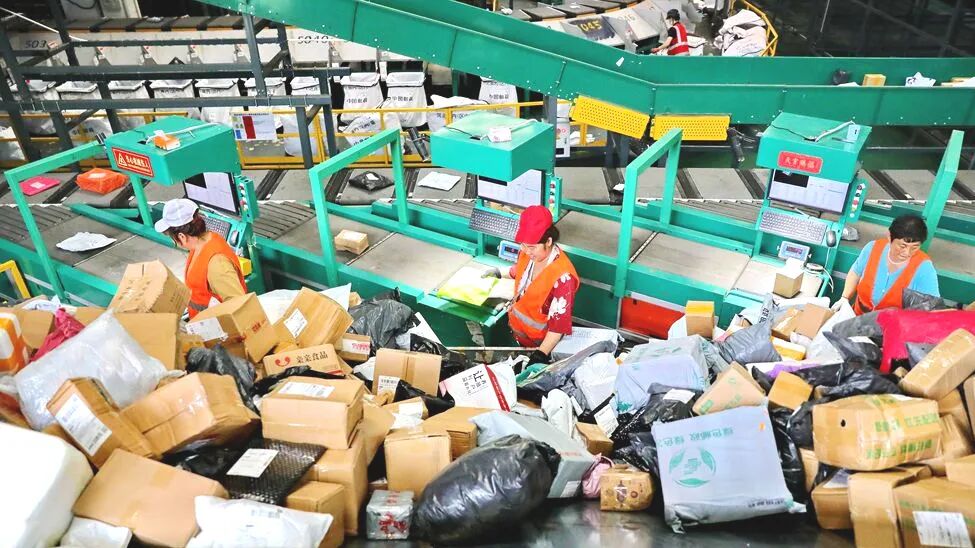
Core Viewpoint - The article discusses the early collection of deposits by express delivery companies for the upcoming Spring Festival, highlighting the necessity of maintaining operations during the holiday to meet market demands and enhance brand image [1][3]. Group 1: Industry Trends - Many express delivery companies are collecting deposits for the "Spring Festival no shutdown" policy earlier than usual this year, indicating a shift in operational strategy [1]. - The express delivery business volume during the Spring Festival has shown an upward trend, with over 641 million packages expected to be delivered in 2025, representing an 82.1% increase in daily delivery volume compared to the 2023 Spring Festival [3]. - The majority of express delivery business (over 80%) is driven by e-commerce, which is linked to the "no shutdown" initiative to ensure timely delivery of goods during the holiday [3]. Group 2: Challenges for Delivery Personnel - The "no shutdown" policy imposes significant pressure on franchise outlets and delivery personnel, especially if actual income or subsidies are not sufficient, potentially leading to a situation where the policy is more about form than substance [3][5]. - Many delivery personnel express a desire to return home for the holiday, with past experiences of paying to take time off likely to continue [3]. - The overall business volume during the Spring Festival is only about 15% of regular levels, leading to concerns about resource waste and increased operational costs for delivery companies [5]. Group 3: Operational Strategies - Franchise outlets, as independent entities, may resist the "no shutdown" policy due to low business volume and high costs during the holiday, with some opting to close and pay fines instead [5]. - Companies are encouraged to utilize big data to determine which outlets should remain open and which can close, ensuring better resource allocation [7]. - The demand for same-city instant delivery services is increasing during the Spring Festival, overshadowing traditional express delivery, indicating a shift in consumer preferences [8].

重庆江北国际机场年货邮吞吐量突破50万吨
Zhong Guo Min Hang Wang· 2025-12-10 10:27
Core Insights - Chongqing Jiangbei International Airport has achieved a record annual cargo throughput of over 500,000 tons as of December 9, marking a significant milestone in its development as an international aviation hub [1] - The airport has expanded its cargo flight network, launching and increasing flights to nine international and regional destinations, including Bournemouth, Milan, Hanoi, Bangkok, Dhaka, Yangon, Frankfurt, Amsterdam, and Hong Kong [1] - The airport is positioned as a key logistics hub connecting Southeast Asia and Europe, facilitating the export of "Made in China" and "Chongqing-made" products [1] Cargo Volume and Growth - As of November, the cumulative cross-border e-commerce cargo volume at Chongqing Jiangbei Airport reached 21,000 tons, representing a year-on-year increase of 31%, establishing Chongqing as a major port for cross-border e-commerce in the central and western regions of China [2] - The airport has seen a significant increase in international air-to-air transit cargo, reaching 8,840 tons in November, which is a 78% increase compared to the same period last year [2] Future Development Plans - The airport aims to focus on high-quality development as an international aviation logistics hub, expanding its cargo flight network to connect Southeast Asia and Europe, and enhancing cargo sourcing efforts [3] - The airport plans to strengthen its operational capabilities and improve resource allocation to support the growing demand for cargo throughput [2][3]
重庆江北国际机场年货邮吞吐量创历史纪录
Zhong Guo Xin Wen Wang· 2025-12-10 07:58
同时,北欧三文鱼等冰鲜产品、南亚鳝鱼和东南亚榴莲等特色进口产品,依托进港航线和完善的指定监 管场地资质快速汇聚重庆。未来,重庆江北国际机场将持续加密欧洲方向进口航线,助力重庆打造西部 冰鲜、进境水果集散中心。(完) 来源:中国新闻网 编辑:张嘉怡 重庆江北国际机场年货邮吞吐量创历史纪录 中新社重庆12月10日电 (梁钦卿)重庆江北国际机场10日对外公布,该机场年货邮吞吐量于12月9日突破 50万吨,创下开航以来历史最高纪录,标志着重庆国际航空枢纽建设迈上新台阶。 "年货邮吞吐量突破50万吨,是重庆国际航空枢纽建设的重要里程碑。"重庆江北国际机场有限公司总经 理侯伟介绍,今年以来,该机场聚焦欧洲、东南亚两大核心方向,新开、加密9条国际(地区)货运航 线,目前在飞国际(地区)货运航线达20条、每周66班,构建了联通欧洲和东南亚的航空物流网,为"中 国造""重庆造"产品出海搭建起高效的空中桥梁。 伴随着航线网络的完善,重庆江北国际机场的集货能力大幅提升,已成功吸引顺丰速运、京东物流、 TEMU等多家物流及电商头部企业加大在渝集货力度。 为提升中转效率,重庆江北国际机场不久前配合东航物流在重庆首次实现国际货物机坪直转 ...
创历史新高!重庆江北国际机场年货邮吞吐量突破50万吨大关
Sou Hu Cai Jing· 2025-12-10 06:13
Core Insights - Chongqing Jiangbei International Airport has achieved a record annual cargo throughput of over 500,000 tons as of December 9, marking a significant milestone in the development of the Chongqing international aviation hub [1][8] Group 1: Cargo Operations - The airport currently operates 20 international (regional) cargo routes, with a focus on Europe and Southeast Asia, having added 9 new routes this year [4] - Weekly flights on these routes total 66, establishing a robust air logistics network connecting Europe and Southeast Asia [4] - The airport has seen a 31% increase in cross-border e-commerce cargo and a 78% increase in international transshipment cargo this year [4] Group 2: Growth Metrics - As of November, cross-border e-commerce cargo at the airport reached 21,000 tons, reflecting a year-on-year growth of 31% [4] - The airport has also facilitated the import of specialty products such as Nordic salmon and Southeast Asian durians, leveraging its comprehensive regulatory facilities [4] - The international air-to-air transshipment volume reached 8,840 tons by November 2025, representing a 78% increase compared to the previous year [7] Group 3: Future Plans - The airport aims to further enhance its cargo route network, particularly towards Europe, to establish Chongqing as a central hub for fresh and imported fruits in the western region [4][8] - Ongoing efforts will focus on improving cargo source acquisition and enhancing hub capabilities to support the region's economic development [8]

甘肃羊肉发成都要在南京“打一头” 诡异快递路线背后,枢纽城市之争暗流涌动
Mei Ri Jing Ji Xin Wen· 2025-12-09 14:42
Core Viewpoint - The article discusses the perplexing logistics routes taken by express deliveries in China, highlighting a case where a package of lamb from Gansu to Chengdu took an indirect route via Nanjing, raising questions about efficiency and resource allocation in modern logistics [1][2][3]. Group 1: Logistics Operations - The delivery route for the lamb involved a journey of over 2900 kilometers instead of the direct 600 kilometers, illustrating a complex logistics operation that seems counterintuitive to consumers [1][2]. - The logistics process involves packages being routed through major hubs, such as Nanjing, which serves as a central distribution point for express deliveries in China [5][6]. - The "Y" shaped route taken by the package symbolizes the modern logistics challenges where consumers question the efficiency of such operations despite technological advancements [2][3]. Group 2: Economic Considerations - The logistics companies utilize an "axle-radial distribution model" to consolidate packages at central hubs, which helps in achieving economies of scale and reducing costs [6][7]. - The cost of shipping a single package is significantly higher when not consolidated, emphasizing the need for logistics companies to optimize routes for cost efficiency [8][9]. - The logistics industry's approach to routing is a calculated decision balancing cost, efficiency, and network stability, which may appear irrational to consumers but is strategically sound [7][8]. Group 3: Hub Selection and Strategy - Major logistics companies, including China Post and SF Express, have strategically chosen hub locations based on factors like traffic infrastructure, regional economic potential, and government planning [9][10]. - The establishment of logistics hubs in cities like Nanjing and Hubei is part of a broader national strategy to enhance logistics efficiency across the country [11][12]. - The future of logistics in China aims to create a more interconnected and efficient network that minimizes unnecessary detours while maximizing operational efficiency [12][13].


中国第三方物流行业市场研究报告
硕远咨询· 2025-12-09 14:22
Investment Rating - The report indicates a strong growth potential for the third-party logistics (3PL) industry in China, with an expected market size exceeding 1.2 trillion RMB by 2025, reflecting a compound annual growth rate (CAGR) of over 10% [18][20]. Core Insights - The third-party logistics industry is characterized by a diverse range of services, including transportation, warehousing, distribution, logistics information management, supply chain design, and reverse logistics [7][8]. - The industry has evolved significantly, driven by the rapid growth of e-commerce and manufacturing, leading to increased demand for logistics services and a shift towards more integrated and intelligent supply chain solutions [12][14]. - The report emphasizes the importance of technology, such as artificial intelligence, IoT, and big data, in enhancing logistics efficiency and service quality [20][27]. Market Size and Structure Analysis - The overall market size of China's 3PL industry surpassed 1 trillion RMB in 2024, with significant contributions from e-commerce, manufacturing, and fast-moving consumer goods sectors [17][18]. - By 2025, the market is projected to reach 1.2 trillion RMB, with warehousing services accounting for approximately 30% and transportation services for about 40% of the total market [21][25]. - The report highlights the strong growth in niche markets such as e-commerce logistics, pharmaceutical logistics, and cold chain logistics, driven by technological advancements and changing consumer demands [22][24]. Competitive Landscape - The market concentration is increasing, with leading companies like SF Express, JD Logistics, and COSCO Shipping Logistics capturing over 40% of the market share [33][37]. - These leading firms leverage extensive logistics networks, advanced technology, and strong capital to maintain their competitive edge [51][52]. - Smaller logistics companies focus on specific regional markets and niche services, often emphasizing personalized and flexible solutions to meet local demands [54][56]. Demand Analysis - The manufacturing sector remains the largest customer group, accounting for about 40% of the market, with a growing emphasis on efficiency, precision, and cost control in logistics services [30][39]. - E-commerce and retail sectors are rapidly expanding, driving demand for fast delivery and last-mile services, which necessitate continuous innovation in logistics solutions [42][43]. - The fast-moving consumer goods and pharmaceutical industries have specific logistics requirements, including speed, frequency, safety, and compliance with regulations [45][46]. Future Development Trends - The report predicts a deep integration of smart and digital technologies across the logistics chain, enhancing automation and decision-making capabilities [57]. - Green logistics and sustainable practices are becoming central to industry development, with a focus on reducing carbon emissions and optimizing resource use [58][59]. - Cross-industry collaboration and innovation are expected to drive the evolution of logistics services, creating a more interconnected and efficient ecosystem [60].
2025年中国跨境物流行业市场研究报告
硕远咨询· 2025-12-09 14:21
Investment Rating - The report does not explicitly state an investment rating for the cross-border logistics industry Core Insights - The cross-border logistics industry is experiencing rapid growth, driven by the boom in cross-border e-commerce and the expansion of international trade, with a compound annual growth rate (CAGR) exceeding 20% [18] - The industry is evolving towards digitalization and automation, with technologies such as IoT, big data, and AI enhancing operational efficiency and service quality [6][24] - Key market players include traditional logistics giants, specialized cross-border logistics firms, and tech-driven logistics companies, each contributing to a diverse market landscape [16] Industry Overview - Cross-border logistics encompasses a range of activities including transportation, warehousing, customs clearance, and distribution across different countries [5] - The industry has seen significant development stages, transitioning from traditional freight forwarding to a more integrated and technology-driven approach [13][14] - The complexity of cross-border logistics is highlighted by the need to navigate various legal regulations, customs policies, and the integration of multiple transportation modes [12] Market Environment Analysis - The macroeconomic environment in China is favorable for cross-border logistics, with stable economic growth and expanding international trade [19][21] - Government policies are increasingly supportive, focusing on enhancing customs efficiency and promoting cross-border e-commerce [22][15] - The technological landscape is rapidly evolving, with advancements in logistics information systems and the application of AI and big data driving operational improvements [24][64] Market Demand Analysis - Demand from end-users, including cross-border e-commerce sellers and manufacturing companies, emphasizes the need for timely, cost-effective, and flexible logistics solutions [26][32] - The growth of cross-border e-commerce is a primary driver of logistics demand, necessitating innovations such as overseas warehouses to improve delivery times [27] - Consumer expectations for transparency and service quality are rising, pushing logistics providers to enhance their service offerings [33] Competitive Landscape Analysis - Major domestic players like SF Express, JD Logistics, and Cainiao Network dominate the market, leveraging their extensive networks and technological capabilities [45] - International logistics giants such as DHL and FedEx maintain significant market presence, often collaborating with local firms to enhance service delivery [49] - The competitive dynamics are characterized by a blend of scale advantages, brand influence, and customer resource management [52][54] Supply Chain and Operational Model Analysis - The cross-border logistics supply chain is complex, involving multiple stakeholders and critical processes from procurement to final delivery [56] - Key operational challenges include customs clearance and last-mile delivery, which require innovative solutions to enhance efficiency [57] - Risk management is crucial in navigating the uncertainties of cross-border logistics, necessitating robust strategies to mitigate potential disruptions [58] Future Development Trends - The industry is expected to undergo significant transformation with the integration of smart technologies, including autonomous vehicles and blockchain for enhanced transparency [72] - Business model innovation is trending towards diversification and platform-based approaches, enabling logistics firms to meet evolving customer needs [73] - The market is projected to continue expanding, with a focus on high-quality service delivery and sustainable practices [75]
日本计划对跨境电商平台征收消费税;TikTok Shop美国黑五GMV突破5亿美元;微信支付落地卡塔尔|一周出海参考
Tai Mei Ti A P P· 2025-12-09 06:05
Group 1 - The China-Vietnam QR code interoperability project has officially launched in Vietnam, allowing Chinese tourists to make payments using various mobile payment apps [1] - The project aims to enhance financial connectivity between China and Vietnam, promoting trade and tourism between the two countries [1] Group 2 - India is projected to attract $4.1 trillion in green investments by 2047, with an annual market potential of $1.1 trillion [2] - This significant investment is expected to contribute to India's sustainable development goals over the next two decades [2] Group 3 - Thailand's cabinet has approved a policy to promote residential solar rooftop installations, allowing tax deductions for related expenses [3] - The initiative aims to encourage the use of clean energy and reduce household electricity costs while transforming the national energy structure [3] Group 4 - Thailand's electric vehicle production exceeded 50,000 units in the first ten months of 2025, marking a 530% year-on-year increase [4] - Despite a slight decline in overall vehicle production, the domestic market remains stable, with electric vehicle sales growing by 60.1% [4] Group 5 - Chinese citizens can now travel to Russia visa-free until September 14, 2026, for tourism and business purposes, with a stay of up to 30 days [5] Group 6 - Amazon has launched its first global smart hub warehouse in Shenzhen, China, set to open in March 2026, as part of its supply chain solutions [6] - The new global smart hub warehouse will facilitate seamless logistics and inventory management for sellers [6] Group 7 - Amazon's Haul program has expanded to 26 countries, with user visits tripling since June [7] - Chinese sellers on Amazon's emerging sites saw sales increase by over 30% from January to October 2025 [8] Group 8 - TikTok Shop's gross merchandise volume (GMV) in the U.S. surpassed $500 million during Black Friday, reflecting a nearly 50% year-on-year growth [9] - The platform's live streaming sales saw significant increases, with participating sellers' sales up by 84% [9] Group 9 - Lazada has upgraded its collection services in mainland China, adding 18 cities and allowing for single-item pickups [10] - The new regulations will be fully implemented by January 2026, with performance assessments for sellers starting then [10] Group 10 - Ozon has launched a premium brand selection platform, "Ozon Select," focusing on high-end products, with over 130,000 SKUs listed [11] - The platform is expected to see a 1.5x increase in orders for fashion items by Q1 2025 [11] Group 11 - Walmart reported a 57% increase in orders on Black Friday compared to the previous year, driven by strong consumer demand for electronics and home goods [12] Group 12 - The global market for robotic vacuum cleaners saw an 18.7% year-on-year increase in shipments in the first three quarters of 2025, with Europe and the Middle East leading growth [13] Group 13 - In November 2025, 33 Chinese companies made it to the global mobile game revenue top 100, collectively earning $1.95 billion [14] - Tencent remains the top mobile game publisher globally, with significant contributions from its flagship products [14] Group 14 - U.S. online sales on Black Friday reached a record $11.8 billion, marking a 5.8% increase from the previous year [15] - Mobile shopping accounted for over 60% of total sales, indicating a shift in consumer purchasing behavior [15] Group 15 - JD Logistics reported a doubling of order volume in its overseas warehouses during the Black Friday sales period [16] - Significant growth was observed in North America, Europe, and the Asia-Pacific regions [16] Group 16 - Ant Group's WorldFirst reported processing nearly $200 billion in transactions in 2025, with a 100% year-on-year growth [17] - The service has expanded to over 220 countries, supporting multiple currencies for transactions [17] Group 17 - WeChat Pay has launched in Qatar, with QNB becoming the first bank in the Gulf Cooperation Council to support the service [18] - This development provides new digital payment options for retailers in Qatar to connect with Chinese consumers [18] Group 18 - Malaysia is drafting regulations to restrict social media access for individuals under 16 years old, focusing on online safety for children [19] Group 19 - Japan plans to impose consumption tax on cross-border e-commerce platforms with annual sales exceeding 5 billion yen, affecting companies like Temu and SHEIN [20] - The new tax regulations aim to reduce tax evasion and support local retail businesses [20]


物流各领域盈利分化显著,京东物流等联动伙伴仓网实现生态协同
Sou Hu Cai Jing· 2025-12-04 17:11
Core Insights - The logistics real estate and express delivery sectors are experiencing a profitability pattern characterized by "strong performance from leading companies and pressure on smaller firms," with industry acceleration towards high-value creation driven by network integration and capital operations [2] Group 1: Logistics Real Estate - The core trend in logistics real estate focuses on optimizing cost structures and adjusting business models, with Wanwei Logistics reporting total revenue of 3.18 billion yuan, a year-on-year increase of 7.4%, by transitioning to a "heavy asset + light asset" model [2] - Baowang Logistics reported total revenue of 1.38 billion yuan, a year-on-year decrease of 3.91%, with net profit declining by 57.71% due to long cultivation periods for newly opened parks and investments in smart park renovations and photovoltaic projects [2] Group 2: Express Delivery Sector - The express delivery industry is seeing improved profitability driven by simultaneous increases in volume and price, with JD Logistics achieving revenue of 55.084 billion yuan, a year-on-year increase of 24.1%, despite a 15% decline in net profit due to an increase in full-time delivery personnel [2] - SF Holding reported total operating revenue of 225.26 billion yuan, a year-on-year increase of 8.89%, and a net profit of 8.31 billion yuan, up 13.69%, indicating simultaneous growth in business scale and profitability [3] Group 3: Cold Chain and Cross-Border Logistics - In the cold chain sector, Hailong Cold Chain reported total revenue of 2.43 billion yuan, a year-on-year increase of 15.20%, with a net profit margin of 12.26%, while Iceberg Cold Chain saw a revenue decline of 2.73% [3] - In cross-border logistics, Jiacheng International reported total revenue of 0.95 billion yuan, a year-on-year decrease of 3.40%, but maintained a high net profit margin of 15.86% [3] Group 4: Investment and M&A Activities - Six investment events were recorded during the reporting period, with leading companies driving industry advancement through technology cooperation, capacity implementation, and capital mergers and acquisitions [3] - Notable investment activities include Zhongtong Express acquiring land for 381 million yuan to build a smart operation center, and JD Logistics launching multiple projects to enhance its logistics network [4][5] Group 5: Technological Innovation - Companies are deepening the integration of technology and logistics applications to enhance operational efficiency, with ProLogis launching an automated warehouse equipped with smart sorting robots and AGV systems [4] - JD Logistics and JD Industrial Development are collaborating on a project to integrate core resources such as warehousing and distribution, improving order processing efficiency by 50% [5][6] Group 6: Capital Operations - Capital operations and asset transactions are becoming crucial for optimizing resource allocation in the logistics industry, with notable transactions including Tianjin Port Group's plan to transfer 60% of China Railway Storage and Transportation's equity [8] - Red Star Cold Chain has submitted a listing application to the Hong Kong Stock Exchange, aiming to raise funds for expanding its cold chain network and upgrading temperature control technology [9]

京东物流(02618) - 截至二零二五年十一月三十日止月份之股份发行人的证券变动月报表
2025-12-04 08:45
股份發行人及根據《上市規則》第十九B章上市的香港預託證券發行人的證券變動月報表 I. 法定/註冊股本變動 | 1. 股份分類 | 普通股 | 股份類別 | 不適用 | | 於香港聯交所上市 (註1) | | 是 | | | --- | --- | --- | --- | --- | --- | --- | --- | --- | | 證券代號 (如上市) | 02618 | 說明 | | | | | | | | | | 法定/註冊股份數目 | | | 面值 | | 法定/註冊股本 | | | 上月底結存 | | 40,000,000,000 | | USD | 0.000025 | USD | | 1,000,000 | | 增加 / 減少 (-) | | | 0 | | | USD | | 0 | | 本月底結存 | | | 40,000,000,000 | USD | | 0.000025 USD | | 1,000,000 | 本月底法定/註冊股本總額: USD 1,000,000 FF301 第 1 頁 共 10 頁 v 1.1.1 截至月份: 2025年11月30日 狀態: 新提交 致:香港交易及結 ...