上峰水泥

Search documents
水泥板块10月13日跌1.2%,上峰水泥领跌,主力资金净流出2.92亿元
Zheng Xing Xing Ye Ri Bao· 2025-10-13 12:45
Market Overview - The cement sector experienced a decline of 1.2% on October 13, with Shangfeng Cement leading the drop [1] - The Shanghai Composite Index closed at 3889.5, down 0.19%, while the Shenzhen Component Index closed at 13231.47, down 0.93% [1] Individual Stock Performance - Shangfeng Cement (code: 000672) closed at 11.30, down 3.42% with a trading volume of 492,700 shares and a transaction value of 55.5 million [2] - Other notable declines include Guotong Co. (down 3.14%), Quanzhou Cement (down 2.06%), and Sichuan Jinding (down 1.99%) [2] - In contrast, Xizang Tianlu (code: 600326) showed a slight increase of 0.39% [1] Capital Flow Analysis - The cement sector saw a net outflow of 292 million from institutional investors, while retail investors contributed a net inflow of 270 million [2][3] - The main capital inflow was observed in Huaxin Cement, which had a net inflow of 16.27 million from institutional investors [3] - Conversely, Shangfeng Cement experienced a net outflow of 2.63 million from retail investors [3]


出海+低估值高股息梳理 | 投研报告
Zhong Guo Neng Yuan Wang· 2025-10-13 01:08
Core Insights - The report highlights the current trends in the non-metallic building materials sector, including price changes, inventory levels, and production rates across various materials [1][4][5]. Group 1: Price Trends and Market Performance - The national average price for high-standard cement is 349 RMB/ton, down 53 RMB/ton year-on-year and down 2 RMB/ton month-on-month, with an average shipment rate of 44.5%, a decrease of 1.9 percentage points from the previous month [1][4]. - The average price of float glass is 1289.81 RMB/ton, which represents an increase of 65.07 RMB/ton or 5.31% month-on-month [1][4]. - The average price for 2.0mm coated panels remains stable at around 13 RMB/square meter [1][4]. Group 2: Inventory and Production Metrics - The inventory days for key monitored provinces in the glass production sector are approximately 24.8 days, a decrease of 1.38 days from the previous week [1][4]. - The concrete mixing station's capacity utilization rate is reported at 7.48%, down 0.19 percentage points month-on-month [4]. - The average price for domestic 2400tex alkali-free winding direct yarn is 3524.75 RMB/ton, remaining stable, while the mainstream price for electronic cloth is between 4.3-4.5 RMB/m, reflecting a 6% increase [4]. Group 3: Company Developments and Recommendations - China National Materials Technology announced plans to raise no more than 4.48 billion RMB for projects related to low dielectric fiber cloth production and to repay government funds [6]. - Huaxin Cement plans to grant 257,800 restricted stocks to 11 incentive targets and intends to repurchase shares worth between 32.25 million and 64.5 million RMB, with a maximum repurchase price of 25 RMB/share [6]. - The report continues to recommend investment in African building materials, fiberglass, and electrolytic aluminum sectors, highlighting companies like Keda Manufacturing and Huaxin Cement as key players in international competition [2].


周期论剑 -三季报展望
2025-10-13 01:00
Summary of Key Points from Conference Call Records Industry Overview - **Financial Conditions**: Domestic financial conditions are stabilizing, with loose fiscal and monetary policies aimed at stabilizing the capital market, which helps to build consensus, boost expectations, and attract foreign capital [1][3] - **Investment Focus**: The main investment themes include technology, particularly AI innovation and semiconductor equipment, as well as adjusted financial sectors and industries like non-ferrous metals, chemicals, steel, and new energy [1][4] Company Insights - **Aviation Industry**: During the 2025 National Day holiday, air passenger traffic significantly increased, with ticket prices rising beyond expectations. The aviation industry is expected to see profits surpassing 2019 levels in Q3 2025, contingent on the recovery of business travel demand [1][5] - **LNG Shipping Market**: The LNG shipping market is expected to perform well in Q4 2025, benefiting from OPEC's production increase and additional supply from South America and West Africa, indicating a rebound in profitability for shipping companies [1][7] - **Coal Market**: The coal market is experiencing a dual improvement in supply and demand, with prices expected to rise gradually starting in the second half of 2026. The focus on coal stocks is increasing due to supply constraints and unexpected demand [1][14][15][16] Key Industry Trends - **Oil Prices**: Recent declines in oil prices are attributed to geopolitical factors, tariffs, and OPEC+ production increases. Future price movements will depend on the attitudes of oil-producing countries and geopolitical developments [1][8][9] - **Steel Industry**: The steel sector is expected to perform well in Q4, with historical data suggesting that policy-related factors can lead to year-end rallies. The industry is also seeing a shift towards a more stable supply-demand balance, with potential profit increases in the coming years [1][19][20] Recommendations - **Investment Recommendations**: - **Aviation**: Focus on companies that can capitalize on the recovery of business travel and rising ticket prices [1][5] - **LNG Shipping**: Companies like China Merchants Energy and China Ship Leasing are recommended due to expected profitability rebounds [1][7] - **Coal**: Companies like China Shenhua and other major state-owned enterprises are highlighted for their strong market positions and potential for profit growth [1][18][17] - **Steel**: Recommended companies include Baosteel and Hualing Steel, which have cost advantages and strong market positions [1][20] Additional Insights - **Geopolitical Impact**: The current geopolitical landscape is influencing market dynamics, with clearer boundaries around trade risks compared to earlier in the year. This clarity is seen as an opportunity for investors to increase their holdings in Chinese assets [2][3] - **Consumer Building Materials**: The consumer building materials sector is showing signs of recovery, with leading companies expected to perform well despite a challenging market environment [1][24][25] This summary encapsulates the key insights and recommendations from the conference call records, providing a comprehensive overview of the current state and future outlook of various industries and companies.
开源晨会-20251012
KAIYUAN SECURITIES· 2025-10-12 14:42
Macro Perspective - The report emphasizes the need to scientifically view the current economic development situation, highlighting the focus on long-term strategic adjustments in macro policies rather than short-term benefits [7][8] - Recent macro policies have concentrated on stabilizing growth in key industries such as steel, petrochemicals, and machinery, with measures to reduce production capacity and promote digital economy innovation [7] Industry Insights Media - The media sector is encouraged to firmly invest in "AI applications + gaming," with significant advancements in AI algorithms and supportive policies driving growth in this area [18][21] Building Materials - The building materials industry is undergoing a transformation driven by policies aimed at industrialization, digitalization, and sustainability, which are expected to open new growth opportunities in green materials and smart construction [23][24] - The building materials index has outperformed the broader market, indicating strong investment potential in this sector [24] Coal - The report indicates that thermal coal prices are stabilizing above 700 RMB per ton, with expectations for further upward movement due to seasonal demand shifts and policy support [29][30] - The investment logic suggests that both thermal and coking coal prices are at a turning point, with potential for significant price recovery [30][31] Retail - The retail sector has shown signs of recovery during the National Day holiday, with increased consumer spending and a focus on young, fashionable brands [34][40] - The report highlights the importance of identifying high-quality companies within the retail space that can adapt to changing consumer preferences [41] Real Estate - The real estate market is experiencing a decline in new home transaction volumes, prompting the need for sustainable urban renewal models [44][45] - Policies aimed at revitalizing the real estate sector are expected to stabilize the market, with a focus on improving existing housing supply and demand dynamics [44][45] Electric Equipment - The solid-state battery industry is making significant technological advancements, with new methods to enhance battery performance and stability being developed [53]
开源证券-建筑材料行业周报:政策继续推动行业供给转型,积极布局建材机会-251012
Xin Lang Cai Jing· 2025-10-12 14:11
Core Viewpoint - The Ministry of Housing and Urban-Rural Development is pushing for a transformation in the construction industry towards industrialization, digitalization, and greening, aiming for high-quality development and sustainability in "Chinese construction" [1] Industry Policy and Trends - The reform focuses on promoting prefabricated buildings, accelerating the application of construction robots, and widely promoting green building materials and practices [1] - The goal is to enhance the quality, efficiency, and sustainability of the construction industry, creating new growth opportunities in green materials and smart construction sectors [1] Investment Recommendations - Recommended companies in the consumer building materials sector include: - Sanke Tree (channel penetration, retail expansion) - Dongfang Yuhong (waterproof leader, optimized operational structure) - Weixing New Materials (high-quality operations, significant retail business) - Jianlang Hardware [1] - Beneficiary companies include: - Beixin Building Materials (gypsum board leader, diversified expansion in coatings and waterproof sectors) [1] - Cement sector beneficiaries include: - Conch Cement, Huaxin Cement, and Shangfeng Cement, as the industry aims to control cement clinker capacity and improve energy efficiency [1] Market Performance - The building materials index rose by 2.66% in the week of October 6-10, 2025, outperforming the CSI 300 index by 3.18 percentage points [2] - Over the past year, the building materials index increased by 21.26%, surpassing the CSI 300 index by 4.71 percentage points [2] Price Trends - As of October 10, 2025, the average price of P.O42.5 bulk cement was 287.21 RMB/ton, down 0.26% month-on-month [3] - The average price of float glass was 1301.65 RMB/ton, with a slight increase of 0.72% [3] - Prices for various fiberglass products ranged from 3400 to 6500 RMB/ton, depending on the type [4] Raw Material Prices - As of October 10, 2025, crude oil prices were 65.05 USD/barrel, down 3.59% week-on-week [4] - Asphalt prices remained stable at 4570 RMB/ton, while acrylic acid and titanium dioxide prices saw declines [4]
行业周报:政策继续推动行业供给转型,积极布局建材机会-20251012
KAIYUAN SECURITIES· 2025-10-12 13:42
Investment Rating - The investment rating for the building materials industry is "Positive" (maintained) [1] Core Viewpoints - The Ministry of Housing and Urban-Rural Development has emphasized deepening reforms in the construction industry, focusing on industrialization, digitalization, and greening as development paths. This aims to transition the construction industry from a traditional extensive model to a refined and intelligent one, with key measures including the promotion of prefabricated buildings and the application of construction robots. The ultimate goal is to achieve high-quality development and enhance the quality, efficiency, and sustainability of "Chinese construction" [1] - The report highlights the long-term investment value of the building materials sector, particularly in green building materials and intelligent construction, which are expected to open new growth spaces due to the profound changes driven by the "three transformations" [1] - Recommended stocks in the consumer building materials sector include: Sankeshu (channel penetration, retail expansion), Dongfang Yuhong (waterproof leader, optimized operational structure), Weixing New Materials (high-quality operations, high retail business proportion), and Jianlang Hardware. Beneficiary stocks include: Beixin Building Materials (gypsum board leader, diversified expansion in coatings and waterproof sectors) [1] Summary by Sections Market Overview - The building materials index increased by 2.66% from October 6 to October 10, 2025, outperforming the CSI 300 index by 3.18 percentage points. Over the past three months, the CSI 300 index rose by 14.91%, while the building materials index increased by 14.73%, indicating a slight underperformance of 0.18 percentage points. In the past year, the CSI 300 index rose by 16.55%, and the building materials index increased by 21.26%, outperforming the CSI 300 index by 4.71 percentage points [2][11] Cement Sector - As of October 10, 2025, the average price of P.O42.5 bulk cement nationwide was 287.21 yuan/ton, a decrease of 0.26% month-on-month. The price trends varied by region, with increases in Northeast (+0.60%) and Central China (+1.32%), while declines were noted in North China (-1.09%) and East China (-1.57%) [22][25] - The clinker inventory ratio was stable at 67.40% [23] - The report tracks the valuation of listed companies in the cement sector, indicating a need for monitoring [72] Glass Sector - The average spot price of float glass as of October 10, 2025, was 1301.65 yuan/ton, reflecting a week-on-week increase of 0.72%. However, the futures price decreased by 2.86% [76][77] - National float glass inventory increased by 696 million weight boxes, a rise of 13.71% [78][79] Fiberglass Sector - The market price for non-alkali 2400tex direct yarn ranged from 3400 to 4000 yuan/ton, with variations depending on the manufacturer [4] Consumer Building Materials - As of October 10, 2025, the price of crude oil was 65.05 USD/barrel, down 3.59% week-on-week. The price of asphalt remained stable at 4570 yuan/ton, while acrylic acid and titanium dioxide prices showed slight declines [4]


出海+低估值高股息梳理-20251012
SINOLINK SECURITIES· 2025-10-12 12:24
Investment Rating - The report highlights several companies with dividend yields exceeding 5%, including Sichuan Road and Bridge, Rabbit Baby, and others, indicating a positive investment outlook for these firms [2][12] Core Insights - The report recommends focusing on overseas markets, particularly in Africa, for building materials, fiberglass, and electrolytic aluminum sectors, suggesting that companies like Keda Manufacturing and Huaxin Cement are well-positioned for international competition [13] - Continued tracking of AI copper foil and AI electronic cloth is advised, as demand remains strong, benefiting from capital expenditure expansion in semiconductor clean rooms and PCB equipment [3] Summary by Sections Weekly Discussion - Companies with a price-to-earnings (PE) ratio below 15x include Sichuan Road and Bridge (8.8x), China Construction (4.8x), and others, indicating potential undervaluation [2][12] - The report emphasizes the importance of cash dividend ratios for 2024 and 2025, with several companies projected to maintain high dividend yields [2][12] Cycle Linkage - The national average price for cement is reported at 349 RMB/t, down 53 RMB/t year-on-year, with an average shipment rate of 44.5% [4][14] - The average price for float glass increased to 1289.81 RMB/t, reflecting a 5.31% rise, while inventory levels decreased [4][14] Market Performance - The building materials index increased by 2.66%, outperforming the Shanghai Composite Index [17] - Cement manufacturing showed a price adjustment of -0.4%, with regional variations in pricing due to demand fluctuations [21][25] Price Changes in Building Materials - The report notes that the price of 2400tex fiberglass remains stable at 3524.75 RMB/t, with no significant changes expected in the short term [56] - The electronic cloth market shows stable pricing, with current rates between 4.3-4.5 RMB/m [57]
上峰水泥拟5000万元参投鑫华半导体
Zheng Quan Ri Bao· 2025-10-10 16:12
Core Viewpoint - Gansu Shangfeng Cement Co., Ltd. has announced a strategic investment in Jiangsu Xinhua Semiconductor Technology Co., Ltd., the largest producer of electronic-grade polysilicon in China, through its wholly-owned subsidiary Ningbo Shangrong Logistics Co., Ltd. [1] Investment Details - The total subscribed capital for the partnership enterprise "Guocai No. 3" amounts to 1.476 billion yuan, with Ningbo Shangrong contributing 50 million yuan, representing a 3.39% stake. Following this investment, Guocai No. 3 will become the largest shareholder of Xinhua Semiconductor [1]. - This investment marks the 19th semiconductor enterprise investment by Shangfeng Cement, following significant investments in leading companies such as Changxin Technology Group and Hefei Jinghe Integrated Circuit Co., Ltd. [2] Industry Context - The semiconductor industry is a key area supported by national strategy, with growing market demand, particularly for critical materials like electronic-grade polysilicon, where domestic self-sufficiency has significant room for improvement [2]. - Shangfeng Cement's investment strategy is part of its five-year plan to drive growth through a dual approach of traditional building materials and equity investment, aiming to create a new growth curve in advanced materials [3]. Financial Performance - The cement business continues to maintain industry-leading gross margins, providing substantial returns to shareholders, while the investment business has also yielded good financial returns, exemplified by a net gain of 166 million yuan from the listing reduction of a single project [3].
上峰水泥携手央企基金投资鑫华半导体
Zhong Zheng Wang· 2025-10-10 11:00
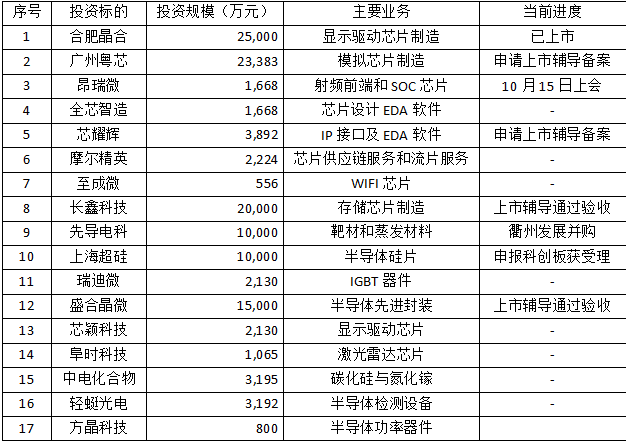
Group 1 - The core point of the article is that Shangfeng Cement has invested 1.476 billion yuan in Jiangsu Xinhua Semiconductor, becoming its largest shareholder through a partnership with various investment funds [1] - The investment in Jiangsu Xinhua Semiconductor marks the 19th semiconductor company that Shangfeng has invested in, focusing on the semiconductor industry chain [1] - Jiangsu Xinhua Semiconductor is the only company in China capable of large-scale production of electronic-grade polysilicon, covering the advanced integrated circuit industry chain and has undertaken several national key technology projects [1] Group 2 - Shangfeng's five-year strategic plan emphasizes a dual-driven approach with construction materials and equity investment, aiming to cultivate a new growth curve in advanced materials [2] - The construction materials business continues to maintain industry-leading gross margins, providing substantial returns to shareholders, while the investment business has also generated good financial returns [2] - Over 60% of the invested projects have initiated or completed the listing process, showcasing effective investment efficiency [2] Group 3 - A detailed table lists various semiconductor investments made by Shangfeng, including investment amounts and current progress, indicating a strong focus on the semiconductor sector [3]
水泥概念上涨1.84% 5股主力资金净流入超3000万元
Zheng Quan Shi Bao Wang· 2025-10-10 09:57
Core Insights - The cement sector has seen a rise of 1.84%, ranking 7th among concept sectors, with 39 stocks increasing in value, including Huaxin Cement and Jinyu Group reaching their daily limit up [1][2] Group 1: Market Performance - The top gainers in the cement sector include Shafeng Cement, Wanhui High-tech, and Tibet Tianlu, with increases of 6.07%, 5.10%, and 4.63% respectively [1] - The leading decliners in the sector are Shanghai Construction, AVIC Tianda, and Yinlong Co., with decreases of 2.27%, 1.67%, and 0.46% respectively [1] Group 2: Capital Flow - The cement sector attracted a net inflow of 382 million yuan, with 22 stocks receiving net inflows, and 5 stocks exceeding 30 million yuan in net inflow [2] - Tibet Tianlu led the net inflow with 191 million yuan, followed by Huaxin Cement and Jinyu Group, each with net inflows of 155 million yuan and 101 million yuan respectively [2][3] Group 3: Capital Inflow Ratios - Jinyu Group, Huaxin Cement, and Ningbo Fuda had the highest net inflow ratios at 21.40%, 17.04%, and 8.94% respectively [3] - The top stocks by net inflow in the cement sector include Tibet Tianlu, Huaxin Cement, and Jinyu Group, with respective net inflow amounts of 190.98 million yuan, 155.35 million yuan, and 101.13 million yuan [3][4]