
宝丰能源

Search documents
化工ETF(159870)盘中净申购3.61亿份,12月PPI环比涨幅扩大,连续3个月上涨
Xin Lang Cai Jing· 2026-01-09 06:25
Group 1 - The core viewpoint of the news is that the Producer Price Index (PPI) for industrial products decreased by 1.9% year-on-year in December 2025, with a narrowing decline of 0.3 percentage points compared to the previous month, while showing a month-on-month increase of 0.2%, marking three consecutive months of increase [1] - The PPI's month-on-month growth has expanded, and the year-on-year decline has narrowed, indicating price recovery in industries related to "anti-involution" such as coal, cement, and new energy vehicle manufacturing, with non-ferrous industries continuing to rise due to input factors [1] - As of January 9, 2026, the CSI Sub-Industry Chemical Theme Index (000813) rose by 0.12%, with significant increases in constituent stocks such as Jinfat Technology (600143) up by 9.99% and Xinjubang (300037) up by 4.63% [1] Group 2 - As of December 31, 2025, the top ten weighted stocks in the CSI Sub-Industry Chemical Theme Index (000813) include Wanhua Chemical (600309), Yanhua Co. (000792), and Cangge Mining (000408), with these stocks collectively accounting for 45.31% of the index [2] - The Chemical ETF (159870) closely tracks the CSI Sub-Industry Chemical Theme Index, which consists of seven sub-indices, selecting larger and more liquid listed company securities to reflect the overall performance of the related sub-industries [1][3]
石化ETF(159731)近4个交易日内合计“吸金”超3235万元,资金低位布局特征显著
Sou Hu Cai Jing· 2026-01-09 03:23
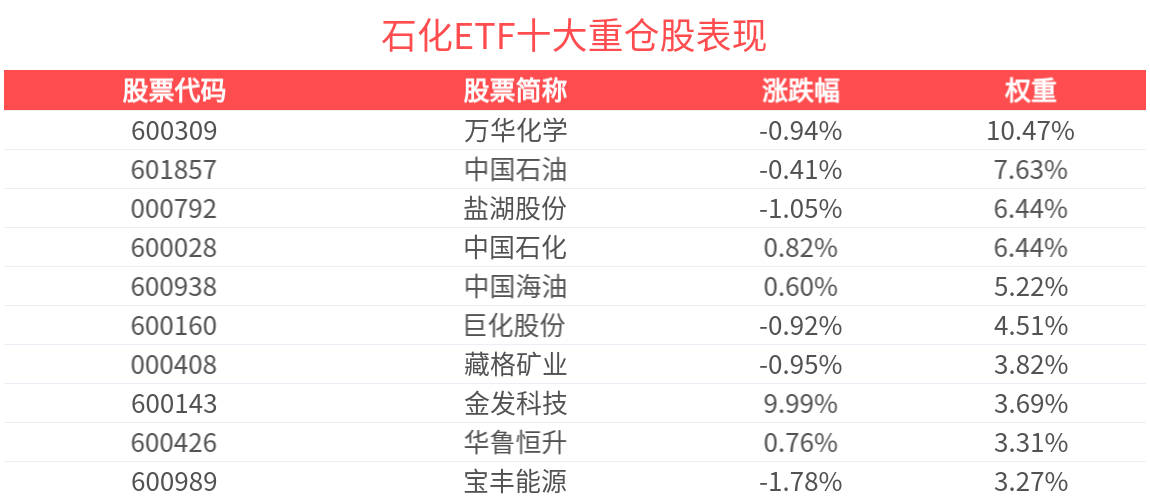
石化ETF(159731),场外联接(华夏中证石化产业ETF发起式联接A:017855;华夏中证石化产业ETF发起式联接C:017856)。 以上内容与数据,与有连云立场无关,不构成投资建议。据此操作,风险自担。 | 股票代码 | 股票简称 | 涨跌幅 | 权重 | | --- | --- | --- | --- | | 600309 | 万华化学 | -0.94% | 10.47% | | 601857 | 中国石油 | -0.41% | 7.63% | | 000792 | 盐湖股份 | -1.05% | 6.44% | | 600028 | 中国石化 | 0.82% | 6.44% | | 600938 | 甲国海海 | 0.60% | 5.22% | | 600160 | 巨化股份 | -0.92% | 4.51% | | 000408 | 藏格矿业 | -0.95% | 3.82% | | 600143 | 金发科技 | 9.99% | 3.69% | | 600426 | 华鲁恒升 | 0.76% | 3.31% | | 600989 | 宝丰能源 | -1.78% | 3.27% | (以上所列 ...






化工ETF(159870)连续6天净流入,PEEK材料在商业航天/机器人概念催化下领涨
Xin Lang Cai Jing· 2026-01-09 02:40
Group 1 - The core viewpoint of the news highlights the performance of the chemical industry, particularly the active role of PEEK materials in aerospace and lithium battery projects announced by several listed companies in early 2026 [1][2] - The China Securities Subdivision Chemical Industry Theme Index (000813) shows mixed performance among its constituent stocks, with Jinfa Technology (600143) leading with a 9.99% increase, while Luxi Chemical (000830) experienced the largest decline [1] - The chemical ETF (159870) is closely tracking the China Securities Subdivision Chemical Industry Theme Index, which consists of seven sub-indices reflecting the overall performance of listed companies in related sectors [2] Group 2 - PEEK and its carbon fiber reinforced composite materials (CF/PEEK) are crucial in the aerospace sector, replacing metals in aircraft components to significantly reduce weight [1] - Specific applications of PEEK in aerospace include electrical harness clamps in the Airbus A350XWB, turbine engine seals, bearing retainers, and components in fuel systems, showcasing its ability to withstand high temperatures and complex stresses [1] - The top ten weighted stocks in the China Securities Subdivision Chemical Industry Theme Index as of December 31, 2025, include Wanhua Chemical (600309) and Yalv Co. (000792), collectively accounting for 45.31% of the index [2]

宝丰能源跌2.08%,成交额5.03亿元,主力资金净流出5738.30万元
Xin Lang Cai Jing· 2026-01-09 02:36
Core Viewpoint - Baofeng Energy's stock price has shown fluctuations, with a recent decline of 2.08%, while the company has experienced significant revenue and profit growth year-on-year. Group 1: Stock Performance - As of January 9, Baofeng Energy's stock price was 19.82 CNY per share, with a market capitalization of 145.35 billion CNY [1] - The stock has increased by 0.97% year-to-date, with a 9.50% increase over the past 20 days and a 14.24% increase over the past 60 days [1] - The net outflow of main funds was 57.38 million CNY, with significant selling pressure observed [1] Group 2: Financial Performance - For the period from January to September 2025, Baofeng Energy achieved a revenue of 35.545 billion CNY, representing a year-on-year growth of 46.43% [2] - The net profit attributable to shareholders for the same period was 8.950 billion CNY, reflecting a year-on-year increase of 97.27% [2] Group 3: Shareholder Information - As of September 30, the number of Baofeng Energy's shareholders increased to 65,400, up by 3.70% from the previous period [2] - The company has distributed a total of 17.348 billion CNY in dividends since its A-share listing, with 8.121 billion CNY distributed in the last three years [3] - The top ten circulating shareholders include Hong Kong Central Clearing Limited, which holds 177 million shares, a decrease of 25.624 million shares from the previous period [3]

化工ETF(159870)盘中净申购超3亿份,冲刺连续6日净申购
Xin Lang Cai Jing· 2026-01-08 06:37
Group 1 - The core viewpoint is that recent adjustments in leading chemical companies are considered normal fluctuations, as there were prior expectations of price increases that need time to materialize [1] - The long-term outlook for the chemical industry is positive, with clear supply-demand reversals expected as time progresses, despite short-term disturbances causing volatility [1] - The next two years present good opportunities for investment in cyclical chemical companies during periods of fluctuation or correction [1] Group 2 - As of December 31, 2025, the top ten weighted stocks in the CSI Chemical Industry Theme Index (000813) account for 45.31% of the index, including companies like Wanhua Chemical and Salt Lake Potash [2] - The Chemical ETF (159870) is closely tracking the CSI Chemical Industry Theme Index and has seen significant net subscriptions, indicating strong investor interest [1][2]
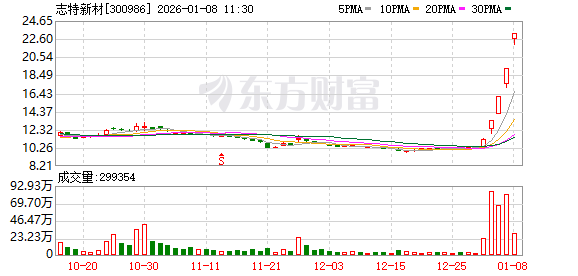
300986 连续4个“20cm”涨停!氢能产业拐点将至 机构密集关注这些高增长股
Zheng Quan Shi Bao Wang· 2026-01-08 04:50
Group 1 - The hydrogen energy industry is gaining increased attention at the top level, with a focus on innovation and development in future industries, including hydrogen and ammonia energy technologies [4] - The report from Guojin Securities indicates that by 2025, the focus on hydrogen energy will intensify, with frequent national policies and a higher level of urgency compared to the previous five-year plan [4] - The hydrogen energy sector is still in its commercial early stages, primarily driven by policy support, with significant opportunities for development in the domestic and international markets [4] Group 2 - Institutions are increasingly focusing on high-growth stocks related to hydrogen energy, with companies like Shichang Co., Zhongyuan Neipei, and Lianmei Holdings receiving attention in recent reports [5] - Kaifeng Securities highlights that Shichang Co. is strategically positioning itself in the hydrogen energy sector through its subsidiary, which is expected to open a new growth curve [6] - Huaxin Securities notes that Zhongyuan Neipei has proactively entered the hydrogen energy and fuel cell systems market, establishing a solid foundation for long-term growth [6] Group 3 - The A-share market has over 370 hydrogen energy concept stocks, with significant institutional ratings for companies like Yangguang Electric, Great Wall Motors, and Baofeng Energy [7] - Some companies are expected to see substantial profit growth this year, with predictions of net profit doubling for companies like Sidike and Tienshun Wind Power, and over 50% growth for others like Punaip and Mingyang Smart Energy [7]
化工行业供给侧有望结构性优化,化工ETF嘉实(159129)把握行业新一轮景气周期机遇
Xin Lang Cai Jing· 2026-01-08 02:41
Group 1 - The core viewpoint of the articles indicates a mixed performance in the chemical industry, with the sub-index showing a slight decline while certain stocks experience significant gains [1] - The chemical industry is witnessing a recovery in global manufacturing since Q3 2025, but the PPI for chemical products is weakening year-on-year, indicating a complex demand-side scenario [1] - Domestic real estate is at a cyclical low, while new energy vehicle sales continue to grow, contributing to a stable retail sales growth [1] - China is positioned as a global leader in the chemical industry, with stable production capacity compared to declining utilization rates in the EU [1] - The market is seeing strong performance in sectors like fluorine chemicals and phosphate fertilizers, alongside price increases in niche products driven by accidents [1] - The overall valuation of the basic chemical sector is showing significant recovery [1] Group 2 - The top ten weighted stocks in the chemical sub-index account for 45.31% of the index, with major players including Wanhu Chemical and Salt Lake Shares [2] - The chemical ETF managed by Harvest closely tracks the chemical sub-index, focusing on the new economic cycle under the "anti-involution" policy [2] - Investors can also explore investment opportunities in the chemical sector through the chemical ETF linked fund [3]
2026年度化工策略-新材料大有可为-反内卷-下周期进入右侧
2026-01-08 02:07
Summary of Key Points from the Conference Call Industry Overview - The conference call focuses on the chemical industry, particularly new materials and lithium battery materials, highlighting the potential for growth and cyclical recovery in the sector [1][3][8]. Core Companies and Assets - Key companies mentioned include Wanhua Chemical and Hualu Hengsheng, which are expected to benefit from capacity expansion and favorable pricing trends [1][2][8]. - Wanhua Chemical has a global advantage in MDI and TDI products, while Hualu Hengsheng has cost advantages across multiple products [6][8]. Core Themes and Strategies - The annual strategy is divided into three main lines: 1. **Growth Line**: Focuses on demand-driven sectors such as AI, semiconductor materials, and lithium battery materials [3]. 2. **Cyclical Growth**: Concentrates on midstream core assets with improving supply-demand dynamics [3][8]. 3. **Value Line**: Emphasizes resource products, particularly phosphates and potash [4][10]. Lithium Battery Materials - The lithium battery materials sector is highlighted, with specific attention to lithium hexafluorophosphate, electrolytes, and separators, which are showing upward pricing trends [5][12]. - Phosphate demand from lithium iron phosphate is significant, accounting for approximately 12% of phosphate demand, supporting price increases [5]. Supply-Demand Dynamics - The chemical industry has seen strong performance recently, driven by low profitability, low valuations, and active reallocation of institutional capital [2]. - The "anti-involution" policy is expected to limit new capacity, improving supply-demand relationships, although the fundamental dynamics still depend on actual supply and demand [7][8]. Market Trends and Future Expectations - The organic silicon industry is projected to have limited new capacity in 2026, with a historical compound growth rate of 8-10% over the past 7-8 years, indicating a positive outlook [9][24]. - Key products such as bottles, glyphosate, and PTA are currently in favorable supply-demand conditions, benefiting from the anti-involution policy [10][25]. Investment Recommendations - Recommended investments include leading companies like Wanhua Chemical and Hualu Hengsheng, as well as products benefiting from the new energy boom, such as electronic-grade DMC and oxalic acid [8][27]. - Specific attention is drawn to sectors with high operating rates and favorable supply-demand balances, including spandex, polyester, and organic silicon [19][22][23]. Resource Products - Phosphate and potash companies are highlighted for their growth potential, with phosphate demand expected to outperform potash [11][26]. - Companies involved in phosphate production are projected to see significant volume growth, with valuations around 10-15 times earnings [11]. Conclusion - The chemical industry is positioned for growth, driven by strategic investments in core assets and favorable market dynamics. The focus on midstream assets and resource products presents significant investment opportunities moving forward [1][8][27].

2026年有望成为周期反转的转折点,聚焦石化ETF(159731)长期布局机会
Xin Lang Cai Jing· 2026-01-07 03:22
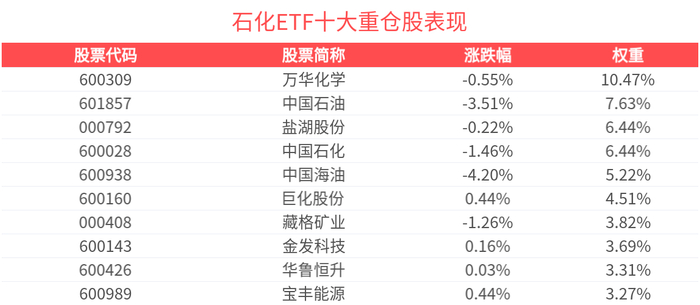
Core Viewpoint - The chemical industry is currently at the bottom of a four-year down cycle, with indicators suggesting a potential turning point in 2026, as various metrics indicate the industry has nearly bottomed out [1]. Group 1: Industry Performance - As of January 7, 2026, the China Petroleum and Chemical Industry Index has decreased by 0.35%, with mixed performance among constituent stocks [1]. - The China Chemical Products Price Index (CCPI) was reported at 3930 points on December 31, 2025, a 39% decline from the peak in 2021, indicating the industry is at a historical low [1]. - The basic chemical sector achieved a net profit of 112.7 billion yuan in the first three quarters of 2025, reflecting a year-on-year increase of 7.5%, suggesting initial stabilization in the sector [1]. Group 2: Capital Expenditure and Supply Cycle - Capital expenditure in the industry has decreased by 18.3% year-on-year, marking seven consecutive quarters of negative growth since Q4 2023, indicating the end of the supply expansion phase [1]. - The use of construction projects to fixed assets and capital expenditure to operating income ratios suggests a turning point in the chemical capacity cycle [1]. Group 3: ETF Performance - The Petrochemical ETF (159731) has seen a net value increase of 48.72% over the past two years, with a maximum monthly return of 15.86% since inception [2]. - The ETF has outperformed its benchmark with an annualized excess return of 2.17% over the past year [2]. - The top ten weighted stocks in the China Petroleum and Chemical Industry Index account for 56.73% of the index, with Wanhua Chemical and China Petroleum being the largest constituents [2].
宝丰能源20260106
2026-01-07 03:05
Summary of Baofeng Energy Conference Call Industry Overview - The fourth quarter of 2024 saw a decline in tin ingot prices, primarily due to the expected increase in domestic polyethylene and polypropylene production capacity by approximately 10.1 million tons in 2025, leading to a total capacity growth of about 13%, which exceeds the apparent consumption growth of around 10% [2][3] - Global olefin production capacity is expected to be predominantly oil-based, which will increase average costs. China is projected to reach a peak in ethylene and propylene production capacity in 2026, with an estimated increase of around 10 million tons, putting pressure on the market. However, demand from emerging industries such as new energy may provide a turning point, with a potential industry shift expected around 2027 [2][5] Company Financials - The company's financing cost remains below 4,000 yuan, typically between 3,780 and 3,890 yuan. The cost of coal is approximately 400 yuan per ton, leading to a total cost of around 3,700 yuan, fluctuating between 3,600 and 3,900 yuan depending on market conditions [2][6] - The company has maintained normal production and sales levels since the fourth quarter, with inventory levels remaining stable. There has been a slight decrease in imports due to increased domestic production, while exports of olefin products, particularly polypropylene, have been steadily rising [3][4] Market Dynamics - The recent rise in coal prices and decline in oil prices are viewed as temporary phenomena, with a strong correlation between oil and coal prices due to their substitutive nature. The gross profit margins in Inner Mongolia were close to 3,000 yuan, while in Ningdong, they ranged between 2,300 and 2,400 yuan, showing a 500 yuan difference [4][11] - The international oil price has dropped to between 55 and 60 USD, which is close to the cost line for most oil extraction companies. If prices remain below this range, it could lead to losses for global oil companies, providing a price support mechanism [7][8] Future Projections - The outlook for the global and Chinese olefin industry indicates that new projects will primarily be concentrated in Russia and Iran, with limited growth in gas-based systems due to peak shale gas production in the U.S. and minimal increases in gas-based systems in the Middle East. This suggests that future global capacity additions will be oil-based, raising average costs [5] - The company is currently focused on the Ningdong Phase IV project, expected to be operational by December 2026, with efforts to expedite completion to November. The Xinjiang project is still awaiting approval, with no clear progress reported [12][13] Technological Considerations - The Fischer-Tropsch synthesis technology is viewed positively, as its industrial application could significantly reduce CO2 emissions and coal consumption. This may influence the direction of existing coal-to-olefin processes. If the Inner Mongolia project is not approved, the company plans to increase dividend payouts [13] Conclusion - The company is navigating a challenging market environment with fluctuating costs and production capacities. The anticipated increase in production capacity in 2025 poses risks to pricing, but emerging demand from new industries may offer opportunities for growth. The company's strategic focus on project development and cost management will be crucial in maintaining competitiveness in the evolving market landscape.