实丰文化

Search documents
荐股108只,浮亏比例近52%!营销套路多,九方智投服务惹争议
Zhong Guo Zheng Quan Bao· 2025-08-06 23:33
Core Viewpoint - The article highlights the contrasting images of Jiufang Zhituo, a third-party investment advisory firm, where investors report significant losses despite high fees for stock recommendations, leading to a trust crisis in the industry [1][11]. Group 1: Company Performance and Investor Experience - Jiufang Zhituo's stock recommendation service has shown a high loss rate, with 51.85% of recommended stocks resulting in losses, and only 38.89% of stocks yielding profits [8][1]. - A specific case study revealed that an investor experienced a loss of over 10,000 yuan on multiple recommended stocks, despite purchasing high-tier services [6][1]. - The company has been criticized for selectively presenting successful cases while ignoring overall performance volatility, which misleads clients [11][1]. Group 2: Marketing and Advisory Practices - Investment advisors at Jiufang Zhituo have been observed promoting stocks based on incomplete or misleading information, often omitting critical details about the companies involved [2][3]. - The marketing strategy includes aggressive promotion of past successes to attract new clients, while failing to disclose the risks associated with their recommendations [11][1]. - Advisors often provide inconsistent recommendations, leading to confusion among investors regarding which stocks to buy [2][3]. Group 3: Regulatory and Ethical Concerns - Legal experts have indicated that Jiufang Zhituo's practices may constitute misleading marketing and could potentially breach regulatory standards, leading to liability for financial damages [11][1]. - The firm's approach of emphasizing individual success stories while downplaying risks has been identified as a short-sighted strategy that could harm the long-term trust in the investment advisory industry [11][1].
荐股营销套路多 九方智投服务惹争议 记者亲历荐股浮亏比例近52% 投资者直呼“割韭菜”
Zhong Guo Zheng Quan Bao· 2025-08-06 23:29
Core Viewpoint - The article highlights the misleading practices of Jiufang Zhituo, a third-party investment advisory firm, which has been accused of exaggerating its stock recommendation success while failing to disclose significant losses to investors [1][11]. Group 1: Company Practices - Jiufang Zhituo's marketing strategy relies on showcasing a few successful stock picks while ignoring the overall poor performance of their recommendations, leading to a lack of trust among investors [1][11]. - A recent analysis revealed that out of 108 stock recommendations made by Jiufang Zhituo, 51.85% resulted in losses, with a win rate of only 38.89% [8][11]. - The firm has been criticized for its selective presentation of information, which may constitute misleading marketing practices and could lead to legal repercussions [11]. Group 2: Investor Experiences - Many investors reported significant losses after purchasing high-priced advisory services from Jiufang Zhituo, with some claiming losses amounting to tens of thousands of yuan [6][7]. - A specific case highlighted an investor who lost over 10,000 yuan on a single stock recommendation, illustrating the firm's failure to provide adequate guidance during downturns [6][9]. - Complaints from investors indicate a pattern of being lured into higher-tier services with promises of better performance, which often do not materialize [6][7]. Group 3: Market Impact - The actions of Jiufang Zhituo and similar firms contribute to a growing trust crisis in the third-party investment advisory industry, potentially harming its long-term development [1][11]. - The firm’s practices of promoting certain stocks while downplaying risks may lead to increased scrutiny from regulators, as they may violate standards of fair disclosure [11].
荐股营销套路多 九方智投服务惹争议
Zhong Guo Zheng Quan Bao· 2025-08-06 21:09
Core Viewpoint - The article highlights the contrasting images of Jiufang Zhituo, a third-party investment advisory firm, where marketing claims of high success rates in stock recommendations are not substantiated by actual performance, leading to significant investor losses and a potential trust crisis in the industry [1][2][9]. Group 1: Company Performance and Investor Experience - Jiufang Zhituo's stock recommendation service has shown a high floating loss rate of 51.85%, with 56 out of 108 recommended stocks resulting in losses, indicating a success rate of only 38.89% [6][7]. - Many investors, after purchasing high-tier membership services, reported substantial losses, with some claiming losses amounting to tens of thousands of yuan despite the high fees paid for advisory services [6][8]. - The company has been criticized for selectively presenting successful cases while ignoring overall performance volatility, which misleads clients and damages trust in the advisory industry [9]. Group 2: Marketing and Advisory Practices - Jiufang Zhituo's advisors have been observed promoting stocks based on speculative claims about their connection to major companies like Huawei, without providing concrete evidence or consistent recommendations [2][4]. - The marketing strategy involves creating a funnel where potential clients are gradually engaged through free stock recommendations and promotional content, ultimately leading to upselling of premium services [5][6]. - The firm has been accused of using misleading marketing tactics, such as exaggerating past performance and downplaying risks, which could lead to regulatory scrutiny and potential legal consequences [9].
重磅!2025年中国及31省市AI玩具行业政策汇总及解读(全) 持续推进“人工智能+”行动计划
Qian Zhan Wang· 2025-08-06 02:08
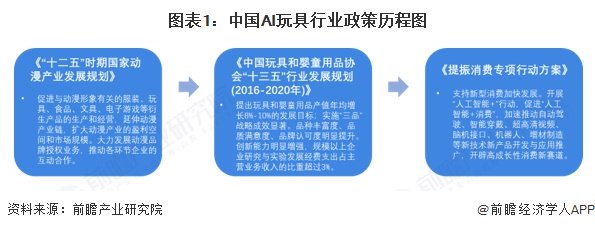
Core Viewpoint - The Chinese AI toy industry is experiencing significant policy support and development opportunities through the "Artificial Intelligence +" action plan, which aims to integrate AI technology with traditional and emerging industries, fostering a new development ecosystem [2][4]. Policy Development - From the "12th Five-Year Plan" to the "14th Five-Year Plan," the government has promoted quality improvement and innovation in the toy industry, encouraging the integration of toys with cultural industries [1]. - The "14th Five-Year Plan" continues to advance the "Artificial Intelligence +" action plan, creating a favorable environment for the development of the AI toy industry [1][2]. National Policy Summary and Interpretation - The government work report on March 5, 2024, introduced the "Artificial Intelligence +" action plan, emphasizing the deep integration of AI with traditional and new industries [2]. - The "Consumption Promotion Special Action Plan" released in March 2025 aims to support new consumption forms and accelerate the development of AI toys [4]. Key Policies Overview - A series of policies have been issued to support the AI toy industry, including: - The "Consumption Promotion Special Action Plan" which encourages AI toy R&D and product innovation [4]. - The "Light Industry Growth Stabilization Work Plan (2023-2024)" which aims to stimulate toy consumption and stabilize imports and exports [5]. Local Policy Summary - Various provinces have introduced policies to support the AI toy industry, focusing on technological paths and application scenarios for AI in toys [7][10]. - For instance, Guangdong Province's initiative aims to develop over 1,500 new intelligent interactive toy products by 2027 [10]. Industry Growth Points - The industry is encouraged to integrate with cultural sectors, enhance brand value, and implement quality safety projects for infant and child products [6]. - The establishment of high-quality exhibition platforms and the promotion of international cooperation are also emphasized to stimulate market consumption [6]. Standards and Regulations - The government is focusing on enhancing standards for quality improvement and cross-industry integration, with plans to revise and establish mandatory national standards for key products [6].







玩具装个“AI脑”售价飙十倍,这个万亿级赛道火了
Mei Ri Jing Ji Xin Wen· 2025-08-04 14:23
Core Insights - The AI toy market is rapidly emerging as a new frontier for startups and capital investment, with major tech companies entering the space [1][4][6] - The market is witnessing a surge in demand and innovation, with traditional toy manufacturers pivoting to AI-enhanced products [3][4][14] - The industry is characterized by high demand, high prices, and high profit margins, making AI toys a key growth area for the toy industry [4][15] Industry Trends - Numerous new AI toy products are being launched daily, indicating a vibrant and competitive market [2][6] - The AI early education toy market has seen explosive growth, with sales increasing sixfold in January due to AI technology [3][14] - Major players like Tom Cat and international giants like Mattel are collaborating with tech firms to develop AI toys, indicating a shift from small startups to larger companies entering the market [4][5] Investment Landscape - The AI toy sector has attracted 96 investment institutions, including major players like ByteDance and Coca-Cola, with significant increases in financing activity since 2024 [6][14] - The market is perceived as a lucrative opportunity, with many investors showing keen interest in AI toy companies [5][6] Technological Advancements - The advent of open-source models has reduced costs and increased the intelligence of AI toys, facilitating their entry into the consumer market [7][8] - Companies are focusing on developing more sophisticated AI capabilities, such as emotional recognition and multi-modal interaction, to enhance user experience [8][9][12] Market Dynamics - The AI toy market is still in its early stages, with a lack of consensus on what constitutes a "true" AI toy [10][11] - The competition is intensifying as companies strive to integrate technology, content, and intellectual property into their products [11][12] - The market is expected to evolve towards more personalized and emotionally intelligent toys that can adapt to user preferences over time [12][14] Future Outlook - The AI toy market is projected to grow significantly, with estimates suggesting it could reach a trillion-yuan scale, driven by the vast global toy market [14][15] - China is positioned to be a leading player in the AI toy sector, leveraging its manufacturing capabilities and large consumer base to potentially produce the first blockbuster AI toy [16]
文娱用品板块8月4日涨0.59%,创源股份领涨,主力资金净流出3660.17万元
Zheng Xing Xing Ye Ri Bao· 2025-08-04 08:30
证券之星消息,8月4日文娱用品板块较上一交易日上涨0.59%,创源股份领涨。当日上证指数报收于 3583.31,上涨0.66%。深证成指报收于11041.56,上涨0.46%。文娱用品板块个股涨跌见下表: | 代码 | 名称 | 收盘价 | 涨跌幅 | 成交量(手) | 成交额(元) | | | --- | --- | --- | --- | --- | --- | --- | | 300651 | 金陵体育 | 21.29 | -3.01% | 14.91万 | | 3.17亿 | | 605299 | 舒华体育 | 9.70 | -1.92% | 16.68万 | | + 1.63亿 | | 002862 | 实丰文化 | 18.66 | -0.96% | 4.01万 | | 7450.16万 | | 002678 | 珠江钢琴 | 4.91 | -0.81% | 11.94万 | | 5798.16万 | | 301287 | 康力源 | 41.30 | -0.60% | 1.73万 | | 7070.57万 | | 002348 | 高乐股份 | 3.76 | 0.00% | 12.69万 | | 4 ...

AI 陪伴玩具市场升温 机遇与挑战交织
Mei Ri Shang Bao· 2025-08-04 00:30
Core Insights - The AI companion toy market is rapidly growing, with products designed for both children and adults, providing emotional support and interaction [1][2][4] - Major companies, including ByteDance, OpenAI, and JD.com, are entering the AI toy space, indicating a competitive landscape [3][4] - Despite the growth potential, the market faces challenges such as high price points and product homogeneity, which may limit widespread adoption [4] Market Overview - The AI toy market in China is projected to exceed 10 billion by 2030, with an annual growth rate of over 70% [4] - AI toys like "AI Magic Star" and "Cupboo" are gaining traction among consumers, with features that enhance interaction and companionship [2][4] Competitive Landscape - Tech giants and traditional toy manufacturers are increasingly collaborating to integrate AI into toys, enhancing their capabilities [3] - Companies like ZTE and JD.com are launching products that focus on emotional companionship, indicating a trend towards more personalized experiences [3] Challenges and Concerns - High pricing of AI companion toys, such as the Japanese brand LOVOT priced over 30,000, poses a barrier to mass market penetration [4] - There is skepticism regarding the practical value of AI toys, with discussions on social media questioning their ability to replace real human interaction [4] - The current market is characterized by a lack of differentiation, as many products rely on generic models without specific optimizations for user experience [4]
竞争激烈:竞得星巴克中国股权的要求是什么?丨消费参考
2 1 Shi Ji Jing Ji Bao Dao· 2025-08-01 02:27
Group 1 - Starbucks is evaluating options for selling its stake in the China business, with over 20 interested parties expressing significant interest [2] - The estimated valuation of Starbucks' China business is around $10 billion, attracting nearly 30 private equity firms [2] - Starbucks may retain a 30% stake in the China business, with the remaining shares distributed among multiple buyers, each holding no more than 30% [2] Group 2 - In the latest fiscal quarter ending June 29, Starbucks China reported an 8% year-on-year revenue growth to $790 million [3] - As of the end of June, Starbucks China had 7,828 stores, with 70 new openings, and same-store sales increased by 2% [3] - In comparison, Luckin Coffee reported a revenue of 12.36 billion yuan, a 47.1% year-on-year increase, with a net profit of 1.25 billion yuan [3] Group 3 - Starbucks is looking for partners who share its mission and values, emphasizing the importance of effective local market operations over capital [3] - The selection process for potential partners is ongoing, with a focus on ensuring the future positioning of the Starbucks brand in China [3]
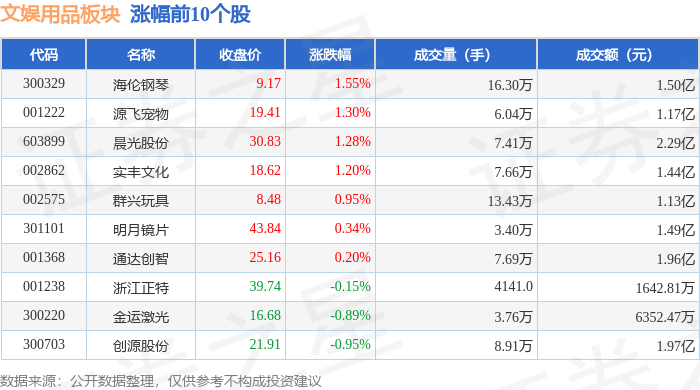
文娱用品板块7月31日跌0.39%,金陵体育领跌,主力资金净流出1.18亿元
Zheng Xing Xing Ye Ri Bao· 2025-07-31 08:37
Market Overview - The entertainment products sector experienced a decline of 0.39% on July 31, with Jinling Sports leading the drop [1] - The Shanghai Composite Index closed at 3573.21, down 1.18%, while the Shenzhen Component Index closed at 11009.77, down 1.73% [1] Individual Stock Performance - Helen Piano (300329) closed at 9.17, up 1.55% with a trading volume of 163,000 shares and a transaction value of 150 million [1] - Source Pet (001222) closed at 19.41, up 1.30% with a trading volume of 60,400 shares and a transaction value of 117 million [1] - Jinling Sports (300651) closed at 26.58, down 4.42% with a trading volume of 241,200 shares and a transaction value of 645 million [2] - Shuhua Sports (605299) closed at 10.38, down 4.16% with a trading volume of 285,000 shares and a transaction value of 299 million [2] Capital Flow Analysis - The entertainment products sector saw a net outflow of 118 million from main funds, while retail investors had a net inflow of 121 million [2][3] - Main funds showed a net inflow in Helen Piano of 11.72 million, while Source Pet had a net inflow of 7.21 million [3] - Jinling Sports experienced a significant net outflow of 4.42 million from main funds [3]



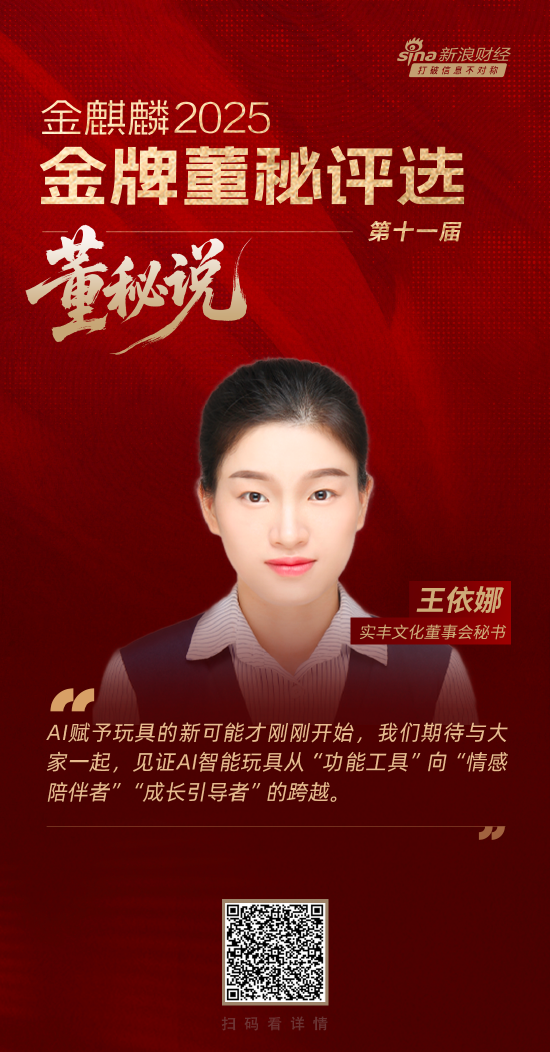
董秘说|实丰文化董秘王依娜:AI赋予玩具的新可能才刚刚开始
Xin Lang Cai Jing· 2025-07-31 05:24
Company Overview - Shifeng Culture Development Co., Ltd. (stock code: 002862) is a high-tech enterprise established in 1992, headquartered in Shantou, Guangdong Province, with over a hundred proprietary patents [6] - The company focuses on two core business segments: toys and games, with a product range exceeding 1,000 types sold in nearly 100 countries [6] - The company has adapted its product strategy to include three main product lines: smart electric toys, trendy toys, and AI toys [6] Game Business Strategy - The company targets the casual gaming sector, investing in research and development with a creative team to innovate gameplay that meets the needs of casual gamers [7] - The game product line is diverse, catering to various player demographics and preferences through effective advertising strategies [7] AI Technology Integration - AI technology is seen as a new business incubator for the toy manufacturing industry, addressing the limitations of traditional toys and enhancing consumer engagement [8] - The global AI toy market is projected to reach $36.377 billion by 2030, driven by trends in "loneliness economy" and "AI technology revolution" [8] AI Product Launches - The company plans to launch its next-generation AI toy, AI Magic Star, in 2024, featuring advanced interactive capabilities for children [9] - Another AI toy, AI Flying Rabbit, is set to be released in June 2025, showcasing significant advancements in responsiveness and interaction [9] Challenges in AI Development - The company faces challenges in balancing interaction naturalness with content safety, implementing a dual-filter algorithm to ensure safe interactions for children [10] - The algorithm must achieve low-latency responses while maintaining content security, which involves optimizing model complexity and processing speed [10] Competitive Landscape - AI is reshaping the competitive landscape in the toy industry, with companies leveraging advanced algorithms and data processing to create smarter toys [11] - The company is focusing on product innovation and market expansion, targeting diverse consumer needs from children's education to elderly companionship [11] Strategic Measures for Competitive Advantage - The company collaborates with universities and research institutions to accelerate AI technology application in toy products [12] - Continuous product innovation and brand building are prioritized to enhance market position and consumer loyalty [12] AI Governance and Data Security - The company has established a compliance assurance system to adhere to data protection regulations, ensuring user consent and data security [13] - A multi-layered security framework is in place for data transmission, with certifications for information security management [14] Future Outlook - The company envisions AI toys evolving from functional tools to emotional companions and growth guides, aiming to bring joy and security to families [15]