
携程集团

Search documents
携程存在的意义到底是什么?旅游刚需该怎么解?
Xin Lang Cai Jing· 2026-01-20 14:27
Core Viewpoint - Ctrip is positioned as a key player in the rapidly developing online travel industry, balancing multiple roles amidst controversies regarding its extensive management practices [1][4]. Group 1: Market Corrector - Ctrip acts as a market corrector by utilizing technology to reduce institutional costs in travel transactions, addressing long-standing issues such as information asymmetry and chaotic service standards [1][4]. - The platform provides certainty for users through mechanisms like "advance compensation" and "dispute mediation," while enforcing rules for merchant entry and service quality supervision, shifting the industry focus from price wars to value competition [1][4]. - This model of "platform credit replacing industry credit" effectively fills the gaps in market mechanisms through technological efficiency [1][4]. Group 2: Efficiency Enhancer - Ctrip enhances efficiency by leveraging network effects to amplify the scale value of the travel economy, creating a positive cycle where more users attract more merchants, leading to richer services and improved user experiences [3][6]. - The eBooking system has helped small and medium-sized hotels increase their occupancy rates by 15%-20%, while the "Worry-Free Rental" standard has shifted the car rental industry from price competition to service competition [3][6]. - This technological empowerment not only optimizes resource allocation but also generates incremental value through precise customer distribution, allowing merchants to diversify their revenue streams beyond just room income to include dining and spa services [3][6]. Group 3: Ecosystem Builder - Ctrip serves as an ecosystem builder, taking on a "quasi-public service" role by providing systematic solutions for essential travel needs [3][6]. - The company addresses the pain points of travel as a rigid consumption demand, ensuring that offerings are not only available but also trustworthy and secure [3][6]. - Through 24/7 global customer service, overseas SOS rescue, and genuine review governance, Ctrip establishes a comprehensive safety net from information decision-making to risk coverage, acting as a "market stabilizer" in an underdeveloped industry credit system [3][6]. - This proactive governance model encourages ordinary users to explore more complex travel scenarios, facilitating a shift in travel consumption from basic needs to quality experiences [3][6].


经济日报:携程的问题出在哪里?
Zhong Guo Jing Ji Wang· 2026-01-20 13:04
Group 1 - The core issue of the investigation against Ctrip is related to its high profits conflicting with the "real economy first" directive, highlighting the tension between platform monopolies and fair market practices [1] - Ctrip's practices, such as the "price adjustment assistant" that pressures hotels to follow suit in pricing, exemplify the "involution" that the policies aim to address, leading to a detrimental cycle for the entire industry [1] - The investigation serves as a critical opportunity for the overall transformation of the platform economy, emphasizing that antitrust actions are intended to promote innovation and ensure fair competition among all market participants [2] Group 2 - The investigation into Ctrip reflects a broader trend of increasing regulatory scrutiny on platform enterprises, necessitating a shift towards creating genuine incremental value through technological innovation and fair profit distribution [1] - The evolving regulatory landscape and the awakening of various stakeholders' rights are reshaping the competitive environment for platform companies, urging them to adapt and innovate [1]


银子都被抢没了...
Ge Long Hui· 2026-01-20 12:36
Group 1 - The core issue revolves around Ctrip facing antitrust complaints from the Yunnan Homestay Association, which accuses the platform of high commissions and unfair pricing practices [1] - The homestay business is struggling, with a significant decline in occupancy rates due to changing consumer preferences, leading to a competitive and price-sensitive market [1] - Prior to 2019, China's tourism industry experienced annual revenue growth of around 15%, but it has stagnated around 0% in recent years, increasing competition among platforms [1] Group 2 - Without platforms like Ctrip, most homestays would struggle to survive due to a lack of customer acquisition channels [2] - Ctrip's commission rate for hotel bookings is approximately 9%, which is lower than the 14.3% commission rate of its U.S. counterpart, Booking.com, indicating that Ctrip's rates are not excessively high by international standards [3] - The intense competition in the domestic market makes it difficult for homestays to absorb even a 9% commission, leading to concerns about sustainability [4] Group 3 - Ctrip's customer service plays a crucial role in advocating for consumer rights, which can sometimes conflict with the interests of hotels [5] - The platform's ability to negotiate on behalf of customers enhances the travel experience, particularly for affluent users who value certainty in their travel arrangements [5] - The balance between protecting consumer interests and the impact on hotel profitability raises questions about the overall fairness of the platform's practices [6]
携程反垄断调查再思考:为何它比阿里、美团更值得警惕?
Sou Hu Cai Jing· 2026-01-20 11:40
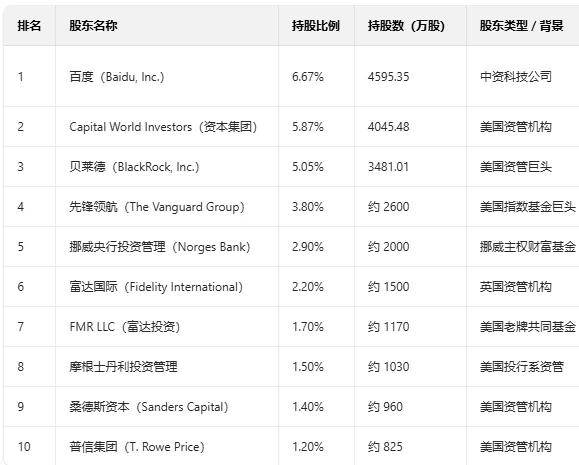
Core Viewpoint - Ctrip Group is under investigation for alleged abuse of market dominance, leading to a significant loss in market value, highlighting the severity of its monopolistic practices in the travel industry compared to previous cases involving Alibaba and Meituan [1] Group 1: Market Dominance and Impact - Ctrip's market share in the travel sector is projected to reach 56% by 2024, with competitors like Meituan, Fliggy, and Douyin holding only 13%, 8%, and 3% respectively [1] - The monopolistic nature of Ctrip is described as more insidious, with many platforms appearing independent but actually operating under Ctrip's control [2][11] Group 2: Ctrip's Business Structure - Ctrip's subsidiaries can be categorized into four types: fully controlled platforms, platforms with board representation, financial investment platforms, and those with deep cooperation agreements [2] - The company's growth strategy has heavily relied on stock acquisitions and capital operations, effectively consolidating its market position [3][5] Group 3: Financial Backing and Strategy - Ctrip's ownership structure is characterized by a high degree of dispersion, with seven of the top ten shareholders being prominent U.S. asset management firms [7] - The focus of these investors is on long-term expansion rather than short-term returns, allowing Ctrip to reinvest profits into acquisitions and market expansion [8][9] Group 4: Consumer Experience and Market Dynamics - Ctrip's monopolistic practices have led to poor consumer experiences, with issues such as price opacity, bundled sales, and complicated refund processes being prevalent [9][10] - Unlike the competitive landscape in e-commerce and food delivery, consumers in the travel sector face limited choices due to Ctrip's dominance, resulting in a significant power imbalance [11] Group 5: Antitrust Investigation Outcomes - The investigation could lead to three potential outcomes: structural separation of Ctrip's assets, substantial fines, or no action at all, with the latter being the least likely scenario [12][13] - A structural separation would directly address the monopolistic control, while fines could serve as a deterrent but may not significantly impact Ctrip's operations due to its high profitability [13][14]

【美股盘前】欧洲考虑抛售万亿美元资产,三大期指齐跌;CapitalWatch发布做空报告,Applovin跌超10%;热门科技股普跌,英伟达、亚马逊跌超...
Mei Ri Jing Ji Xin Wen· 2026-01-20 10:20
Group 1 - Major stock indices futures are experiencing declines, with Dow futures down 1.64%, S&P 500 futures down 1.82%, and Nasdaq futures down 2.25% [1] - European countries are considering retaliatory measures, including the potential sale of trillions of dollars in assets, in response to the U.S. imposing a 10% tariff on eight European nations starting February 1 [1] - Chinese concept stocks are also declining, with Alibaba down 2.53%, Pinduoduo down 3.79%, and Trip.com down 1.14% [1] Group 2 - Bank of America has raised its target price for IBM from $315 to $335, maintaining a "buy" rating, citing strong free cash flow prospects and an increase in high-margin software business [2] - AppLovin's stock dropped over 10% following a short report from CapitalWatch, which alleged connections to money laundering activities involving cross-border crime groups [2] Group 3 - Gold prices have surged past $4,700, with spot gold at $4,732.85 per ounce and futures at $4,741.54 per ounce, marking significant increases for gold mining companies [3] - BHP has raised its copper production forecast for the 2026 fiscal year despite a 4% year-on-year decline in quarterly copper output, now expecting total copper production of 1.9 to 2 million tons [3] Group 4 - The social media platform X, owned by Elon Musk, has officially open-sourced its new algorithm, which is now accessible on GitHub and is powered by the same Transformer architecture as the xAI Grok model [4]



消息称百度文心一言月活跃用户突破2亿
Feng Huang Wang· 2026-01-20 07:24
Core Insights - Baidu's AI product, Wenxin Yiyan, has surpassed 200 million monthly active users amid increasing competition in the AI sector [1] Company Summary - Baidu has integrated its flagship search engine and PC applications with the AI-driven Wenxin Yiyan, enhancing user experience [1] - Wenxin Yiyan is linked with popular applications such as JD.com, Meituan, and Ctrip, enabling users to book flights, order takeout, and seek health and legal advice [1] - The AI assistant allows users to generate videos and images, write summaries, and perform various tasks, with options to choose different AI models [1] - Wenxin Yiyan is also connected to Baidu Maps and Baidu Health platforms, expanding its utility [1] Industry Summary - Major Chinese tech companies, including ByteDance, Alibaba, and Tencent, are heavily investing in AI models and applications [1] - Alibaba's Qianwen chatbot has also seen significant growth, reaching over 100 million monthly active users within two months of its launch in November [1]


亚太主要股指集体飘绿,A股化工股爆发,泡泡玛特涨超8%,黄金涨白银跌
2 1 Shi Ji Jing Ji Bao Dao· 2026-01-20 07:23
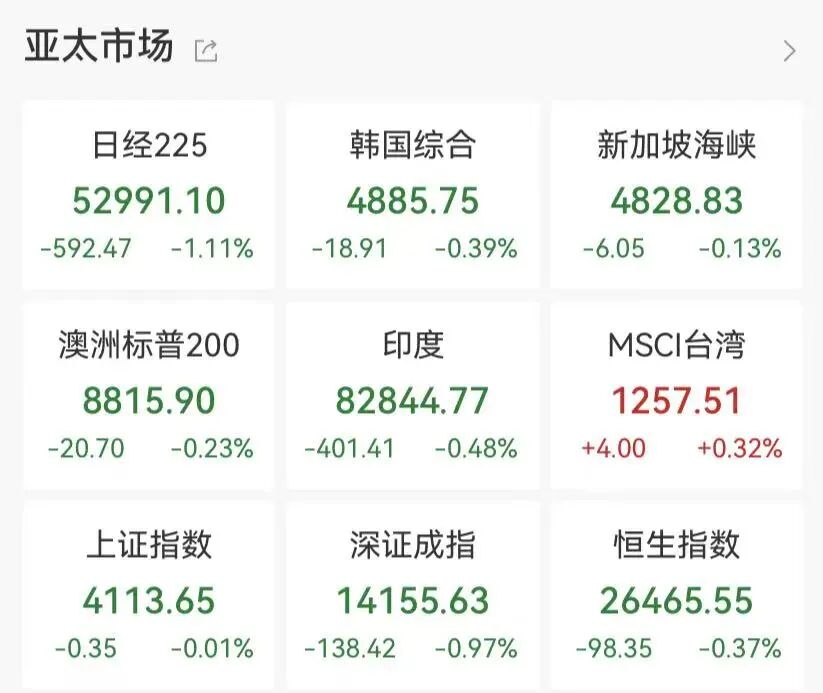
Market Overview - Major Asia-Pacific stock indices collectively declined on January 20, with the Nikkei 225 down by 592.47 points or 1.11%, the KOSPI down by 18.91 points or 0.39%, and the Straits Times Index down by 6.05 points or 0.13% [2] - The A-share market experienced fluctuations, with the Shanghai Composite Index down by 0.01%, the Shenzhen Component down by 0.97%, and the ChiNext Index down by 1.79%. Over 3,100 stocks in the market fell [2] Sector Performance - The satellite internet, CPO, commercial aerospace, and telecommunications sectors led the declines, with commercial aerospace stocks experiencing significant drops, including Shenjian Co. (002361) facing four consecutive trading halts and Aerospace Power (600343) facing two consecutive halts [3] - The chemical sector showed resilience, with over ten constituent stocks hitting the daily limit up, including Hongbaoli (002165), Shandong Heda (002810), Weiyuan Co. (600955), and Hongqiang Co. (002809) [3] - The real estate sector was active, with Dayuecheng (000031) and City Investment Holdings (600649) hitting the daily limit up [3] Hong Kong Market - In the Hong Kong market, the Hang Seng Technology Index fell over 1%, while the Hang Seng Index and Hang Seng China Enterprises Index saw slight declines. Most tech stocks were in the red, with SMIC, Sunny Optical Technology, and BYD (002594) down over 3%, while Xiaomi Group fell over 2%. Ctrip Group rose over 2.5%, and Midea Group (000333) and Baidu Group increased by over 1% [3] Gold and Silver Market - Gold prices rose, with spot gold surpassing $4,700, increasing by nearly 1% and up over 9% year-to-date. In contrast, spot silver fell nearly 0.5%, fluctuating around $94 per ounce [5] - Current prices for gold and silver include: - London Gold: $4,714.235, up by $45.051 or 0.96%, with a year-to-date increase of 9.17% - London Silver: $93.954, down by $0.444 or -0.47%, with a year-to-date increase of 31.26% - COMEX Gold: $4,712.5, up by $35.8 or 0.77%, with a year-to-date increase of 8.78% - COMEX Silver: $93.380, down by $0.900 or -0.95%, with a year-to-date increase of 31.58% [6]

亚太主要股指集体飘绿,A股化工股爆发,泡泡玛特涨超8%,黄金涨白银跌
21世纪经济报道· 2026-01-20 07:18
Market Overview - Major Asia-Pacific stock indices collectively declined, with the Nikkei 225 down by 1.11% and the Hang Seng Index down by 0.37% [2] - A-shares experienced volatility, with the Shanghai Composite Index closing down 0.01%, the Shenzhen Component down 0.97%, and the ChiNext Index down 1.79% [2] - Over 3,100 stocks in the market fell, indicating a broad market downturn [2] Sector Performance - The satellite internet, CPO, commercial aerospace, and communications sectors led the decline, with significant drops in commercial aerospace stocks [3] - The chemical sector showed resilience, with over ten stocks hitting the daily limit up, including Hongbaoli and Shandong Heda [3] - The real estate sector was active, with stocks like Diyi City and Urban Investment Holdings reaching the daily limit up [3] Stock Highlights - In Hong Kong, the Hang Seng Technology Index fell over 1%, while the overall Hang Seng Index saw a slight decline [3] - Notable declines were observed in tech stocks such as SMIC and BYD, both dropping over 3%, while Ctrip Group rose over 2.5% [3] - Pop Mart showed strong performance, initially rising over 10% after announcing a share buyback of 140,000 shares for HKD 251 million [3] Gold and Silver Market - Gold prices rose, surpassing USD 4,700, marking a year-to-date increase of over 9% [5] - In contrast, silver prices fell nearly 0.5%, fluctuating around USD 94 per ounce [5]

携程集团:酒店板块竞争加剧的潜在影响分析-利润拆分与盈利敏感性;买入
2026-01-20 03:19
Trip.com Group (TCOM) Conference Call Summary Company Overview - **Company**: Trip.com Group (TCOM) - **Market Cap**: $39.3 billion - **Enterprise Value**: $32.9 billion - **Current Share Price**: $61.77 - **12-Month Price Target**: $87.00 (Upside: 40.8%) [1] Key Industry Insights - **Investigation Impact**: TCOM's share price dropped approximately 20% following the announcement of an investigation by the State Administration for Market Regulations (SAMR) of the PRC under the Anti-Monopoly Law. Historical cases (e.g., Alibaba, Meituan) were referenced to assess potential impacts on stock performance [1][2]. - **Competitive Landscape**: The investigation may lead TCOM to adopt a more restrained competitive stance, particularly in the hospitality segment, which is more fragmented compared to the airline and railway sectors dominated by state-owned companies [2][28]. - **Booking Volume vs. Take Rate**: The anticipated impact of increased competition is expected to affect booking volumes more than take rates. TCOM and Tongcheng have maintained stable hotel take rates despite competitive pressures [2][32]. Financial Performance and Projections - **Revenue Forecasts**: - FY2025E: Rmb 62,056.3 million - FY2026E: Rmb 69,843.2 million - FY2027E: Rmb 77,269.2 million [6][19] - **Earnings Adjustments**: Core earnings estimates for FY26-27 were revised down by 5% to 8%, with a slower hotel GMV CAGR projected at 6% (previously 13%) [19]. - **EBIT Margin**: Expected to narrow to 28.9% in FY26E from 30.4% in FY24E [19]. Key Financial Metrics - **EBITDA**: - FY2025E: Rmb 18,927.3 million - FY2026E: Rmb 21,113.1 million - FY2027E: Rmb 23,062.7 million [6][19] - **EPS**: - FY2025E: Rmb 46.30 - FY2026E: Rmb 30.04 - FY2027E: Rmb 32.16 [6][19] Risks and Considerations - **AI Adoption**: TCOM faces potential risks from AI adoption compared to peers, as competitors like Alibaba have integrated AI solutions to enhance customer experiences [21]. - **Market Structure**: The hospitality segment's fragmented nature may lead to increased competition and potential loss of exclusivity agreements, impacting TCOM's hotel business [28][29]. - **Take Rate Sensitivity**: A 10% reduction in hotel GMV could lower FY26E earnings by 5%, while a 1% change in hotel take rate could impact earnings by 8% [19]. Revenue Breakdown - **Domestic Revenue**: Approximately Rmb 40 billion or 63% of total revenue in FY2025E, with significant contributions from domestic hotels (29%) and transportation (15%) [26]. - **EBIT Contribution**: Majority of EBIT derived from domestic and outbound travel businesses, with 41% from domestic hotels [26]. Conclusion - Despite the recent volatility due to regulatory scrutiny, TCOM is positioned to benefit from the long-term growth of Chinese travel demand. The current share price correction may present a buying opportunity for long-term investors [20].
大摩闭门会:科技、金属、亚洲,开门普涨能持续么?
2026-01-20 01:50
Summary of Key Points from the Conference Call Industry or Company Involved - Focus on the Asian stock market, particularly China, Japan, and South Korea, as well as the technology and resource sectors [1][3][4] Core Points and Arguments - The recent rally in Asian stock markets, including China, is attributed to three main factors: strong belief in technological innovation, liquidity support from institutional investors reallocating from bonds to stocks, and global sentiment influenced by geopolitical factors [4][5] - The technology sector, particularly AI applications, is highlighted as a key area of investment interest, with concerns about regulatory scrutiny and potential overvaluation in certain tech stocks [3][5][6] - The resource sector is also experiencing price increases, with insights from recent research in Southeast Asia indicating sustained demand [3][4] - The current market sentiment shows signs of overheating, with indicators suggesting a potential for a correction if not managed properly [5][10][21] - The Chinese government is implementing moderate regulatory measures to cool down the overheated market without stifling overall market confidence [11][12][20] - Economic indicators show that while there is optimism in the stock market, underlying economic recovery, particularly in consumer spending and the real estate sector, remains weak [9][10][49] - The recent decline in consumer retail sales growth, which fell below 1% year-on-year, raises concerns about the sustainability of the current market rally [10][49] - The central bank has room for interest rate cuts and reserve requirement ratio reductions, which could further support market liquidity [45][46] Other Important but Possibly Overlooked Content - The potential for a significant portion of household deposits, estimated at 80 trillion RMB, to mature this year, which could lead to increased investment in the stock market if economic conditions improve [51][52] - The geopolitical landscape, including trade relations with Japan and potential export controls, could impact market dynamics and investor sentiment [53][54] - The importance of monitoring the A-share market sentiment index, which has shown signs of overheating, indicating the need for regulatory intervention to maintain market stability [21][23][26] - The performance of the Hong Kong stock market and its attractiveness to foreign investors, driven by a favorable exchange rate and strong IPO activity [34][35] - The ongoing discussions about the balance between technological advancement and regulatory oversight, particularly in the context of AI and major internet platforms [56][57]

