地平线

Search documents
无界动力完成首轮3亿元融资 红杉、线性领投
Zhong Guo Jing Ji Wang· 2025-11-10 03:22
Company Overview - Wujie Power, a company focused on embodied intelligence robotics, completed its first round of angel financing amounting to 300 million yuan, led by Sequoia China and Linear Capital, with participation from various financial and industrial investors [1] - The company was founded in 2025 in Beijing and aims to develop a "general brain" for robots and operational intelligence, addressing key challenges in hand-eye-brain coordination [1][3] - Wujie Power has raised over 500 million yuan in total financing, including an ongoing angel+ round [1] Leadership and Team - The founder and CEO, Zhang Yufeng, has extensive experience in technology development and commercialization, having worked at Sony and ARM, and previously held senior positions at Horizon Robotics [2] - The core team includes co-founder and CTO Xu Wenda, a PhD from Carnegie Mellon University with a background in autonomous driving technology and successful entrepreneurial ventures [2] Industry Context - The embodied intelligence sector is entering a phase of accelerated development, but achieving complete generalization is expected to take over ten years [3] - The industry is transitioning from laboratory demonstrations to real-world applications, with existing general models not yet meeting commercial deployment standards [3] Future Plans - The recent financing will significantly accelerate the dual-path approach of developing foundational models and implementing expert models, aiming to create immediate value for clients while advancing the long-term evolution of a general operational brain [3] - Wujie Power is focusing on high-value scenarios for foundational model development and iteration, collaborating with global industry partners to promote the large-scale application of embodied intelligence robots [3] Technical Development - The company is systematically advancing algorithm architecture innovation and model iteration, addressing data challenges through simulation and real-world environments [4] - Wujie Power is establishing a closed-loop evolution system for foundational model research and expert model implementation, aiming for commercial-level task success rates [4] - The first-generation robot platform has made significant breakthroughs in industrial manufacturing and commercial services, with plans for deeper exploration in collaboration with international partners [4]
具身智能公司无界动力完成3亿元首轮融资
Mei Ri Jing Ji Xin Wen· 2025-11-10 02:47
Core Insights - The company, Wujie Power, has successfully completed its first round of angel financing amounting to 300 million yuan, led by Sequoia China and Linear Capital, with participation from Hillhouse Capital and Horizon Robotics [1] - Additionally, the company is nearing completion of its angel+ round financing, with total funds raised exceeding 500 million yuan [1] Financing Details - The first round of angel financing raised 300 million yuan [1] - The cumulative financing amount, including the ongoing angel+ round, has surpassed 500 million yuan [1]
具身智能公司无界动力完成3亿元首轮融资,红杉中国、线性资本领投
Xin Lang Cai Jing· 2025-11-10 02:33
Core Insights - The company, Wujie Power, has completed its first round of angel financing amounting to 300 million yuan, led by Sequoia China and Linear Capital [1] - The total financing amount, including the ongoing angel+ round, has exceeded 500 million yuan [1] - The CEO, Zhang Yufeng, stated that this financing will significantly accelerate the dual-path approach of "basic model research and expert model implementation," while also advancing the long-term evolution of the general operational brain [1] Financing Details - The first round of angel financing raised 300 million yuan [1] - The total financing amount has surpassed 500 million yuan with the angel+ round nearing completion [1] - Investors include notable firms such as Hillhouse Capital, Horizon Robotics, Huaye Tiancai, Zhongding Capital, BV Baidu Ventures, and Tongge Ventures [1] Strategic Focus - The financing will enhance the company's ability to create immediate value for clients [1] - The company aims to firmly advance the long-term evolution of its general operational brain technology [1]
无界动力完成3亿元首轮融资,红杉中国、线性资本领投
Sou Hu Cai Jing· 2025-11-10 01:45
Core Insights - Wujie Power, a company focused on embodied intelligence robotics, has completed its first round of angel financing, raising 300 million yuan, with a total financing amount exceeding 500 million yuan as the angel+ round nears completion [1][6] - The company aims to develop a "general brain" for robots and operational intelligence, overcoming key bottlenecks in hand-eye-brain coordination to provide reliable embodied intelligence solutions for global customers [1][5] Company Overview - Founded in 2025 in Beijing, Wujie Power focuses on transforming embodied intelligence into a widely deployable and continuously evolving infrastructure [1] - The founding team includes Zhang Yufeng, who has extensive experience in technology development and commercialization, having previously worked at Sony and ARM, and led significant projects at Horizon Robotics [2][3] Team and Expertise - The core team comprises experts in cutting-edge technology and engineering capabilities, including co-founder and CTO Xu Wenda, who has a PhD in robotics from Carnegie Mellon University and has a successful track record in autonomous driving technology [4] - The team includes top scientists and technical experts with significant contributions in multimodal large models and reinforcement learning, ensuring a comprehensive capability from algorithm breakthroughs to product deployment [4] Technological Development - Wujie Power is systematically advancing algorithm architecture innovation and model iteration to create a general embodied model capable of understanding the physical world and completing complex tasks across various scenarios [5] - The company employs a data strategy that combines simulation and real-world data collection to enhance model success rates and generalization capabilities, bridging the gap between simulation and reality [5][6] Operational Strategy - A closed-loop evolution system is being established to drive the development of general foundational models and the application of expert models, ensuring commercial-grade task success rates [6] - The company utilizes a shadow mode mechanism, allowing foundational models to operate silently alongside expert models to gather real-world feedback for continuous improvement [6] Product Development and Market Application - Wujie Power is rapidly completing the productization and validation of its technology, with its first dual-arm wheeled robot platform making significant progress in industrial manufacturing and commercial services [7] - The company aims to leverage its engineering experience from the automotive sector to ensure high reliability and stability in diverse real-world scenarios [6][7] Future Vision - The recent financing will accelerate the dual-path approach of foundational model development and expert model application, enabling the team to create immediate value for customers while advancing the long-term evolution of the general operational brain [8] - Wujie Power is committed to driving the large-scale application of embodied intelligence robots in high-value scenarios, aiming to make robots a sustainable support for human development [8]

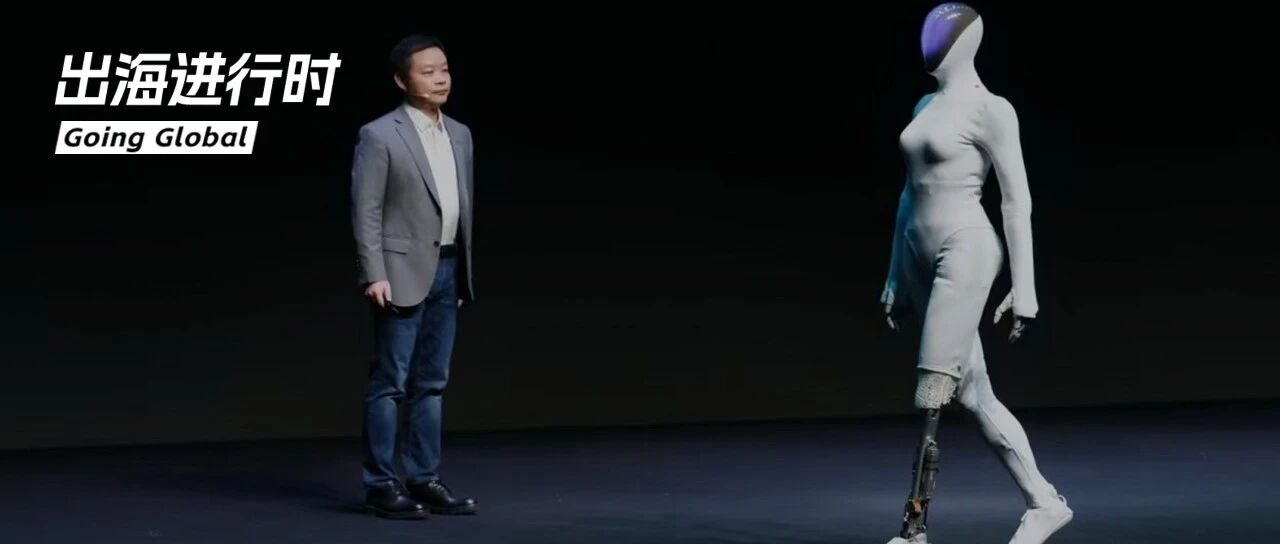
马斯克点赞小鹏机器人;游戏科学冯骥:全球最赚钱10款游戏里,7款与中国公司相关丨Going Global
创业邦· 2025-11-09 10:09
Group 1 - The "Top 50 Globalization Brands Loved by Generation Z" list has been released, with Tencent, Xiaomi, and SHEIN ranking in the top three, and SHEIN leading in the e-commerce category [5][6][7] - TikTok Shop achieved approximately $19 billion in global sales in Q3 2025, with the U.S. market contributing $4 to $4.5 billion, marking a 125% increase from Q2 [8] - AliExpress saw a 181% month-on-month increase in downloads in Japan, becoming the fastest-growing e-commerce app in the market [9] Group 2 - Elon Musk praised Xpeng's robot, indicating that the robot market will be dominated by Tesla and Chinese companies [11][15] - Former Tmall International beauty head joined Sam's Club, raising discussions about the "Alibaba-ization" of the brand [18] - Zhongtong Cloud Warehouse Technology completed nearly 200 million yuan in Series A financing to expand its logistics network and overseas warehouse business [19][20] Group 3 - The latest model from "The Dark Side of the Moon" has a training cost of $4.6 million, which is lower than that of ChatGPT [21][22] - Seven out of the ten highest-grossing games globally are related to Chinese companies, highlighting China's significant role in the gaming industry [24] - Horizon Robotics and Volkswagen announced a partnership to develop advanced driving assistance and autonomous driving systems [26][27] Group 4 - Tesla shareholders approved Musk's compensation plan, which could reach up to $1 trillion based on the company's market value and performance targets [30] - Apple plans to launch its first low-cost MacBook under $1,000 in the first half of next year to compete in the entry-level market [31] - Meta's internal documents revealed that about 10% of its revenue in 2024 could come from scam ads and prohibited product advertisements [32][33] - Nissan is selling its global headquarters for 97 billion yen (approximately 4.5 billion yuan) as part of its restructuring efforts [34][36]
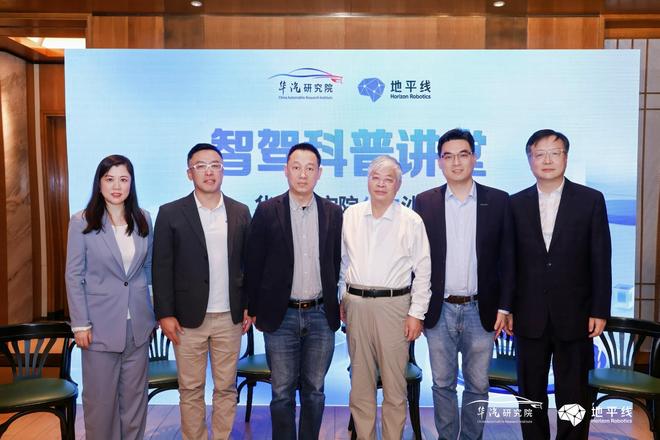
从“辅助”到“自动”,我们该如何与AI共驾未来?
Guan Cha Zhe Wang· 2025-11-08 01:28
Core Insights - The article emphasizes the importance of open collaboration and rational dissemination of knowledge to advance the safety and trust in the era of intelligent driving [1] Industry Trends - The intelligent driving industry is transitioning towards a new era characterized by openness and collaboration, driven by rational policy regulation and improved industry standards [3] - The future of intelligent driving technology is expected to see a significant explosion starting in 2024, with intelligent auxiliary driving becoming mainstream [4] - The industry anticipates a shift from L2+ to L3 autonomous driving systems, allowing drivers to disengage from active control under certain conditions [4][5] User Experience and Trust - User experience is becoming a central focus, with an emphasis on refining small scenarios rather than chasing cutting-edge technology blindly [6] - Building user trust and understanding of intelligent driving is seen as a collective responsibility of enterprises and a cornerstone for healthy industry development [6] - The ultimate vision for intelligent driving is to create a highly trusted system that ensures safety while providing seamless travel experiences [6] Technological Development - The intelligent driving ecosystem is expected to evolve into a model where 20% of technology is developed in-house and 80% through third-party collaboration, enhancing efficiency and consensus in the industry [7] - The maturity of intelligent driving technology is attributed to advancements in data utilization, cloud computing, and vehicle computing power [7] - Safety remains the primary value of intelligent driving, with a focus on reducing collisions and accidents across all levels of automation [8] Market Dynamics - The article highlights the potential for improved consumer trust and sales through clear responsibility allocation in insurance and manufacturer liability [8] - The Chinese market is noted for its high safety tolerance, with local standards surpassing some European benchmarks, showcasing a blend of local innovation and safety priorities [8] - The need for clearer communication regarding the safety boundaries and operational domains of intelligent driving technology is emphasized, as current testing often lacks real-world relevance [8]

一家企业融到C13轮了
36氪· 2025-11-08 01:19
Core Insights - The investment enthusiasm in the autonomous driving sector is reportedly returning, with significant financing activities observed recently [2][4][11]. Financing Activities - Momenta has completed two rounds of financing (C12 and C13), with the C13 round achieving a valuation of $6 billion [4]. - In the past month, over 10 financing events in the domestic autonomous driving sector have occurred, totaling more than 10 billion [5][7]. - Notable financing events include Didi's autonomous driving company raising 2 billion yuan in D round financing and New Stone's over $600 million in D round financing, which set a record for single financing in the sector [8][11]. Market Trends - The number of financing events in the autonomous driving industry in 2023 is approximately 140, with a total amount of around 20 billion yuan, indicating a clear "warming" signal in the market [11]. - The investment landscape has shifted, with large private equity firms increasingly participating in the sector, contrasting with the previous cautious sentiment [11][21]. Key Drivers of Investment - The push towards large-scale commercial applications, exemplified by companies like NineSight aiming for significant delivery targets, has sparked renewed investor interest [13][20]. - The emergence of embodied intelligence concepts has provided new opportunities for the autonomous driving sector, enhancing its appeal to investors [14][16]. Competitive Landscape - The current investment trend shows a clear tilt towards leading companies in the sector, particularly those demonstrating verifiable progress in commercialization [19][20]. - Companies like New Stone and Didi are highlighted as leaders in the field, with New Stone being the first to deliver over 10,000 L4 autonomous vehicles [20]. Future Outlook - The entry of major players like Huawei into the autonomous driving space is seen as a potential game-changer, with expectations that the competitive landscape will consolidate to a few dominant players [22]. - The industry is anticipated to transition from a phase of diverse players to a more concentrated market, with only a few key players remaining [22].

地平线ResAD:残差学习让自动驾驶决策更接近人类逻辑
自动驾驶之心· 2025-11-07 16:04
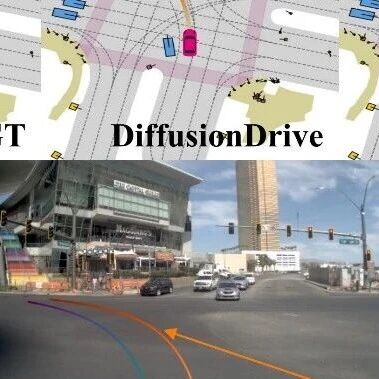
Core Insights - The article discusses the limitations of traditional modular approaches in autonomous driving and introduces the ResAD framework, which aims to improve efficiency and safety by using an end-to-end model that focuses on learning necessary adjustments from a baseline trajectory [2][50]. Group 1: Framework Overview - ResAD framework proposes a shift from directly predicting future trajectories to learning the necessary adjustments from a physical baseline trajectory, termed "inertial reference line" [2][50]. - The model focuses on understanding the reasons for trajectory adjustments, such as obstacles and traffic rules, rather than memorizing data correlations [50]. Group 2: Methodology - The ResAD framework incorporates a "normalized residual trajectory modeling" approach, which simplifies the learning problem by defining trajectory predictions as adjustments to a reference line [11][50]. - The framework employs a "point-wise residual normalization" technique to balance the optimization weights of near and far trajectory points, ensuring that critical adjustments are not overlooked [20][50]. Group 3: Testing and Results - Real-world testing demonstrated the effectiveness of the ResAD framework, showcasing its ability to handle complex driving scenarios and respond intelligently to dynamic obstacles [6]. - In benchmark evaluations, ResAD achieved state-of-the-art performance on NAVSIM v1 and v2, with a PDMS score of 88.6 and an EPDMS score of 85.5, indicating high safety and efficiency in route completion [38][39]. Group 4: Comparative Analysis - ResAD outperformed existing models like DiffusionDrive in various metrics, including lane adherence and route completion efficiency, highlighting its superior trajectory generation capabilities [41][39]. - The article emphasizes the importance of the unique trajectory modeling strategy in ResAD, which allows for the generation of contextually relevant and diverse trajectories without relying on a static trajectory library [10][41].
大众中国初步完成“财务建模”
Jing Ji Guan Cha Wang· 2025-11-07 14:09
Core Insights - Volkswagen Group's third-quarter financial report indicates that the company has not yet emerged from a downward trend, particularly in China where it is increasing investment [1][3] - The CFO of Volkswagen Group (China) emphasized the importance of local innovation and efficient operations, as the company has invested €50 billion in transformation efforts in China [1][2] - The financial modeling for the transition to new energy vehicles is nearing completion, with strategic goals entering the execution phase [1][2] Sales and Profitability Goals - Volkswagen aims to increase the share of new energy vehicle sales from 5% to double digits by 2026, with over 20 new models launched [2] - The company anticipates that profitability from new energy vehicles will not match that of traditional fuel vehicles until the later stages of the planning cycle, likely around 2030 [2] - Profit contributions from joint ventures are expected to rebound to €2 billion by 2027 and reach €3 billion by 2030, including contributions from the new joint venture in Anhui [2][5] Financial Performance and Challenges - Volkswagen's financial performance has significantly weakened, with a projected drop in investment returns from joint ventures in China from €2.6 billion in 2023 to €1.7 billion in 2024, and further down to €0.5-1 billion in 2025 [4] - The company is facing challenges in maintaining profitability as the volume of new energy vehicle sales increases, but the scale is still insufficient to enhance profit margins compared to fuel vehicles [4][6] Cost Optimization Strategies - Volkswagen is focused on optimizing costs, with a target to reduce costs by 40% compared to previous global platforms, aiming for a 50% reduction in the long term [7] - The company is conducting intensive product workshops to analyze cost details and price forecasts, indicating a shift towards a more cost-conscious operational approach [6][7] - The management team is prioritizing the prediction of market price trends and optimizing costs to ensure profitability amid intense competition [6][8] Recent Developments - Volkswagen announced two new investments, including a collaboration with Horizon to develop system-level chips with an investment of approximately $200 million, and the opening of a new Porsche R&D center in Shanghai [9]
聚焦进博|以进博为平台,全球汽车大秀中国“朋友圈”
Guo Ji Jin Rong Bao· 2025-11-07 11:00
Core Insights - The 8th China International Import Expo (CIIE) has opened in Shanghai, showcasing the integration of the Chinese automotive industry with global players [1][3] - The event features over 4,108 foreign enterprises and spans more than 430,000 square meters, highlighting China's commitment to an open and win-win automotive ecosystem [1][3] Group 1: Industry Collaboration and Innovation - The automotive exhibition theme "Mobility, Infinite Possibilities" emphasizes a three-dimensional ecosystem combining automotive industry, future technologies, and automotive culture [3] - Major global automotive companies like Tesla, Mercedes-Benz, BMW, and Volkswagen are showcasing a wide range of products from mass production vehicles to cutting-edge technologies [3] - Volkswagen and local tech firm Horizon are deepening collaboration to develop system-level chips, aiming for a closed-loop model of "defined, developed, and produced in China" [5][8] Group 2: Technological Advancements - Hyundai introduced the world's first mass-produced hydrogen-powered tractor, the XCIENT, combining L4 autonomous driving with zero-emission technology [3] - Tesla's Cybercab made its Asia-Pacific debut, featuring a design without a steering wheel or pedals, set for mass production in 2026 [10] - BMW is integrating AI capabilities with local partners to create a smart personal assistant tailored for Chinese users [5][10] Group 3: Market Expansion and Globalization - The CIIE serves as a platform for tangible cooperation, with companies like FAW-Volkswagen and Nissan establishing joint ventures to enhance product diversity and export capabilities [7][11] - The automotive industry is transitioning from a simple product trade model to a more complex framework of technology co-creation and market sharing [13][14] - The establishment of Nissan's joint venture for vehicle import and export marks a new model for foreign automotive companies in China [11][14] Group 4: Future Directions - The ongoing collaboration between foreign and Chinese companies is transforming the automotive landscape, with a focus on innovation and shared growth [12][14] - The shift from traditional fuel vehicles to new energy vehicles is evident, as is the evolution from mere market participation to becoming a global innovation engine [14]