
系统级芯片(SoC)

Search documents
刚刚!IPO审2过2
梧桐树下V· 2026-03-20 12:24
Core Viewpoint - The Beijing Stock Exchange approved the IPO of two companies, Huzhou Anda Automotive Parts Co., Ltd. and Zhuhai Jieli Technology Co., Ltd., indicating a positive trend in the market for new listings [1]. Group 1: Huzhou Anda Automotive Parts Co., Ltd. - The company specializes in the research, production, and sales of automotive aluminum alloy precision die-casting parts, with a focus on components for power transmission systems and new energy systems [5]. - For the year 2024, the projected revenue is approximately 911.18 million yuan, with a net profit of around 52.32 million yuan [3]. - The company has shown a revenue growth trend, with reported revenues of 771.43 million yuan in 2022, 924.48 million yuan in 2023, and a slight decrease to 911.18 million yuan in 2024 [9]. - The company’s net profit has also increased from 15.21 million yuan in 2022 to 57.53 million yuan in 2023, and is projected to be 52.32 million yuan in 2024 [9]. - The company has a total of 1,004 employees as of June 30, 2025, and has no controlling subsidiaries [6][10]. Group 2: Zhuhai Jieli Technology Co., Ltd. - The company focuses on the design of system-level chips (SoC) for various applications, including Bluetooth audio and video, smart wearables, and IoT devices [14]. - The projected revenue for 2024 is approximately 3.12 billion yuan, with a net profit of around 734.31 million yuan [3]. - The company has experienced significant revenue growth, with reported revenues of 2.27 billion yuan in 2022, 2.93 billion yuan in 2023, and 3.12 billion yuan in 2024 [17]. - The net profit has also increased from 335.97 million yuan in 2022 to 622.98 million yuan in 2023, and is projected to be 734.31 million yuan in 2024 [17]. - As of June 30, 2025, the company has 501 employees and one controlling subsidiary [15].


只靠 IP 授权,半导体公司还能走多远?
是说芯语· 2026-02-18 01:03
Core Insights - The semiconductor industry is undergoing significant changes, particularly in the business model of intellectual property (IP) licensing, which is shifting towards a more integrated approach that includes design services and system integration [4][5][6]. Industry Trends - The most notable change is industry consolidation driven by the transition to system-on-chip (SoC) designs, particularly for the Internet of Things (IoT), leading semiconductor companies to acquire IP to reduce reliance on third-party sources and enhance product differentiation [2][3]. - Open-source hardware IP is emerging as a disruptive force in the hardware ecosystem, similar to the impact of open-source software, with RISC-V architecture gaining traction in both embedded and high-performance computing applications [3][4]. - The evolution of the semiconductor industry, supported by advanced electronic design automation (EDA) tools and the proliferation of licensable IP, is making custom chip development more accessible, with AI accelerating development speed and reducing costs [3][4]. Changes in IP Business Model - The traditional IP licensing model is declining as a standalone business model, becoming more valuable as part of a broader product and service offering that includes design services and system integration [4][5]. - Companies like Arm and MIPS are adapting to these changes, with Arm expanding its IP offerings and MIPS transitioning to an IP service provider model focused on specific applications [5][6]. Strategic Developments - Following its acquisition by SoftBank, Arm has increased its R&D budget and is now targeting new markets, including high-performance computing, while also offering comprehensive design services [5][6]. - MIPS, after overcoming bankruptcy, is focusing on RISC-V architecture and positioning itself as an IP service provider, reflecting the challenges faced by traditional IP suppliers [5][6]. - GlobalFoundries' acquisition of MIPS is part of a broader strategy to provide custom semiconductor solutions, integrating design and manufacturing capabilities [6][7]. Future Outlook - Despite rapid innovation in semiconductors, structural changes in the industry will take time, with Arm's standard CPU architecture remaining dominant while custom and RISC-V based CPUs are expected to grow [7]. - Successful companies will be those that view IP as part of a broader silicon solution platform rather than as a standalone product [7].

杰理科技IPO:供应商约定赠送产品“食言” “是否存在特殊利益安排”被问询
Xi Niu Cai Jing· 2025-12-26 07:54
Core Viewpoint - Zhuhai Jieli Technology Co., Ltd. (referred to as "Jieli Technology") is facing scrutiny from the Beijing Stock Exchange regarding its declining performance and the adequacy of its product iteration disclosures, as well as the authenticity of its financial flows and revenue verification [2]. Group 1: Financial Performance - In 2022, Jieli Technology reported revenue of 2.267 billion yuan and a net profit of 336 million yuan, marking the first occurrence of a "double decline" in its performance, indicating increased volatility [3]. - The company experienced a significant increase in sales expenses, which rose by 86.65% to 55.9174 million yuan due to high business promotion costs associated with efforts to maintain customer stability and expand downstream clients [3]. Group 2: Market Conditions and Supply Chain Issues - The consumer electronics sector's demand remained weak in 2021, leading to high inventory levels among chip design companies and an overall supply-demand imbalance in the industry [3]. - Jieli Technology's suppliers had initially agreed to adjust prices through the provision of free wafers in 2022, but they failed to deliver these wafers as promised, instead concentrating the distribution in the second half of 2023 [3]. Group 3: Regulatory Inquiry - The Beijing Stock Exchange has requested Jieli Technology to clarify the commercial rationale behind the provision of free wafers and whether there are any special interest arrangements involved [4].
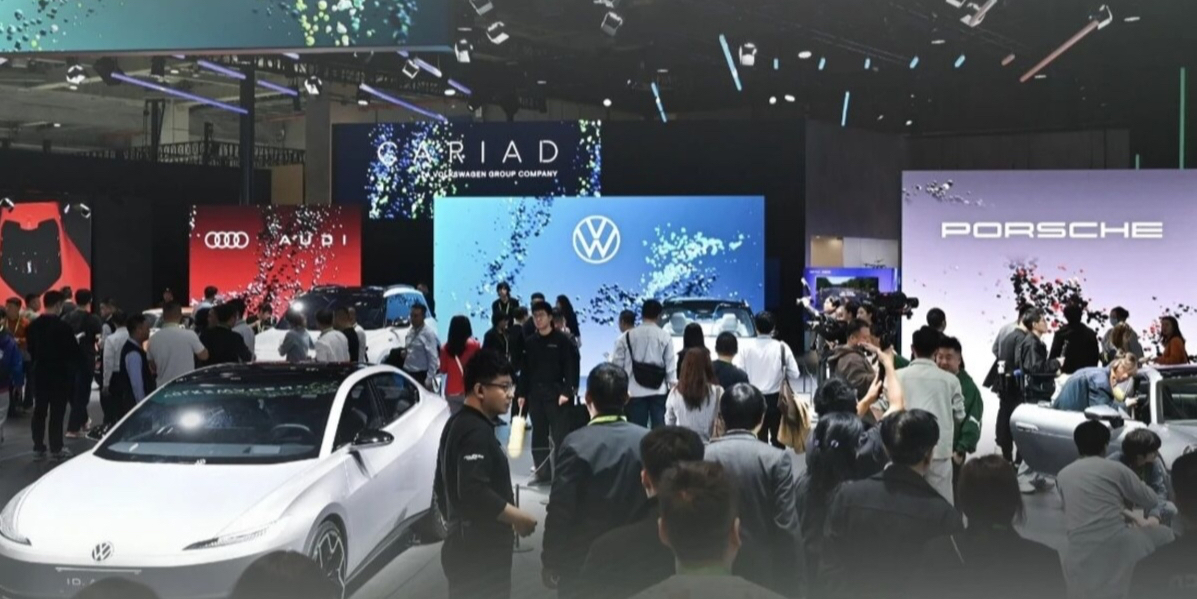
主帅贝瑞德统领全局,大众在华转型迎关键战役
Di Yi Cai Jing· 2025-11-11 03:06
Core Insights - Volkswagen Group is intensifying its commitment to the Chinese market through its "In China, For China" strategy, focusing on smart and connected vehicle transformation [1][4][10] - The establishment of a joint venture with Horizon Robotics, CARIZON, marks a significant step towards independent research and development of system-on-chip (SoC) technology in China [1][8] - The company is transitioning from a focus on electrification to a more comprehensive approach that includes smart technology, with plans to deliver over 20 electric smart models by 2027 [10][12] Group 1: Strategic Developments - Volkswagen's board members are actively engaged in discussions to deepen the "In China, For China" strategy, showcasing their commitment during the China International Import Expo [1][4] - The management's long-term commitment is reflected in the three-year contract extension for CEO Berndt, who has been pivotal in navigating the rapidly changing Chinese automotive market [3][5] - The company is restructuring its business model to adapt to the evolving market, with a focus on local R&D and collaboration with both traditional partners and new tech firms [5][6] Group 2: Technological Advancements - The new SoC chip developed in partnership with Horizon Robotics is designed to handle complex driving scenarios in China, with processing capabilities of 500 to 700 TOPS [8] - Volkswagen's R&D center in Hefei has become the largest outside Germany, employing over 3,000 engineers to accelerate the development of smart vehicles [5][6] - The company is also collaborating with XPeng Motors to enhance its electronic and electrical architecture, achieving significant reductions in development time and costs [9] Group 3: Market Positioning - Volkswagen is entering the "delivery phase" of its smart transformation, with a clear roadmap for the rollout of new models equipped with advanced driving assistance systems [10][12] - The focus is shifting from price competition to value competition, emphasizing the importance of technology and user experience in the automotive market [12][13] - The company is committed to adapting to new regulations and safety standards set by the Chinese government, ensuring that quality and safety remain paramount in its product offerings [13]

新能源车交付前夜,大众每天都在“算账”
3 6 Ke· 2025-11-11 01:11
Core Insights - Volkswagen Group is facing challenges in its financial performance, particularly in China, where it has invested heavily in transformation efforts [1][3] - The company aims to increase its electric vehicle (EV) sales significantly by 2026, with a target of over 20 new EV models and a sales share rising from 5% to double digits [2] - Volkswagen's CFO for China, Patrick Heinecke, emphasizes the importance of local innovation and efficient operations to ensure sustainable profitability in the Chinese market [1][2] Financial Performance - Volkswagen Group's third-quarter results indicate ongoing financial decline, with a warning of continued losses in the next two years [3] - The company reported a drop in investment returns from joint ventures in China, forecasting profits to decrease from €2.6 billion in 2023 to €1.7 billion in 2024, and further to €0.5-1 billion in 2025 [4] - The profitability of EVs is a critical concern, as the company anticipates that the transition phase will not yield parity in profit margins between traditional fuel vehicles and EVs until the later stages of its planning cycle, likely around 2030 [2][4] Cost Optimization Efforts - Volkswagen is actively engaged in cost optimization, with a goal to reduce costs by 40% compared to previous global platforms, aiming for a 50% reduction in the long term [7][8] - The company is focusing on detailed cost analysis and price forecasting through intensive product workshops, involving all team members in the process [2][6] - The management team is prioritizing the prediction of market price trends and optimizing costs across all vehicle segments to enhance profitability [6][7] Strategic Investments - Recent investments include a partnership with Horizon Robotics to develop system-level chips, with an investment of approximately $200 million, and the opening of a new Porsche R&D center in Shanghai [9] - Volkswagen is committed to maintaining control over core technologies in the Chinese market, despite speculation about shifting to external collaborations for software development [8][9] Market Position and Future Outlook - Volkswagen anticipates that its joint venture profits will rebound to €2 billion by 2027 and reach €3 billion by 2030, supported by new ventures like Volkswagen Anhui [5] - The company acknowledges the competitive landscape in the A-segment market, which is more challenging than the B and C segments, impacting overall profitability [5][6] - The focus on enhancing capital efficiency in the fuel vehicle segment is crucial as the market share for fuel vehicles continues to decline, currently standing at 22% in China [8]
新能源车交付前夜 大众每天都在“算账”
Jing Ji Guan Cha Wang· 2025-11-10 03:24
Core Insights - Volkswagen Group's third-quarter financial report indicates that the company has not yet emerged from a downward trend, particularly in the Chinese market where it is increasing investment [2][4] - The CFO of Volkswagen China, Patrick Heinecke, emphasized the importance of local innovation and efficient operations as the company aims to build a sustainable profit model in China [2][3] Investment and Financial Goals - Volkswagen China has committed 50 billion euros towards its transformation, with strategic goals including increasing the share of new energy vehicle (NEV) sales from 5% to double digits by 2026 [3][5] - The company anticipates that profits from joint ventures will rebound to 2 billion euros by 2027 and reach 3 billion euros by 2030, aided by new joint ventures [5][9] Cost Management and Operational Efficiency - Volkswagen China is focused on optimizing costs, having reduced costs by 40% compared to previous global platforms, with a target of achieving a 50% reduction in the long term [8][9] - The management team is conducting frequent product workshops to analyze cost details and predict pricing, indicating a shift towards a more cost-conscious operational approach [7][8] Market Challenges and Strategic Adjustments - The company faces significant challenges in achieving profitability in the NEV sector, as the transition phase is expected to see lower profit margins compared to traditional fuel vehicles [4][5] - Volkswagen anticipates ongoing price competition in the Chinese market, which will require rapid cost optimization and market share enhancement to maintain profitability [7][10] Recent Developments - On November 15, Volkswagen China announced two new investments, including a partnership with Horizon to design and develop system-on-chip (SoC) technology, with an investment of approximately 200 million euros [10]
大众中国初步完成“财务建模”
Jing Ji Guan Cha Wang· 2025-11-07 14:09
Core Insights - Volkswagen Group's third-quarter financial report indicates that the company has not yet emerged from a downward trend, particularly in China where it is increasing investment [1][3] - The CFO of Volkswagen Group (China) emphasized the importance of local innovation and efficient operations, as the company has invested €50 billion in transformation efforts in China [1][2] - The financial modeling for the transition to new energy vehicles is nearing completion, with strategic goals entering the execution phase [1][2] Sales and Profitability Goals - Volkswagen aims to increase the share of new energy vehicle sales from 5% to double digits by 2026, with over 20 new models launched [2] - The company anticipates that profitability from new energy vehicles will not match that of traditional fuel vehicles until the later stages of the planning cycle, likely around 2030 [2] - Profit contributions from joint ventures are expected to rebound to €2 billion by 2027 and reach €3 billion by 2030, including contributions from the new joint venture in Anhui [2][5] Financial Performance and Challenges - Volkswagen's financial performance has significantly weakened, with a projected drop in investment returns from joint ventures in China from €2.6 billion in 2023 to €1.7 billion in 2024, and further down to €0.5-1 billion in 2025 [4] - The company is facing challenges in maintaining profitability as the volume of new energy vehicle sales increases, but the scale is still insufficient to enhance profit margins compared to fuel vehicles [4][6] Cost Optimization Strategies - Volkswagen is focused on optimizing costs, with a target to reduce costs by 40% compared to previous global platforms, aiming for a 50% reduction in the long term [7] - The company is conducting intensive product workshops to analyze cost details and price forecasts, indicating a shift towards a more cost-conscious operational approach [6][7] - The management team is prioritizing the prediction of market price trends and optimizing costs to ensure profitability amid intense competition [6][8] Recent Developments - Volkswagen announced two new investments, including a collaboration with Horizon to develop system-level chips with an investment of approximately $200 million, and the opening of a new Porsche R&D center in Shanghai [9]
何小鹏:全倾转固定翼飞行汽车汇天A868已进入试飞阶段;LG电子向苹果在印度的iPhone生产线提供制造设备丨智能制造日报
创业邦· 2025-11-06 03:44
Group 1 - Volkswagen announced the self-developed SoC chip, expected to be mass-produced and delivered within 3 to 5 years, with a computing power of 500 to 700 TOPS and a strategic investment of approximately $200 million [2] - Elon Musk clarified that Tesla's AI5 chip will only be mass-produced in 2027, with samples available in 2026, while the AI6 chip is expected to be produced in mid-2028, offering about double the performance [2] - Xiaopeng Motors' chairman He Xiaopeng revealed that the hybrid long-range flying car, Huitian A868, has entered the test flight stage, designed for a range greater than 500 km and a maximum speed exceeding 360 km/h, accommodating up to 6 passengers [2] Group 2 - LG Electronics reportedly provided manufacturing equipment to Apple's iPhone production line in India, facilitating the automated manufacturing process for the latest iPhone 17 [2]



每日市场观察-20251106
Caida Securities· 2025-11-06 02:33
Market Performance - A-shares showed resilience with a trading volume of 1.89 trillion, down approximately 500 billion from the previous trading day[1] - The Shanghai Composite Index rose by 0.23%, while the Shenzhen Component increased by 0.37% and the ChiNext Index gained 1.03%[4] - The October China Warehousing Index improved to 50.6%, up 1 percentage point from the previous month, indicating economic vitality[1] Sector Analysis - The power equipment sector, including energy storage and distribution, was the standout performer, driven by AI computing infrastructure concerns and energy shortages[2] - Main capital inflows were observed in power grid equipment, batteries, and photovoltaic equipment, while software development, semiconductors, and IT services saw capital outflows[4] Policy Developments - The State Council announced the suspension of additional tariffs on certain U.S. imports effective November 10, 2025, as part of trade negotiations[5][8] - China signed an economic partnership framework agreement with several Pacific island nations to enhance bilateral trade and investment cooperation[6][7] Fund Dynamics - The total trading volume of ETFs reached 497.25 billion, with stock ETFs accounting for 112.1 billion and bond ETFs for 246.06 billion[13][14] - Public fund reports indicate a concentration in technology growth sectors, with increased holdings in TMT while reducing positions in large finance and consumer sectors[15]
大众自研“中国芯”,本土化战略驶向“深水区”
Zhong Guo Qi Che Bao Wang· 2025-11-06 01:20
Core Insights - Volkswagen Group (China) announced a significant partnership with Horizon Robotics to establish a joint venture, CARIZON, focusing on the design and development of system-on-chip (SoC) technology in China, marking a strategic shift towards local innovation in smart mobility [1][4] Group 1: Strategic Shift - The new SoC chip, designed for next-generation smart connected vehicles, is seen as the "digital engine" of future smart cars, featuring a processing power of 500 to 700 TOPS, enabling real-time data processing for safer and smarter decision-making in complex Chinese traffic conditions [4] - Volkswagen aims to create a "Chinese chip" that understands local driving habits, allowing the company to regain control over product experience in the competitive smart electric vehicle market [4][5] - The collaboration with Horizon Robotics represents a deep integration of local technology capabilities, transitioning from traditional joint ventures to advanced co-development of core technologies [4][5] Group 2: Commitment to Local Innovation - The launch of the self-developed SoC project is a key step in Volkswagen's "In China, For China" strategy, emphasizing the company's commitment to shaping core technologies for future mobility in the Chinese market [5] - The partnership is a recognition of Horizon's technical strength and production capabilities, aiming to combine Volkswagen's global engineering expertise with Horizon's local development advantages to create high-performance, reliable integrated solutions [5] - Volkswagen's vision includes a comprehensive local R&D system covering chips, software, systems, and vehicles, with plans to offer around 30 pure electric models by 2030, supported by this technological foundation [5]
