中信保诚基金

Search documents
基金业绩回暖!超90%主动权益基金正收益,翻倍产品涌现
Zheng Quan Shi Bao· 2025-08-04 10:27
Core Viewpoint - The public fund industry is experiencing a significant recovery in 2025 after a four-year downturn, with over 90% of active equity funds achieving positive returns this year, leading to increased confidence among fund managers and a revival in fund issuance [1][2]. Fund Performance - Active equity funds have seen an average return of over 13% year-to-date as of August 1, with a notable number of funds doubling their performance, including 17 funds that achieved over 140% returns [2]. - More than 800 active equity funds reached historical net asset value highs in the past month, indicating a strong recovery from previous losses [3]. Market Dynamics - The current market environment presents structural opportunities in sectors like humanoid robots, AI hardware, and innovative pharmaceuticals, which have contributed to the recovery of fund performance [2]. - Fund managers are increasingly focusing on high-growth sectors, with a shift from traditional sectors like real estate and bonds to equities, particularly in new economy sectors [3]. Fund Manager Behavior - Fund managers are showing a clear increase in risk appetite, with many raising their stock positions and concentrating their holdings in core stocks [5]. - Data shows that nearly 2,500 funds increased their stock positions and concentration in the second quarter, reflecting a significant shift in risk preference [5]. Fund Issuance Trends - The pace of new fund issuance has accelerated, with 149 new funds launched in July, matching the issuance rate from November 2022 [11]. - Notable funds like Dachen Insight Advantage raised 2.461 billion yuan in just eight days, marking the largest initial fundraising for active equity funds this year [9]. Investor Sentiment - Despite the positive performance, many investors remain cautious, with a tendency to redeem funds once they break even, indicating a need for trust rebuilding in active equity funds [1][11]. - The market is witnessing a preference for passive investment products over active equity funds, with high-performance products gaining more attention [11].

基金业绩回暖!超90%主动权益基金正收益,翻倍产品涌现
证券时报· 2025-08-04 09:55
Core Viewpoint - After a four-year downturn, public funds are experiencing a significant recovery in 2025, with over 90% of active equity funds achieving positive returns this year, marking a turning point for the industry [1][2]. Group 1: Performance Recovery - Active equity funds have seen an average return exceeding 13% as of August 1, 2025, with a notable number of products doubling their performance, including 17 funds achieving over 140% returns [2]. - Many fund managers are recovering from previous losses, with over 800 active equity funds reaching historical net asset value highs in the past month [2][3]. - Despite some funds still in the recovery phase, the short-term performance rebound is expected to support long-term growth [2]. Group 2: Investment Strategy Shifts - Fund managers are increasingly focusing on the stock market as a key asset allocation option, moving away from real estate and low-yield bonds [3]. - There is a noticeable increase in risk appetite among fund managers, with many raising stock positions and concentrating holdings in core stocks [5]. - Data shows that nearly 2,500 funds increased their stock positions and concentration in the second quarter, indicating a shift towards higher risk tolerance [5]. Group 3: Fund Issuance and Market Sentiment - The positive performance of funds has boosted market confidence, leading to a noticeable acceleration in the issuance of new funds, particularly equity funds [8]. - In June, 155 new funds were established, marking a recent high, with July seeing 135 new fund launches, indicating a strong recovery in the fund issuance market [9]. - Fund companies are rapidly increasing the pace of new fund launches to capitalize on the market rebound, with some funds achieving record subscription amounts [9][10]. Group 4: Challenges and Investor Sentiment - Despite the recovery, many investors remain cautious, with a tendency to redeem funds as soon as they break even, reflecting a lack of deep trust in active equity funds [1][11]. - The sales performance of equity funds varies significantly across different sales departments, with some struggling to meet sales targets despite the overall market improvement [10][11]. - Passive investment products are currently more favored by investors compared to active equity funds, indicating a need for active funds to rebuild trust and attract new capital [11].

基金渐入夏,超90%主动权益基金收益,翻倍产品涌现
Zheng Quan Shi Bao· 2025-08-04 08:23
Core Viewpoint - The public fund industry is experiencing a significant recovery in 2025 after a four-year downturn, with over 90% of active equity funds achieving positive returns this year, leading to increased confidence among fund managers and a revival in fund issuance [1][3]. Fund Performance - Active equity funds have seen an average return of over 13% year-to-date, with a notable number of funds doubling their performance, including 17 funds that achieved over 140% returns as of July 29 [3]. - Despite some funds still recovering from previous losses, the short-term performance rebound is expected to support long-term growth [3]. - More than 800 active equity funds reached historical net asset value highs in the past month, indicating a strong recovery [3]. Fund Manager Sentiment - Fund managers are showing increased risk appetite, with many raising stock positions and focusing on core holdings [7][8]. - A significant number of funds have increased their stock positions by 5 to 8 percentage points, particularly in technology and growth sectors, as they anticipate improving profit growth in the latter half of the year [8][10]. Fund Issuance Trends - The positive performance has led to a noticeable acceleration in the issuance of new funds, particularly equity funds, with a significant increase in marketing efforts [12]. - In June, 155 new funds were established, marking a near-record high, and 135 funds were launched in July, indicating a robust recovery in the fund issuance market [13]. - Fund companies are rapidly increasing the pace of new fund launches to capitalize on the market rebound, with 149 new funds initiated in July alone [13]. Investor Behavior - Despite the positive performance, many investors remain cautious, with a tendency to redeem funds once they break even, indicating a trust gap that needs to be addressed for sustained growth [1][14]. - The demand for passive investment products is currently outpacing that for active equity funds, with high-performance products attracting more interest than stable ones [14].
基金业渐入夏!超90%主动权益基金正收益,翻倍产品涌现
券商中国· 2025-08-04 07:38
Core Viewpoint - After a four-year downturn, public funds are entering a recovery phase in 2025, with over 90% of active equity funds achieving positive returns this year, marking a significant turnaround in performance [2][3]. Fund Performance and Market Dynamics - Active equity funds have seen an average return exceeding 13% year-to-date, with a notable number of products doubling their performance, including 17 funds achieving over 140% returns as of July 29 [3]. - Despite some funds still recovering from previous losses, the short-term performance rebound is expected to support long-term growth [3]. - Fund managers are increasingly optimistic, with many raising their stock positions and focusing on core holdings, reflecting a shift in risk appetite [6][8]. Investment Strategies and Market Sentiment - Fund managers are concentrating their investments in sectors with clear competitive advantages, particularly in new economy areas, as traditional sectors like real estate show limited growth potential [4]. - The market is experiencing a positive shift in sentiment, with a significant increase in fund issuance and investor interest in equity funds, although trust in active equity funds still needs rebuilding [9][11]. Fund Issuance Trends - The issuance of new funds has accelerated, with 155 new funds launched in June, the highest in recent years, and 149 new funds initiated in July [10]. - Notable funds like Dachen Insight Advantage raised 2.461 billion yuan in just eight days, indicating strong market demand [10]. - Despite the positive trends, not all funds are equally favored, with passive investment products still attracting more investor interest than active equity funds [11].

权益市场持续回暖 绩优基金齐发限购令
Zhong Guo Zheng Quan Bao· 2025-08-03 21:12
Group 1 - Recent domestic equity markets have shown signs of recovery, leading to several high-performing active equity funds implementing purchase limits to manage inflows and maintain stability [1][2] - The Yongying Ruixin Mixed Fund, managed by Gao Nan, has achieved a return rate of 43.62% year-to-date, ranking in the top 5 of its category, while its assets have surged to over 5 billion yuan [2] - The Huatai-PB Hong Kong Advantage Selected Mixed Fund (QDII) has reported an impressive return of 136.89% year-to-date, making it the top performer in the public fund market [2] Group 2 - Several quantitative funds have also announced purchase limits, including the Nuon Fund and CITIC Prudential Multi-Strategy Mixed Fund, to ensure smooth operations and protect investors' interests [3] - The performance of quantitative funds has been strong, with several achieving historical net asset value highs recently, indicating robust management and investment strategies [3][4] - The small-cap style has outperformed the large-cap style this year, with significant excess returns, driven by high turnover stocks amid prevailing risk aversion [4] Group 3 - Market liquidity remains abundant, with expectations of continued policy support and a favorable economic outlook, contributing to a positive investment environment [5] - The A-share market is anticipated to experience a structural uplift, supported by potential catalysts and a favorable monetary policy environment [5]
公募收获“盛夏的果实” 基民“信任裂缝”待修复
Zheng Quan Shi Bao· 2025-08-03 19:47
Core Viewpoint - The public fund industry is experiencing a resurgence in 2025 after a prolonged period of stagnation, with over 90% of actively managed equity funds achieving positive returns this year, indicating a potential recovery in investor confidence [1][2]. Group 1: Fund Performance - Active equity funds have seen an average return exceeding 13% year-to-date, with a significant number of products doubling their performance, including 17 funds achieving returns over 140% as of July 29 [2]. - Over 800 active equity funds reached historical net asset value highs in the past month, reflecting a strong recovery in short-term performance [2][3]. - Despite some funds still recovering from previous losses, the overall performance improvement is expected to support long-term growth [2]. Group 2: Fund Manager Sentiment - Fund managers are increasingly optimistic, raising stock positions and focusing on core holdings, with some increasing their stock allocations by 5 to 8 percentage points [5][6]. - A notable shift in investment strategy is observed, with managers concentrating their portfolios, as seen in the increase of top ten holdings' concentration from around 50% to nearly 60% [6][7]. - Fund managers are favoring sectors with clear growth potential, particularly in technology and high-end manufacturing, as they anticipate improving profit growth in the latter half of the year [5][7]. Group 3: Fund Issuance and Market Dynamics - The positive performance of funds has led to a noticeable increase in the pace of new fund issuance, particularly in equity funds, with a significant rise in marketing efforts [8][9]. - In June, 155 new funds were established, marking a near-record high, with July seeing 135 new fund launches, indicating a robust recovery in the fund issuance market [9][10]. - Despite the overall positive trend, not all funds are equally favored, with passive investment products gaining more traction than actively managed equity funds [10].
着眼提升持有人体验 多只基金接连宣布限购
Zheng Quan Shi Bao· 2025-08-03 18:43
Group 1 - The core viewpoint of the news is that multiple active equity funds, including Yongying Fund's Yongying Ruixin, have announced purchase limits to manage investor enthusiasm and maintain fund stability [1][2][3] - Yongying Ruixin Fund has set a daily purchase limit of 1 million RMB per account starting from August 4, 2023, due to increased investor interest following market gains [2][3] - Other funds, such as Guojin Quantitative Multi-Factor and China Merchants Growth Quantitative Stock Selection, have also reduced their purchase limits significantly this year, indicating a trend among quantitative small-cap strategy funds [3] Group 2 - The recent surge in fund limits is attributed to strong performance in the quantitative small-cap strategy funds, with several funds reaching historical net asset value highs in July [3] - The increase in demand for dividend-themed funds is linked to market volatility in the bond market, leading to heightened interest from both institutional and individual investors [3] - Fund companies are focusing on structural opportunities in the market, particularly in technology growth sectors and consumer sectors that may benefit from policy support [4][5]
逾300只量化基金净值创历史新高 小微盘“高光”背后有何风险?
Di Yi Cai Jing· 2025-07-30 03:22
Group 1 - The A-share market has recently rebounded, with small-cap stocks outperforming the broader market significantly, leading to a collective rise in the net value of quantitative public funds, with over 97% achieving positive returns this year [1][2][3] - The Wind data shows that as of July 28, 314 out of 652 quantitative public funds have refreshed their historical net value highs, representing over 48% of the total [2][3] - The small-cap stock index reached a historical high of 476,824.12 points on July 29, with a year-to-date return of 50.23%, significantly outperforming larger indices [2][3] Group 2 - Due to the limited capacity of small-cap stocks to absorb funds, several high-performing products have implemented purchase limits, with some reducing the daily purchase limit to as low as 1,000 yuan [3][4] - Approximately 28 quantitative products are currently under restrictions for large purchases, with some tightening their purchase limits further [4] - Fund managers indicate that maintaining a comfortable management scale around 20 billion yuan is crucial for effective strategy execution [4] Group 3 - Despite the strong performance of small-cap stocks, there are emerging risks, including high crowding in small-cap strategies, which could lead to significant downturns if market sentiment shifts [6][7][8] - Analysts have noted that the current rally in small-cap stocks is heavily reliant on sentiment and liquidity rather than solid performance fundamentals, raising concerns about potential valuation bubbles [6][7] - Fund managers have cautioned about the risks associated with high crowding and the need for careful monitoring of market volatility and external uncertainties [7][8]
基金早班车丨七月新基发行破九百亿份,科创债ETF独占风头
Sou Hu Cai Jing· 2025-07-30 00:45
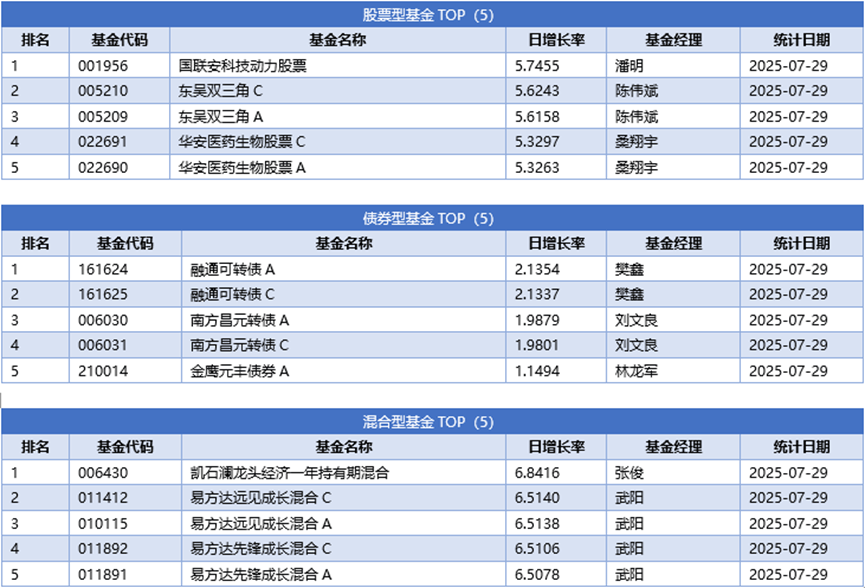
Group 1: Market Overview - In July, 115 new funds were established, raising over 900 billion shares, indicating a warming trend in the market [1] - The A-share market showed volatility with the Shanghai Composite Index closing at 3609.71 points, up 0.33%, while the Shenzhen Component Index and the ChiNext Index reached new highs since November last year [1] Group 2: Fund News - No new funds were launched on July 29, but 16 funds distributed dividends, with the highest being 0.5810 yuan per 10 shares for the Jin Xin Min Da Pure Bond Fund [2] - Over 90% of active equity funds recorded positive returns by the end of July, leading to a surge in new equity fund issuances [2] - The number of domestic QDII funds reached 319, with a total scale of 683.77 billion yuan, marking an 11.85% increase from the end of last year [2] Group 3: Fund Performance - The best-performing fund on July 29 was the Kai Shi Lan Long Tou Economic One-Year Holding Mixed Fund, with a daily growth rate of 6.8416% [3] - The top equity fund was the Guo Lian An Technology Power Stock Fund, with a daily growth rate of 5.7455% [4] - The top QDII fund was the Guang Fa Zhong Zheng Hong Kong Innovation Drug ETF, with a daily growth rate of 4.5815% [4]
年内225只基金涨超50%,近两成限购!绩优基金“闭门”为哪般?
Sou Hu Cai Jing· 2025-07-29 11:01
Core Viewpoint - The recent trend of fund subscription limits reflects a response to significant performance gains in the active equity fund sector, with many funds experiencing substantial inflows and subsequently implementing restrictions to manage investor behavior and maintain stability [1][2][5]. Fund Subscription Limits - Da Cheng Fund has reduced the subscription limit for its Da Cheng Global USD Bond Fund's RMB share to 50,000 yuan as of July 29 [1]. - A total of 225 funds have seen year-to-date growth exceeding 50%, with 12 funds currently suspended from subscriptions and 21 funds limiting large subscriptions [2]. - Notable funds like Huatai-PineBridge Hong Kong Advantage Select have reported year-to-date returns of 134.72% and 135.08% for their A and C classes, respectively [2]. Performance and Market Trends - The active equity fund sector has rebounded significantly, with many funds experiencing over fivefold growth in size during the second quarter [2]. - Small-cap stocks have outperformed large-cap stocks in the first half of 2025, driven by favorable industry trends and macroeconomic conditions [2]. - Despite the positive performance, some funds are limiting subscriptions to prevent investors from chasing high returns and to manage volatility [2][4]. Fund Management Strategies - Funds like Nuon Multi-Strategy have focused on small-cap stocks, which have contributed to their net value growth, although they also exhibit higher volatility [3][4]. - The strategy of limiting subscriptions is aimed at maintaining portfolio stability and preventing forced adjustments due to large inflows [5]. - Some funds have implemented subscription limits to mitigate the impact of large institutional investments and to avoid dilution of returns [5].