欣旺达

Search documents
刚因“电芯”遭23亿天价索赔,欣旺达又卷入沃尔沃全球召回风波
Guo Ji Jin Rong Bao· 2026-01-19 13:00
Core Viewpoint - The recent recall of Volvo's electric vehicle EX30 due to battery safety issues has raised concerns about the responsibility of the battery supplier, A123, and has compounded existing sales pressures on Volvo [2][3][5]. Group 1: Volvo's Recall and Sales Performance - Volvo has initiated a global recall of its EX30 electric model due to high-voltage battery overheating risks, affecting markets including the US, Canada, South Africa, and Australia [2]. - In the UK, 10,440 units of the EX30 are confirmed to be affected, covering models from 2024 to 2026 [2]. - Volvo's global sales in 2024 are projected at 763,400 units, an 8% increase year-on-year, but sales in China, its largest market, have dropped to 156,400 units, the lowest in five years [4]. Group 2: Financial Impact and Battery Supplier Issues - In Q3 2023, Volvo's global sales fell to 160,500 units, a 7% year-on-year decline, with revenues of 86.4 billion Swedish Krona, down 6% [5]. - The recall has sparked controversy over battery supply responsibilities, with reports indicating that the problematic battery cells were produced by a joint venture involving A123 [5][6]. - A123's chairman stated that the battery packs were supplied through a different factory, distancing the company from direct responsibility for the issues [5]. Group 3: A123's Challenges and Market Position - A123 is facing significant challenges, including a recent lawsuit from Zeekr over battery quality issues, which has intensified scrutiny on the company's reliability [6][9]. - The company has seen a reduction in orders from key clients like Li Auto and Xiaomi, with the number of models supported by A123 for Li Auto dropping from 10 to 3 [9]. - A123's aggressive pricing strategy has led to declining profit margins, with a gross margin of only 9.77% in H1 2025, significantly lower than competitors [10]. Group 4: Financial Health and Future Outlook - A123 reported a loss of 1.87 billion Yuan in 2024, with cumulative losses exceeding 4.5 billion Yuan from 2023 to H1 2025 [10]. - The company's debt levels have risen sharply, with a debt-to-asset ratio of 67.62% and total liabilities reaching 67.9 billion Yuan [10]. - Concerns about ongoing litigation and financial losses may hinder A123's plans for an IPO in Hong Kong, which was anticipated for 2026 [10].

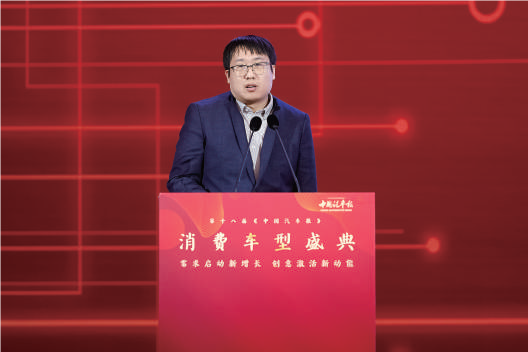
欣旺达动力总裁助理/产品线总经理何轩:超充型电池引领行业变革
Zhong Guo Qi Che Bao Wang· 2026-01-19 03:31
Core Insights - The company, XWANDA, is focusing on a dual-driven strategy of "hybrid on the left, pure electric on the right" to empower automotive companies in their transition to electric vehicles, showcasing its precise understanding of market demands and technological innovation [1][3]. Market Analysis - The global electric vehicle market exhibits differentiated characteristics, with the domestic market seeing a rise in pure electric vehicles due to improved charging infrastructure, while the overseas market, particularly Europe, is experiencing over 40% growth in hybrid models due to Chinese companies expanding internationally [3]. - In China, the market has entered a late-stage mass adoption phase, shifting user demands from policy-driven and cost-effective solutions to longer range, convenient charging, and lifecycle safety, necessitating a multi-dimensional balance in battery products [3]. Product Strategy - XWANDA has developed three platform systems: Xingchi, Xingyao, and Xinghuan, catering to various vehicle types including economical, high-end, and PHEV/BEV cylindrical cells, thus achieving comprehensive coverage across all application scenarios [3]. - The company’s ultra-fast charging technology leads the pure electric vehicle sector, with the latest version of its battery achieving a peak charging rate of 15C and a peak charging power exceeding 1.4 MW, allowing for a 20% SOC recharge in just one minute [4]. Hybrid Solutions - In the hybrid sector, XWANDA is targeting a projected market of 10 million HEVs by 2030, offering high-power battery solutions with significant performance advantages, including a 40% market share in Europe [5]. - The company’s hybrid batteries utilize fast charging technology, achieving a peak charging rate of 4-8C and covering ranges of 200-500 kilometers, with specific solutions designed for A00 to A-class vehicles [5]. Technological Innovation - XWANDA emphasizes technological innovation and safety as core competitive advantages, utilizing AI for battery development and management, and implementing rigorous testing standards to ensure safety and reliability [6]. - The company has successfully equipped nearly 2 million HEV products, with significant partnerships with major automotive brands, demonstrating the strength of its product offerings [6]. Future Outlook - XWANDA aims to continue leveraging its ultra-fast charging technology across its product lines, providing solutions for both hybrid and pure electric vehicles, thereby contributing to the high-quality development of the electric vehicle industry globally [6].

西部证券晨会纪要-20260119
Western Securities· 2026-01-19 02:39
Group 1: Commercial Aerospace - The commercial aerospace sector is transitioning from "single satellite testing" to "constellation networking," with significant growth expected as China develops reusable rocket technology and increases satellite launches [5][6][7] - The "Zhuque-3" rocket has a launch capacity of 21.3 tons, surpassing the Falcon 9's initial recovery capacity, indicating a strong foundation for future satellite launches [6] - The market potential for domestic satellite launches is substantial, with an estimated annual demand for approximately 4,000 satellites, suggesting a significant growth trajectory for the industry [6][7] Group 2: Automotive Industry - Spring Power (603129.SH) is projected to achieve net profits of 1.907 billion, 2.371 billion, and 2.805 billion yuan from 2025 to 2027, with a target market capitalization of 49.8 billion yuan based on a 21x PE ratio for 2026 [2][13] - The company is positioned as a leader in all-terrain vehicles and large-displacement motorcycles, with competitive advantages in performance and cost-effectiveness compared to international competitors [13][14] - The electric two-wheeler segment is expected to contribute significantly to revenue growth, with sales reaching 250,500 units and revenue of 872 million yuan in the first half of 2025, reflecting a year-on-year increase of 652.06% [15] Group 3: Financial Sector - The introduction of the "Derivatives Trading Supervision Management Measures" aims to regulate the derivatives market, enhancing the legal framework and promoting the development of the derivatives business [32][33][34] - The measures emphasize the importance of derivatives in managing risks and supporting the real economy, indicating a growing focus on regulatory oversight in the financial sector [32][34] - Major securities firms are expected to benefit from the regulatory changes, particularly those with strengths in derivatives trading, as the market becomes more structured and opportunities for growth arise [34] Group 4: Macro Financial Data - In December, new loans totaled 910 billion yuan, with a year-on-year decrease compared to the previous year, while corporate loans showed signs of recovery [18][19] - The social financing growth rate slowed, primarily due to government financing constraints, indicating a need for policy adjustments to stimulate economic activity [19][20] - The central bank's recent rate cuts and liquidity measures suggest a continued effort to support economic growth and maintain stable financing conditions [20][40]
中国储能最具科技创新力10强排行榜|独家
24潮· 2026-01-18 23:04
Core Viewpoint - Technological innovation is a crucial driving force for the sustainable development of the energy storage industry, impacting various sectors such as large-scale battery cells, long-duration energy storage, and grid-connected energy storage [2]. Group 1: Technological Innovation in Energy Storage - China's investment in energy storage technology and talent has been steadily increasing, with R&D spending expected to reach nearly 100 billion yuan by 2025, nearly doubling from five years ago [2]. - The number of R&D personnel has surpassed 200,000, and the number of patents has exceeded 100,000, indicating a growing foundation and strength in technological innovation [2]. - The competitive landscape is characterized by intense price wars, which may hinder R&D investments and innovation momentum in the technology sector [2]. Group 2: Future Competitiveness of Enterprises - The 24潮产业研究院 (TTIR) emphasizes that only companies with global layout capabilities, strong market expansion, financial health, and significant brand influence will have the potential for sustainable growth [3]. - Starting in 2026, TTIR will release a ranking of the top 10 Chinese energy storage companies based on their technological innovation capabilities across seven primary dimensions and 20 secondary dimensions [3]. Group 3: Ranking of Technological Innovation - The ranking will assess companies based on R&D investment, foundational strength, innovation outcomes, commercial promotion capabilities, product competitiveness, achievements, and leading layouts [4]. - The scoring breakdown for the ranking includes 45% for R&D investment, 15% for foundational strength, 10% for innovation outcomes, and various other dimensions [4]. Group 4: Top 10 Energy Storage Companies by Innovation - The top-ranked companies for technological innovation include BYD, CATL, and Sungrow, with scores reflecting their R&D investment, innovation outcomes, and product competitiveness [7]. - BYD scored 87.49, followed by CATL with 81.90, and Sungrow with 81.00, showcasing their leadership in the energy storage sector [7]. Group 5: Detailed Scoring Metrics - The detailed scoring metrics for R&D investment show that BYD leads with a score of 95.42, while CATL and Sungrow follow with scores of 83.12 and 78.33, respectively [9]. - In terms of innovation outcomes, Sungrow leads with a score of 86.88, followed closely by BYD and CATL [11]. - The foundational strength scores indicate that Sungrow also leads in R&D personnel metrics, highlighting its commitment to innovation [13].



邀请函:2026(第二届)起点锂电圆柱电池技术论坛暨圆柱电池20强排行榜发布会4月10日深圳举办!
起点锂电· 2026-01-18 11:25
Industry Background - The market for large cylindrical batteries and all-tab batteries is expected to explode by 2025, with China's cylindrical battery shipments projected to grow by over 15%, and large cylindrical batteries expected to exceed 40% growth. Major companies like EVE Energy, Molicel, and others are facing supply shortages, indicating continued high growth into 2026 [3]. - Series products such as 32, 40, 46, and 60 are rapidly expanding in various sectors including lightweight power, electric two- and three-wheelers, portable and home energy storage, and automotive power [3]. - The integration of technologies such as all-tab, high nickel, silicon-carbon, and sodium batteries with cylindrical batteries is creating new growth points and market opportunities [3]. - The 2026 China Cylindrical Battery Comprehensive Competitiveness Ranking Top 20 has been released by the Qidian Research Institute (SPIR), providing a reference for industry procurement [3]. Event Overview - The 2026 Qidian Lithium Battery Cylindrical Battery Technology Forum and Top 20 Ranking Release will be held on April 10, 2026, in Shenzhen, with a focus on all-tab technology leading the large cylindrical market [6]. - The event will feature over 600 participants and will include discussions on cutting-edge technologies, processes, and materials related to cylindrical batteries [6]. Conference Agenda - The forum will include sessions on high-power cylindrical battery technology, innovations in household and portable energy storage, and the development of next-generation large cylindrical batteries [7][8]. - Roundtable discussions will address topics such as overcoming barriers to overseas market entry and identifying emerging application markets for rapidly growing cylindrical batteries [7][8]. Participating Companies - Notable cylindrical battery companies include EVE Energy, Ningde Times, BYD, and LG Energy, among others. The event will also attract downstream application companies and equipment manufacturers [10].

碳酸锂最高涨至17.4万元;多种锂电原料取消出口退税;宁德时代落子沙特;LG新能源Q4亏损;珠海赛纬IPO终止;欣旺达回应电池争议
起点锂电· 2026-01-18 11:25
Group 1 - CATL opened its largest comprehensive service experience center in the Middle East, "Ningjia Service," in Saudi Arabia, covering an area of approximately 7,000 square meters and providing various after-sales services for passenger cars, commercial vehicles, and energy storage systems [3] - LG Energy Solution reported an operating loss of 122 billion KRW (approximately 83.8 million USD) in Q4 due to weak demand from electric vehicle manufacturers, despite a revenue increase of 4.8% to 6.14 trillion KRW [4] - Ganfeng Lithium's second-phase project for lithium-ion batteries has been approved for construction, with a total investment of 316 million RMB and an annual production capacity of 200 million batteries [6] Group 2 - A new 51GWh battery production line project has commenced in Xinyang, with a total investment of 12.725 billion RMB, focusing on advanced lithium-ion battery production [7] - Shenzhen Yuanxin Energy Technology Co., Ltd. submitted an IPO application to the Hong Kong Stock Exchange, aiming to develop sustainable energy solutions and reliable energy storage products [8] - A 2GWh high-performance lithium battery project has been signed in Hubei, with a total investment of 1 billion RMB, expected to generate over 1 billion RMB in annual output value by 2031 [9] Group 3 - Huizhou's Tianli Lithium Energy announced a planned maintenance shutdown of its lithium iron phosphate production line, expected to reduce output by 1,500 to 2,000 tons, which may support price increases in the market [22] - The Ministry of Industry and Information Technology and other departments released new regulations for the recycling of used power batteries, effective from April 1, 2026, focusing on comprehensive management throughout the battery lifecycle [33] - The price of battery-grade lithium carbonate reached a new high of 157,250 RMB per ton, with a significant increase in both futures and spot prices [16][17]
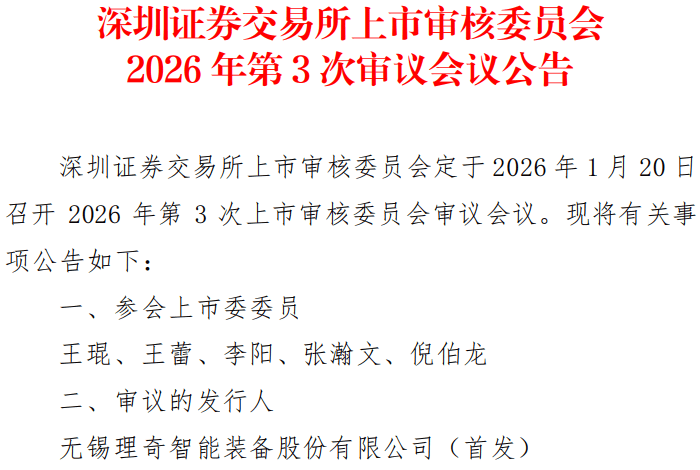
募资补血2亿 vs 分红套现过亿:理奇智能IPO前夕的“矛盾”财技
Sou Hu Cai Jing· 2026-01-18 04:27
Core Viewpoint - The IPO application of Lichi Intelligent Equipment Co., Ltd. reveals significant discrepancies between its impressive financial growth and underlying governance issues, particularly concerning the actual controller's capital operations and the company's financial practices [1][31]. Group 1: Financial Performance and Concerns - Lichi Intelligent's revenue surged from 619 million to 2.173 billion over three years, with net profit increasing from 107 million to 270 million [24][31]. - The company heavily relies on tax incentives, with total tax benefits amounting to 132 million from 2022 to 2024, constituting over 20% of net profit during the same period [4][26]. - The company's cash dividend distribution of approximately 1.07 billion to the actual controller raises questions about the authenticity of its funding needs, as it simultaneously seeks to raise 200 million for operational liquidity [4][13]. Group 2: Governance and Compliance Issues - The actual controller, Lu Haodong, acquired shares worth 52.4 million through various low-cost channels, raising compliance concerns regarding the legitimacy of these stock incentives [3][12]. - Lichi Intelligent has faced multiple legal disputes, including customs violations and contract disputes totaling over 13.57 million, indicating systemic flaws in compliance and contract management [4][30][31]. - The company has a history of compliance issues, including administrative penalties for customs violations, reflecting systemic management deficiencies [29][30]. Group 3: Business Structure and Market Risks - The company's business is highly concentrated in the lithium battery sector, with over 90% of revenue derived from this industry from 2022 to 2024, making it vulnerable to market fluctuations [5][21]. - Major clients account for a significant portion of revenue, with the top five clients contributing 86.87%, 81.67%, and 74.27% of sales from 2022 to 2024, indicating a lack of diversification [5][7]. - The company's product structure shows instability, with a 79.02% decline in single machine equipment revenue, despite significant growth in material intelligent processing systems [21][22]. Group 4: IPO Process and Market Position - Lichi Intelligent's IPO application was accepted on June 26, 2025, and quickly entered the inquiry stage, indicating a rapid progression in the listing process [8]. - The company claims a market share increase in lithium material intelligent processing systems from 27% in 2023 to 43% in 2024, although this growth occurred amid a slowing industry [23]. - The underwriting firm, Guotai Junan Securities, has experience in the equipment manufacturing sector but may face challenges in conducting thorough due diligence due to managing multiple similar projects simultaneously [10].
力争“十五五”期间经济总量迈上五千亿元新台阶 广东茂名培育特色产业体系
Xin Lang Cai Jing· 2026-01-17 05:22
(来源:经济日报) 转自:经济日报 近年来,广东省茂名市积极构建现代化产业体系,特色农业、重点制造业等蓬勃发展。 产业集群集聚发展。依托茂名石化、零碳产业园、欣旺达电白基地、马店河新型储能产业园、华南钛谷 五大链主企业和项目引领带动,茂名开辟绿色化工、新材料、新能源新赛道,先进制造业增加值占规上 工业比重提升至74%。 新质生产力加快培育。茂名加快布局新型储能、电子信息、高端装备三大战略性新兴产业,开通低空航 线19条,新增国家高新技术企业78家。 数智化转型深入推进。依托广东省中小企业数字化转型城市试点,茂名加快推进"智改数转网联",710 家企业完成数字化转型,757家企业实施技术改造。 王雄飞表示,"十五五"时期,茂名将一手抓新型工业化,一手抓新型城镇化,推动经济总量迈上5000亿 元新台阶。 茂名市委副书记、市长王雄飞介绍,"十四五"期间,茂名积极推动产业集聚发展,实施科技专项计划支 持产业创新,巩固提升石油化工、农业、建筑业三大千亿元级传统支柱产业,推进发展绿色化工、新材 料、新能源三大战略主导产业,引进培育新型储能、电子信息、高端装备三大战略性新兴产业,做强做 大食品加工、矿产金属加工、轻工医药、 ...
广东茂名培育特色产业体系
Jing Ji Ri Bao· 2026-01-17 04:56
Core Viewpoint - Guangdong's Maoming City is actively building a modern industrial system, focusing on the development of characteristic agriculture and key manufacturing industries, with significant growth in traditional and emerging sectors [1][2]. Group 1: Industrial Development - During the "14th Five-Year Plan" period, Maoming is promoting industrial agglomeration and implementing technology special plans to support industrial innovation [1]. - The city aims to consolidate and enhance three traditional pillar industries: petrochemicals, agriculture, and construction, while advancing three strategic leading industries: green chemicals, new materials, and new energy [1]. - Maoming is also focusing on cultivating three strategic emerging industries: new energy storage, electronic information, and high-end equipment [1]. Group 2: Economic Performance - The total output value of the petrochemical industry in Maoming remains stable at around 180 billion yuan, with 12 new chemical products reaching international advanced levels [1]. - The total agricultural output value has surpassed 120 billion yuan, with eight characteristic agricultural industry clusters each exceeding 10 billion yuan in output [1]. Group 3: Industrial Cluster Development - Maoming is leveraging five leading enterprises and projects, including Maoming Petrochemical and the Zero Carbon Industrial Park, to drive the development of green chemicals, new materials, and new energy [1]. - The added value of advanced manufacturing accounts for 74% of the industrial output above designated size [1]. Group 4: New Production Capacity - The city is accelerating the layout of strategic emerging industries, including new energy storage, electronic information, and high-end equipment, and has opened 19 low-altitude flight routes [1]. - A total of 78 new national high-tech enterprises have been added [1]. Group 5: Digital Transformation - Maoming is advancing the "smart transformation and digital upgrade" initiative, with 710 enterprises completing digital transformation and 757 enterprises implementing technological upgrades [2]. - In the "15th Five-Year Plan" period, Maoming aims to focus on new industrialization and new urbanization, targeting an economic total of 500 billion yuan [2].
欣旺达再陷电池安全漩涡背后:毛利率承压,涉事子公司仍亏损
Nan Fang Du Shi Bao· 2026-01-17 03:49
Core Viewpoint - The company Xiwanda is facing significant challenges due to safety issues with its battery products, leading to recalls and legal claims from partners, which may impact its financial performance and market reputation [1][6][8]. Group 1: Battery Safety Issues - Volvo has initiated a recall of its EX30 model due to potential overheating risks in high-voltage batteries, which are produced by a joint venture between Xiwanda and Geely [3][4]. - The recall affects multiple markets, with specific numbers including 40 vehicles in the U.S. and 2,815 in Australia, highlighting the scale of the issue [4]. - Xiwanda has not clearly defined its responsibility in the recall and has not disclosed potential impacts on its battery business [5][6]. Group 2: Legal Challenges - Xiwanda is facing a lawsuit from Geely's subsidiary, Weirui Electric Vehicle Technology, claiming damages of 2.314 billion yuan due to quality issues with battery cells delivered between June 2021 and December 2023 [6][8]. - The lawsuit is linked to previous quality complaints, including a situation where Zeekr, a Geely brand, offered free battery replacements to customers due to performance issues [7]. Group 3: Financial Performance and Market Position - Xiwanda's revenue from its automotive battery business has grown rapidly, from 428 million yuan in 2020 to 151.39 billion yuan in 2024, increasing its share of total revenue from less than 3% to 27.02% [8][9]. - Despite this growth, the gross margin for Xiwanda's electric vehicle batteries is only 9.77%, significantly lower than competitors like CATL and EVE Energy, which have margins of 22.41% and 17.6%, respectively [9]. - The company reported a net loss of 877 million yuan in the first half of 2025, despite generating 7.392 billion yuan in revenue from its battery segment [9].