联发科

Search documents
与OpenAI深度绑定,博通在陪Altman进行一场“AI豪赌”
Hua Er Jie Jian Wen· 2025-10-15 00:50
博通与OpenAI的深度合作,是一场高风险与高回报并存的豪赌。 周一华尔街见闻撰文,市场传出博通将为OpenAI开发大量芯片及计算系统的消息,推动其股价周一飙 升近10%。这项协议是OpenAI与包括英伟达、AMD在内的全球顶级AI芯片供应商达成的一系列采购计 划中的一部分。 据报道,OpenAI计划投入数十亿美元,用数十万颗芯片填充数据中心,其总耗电量将达到26吉瓦,这 一数字足以让纽约市夏季的峰值用电需求相形见绌。然而,这仅仅是OpenAI首席执行官Sam Altman向 员工透露的未来八年建设计划的十分之一。 然而,关键问题在于,OpenAI将如何为此买单尚不明朗。这家AI领域的明星初创公司今年的预计收入 约为130亿美元,虽已相当可观,但远不足以支撑Altman所描绘的庞大支出。该公司已告知投资者,预 计到2029年才能实现盈利。 对博通而言,这意味着它将大量资源押注于一个充满不确定性的客户。 豪赌背后的潜在回报与风险 对于博通而言,与OpenAI的合作描绘了巨大的商业前景,但也伴随着对等的风险。 Bernstein Research分析师Stacy Rasgon周一估计,该交易有望在未来三到四年内为 ...

vivo冲击高端打造“影像大小王” 新品升级四大蓝科技
Nan Fang Du Shi Bao· 2025-10-14 17:16
Core Insights - The domestic smartphone market is experiencing a peak period ahead of the "Double 11" shopping festival, with vivo launching its new flagship X300 series on October 13, featuring significant upgrades in various technological aspects [1][3]. Group 1: Product Features and Innovations - The vivo X300 series introduces four major upgrades under the "Blue Technology" framework: Blue Crystal Chip Technology Stack, Blueprint Imaging, Blue Ocean Battery System, and Blue River Operating System [3]. - The X300 series is the first to feature the Dimensity 9500 flagship chip and includes the self-developed Blueprint Imaging chip V3+, which enhances image processing capabilities [3][5]. - The X300 Pro is highlighted as the "Image King," featuring a new 85mm Zeiss 200MP APO super telephoto system, while the X300 is referred to as the "Image Little King" [9]. Group 2: AI and Operating System Integration - vivo's OriginOS 6, which integrates AI deeply with the operating system, aims to provide a personalized smart experience for users, functioning as a "VIP personal assistant" [1][12]. - The operating system has undergone significant enhancements, including the "Blue River Smooth Engine" technology, which improves performance and integrates with Apple's ecosystem [10]. - vivo's strategy emphasizes the importance of AI in operating systems, with predictions that by 2025, one-third of global smartphone shipments will support Generative AI [12][14]. Group 3: Market Position and Future Outlook - vivo's advancements in AI and imaging technology position it competitively within the smartphone market, aiming to redefine user experience through personalized services and enhanced imaging capabilities [1][12]. - The company is focused on creating a seamless integration of AI capabilities in smartphones, which is expected to drive user engagement and satisfaction [13][14].

时隔9年,黄仁勋再次给马斯克送货上门,跳票大半年的AI个人超算终于来了
3 6 Ke· 2025-10-14 08:25
Core Insights - The article highlights the successful delivery of NVIDIA's DGX Spark personal AI supercomputer to Elon Musk at SpaceX's Starbase, marking a significant moment in AI computing history [2][4][8]. Group 1: Product Overview - The DGX Spark is a powerful AI supercomputer that combines a 20-core ARM architecture Grace CPU and a Blackwell GPU, providing up to 1 Petaflop of AI computing performance [11]. - It features NVIDIA NVLink™-C2C technology, allowing seamless connection between CPU and GPU with a shared 128 GB unified memory pool, ensuring high-speed data transfer with minimal latency [11][15]. - The DGX Spark is priced at $3,999, which is $1,000 more than initially promised, and is targeted at AI developers and hardcore users [18]. Group 2: Historical Context - The delivery of the DGX Spark recalls a similar event in 2016 when Jensen Huang delivered the first DGX-1 supercomputer to OpenAI, which played a crucial role in the development of large models [4][6]. - The DGX Spark represents a shift from large, cumbersome machines to a more accessible form factor that can fit on a desk, signaling the start of a new era in personal AI supercomputing [6][8]. Group 3: Technical Specifications - The DGX Spark's Blackwell GPU is equipped with fifth-generation Tensor Cores, supporting ultra-low precision formats like FP4/FP8, resulting in a fivefold performance increase compared to the previous generation [14]. - It can handle models with up to 400 billion parameters, making it suitable for advanced AI tasks without the need for complex model partitioning [16]. Group 4: Software Ecosystem - The DGX Spark comes pre-installed with NVIDIA's complete AI software stack, including CUDA libraries and TensorRT, allowing developers to start working immediately without compatibility issues [16].


英伟达CEO黄仁勋亲自向马斯克交付DGX Spark迷你超级计算机
Sou Hu Cai Jing· 2025-10-14 06:59
Core Insights - NVIDIA CEO Jensen Huang delivered the DGX Spark, a highly anticipated product, to billionaire Elon Musk, highlighting its significance within the company [1][3] - The DGX Spark aligns with Huang's vision of making artificial intelligence accessible to everyone, marking a continuation of NVIDIA's mission in AI technology [3] Product Launch and Specifications - DGX Spark will officially launch on October 15, available through major retailers and NVIDIA's website, with partners including Acer, ASUS, Dell Technologies, GIGABYTE, HP, Lenovo, and MSI [5] - Key specifications include: - NVIDIA GB10 Grace Blackwell Superchip, offering up to 1 petaflop of AI computing performance at FP4 precision [5] - 128GB unified CPU-GPU memory for local model prototyping, fine-tuning, and inference tasks [5] - NVIDIA ConnectX networking technology for cluster expansion, achieving data transfer rates up to five times that of traditional PCIe [5] - High-speed NVMe storage and HDMI video output for visualization needs [5] Pricing and Market Position - The DGX Spark was initially scheduled for a July release but faced delays due to the complexity of the custom GB10 SoC developed in collaboration with MediaTek, now set for an October launch [8] - The starting price for the first-party FE version is $3,999, approximately 28,533 RMB at current exchange rates, positioning it as a premium product for professional users [8]

vivo X300系列正式发布:打造移动影像的全场景解决方案
Huan Qiu Wang Zi Xun· 2025-10-14 01:17
Core Insights - Vivo has officially launched the new X300 series flagship smartphones, focusing on professional imaging capabilities and comprehensive upgrades in performance, system, and design, providing a mature all-around flagship solution for users [1][3] Imaging Technology - The X300 series is positioned as "Zeiss 200MP Dual Flagship," featuring breakthroughs in imaging capabilities, including the Zeiss APO 200MP super telephoto lens on the X300 Pro and a significant upgrade to the Zeiss 200MP main camera on the X300 [3][5] - The X300 Pro's imaging system includes a new 85mm Zeiss 200MP APO super telephoto lens, developed in collaboration with Samsung, featuring a large 1/1.4-inch sensor and advanced stabilization technology [5][6] - The main camera of the X300 Pro utilizes a jointly developed sensor with Sony, achieving precise color reproduction and professional-grade stabilization for video and low-light photography [6][9] Performance and System - The X300 series is powered by the Blue Crystal × Dimensity 9500 flagship platform, combined with Vivo's self-developed Blueprints imaging chip V3+, enabling 4K video creation and significant performance improvements, with the X300 Pro achieving over 4.1 million on AnTuTu benchmark [3][11] - The new OriginOS 6, built on the "Blue River Smooth Engine" technology, enhances user experience through various underlying technological innovations, achieving certifications for long-term smooth performance [11][12] Battery and Display - Both the X300 Pro and X300 feature large capacity batteries, with 6510mAh and 6040mAh respectively, utilizing second-generation semi-solid battery technology, providing endurance comparable to devices with 7500mAh and 7000mAh batteries [12] - The display features a Zeiss Master Color screen with advanced eye protection technologies, ensuring a comfortable viewing experience even at low brightness levels [12]

国产手机开启新较量,「不争先」的赢了
36氪· 2025-10-13 14:44
Core Viewpoint - The Chinese smartphone industry has entered a new phase characterized by systemic competition, where brands like Huawei, Xiaomi, and vivo are focusing on technological depth and ecosystem innovation rather than just product iteration [2][5][26]. Market Dynamics - As of September 28, 2025, vivo (including iQOO) holds an 18.4% market share, leading the Chinese smartphone market for the third quarter of 2025, and a 17.2% share for the first three quarters of 2025 [4]. - In the high-end market (above 4000 yuan), vivo ranks second with a 22.14% share, following Huawei [4]. Competitive Landscape - The current competitive landscape is defined by a shift from "single-point leadership" to "system leadership," where brands must build closed loops in technology, experience, and ecosystem [5][26]. - The evolution in the imaging sector reflects this shift, moving from hardware competition to a focus on real-world problem-solving capabilities [5][11]. Innovation Strategies - vivo's innovation strategy involves deep collaboration with partners like MediaTek and Arm, allowing for co-development of chipsets and imaging algorithms, which enhances their competitive edge [7][20]. - The X300 series exemplifies this approach, integrating advanced imaging capabilities with AI to create a seamless user experience [9][19]. Long-term Vision - vivo's approach is likened to a river, emphasizing patience and accumulation over time, which allows for the development of a reusable system capability [16][19]. - The "Blue Technology" system represents a comprehensive ecosystem that integrates chip performance, imaging, system interaction, and AI understanding, enabling continuous self-evolution [19][20]. Societal Impact - The focus on user-centric innovation is evident in vivo's projects, such as the "Digital National Treasure Plan," which utilizes imaging technology for cultural heritage preservation [23]. - By addressing real-world needs, vivo demonstrates that technological innovation can create significant social value beyond mere product performance [24][28].
vivo X300系列发布:搭载联发科天玑9500芯片,4399元起
Feng Huang Wang· 2025-10-13 13:18
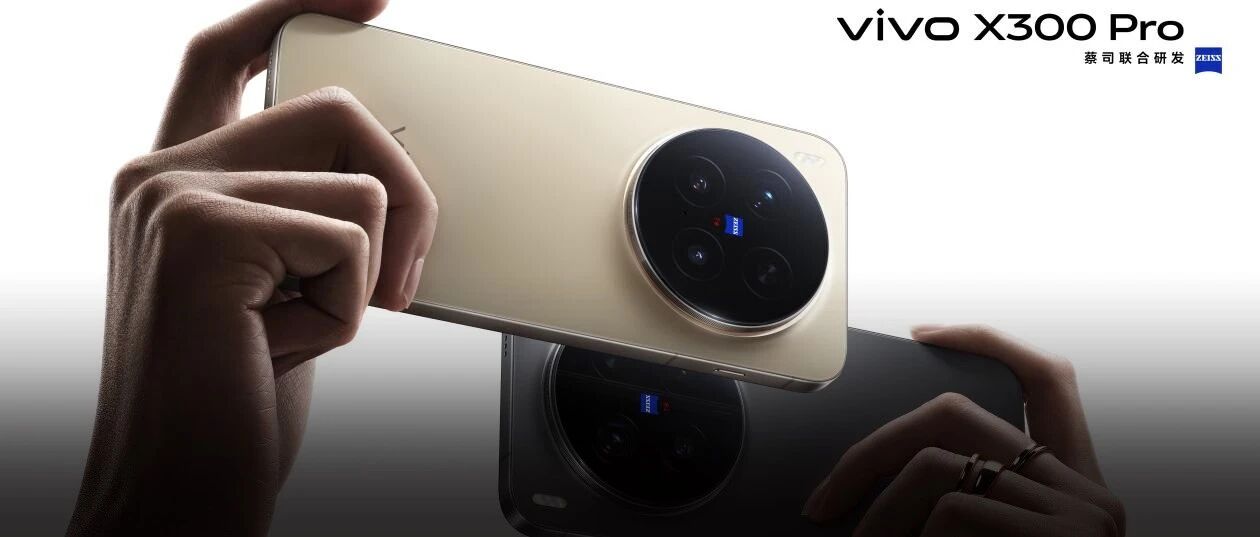
Core Points - Vivo officially launched the X300 series flagship smartphones on October 13, 2023, in Shanghai, with a starting price of 4399 yuan for the standard version and 5299 yuan for the pro version, set to go on sale on October 17 [1] - The X300 series features the MediaTek Dimensity 9500 chip and a jointly developed "Blue Crystal × Dimensity 9500" imaging solution, marking a significant technological advancement [1][2] - The devices are equipped with a 6040mAh battery utilizing fourth-generation silicon-carbon anode materials, enhancing battery capacity while maintaining a slim profile [1][2] Design and User Experience - The X300 series has a thickness of 7.95mm and weighs 190g, with a black border width of 1.05mm on the screen [1] - The design includes a floating water droplet cold-sculpted glass for the camera area, and a velvet glass back that resists fingerprints, available in four colors: Free Blue, Lucky Color, Comfortable Purple, and Pure Black [1] - The new OriginOS 6 system features a natural and comfortable motion design, with an average application launch response time of 72 milliseconds [2] Imaging and Video Capabilities - The standard version includes a 200MP Zeiss main camera, while the Pro version features a 200MP APO super telephoto lens, enhancing photography capabilities significantly [2][3] - The Pro version supports advanced video features, including 4K 120fps Dolby Vision recording and editing capabilities, showcasing a collaboration with Jianying for video editing [3] - The devices also include professional-grade stabilization features, with CIPA 5.5 stabilization and dual-view recording modes [2][3] Performance and Connectivity - The X300 series achieved a score exceeding 410,000 on AnTuTu, indicating high performance [3] - All models are equipped with USB 3.2 Gen1, ultrasonic fingerprint recognition, wireless fast charging, and IP68/IP69 dust and water resistance [3]
华小v与中国科技产业的“成人礼”
Feng Huang Wang Cai Jing· 2025-10-13 12:30
Core Insights - The launch of the vivo X300 series marks the entry of a new player in China's high-end smartphone market, showcasing a collaborative ecosystem with top-tier partners [1][4] - The Chinese smartphone market is now dominated by three major players: Huawei, vivo, and Xiaomi, collectively holding over 50% market share [5][19] - The competition has shifted from low-end, chaotic battles to high-quality competition focused on technology, user experience, and ecosystem building [8][19] Market Dynamics - The presence of major suppliers like BOE, Sony, and MediaTek at the vivo launch indicates strong industry support and confidence in vivo's product strategy [4][5] - Huawei and vivo each hold a 17.6% market share, while Xiaomi has 16.4%, illustrating a significant shift in market power towards domestic brands [5][19] - The "华小v" (Huawei, Xiaomi, vivo) era signifies a new phase in the smartphone industry, moving away from reliance on carrier channels to a focus on innovation and user-centric design [8][19] Competitive Strategies - Huawei employs a "top-down" technology-driven approach, while Xiaomi uses a "bottom-up" market-driven strategy, and vivo focuses on "deep cultivation" of user needs [9][10] - Vivo's strategy emphasizes enhancing user experience through advanced imaging technology, positioning itself as a leader in this niche [10][12] - The collaboration with Zeiss and MediaTek has allowed vivo to develop a comprehensive imaging system that surpasses traditional smartphone capabilities [10][18] Long-term Vision - The concept of "long-termism" is central to the strategies of these companies, emphasizing integrity and genuine value in consumer relationships [13][15] - Vivo's approach to technology development reflects a commitment to building a sustainable competitive advantage through deep partnerships and innovation [17][20] - The competitive landscape fosters a healthier ecosystem, preventing monopolistic stagnation and encouraging technological advancements [19][20]
【太平洋科技-每日观点&资讯】(2025-10-14)
远峰电子· 2025-10-13 11:19
Market Overview - The main board led the gains with notable increases in stocks such as Rongji Software (+10.04%), Xuguang Electronics (+10.02%), and Guanshi Technology (+10.01%) [1] - The ChiNext board saw significant growth with Yingjian Technology (+20.01%) and Jiangfeng Electronics (+14.54%) leading the charge [1] - The Sci-Tech Innovation board also performed well, with Luwei Optoelectronics and Huahong Semiconductor both increasing by 20% [1] - Active sub-industries included SW Semiconductor Materials (+6.24%) and SW Electronic Chemicals III (+3.32%) [1] Domestic News - In the semiconductor industry, China's export of electromechanical products reached 12.07 trillion yuan, a 9.6% increase, accounting for 60.5% of total exports [1] - The MCA Mobile Alliance, represented by Wentai Technology, issued a statement opposing the politicization of business issues and criticized the Dutch government's actions against Nexperia [1] - The Anhui Quantum Information Engineering Technology Research Center announced the successful mass production of the world's first four-channel ultra-low noise single-photon detector, which will enhance various applications [1] - Taiwan's economic department stated that the expanded ban on rare earth elements from mainland China is not expected to significantly impact chip manufacturing but may affect the global supply chain for electric vehicles and drones [1] Company Announcements - Liyi Intelligent Manufacturing forecasted a net profit of 960 million to 1.2 billion yuan for Q3 2025, representing a year-on-year growth of 32.35% to 65.44% [2] - Yabo Xuan reported total revenue of 419 million yuan for Q1-Q3 2025, a 55.9% increase, with a net profit of 49 million yuan, up 36.59% [2] - Feirongda projected a net profit of 275 million to 300 million yuan for the first three quarters of 2025, reflecting a growth of 110.80% to 129.96% [2] - Juxin Technology estimated a revenue of 721 million yuan for Q1-Q3 2025, a 54.50% increase, with a net profit of 151 million yuan, up 112.94% [2] International News - LaserApps developed a technology to create through-glass vias (TGV) on 1.1mm thick glass, crucial for signal transmission to semiconductor glass substrates [2] - Amid U.S.-China trade tensions, Japanese electronic component manufacturers are restructuring global production, with Tamura Electric planning to reduce its Chinese bases by 30% by March 2028 [2] - Indian eyewear company Lenskart announced the integration of a unified payment interface (UPI) in its upcoming B Camera smart glasses, allowing secure payment through voice commands [2] - Counterpoint reported that by 2025, smartphones with GenAI capabilities will account for 35% of global shipments, with Apple leading at 46% market share [2]

台积电资本支出,创历史新高
半导体行业观察· 2025-10-13 01:36
Group 1 - TSMC will hold a conference on October 16, with strong demand for its 2nm capacity, leading major clients like Apple, AMD, Qualcomm, and MediaTek to fully book the capacity for next year [2][3] - TSMC's 2nm production facilities in Hsinchu and Kaohsiung are in trial production, with a yield rate nearing 70%, expected to enter mass production by the end of the year [2] - The estimated monthly production capacity for TSMC's 2nm process could reach 40,000 wafers by the end of the year, potentially increasing to nearly 100,000 wafers by the end of next year [2][3] Group 2 - TSMC's advanced packaging capacity is also expected to rise, with overall monthly capacity projected to exceed 150,000 wafers next year due to increased demand from major clients [3] - Capital expenditures for TSMC are anticipated to exceed this year's $38 billion to $42 billion, reaching new historical highs by 2026 [3] Group 3 - The global spending on 300mm wafer fab equipment is projected to reach $374 billion from 2026 to 2028, with a significant increase in investment driven by AI chip demand and regional supply chain localization [5] - In 2025, global spending on 300mm wafer fab equipment is expected to surpass $100 billion for the first time, with a growth rate of 7% [5] Group 4 - The memory sector is projected to invest $136 billion over three years, marking the beginning of a new growth cycle, with DRAM and 3D NAND investments expected to exceed $79 billion and $56 billion, respectively [6][7] - The demand for high-bandwidth memory (HBM) is expected to rise significantly due to AI training and inference needs [7] Group 5 - China is expected to lead global 300mm equipment spending with an investment of $94 billion from 2026 to 2028, followed by South Korea at $86 billion and Taiwan at $75 billion [8]