
LVMH

Search documents
Swatch道歉,谁在定义东方?
3 6 Ke· 2025-08-18 01:58
Core Viewpoint - The Swatch brand faced significant backlash after releasing an advertisement that featured a model making a gesture perceived as racially insensitive, leading to widespread criticism and a rapid apology from the company [1][8][10]. Group 1: Cultural Sensitivity and Brand Perception - The backlash against Swatch highlights the importance of understanding cultural context in advertising, as gestures or symbols can carry historical weight and be interpreted differently depending on the audience [4][7][12]. - The incident reflects a broader issue where brands often fail to grasp the cultural implications of their marketing strategies, leading to missteps that can damage consumer trust [19][20]. - The Swatch case is not isolated; it is part of a pattern where international brands repeatedly misinterpret cultural symbols, resulting in public outrage and calls for accountability [11][18]. Group 2: Financial Impact and Market Trends - Swatch reported a 23.7% decline in revenue in the Chinese market, significantly worse than the global average decline of 8.9%, with net profit plummeting by 88% [19][20]. - The luxury goods market in China is experiencing a downturn, with a projected overall decline of 20% to 22% in 2024, as consumers increasingly shift their luxury spending to overseas markets [20][21]. - In contrast, other luxury brands like LVMH are facing less severe financial impacts, indicating that Swatch's issues are more about lost consumer trust than broader market trends [23][24]. Group 3: Future Implications for Luxury Brands - The rise of Generation Z in China is changing the dynamics of the luxury market, with predictions that Chinese consumers will contribute nearly 40% of global luxury market growth in the coming years [24]. - There is a shift from a narrative where other markets passively accept representations to one where Chinese consumers demand authentic representation in advertising [24]. - Brands must adapt to this new reality by respecting cultural nuances and engaging with local contexts to avoid missteps that could lead to significant financial repercussions [24][25].
黄仁勋子女成长史
投资界· 2025-08-17 08:36
Core Viewpoint - The article discusses the career paths of Jensen Huang's children, Madison and Spencer, who have both risen to executive positions at NVIDIA, highlighting their unconventional journeys and the importance of their roles in the company's future directions in simulation and robotics [2][27]. Group 1: Madison Huang - Madison Huang, aged 34, is currently the Senior Director of the Omniverse software department at NVIDIA, with an annual income of $1.1 million for the fiscal year 2025 [4][15]. - She joined NVIDIA in 2020 as a marketing intern and has since held various positions, including Campaign Marketing Manager and Senior Product Marketing Manager, before becoming Senior Director in March 2025 [5][6]. - Madison's educational background includes a Bachelor's degree in Culinary Arts Management and an MBA from London Business School, showcasing a diverse skill set before her tenure at NVIDIA [7][12]. Group 2: Spencer Huang - Spencer Huang, aged 35, serves as the Robotics Product Line Manager at NVIDIA, focusing on AI models and simulation software for robotics, with a reported annual salary of $530,000 [15][17]. - He joined NVIDIA in 2022, initially as a product manager for the Isaac Sim Cloud team, and has a technical background that includes additional courses in human-computer interaction and an MBA from New York University [17][22]. - Prior to his role at NVIDIA, Spencer was a bar owner for eight years, where he established a successful cocktail bar that received international recognition [23][27].



买奢侈品这件事:韩国青年vs中国青年,差距在哪?
Sou Hu Cai Jing· 2025-08-14 00:16
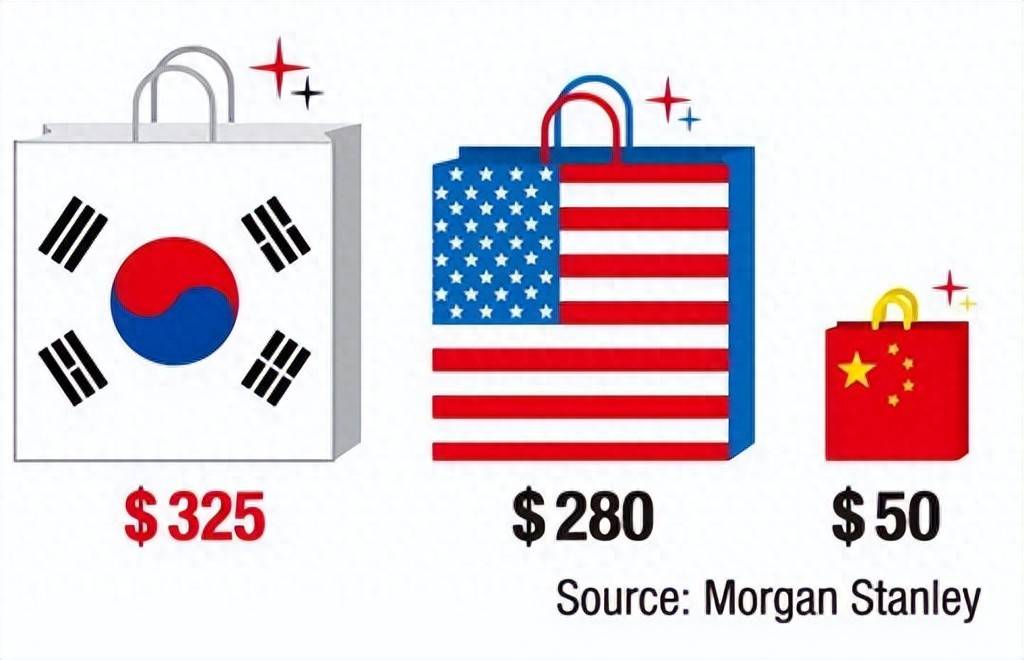
Group 1 - South Korean consumers have the highest per capita luxury goods spending globally at approximately $325, with many young individuals resorting to loans for purchases [1][3] - A report from the Korea Financial Institute indicates that 18% of the debt among individuals aged 20 to 39 is spent on luxury goods, and about 17% of young workers in Seoul actively take loans to buy luxury items [3] - The cultural context in South Korea drives luxury consumption, where luxury items are seen as status symbols in job markets and social circles, exacerbated by high living costs and limited job opportunities [3] Group 2 - In contrast, the Chinese luxury market is experiencing a shift towards rational consumption, with a projected sales decline of 18%-20% in 2024, prompting major brands like LVMH and Kering to adjust their strategies [5] - The shift in consumer behavior in China reflects a transition from "symbolic consumption" to "value consumption," with discount channels becoming the preferred choice for entry-level luxury goods [5][7] - Young Chinese consumers are increasingly prioritizing value over brand logos, leading to a more mature approach to luxury spending, as evidenced by the popularity of discount platforms offering significant savings on luxury items [6][7]
英伟达帝国的继承者们:蛋糕、红酒和四万亿
Tai Mei Ti A P P· 2025-08-13 07:19
Core Viewpoint - The article discusses the unconventional career paths of NVIDIA CEO Jensen Huang's children, Spencer and Madison Huang, who have transitioned from unrelated fields into key roles at NVIDIA, focusing on AI and robotics, which are seen as the company's future strategic areas [1][7]. Group 1: Spencer Huang's Journey - Spencer Huang initially pursued a career in the nightlife industry by opening a cocktail bar in Taipei, which gained recognition as one of Asia's top 50 bars [2][3]. - His experience in the bar industry included applying management techniques learned from his father, such as a weekly reporting system, and he self-taught IT skills to analyze sales data [2][3]. - After attending AI executive courses at MIT and obtaining an MBA from NYU, Spencer joined NVIDIA in 2022, where he now manages product development for AI models and robotics simulation [3][7]. Group 2: Madison Huang's Path - Madison Huang's career began in culinary arts, earning a degree in culinary management and working as a chef before shifting to the luxury goods sector with LVMH [5][6]. - She later joined NVIDIA in 2020 as a marketing intern in the Omniverse department, which focuses on 3D simulation and digital twins, and quickly rose through the ranks to become a senior director [6][7]. - Madison has become a prominent figure in external company events, known for her high standards and direct approach, aiming to establish her own identity separate from her father's legacy [6][8]. Group 3: Return to NVIDIA and Industry Context - Both siblings have entered NVIDIA at a time when the company is focusing on future technologies like digital twins and robotics, which are critical for AI implementation [7][9]. - Their entry into the company has sparked discussions about nepotism, but Jensen Huang has expressed confidence in their abilities and commitment to the company [8]. - The presence of the Huang siblings at NVIDIA is notable in Silicon Valley, where second-generation leaders are rare, contrasting with other tech giants where offspring typically do not join the family business [7][8].
2025年第31周:服装行业周度市场观察
艾瑞咨询· 2025-08-12 00:05
Group 1: Luxury Goods Market - The luxury goods market is experiencing significant changes, with frequent management shifts indicating strategic adjustments in response to a historical low in the market [2][3] - Key strategic adjustments include hiring cross-industry management talent, difficulties in family businesses with external CEOs, and internal movement of creative talent within companies [2] - The establishment of senior communication roles in brands like Chanel and LV reflects a focus on enhancing brand image management during this challenging period [2] Group 2: Outdoor Equipment Trend - The streetwear market is declining, while outdoor brands like Arc'teryx and Salomon are gaining popularity among consumers, particularly the middle class [4] - The pandemic has accelerated consumer interest in a healthy outdoor lifestyle, prompting outdoor brands to shift from functionality to fashion [4] - Traditional sports brands are also expanding their outdoor product lines, indicating a significant shift in consumer demand towards outdoor fashion [4] Group 3: Swiss Watch Exports - Swiss watch exports saw a 5.6% decline in June 2025, totaling 2.2 billion Swiss francs, primarily due to significant drops in key markets like the US, Japan, and Hong Kong [5] - Overall exports for the first half of the year decreased by 0.1% to 13 billion Swiss francs, with the top six markets experiencing a 7.6% decline [5] - Despite some markets like Spain and India showing double-digit growth, the overall trend indicates a challenging environment for Swiss watch exports [5] Group 4: Fashion Industry Developments - The 2025 China Fashion Conference highlighted the transformation of Haining into a comprehensive fashion center, focusing on technology, cultural confidence, and sustainable development [6] - The conference featured discussions on digital transformation and showcased a blend of traditional and modern design [6] - Haining aims to establish itself as a "full-chain service provider" for the fashion industry, promoting high-quality development [6] Group 5: Gold Jewelry Market - The report from Huayi Think Tank indicates that the high international gold prices are driving a consumption boom in gold jewelry in China [7] - Local brands are leveraging traditional craftsmanship and product innovation to attract younger and high-end consumers, shifting from homogeneous competition to differentiated development [7] - The report emphasizes the need for brands to enhance aesthetic value to achieve sustainable growth amidst market fluctuations [7] Group 6: Brand Collaborations and Innovations - The collaboration between Tai Ping Bird and Suzhou embroidery showcases the integration of traditional craftsmanship into modern fashion, appealing to culturally confident consumers [10][13] - Ciele Athletics' entry into the Chinese market through a partnership with Tmall reflects the trend of overseas brands capitalizing on China's growing outdoor and running market [16] - JW Anderson's transition from a clothing brand to a lifestyle brand indicates a strategic move to avoid competition in the apparel sector while exploring new product lines [11] Group 7: Insights from Industry Leaders - Ralph Lauren's CEO discussed strategies for navigating economic challenges, emphasizing diversification in procurement and supply chain efficiency [19] - The focus on women's wear and sports collaborations presents significant growth opportunities, particularly in the Asia-Pacific region [19] - The insights shared by industry leaders highlight the importance of aligning brand strategies with consumer values and preferences [19]

爱马仕继承人150亿美元股票不翼而飞,细节曝光
Feng Huang Wang Cai Jing· 2025-08-11 14:22
Core Viewpoint - The article discusses the mysterious disappearance of 6 million shares of Hermès stock, valued at approximately $15 billion, belonging to Nicolas Puech, the heir of Hermès, and the implications of this incident on wealth management and family dynamics within the luxury goods industry [4][9]. Group 1: Disappearance of Shares - Nicolas Puech discovered that his 6 million shares of Hermès had vanished, leading to a legal battle against Eric Freymond, his wealth manager, who is implicated in the disappearance [3][9]. - Freymond was questioned by French authorities regarding the lawsuit filed by Puech, despite having no legal obligation to appear as a Swiss citizen [6][7]. - The shares, valued at $15 billion, were reportedly transferred to LVMH, raising questions about Puech's knowledge and consent regarding the transactions [4][12]. Group 2: Legal Proceedings - Puech has filed three lawsuits against Freymond, accusing him of concealing information and refusing to return the Hermès shares [9][10]. - Freymond claims he never managed Puech's Hermès stock account, and a Geneva court previously found no evidence of wrongdoing on his part [11]. - Initial charges against Freymond in France include forgery and serious breach of trust, indicating the severity of the investigation [11]. Group 3: Wealth Management and Family Dynamics - Puech's wealth management decisions have come under scrutiny, particularly regarding his trust in Freymond and the management of his financial affairs [14][15]. - The article highlights a dramatic change in Puech's will, where he decided to adopt his gardener as his heir, potentially complicating the distribution of his wealth [16][17]. - As of December 31, 2023, Puech's financial situation appears precarious, with only €600,000 in cash and approximately €96 million in stocks and investments, raising concerns about the future of his estate [17].
爱马仕继承人150亿美元股票不翼而飞,细节曝光
凤凰网财经· 2025-08-11 13:47
Core Viewpoint - The article discusses the mysterious disappearance of 6 million shares of Hermès stock, valued at approximately $15 billion, belonging to Nicolas Puech, the heir of Hermès, and the subsequent legal battles involving his wealth manager, Eric Fremont [4][22]. Group 1: Disappearance of Shares - Nicolas Puech discovered that his 6 million shares of Hermès had vanished, which were worth around $15 billion at current valuations [4]. - Eric Fremont, who managed Puech's wealth for decades, was implicated in the disappearance and faced multiple lawsuits from Puech [16][17]. - Fremont claimed he never managed the Hermès stock account, while Puech accused him of concealing information and refusing to return the shares [19][22]. Group 2: Legal Proceedings - Fremont assembled a high-profile legal team to defend himself against the accusations, which included former diplomats and renowned law firms [6]. - The legal disputes trace back to a significant acquisition by LVMH, which led to a family feud over Hermès shares, with Puech's cousin forming a holding company to retain family control [10][12]. - Fremont's defense included evidence that Puech was aware of the transactions involving his shares, which were allegedly transferred to LVMH [24][30]. Group 3: Wealth and Inheritance - Puech's wealth is further complicated by a recent change in his will, where he decided to adopt his gardener, making him a significant heir to his fortune [34]. - An audit revealed that Puech's current assets include only €600,000 in cash and approximately €96 million in stocks and investments, a stark contrast to his previously estimated net worth of CHF 9-10 billion [37]. - The ongoing legal issues and the potential loss of his Hermès shares could significantly reduce the expected inheritance for both the gardener and Puech's charitable foundation [36][37].

不敢配货了,爱马仕开始偷偷降价
36氪· 2025-08-11 09:48
Core Viewpoint - The global luxury goods industry is facing significant challenges, potentially experiencing its largest setback in 15 years, as indicated by Bain & Company. Despite this, Hermès continues to show growth, although it faces increasing difficulties in customer acquisition and reliance on leather goods [4][6]. Financial Performance - Hermès reported an 8% revenue growth to €8 billion, with all geographic regions showing growth, except for the perfume and beauty and watch sectors [4][5]. - In the first half of 2024, Hermès achieved a 15% growth, with double-digit growth across most regions, except for a slight decline in the watch sector [5]. Market Challenges - The company is struggling with the challenge of attracting new customers and is affected by the second-hand market disrupting pricing strategies. The reliance on leather goods is becoming increasingly problematic [6][20]. - The second-hand market has shown that Hermès products can sell for more than retail prices, indicating a strong demand but also a shift in consumer purchasing behavior [12][14]. Sector Performance - The leather goods sector saw a revenue increase of 12.4%, while the ready-to-wear and silk sectors experienced a decline in growth rates, with ready-to-wear growing only 5.5% compared to 15.5% the previous year [21]. - The perfume and beauty sector saw a decline of 3.8%, while the watch sector dropped by 7.9% [21]. Geographic Performance - The Americas market is becoming increasingly important for Hermès, with a 9.5% growth in the first half of 2025, while the Asia-Pacific region only grew by 1.5% [30][31]. - Growth in Japan has slowed from over 22% in 2024 to 16% in 2025, and the overall growth in the Asia-Pacific region has significantly decreased compared to previous years [30][31]. Pricing Strategy - Hermès plans to continue raising prices globally, but has already implemented a 5% price increase in the U.S. to counteract tariff impacts [28][29]. - The company is facing pressure to adjust its pricing strategy due to rising costs of raw materials, particularly in the jewelry sector [33]. Future Outlook - The importance of diversifying product lines is emphasized, as reliance on leather goods may not sustain the company in the long term. The company is looking to expand into high-end fashion to create a second growth curve [24][34]. - The decline in middle-class consumers willing to spend on entry-level products poses a risk to Hermès' customer base [36].

纺织服饰25W32周观点:奢侈品专题:亚太环比改善,Hermes表现相对坚挺-20250810
Huafu Securities· 2025-08-10 12:09
Investment Rating - The report maintains an "Outperform" rating for the luxury goods sector [6]. Core Insights - The luxury goods sector in the Asia-Pacific region (excluding Japan) shows a sequential improvement, with Hermes demonstrating relative resilience [3][12]. - In Q2 2025, LVMH, Hermes, and Kering reported revenue changes in Asia (excluding Japan) of -6%, +5%, and -19% year-on-year, respectively [3][12]. - Hermes continues to grow across all regions, while LVMH and Kering face challenges, particularly in the Asia-Pacific market [3][12][28]. Summary by Sections 1. Luxury Goods Sector Performance - The luxury goods sector in Asia (excluding Japan) has improved sequentially, with Hermes showing a 5.6% year-on-year revenue increase in Q2 2025 [3][21]. - LVMH's revenue decreased by 4% to €19.5 billion, with a 22% drop in net profit to €5.7 billion, affected by macroeconomic uncertainties and currency fluctuations [14][15]. - Kering's revenue fell by 18% to €3.7 billion, with Gucci and YSL brands experiencing significant declines [28]. 2. Investment Recommendations - The report suggests focusing on sectors benefiting from policy support and consumer recovery, including major home appliances and pet products [30][31]. - Key companies to watch include Midea Group, Haier Smart Home, and Gree Electric for home appliances, and brands like Anta Sports and Li Ning in the apparel sector [30][31]. 3. Market Trends - The home appliance sector saw a weekly increase of 2.3%, while the textile and apparel sector rose by 4.23% [34][36]. - Cotton prices are reported at ¥15,178 per ton, reflecting a slight decrease of 0.54% [36].
心力经济
Hu Xiu· 2025-08-09 23:39
Group 1 - The article discusses the importance of emotional value and individual agency in driving economic activities, highlighting a shift towards a "heart power economy" that emphasizes creativity, initiative, and emotional investment [3][6][20] - It mentions the growth of rural economies and the need for strong individual responsibility and initiative among enterprises, as government support is becoming less prioritized [1][2] - The narrative reflects on the changing dynamics of relationships and the need for boundaries, suggesting that mutual support without over-reliance is essential for sustainable growth [2][5] Group 2 - The article illustrates the concept of "heart power" through various entrepreneurial stories, emphasizing resilience and adaptability in the face of challenges, leading to success even during economic downturns [9][10][12] - It highlights the significance of emotional value in business, where trust and customer relationships become the foundation for sustainable growth, especially in a competitive market [12][20] - The discussion includes the impact of societal changes on individual agency, suggesting that as people become more self-aware, they can better navigate their personal and professional relationships [5][6][18]