上海家化

Search documents
化妆品企业为何再攻植物成分|科技赋能新消费
Jing Ji Guan Cha Wang· 2025-10-11 07:07
Core Insights - The Chinese cosmetics industry is experiencing a significant shift towards the use of domestic plant ingredients, driven by innovation and the demand for unique, region-specific components [4][6][12] Group 1: Industry Trends - The trend of utilizing plant-based ingredients has become a common strategy among domestic cosmetics companies, with many brands showcasing their research and development achievements at industry events [3][5] - The number of new plant-based raw materials registered has surged, with 42 new plant materials recorded in 2024, surpassing chemical raw materials for the first time [6][12] - The market for domestic brands is growing, with over 55.2% market share in 2024, indicating a shift away from reliance on foreign brands [13] Group 2: Technological Advancements - Advances in technology have enabled the precise extraction and identification of active ingredients from plants, enhancing the efficacy of cosmetic products [8][9] - Companies are increasingly using AI technology to streamline the selection of effective cosmetic ingredients, significantly improving the efficiency of product development [10] Group 3: Market Dynamics - The capital market is showing increased interest in companies that focus on plant-based ingredients, with several firms initiating IPO processes and attracting significant investments [11][12] - The push for domestic raw material usage is expected to reshape the market landscape, with predictions that local ingredients will dominate the market share in the future [12][13]


万亿美妆市场洗牌加速:靠营销的短命品牌退场,研发型公司逆势突围
Di Yi Cai Jing· 2025-10-11 07:01
Core Insights - The Chinese fragrance and cosmetics industry is transitioning from "incremental competition" to "stock game" dynamics, with a shift from channel-driven to brand-driven competition [1] - The market size of China's cosmetics industry has exceeded 1 trillion yuan for two consecutive years, making it the largest cosmetics consumer market globally [1] - Companies are focusing on technological innovation, brand value reconstruction, and collaborative networks to enhance their competitiveness in the global value chain [1] Industry Trends - The Chinese cosmetics market is projected to reach a total transaction value of 1,073.82 billion yuan in 2024, reflecting a year-on-year growth of 2.8% [3] - The core driving force of the cosmetics market is the innovation in raw materials, with domestic companies primarily concentrated in the mid-to-low-end sectors [3] - Many local beauty companies are investing in R&D to develop proprietary raw materials, moving away from reliance on imports [5][6] Technological Advancements - Companies like Huaxi Biological Technology are emphasizing the importance of core technology and R&D capabilities to survive in a competitive market [2] - Natural堂 has developed over 20 proprietary raw materials, showcasing a shift from dependence on imports to self-sufficiency in high-quality ingredients [6] - The Chinese government is implementing policies to support innovation in cosmetic raw materials, including expedited review processes for new ingredients [7] Collaborative Efforts - The establishment of partnerships between research institutions and cosmetic companies aims to bridge the gap between laboratory innovations and market applications [9][12] - The launch of the "Beautiful Health Medical Research and Enterprise Transformation Center" in Nanjing signifies a commitment to enhancing collaboration in the industry [9] - Shanghai Jahwa's collaboration with the Chinese Academy of Traditional Chinese Medicine highlights the potential of traditional ingredients like artemisinin in skincare applications [11]


双11箭在弦上,高盛专家:本土美妆品牌领跑,上海家化、毛戈平位居高增长梯队
Zhi Tong Cai Jing· 2025-10-10 14:16
Core Viewpoint - Goldman Sachs is optimistic about the growth of local Chinese beauty brands during the upcoming Double 11 shopping festival, predicting that brands like Shanghai Jahwa and Mao Geping will lead the high-growth tier [2]. Group 1: GMV Targets and Growth Expectations - Tmall/Taobao aims for a total GMV growth of 20%-25% (approximately 600 billion), with the beauty category expected to grow around 20% [2]. - Douyin is projected to achieve over 40% GMV growth across the platform, with the beauty category exceeding 30%, making it a key growth driver [3]. - Tmall's promotional efforts are more aggressive than previous events, while Douyin continues to attract brand investments through content e-commerce and live streaming advantages [3]. Group 2: Promotional Period Extensions - The promotional period for Double 11 has been extended significantly this year, with Douyin extending by 22 days, starting pre-sales on September 16 [4]. - JD.com has extended its promotional period by 8 days, while Tmall has added 2 days, with pre-sales starting on October 15 [5]. Group 3: Brand Performance Insights - Local leading brands are expected to outperform the industry, with high-growth brands like Mao Geping (40%-50%) and Shanghai Jahwa showing strong potential [6]. - Multinational high-end brands like Lancôme and Estée Lauder are expected to grow between 10%-30%, while mass-market brands face pressure with growth below 10% [7]. Group 4: KOL Trends and Strategies - The trend is shifting towards mid-tier KOLs, with Douyin directing traffic towards them, resulting in reduced commission rates for brands [8]. - Both local and multinational brands are adopting a dual strategy of collaborating with both top-tier and mid-tier KOLs to enhance reach and conversion efficiency [8]. Group 5: Industry Dynamics and Consumer Experience - The Double 11 event is seen as an accelerator for industry differentiation, with local brands gaining market share through live streaming and product innovation [8]. - Consumers will benefit from a longer promotional period, lower prices, and simplified rules, while investors should focus on high-growth local leaders and established multinational brands [8].
化妆品板块10月10日涨1.51%,水羊股份领涨,主力资金净流入9614.02万元
Zheng Xing Xing Ye Ri Bao· 2025-10-10 08:52
Core Insights - The cosmetics sector experienced a rise of 1.51% on October 10, with Shuiyang Co. leading the gains [1] - The Shanghai Composite Index closed at 3897.03, down 0.94%, while the Shenzhen Component Index closed at 13355.42, down 2.7% [1] Company Performance - Shuiyang Co. (300740) closed at 23.93, up 8.72%, with a trading volume of 397,000 shares and a transaction value of 931 million yuan [1] - Jiahen Jiahua (300955) closed at 37.76, up 7.95%, with a trading volume of 119,800 shares and a transaction value of 438 million yuan [1] - Lafang Jiahua (603630) closed at 23.80, up 3.30%, with a trading volume of 73,600 shares and a transaction value of 17.5 million yuan [1] - Other notable performers include Bawi Co. (920123) up 2.45%, Shanghai Jahwa (600315) up 1.91%, and Jingsheng New Materials (300849) up 1.40% [1] Fund Flow Analysis - The cosmetics sector saw a net inflow of 96.14 million yuan from institutional investors, while retail investors experienced a net outflow of 98.20 million yuan [1] - Shuiyang Co. had a net inflow of 43.09 million yuan from institutional investors, but a net outflow of 33.48 million yuan from retail investors [2] - Jiahen Jiahua recorded a net inflow of 33.03 million yuan from institutional investors, with a significant net outflow of 67.04 million yuan from retail investors [2]


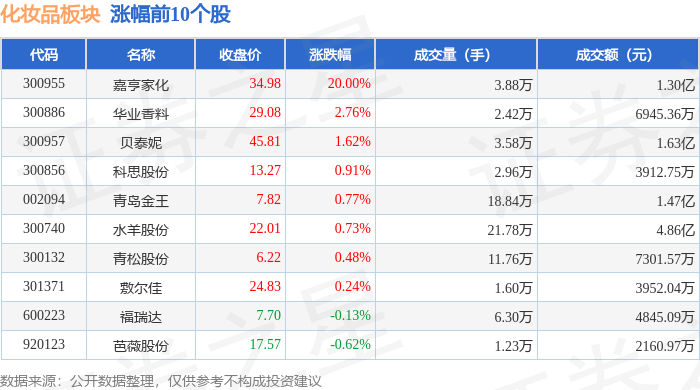
化妆品板块10月9日跌0.53%,上海家化领跌,主力资金净流入2247.14万元
Zheng Xing Xing Ye Ri Bao· 2025-10-09 09:00
证券之星消息,10月9日化妆品板块较上一交易日下跌0.53%,上海家化领跌。当日上证指数报收于 3933.97,上涨1.32%。深证成指报收于13725.56,上涨1.47%。化妆品板块个股涨跌见下表: 以上内容为证券之星据公开信息整理,由AI算法生成(网信算备310104345710301240019号),不构成投资建议。 | 代码 | 名称 | 收盘价 | 涨跌幅 | 成交量(手) | 成交额(元) | | --- | --- | --- | --- | --- | --- | | 300955 | 嘉亨家化 | 34.98 | 20.00% | 3.88万 | 1.30亿 | | 300886 | 华 香料 | 29.08 | 2.76% | 2.42万 | 6945.36万 | | 300957 | 贝泰妮 | 45.81 | 1.62% | 3.58万 | 1.63亿 | | 300856 | 科思股份 | 13.27 | 0.91% | 2.96万 | 3912.75万 | | 002094 | 青岛金王 | 7.82 | 0.77% | 18.84万 | 1.47亿 | | 300740 | 水 ...
中国化妆品_双十一动态核查_专家电话会议要点-天猫、淘宝促销力度加大,活动时长创历史之最;上海家化(MGP-Jahwa)将引领市场-China Cosmetics_ Double 11 pulse check_ Expert call takeaways_ Longest ever with step up promotion from Tmall_Taobao; MGP-Jahwa to lead
2025-10-09 02:39
Summary of Key Points from the Conference Call on China Cosmetics Industry Industry Overview - The conference focused on the cosmetics industry in China, particularly the upcoming Double 11 Shopping Festival, which runs from October 9 to November 14, 2025. This event is expected to account for over 60% of the fourth quarter's online Gross Merchandise Value (GMV) and approximately 20% of the full year's GMV based on historical averages [1][2]. Growth Expectations - **GMV Growth Targets**: - Taobao/Tmall and Douyin are targeting year-over-year GMV growth of 20-25% and over 40%, respectively. The cosmetics segment is expected to grow at a slower rate of around 20% for Taobao/Tmall and approximately 30% for Douyin [2][12]. - Actual sales growth may exceed expectations due to a decline in return rates, with Tmall's return rate expected to drop from 15-20% last year to below 15%, and Douyin's from 35-40% to about 25% [2][15]. Promotional Strategies - **Extended Promotion Period**: - The Double 11 event will be the longest ever, lasting 31-57 days compared to 29-35 days last year. Douyin, JD, and Tmall have extended their promotion periods by 22, 8, and 2 days, respectively [3][14]. - **Discount Mechanisms**: - Platforms will focus on instant discounts (e.g., 15% off for all products) rather than spend-based discounts, leading to lower final purchase prices [3][15]. Brand Performance Insights - **Local Brands**: - Local brands such as KANS and Shanghai Jahwa are expected to outperform, with Jahwa's Herborist brand potentially achieving triple-digit growth off a low base [5][17]. - MAOGEPING is projected to deliver 40-50% growth, supported by a strong product matrix and omni-channel strategy [17]. - **MNC Brands**: - Premium multinational brands like Lancome and Estee Lauder are expected to maintain solid growth of 10-30%, while mass brands such as L'Oreal Paris and Olay may struggle with growth rates below 10% [5][17]. Market Dynamics - **KOL Influence**: - Top-tier Key Opinion Leaders (KOLs) are losing market share to mid and lower-tier KOLs, who are offering better terms to brands. The expert noted that top-tier KOLs are setting lower targets for livestreaming [7][15]. - **Merchant Support**: - Tmall/Taobao is expected to favor multinational corporations (MNCs) due to its focus on 88VIP users, while Douyin allocates traffic based on brands demonstrating high incremental growth [6][15]. Conclusion - The upcoming Double 11 Shopping Festival is poised to be a significant event for the cosmetics industry in China, with expectations of strong growth driven by extended promotional periods, aggressive pricing strategies, and a shift in KOL dynamics. Local brands are likely to outperform their multinational counterparts, reflecting changing consumer preferences and market conditions [1][5][17].
国货排名第七的自然堂赴港股IPO,招股书透露两大隐忧
Sou Hu Cai Jing· 2025-10-02 05:22
Core Viewpoint - The Chinese beauty brand Natureround is set to go public on the Hong Kong Stock Exchange, following the trend of domestic beauty brands seeking IPOs, despite facing challenges such as reliance on its main brand and decreasing R&D expenditure rates [1][5]. Group 1: IPO Details - Natureround Global Holdings Limited submitted its prospectus to the Hong Kong Stock Exchange on September 29, aiming for a main board listing, with Huatai International and UBS Group as joint sponsors [1]. - The company has attracted significant strategic and financial investors, including L'Oréal, which invested 442 million yuan for a 6.67% stake, and Hua Capital, which invested 300 million yuan for a 4.20% stake [1]. Group 2: Market Position and Performance - Natureround claims to be the third-largest domestic cosmetics group in China by retail sales for 2024, although its actual ranking is sixth when compared to other listed domestic brands [5][6]. - The flagship brand, Natureround, has maintained a top-two position in retail sales among domestic brands for 12 consecutive years, but has missed the rapid growth opportunities since 2017 [6][7]. Group 3: Financial Performance - Natureround's revenue has shown stable growth over the past three years, with figures of 4.292 billion yuan in 2022, 4.442 billion yuan in 2023, and projected 4.601 billion yuan in 2024, reflecting growth rates of 3.49% and 3.58% for 2023 and 2024 respectively [6][10]. - The company reported a revenue of 2.448 billion yuan in the first half of 2025, marking a year-on-year increase of 6.43% [6][10]. Group 4: Brand Dependency and R&D - Natureround heavily relies on its main brand, which contributed 94.6% to 95.9% of total revenue from 2022 to 2024, indicating a lack of diversification [8]. - The R&D expenditure rate has been declining, from 2.8% in 2022 to 1.7% in the first half of 2025, raising concerns about the company's innovation capabilities [10]. Group 5: Profitability Challenges - Despite a rising gross profit margin from 66.5% in 2022 to 70.1% in the first half of 2025, the net profit margin remains low, with figures around 7.80% for the first half of 2025 and 4.13% for 2024, primarily due to high sales and marketing costs [10].
2025年第39周:美妆行业周度市场观察
艾瑞咨询· 2025-10-01 00:00
Core Insights - The beauty industry in China is experiencing significant changes, with a focus on high-end fragrance brands, domestic beauty brands' performance, and the integration of science and global strategies in the market [2][3][4][5][6][7]. Industry Environment - Douyin e-commerce has revitalized the perception of "Chinese good ingredients," showcasing natural components from local brands and enhancing consumer trust through expert endorsements and interactive marketing [3]. High-End Fragrance Market - The fragrance category is witnessing growth despite overall market pressures, with projections indicating the Chinese perfume market will reach 24.9 billion yuan by 2025 and exceed 33.9 billion yuan by 2028, reflecting a compound annual growth rate of 8% [4]. Domestic Beauty Brands Performance - In the first half of 2025, the domestic beauty market grew by 3.1%, with leading brands like Proya achieving 5.36 billion yuan in revenue, while others like Huaxi Biological faced challenges [5]. Globalization and Scientific Innovation - The second half of the domestic beauty market is expected to focus on scientific advancements, segmentation of consumer scenarios, and globalization strategies [7]. Medical Beauty and Cosmetic Integration - The medical beauty sector is projected to grow at a compound annual growth rate of 10%-15% from 2024 to 2027, with brands increasingly merging beauty and medical aesthetics to meet consumer demands for comprehensive care [10]. E-commerce and Brand Strategies - E-commerce operators in the beauty sector are facing challenges, with only one company, Ruoyu Chen, showing significant growth amidst a broader industry slowdown [14]. New Product Launches and Brand Collaborations - Major brands like L'Oréal are expanding into the fragrance market with new high-end products, while emerging brands like Huaxizi are innovating in skincare with a focus on traditional Chinese medicine [16][17]. Market Trends and Consumer Behavior - The beauty market is seeing a shift towards affordable and effective products, with brands needing to adapt to changing consumer preferences and the competitive landscape [12][25].

迟到两年!自然堂赴港上市,营销费占收入六成,研发短板难破流量依赖
Guo Ji Jin Rong Bao· 2025-09-30 16:41
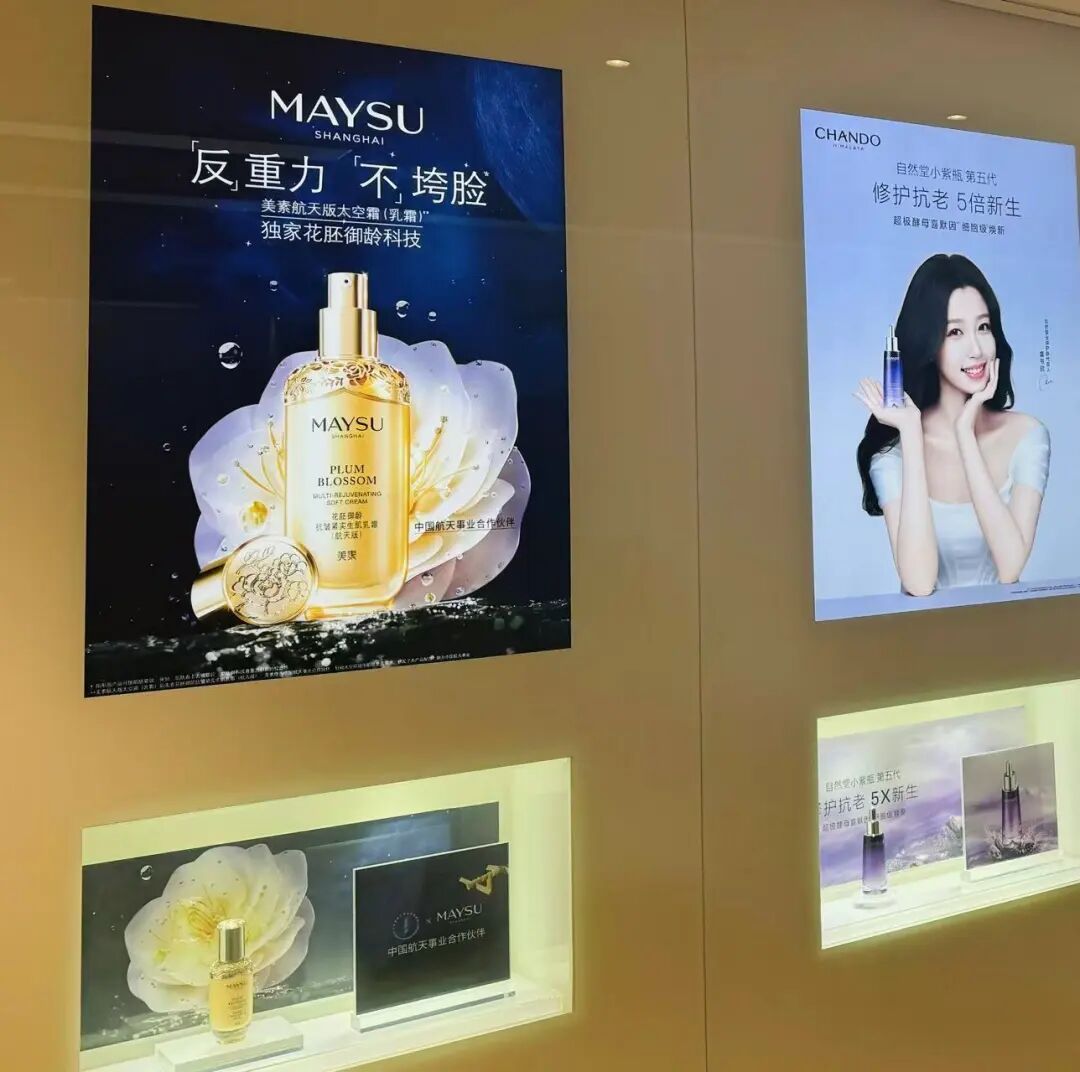
Core Viewpoint - The long-anticipated IPO of Chando has finally materialized, with the company filing its prospectus with the Hong Kong Stock Exchange on September 29, 2023, after previous rumors in 2023 regarding its parent company, Jala Group, planning to raise up to $500 million [1]. Company Overview - Chando was founded in Shanghai by Zheng Chunying, who transitioned from a government job to entrepreneurship in the 1990s, establishing Jala Group and launching the Chando brand [4]. - The company has developed five major brands, including Chando, with a total of 522 SKUs priced between 49 yuan and 680 yuan [4]. Financial Performance - Revenue from Chando's brands for the years 2022 to 2024 is projected to be 4.292 billion yuan, 4.442 billion yuan, and 4.6 billion yuan, respectively [5]. - In 2024, Chando is expected to rank as the third-largest domestic cosmetics group in China, holding approximately 10.1% of the market share among the top five domestic brands [5]. Ownership Structure - The ownership of Chando is highly concentrated, with the founding family holding approximately 87.82% of the voting rights [6]. - Prior to the IPO, Chando secured investments from two investors, including 300 million yuan from JiaHua Capital for a 4.2% stake and approximately 443 million yuan from L'Oréal for a 6.67% stake, leading to a pre-IPO valuation of about 7.14 billion yuan [6]. Revenue Composition - Chando's revenue is heavily reliant on its flagship brand, with approximately 95% of total revenue coming from Chando itself during 2022 to 2024, indicating a significant imbalance in income sources [9]. - In the first half of 2025, Chando reported revenue of 2.448 billion yuan, with 94.9% derived from the Chando brand, while the other four brands contributed only 5% [9]. Marketing and Sales Costs - Chando's sales and marketing expenses have increased, reaching 2.717 billion yuan in 2024, which constitutes 59% of total revenue, marking a new high [9]. - In the first half of 2025, sales and marketing costs were 1.347 billion yuan, maintaining a similar proportion of 55% of total revenue [11]. Online Sales Dependency - Chando's online sales accounted for 68.8% of total revenue in the first half of 2025, with direct online sales exceeding 54.3%, indicating a strong reliance on online traffic [12]. - The company faces challenges in developing proprietary patented materials, which could hinder long-term growth and lead to a cycle of reliance on promotions and price reductions [12]. Inventory Management - As of the first half of 2025, Chando's inventory turnover days were 103.1, an improvement from 146.6 days in 2022 but still lagging behind competitors like Pechoin, which reported 81.35 days [12].
国货美妆超级独角兽要上市了!郑春颖家族迎来资本盛宴!
IPO日报· 2025-09-30 15:59
Core Viewpoint - The article discusses the upcoming IPO of China's beauty brand "Chando" and its significance in the market, highlighting its growth and the strategic moves made by its parent company, Jala Group, led by founder Zheng Chunying [1][4]. Group 1: Company Overview - Chando, a leading Chinese beauty brand, has applied for a listing on the Hong Kong Stock Exchange, with Huatai International and UBS serving as joint sponsors [1]. - Founded by Zheng Chunying in 2001, Chando has expanded its presence across China, with over 62,700 retail points and more than 45,000 stores nationwide [5]. - The company operates a multi-brand matrix, including Chando, Pechoin, Meisu, and others, covering skincare, makeup, and personal care products [5]. Group 2: Financial Performance - Chando's revenue has shown consistent growth, with figures of 4.292 billion yuan, 4.442 billion yuan, 4.601 billion yuan, and 2.448 billion yuan for the years 2022 to the first half of 2025, respectively, with a year-on-year growth of 6.4% in the first half of 2025 [5][6]. - The company's net profit for the same periods was 139 million yuan, 302 million yuan, 190 million yuan, and 191 million yuan, indicating a stable profit trajectory [5]. Group 3: Market Position and Strategy - Chando ranks as the third-largest domestic cosmetics group in China by retail sales in 2024, with its brand being the second-largest among domestic brands, following Pechoin [5]. - The growth in revenue is attributed to the expansion of online channels, with online sales increasing from 59.7% in 2022 to 68.8% in the first half of 2025 [6]. - The company aims to enhance its direct-to-consumer (DTC) capabilities and improve the synergy between online and offline sales networks through the funds raised from the IPO [10]. Group 4: Ownership and Corporate Structure - Zheng Chunying and family hold approximately 87.82% of the voting rights in Chando, following a red-chip restructuring to facilitate the IPO [9]. - The company has a strategic partnership with L'Oréal, which holds a 6.67% stake in Chando [10].