
佰草集

Search documents
上海家化(600315) - 上海家化关于2025年第四季度主要经营数据的公告
2026-03-25 10:01
证券代码:600315 证券简称:上海家化 公告编号:临 2026-007 注:个护(含六神、美加净品牌)、美妆(含玉泽、佰草集、双妹、典萃品牌)、 创新(含启初、家安、高夫等品牌)、海外(汤美星等品牌)。 二、主要产品和原材料的价格变动情况 (一)主要产品价格变动情况 2025年第四季度,公司主要产品的价格详见下表: 上海家化联合股份有限公司 关于 2025 年第四季度主要经营数据的公告 本公司董事会及全体董事保证本公告内容不存在任何虚假记载、误导性陈述或者重大遗 漏,并对其内容的真实性、准确性和完整性承担个别及连带责任。 根据上海证券交易所《上市公司行业信息披露指引第十三号——化工》的要 求、现将公司 2025 年第四季度主要经营数据披露如下: 一、主要产品的产量、销量及收入实现情况 | 主要产品 | 产量(支) | 销量(支) | 营业收入(元) | | --- | --- | --- | --- | | 个护 | 70,066,164 | 28,835,321 | 223,052,734.81 | | 美妆 | 15,784,744 | 11,415,815 | 512,458,536.32 | | ...

深度 | 57%之后,国货美妆进入“能力淘汰赛”
FBeauty未来迹· 2026-02-28 13:12
Core Viewpoint - The domestic beauty industry in China has reached unprecedented heights, with domestic brands capturing 57.37% of the market share by 2025, marking a significant milestone. However, the industry is now facing new challenges as it transitions from a phase of rapid growth to one focused on capability and efficiency [3][9]. Group 1: Industry Transition - The industry is shifting from "opportunity-driven" to "capability-driven," indicating a maturation phase where brand value and organizational efficiency are becoming critical for sustained growth [4][9]. - The overall market growth has slowed to around 2% annually, leading to increased costs for online traffic and a lack of recovery in offline channels, prompting brands to reassess their strategies [9][10]. - Companies are now focusing on internal efficiency and profit recovery rather than merely expanding their scale, as evidenced by the proactive measures taken by brands like Huaxi Biological and Shanghai Jahwa [10][13]. Group 2: Case Studies of Brand Adjustments - Huaxi Biological faced a significant decline in net profit, over 70% in 2024, due to resource dispersion and cost structure imbalances. In response, the company decided to streamline operations by shutting down non-core brands and focusing on four key brands, leading to a projected profit increase of 54.93% to 83.63% in 2025 [10][12]. - Shanghai Jahwa has also undergone deep adjustments, expecting to turn a profit in 2025 after significant losses in previous years. The company emphasized "four focuses" to ensure competitive pricing and brand strength in key categories [13][15]. Group 3: New Market Entrants and IPOs - New brands like HBN, Banmu Huatian, and Lin Qingxuan are entering the capital market, with HBN showing a net profit growth of over 190% and Banmu Huatian achieving a 495% increase in a specific product category [18][19]. - The focus of capital markets is shifting from growth speed to profit quality, indicating a more mature investment landscape where certainty is prioritized over mere growth narratives [20][21]. Group 4: Future Growth Models - The Chinese cosmetics market is expected to grow at a stable rate of 2.83% in 2025, with a shift in narrative from expansion to quality improvement, emphasizing supply-side capability upgrades [29][31]. - The new growth model is defined as "technical barriers × brand value × organizational efficiency × global layout = quality growth," contrasting with the previous model that relied on traffic and explosive product efficiency [32][39]. - Companies are increasingly focusing on technological advancements and brand building as core assets for long-term competitiveness, with an emphasis on establishing a stable profit structure [34][36]. Group 5: Global Expansion and Organizational Efficiency - Companies are looking to expand into international markets, particularly Southeast Asia and Europe, with a focus on establishing brand recognition and technical standards abroad [38][39]. - The ability to navigate through competitive pressures and establish organizational efficiency will be crucial for brands to sustain growth in a maturing market [37][39].



关于美妆新增长,吕义雄/黄锦峰/唐毅等20+行业大咖给出了答案|品观2025中国化妆品年会
3 6 Ke· 2025-11-28 07:31
Core Insights - The beauty industry is entering a new life cycle characterized by a general decline, making growth a rare capability [3][4] - Understanding the new cycle's operational logic is essential for finding growth paths amidst industry fluctuations [4][5] Industry Trends - The 2025 China Cosmetics Annual Conference highlighted the industry's transformation and invited over 300 speakers to share insights on growth [4][5] - The event attracted over 2,000 attendees and 20,000 online viewers, indicating a strong desire for answers regarding growth in an uncertain environment [5] Company Strategies - UpBeauty's CEO emphasized sustainable growth based on quality scale, activated organizational mechanisms, and clear strategic layouts, targeting over 10 billion yuan in sales by 2025 [16][17] - Yatsen's CEO shared a threefold growth strategy focusing on global R&D systems, multi-brand operations, and resilient learning organizations, achieving positive growth for four consecutive quarters [19][20] - Shanghai Jahwa's strategy includes focusing on core brands, brand building, online presence, and efficiency, resulting in double-digit growth in the first half of the year [21][24] - Pechoin's CEO highlighted the importance of entering the medical beauty sector to overcome growth challenges, leveraging a comprehensive ecosystem for product offerings [25][27] - Weibo Haitai's founder discussed the necessity of adapting to change as a core driver for industry development, predicting a shift from ingredient promotion to effect-based payment models [30][34] Future Outlook - The industry is expected to see significant growth in aerosol cosmetics, with projections of 900 million units by 2030 [51][56] - The trend towards precision skincare driven by scientific methodologies is anticipated to reshape the market landscape [61][63] - The integration of AI in the beauty industry is expected to enhance innovation and efficiency, with many companies investing in AI technologies [65][67] Market Opportunities - The potential for Chinese brands to expand internationally is significant, with a focus on localizing products and establishing a strong brand presence abroad [40][45] - The emphasis on emotional and experiential aspects of consumer engagement is becoming increasingly important for brand differentiation and growth [81][82]

东南亚淘金路:美妆出海如何与不确定性共存丨出海观察
2 1 Shi Ji Jing Ji Bao Dao· 2025-11-24 10:09
Core Insights - The "lipstick effect" is still prevalent in Southeast Asia, with a projected growth rate of 4%-5% for the cosmetics market by 2025 despite economic slowdowns in the region [1] - Chinese beauty brands are leveraging their cost-performance advantage to penetrate the Southeast Asian market, adapting their products to local preferences and trends [1][2] Group 1: Market Dynamics - Southeast Asian consumers are becoming more savvy, utilizing refillable skincare products and lower-priced sample sets, while also engaging in cross-platform price comparisons [1] - The beauty market in Southeast Asia is primarily dominated by international brands from Europe, America, and Japan, creating opportunities for Chinese brands to fill existing gaps by tailoring products to local tastes [2][3] Group 2: Operational Strategies - The initial approach for Chinese brands entering Southeast Asia was through cross-border e-commerce, but there is a need for local presence to understand consumer preferences better [2] - Local teams in Southeast Asia are crucial for success, with a focus on hiring local talent to ensure effective execution of strategies [4][5] Group 3: Supply Chain and Brand Development - Supply chain management poses unique challenges in Southeast Asia, requiring brands to anticipate stock needs well in advance due to longer supply cycles [5] - Building brand recognition and consumer loyalty in Southeast Asia is essential for long-term success, with a focus on localizing marketing efforts [5][9] Group 4: Financial Considerations - Currency fluctuations, particularly the depreciation of the Vietnamese dong against the RMB, can significantly impact profitability for companies operating in Southeast Asia [6] - Companies are advised to adopt financial strategies such as forward contracts to manage currency risks effectively [6][10] Group 5: Future Outlook - The beauty market is expected to consolidate, with only a few leading brands surviving the competitive landscape, emphasizing the importance of strong operational capabilities [9] - Southeast Asia is viewed as a more favorable market for expansion compared to developed markets like the US and Europe, which are seen as riskier for new entrants [8][9]
化妆品医美行业周报:双11收官在即,预计上美股份毛戈平表现稳健-20251110
Shenwan Hongyuan Securities· 2025-11-10 06:53
Investment Rating - The report maintains a "Positive" outlook on the cosmetics and medical beauty industry, highlighting potential growth opportunities despite recent market underperformance [2]. Core Insights - The cosmetics and medical beauty sector has underperformed the market, with the Shenwan Beauty Care Index declining by 3.1% from October 31 to November 7, 2025 [3][4]. - The upcoming Double 11 shopping festival is expected to boost performance for companies like Shuangmei Co. and Maogeping, with strong sales anticipated on platforms like Douyin and Tmall [3][9]. - Key companies such as Proya, Shanghai Jahwa, and Ruifucheng have shown varying performance, with Proya's revenue for Q3 2025 at 1.736 billion yuan, down 11.63% year-on-year, while Shanghai Jahwa's revenue increased by 28% to 1.483 billion yuan [10][16]. Summary by Sections Industry Performance - The cosmetics and medical beauty sector has shown a decline, with the Shenwan Cosmetics Index down 2.6%, underperforming the Shenwan A Index by 3.3 percentage points [3][4]. - The top-performing stocks this week included *ST Meigu (+12.3%) and Jinsong New Materials (+6.2%), while Huaxi Biological and Beitaini saw declines of 7.8% and 7.4%, respectively [5]. Company Performance - Proya's Q3 2025 revenue was 1.736 billion yuan, a decrease of 11.63% year-on-year, with a net profit of 227 million yuan, down 23.64% [10][11]. - Shanghai Jahwa reported Q3 revenue of 1.483 billion yuan, up 28%, with a net profit of 140 million yuan [16]. - Ruifucheng's Q3 revenue reached 819 million yuan, a significant increase of 123.4% year-on-year, with a net profit of 33 million yuan [20]. Market Trends - The 8th China International Import Expo showcased international beauty brands, indicating a shift towards high-end markets and functional skincare products [31]. - The report highlights the increasing importance of e-commerce channels, with brands like Maogeping and Shuangmei Co. performing well on platforms like Tmall and Douyin [9][24]. E-commerce Data - In September 2025, the GMV for domestic brands on Douyin and Tmall showed significant growth, with Shuangmei Co. achieving a GMV of 8.1 billion yuan, up 47% year-on-year [24]. - The overall retail sales of cosmetics in September 2025 reached 368 billion yuan, reflecting an 8.6% year-on-year growth, driven by pre-Double 11 promotions [25][27].

上海家化三季度净利增超一倍!林小海“刮骨疗伤”改革起效?
Nan Fang Du Shi Bao· 2025-10-28 09:32
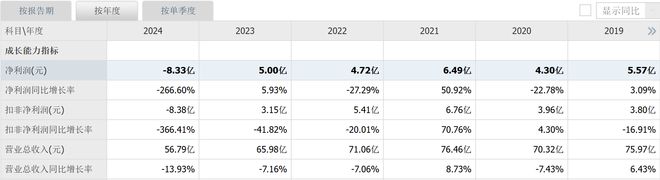
Core Insights - Shanghai Jahwa reported a significant increase in net profit for the third quarter, with a year-on-year growth of 149.1%, reaching 405 million yuan, while total revenue for the first three quarters was 4.961 billion yuan, up 10.8% year-on-year [1][2] Financial Performance - The company faced a revenue decline from 2020 to 2023, with revenues of 7.032 billion yuan, 7.646 billion yuan, 7.106 billion yuan, and 6.598 billion yuan, reflecting year-on-year changes of -7.43%, 8.73%, -7.06%, and -7.16% respectively [2] - In 2024, the company reported its first annual loss in 24 years, with total revenue of 5.679 billion yuan, down 13.93% year-on-year, and a net loss of 833 million yuan, a decline of 266.6% [3][4] Strategic Adjustments - The company attributed its performance issues to goodwill impairment, with a provision of approximately 613 million yuan for overseas business goodwill impairment due to low birth rates and increased competition [4] - Following the appointment of Lin Xiaohai as chairman in June 2024, the company initiated a "focus on efficiency" strategy, leading to a significant restructuring of its sales department and a planned 15% workforce reduction [6][9] Revenue Breakdown - In the third quarter, revenue from personal care products was 606 million yuan, beauty products 354 million yuan, innovative products 158 million yuan, and overseas sales 365 million yuan [8] - Online sales accounted for over half of the domestic business revenue, with a 1.7 times increase in online channel revenue in the third quarter of 2025 [8] Future Outlook - The company plans to increase investment in brand development and R&D, aiming for profitability in the second half of the year [9]
上海家化(600315):改革效果持续体现,核心品牌驱动较快增长
CMS· 2025-10-28 05:13
Investment Rating - The report maintains a "Strong Buy" rating for the company [2][7]. Core Insights - The company continues to demonstrate the effects of its reforms, with rapid growth driven by core brands. The beauty segment is experiencing high growth, while personal care maintains steady growth. The improvement in product channel structure and cost reduction efforts have enhanced profitability [1][7]. - The company reported a revenue of 1.483 billion yuan in Q3 2025, a year-on-year increase of 28.29%. The net profit attributable to shareholders was 140 million yuan, with a non-recurring net profit of 10 million yuan, both turning profitable compared to the same period last year [7]. - The online channel and core brand growth momentum remain strong, with the beauty segment showing a 272.3% year-on-year increase in Q3 2025. The personal care segment also saw a 13.8% increase, with the online channel accounting for 50% of total sales [7]. - The gross margin improved by 7.0 percentage points to 61.5% in Q3 2025, attributed to a higher proportion of high-margin new products and a decrease in raw material costs [7]. - Operating cash flow significantly improved, reaching a net amount of 734 million yuan in the first three quarters, a year-on-year increase of 172.77% [7]. - The company expects net profits attributable to shareholders to be 428 million yuan, 482 million yuan, and 544 million yuan for 2025, 2026, and 2027, respectively, with year-on-year growth rates of 13% for both years [7]. Financial Data Summary - Total revenue for 2025 is estimated at 6.5 billion yuan, with a projected growth of 14% in 2026 and 15% in 2027 [12]. - The company’s total assets are projected to be 9.953 billion yuan in 2025, with a total liability of 2.853 billion yuan [11]. - The return on equity (ROE) is expected to improve to 6.2% in 2025, with a gradual increase to 7.1% by 2027 [12].
上海家化联合股份有限公司 2025年第三季度报告
Zheng Quan Ri Bao· 2025-10-27 23:57
Core Viewpoint - The company, Shanghai Jahwa United Co., Ltd., has released its third-quarter report for 2025, ensuring the accuracy and completeness of the information provided [8][17]. Financial Data - The financial statements for the third quarter of 2025 are unaudited, covering the period from January to September 2025 [5][6]. - The report indicates that there were no significant changes in net profit from merged entities, with both current and previous periods showing a net profit of 0.00 yuan [6]. Key Operational Data - The company disclosed its main operational data for the third quarter, including production, sales, and revenue figures for its key products, which include personal care and beauty products [8]. - The average selling price of beauty products increased year-on-year, attributed to strategic adjustments made in the previous year and improved business health [9]. Price Changes - The prices of key raw materials experienced notable fluctuations: - Prices for soap and oil raw materials increased by 26%-38% compared to the same period last year, primarily due to a significant rise in palm kernel oil prices [11]. - Prices for surfactants and emulsifiers rose by 18%, also influenced by palm kernel oil price increases [12]. - The price of solvents, such as ethanol, decreased by approximately 6% due to insufficient demand [12]. - Nutritional drug additives saw a slight decline of about 1% in prices [13]. - Packaging materials experienced price reductions, with glass bottles down 0.4%, plastics down 1%, and cartons down 4% compared to the previous year [14]. Investor Communication - The company will hold an investor briefing on November 14, 2025, to discuss the third-quarter results and address investor inquiries [18][20]. - The briefing will be conducted online, allowing investors to participate and submit questions in advance [21].
上海家化(600315) - 上海家化关于2025年第三季度主要经营数据的公告
2025-10-27 09:46
本公司董事会及全体董事保证本公告内容不存在任何虚假记载、误导性陈述或者重大遗 漏,并对其内容的真实性、准确性和完整性承担个别及连带责任。 根据上海证券交易所《上市公司行业信息披露指引第十三号——化工》的要 求、现将公司 2025 年第三季度主要经营数据披露如下: 关于 2025 年第三季度主要经营数据的公告 一、主要产品的产量、销量及收入实现情况 | 主要产品 | 产量(支) | 销量(支) | 营业收入(元) | | --- | --- | --- | --- | | 个护 | 49,611,974 | 63,915,054 | 605,859,654.10 | | 美妆 | 14,338,725 | 8,700,175 | 353,885,916.16 | | 创新 | 19,886,469 | 15,560,797 | 158,248,088.59 | | 海外 | 29,273,055 | 21,821,670 | 364,586,808.67 | 注:个护(含六神、美加净品牌)、美妆(含玉泽、佰草集、双妹、典萃品牌)、 创新(含启初、家安、高夫等品牌)、海外(汤美星等品牌)。 二、主要产品和原材料的 ...
林小海和上海家化的青浦棋局:“国货样本不只卖产品,还要卖标准”
Guan Cha Zhe Wang· 2025-10-18 15:01
Core Insights - The article discusses the transformation of Shanghai Jahwa, a traditional cosmetics company, from performance decline to recovery, highlighting its strategic shift towards supply chain control and innovation [1][4][10] Industry Overview - Shanghai is a major hub for the cosmetics industry in China, with 230 production enterprises and 3,200 registered entities, dominating the import registration market [1] - The industry faces common challenges such as supply chain restructuring, innovation in research and development, and brand rejuvenation [1][4] Company Strategy - Shanghai Jahwa has strategically relocated its production from OEM factories back to its own facilities in Qingpu, reflecting a broader trend in the cosmetics industry to reassess supply chain structures [5][7] - The company increased its R&D investment by 26.3% year-on-year, indicating a commitment to innovation despite overall cost control measures [8] Supply Chain Dynamics - The return of production to Qingpu is not merely a logistical move but signifies a deeper restructuring of the supply chain, focusing on cost efficiency, quality control, and risk management [5][7] - The establishment of a "factory-to-consumer" (C2M) model aims to enhance product freshness, cost optimization, and delivery efficiency, although it poses significant operational challenges [7] R&D and Innovation - Shanghai Jahwa's 35 years of R&D experience and over 400 patents highlight the importance of long-term investment in research as a competitive advantage [8] - The company is focusing on leveraging traditional Chinese medicine in its product development, collaborating with research institutions to modernize and scientifically validate its offerings [8][11] Market Positioning - The rise of domestic brands is not just about market share but involves a systemic reconstruction of technology, cultural confidence, and industry ecology [10][12] - Successful domestic brands are transitioning from "Chinese elements" to "Chinese values," integrating traditional culture with modern consumer needs [11] Industry Collaboration - The Qingpu industrial cluster exemplifies the importance of collaborative innovation, where the efficiency of various industry segments determines overall competitiveness [11][12] - Shanghai Jahwa's willingness to share testing facilities with peers reflects a recognition of the need for collective industry standards to enhance competitiveness on a global scale [11]
