
OPPO

Search documents
广东将加快谋划出台AI终端高质量发展行动方案
Di Yi Cai Jing Zi Xun· 2026-01-20 06:56
Group 1 - Guangdong has maintained the largest mobile phone industry scale in China for 35 consecutive years and plans to accelerate the development of high-quality action plans for AI terminals [2][3] - The "Guangdong Goods Go Global" spring promotional event showcased 36 AI mobile phones from leading companies like Huawei, vivo, OPPO, Honor, ZTE, and TCL, along with over 2000 products from more than 700 industry chain enterprises [1][2] - Honor's government affairs director highlighted the importance of understanding consumer psychology and the demand for "self-satisfying consumption" in the current market [1] Group 2 - In 2024, Guangdong's mobile phone production is expected to reach 683 million units, accounting for 40.9% of the national total, with one in three mobile phones sold globally originating from Guangdong [3] - Dongguan is identified as the core area of Guangdong's mobile phone industry, contributing 28.6% of the province's mobile phone production in 2024, and hosts major companies like Huawei, OPPO, and vivo [3] - By the third quarter of 2025, the combined market share of vivo, Huawei, and OPPO in the domestic market is projected to reach 47%, indicating strong market cohesion [3]

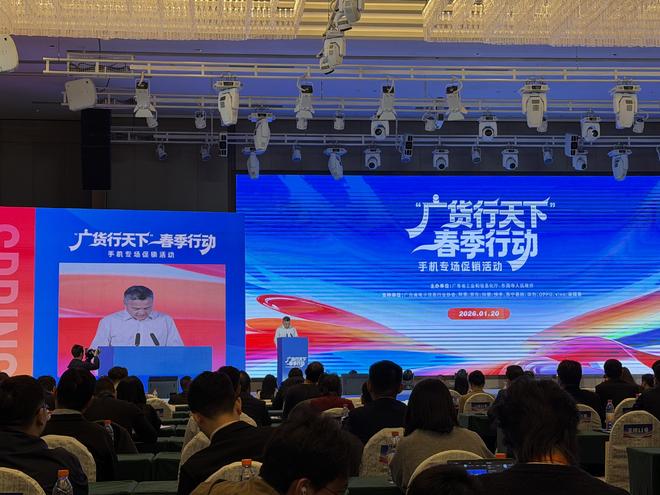
真金白银补贴,全场6至9折!“广货行天下”春季行动手机专场促销在东莞举办
Nan Fang Nong Cun Bao· 2026-01-20 05:31
Core Viewpoint - The "Guangdong Goods Going Global" Spring Action mobile promotion event in Dongguan aims to boost market expansion and sales for local enterprises through significant discounts and promotional activities [2][3][4]. Group 1: Event Overview - The event is organized by the Guangdong Provincial Department of Industry and Information Technology and the Dongguan Municipal Government [2]. - It is part of a broader initiative to support the province's economic development during the 14th Five-Year Plan period [4]. - The promotion features 109 exhibition booths and showcases products from major mobile brands such as Huawei, Vivo, OPPO, Honor, ZTE, and TCL [9][10]. Group 2: Discounts and Promotions - Consumers can enjoy discounts ranging from 60% to 90% through national subsidies, platform incentives, and enterprise concessions [11]. - The event also includes exclusive gift packages for consumers, enhancing the overall value proposition [11]. Group 3: Marketing and Sales Strategy - The promotion employs a dual approach of online and offline marketing, utilizing platforms like JD.com, Kuaishou, and Douyin to create a "Guangdong Goods Going Global" spring action zone [12][13]. - The strategy aims to increase product exposure and market influence, with many participating companies reporting record sales [15][16]. - The event is designed to create a flow aggregation ecosystem that combines offline traffic with online conversion [14]. Group 4: Participation and Impact - The event attracted over 1,000 participants, including representatives from major media outlets and e-commerce platforms, as well as international purchasing groups [19][20][21]. - This is the second stop of the "Guangdong Goods Going Global" Spring Action, indicating a continued effort to promote local products [18].



那些外国博主们,怎么突然开始吹中国手机了???
创业邦· 2026-01-20 03:29
Core Viewpoint - The article discusses the increasing recognition and acceptance of Chinese smartphones in the global market, particularly highlighted by MKBHD's annual smartphone awards, which this year featured several Chinese brands prominently [8][9][11]. Group 1: Recognition of Chinese Smartphones - MKBHD's awards this year included Chinese smartphones such as Xiaomi 17 Pro Max for "Best Large Phone," OnePlus 15 for "Best Battery Life," and OPPO Find X9 Pro for "Best Camera," indicating a shift in perception towards Chinese brands [9][11]. - The article notes that previously, Chinese smartphones were often overlooked in international awards, but recent trends show a growing appreciation for their quality and innovation [8][9]. Group 2: Technological Advancements - Chinese smartphone manufacturers have made significant advancements in hardware design, achieving thinner devices with larger battery capacities through improved internal stacking technology and battery innovations [16][18]. - The use of silicon-carbon anode materials has led to the development of smartphones with batteries exceeding 8000 mAh, showcasing the ability to balance battery size and longevity [20][22]. - Innovations in materials, such as Huawei's Kunlun glass and OPPO's use of 3D-printed titanium alloy in hinges, have enhanced durability and performance in smartphones [22][26]. Group 3: Software and User Experience - The introduction of OPPO's "Starry Compiler" aims to improve the efficiency of Android applications by optimizing the communication between software and hardware, resulting in a smoother user experience [30][31]. - The article highlights the emergence of advanced AI applications in smartphones, such as the "Doubao" phone assistant, which can perform complex tasks and adapt to user needs, indicating a shift towards more intuitive technology [40][42]. Group 4: Market Dynamics - The article emphasizes that the increasing prices of Chinese smartphones in international markets reflect a shift from cost-based purchasing to a recognition of their quality and functionality [11][13]. - The growing acceptance of Chinese smartphones in markets like Australia suggests a broader trend of international consumers valuing performance and innovation over brand origin [13][18].


荣耀超薄机配置超苹果,定价比华为Mate80高
Guan Cha Zhe Wang· 2026-01-20 01:27
Core Insights - Honor has launched the Magic8 Pro Air, a lightweight smartphone aimed at younger consumers, highlighting its strategy to appeal to a younger demographic [1][6] - The Magic8 Pro Air features a 6.31-inch display, a thickness of 6.1mm, and weighs 155 grams, making it lighter than competitors like Apple's and Huawei's models [1] - The device is equipped with a MediaTek Dimensity 9500 processor, a triple-camera setup with a 64MP periscope lens, a 5500mAh battery, and supports both physical SIM and eSIM [1][2] Pricing Strategy - The starting price for the Magic8 Pro Air is set at 4999 yuan (approximately $700), which is significantly lower than Apple's Air at 7999 yuan but higher than Huawei's Mate70 Air by 800 yuan [4] - The competitive landscape in the 4000-5000 yuan price range includes multiple flagship models from brands like Xiaomi and OPPO, presenting a challenge for Honor's pricing strategy [4] Market Position and Challenges - Honor aims to become the fastest-growing mainstream brand overseas by 2025, targeting markets in Latin America, the Middle East, and Africa, with a goal of exceeding 10 million units shipped [5] - In the domestic market, Honor holds a 13.4% share, ranking sixth, while facing pressure from leading brands like Huawei, Apple, and Vivo, all of which have shares above 16% [5] - The smartphone industry is expected to face challenges in 2026, with projected storage price increases of 40%-50% in Q1 and an additional 20% in Q2, leading to a potential market downturn [5] Strategic Adjustments - Honor is shifting its strategy towards becoming a leading AI terminal ecosystem company, with plans to mass-produce Alpha mobile robots and launch embodied intelligent robots [6] - The company is employing a "product ocean" strategy, having launched seven new smartphone models in the last two months, significantly outpacing competitors [6] - Honor's efforts to appeal to younger consumers are evident in its marketing approach, including changes in presentation style and collaborations with trendy brands [6]
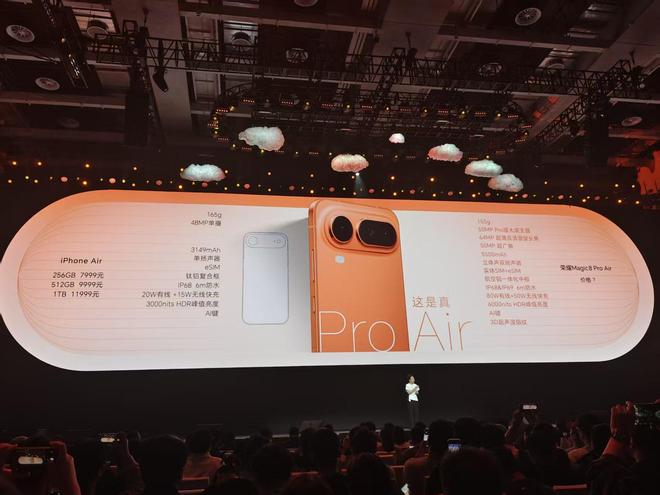
荣耀超薄机配置超苹果:首次用联发科,起售价4999元
Guan Cha Zhe Wang· 2026-01-20 01:25
Group 1 - The core focus of the article is on the launch of Honor's new lightweight smartphone, the Magic8 Pro Air, which aims to appeal to younger consumers and compete with Apple's Air series by offering a more affordable option with superior specifications [1][4] - The Magic8 Pro Air features a 6.31-inch display, a thickness of 6.1mm, and a weight of 155 grams, making it lighter than both Apple's and Huawei's competing models [1] - The device is equipped with a MediaTek Dimensity 9500 processor, a triple-camera setup including a 64MP periscope lens, a 5500mAh battery, dual speakers, and supports both physical SIM and eSIM, along with 50W wireless fast charging [1][2] Group 2 - The starting price of the Magic8 Pro Air is set at 4999 yuan, which is significantly lower than Apple's starting price of 7999 yuan but higher than Huawei's Mate70 Air by 800 yuan [4] - Honor aims to become the fastest-growing mainstream brand overseas by 2025, targeting over 10 million units shipped in regions like Latin America and the Middle East, while facing stiff competition in the domestic market [4][6] - The smartphone industry is expected to face challenges in 2026, with storage prices projected to rise by 40%-50% in Q1 and an additional 20% in Q2, leading to a potential market downturn [5][6] Group 3 - Honor is adjusting its strategy to transition into a leading AI terminal ecosystem company, planning to produce Alpha mobile robots and deepen partnerships within the industry [6] - The company is adopting a "ship more models" strategy, having launched seven new smartphones in the last two months, which is significantly higher than its competitors [6] - Honor's recent marketing efforts, including a shift towards a younger audience and collaborations with trendy brands, indicate its intent to differentiate itself in a competitive market [6]


去年中国GDP增长5%,多家手机厂商下调出货预期 | 财经日日评
吴晓波频道· 2026-01-20 00:30
Economic Overview - In 2025, China's GDP reached 1401879 billion yuan, growing by 5% year-on-year, with quarterly growth rates of 5.4%, 5.2%, 4.8%, and 4.5% respectively [2] - The industrial added value increased by 5.9%, while the service sector grew by 5.4%. Retail sales totaled 501202 billion yuan, up by 3.7% [2] - Fixed asset investment decreased by 3.8%, with a notable decline in real estate investment [3] Trade and Investment - Canada has reduced the import tax on Chinese electric vehicles to 6.1%, allowing an annual quota of 49,000 vehicles, which is a significant policy shift aimed at filling market gaps [4][5] - The adjustment in tariffs is expected to enhance the competitiveness of Chinese electric vehicles in the Canadian market, which has seen a decline in sales due to high costs and tariffs [5] Real Estate Market - In December 2025, new home prices in first-tier cities fell by 0.3%, with a notable increase in Shanghai, while overall new home sales area decreased by 8.7% year-on-year [6] - The real estate market is still in a bottoming phase, with a significant reduction in new supply and ongoing inventory pressure [7] Mobile Phone Industry - Several smartphone manufacturers, including Xiaomi and OPPO, have lowered their annual shipment forecasts due to rising storage costs, with reductions exceeding 20% for some brands [8] - The impact of rising storage prices is uneven across manufacturers, with larger firms like Apple and Samsung less affected [9] Solar Industry - Nine leading solar companies, including LONGi Green Energy and Tongwei Co., have announced expected losses for 2025, with Tongwei projecting a loss of 90 to 100 billion yuan [10] - The solar industry is facing significant challenges, including high inventory levels and price competition, leading to a prolonged period of losses [11] Wealth Disparity - The global wealth of billionaires reached a record 18.3 trillion USD in 2025, with a 16% increase in total wealth, highlighting a growing wealth gap amid stagnant poverty reduction efforts [12][13] - The AI sector's growth has significantly contributed to the increase in billionaire wealth, while ordinary residents face declining purchasing power due to inflation [13] Space Tourism - A startup has announced the opening of reservations for the world's first lunar hotel, aiming to begin operations by 2032, although the feasibility of such a project remains uncertain [14][15]




全球每卖出3部手机,就有1部产自广东
2 1 Shi Ji Jing Ji Bao Dao· 2026-01-20 00:29
Group 1 - The core viewpoint highlights the evolution of Guangdong's mobile phone industry, showcasing companies like Huawei, vivo, OPPO, Honor, and Transsion as global leaders in technology and innovation [1] - The rapid advancement in mobile technology is driven by new techniques, materials, and automation in manufacturing, with OPPO's fast charging technology fully charging a battery in just 30 minutes and Huawei's precision hinge design achieving a thickness of only 3.6mm [1][2] - The Guangdong mobile phone industry benefits from a collaborative ecosystem that integrates mechanical and AI technologies, positioning the Guangdong-Hong Kong-Macau Greater Bay Area as a unique global hub for these advancements [1] Group 2 - Guangdong mobile phones are expanding beyond traditional boundaries, introducing innovative features such as the 200MP long-focus camera in vivo X300 Pro, which captures professional-quality images, and the 165Hz high refresh rate screen in OnePlus 15, providing competitive advantages for mobile gamers [2] - The transformation of the Guangdong mobile phone industry reflects a shift from scale advantages to systemic innovation, overcoming critical technological challenges while exploring new market scenarios [2] - AI is enhancing mobile devices with capabilities for perception, reasoning, and response, making these "awakened devices" essential intermediaries between humans and the digital world, thus reshaping lifestyles through technological innovation [2]
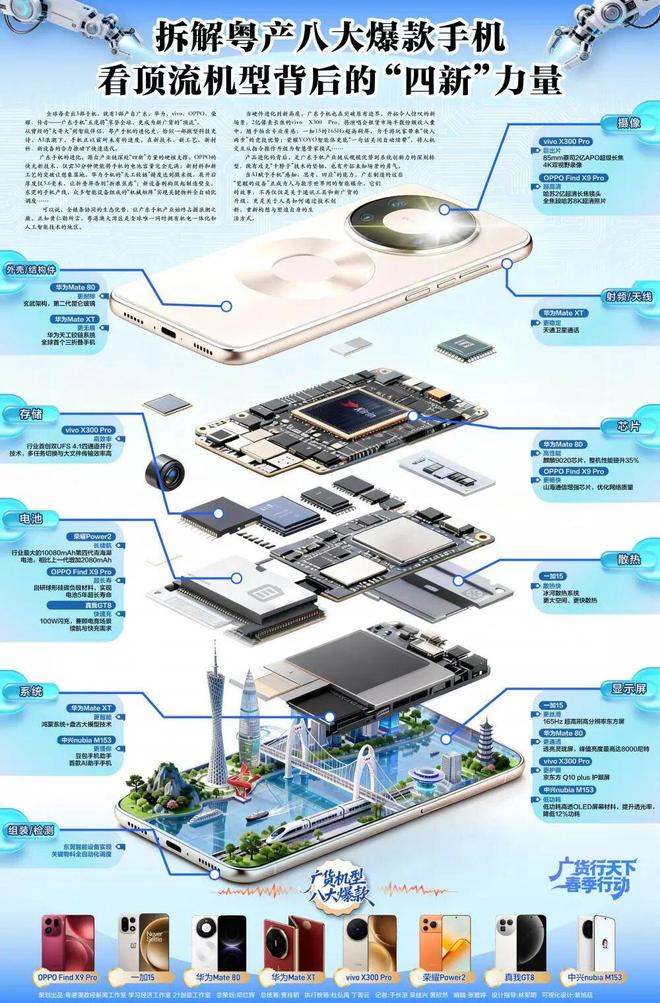
全球每卖出3部手机,就有1部产自广东
21世纪经济报道· 2026-01-20 00:24
Core Viewpoint - Guangdong produces one out of every three mobile phones sold globally, with major brands like Huawei, vivo, OPPO, Honor, and Transsion leading the market, showcasing the evolution of mobile technology in the region [1][2]. Group 1: Evolution of Guangdong Mobile Phones - The rapid evolution of mobile phones in Guangdong is driven by advancements in new technologies, materials, and manufacturing processes, resulting in significant innovations such as OPPO's fast charging technology that fully charges a battery in just 30 minutes [1]. - Breakthroughs in materials and processes have led to innovations like Huawei's "Tian Gong hinge," which achieves micron-level precision and a thickness of only 3.6 mm when unfolded, alleviating concerns about foldable screens [1]. - The automation of key material scheduling through a "mechanical matrix" in Dongguan's production lines exemplifies the collaborative ecosystem that keeps Guangdong's mobile industry at the forefront of technological advancements [1]. Group 2: New Applications and Market Expansion - Guangdong mobile phones are breaking traditional boundaries by exploring new scenarios, such as the vivo X300 Pro capturing half of the concert rental market with its 200-megapixel telephoto capabilities [2]. - The OnePlus 15 features a 165Hz ultra-high refresh rate screen, providing competitive advantages for mobile gamers, while Honor's YOYO smart assistant enhances user interaction by allowing voice commands to manage subscriptions [2]. - The integration of AI into mobile devices is transforming them into intelligent mediators between humans and the digital world, reflecting a shift in how technology can reshape lifestyles [2].


2026企业创新创投年会圆满举办,共探AI投资新图景与全球化未来
创业邦· 2026-01-20 00:10
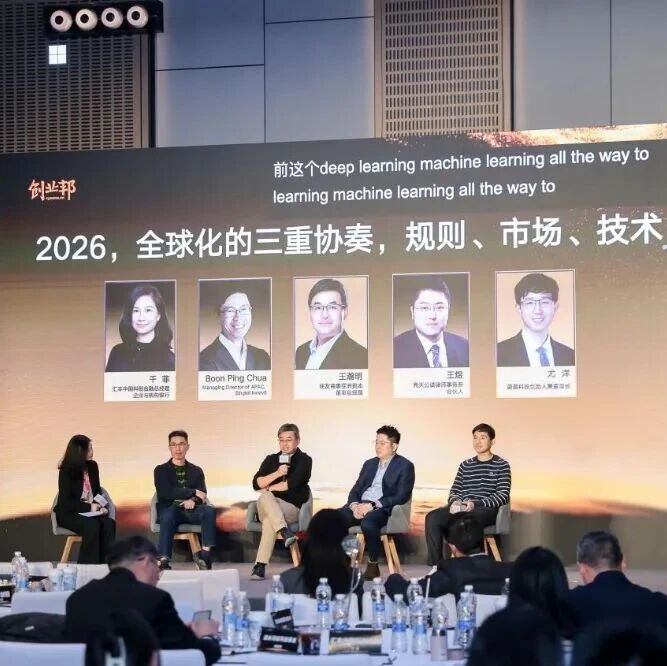
Group 1 - The 2026 Enterprise Innovation and Venture Capital Annual Conference focused on key topics such as AI reshaping industries, hard technology investment cycles, and new global rules, aiming to identify growth logic and collaboration opportunities in an uncertain market environment [2] - Li Chunbo, Chairman of Citic Lyon, shared insights on the resilience of the Hong Kong stock market, indicating that 2025 will be a turning point for asset valuation and perception in China, with a shift towards tech-driven enterprises like chips and AI [2] - The report on CVC development in China for 2025 highlighted a significant drop in new fund registrations, with over one-third of new funds registered in Zhejiang, Guangdong, and Shandong, and Lenovo Capital leading in investment events [4] Group 2 - The first roundtable discussion on "AI Investment New Landscape" emphasized a shift in AI investment logic from chasing star teams to focusing on product-market fit and commercialization capabilities, predicting 2026 as a year of explosive AI application growth [6] - The second roundtable on "How AI Reshapes Automotive Intelligence" discussed the importance of high-quality real-world data and safety validation in overcoming technological gaps, with B-end closed scenarios already demonstrating viable business models [8] - The third roundtable on "How Hard Technology Venture Capital Can Be 'Friends of Time'" stressed the need for capital to provide comprehensive industry empowerment beyond funding, to help navigate the challenges from lab to mass production [10] Group 3 - The fourth roundtable on "2026, the Triple Concerto of Globalization: Rules, Markets, Technology" highlighted the evolution of Chinese enterprises' overseas strategies from product export to ecosystem and supply chain expansion, with Southeast Asia being a primary market due to geographical and cultural advantages [12] - The conference facilitated discussions on breaking industry barriers and achieving consensus on cross-border collaboration and ecosystem building, aiming to inject strong momentum into the technology innovation industry for 2026 [14] - The upgrade of the Corporate Venture Capital Alliance to the Corporate Innovation Venture Capital Alliance in 2024 aims to enhance the synergy between large enterprises' internal investments and innovations, accelerating the application of innovations [15]
拆解粤产八大爆款手机
Xin Lang Cai Jing· 2026-01-19 23:21
Core Insights - Guangdong produces one out of every three smartphones sold globally, with major brands like Huawei, vivo, OPPO, Honor, and Transsion leading the market [1] - The evolution of smartphones in Guangdong reflects a microcosm of technological advancement, driven by new technologies, processes, materials, and equipment [1] Group 1: Technological Advancements - OPPO's fast charging technology can fully charge a smartphone battery in just 30 minutes [1] - Huawei's "Tian Gong hinge" achieves micron-level precision, with a thickness of only 3.6 mm when unfolded, alleviating concerns about foldable screen creases [1] - Automation in manufacturing, exemplified by Dongguan's smartphone production lines, enhances efficiency through a "mechanical matrix" for key material scheduling [1] Group 2: Market Expansion and Innovation - Guangdong smartphones are breaking traditional boundaries, creating impressive new scenarios, such as the vivo X300 Pro capturing half of the concert rental market with its 200 million pixel telephoto capabilities [2] - OnePlus 15 offers a 165Hz ultra-high refresh rate screen, providing competitive advantages for mobile gamers [2] - Honor YOYO smart assistant enhances user interaction by allowing voice commands to manage subscriptions, transitioning from manual operations to a smart assistant model [2] Group 3: Industry Transformation - The Guangdong smartphone industry is undergoing a profound transformation from scale advantages to systemic innovation, tackling critical technology challenges while exploring new scenarios [2] - AI is enabling smartphones to possess capabilities of perception, thought, and response, positioning these devices as intelligent intermediaries between humans and the digital world [2] - The narrative surrounding these products has shifted from mere communication tools to a reimagining of human lifestyles through technological innovation [2]