
优衣库

Search documents
lululemon涨价,是中国给的底气?
3 6 Ke· 2025-06-11 23:27
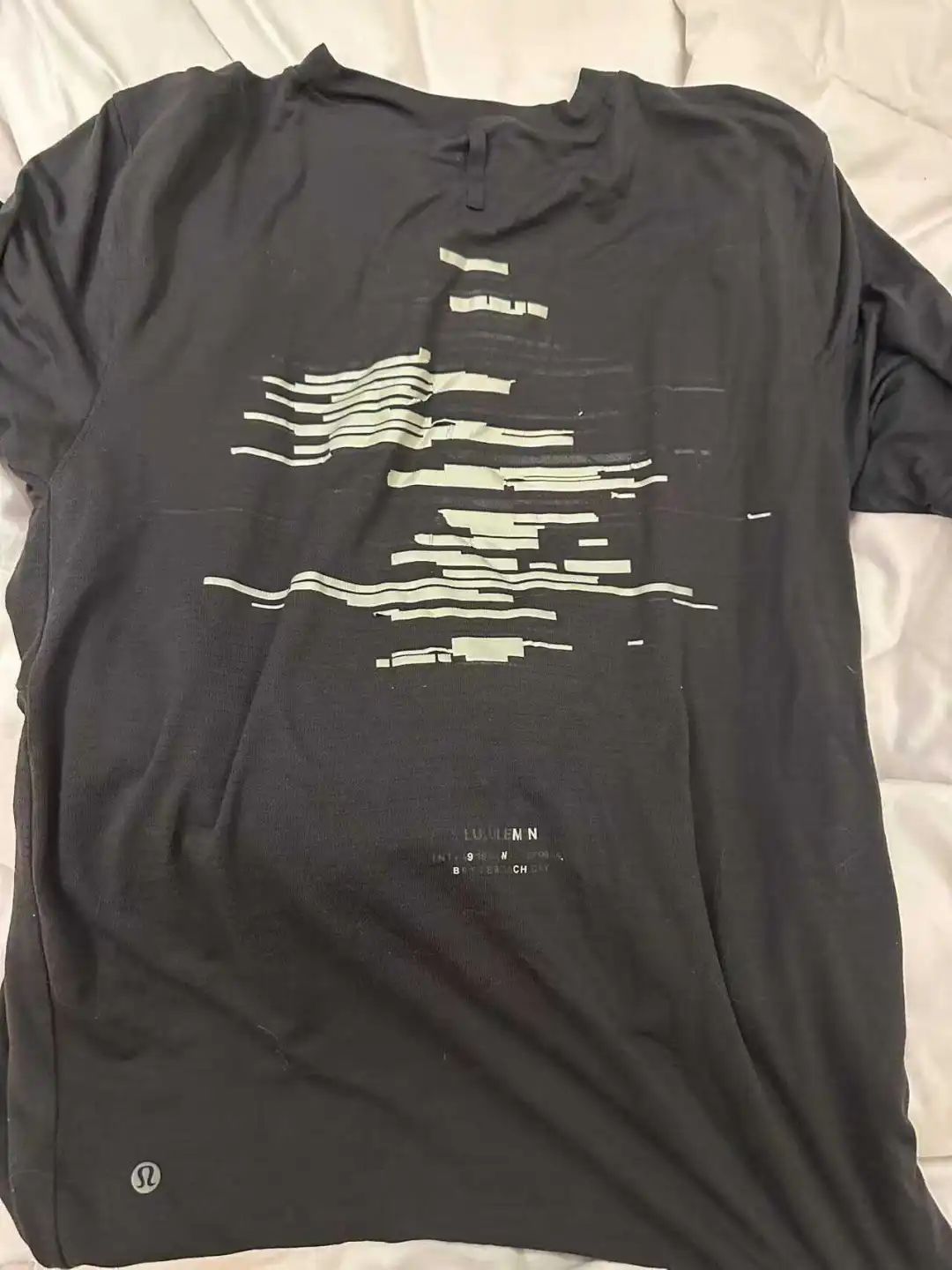
Core Viewpoint - Lululemon is facing significant challenges in maintaining growth, particularly in its core North American market, leading to a substantial drop in stock price after disappointing earnings and lowered guidance [3][4][5]. Group 1: Financial Performance - Lululemon's first-quarter revenue in North America grew by only 3% year-over-year, with comparable sales down by 2%, indicating a decline in customer retention [5][6]. - The company's net profit for the quarter decreased by 2.13% to $315 million, marking the first decline since the pandemic's impact in 2020 [6]. - Analysts have expressed skepticism about Lululemon's ability to recover in North America, with Morgan Stanley cutting its price target from $389 to $303 per share [7]. Group 2: Market Dynamics - The brand is losing its core customers, particularly as U.S. middle-class consumers reduce spending on high-end athletic apparel [6][11]. - In China, while revenue grew by 21%, comparable sales only increased by 7%, suggesting a slowdown in growth despite the market's overall performance [9][12]. - Lululemon's expansion plans have fallen short, with only three new stores opened in China this year, compared to an initial target of 40-50 [9]. Group 3: Competitive Landscape - Lululemon faces increasing competition from brands like Alo Yoga, Vuori, and Gymshark, as well as established players like Nike and Adidas, which are capturing market share among younger consumers [11][12]. - The brand's recent shift towards a more fashion-oriented image has diluted its core identity, leading to concerns about product differentiation and market positioning [18]. Group 4: Strategic Responses - To mitigate financial impacts, Lululemon is optimizing procurement and negotiating with suppliers to reduce costs, while also planning to raise prices on some products [12][13]. - The company is attempting to diversify its product offerings, including men's apparel and footwear, but has struggled to achieve significant growth in these categories [14][16].


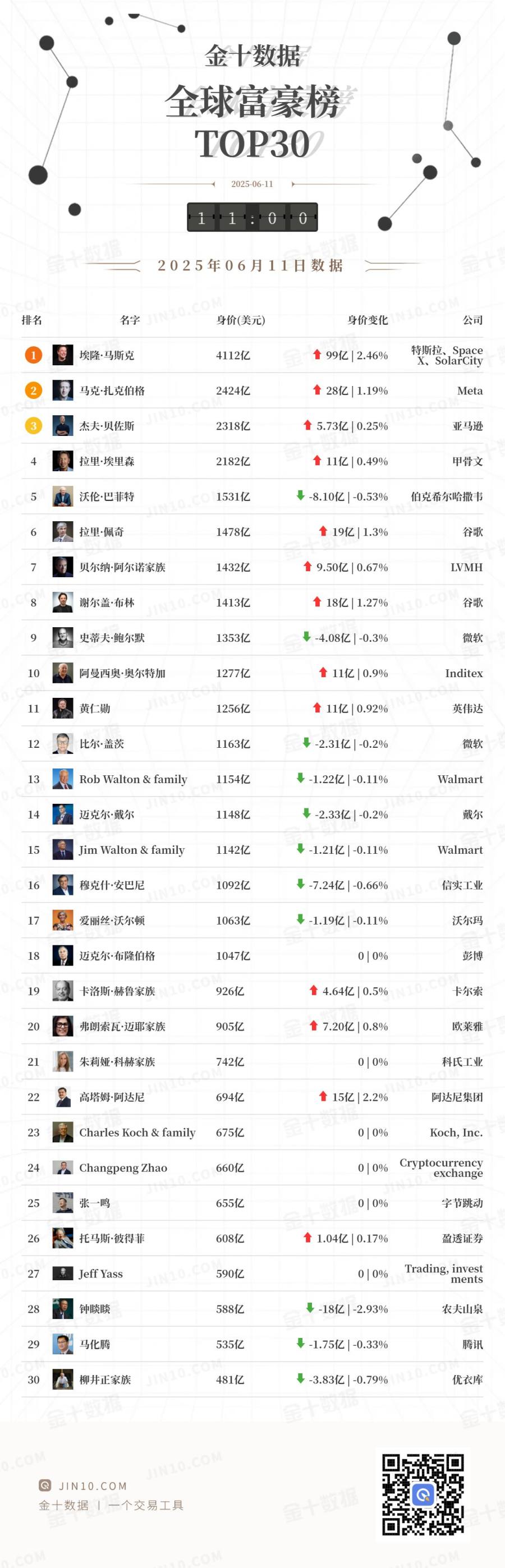
金十图示:2025年06月11日(周三)全球富豪榜
news flash· 2025-06-11 03:10
| 12 | 比尔·盖茨 | 1163亿 | -2.31亿 -0.2% | 微软 | | --- | --- | --- | --- | --- | | 13 | Rob Walton & family | 1154亿 | + -1.22亿 -0.11% | Walmart | | 14 | 迈克尔·戴尔 | 1148亿 | + -2.33亿 -0.2% | 戴尔 | | 15 | Jim Walton & family | 1142亿 | + -1.21亿 -0.11% | Walmart | | 16 | 穆克什·安巴尼 | 1092亿 | + -7.24亿 -0.66% | 信实工业 | | 17 | 爱丽丝·沃尔顿 | 1063亿 | 4-1.19亿 -0.11% | 沃尔玛 | | 18 | 迈克尔·布隆伯格 | 1047亿 | 0 0% | 或博 | | 19 | 卡洛斯·赫鲁家族 | 926亿 | 1 4.64亿 0.5% | 卡尔索 | | 20 | 弗朗索瓦·迈耶家族 | 905亿 | 1 7.20亿 0.8% | 欧莱雅 | | 21 | 朱莉娅·科赫家族 | 742FL | 0 0% | ...
即时零售重塑消费场景研究报告
笙策零售· 2025-06-10 03:35
Investment Rating - The report does not explicitly state an investment rating for the instant retail industry Core Insights - Instant retail is defined as a consumption model based on an instant delivery system, emphasizing "online ordering, delivery within 30 minutes," allowing consumers to quickly obtain needed products [7][8] - The market size of China's instant retail reached 650 billion yuan in 2023, with a year-on-year growth of 28.89%, outpacing the growth of online retail by 17.89 percentage points [17][19] - By 2030, the instant retail market in China is expected to exceed 2 trillion yuan [19] Summary by Sections 1. Instant Retail Overview - Instant retail activates "scene consumption," meeting immediate needs, contrasting with traditional retail's reliance on "demand forecasting" [7][8] - The development of instant retail can be traced back to the emergence of food delivery platforms a decade ago, evolving into a high-speed growth phase post-2015 with platforms like Meituan and JD Daojia [11][13] 2. Background of Instant Retail's Rise - Consumer demand has shifted towards faster delivery, with over 50% of post-95 consumers wanting same-day or even within-hours delivery [24][27] - The Z generation's market share surged from 30% in 2020 to 59%, driving a shift towards "emotional value consumption" [30] - Technological advancements, including the integration of the internet and big data, support the growth of instant retail [32] 3. Reshaping of Consumption Scenarios - Instant retail has expanded from food delivery to encompass a wide range of products, including fresh produce, pharmaceuticals, and electronics [43][44] - New consumption scenarios have emerged, such as "hot pot delivery" and "instant meal kits," significantly reducing food waste [45] - Instant retail platforms have partnered with pharmacies to provide 24-hour medicine delivery services across over 300 cities [47] 4. Business Models of Instant Retail - Platform-based instant retail companies leverage various methods to acquire traffic, such as Meituan's integration with its food delivery service [60] - The front warehouse model is employed to ensure rapid response to consumer orders, particularly in densely populated areas [63] - The warehouse-store integration model enhances quality consumption by combining online and offline sales [71] 5. Competitive Landscape of Instant Retail - The market is characterized by a "one strong, many strong" structure, with Meituan leading with a 35% market share and over 10 million daily orders [79] - Major platforms have built strong supply chain systems and efficient delivery networks, enhancing their competitive edge [81][82] 6. Challenges Facing Instant Retail - Cost control is a significant challenge, with high warehousing and delivery costs impacting profitability [95] - Supply chain stability is crucial, as demand fluctuations can lead to supply interruptions [97] 7. Future Trends in Instant Retail - Instant retail platforms are expected to deepen service scenarios, such as offering laundry pickup and delivery services [109] - The integration of AI and IoT technologies will enhance operational efficiency and product quality assurance [118][119] 8. Development Recommendations - Companies should invest in AI and IoT technologies to optimize delivery routes and ensure product quality [131][132] - Strengthening partnerships with local producers and wholesalers can create a more agile supply chain [133]
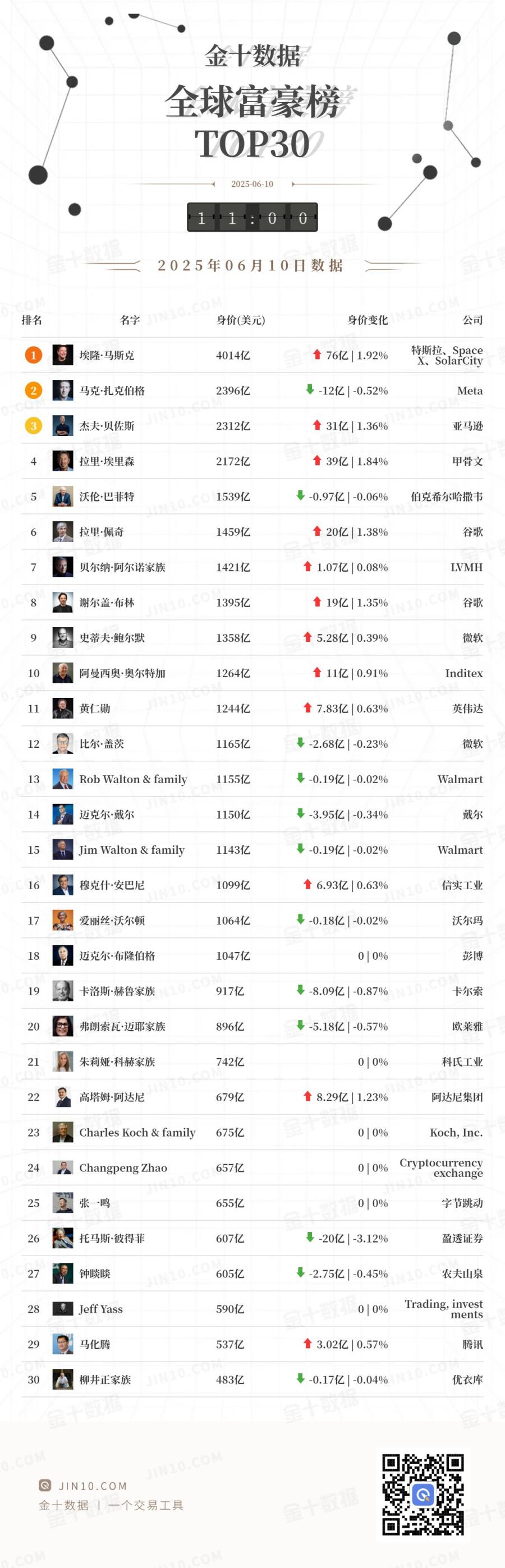
金十图示:2025年06月10日(周二)全球富豪榜



news flash· 2025-06-10 03:02
金十图示:2025年06月10日(周二)全球富豪榜 | 排名 | 名字 | 身价(美元) | 身价变化 | 公司 | | --- | --- | --- | --- | --- | | | 埃隆·马斯克 | 4014亿 | ↑ 76亿 1.92% | | | 2 | 马克·扎克伯格 | 2396亿 | + -12亿 -0.52% | Meta | | | 杰夫·贝佐斯 | 2312亿 | 1 31亿 1.36% | 亚马逊 | | 4 | 拉里·埃里森 | 2172亿 | 1 39亿 1.84% | 甲骨文 | | 5 | 沃伦·巴菲特 | 0 1539亿 | + -0.97亿 -0.06% | 伯克希尔哈撒韦 | | 6 | 拉里·佩奇 | 1459亿 | 1 20亿 1.38% | 谷歌 | | 7 | 贝尔纳·阿尔诺家族 | 1421亿 | 1 1.07亿 0.08% | LVMH | | 8 | 谢尔盖·布林 | 1395亿 | 1 19亿 1.35% | 谷歌 | | 9 | 史蒂夫·鲍尔默 | 1358亿 | 1 5.28亿 0.39% | 微软 | | 10 | 阿曼西奥·奥尔特加 | 1264 ...
赚钱模式,彻底变了
Hu Xiu· 2025-06-09 09:16
Group 1 - The core viewpoint of the article emphasizes the shift from growth-driven strategies to efficiency-focused approaches in the current economic landscape, termed the "stock economy" era [6][10][14] - The article discusses the success of companies like Pop Mart, which saw its market value increase over tenfold to over 330 billion in just two years, and the expansion of other brands like Hushang Ayi and Anker Innovation [2][3] - The author highlights the importance of efficiency in business operations, stating that without it, growth can lead to failure, especially in a stock economy where resources are limited [14][16][18] Group 2 - The article outlines the characteristics of national brands that can thrive in the stock economy, emphasizing the need for products, store types, and management strategies that can penetrate deeper markets [30][31][32] - It discusses the significance of regional density in store management, suggesting that higher density can optimize supply chain costs and improve operational efficiency [41][42] - The article also mentions the importance of adapting to seasonal demand fluctuations and maintaining consistent sales throughout the year [45][46] Group 3 - The article addresses the global expansion strategies of companies, advocating for a diversified market approach and the establishment of manufacturing capabilities outside of China [60][62] - It emphasizes the need for companies to adopt a global mindset from inception, rather than merely reacting to international market conditions [61][65] - The author notes that the current trend in globalization is shifting from cost-driven strategies to efficiency-driven ones, leveraging validated technologies and operational capabilities [66][67] Group 4 - The article discusses the role of technology, particularly AI, in enhancing business efficiency, with a focus on companies like DeepSeek that have significantly reduced operational costs [70][71] - It predicts a future where the number of applications on mobile devices will decrease, workweeks will shorten, and average human lifespans will increase due to advancements in AI and healthcare [72][74][75] - The author stresses the importance of product development and innovation in maintaining competitive advantages in the market [56][70] Group 5 - The article highlights the essential qualities of successful founders, including strong values, learning ability, and adaptability to market changes [77][78] - It suggests that founders should focus on long-term sustainability rather than short-term gains, emphasizing the importance of building a solid foundation for their businesses [80][81] - The author provides advice for young professionals, encouraging them to prioritize skill development and time management over immediate financial rewards [86][94]
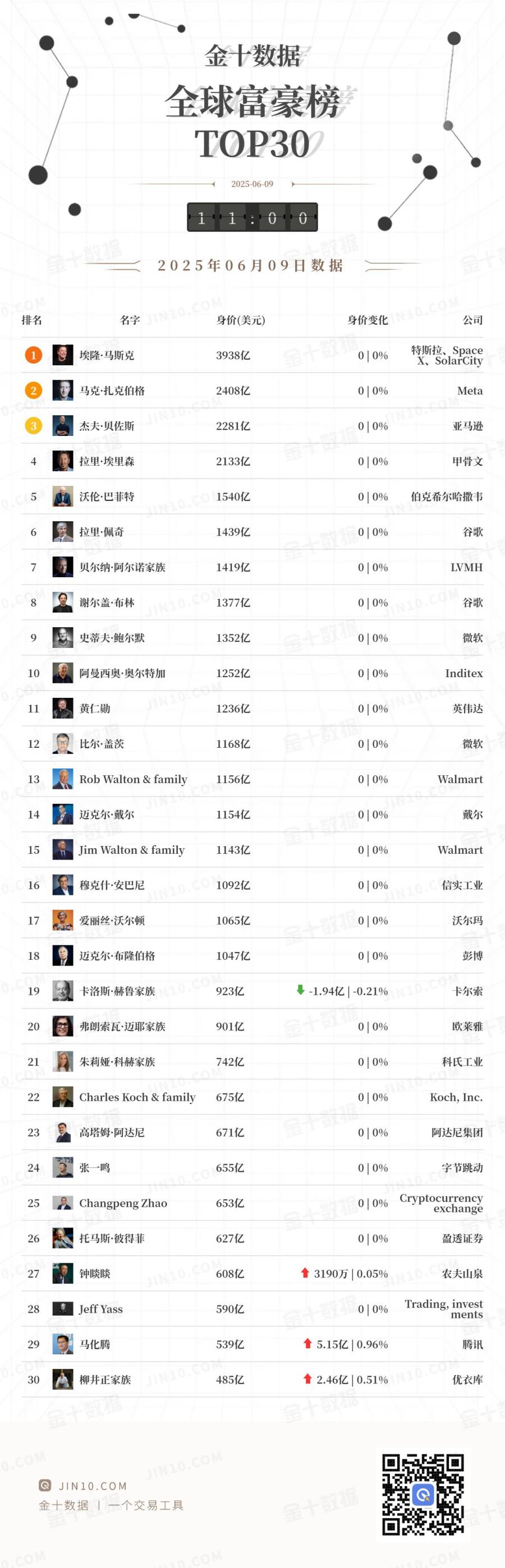
金十图示:2025年06月09日(周一)全球富豪榜
news flash· 2025-06-09 03:04
-- @ JIN10.COM 71410.COM 金十数据 | 一个交易工具 n.coM . Comment . In.com . Comment . Com | 排名 | 名字 | 身价(美元) | 身价变化 | 公司 | | --- | --- | --- | --- | --- | | | 埃隆·马斯克 | 3938亿 | 0 0% | 特斯拉、Spa | | 2 | 马克·扎克伯格 | 2408亿 | 0 0% | Meta | | | 杰夫·贝佐斯 | 2281亿 | 0 0% | 亚马逊 | | 4 | 拉里·埃里森 | 2133亿 | 0 0% | 甲骨文 | | 5 | 沃伦·巴菲特 | -0 1540亿 | 0 0% | 伯克希尔哈撒韦 | | 6 | 拉里·佩奇 | 1439亿 | 0 0% | 谷歌 | | 7 | 贝尔纳·阿尔诺家族 | 1419亿 | 0 0% | LVMH | | 8 | 谢尔盖·布林 | 1377亿 | 0 0% | 谷歌 | | 9 | 史蒂夫·鲍尔默 | 1352亿 | 0 0% | 微软 | | 10 | 阿曼西奥·奥尔特加 | 1252亿 | 0 0% | ...
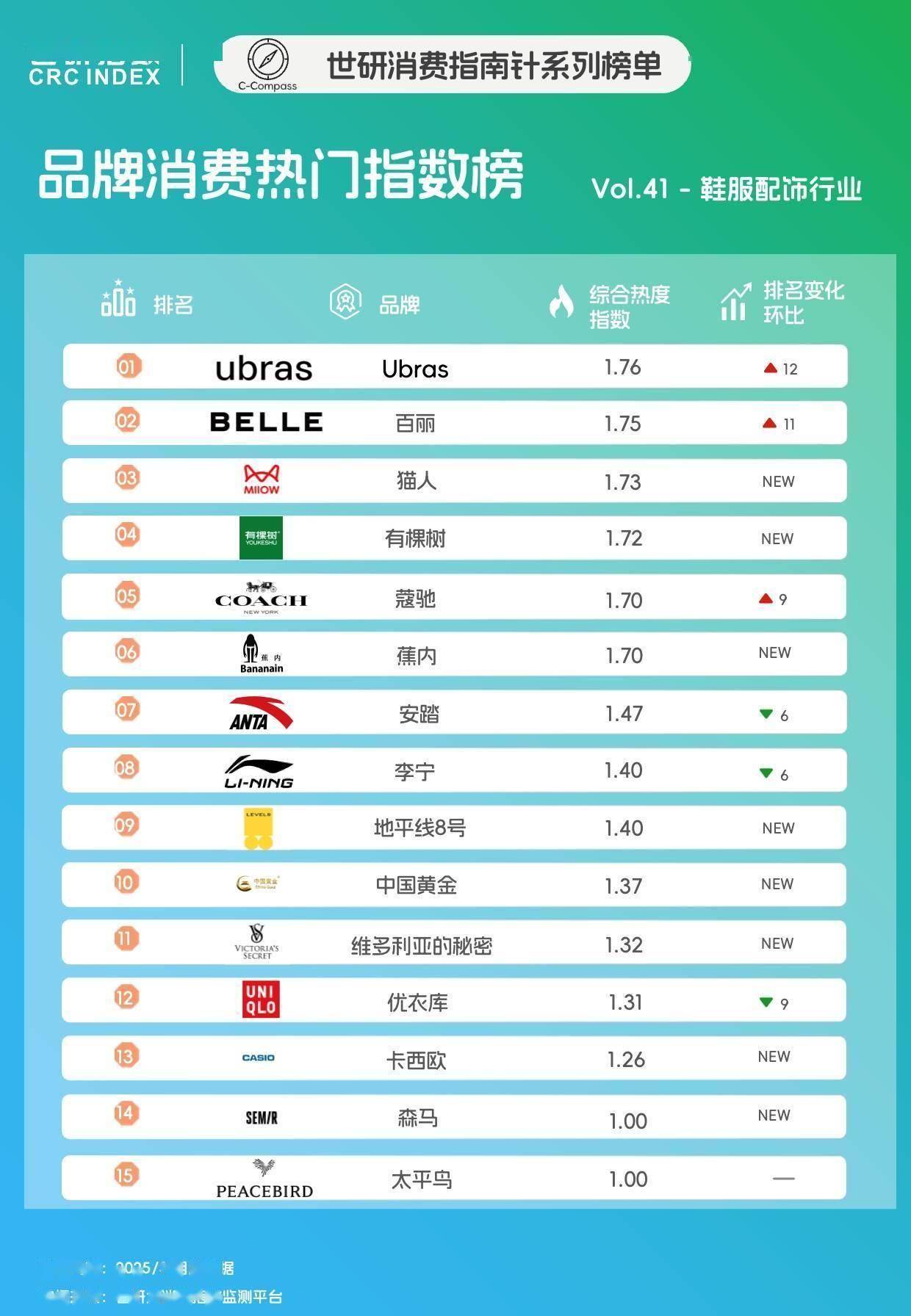
3月鞋服配饰品牌TOP,轻量化配饰革新出行场景|世研消费指数
Sou Hu Cai Jing· 2025-06-06 13:25
Group 1: Market Trends - The spring lingerie market is experiencing three major trends: functional verticalization, scene precision adaptation, and value-based marketing [4] - Brands like Ubras, Catman, and Youkeshu are focusing on specific scenarios such as workplace, regional protection, and sports yoga with their unique selling propositions [4][5] - Ubras launched a "No-Bound Workplace" series for Women's Day, utilizing size-free technology to address the fit issues of women's undergarments in professional settings [4] Group 2: Consumer Preferences - Consumers are seeking not only functional attributes like moisture-wicking and high elasticity but also cultural identity and emotional value in lingerie, transforming the category from mere clothing to lifestyle solutions [5] - Brands are engaging in value-based marketing, with Ubras redefining lingerie consumption meaning by emphasizing "self-appreciation" for women [4] Group 3: Product Innovations - The luggage market is shifting towards lightweight and smart designs, driven by increased travel demand during the spring season [6] - Brands like Horizon 8 are promoting lightweight carry-on luggage with high durability and minimalist design, catering to young consumers' spontaneous travel needs [6] Group 4: Jewelry Market Dynamics - The jewelry brand China Gold is leveraging a dual strategy of investment attributes and cultural rituals to attract consumers during the wedding season amidst fluctuating gold prices [7] - New Chinese design elements are being incorporated into gold jewelry to appeal to younger consumers seeking a sense of ritual and cultural identity [7] Group 5: Index Reports - The Consumer Index Report by Shiyan Index aims to objectively present trends in the consumption world, helping industries and brands track market trends and enhance competitive strength [8] - The report continuously monitors 12 major industries, including 3C digital, apparel accessories, and beauty products [9]
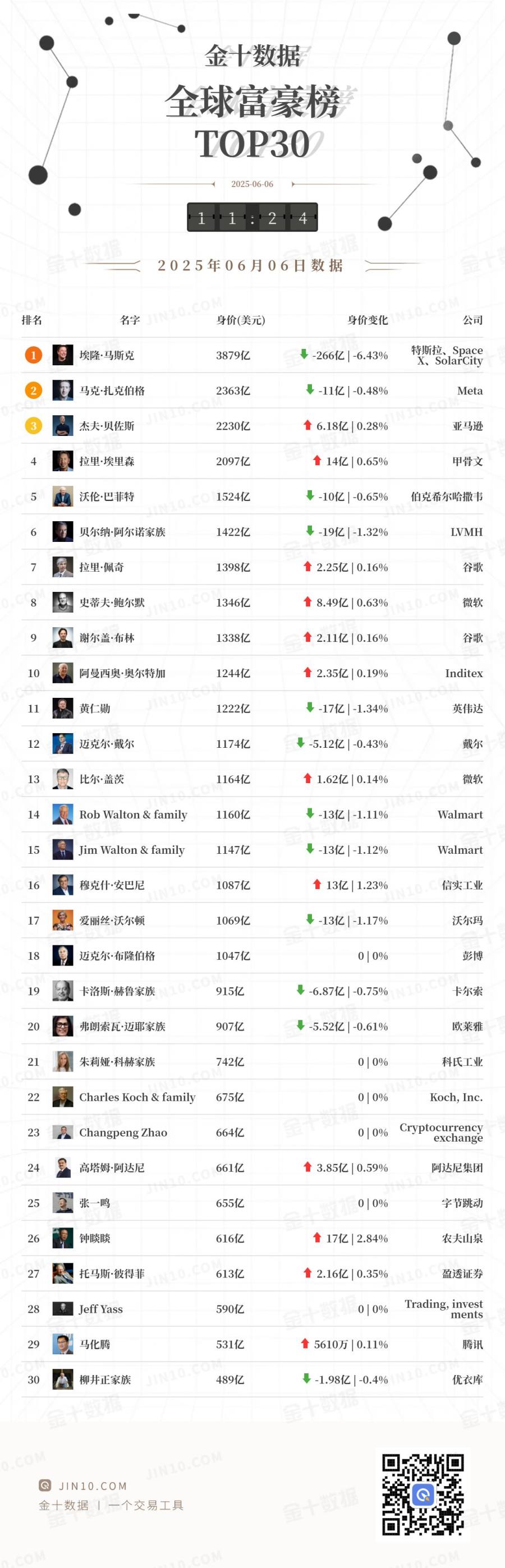
金十图示:2025年06月06日(周五)全球富豪榜
news flash· 2025-06-06 03:27
@ JIN10.COM 7/H10.COM 金十数据 | 一个交易工具 n.coM . Comments . In.com . Comment . Com -- 金十图示:2025年06月06日(周五)全球富豪榜 | 排名 | 名字 | 身价(美元) | 身价变化 | 公司 | | --- | --- | --- | --- | --- | | | 埃隆·马斯克 | 3879亿 | -266亿 -6.43% | | | 2 | 马克·扎克伯格 | 2363亿 | + -11亿 -0.48% | Meta | | | 杰夫·贝佐斯 | 2230亿 | 1 6.18亿 0.28% | 亚马逊 | | 4 | 拉里·埃里森 | 2097亿 | 1 14/Z 0.65% | 甲骨文 | | 5 | 沃伦·巴菲特 | 0 1524亿 | + -10亿 -0.65% | 伯克希尔哈撒韦 | | 6 | 贝尔纳·阿尔诺家族 | 1422亿 | + -19亿 -1.32% | LVMH | | 7 | 拉里·佩奇 | 1398亿 | 1 2.25亿 0.16% | 谷歌 | | 8 | 史蒂夫·鲍尔默 | 1346亿 | 1 ...
关税影响专题三:美国对等关税暂缓期,国际品牌表述与供应链梳理
Guoxin Securities· 2025-06-05 02:40
Investment Rating - The report maintains an "Outperform" rating for the textile and apparel industry [1] Core Insights - The report outlines the timeline of Trump's tariff policy, highlighting the uncertainty surrounding tariffs and their impact on international brands [2] - International brands have expressed concerns about the impact of tariffs on profits, with varying exposure levels to the U.S. market and sourcing strategies [2][12] - The report anticipates industry consolidation and the potential for suppliers with lower U.S. exposure and higher profit margins to gain market share [2][35] Summary by Sections 1. Key Timeline of Trump's Tariff Policy - On April 10, the Trump administration announced a 90-day tariff delay for 75 countries, set to expire on July 8 [2] - A court ruling on May 28 deemed Trump's tariff policy invalid, leading to further appeals and ongoing uncertainty [2][11] 2. International Brands' Responses to Tariff Events - Brands like Uniqlo, Adidas, and PUMA have varying U.S. market exposure, with Uniqlo at 7% and Adidas and PUMA at 20% [12][13] - Most brands source less than 10% of their products from China, with a significant portion coming from Southeast Asia, particularly Vietnam [12] - Short-term measures include pre-shipping goods to the U.S. and long-term strategies involve price adjustments and supply chain diversification [12][19] 3. Textile Enterprises' Capacity Distribution and Tariff Risk Exposure - Companies like Shenzhou International and Huayi Group have low U.S. revenue exposure, while those with significant Southeast Asian production face higher U.S. revenue percentages [2][32] - The report lists net profit margins for various companies, with Shenzhou International leading at 20.9% [2][32] - Companies with U.S. revenue below 20% are less sensitive to tariff impacts, while those with higher margins can maintain profitability even under pressure [32] 4. Investment Recommendations - Key recommendations include Shenzhou International for its low U.S. exposure and high net margin, and Huayi Group for its strong market position and demand [35] - Other companies to watch include Weixing Co., Taihua New Materials, and Kairun Co., which are expected to benefit from market share gains [35]





关税影响专题三:美国对等关税暂缓期,国际品牌表述与供应链梳理-20250605
Guoxin Securities· 2025-06-05 02:24
Investment Rating - The investment rating for the textile and apparel industry is "Outperform the Market" [1] Core Insights - The report outlines the timeline of Trump's tariff policy, highlighting the uncertainty surrounding tariffs and their impact on international brands [2][11] - International brands have expressed concerns about the impact of tariffs on profits, with varying exposure to the U.S. market and procurement strategies [2][12] - The report anticipates industry consolidation and the expansion of suppliers with lower exposure to U.S. business and higher profit margins due to tariff-related challenges [2][35] Summary by Sections 1. Key Timeline of Trump's Tariff Policy - On April 10, the Trump administration announced a 90-day delay on tariffs for 75 countries, set to expire on July 8 [2][11] - A significant ruling by the U.S. International Trade Court deemed Trump's tariff policy invalid, leading to an appeal by the Trump administration [2][11] 2. International Brands' Responses to Tariff Events - Brands like Uniqlo, Adidas, and PUMA have varying U.S. market revenue exposure, with Uniqlo at 7% and Adidas and PUMA at 20% [2][12] - Most brands source less than 10% of their products from China, with a significant portion coming from Southeast Asia, particularly Vietnam [2][12] - Brands are implementing short-term measures such as pre-shipping goods to the U.S. and long-term strategies like price increases and supply chain diversification [2][12] 3. Textile Enterprises' Capacity Distribution and Tariff Risk Exposure - Companies like Shenzhou International and Huayi Group have low U.S. revenue exposure, while those with significant production in Southeast Asia face higher risks [2][32] - The report lists net profit margins for various companies, with Shenzhou International leading at 20.9% [2][32] - Companies with U.S. revenue below 20% are less sensitive to tariff impacts, while those with higher exposure may face significant profit margin pressures [2][32] 4. Investment Recommendations - Key recommendations include Shenzhou International for its low U.S. exposure and high net profit margin, and Huayi Group for its strong market position and demand [2][35] - Other companies to watch include Weixing Co., Taihua New Materials, and Kairun Co., which are expected to benefit from market share growth [2][35]