
华能国际

Search documents
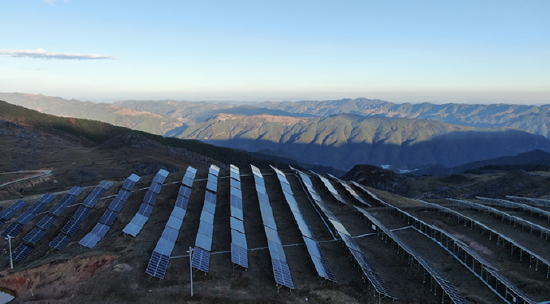
光伏再迎“寒冬”:多家央国企退场,风电成新能源新宠?
Xin Lang Cai Jing· 2025-12-10 01:31
Core Insights - The article discusses the significant number of solar photovoltaic (PV) projects being abandoned by state-owned enterprises (SOEs) in China due to declining profitability and stringent internal return requirements [2][6][10] Group 1: Project Abandonment - A total of 80 solar PV projects have been canceled this year, amounting to over 11 GW, involving major energy SOEs such as China National Nuclear Corporation and State Grid [2] - In Yunnan province alone, over 800 MW of projects have been abandoned, with companies like China National Nuclear Corporation and Guangdong Energy Group involved [3] - The abandonment of projects is attributed to the inability to meet the internal rate of return (IRR) requirements set by the State-owned Assets Supervision and Administration Commission (SASAC), which is typically not lower than 6.5% [4][6] Group 2: Financial Pressures - The decline in electricity prices, particularly after the issuance of document "136," has led to a significant drop in project profitability, with Yunnan's guiding price falling by 18% to 0.248 yuan/kWh [7] - The increased costs associated with land leasing and additional non-technical costs imposed by local governments have further strained project economics [8][9] - The IRR requirements for wind and solar projects are set at a minimum of 6.5%, while rooftop distributed solar projects require a minimum of 7% [5] Group 3: Shift in Investment Focus - There is a noticeable shift in investment preference towards wind energy, as it offers better utilization hours and higher returns compared to solar projects [10] - The competitive landscape for wind energy is perceived to be more orderly, with stricter approval processes compared to the oversaturated solar market [10] - The current trend of SOEs exiting solar projects may create opportunities for more agile private enterprises to capitalize on the market [11]

东吴证券晨会纪要-20251210
Soochow Securities· 2025-12-10 00:43
Macro Strategy - The report highlights a shift in policy focus from "preventing and mitigating risks in key areas and external shocks" to "better coordinating domestic economic work and international economic struggles," indicating a more proactive approach to external economic conditions [1][15] - There is a transition from stabilizing asset prices to stabilizing microeconomic entities, emphasizing the importance of employment, enterprises, markets, and expectations over real estate and stock markets [2][15] - The policy language has evolved from "extraordinary counter-cyclical adjustments" to "increasing counter-cyclical and cross-cyclical adjustment efforts," reflecting a balance between short-term stimulus and long-term economic structure considerations [2][15] Industry Insights - The food and beverage industry strategy for 2026 emphasizes stock selection based on certainty, focusing on growth and turnaround opportunities, particularly in leading snack companies and quality retail chains [9] - The report suggests a keen interest in the health products sector, driven by an aging population and expanding young consumer demographics, with a focus on innovation and iteration in product offerings [9] - In the phosphoric chemical industry, companies with phosphate iron and phosphate rock resources are recommended, highlighting the significant cost contribution of phosphate sources to phosphate iron production [10] - The non-ferrous metals sector is experiencing price increases, with copper prices rising due to supply tightening and demand fluctuations, while aluminum prices are also on the rise amid stable production [11][12]
视频丨我国首个燃机发电无人智控系统成功投运
Yang Shi Xin Wen Ke Hu Duan· 2025-12-09 23:48
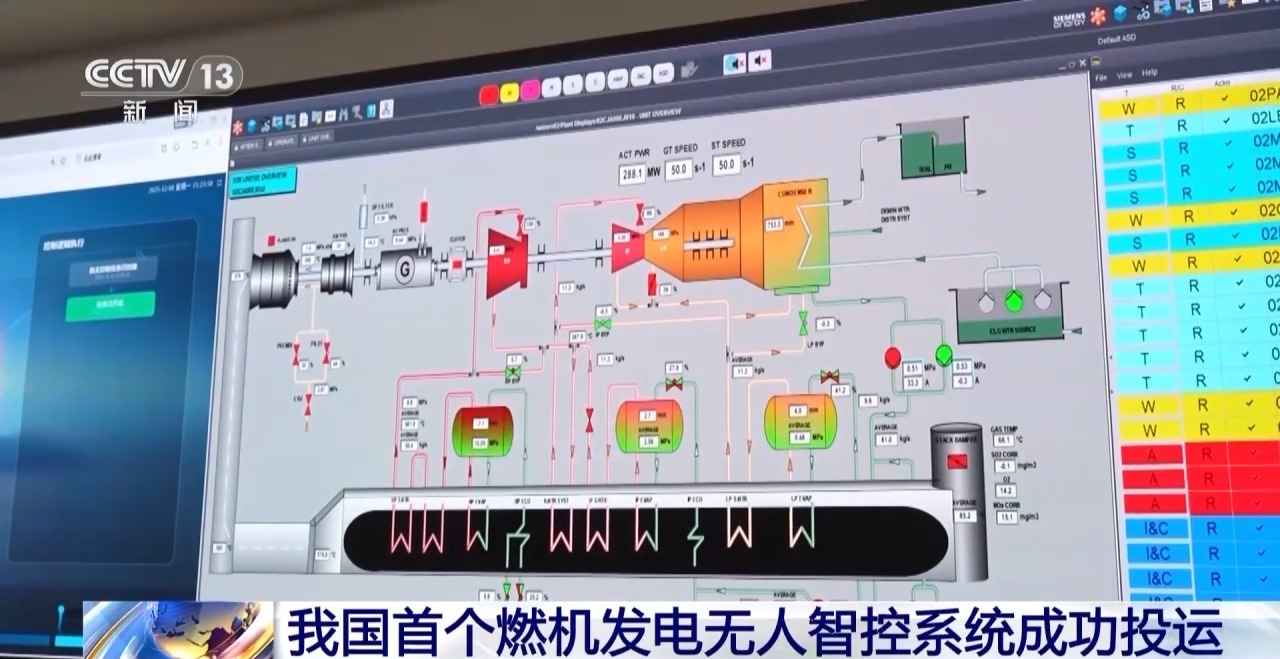
Group 1 - The first intelligent autonomous operation control system for gas turbine power generation in China has been successfully put into operation at Huaneng Shanghai Gas Turbine Power Plant [1][2] - This system represents a shift from traditional manual monitoring to intelligent autonomous operation in thermal power generation, allowing for fully automated control from startup to shutdown without human intervention [2] - The intelligent control system acts as a "smart brain" for the unit, enabling automatic data collection, precise equipment status assessment, and proactive adjustment of control strategies, thereby reducing errors and risks associated with manual operations [2] Group 2 - The key operational parameter compliance rate for the trial operation unit reached 100%, which will significantly accelerate the digital and intelligent transformation of the traditional energy industry [2]

中金 | 储能观市系列(1):政策迎风期,中国独立储能建设加速
中金点睛· 2025-12-09 23:46
Core Viewpoint - The Chinese large-scale energy storage industry is transitioning from "policy-driven" to "market-driven," with clearer business models and diversified application scenarios, entering a new phase of large-scale and high-quality development [2]. Group 1: Market Trends and Data - The domestic new energy storage bidding scale reached 205.30 GWh from January to October 2025, a year-on-year increase of 45%, with central and state-owned enterprises' procurement scale increasing by 61% [4]. - The supply side of leading battery manufacturers is nearing full capacity, and the tight supply-demand situation is expected to continue until the second quarter of 2026 [4]. - The theoretical installation space for independent energy storage is estimated to be around 158 GW/634 GWh for 2026-2027, supported by declining electricity costs on the generation side [5]. Group 2: Business Model Evolution - Before the "Document 136," the value of energy storage was primarily derived from "obtaining renewable energy project permits," with low utilization rates [6]. - After the "Document 136," independent energy storage can realize its true value through "peak-valley price arbitrage + capacity market + ancillary services," with internal rates of return (IRR) exceeding 10% in regions like Inner Mongolia and Xinjiang [4][5]. - The capacity price policy has led to a short-term rush for installations, with independent energy storage expected to benefit from this policy window [5]. Group 3: Capacity Compensation Mechanism - The capacity compensation mechanism is gradually replacing the previous capacity leasing price, with provinces like Inner Mongolia and Gansu already implementing compensation standards [15]. - The compensation standards vary, with Gansu setting a preliminary compensation of 330 yuan/kW·year, while Inner Mongolia compensates based on actual discharge [15]. - The establishment of a capacity compensation mechanism aims to create stable price signals to guide investment in flexible resources like energy storage [15]. Group 4: Auxiliary Services Market - The auxiliary services market is evolving from single peak and frequency regulation to a more diversified and market-oriented approach [18]. - Independent energy storage currently participates mainly in frequency regulation services, with significant compensation in provinces like Guangdong and Shanxi [20]. - As the auxiliary services market develops, energy storage is expected to expand its participation to include backup and ramping services, providing additional revenue streams [20]. Group 5: Economic Viability of Independent Energy Storage - The economic viability of independent energy storage projects is influenced by peak-valley price differences, capacity compensation, and ancillary service revenues [21]. - Initial calculations indicate that the capital IRR for independent energy storage in regions like Inner Mongolia can reach up to 37.3%, primarily driven by capacity compensation [24]. - The sensitivity of capital IRR to capacity compensation levels and duration is significant, with longer compensation periods enhancing project attractiveness [25].

能源早新闻丨我国首个国家级,全面完成!
中国能源报· 2025-12-09 22:33
Industry Updates - The National Energy Administration projects that China's crude oil production is expected to reach 215 million tons by 2025, marking a historical high. During the 14th Five-Year Plan period, the country has added 105 million tons of new crude oil capacity, with offshore oil contributing over 60% of the new production for five consecutive years [2] - The first national-level continental shale oil demonstration zone in China, located in Xinjiang, has achieved an oil output of over 1.7 million tons this year, completing its construction tasks. The shale oil reservoir presents significant technical challenges due to its depth and low permeability [3] - The first intelligent autonomous control system for gas turbine power generation in China has been successfully put into operation, marking a transition to smart autonomous operation in thermal power generation [3] - Sichuan Province is soliciting opinions on the implementation details for green electricity direct connection projects, aiming for a self-consumption ratio of at least 60% of total available power generation by 2030 [4] - Jiangsu Province has completed its first batch of intelligent orderly charging pilot communities, enhancing the synergy between new energy vehicles and the new power system [4] Company News - The first gas turbine unit of the Sichuan Huadian Neijiang Gas Turbine Innovation Development Demonstration Project has officially commenced power generation, contributing to energy supply during the winter peak [7] - The East African Crude Oil Pipeline (EACOP) project, undertaken by a Chinese company, has completed 581 kilometers of mainline welding, reaching a completion rate of 96.5%, and is entering the final stages of construction [7] Market Performance - In November, the production of new energy passenger vehicles reached 1.757 million units, a year-on-year increase of 18.3%, with a cumulative production of 13.788 million units from January to November, reflecting a growth of 28.6% [5]
在中国华能成功投运!
中国能源报· 2025-12-09 09:01
我国首个燃机发电无人智控系统成功投运。 12月9日从中国华能获悉,我国首个燃机发电智能自主运行控制系统在华能上海燃机电厂 成功投运。 End 欢迎分享给你的朋友! 出品 | 中国能源报(c n e n e rg y) 编辑丨闫志强 这是我国首次实现火电燃气机组从启动、并网、负荷调节到停机的全过程无人干预智能自 主控制,标志着我国火力发电技术从"传统人工监控"进入"智能自主运行"新阶段。相较 于过去依赖运行人员经验判断,此次投运的智控系统相当于给机组安装了精准计算的"智 能大脑",可一键自动采集运行数据,精准研判设备状态,提前预判变化,主动调整控制 策 略 , 可 有 效 避 免 人 工 操 作 带 来 的 误 差 与 风 险 。 本 次 试 运 行 机 组 关 键 运 行 参 数 达 标 率 100%,将有效加快传统能源产业数字化、智能化转型。 来源:央视新闻客户端 ...

央媒报道!雄安新区:一座高水平现代化城市正拔地而起
Xin Lang Cai Jing· 2025-12-09 08:19
Core Viewpoint - Xiong'an New Area is rapidly transforming from a planning blueprint into a modern high-level city, showcasing significant achievements in industrial clustering, ecological construction, and the relocation of non-capital functions from Beijing [4][16]. Group 1: Relocation and Infrastructure Development - Xiong'an New Area is designated as a key area for the relocation of non-capital functions from Beijing, with visible progress in the establishment of core functions [6][21]. - As of now, over 400 central enterprise branches and more than 4,000 Beijing-origin enterprises have successfully settled in Xiong'an [6][21]. - The first batch of central enterprise relocation projects is accelerating, with major companies like China Huaneng and China Sinochem officially moving their headquarters to Xiong'an [6][21]. Group 2: Service Mechanisms and Support Policies - Xiong'an has introduced the "1+N" action plan for enterprise migration, facilitating a smooth and efficient relocation process [7][22]. - The local government has implemented comprehensive support policies for relocated personnel, covering housing, social security, education, and talent incentives [8][23]. - The establishment of "zero-distance" service stations directly at enterprises aims to address the needs of relocated employees [8][23]. Group 3: Innovation and Industrial Growth - Innovation is a core driver of development in Xiong'an, with a collaborative ecosystem emerging among enterprises in the region [9][26]. - The Xiong'an Artificial Intelligence Industrial Park is fostering a unique industrial collaboration environment, enhancing innovation capabilities [9][26]. - The successful launch of the first "Xiong'an-made" satellite marks a significant milestone in the development of the aerospace information industry in Xiong'an [12][27]. Group 4: Ecological Development - Xiong'an has adopted a "green first, then build" philosophy, resulting in the planting of 483,000 acres of trees and the establishment of a vibrant ecological landscape [13][28]. - The water quality of Baiyangdian has improved significantly, now classified as a good lake, with biodiversity efforts leading to an increase in bird species [13][29]. - The urban park system is being developed to ensure accessibility to green spaces, enhancing the quality of life for residents [14][30].
我国首个燃机发电无人智控系统成功投运
Yang Shi Xin Wen· 2025-12-09 06:23
(文章来源:央视新闻) 记者今天(9日)从中国华能获悉,我国首个燃机发电智能自主运行控制系统在华能上海燃机电厂成功 投运。 这是我国首次实现火电燃气机组从启动、并网、负荷调节到停机的全过程无人干预智能自主控制,标志 着我国火力发电技术从"传统人工监控"进入"智能自主运行"新阶段。相较于过去依赖运行人员经验判 断,此次投运的智控系统相当于给机组安装了精准计算的"智能大脑",可一键自动采集运行数据,精准 研判设备状态,提前预判变化,主动调整控制策略,可有效避免人工操作带来的误差与风险。本次试运 行机组关键运行参数达标率100%,将有效加快传统能源产业数字化、智能化转型。 ...
江苏广东发布2026年电力市场交易通知,攀西特高压交流工程核准 | 投研报告
Zhong Guo Neng Yuan Wang· 2025-12-09 04:02
Core Viewpoint - The recent report from Dongwu Securities highlights the upcoming electricity market trading arrangements in Jiangsu and Guangdong for 2026, along with the approval of the Panzhixi High Voltage AC Project to enhance power supply in the region [1] Group 1: Electricity Market Trading - Jiangsu and Guangdong have released notifications for the 2026 electricity market trading, detailing the annual trading arrangements [1] - In Guangdong, the annual trading will occur in phases from December 5 to December 22, including bilateral negotiations, competitive trading, and green electricity trading [1] - Jiangsu's annual negotiation trading is scheduled for December 12, 15, and 16, with auction trading on December 11 and 17 [1] Group 2: Infrastructure Development - The Panzhixi High Voltage AC Project has been approved to meet the power transmission needs of the Panzhixi clean energy base and to optimize the 500 kV grid structure in southern Sichuan [1] - The total investment for the project is approximately 2.32 billion yuan, with 463.53 million yuan as capital, accounting for 20% of the total investment [1] Group 3: Industry Data Tracking - The national average electricity purchase price decreased by 2% year-on-year and increased by 2.8% month-on-month as of November 2025 [2] - The price of thermal coal at Qinhuangdao was 785 yuan per ton, down 31 yuan week-on-week as of December 5, 2025 [2] - The total electricity consumption from January to October 2025 reached 8.62 trillion kWh, a year-on-year increase of 5.1% [2] Group 4: Investment Recommendations - The report suggests focusing on renewable energy companies like Longyuan Power and China Three Gorges Energy, as the market conditions for green electricity are improving [3] - For thermal power, companies like Huaneng International and Huadian International are recommended due to their reliability and flexibility [3] - Hydropower companies such as Yangtze Power are highlighted for their low costs and strong cash flow [3] - Nuclear power companies like China National Nuclear Power and China General Nuclear Power are recommended for their growth potential and increasing dividends [3] - Companies involved in solar assets and charging stations are expected to see a revaluation of their assets [3]
中国华能:从首都绿热到雪域绿能 守护保供“暖心线”
Zhong Guo Neng Yuan Wang· 2025-12-09 03:40
Core Viewpoint - China Huaneng is leveraging technological innovation to address energy supply challenges, ensuring both ecological sustainability and the warmth of people's lives across different regions, from urban Beijing to the snowy highlands of Tibet [1] Group 1: Energy Supply Innovations in Beijing - The newly operational temperature regulation system at Huaneng Beijing Thermal Power Plant utilizes "water-gas" heat exchange technology, saving nearly 5 million standard cubic meters of natural gas and reducing CO2 emissions by approximately 10,000 tons during the heating season [2] - The implementation of a "zone isolation + dynamic monitoring" plan during the construction of the temperature regulation system ensured zero accidents in high-risk operations [2] - The ongoing energy-saving upgrades at Huaneng Beijing Thermal Power Plant include the deployment of a "heat storage flexibility modification project," enhancing the green heating network and improving the system's intelligence and sustainability [4] Group 2: Renewable Energy Initiatives in Tibet - Huaneng's Cangmu Hydropower Station and the 250,000 kW Cangwa Photovoltaic Storage Power Station are crucial for energy supply in Tibet, operating effectively in extreme conditions [5][6] - The Cangwa Photovoltaic Storage Power Station features a 50 MW/200 MWh energy storage system, which stores solar energy during the day and provides 200,000 kWh of electricity during peak demand at night, ensuring continuous green energy availability [6] - The implementation of a "snow domain protection plan" for equipment in high-altitude environments helps maintain operational stability, even in temperatures as low as -30°C [5][6]