
拜耳

Search documents
跨国药企投资逻辑生变
Guo Ji Jin Rong Bao· 2025-09-16 13:00
Group 1 - BMS is selling a 60% stake in its China joint venture, Shanghai BMS, to an affiliate of Hillhouse Capital, with the deal expected to close in early 2026 [1][4] - The divested assets include several products manufactured and sold exclusively in mainland China, such as Baraclude, Bufferin, and Theragran [1][4] - This divestiture is part of BMS's strategy to focus resources on core areas and optimize its business layout [1][4] Group 2 - Shanghai BMS was established in 1982 as the first Sino-American joint venture pharmaceutical company in China, predating other joint ventures like Xi'an Janssen and MSD [3] - The trend of foreign pharmaceutical companies exiting joint ventures in China is increasing, as the policy environment allows for wholly-owned operations [3][6] - Shanghai BMS has faced declining performance due to intensified competition and price reductions from centralized procurement, leading to a strategic decision to sell its business [4][6] Group 3 - In 2016, Shanghai BMS reported a record revenue of 4.72 billion yuan, but recent years have seen a decline in performance due to competition and pricing pressures [4] - The divestiture aligns with BMS's broader transformation plan, as the company reported a 2.48% year-over-year revenue decline in its latest financial report [4]


行业聚焦:全球铝碳酸镁咀嚼片市场头部企业份额调研(附Top10 厂商名单)
QYResearch· 2025-09-16 03:55
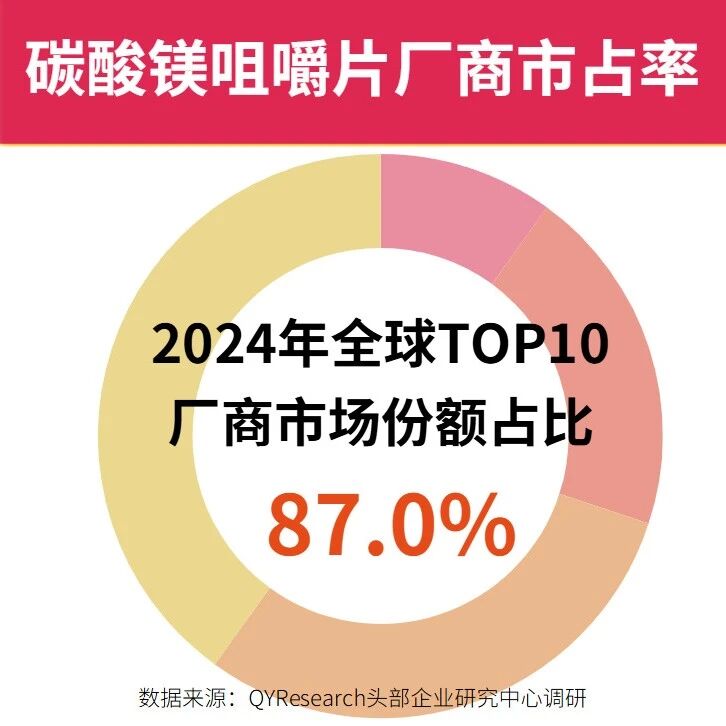
Core Insights - The article discusses the market for aluminum magnesium carbonate chewable tablets, highlighting its expected growth and key market players. The global market size is projected to reach $310 million by 2031, with a compound annual growth rate (CAGR) of 6.5% over the coming years [1]. Market Overview - The global market for aluminum magnesium carbonate chewable tablets is dominated by original research drugs, which hold approximately 38.3% market share [6]. - The top 10 manufacturers account for about 87.0% of the market share in 2024, indicating a concentrated market [6]. Application Segmentation - Hospitals and clinics represent the largest downstream market, accounting for around 41.2% of the demand [10]. Market Drivers - The increasing public awareness of health issues related to excessive stomach acid and gastroesophageal reflux is driving demand for convenient and safe formulations [13]. - The chewable tablet form is favored for its convenience, aligning with modern lifestyles [13]. - Pharmaceutical companies are investing in process optimization, flavor improvement, and packaging upgrades, enhancing consumer acceptance [15]. - Inclusion of common digestive diseases in insurance coverage in various regions is improving medication accessibility [15]. Market Challenges - The market faces challenges such as high product homogeneity and intense price competition, which may compress profit margins [16]. - Growing consumer concerns regarding drug safety and long-term effects necessitate higher standards in production and clinical evidence [16]. - Rapid changes in pharmaceutical distribution channels, especially the rise of online sales, require companies to adapt quickly to maintain competitive advantages [16]. Demand Trends - There is a trend towards diversified and refined demand, with younger consumers prioritizing convenience and taste, while older consumers focus on long-term gastrointestinal care [17]. - The interplay between hospital and retail sectors is expanding the application of these products in both acute symptom relief and chronic disease management [17]. - Future market scenarios may see aluminum magnesium carbonate chewable tablets used in combination with other digestive medications, broadening their demand [17].

德国的世界第一,正在批量阵亡
虎嗅APP· 2025-09-16 00:11
Core Viewpoint - The article discusses the concept of "invisible champions," which are small to medium-sized enterprises that dominate niche markets but remain largely unknown to the general public. It highlights the contrast between the number of invisible champions in Germany and China, emphasizing Germany's significant lead in this area [4][8][10]. Group 1: Definition and Characteristics of Invisible Champions - The term "invisible champion" was introduced by German scholar Hermann Simon in 1990, referring to companies that are not widely known but hold a dominant position in a specific niche market, characterized by strong technology and high added value [8][10]. - Invisible champions typically have unique traits: they are often rooted in small towns, family-owned, have low employee turnover, and focus on highly specialized products that are hard to replicate [10][21]. - According to Simon's criteria, there are nearly 3,000 invisible champions globally, with about half located in Germany, while China has fewer than 100 [10][11]. Group 2: The Strength of German Manufacturing - Germany's manufacturing sector remains robust, with small and medium-sized enterprises (SMEs) constituting over 99% of all companies and contributing 55% to GDP. These SMEs provide over 70% of employment and around 80% of training positions for young people [21][19]. - German SMEs excel in niche markets, focusing on high-value, technology-intensive products, which helps them build competitive advantages and maintain market positions [21][19]. - The article cites examples of successful invisible champions like Wanzl and Körber, which dominate their respective markets in shopping carts and cigarette manufacturing equipment [14][15]. Group 3: Challenges Faced by German Invisible Champions - Recently, many German invisible champions, particularly in the automotive sector, have faced bankruptcy due to rising costs and external pressures, such as the energy crisis following the Russia-Ukraine conflict [27][32]. - The aging workforce in Germany is leading to a significant labor shortage, with projections indicating a shortfall of up to 7 million jobs by 2035 [32][34]. - The rise of Chinese automotive manufacturing has also impacted German invisible champions, as Chinese companies offer competitive pricing and improved product quality, leading to reduced sales for German suppliers [34][35].

REGN Loses 21.1% Year to Date: Buy, Sell or Hold the Sock?
ZACKS· 2025-09-15 14:56
Core Insights - Regeneron Pharmaceuticals (REGN) shares have declined by 21.1% year-to-date, underperforming the industry growth of 5.2% and the S&P 500 Index [1][8] - The lead drug Eylea has faced significant sales pressure due to competition from Roche's Vabysmo, impacting investor sentiment [2][6] - Despite challenges, Regeneron's oncology portfolio shows promise with recent approvals and strong sales growth in certain products [8][14] Company Performance - Eylea, the primary revenue driver, has seen declining sales due to competition, although Eylea HD sales in the U.S. increased by 29% in Q2 2025 [5][6] - The FDA has extended the review periods for Eylea HD submissions to Q4 2025, causing further uncertainty [7][10] - Dupixent continues to perform well, contributing positively to Regeneron's top line, with recent label expansions expected to drive sales growth [12][13] Oncology Portfolio - Regeneron's oncology franchise, including Libtayo, has shown strong performance with sales of $661.6 million in the first half of 2025, up 18% year-over-year [14] - Recent FDA approvals for Lynozyfic and Ordspono enhance the oncology portfolio, although Ordspono faced a setback with a complete response letter from the FDA [16][17] - The company is actively expanding its oncology pipeline, which is expected to diversify revenue sources [25] Future Outlook - Regeneron is exploring opportunities in the obesity market through a licensing agreement with Hansoh Pharmaceuticals, which could enhance its clinical-stage portfolio [19] - The company is also developing investigational allergen-blocking antibodies, with positive results from phase III studies [20] - Current valuation metrics indicate that REGN shares are trading at a price/earnings ratio of 17.87X forward earnings, higher than the large-cap pharma industry average [21] Challenges - Pipeline setbacks, particularly related to the mixed results from late-stage studies on itepekimab, pose risks to the company's near-term outlook [26] - The transition from Eylea to Eylea HD is expected to take time, creating additional pressure on the stock [25][27]

市场洞察:电动牙刷市场竞争激烈,企业如何突出重围
Tou Bao Yan Jiu Yuan· 2025-09-12 13:09
Investment Rating - The report does not explicitly provide an investment rating for the electric toothbrush industry in China [2]. Core Insights - The electric toothbrush market in China has experienced a decline in sales from 2022 to 2024 due to factors such as severe product homogeneity, unresolved smart features, and a significant reduction in the number of brands from 658 to less than 300 [6][12]. - The children's electric toothbrush segment is identified as a new growth area, with sales increasing by 45% year-on-year in 2024, capturing 11.5% of the market share [12][21]. - The market is dominated by sonic vibration technology, which accounts for 67% of sales, followed by rotating types at 28% [14]. - Online sales channels dominate the market, accounting for 72% of total sales, with significant contributions from live-streaming platforms [18]. Summary by Sections Market Overview - Electric toothbrushes are defined as oral care tools that utilize motor-driven vibrations or rotations to enhance cleaning efficiency compared to manual toothbrushes [3]. - The market saw stable growth from 2020 to 2021, but a contraction occurred from 2022 to 2024 due to various challenges [6]. Product Segmentation - The market is segmented into categories such as adult and children's electric toothbrushes, with adults holding the majority share [11]. - The children's electric toothbrush segment is rapidly growing, driven by increased consumer awareness and demand for smart features [20][24]. Sales Channels - Online sales channels are the primary distribution method, with traditional e-commerce platforms and live-streaming contributing significantly to sales growth [18]. Competitive Landscape - The competitive landscape is characterized by a concentration of brands, with top players like usmile, Philips, and Oral-B leading the market [26][34]. - The first tier of brands focuses on product quality and innovation, while second-tier brands emphasize specific features and competitive pricing [28]. Future Trends - The report highlights a growing trend towards smart features in electric toothbrushes, including connectivity with mobile apps and personalized care recommendations [19][24].
基础化工行业双周报(2025、8、29-2025、9、11):涨价背景下,关注制冷剂板块机会-20250912
Dongguan Securities· 2025-09-12 09:39
Investment Rating - The report maintains an "Overweight" rating for the basic chemical industry, indicating an expectation that the industry index will outperform the market index by more than 10% over the next six months [34]. Core Insights - The basic chemical index increased by 1.6% over the past two weeks, underperforming the CSI 300 index by 0.3 percentage points, ranking 16th among 31 industries. Year-to-date, the index has risen by 25.1%, outperforming the CSI 300 by 9.5 percentage points, ranking 9th among 31 industries [4][14]. - Among the sub-sectors, six out of seven saw price increases, with the chemical fiber sector up by 3.0%, plastics by 2.9%, and agricultural chemicals by 2.0%. Only the chemical raw materials sector experienced a slight decline of 0.01% [16]. - The report highlights significant price increases for major refrigerants in June 2025 compared to the beginning of the year, with R134a up by 15.29%, R125 by 8.33%, R32 by 22.09%, and R410A by 16.67% [28]. Summary by Sections Market Review - As of September 11, the basic chemical index has shown a year-to-date increase of 25.1%, with notable sub-sector performances including a 55.1% rise in the plastics sector and a 27.8% increase in the rubber sector [16][17]. Chemical Product Price Trends - Recent price movements include a 1.20% increase in hydrochloric acid and a 0.82% increase in refrigerant R32, while TDI and synthetic ammonia saw declines of 0.46% and 1.96%, respectively [21][22]. Key Company Announcements - Notable announcements include a profit distribution plan by Lingwei Technology and strategic adjustments by Qide New Materials regarding stock options and subsidiary management [26]. Industry Outlook - The report emphasizes the positive outlook for refrigerant companies due to rising prices and improved profitability, particularly for Sanmei Co. and Juhua Co., suggesting investors pay attention to these companies [28][29].
行业研究框架培训 - 农药框架培训
2025-09-11 14:33
Industry Research Summary - Pesticide Industry Industry Overview - The global pesticide market is approximately $70 billion, highly concentrated with multinational companies such as Syngenta, FMC, Bayer, Corteva, and BASF dominating the market, providing integrated services of seeds, fertilizers, and pesticides [1][2] - The domestic pesticide market in China is fragmented, influenced by historical factors and the participation of both domestic and foreign enterprises. About 70% of raw material exports are for international markets, while 30% are for domestic sales [1][4] Market Dynamics - In 2021, a significant increase in demand occurred due to inventory replenishment, but prices began to decline from Q4 2022, leading to a bottoming out phase in 2024 and 2025 [1][5] - Key products expected to perform well in 2025 include Bacillus subtilis, Mancozeb, Abamectin, Methomyl, and Acetochlor, driven by factors such as disease outbreaks and supply shortages [1][6] Supply and Demand Analysis - Glyphosate has a global supply of approximately 1.2 million tons, with China supplying 800,000 tons and Monsanto accounting for 370,000-380,000 tons. The global demand is around 900,000 tons, with a capacity utilization rate of about 75% [1][9] - The price of glyphosate has increased from 23,000 yuan to 27,000 yuan per ton due to reduced supply and declining inventory, leading to improved profitability for companies [1][9] Product-Specific Insights - Glyphosate's future outlook is optimistic due to stable supply-demand dynamics and no new capacity additions allowed by policy [1][8] - In contrast, Glufosinate has faced oversupply issues since being listed in a restricted directory in 2024, with demand growth lagging behind supply growth, resulting in poor price and margin performance [1][10][11] Company-Specific Strategies - Yangnong Chemical's investment logic is based on capacity expansion and price elasticity opportunities, while Limin Co. focuses on reversing its main business challenges and developing innovative products [1][13] - Guangxin's core competitiveness lies in its comprehensive layout along the phosgene industrial chain, enabling it to achieve the lowest cost operations [1][15] - Runfeng Company emphasizes global formulation channel development, achieving periodic growth through continuous registration and channel establishment [1][16] Key Considerations for Industry Analysis - Important factors to monitor include cyclical trends, supply-demand relationships, the development of innovative products, and the characteristics of the formulation industry, which is asset-light and high-turnover [1][17] - Tracking inventory can be done through multinational company financial reports, communication with listed companies, and industry exhibitions [1][12]
颖泰生物20250911
2025-09-11 14:33
Summary of the Conference Call on Yingtai Biological Company Overview - **Company**: Yingtai Biological - **Industry**: Pesticide Industry Key Points and Arguments 1. **Industry Cycle Reversal**: The pesticide industry is experiencing a cycle reversal, with some pesticide prices rising. Yingtai Biological turned a profit in Q1 and established profitability in Q2, benefiting from the industry's recovery [2][3][4]. 2. **Increased Industry Concentration**: Stricter environmental policies are shifting competition towards technology, branding, and compliance, favoring companies with strong R&D capabilities like Yingtai Biological, which is expected to expand its market share [2][3][5]. 3. **R&D and Production Capabilities**: Yingtai Biological has a leading GLP laboratory in China, with 1,321 registered products overseas, 217 self-registered products, and 420 registered domestically, showcasing its strong R&D and production capabilities [2][5][28]. 4. **Strategic Partnerships**: The company has established long-term strategic partnerships with top global agrochemical companies such as ADAMA, Corteva, and Syngenta, and is expanding into the European and American markets through joint ventures [2][5]. 5. **Financial Performance**: In the first half of 2025, the pesticide sector's revenue grew by 5.66% year-on-year, with net profit surging by 82.59%. Yingtai Biological's net profit doubled year-on-year, indicating strong recovery signals in the industry [2][8][29]. 6. **Market Dynamics**: The pesticide market is expected to transition from destocking to capacity reduction in 2025, with market share concentrating among leading firms. Companies with core technologies are projected to gain more growth opportunities [2][9]. 7. **Valuation Metrics**: Yingtai Biological's market capitalization is approximately 5.5 billion RMB, with a low price-to-book (PB) ratio of 1.08 and a price-to-sales (PS) ratio below 1, indicating a good opportunity for bottom-fishing [4][29]. 8. **Global Market Trends**: The global pesticide market is projected to reach $79 billion in 2024, with a growth rate of approximately 5.6%. Herbicides remain the largest segment, expected to reach $38.5 billion by 2025 [15]. 9. **Demand Drivers**: Factors such as global population growth, shrinking arable land, and climate change are driving the demand for pesticides, with specific herbicides seeing increased demand due to the expansion of genetically modified crops [15][16]. 10. **Export Performance**: In the first half of 2025, China's pesticide formulation exports reached 1.8 million tons, a year-on-year increase of 15.72%, reflecting the company's competitive advantages in quality and pricing [24]. Additional Important Insights 1. **Regulatory Environment**: The recent explosion at a chemical plant in Shandong has led to stricter controls on microchemical processes, causing some product prices to rise [11][12]. 2. **Financial Restructuring**: Yingtai Biological undertook significant impairment provisions in 2024, which have alleviated future development risks, allowing for a return to growth in 2025 [29]. 3. **Market Positioning**: Yingtai Biological's early international market entry has provided a solid customer base and terminal sales advantages, with over 50% of its revenue coming from overseas [7][25]. 4. **Technological Challenges**: The development of new active ingredients is facing challenges, with longer development cycles and increased costs, leading to a shift towards non-patented products [22][23]. This summary encapsulates the key insights from the conference call regarding Yingtai Biological and the pesticide industry, highlighting the company's strengths, market dynamics, and future growth potential.
黄昳扬总领事率中资企业代表参观法兰克福赫希斯特工业园
Shang Wu Bu Wang Zhan· 2025-09-10 12:24
Group 1 - The core message emphasizes the strategic importance of the Höchst Industrial Park as a hub for Chinese companies to integrate into the European industrial ecosystem, showcasing Germany's leading position in the chemical and pharmaceutical industries [1][2] - The Höchst Industrial Park has a history of 150 years and is home to over 90 top global chemical and pharmaceutical companies, making it one of the largest research and production bases in Europe [2] - Sinopec, Shanghai Electric, and Huawei expressed strong intentions to enhance cooperation in emerging fields such as research and development centers, new energy, biomedicine, and digital technology [2] Group 2 - The park features significant infrastructure, including an independent power plant, hydrogen station, and port facilities, providing comprehensive support services such as energy and raw material supply, waste treatment, logistics, and vocational training [1] - Sanofi is set to invest €1.3 billion to expand the world's largest insulin production base in the park by 2024, while startups are establishing new lithium battery electrolyte factories and plastic degradation laboratories [2]




现场直击|在欧洲议会激辩中透视“挺乌”三年财政困境与分歧
Xin Hua She· 2025-09-10 07:22
Core Points - The European Parliament is debating the continuation of security support to Ukraine amidst financial tightening and divided public opinion, with over €100 billion already spent since the onset of the Russia-Ukraine conflict [1] - EU's High Representative for Foreign Affairs, Josep Borrell, stated that since the conflict began in 2022, the EU and its member states have provided nearly €169 billion in financial support to Ukraine, including over €63 billion in military aid [1] - Concerns were raised by German MEP Alexander Zeller regarding the impact of high energy prices on the German chemical industry, leading to significant layoffs and economic distress, attributing these issues to current EU policies [1][2] - Hungarian MEP József Szájer criticized the EU's proposed budget, which could allocate 20% of the overall budget to Ukraine, questioning the sustainability of such support if the European economy suffers [2] - Calls for peace and diplomatic solutions were voiced by some MEPs, emphasizing the need to avoid escalating military involvement in Ukraine [2]