上海莱士

Search documents
上海莱士:截至2026年1月20日,公司股东总户数为110824户
Zheng Quan Ri Bao Wang· 2026-01-22 13:12
证券日报网讯1月22日,上海莱士(002252)在互动平台回答投资者提问时表示,截至2026年1月20日, 公司股东总户数为110824户。 ...

上海莱士:公司代理进口人血白蛋白产品以美元结算为主
Zheng Quan Ri Bao· 2026-01-22 13:07
Core Viewpoint - The company Shanghai Laishi indicated that its imported human albumin products are primarily settled in US dollars, and a rise in the value of the RMB could increase the company's net profit, assuming other variables remain constant [2]. Group 1 - The company primarily uses US dollars for settling its imported human albumin products [2]. - A stronger RMB could lead to an increase in net profit for the company [2].

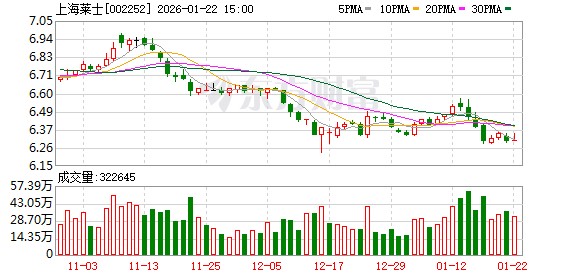
天坛生物承压换帅 血制品业迎加速整合期
2 1 Shi Ji Jing Ji Bao Dao· 2026-01-20 23:07
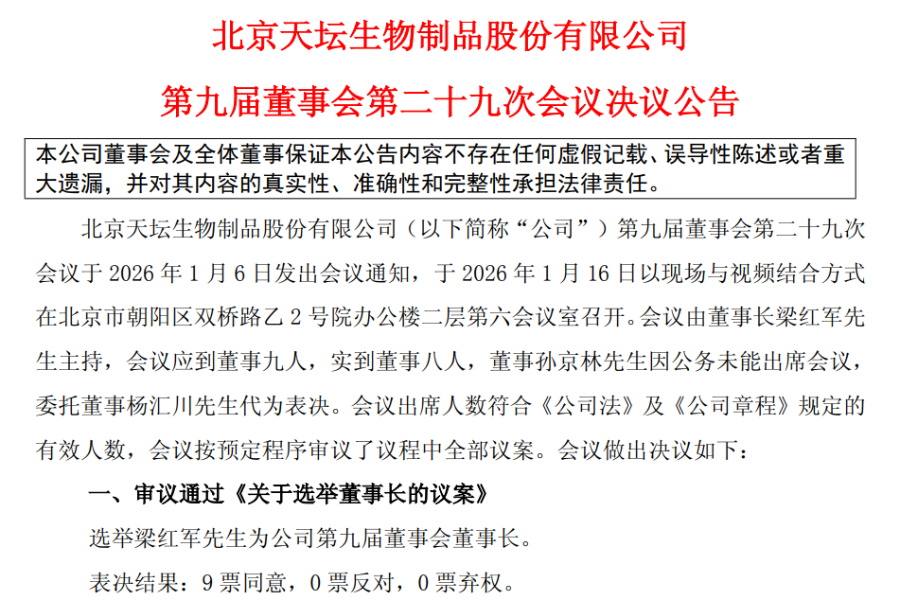
Group 1 - The core point of the article is the recent personnel changes at Tian Tan Biological Products, a subsidiary of China National Pharmaceutical Group, which aims to adapt to market changes and strengthen its position in the blood products industry [2][8] - Yang Huichuan resigned as chairman but remains as a board member and general manager, while Liang Hongjun has been elected as the new chairman [2][3] - Under Yang's leadership, the company saw steady revenue growth in 2023 and 2024, with revenues of 5.18 billion and 6.032 billion yuan respectively, and net profits of 1.11 billion and 1.549 billion yuan, marking increases of 25.99% and 39.58% [2][5] Group 2 - The blood products industry in China has experienced increasing performance differentiation and intensified market competition, prompting Tian Tan Biological's strategic personnel adjustments [2][6] - Liang Hongjun's appointment comes at a critical time as the company faces profit pressure, with a reported net profit decline of 22.16% in the first three quarters of 2025 [4][5] - The industry has seen a narrowing growth rate, with some companies like Hualan Biological and Boya Biological experiencing significant revenue declines, while others like Tian Tan Biological and Shanghai Lai Si have shown revenue growth [6][7] Group 3 - The blood products sector is undergoing consolidation, with fewer than 30 operational companies in China, making license resources scarce and acquisitions vital for enhancing competitive strength [7][8] - The industry is shifting from a low-competition, high-growth phase to a differentiated competition phase, necessitating continuous strategic adjustments from leading companies like Tian Tan Biological [8]

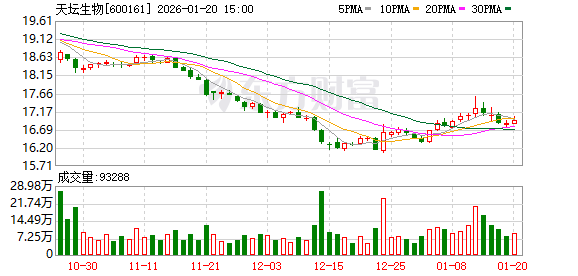
天坛生物承压换帅,血制品迎加速整合期
2 1 Shi Ji Jing Ji Bao Dao· 2026-01-19 12:29
Core Viewpoint - Tian Tan Biological, a subsidiary of China National Pharmaceutical Group, has undergone a significant personnel adjustment with the resignation of Chairman Yang Huichuan and the appointment of Liang Hongjun as the new chairman, indicating a strategic response to the competitive landscape in the blood products industry [1][3][4]. Company Summary - Yang Huichuan, who took over as chairman at the end of 2022, led the company to steady revenue growth, achieving operating revenues of 5.18 billion yuan and 6.032 billion yuan in 2023 and 2024, respectively, with year-on-year growth rates of 21.57% and 16.44% [3]. - The company reported net profits of 1.11 billion yuan and 1.549 billion yuan for the same years, with increases of 25.99% and 39.58% [3]. - However, since 2025, Tian Tan Biological has experienced fluctuations in performance, characterized by "increased revenue without increased profit" [3][5]. Personnel Changes - The new chairman, Liang Hongjun, has extensive experience within the China National Pharmaceutical Group and a strong financial background, which is seen as crucial for addressing the company's current need for cost control and profit stabilization [4][5]. - The dual leadership structure, with Yang remaining as general manager, aims to combine financial oversight with operational expertise [5]. Industry Context - The blood products industry in China has seen increasing performance disparities among companies, with Tian Tan Biological facing intensified competition [3][7]. - The industry has been experiencing a slowdown in growth, with some companies reporting significant revenue declines, while others, including Tian Tan Biological, have shown mixed results [7][8]. - The market is currently characterized by price declines and cash flow pressures, leading to concerns about the sustainability of profits in the short term [8]. Future Outlook - The focus for Tian Tan Biological in 2026 is expected to shift from expansion to improving quality and efficiency, emphasizing cost control and profit stability [6][9]. - The ongoing adjustments in leadership and strategy will be critical for the company to navigate the evolving market dynamics and competitive pressures [9].
上海莱士:目前公司运营一切正常,各项业务均有序推进
Zheng Quan Ri Bao Wang· 2026-01-16 12:16
证券日报网讯1月16日,上海莱士(002252)在互动平台回答投资者提问时表示,目前公司运营一切正 常,各项业务均有序推进。 ...
上海莱士:通过合规渠道向国内各类医疗机构供应符合国家标准的产品
Sou Hu Cai Jing· 2026-01-08 03:48
Core Viewpoint - The company, Shanghai Laishi, emphasizes its focus on producing and selling blood products while adhering to national regulations and procurement management standards [1]. Group 1: Company Operations - Shanghai Laishi's main business involves the production and sale of blood products, ensuring compliance with national drug management regulations [1]. - The company supplies products that meet national standards to various domestic medical institutions to fulfill clinical emergency and routine medical needs [1]. Group 2: Procurement and Disclosure - The company stated that any significant procurement cooperation will be disclosed in accordance with regulatory requirements and information disclosure rules [1].
“海尔系”再扩资本版图:海尔新能源启动IPO辅导
Zhong Guo Jing Ying Bao· 2026-01-06 07:23
中经记者 张英英 吴可仲 北京报道 海尔集团的资本布局再落一子。 近日,海尔集团旗下新能源公司——海尔新能源科技股份有限公司(以下简称"海尔新能源")首次公开 发行股票并上市辅导备案报告正式披露,其辅导机构为国泰海通。 关于此次IPO事宜,截至发稿,海尔新能源方面未向《中国经营报》记者置评。 创立于1984年的海尔集团,其业务及投资已延伸至多个领域。目前,海尔集团旗下资本版图已囊括海尔 智家、雷神科技、海尔生物、盈康生命、上海莱士、新时达、汽车之家、众淼控股等多家上市公司。 2024年9月,海尔集团旗下有屋智能登陆新三板。 此次海尔新能源若成功上市,将进一步扩充海尔集团的资本版图。 公开资料显示,海尔新能源成立于2022年5月11日,注册资本3.37亿元,法定代表人为董增。该公司控 股股东为海尔集团全资子公司青岛纳晖控股有限公司,后者直接持股59.4%。 2025年4月,海尔新能源完成超7亿元的A轮融资,获得国投创益、中国石油昆仑资本、普超资本、星航 资本、恒旭资本等资方投资。同年12月,海尔新能源获评"全球独角兽企业"。 从业务上看,海尔新能源聚焦"绿能+储能+智慧能源控制器",为家庭及工商业用户提供光伏、 ...
医药股深夜放大招:38巨头百亿回购血本,6家狂烧超5亿直接销户
Sou Hu Cai Jing· 2026-01-02 21:40
Core Viewpoint - In 2025, the pharmaceutical sector in the A-share market is actively engaging in stock buybacks, with many companies opting to destroy the repurchased shares, contrasting with the more subdued actions in the liquor sector [1][10]. Group 1: Buyback Activities - A total of 38 leading pharmaceutical companies participated in stock buybacks, with 6 companies spending over 500 million yuan, and the largest spending 1 billion yuan [1][3]. - WuXi AppTec, a major player in the pharmaceutical outsourcing industry, announced a buyback plan of 1 billion yuan, completing 497 million yuan by April 2025 [2][5]. - Hengrui Medicine, a leader in innovative drugs, announced a buyback plan of 2 billion yuan, having already repurchased 535 million yuan worth of shares by August 2025 [3][6]. - Other notable companies include Jingxin Pharmaceutical, which planned to spend 700 million yuan and has already spent 609 million yuan, and several others like New Harmony, Jiuzan Medical, and Nengte Technology, each spending over 500 million yuan [3][9]. Group 2: Purpose and Impact of Buybacks - The primary purpose of these buybacks is to cancel the repurchased shares, effectively reducing the total share capital and increasing the value of remaining shares for shareholders [4][10]. - This strategy is viewed as a strong signal of management's confidence in the company's future, especially during periods of low market sentiment [5][10]. - The buyback actions are seen as a more tangible commitment to shareholder value compared to merely announcing intentions to stabilize stock prices [4][10]. Group 3: Financial Health and Market Position - The companies engaging in these buybacks, such as WuXi AppTec and Hengrui Medicine, possess strong market positions and cash flows, allowing them to undertake such financial maneuvers [6][10]. - The buyback trend is not as prevalent in the liquor sector, indicating a potential difference in financial strategies and market confidence between the two industries [6][10]. - The buyback prices set by companies reflect a calculated approach, ensuring that they are responsible with shareholder funds [8][10].




万亿并购市场奏响“冰与火之歌”
2 1 Shi Ji Jing Ji Bao Dao· 2025-12-25 01:20
(原标题:万亿并购市场奏响"冰与火之歌") 一半海水,一半火焰。 2025年行至尾声,如行业所料,在"并购六条"等政策暖风之下,2025年的A股并购市场迎来了久违繁 荣。 Wind数据显示,今年以来,截至12月23日,A股市场更新的并购重组事件达到6074单(含涉及多家上市 公司的同一重组事件重复统计,下同)。其中,重大重组数量达到279单,比去年全年增长接近两倍,已 披露的交易总金额高达1.87万亿元,较去年全年增长超过十倍。 然而,繁荣之下,暗流汹涌。今年更新的重大交易中,有四分之一以失败收场,其中不乏大市值科技公 司发起的产业并购、同一控制权下的交易等。 "乘兴而来,败兴而归",不仅是大多数并购从业者的内心写照,亦是部分二级市场投资者挥之不去的阴 影。 年中终止的华大九天定增收购芯和半导体、年末终止的海光信息吸收合并中科曙光……从筹划到终止引 发的股价波动,在资本市场引发了不小的争议。年初终止的海尔生物吸收合并上海莱士,虽然因筹划时 间短没有引起股价波动,但复牌后海尔生物股价也出现大跌。 "重大资产重组由于涉及众多环节,本来失败的概率就比较高。而今年市场氛围比较火热,很多企业不 管是从提升质量的角度,还 ...


揭秘年内72单重大重组失利,半导体赛道失败率高
Xin Lang Cai Jing· 2025-12-25 01:00
Core Viewpoint - The A-share merger and acquisition (M&A) market has seen a significant revival in 2025, with a total of 6,074 M&A events reported, including 279 major restructurings, marking a nearly twofold increase from the previous year. The total disclosed transaction amount reached 1.87 trillion yuan, over ten times higher than last year. However, one-quarter of these major transactions ended in failure, highlighting underlying challenges in the market [1][3][12]. Group 1: Market Performance - The number of major restructuring events in the A-share market has increased significantly, with 279 major restructurings reported this year, compared to 72 last year [1][3]. - The total disclosed transaction amount for M&A activities reached 1.87 trillion yuan, reflecting a growth of over ten times compared to the previous year [1][3]. - The approval rate for M&A applications in the Shanghai, Shenzhen, and Beijing stock exchanges reached 100%, with 39 companies' applications reviewed this year, a 160% increase from last year [3][12]. Group 2: Reasons for Failure - A total of 72 major restructurings failed this year, primarily due to market factors such as changes in market conditions, disagreements on valuation, and inconsistent interests among minority shareholders [3][12]. - The semiconductor and biopharmaceutical sectors experienced higher failure rates, with 12 and 8 failed restructurings, respectively, attributed to significant valuation discrepancies and the nature of their business models [4][5][12]. - Notable failed transactions included the merger between Haier Biomedical and Shanghai Laister, which was terminated after only 15 days of planning, indicating a trend of rapid failures in the current market [6][15]. Group 3: Market Dynamics - The current market environment has led to impulsive M&A decisions, with companies eager to initiate transactions without thorough negotiations, resulting in many deals being called off [2][11]. - The introduction of new IPO policies has influenced companies' attitudes towards M&A, with many firms reassessing their strategies in light of the evolving regulatory landscape [5][14]. - The phenomenon of "flash crash" terminations has become more common, with 18 failed restructurings occurring within 100 days of announcement, indicating a lack of adequate negotiation time [6][15]. Group 4: Investor Behavior - Investors are advised to be cautious of "hype-driven" restructurings, focusing on whether the M&A aligns with the company's long-term strategy and whether there is substantial synergy [8][17]. - The speculative nature of some M&A announcements has led to significant stock price fluctuations, with examples of companies experiencing over 400% price increases before ultimately failing to complete their transactions [7][17]. - The market's reaction to M&A announcements has been volatile, with many investors engaging in irrational speculation, particularly in sectors like semiconductors and renewable energy [7][16].