
中金基金

Search documents
最高收益率超70% 首批浮动费率基金期末“成绩单”揭晓
Zheng Quan Shi Bao· 2025-12-28 22:29
Core Insights - The first batch of floating rate funds has shown significant performance differences, with some funds focused on AI achieving over 70% returns, while others targeting consumer and healthcare sectors performed poorly [1][2]. Group 1: Fund Performance - As of December 27, the top-performing fund, Huashang Zhiyuan, achieved a return of approximately 71.75%, followed by Xinao Advantage Industry at 54.44%, with several other funds exceeding 40% returns [2]. - A total of 26 floating rate funds were launched, with 10 funds outperforming their benchmarks, representing less than 40% of the total [4]. Group 2: Investment Strategy - Fund managers are under pressure to balance between seeking excess returns and adhering closely to benchmark indices, which requires enhanced asset pricing and industry rotation judgment capabilities [6]. - The floating rate mechanism encourages fund managers to focus not only on absolute returns but also on the controllability of excess returns and drawdowns [7]. Group 3: Market Trends - The AI sector remains a core focus for many top-performing funds, with significant investments in leading AI stocks contributing to their success [3]. - The overall market, represented by the CSI 300 index, saw a rise of approximately 18.32% in the second half of the year, positively impacting the net asset values of these funds [4].
中金基金总经理宗喆:发挥差异化竞争优势 助力客户财富保值增值
Zheng Quan Ri Bao· 2025-12-28 16:13
Group 1 - The core viewpoint emphasizes the need for public funds to enhance wealth management services, focusing on long-term stable returns to improve investor satisfaction and trust [1] - The importance of absolute return investment philosophy is highlighted, advocating for strategies that aim for positive returns while managing risks and controlling volatility [1] - The necessity for differentiated and diverse development in the public fund industry through product innovation and policy support is discussed, with a call for more opportunities for small and medium-sized institutions [2] Group 2 - A systematic approach and bottom-line thinking are recommended to balance development and safety in wealth management, ensuring the protection of investors' assets [3]
突破2600亿!指增“黄金时代”正在来临,来看大厂样本
券商中国· 2025-12-28 12:52
Core Viewpoint - The tightening regulation of performance benchmarks in the public fund industry is pushing all players towards a competitive landscape focused on these benchmarks, marking the beginning of a significant industry transformation [1] Group 1: Industry Trends - The index-enhanced strategy, which naturally aligns with benchmark constraints, has emerged as a significant structural trend in the market, with 177 new index-enhanced funds established in 2025, totaling over 975.18 billion yuan in new issuance, surpassing the total from 2022 to 2024 [2][3] - The performance benchmark is becoming a new guiding principle for the public fund industry, with regulatory actions aimed at promoting high-quality development, leading to a focus on performance assessment and management [2] Group 2: Market Response - By the end of Q3 2025, the scale of quantitative index-enhanced funds exceeded 260 billion yuan, showing significant quarterly growth [3] - The new products are primarily focused on broad-based indices like the CSI A500 and the Sci-Tech Innovation Index, while traditional indices like the CSI 300 and CSI 500 continue to thrive [4] Group 3: Competitive Landscape - A clear competitive hierarchy has formed among fund companies, with leading institutions like China Merchants Fund and Tianhong Fund establishing extensive index ecosystems, while mid-tier and smaller firms are attempting to carve out niches [5] - The top institutions are focusing on building comprehensive index ecosystems, while smaller firms are trying to specialize in specific strategies or niche indices [5] Group 4: Performance and Value Creation - As of December 26, 2025, 95.97% of enhanced index products achieved positive returns, with the highest return reaching 85.77%, indicating a strong performance across the board [6] - A significant portion of enhanced index products (86.01%) generated positive excess returns, with nine products exceeding 20% in excess returns compared to their benchmarks [6] Group 5: AI Empowerment - Tianhong's quantitative index-enhanced business has evolved into a crown jewel of passive investment, leveraging AI to achieve systematic and scientific investment strategies [9] - Over 70% of Tianhong's excess factors are derived from AI learning, showcasing a shift from traditional quantitative models to AI-driven approaches [10][11] - The team at Tianhong utilizes a comprehensive AI model that processes over 30GB of data daily to capture underpriced signals in the market, creating a highly engineered "alpha pipeline" [11][12]


首批新型浮动费率基金,“成绩单”揭晓
Sou Hu Cai Jing· 2025-12-28 10:03
Core Insights - The first batch of floating rate funds has shown mixed performance, with some funds achieving over 70% returns while others struggled, highlighting the challenges faced by fund managers in adapting to new benchmarks [1][2]. Group 1: Fund Performance - As of December 26, the top-performing fund, Huashang Zhiyuan, achieved a return of approximately 71.75%, followed by Xinao Advantage Industry at 54.44%, with several other funds also exceeding 40% returns [2]. - Despite the overall positive performance, only 10 out of 26 funds managed to outperform their benchmarks, indicating a less than 40% success rate [3]. Group 2: Investment Strategy and Challenges - Fund managers are required to balance the pursuit of excess returns with the need to stay close to benchmarks, which has raised the bar for their research and investment capabilities [5][6]. - The floating fee structure necessitates a focus on risk-adjusted excess returns and the controllability of drawdowns, shifting the emphasis from absolute returns to more nuanced performance metrics [6]. Group 3: Market Trends and Future Outlook - The AI sector has been a significant driver of returns for top-performing funds, with managers emphasizing the ongoing investment and growth in AI applications across various industries [2][4]. - Fund managers are encouraged to actively select stocks based on competitive advantages and cash flow quality, rather than merely following index weightings, to enhance their investment strategies [5][6].
首批新型浮动费率基金,“成绩单”揭晓
券商中国· 2025-12-28 09:30
Core Viewpoint - The first batch of new floating rate funds has shown mixed performance, with some funds achieving over 70% returns while others focusing on consumer and healthcare sectors have struggled, indicating that less than 40% of funds outperformed their benchmarks, highlighting the challenges faced by some fund managers in adapting to this new product structure [2][4]. Group 1: Fund Performance - The first batch of 26 new floating rate funds was launched in May, with 61 such funds established by the end of the year [3]. - As of December 26, the top-performing fund, Huashang Zhiyuan, achieved a return of approximately 71.75%, followed by Xinao Advantage Industry at 54.44%, with eight funds exceeding 20% returns and 15 funds over 10% [3]. - The leading funds heavily invested in the AI sector, with significant holdings in stocks like Zhongji Xuchuang and Dongshan Precision, which performed well throughout the year [3]. Group 2: Benchmark Performance - The CSI 300 index saw a rise of about 18.32% in the second half of the year, benefiting the net asset values of the floating rate funds [4]. - Despite the overall positive performance, only 10 out of 26 funds managed to outperform their benchmarks, representing less than 40% of the total [4]. - Some funds, despite having double-digit returns, still underperformed against their benchmarks, with one fund down nearly 30% relative to a highly elastic index [4]. Group 3: Managerial Challenges - The low percentage of funds outperforming benchmarks indicates that some fund managers are struggling to adapt to the performance-based structure of these products [5]. - Fund managers are required to balance the pursuit of excess returns with the need to control deviations from benchmarks, which raises the bar for their investment decision-making capabilities [5][6]. - The thematic benchmarks allow for significant active management opportunities, enabling fund managers to select stocks with competitive advantages rather than simply following index weights [6]. Group 4: Future Strategies - Fund managers are encouraged to incorporate stocks from the industry chain that benefit from macro themes but are not part of the index, enhancing their ability to capture industry trends [6]. - Active management should focus not only on absolute returns but also on the controllability of excess returns and drawdowns, which are becoming increasingly important metrics for investors [6]. - The ability to adjust positions and sector allocations in response to market conditions is crucial for maintaining performance and protecting against significant downturns [6].
3只沪深300指数ETF成交额环比增超100%
Zheng Quan Shi Bao Wang· 2025-12-26 08:57
Core Insights - The total trading volume of the CSI 300 Index ETFs reached 7.069 billion yuan today, an increase of 2.321 billion yuan from the previous trading day, representing a growth rate of 48.89% [1] Trading Volume Summary - Huatai-PB CSI 300 ETF (510300) had a trading volume of 3.903 billion yuan, up 1.869 billion yuan from the previous day, with a growth rate of 91.92% [2] - Harvest CSI 300 ETF (159919) recorded a trading volume of 820 million yuan, an increase of 328 million yuan, with a growth rate of 66.54% [2] - Huaxia CSI 300 ETF (510330) saw a trading volume of 432 million yuan, up 182 million yuan, with a growth rate of 72.54% [2] - Notably, Guolianan CSI 300 ETF (515660) and CICC CSI 300 ETF (510320) experienced significant increases in trading volume, with growth rates of 1929.28% and 638.58% respectively [1][2] Market Performance - As of market close, the CSI 300 Index (000300) rose by 0.32%, while the average increase for related ETFs was 0.35% [1] - The top performers included China Life Asset Management CSI 300 ETF (510380) and Invesco Great Wall CSI 300 Enhanced Strategy ETF (159238), which increased by 0.58% and 0.56% respectively [1]
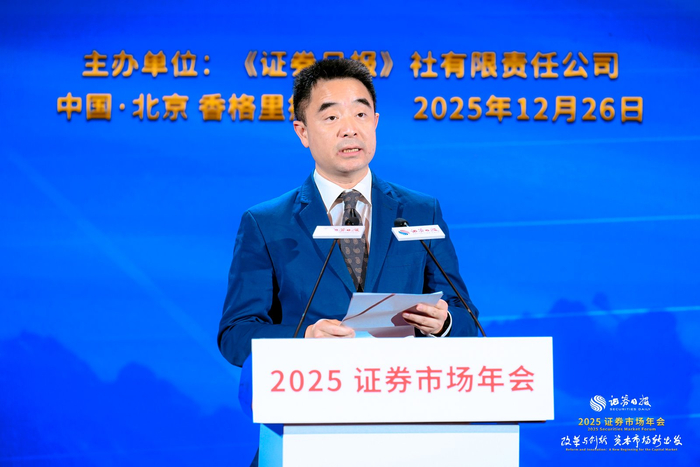
宗喆:金融机构发挥差异化竞争优势 助力客户财富保值增值
Zheng Quan Ri Bao Zhi Sheng· 2025-12-26 08:41
Core Viewpoint - The public fund industry is facing both opportunities and challenges, necessitating a focus on enhancing wealth management services and adapting to diverse investor needs for wealth preservation and growth [3][4][5]. Group 1: Industry Opportunities and Challenges - The public fund industry plays a crucial role in capital market stability and investor service, especially during the "14th Five-Year Plan" period, which presents new development opportunities [3]. - Challenges include declining interest rates and economic structural adjustments, which increase asset allocation difficulties and demand for improved investment research and product innovation [3][4]. - There is a shift in resident wealth management needs from single income pursuit to personalized, long-term wealth preservation and growth [3][4]. Group 2: Wealth Management Service Enhancement - The industry must enhance wealth management service capabilities, focusing on providing long-term stable returns to improve investor satisfaction [4][5]. - The relationship between asset management and wealth management is emphasized, with both aiming to create returns for clients [4]. - The implementation of new policies, such as the "New National Nine Articles," aims to strengthen the principle of prioritizing the interests of fund holders and guide the industry back to its core mission [3][4]. Group 3: Investment Philosophy and Market Confidence - The emphasis on absolute return investment philosophy is crucial in the current market environment, with a focus on achieving positive returns while controlling risks [5][6]. - Confidence in the A-share market is noted, supported by favorable fundamentals, liquidity, and ongoing policy efforts [5][6]. - The need for diversified asset allocation and risk hedging strategies is highlighted to ensure wealth growth and protect investor capital [6]. Group 4: Differentiation and Innovation in Fund Management - The "New National Nine Articles" encourages differentiated development among small and medium-sized fund companies, providing long-term guidance for their growth [7][8]. - The company has developed a comprehensive range of public products, including index-enhanced funds, to meet diverse investor needs and has received positive recognition for its historical performance [7][8]. - The company actively participates in innovative public products, such as public REITs, contributing to the industry’s development and providing stable dividend and long-term growth potential for investors [8]. Group 5: Recommendations for Industry Growth - Suggestions include enhancing participation opportunities for small and medium-sized fund companies in innovative product trials to stimulate industry dynamism [9]. - Increasing the proportion of small and medium-sized institutions in innovative product trials is recommended to foster their differentiated operational capabilities [9]. - Emphasizing a systematic approach to balancing development and safety in wealth management is crucial for protecting investor interests [9][10]. Group 6: Risk Management and Regulatory Focus - Attention to credit risk in key areas is essential, particularly regarding the high proportion of credit bonds in public funds and the potential impact of upcoming debt maturities [10]. - The importance of robust credit risk research and liquidity impact response strategies is emphasized to mitigate potential market pressures [10]. - The call for increased regulatory support and attention to credit risk management is highlighted as a necessary measure for the industry [10].
复盘2025,公募REITs震荡中突显韧性,2026年配置瞄准景气赛道与超跌机会
Mei Ri Jing Ji Xin Wen· 2025-12-26 02:14
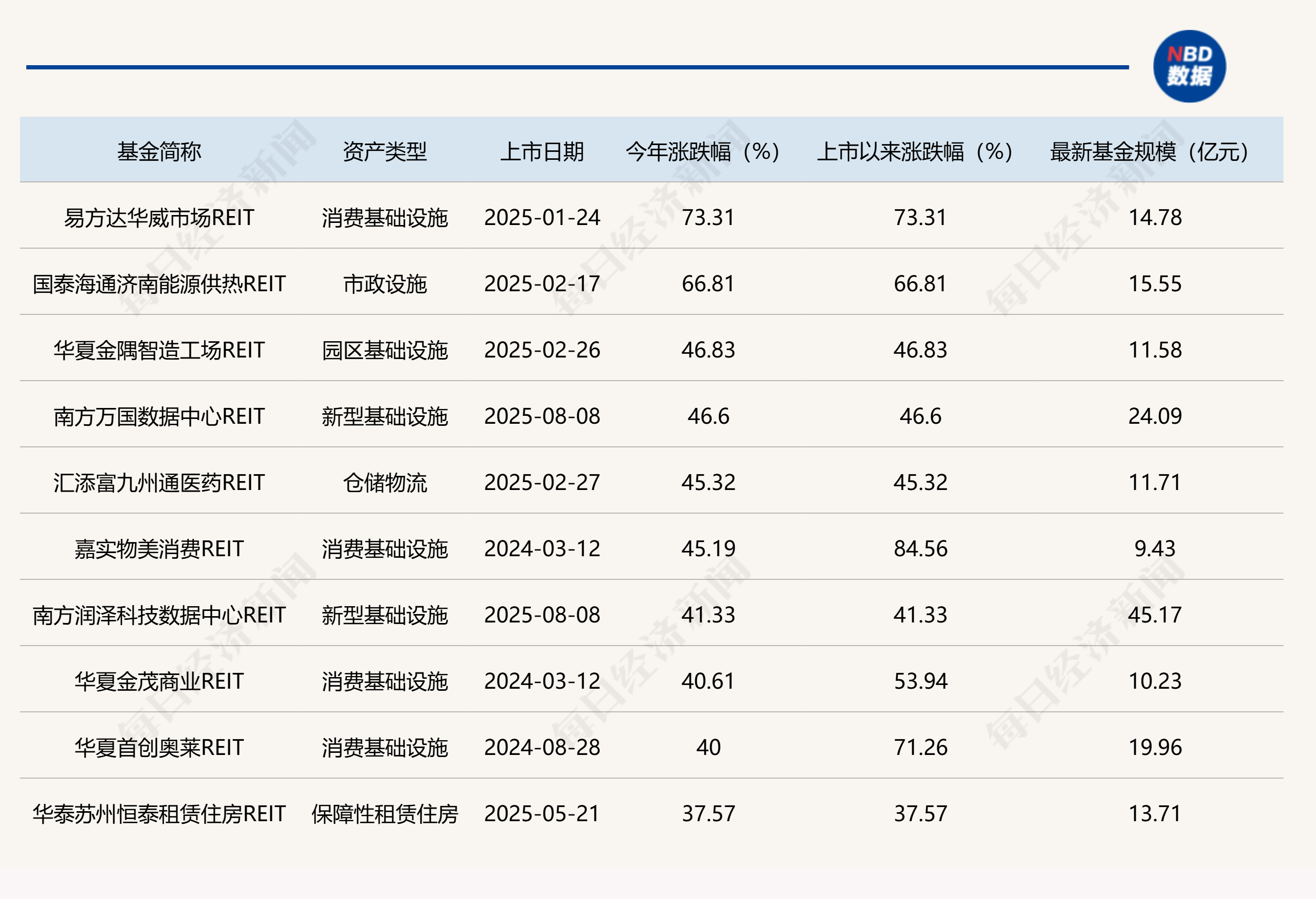
Group 1 - The core viewpoint of the articles indicates that the public REITs market in China is expected to experience rapid growth in 2025, with nearly 80 products issued and a total market value exceeding 220 billion yuan, covering various asset types including parks, consumption, transportation, and energy [1][2] - The secondary market for public REITs showed a "rise first, then fall" trend in 2025, with a cumulative increase of 14.2% in the first half of the year, followed by a noticeable decline in the second half due to rising long-term interest rates and release pressure [1][11] - The issuance of new REITs in the primary market was driven by asset expansion and mechanism improvement, with notable projects including the first data center REITs and the first municipal infrastructure REIT [1][2] Group 2 - As of November 2025, 78 public infrastructure REITs had been issued, raising a total of 209.5 billion yuan, with a market value of approximately 222.3 billion yuan [2] - Among the 77 listed products, 61 saw price increases, with 25 products rising over 20%, and 15 of those exceeding 30% [2][4] - The best-performing product was the Yifangda Huawai Market REIT, which increased by 73.31% since its listing in January 2025, reflecting strong market enthusiasm [4] Group 3 - The worst-performing products were primarily industrial park REITs, with seven out of the ten largest declines being from this category, indicating significant pressure on these assets [6] - Consumer and rental housing REITs showed strong performance, with increases of 22% and 13% respectively, while industrial parks were the only sector with negative returns by the end of November [6][11] - Experts predict that the REITs market in 2026 will see a steady improvement in overall conditions, driven by macroeconomic factors and ongoing policy support, despite potential challenges [7][8] Group 4 - Investment strategies for 2026 should focus on assets with stable cash flows and strong demand, particularly in sectors like consumption infrastructure and public utilities, while also considering opportunities in distressed assets showing signs of recovery [9][10] - A multi-dimensional evaluation framework is recommended for investors, emphasizing the importance of asset quality, management efficiency, and future growth potential [12]
复盘2025:公募REITs震荡中突显韧性
Mei Ri Jing Ji Xin Wen· 2025-12-25 14:55
Core Viewpoint - The public REITs market in China is expected to experience rapid growth in 2025, with nearly 80 products issued and a total market value exceeding 220 billion yuan, potentially driving over 1 trillion yuan in new project investments [1] Group 1: Market Performance - In 2025, the secondary market for public REITs showed a "rise then fall" pattern, with the CSI REITs total return index increasing by 14.2% in the first half of the year, followed by a noticeable decline in the second half due to rising long-term interest rates and unlocking pressures [1] - By December 10, 2025, 61 out of 77 listed public REITs had increased in value, representing nearly 80% of the total, while 16 products saw declines [2] - The top-performing public REITs included 25 products with gains exceeding 20%, and 15 of those had gains over 30%, with the highest being the E Fund Huawai Market REIT, which saw a rise of over 70% before a temporary suspension [2][3] Group 2: Asset Class Performance - Consumer REITs performed particularly well, with four out of the top ten products in terms of growth being from this category, while industrial park REITs faced significant pressure, with the largest decline being 22.57% for the Zhongjin Hubei Ketiang REIT [3] - The Jinan Energy Heating REIT, launched in February 2025, achieved a notable increase of 66.81% during the year, indicating strong market interest [3] Group 3: Future Outlook - Experts predict that the public REITs market will see both scale and quality improvements in 2026, with a more mature and deeper market expected to emerge [4] - The overall market sentiment is optimistic, driven by macroeconomic conditions and ongoing policy support, although individual REIT performance may vary significantly [5] - Investment opportunities are anticipated in sectors with stable cash flows and strong policy backing, particularly in areas like consumer infrastructure and public utilities [5][6]