
科济药业

Search documents
科济药业-B午前涨超4% 近日宣布与Dispatch Bio达成合作
Xin Lang Cai Jing· 2026-01-22 03:52
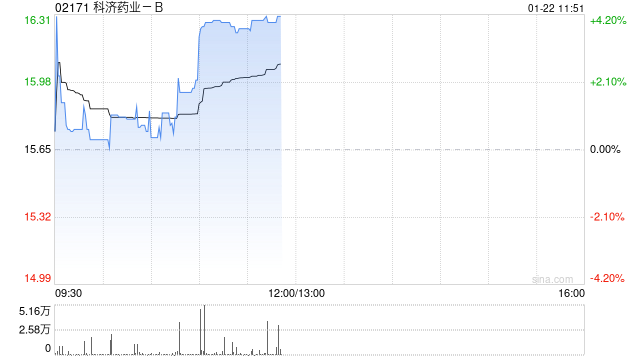
Core Viewpoint - The company Kintor Pharmaceutical (科济药业-B) has announced a clinical collaboration with Dispatch Bio to initiate a Phase I clinical trial in China by 2026, focusing on a combination therapy for solid tumors [1][5]. Group 1: Company Developments - Kintor Pharmaceutical's stock price increased by 4.22%, currently trading at HKD 16.31, with a trading volume of HKD 7.3022 million [1][5]. - The collaboration with Dispatch Bio involves the evaluation of the combination therapy DISP-11, which includes Dispatch's novel tumor-specific virus DV-10 and Kintor's targeted BCMA autologous CAR-T cell product, Kintor's ZKAB (泽沃基奥仑赛注射液) [1][5]. - Kintor's ZKAB has already received approval from the National Medical Products Administration (NMPA) in China for the treatment of multiple myeloma [1][5].

科济药业-B涨近4% 近日宣布与Dispatch Bio达成合作 计划开展赛恺泽相关临床试验
Zhi Tong Cai Jing· 2026-01-22 03:23
Core Viewpoint - 科济药业-B (02171) has seen a nearly 4% increase in stock price, currently trading at 16.27 HKD, with a transaction volume of 4.9417 million HKD. The company announced a clinical collaboration with Dispatch Bio to initiate a Phase I clinical trial in China by 2026, focusing on the application of the combined therapy DISP-11 in solid tumor patients [1]. Group 1 - The collaboration with Dispatch Bio involves the use of the Flare platform to develop a universal treatment for solid tumors [1]. - The combined therapy consists of Dispatch's investigational therapy, including the novel tumor-specific virus DV-10, and 科济药业's targeted BCMA autologous CAR-T cell product,赛恺泽 (泽沃基奥仑赛注射液) [1]. - 赛恺泽 has already received approval from the National Medical Products Administration (NMPA) in China for the treatment of multiple myeloma [1].
港股异动 | 科济药业-B(02171)涨近4% 近日宣布与Dispatch Bio达成合作 计划开展赛恺泽相关临床试验
智通财经网· 2026-01-22 03:19
Core Viewpoint - Kintor Pharmaceutical Co., Ltd. (02171) has seen a nearly 4% increase in stock price following the announcement of a clinical collaboration with Dispatch Bio to initiate a Phase I clinical trial in China by 2026 for a combination therapy targeting solid tumors [1] Group 1: Company Developments - Kintor Pharmaceutical has partnered with Dispatch Bio, a biotechnology company that utilizes its proprietary Flare platform to develop treatments for solid tumors [1] - The planned Phase I clinical trial will evaluate the application of the combination therapy DISP-11 in patients with solid tumors [1] Group 2: Product Information - The combination therapy consists of Dispatch's investigational therapy, including the novel tumor-specific virus DV-10, and Kintor's targeted BCMA autologous CAR-T cell product, SaiKezai (Zevorikioran injection) [1] - SaiKezai has already received approval from the National Medical Products Administration (NMPA) in China for the treatment of multiple myeloma [1]
2026年中国肿瘤免疫细胞治疗行业发展驱动因素、市场现状、获批产品情况及未来趋势研判:行业发展迅速,产品种类日益丰富,未来渗透率将不断提升[图]
Chan Ye Xin Xi Wang· 2026-01-20 00:58
Core Insights - The article discusses the rapid growth and development of immunotherapy for cancer treatment, particularly focusing on immune cell therapies such as CAR-T, CAR-NK, TCR-T, and TIL therapies, which have become a significant fourth modality in cancer treatment alongside surgery, radiation, and drug therapy [1][4]. Industry Overview - Immunotherapy involves collecting young, healthy immune cells, expanding them in vitro, enhancing their targeting capabilities, and reinfusing them into patients to combat pathogens, cancer cells, and mutated cells [1][4]. - The global market for tumor immunotherapy products is projected to grow at a compound annual growth rate (CAGR) of 149.1% from 2017 to 2024, reaching a market size of $7.1 billion by 2025 [1][6]. - In China, the market for tumor immunotherapy products is expected to reach 2.1 billion yuan by 2025, driven by the approval of various immune cell therapy products [1][8]. Development Background - China has the highest incidence and mortality rates of cancer globally, with 4.8247 million new cases and 2.5742 million deaths reported in 2022, accounting for 24.1% and 26.5% of global totals, respectively [4]. - The increasing disposable income of Chinese residents has improved their ability to pay for medical care, with healthcare spending projected to reach 2,547 yuan per capita in 2024, growing by 3.6% [4][5]. Current Market Status - As of the end of 2024, there are 1,040 immunotherapy products in clinical trials, with the U.S. and China leading in the number of trials [10]. - CAR-T therapy is the most commercially mature and widely tested method, with 15 drugs approved globally by December 2025, 8 of which are approved in China [12]. Future Trends - The clinical transformation of immunotherapy is expected to accelerate, with market penetration likely to expand, potentially exceeding 10 billion yuan by 2027 [13]. - Advances in gene editing and AI-assisted target selection are anticipated to enhance treatment precision, while universal and multi-target cell products are expected to become mainstream in research [13][14].

科济药业-B(02171.HK):自体CAR-T进入商业化兑现阶段 通用型CAR-T平台持续发力
Ge Long Hui· 2026-01-14 18:48
Group 1 - The company achieved a significant milestone by commercializing its CAR-T therapy, Zevokiorunsai (CT053), for the treatment of relapsed/refractory multiple myeloma (R/R MM), marking a successful transition from research to commercialization [1] - Zevokiorunsai received NMPA approval in February 2024, becoming one of the first BCMA-targeted CAR-T drugs approved in China, with a 71.6% sCR/CR rate among R/R MM patients [1] - The company has established a deep collaboration with East China Pharmaceutical, which has formed a dedicated commercialization team to promote Zevokiorunsai, with over 111 valid orders received [1] Group 2 - The company is advancing its pipeline in solid tumors with its core product, Shurujikiorunsai (CT041), targeting CLDN18.2 for gastric and gastroesophageal junction adenocarcinomas, which has entered the NDA stage [2] - CT041 demonstrated significant improvements in progression-free survival (mPFS) and overall survival (mOS) in clinical trials, particularly in patients with CLDN18.2 positive G/GEJC [3] Group 3 - The company is developing a universal CAR-T platform, THANK-u Plus, aimed at standardizing and scaling cell therapy production, with promising results in overcoming immune rejection issues [3] - CT0596, targeting BCMA, has received IND applications for clinical trials in R/R MM and primary plasma cell leukemia (pPCL), while CT1190B is in trials for R/R B-NHL [4] Group 4 - Preliminary results for CT0596 in R/R MM show a median follow-up of 4.14 months, with 6 out of 8 evaluable patients achieving at least partial response, and no severe adverse events reported [4] - The company has a pipeline for in vivo CAR-T therapies, demonstrating significant efficacy in mouse models for targeting CD19/CD20 [4] Group 5 - Revenue projections for the company are estimated at 118 million, 310 million, and 714 million yuan for 2025, 2026, and 2027 respectively, with net losses expected to decrease over the same period [4]
科济药业:与Dispatch Bio达成临床合作,探索Flare平台与赛恺泽 在实体瘤中的应用
Cai Jing Wang· 2026-01-13 04:42
Core Viewpoint - The announcement highlights a clinical collaboration between Kogei Pharmaceuticals and Dispatch Bio to initiate a Phase I clinical trial in China by 2026, focusing on the application of the combined therapy DISP-11 in patients with solid tumors [1] Group 1: Clinical Trial Details - The Phase I clinical trial will evaluate the combined therapy DISP-11, which includes Dispatch's investigational therapy developed on the Flare platform, featuring a novel tumor-specific virus DV-10 [1] - The combined therapy will also utilize Kogei Pharmaceuticals' targeted BCMA autologous CAR-T cell product, Zekai (CT053), which has already received approval from the National Medical Products Administration (NMPA) in China for the treatment of multiple myeloma [1]
全球策略-多行业联合电话会议-3月港股通调整前瞻
2026-01-12 01:41
Summary of Conference Call Records Industry Overview - The conference call focused on the Hong Kong stock market and various sectors including futures trading, virtual currency exchanges, and aluminum production. [1][2][5] Key Points and Arguments Hong Kong Stock Market - Significant inflow of capital into the Hong Kong stock market, with net inflow from January 1 to January 8 exceeding the total for December [1][2] - The appreciation of the Renminbi is expected to enhance the attractiveness of Hong Kong stocks to foreign investors [2] South China Futures - South China Futures has seen rapid growth in international business, with margin scale increasing from 3 billion to approximately 16 billion since 2021 [6] - Expected overseas business profit could reach 600 million RMB, benefiting from the shift of settlement business to Chinese companies and the interest rate environment [6][7] Virtual Currency Exchanges - Hashkey Holdings and OSL Group are actively developing in the virtual currency sector, with OSL Group projecting significant revenue growth by 2025 despite current losses [8][9] - OSL's revenue increased by nearly 60% in 2025, with trading volume up 200%, but the company remains in a loss position [9][10] - Hashkey focuses on building foundational systems and has a high percentage of institutional users [11] Securities and Financial Services - Yao Cai Securities reported a 6% increase in revenue and a 4.5% increase in net profit for the first half of 2025, driven by a 77% increase in brokerage income due to higher trading volumes [12][13] - The company has implemented technology to enhance customer retention and cross-border trading activity [12] Aluminum Industry - Innovation Industry has a strong position in the aluminum sector, with low power costs and logistical advantages [14] - The company plans to increase production capacity significantly by 2027, anticipating a supply-demand imbalance in the industry [14] Tungsten Resources - Jiaxing International owns a large open-pit tungsten mine with low extraction costs and significant resource potential [15][16] - The company is expected to increase production capacity significantly by 2027, with tungsten prices having risen over 200% since early 2025 [17] JD Industrial - JD Industrial, a subsidiary of JD Group, has shown steady growth with a focus on MRO and BOM segments, aiming to expand its market significantly [18][19] - The company reported an 18.9% revenue growth in the first half of 2025, with a focus on improving gross margins [19] Robotics Industry - Geekplus Robotics is a leader in the AMR sector, with a strong competitive edge due to its technology and customer base [20][21] - The company is expected to enter the Hong Kong Stock Connect in February 2026, which could act as a catalyst for its stock price [24] Biotech Sector - Weili Zhibo is developing next-generation antibody therapies with promising clinical data [25][26] - The company is focusing on universal CAR-T therapies, which could significantly reduce treatment costs compared to autologous CAR-T therapies [29][30] Other Important Insights - The upcoming adjustments to the Hong Kong Stock Connect are expected to include around 50 new stocks, primarily in healthcare, information technology, and consumer discretionary sectors [5] - The potential impact of U.S. government decisions and domestic policies in China on the market was discussed, highlighting the interconnectedness of global and local factors [3][4] This summary encapsulates the key insights and developments discussed during the conference call, providing a comprehensive overview of the current state and future outlook of the relevant industries.
开年国产创新药密集获批 上市药企迎来“中国首发”机遇期
Shang Hai Zheng Quan Bao· 2026-01-11 18:44
Core Insights - The approval of Zeshuo Pharmaceutical's injection of human thyroid-stimulating hormone beta (Zesuning) marks a significant milestone as it becomes China's first innovative product approved for precise assessment post-surgery for differentiated thyroid cancer [1][2] - The Chinese innovative drug industry is experiencing robust growth, with multiple new drugs receiving approval since the beginning of 2026, including innovative drugs from companies like Hengrui Medicine and BeiGene [1][2] - The National Medical Products Administration (NMPA) is enhancing support for innovative drugs, focusing on new mechanisms and targets, and aims to facilitate the "China first launch" of innovative drugs [3][4] Company Developments - Hengrui Medicine's innovative drug, the dual-specific antibody fusion protein Ruilafuzumab α injection, has been approved as the world's first anti-PD-L1/TGF-βRII dual-specificity antibody fusion protein for advanced gastric cancer [1][2] - BeiGene's innovative drug, Sotorasib tablets, has received conditional approval for treating chronic lymphocytic leukemia/small lymphocytic lymphoma and is the first and only BCL2 inhibitor approved for treating mantle cell lymphoma in China [2] - The approval of multiple innovative drugs reflects a significant increase in the number of innovative drugs approved in China, with 76 approved in 2025, surpassing the 48 approved in 2024 [2] Industry Trends - Approximately 20 major new drugs are expected to receive approval in 2026, covering various therapeutic areas such as oncology, infectious diseases, rare diseases, autoimmune diseases, and neurological disorders [3] - The Chinese innovative drug industry is transitioning from a follower to a competitor, with many domestic companies accelerating the development and market entry of groundbreaking innovative drugs [2][3] - The NMPA is implementing reforms to enhance the drug approval process, including the introduction of a data protection system for drug trials and a market exclusivity system for pediatric and rare disease medications [4][5] Policy Support - The NMPA is set to provide comprehensive support across the entire chain of communication, clinical trials, registration, and review processes for innovative drugs [4] - The new medical insurance directory has been implemented, facilitating the inclusion of innovative drugs in hospitals, which alleviates initial payment challenges for high-value innovative drugs [4] - The NMPA is also optimizing the review process for urgently needed foreign drugs, encouraging global simultaneous research and application in China [4][5]



新医保目录实施一周:创新药“首单”频现
Bei Jing Shang Bao· 2026-01-08 15:45
Core Insights - The new medical insurance directory has entered a substantial implementation phase, with multiple innovative drugs, including Tislelizumab and Fuzhengzhu, being covered by insurance in various hospitals, indicating a rapid reduction in access barriers for patients [1][3] - The adjustment includes 114 new drugs and introduces a commercial health insurance innovative drug directory for 2025, marking a significant shift towards a multi-tiered insurance payment system [1][3] Group 1: Innovative Drug Inclusion - The new medical insurance directory reflects increased support for "true innovation" with 124 unique products included, showcasing a strong emphasis on high clinical value [3][4] - Notable drugs like Tislelizumab, the first targeted therapy for thyroid eye disease, and Fuzhengzhu, a biological agent for psoriasis, have been rapidly integrated into the insurance system, filling long-standing treatment gaps [3][4] - Heng Rui Medicine is highlighted as a major beneficiary, with 20 products and indications adjusted, including 10 new drugs, enhancing patient access to innovative therapies [3][4] Group 2: Biotech Sector Impact - Companies like BeiGene, Innovent Biologics, and Kangfang Biotech are also benefiting from the new directory, accelerating their commercialization processes [4] - BeiGene is the only company with two products included in the first commercial insurance innovative drug directory, addressing unmet needs in cholangiocarcinoma and neuroblastoma [4] - Innovent Biologics has expanded its offerings to 12 innovative drugs under the new directory, creating a robust product matrix [4] Group 3: Shift in R&D Strategies - The introduction of the commercial insurance innovative drug directory is seen as a solution to the payment challenges faced by high-value innovative drugs, encouraging companies to focus on true innovation rather than me-too products [5][6] - The directory allows for a second market for high-priced therapies, with price reductions between 15% and 50%, which is less severe than the typical cuts seen in basic insurance [6][7] - This dual-directory model is expected to drive pharmaceutical companies to align their R&D strategies with real-world clinical needs, particularly in oncology and rare diseases [7][9] Group 4: Drug Exclusions - The adjustment also involved the removal of 29 drugs from the insurance directory, including Benalutide injection, which faced competition from more effective alternatives [8][9] - This "one in, one out" approach aims to enhance the efficiency of insurance fund usage by prioritizing high-demand and effective medications [9]

科济药业(02171) - 截至2025年12月31日止月份之股份发行人的证券变动月报表
2026-01-07 10:51
致:香港交易及結算所有限公司 公司名稱: 科濟藥業控股有限公司 呈交日期: 2026年1月7日 股份發行人及根據《上市規則》第十九B章上市的香港預託證券發行人的證券變動月報表 截至月份: 2025年12月31日 狀態: 新提交 FF301 第 1 頁 共 10 頁 v 1.1.1 FF301 II. 已發行股份及/或庫存股份變動 | 1. 股份分類 | 普通股 | | 股份類別 | 不適用 | 於香港聯交所上市 (註1) | 是 | | | --- | --- | --- | --- | --- | --- | --- | --- | | 證券代號 (如上市) | 02171 | 說明 | | | | | | | | | 已發行股份(不包括庫存股份)數目 | | 庫存股份數目 | | 已發行股份總數 | | | 上月底結存 | | | 574,242,655 | | 3,730,500 | | 577,973,155 | | 增加 / 減少 (-) | | | -3,943,656 | | 4,087,500 | | | | 本月底結存 | | | 570,298,999 | | 7,818,000 | | ...