
MediaTek

Search documents
QCOM vs. AMD: Which Semiconductor Stock is the Smarter Buy in 2026?
ZACKS· 2026-01-14 16:05
Core Insights - Qualcomm Technologies Inc. and Advanced Micro Devices, Inc. are leading firms in the semiconductor industry, focusing on mobile, PC, and data center markets, with an emphasis on AI and advanced chip technologies [2][4] - Qualcomm is transitioning from a wireless communications firm to a connected processor company, leveraging its extensive intellectual property portfolio [5][6] - AMD has evolved from a consumer-PC chip provider to an enterprise-focused company, bolstered by its acquisition of Xilinx and the introduction of new products [3][10] Qualcomm's Position - Qualcomm is well-positioned for long-term revenue growth, driven by strong 5G traction and a diversified revenue stream [5] - The company is expanding its Snapdragon chipsets for AI PCs and gaming, aiming to reduce reliance on the slowing smartphone market [6][9] - Despite its advancements, Qualcomm faces stiff competition from Intel in the AI PC market and from Samsung and MediaTek in the smartphone sector [7] AMD's Position - AMD is benefiting from rising demand for its EPYC processors and strong enterprise adoption, particularly in cloud deployments and AI applications [11] - The company is expanding its AI market presence with new products like the MI350 series and is seeing strong demand across various sectors [10][11] - AMD faces competition from Intel in traditional computing and from NVIDIA in the GPU market, but has had success in the mobile segment [12] Financial Performance - Qualcomm's fiscal 2026 sales and EPS estimates suggest modest growth of 2.7% and 1%, respectively, with positive trends in EPS revisions [13] - In contrast, AMD's 2025 sales estimates indicate a significant growth of 31.6%, with EPS expected to rise by 19.6%, although EPS estimates have been trending downward [14] - Over the past year, Qualcomm's stock has gained only 0.6%, while AMD has surged by 84.2%, indicating a stronger market performance for AMD [16] Valuation Metrics - Qualcomm appears more attractive from a valuation perspective, with a price/earnings ratio of 13.46 compared to AMD's 34.67 [17] - Both companies are rated with a Zacks Rank of 3 (Hold), but Qualcomm's lower valuation may provide a slight edge as a better investment option [18][19]



大摩闭门会-2026-亚洲科技硬件行业展望
2026-01-12 01:41
Summary of Key Points from the Conference Call Industry Overview - The overall outlook for the Asian technology hardware industry in 2026 is positive, particularly in the AI sector, with the AIGC market expected to reach $55 billion by 2029, significantly boosting revenues for companies like TSMC [2][3] - Non-AI segments such as the smartphone and PC markets are facing challenges, with the Chinese Android smartphone market projected to decline by 8-10% and the PC market expected to drop by approximately 10% [2][3] Memory Market Insights - The memory market is anticipated to perform well in 2026, with DRAM prices expected to rise by 50-60% quarter-over-quarter in Q1, and a potential annual price increase of around 20% [3][4] - DRAM order fulfillment rates are currently about 50%, while NAND fulfillment rates are between 60-70%, indicating a tight supply-demand balance [4] - There is significant potential for EPS and profit upgrades in memory stocks due to the upward price trends [4] HBM Market Developments - HBM4 is expected to receive NVIDIA certification around March and begin mass production by the end of Q1 or early Q2 [5] - Samsung plans to increase its HBM4 production capacity from 180K to between 200K and 250K, reflecting optimism in the HBM4 market [5] AI Sector Growth - The development of GPU and ASIC technologies in the AI field is promising, with NVIDIA making rapid technological advancements and minimal inventory concerns [6] - MediaTek anticipates producing 400,000 TPUs in 2026 and scaling up to 5 million units by 2027, alongside an upward revision of ADAS forecasts [6] OSAT Company Outlook - OSAT companies like Moonlight and KYC are expected to benefit from increased demand for AI semiconductors, with Moonlight planning a price increase of 5-20% [7] - KYC's capital expenditures remain strong, potentially exceeding last year's levels [7] Investment Recommendations - Samsung Electronics is recommended for memory stocks due to its aggressive pricing strategy and advantages in HBM [8] - In the ASIC sector, MediaTek, LGE, and GUC are favored, while OSAT companies Moonlight and KYC are also seen as strong investment opportunities [8] Company Guidance Expectations - TSMC is expected to provide a mid-year growth guidance of 20% in the upcoming earnings call, with potential for stock price increases if actual guidance exceeds expectations [8][9] - AI semiconductor business growth estimates may be revised from 45% to 60% based on global market models [8] Display Industry Insights - The display industry outlook has been upgraded to Overweight, with improvements in TV panel order momentum due to early promotional activities ahead of major events [10] - TV panel prices are expected to rise by an average of 1% in January, with stability in IT panel prices and slight increases in monitor prices [10] eInk Industry Evaluation - The eInk rating has been downgraded to Equal-weight due to a lack of strong catalysts in the short term, despite long-term growth potential in applications like electronic shelf labels [11] Company Performance Highlights - Apple reported better-than-expected revenue in December, with growth in its Switch business, while BizLink's revenue grew by 7% in Q4, exceeding expectations [13][19] - TSMC's reduction in resources for mature processes may benefit companies like Vanger in the long term [14][15] MediaTek's Progress - MediaTek is working on manufacturing TPU chips for Google, with testing expected around the Lunar New Year, facing challenges primarily related to ABF substrate shortages [16] L Chip and Marvell Collaboration - L chip is expected to dominate the bottom fan design in 2023, with positive developments anticipated in partnerships despite some controversies [17][18] Global Uniqlo Highlights - Global Uniqlo's ARM architecture CPU will see large-scale application in Google server systems, and collaborations with Tesla in AI design services are expected to yield significant revenue growth [19]
博通_拉斯维加斯见闻…CES 投资者会议中与半导体解决方案集团总裁交流的要点
2026-01-10 06:38
Summary of Broadcom Inc. Conference Call Company and Industry - **Company**: Broadcom Inc (Ticker: AVGO) - **Industry**: U.S. Semiconductors Core Points and Arguments 1. **Investor Concerns**: Investors have expressed worries about rising competition and customer-owned tooling (COT) potentially impacting Broadcom's AI-dominant position. However, the company believes these concerns are overblown and unlikely to dethrone them in the ASIC space anytime soon [2][11]. 2. **Technological Advantages**: Broadcom claims to have unique technological, scale, and supply chain advantages, particularly in their XPU roadmaps. They are positioned to keep pace with NVIDIA's innovation in the AI space, which is seen as a critical factor for success [2][3][12]. 3. **TPU Shipping Projections**: Broadcom anticipates shipping "many millions" of TPUs in 2026, with hundreds of thousands of TPU v8 units expected to ship monthly by year-end. The previously mentioned $73 billion order number is now considered "significantly higher" [4][15]. 4. **Financial Outlook**: The company remains bullish on its AI story, with current valuations providing an attractive entry point. The stock is rated as Outperform with a price target of $475 [5][16]. 5. **Supply Chain Management**: Broadcom is actively managing its supply chain, working with all HBM vendors and ensuring that they have dedicated substrate supply. They are focused on a limited number of large LLM customers, which allows for tighter management of resources [14]. Additional Important Information 1. **Innovations in Chip Technology**: Broadcom is innovating with 3D chip stacking and 400G serdes, which are expected to provide significant performance advantages over competitors. They have also built a substrate factory in Singapore to secure supply and manage costs effectively [3][13]. 2. **Financial Metrics**: - **Adjusted EPS**: Expected to grow from $6.82 in FY2025 to $14.86 in FY2027, indicating a strong CAGR [8]. - **Market Cap**: Approximately $1,576.38 billion [6]. - **Performance**: The stock has shown a 45% increase over the past 12 months [6]. 3. **Risks**: Potential risks to the price target include unexpected weakness in AI demand, share losses at key customers, and failure to execute on merger synergies [27]. This summary encapsulates the key takeaways from the conference call, highlighting Broadcom's strategic positioning, financial outlook, and the competitive landscape within the semiconductor industry.

亚洲半导体洞察:2026 年十大主题-Asia Semiconductor Insight_ Top 10 themes for 2026
2026-01-08 10:42
Summary of Key Points from the Conference Call Industry Overview - The focus is on Asia's logic semiconductor firms, with a robust growth forecast driven by cloud AI applications. Non-memory semiconductor revenue is expected to grow by **25% YoY in 2026**, following a **16% growth in 2025** [2][9]. Core Company Insights TSMC (Taiwan Semiconductor Manufacturing Company) 1. **Revenue Growth**: TSMC is projected to achieve **25% revenue growth** in USD terms for 2026, supported by strong demand for cloud AI products, particularly GPUs and ASICs [3][10]. 2. **Capex Increase**: Capital expenditures are expected to rise to **US$50 billion** in 2026, up from **US$42 billion** in 2025, to support leading-edge technology migrations [12][18]. 3. **Capacity Expansion**: TSMC's N3 capacity is forecasted to reach **170kwpm** by the end of 2026, up from **120kwpm** at the end of 2025, with tight utilization expected throughout the year [15][16]. 4. **Cloud AI Demand**: Cloud AI is anticipated to account for **35-40%** of N3 demand in 2026, with significant contributions from major clients like Nvidia and Google [16][18]. MediaTek 1. **TPU Production**: MediaTek's TPU efforts are expected to ramp up significantly, with sales projected to reach **US$0.8 billion** in 2026 and **US$4 billion** in 2027, driven by strong demand and potential upside in volume expectations [3][23]. 2. **Market Position**: The company is positioned to benefit from the growing market for cloud AI, with expectations of shipping around **1 million units** of TPU in 2027, with potential for much higher volumes [23][25]. Advanced Packaging and Testing 1. **CoWoS Capacity**: The industry is expected to see an **85% YoY increase** in CoWoS capacity in 2026, with TSMC's CoWoS capacity projected to reach **110kwpm** by Q3 2026 [4][28]. 2. **Technological Advancements**: Advanced packaging technologies are gaining traction, with Intel's EMIB also expected to ramp up production in H226 [4][28]. Stock Recommendations - Top picks include **TSMC**, **MediaTek**, and **ASE**, with buy ratings on several other companies such as **Aspeed**, **Hon Precision**, and **GlobalWafers**. Neutral ratings are given to **Vanguard**, **Realtek**, and **SMIC** [6]. Additional Insights - **Market Dynamics**: The semiconductor market is experiencing a shift, with mature foundries and OSAT expected to outgrow fabless companies in 2026 due to improved competition and pricing [5]. - **Silicon Wafer Supply**: Supply and demand for silicon wafers are expected to stabilize, with a more favorable pricing outlook despite some persistent oversupply [5]. - **Potential Risks**: Rising memory BOM costs could impact end demand for smartphones and PCs in 2026, posing a risk to overall market growth [5]. This summary encapsulates the key insights and projections from the conference call, highlighting the growth potential and strategic directions of major players in the semiconductor industry.
黄仁勋喊话“中国英伟达”:期待竞争,你们世界顶尖,但必须努力
3 6 Ke· 2026-01-07 04:13
Core Insights - NVIDIA's CEO Jensen Huang announced the launch of the Rubin platform, consisting of six new chips, and introduced the autonomous driving AI software "Alpamayo," referring to it as a "ChatGPT moment for robotics" [1][2] - Huang expressed optimism about the data center sales forecast, suggesting that recent developments could increase expectations for $500 billion in sales [1][3] - The company is focusing on the growing trend of open-source models, which now account for 25% of AITokens generated, indicating a significant shift in the AI landscape [1][3] Market Outlook - Huang emphasized a $10 trillion modernization of computing, with the labor market potentially reaching $100 trillion, highlighting the transformative impact of technology on the global economy [1][9] - The demand for NVIDIA's products is expected to increase, particularly with the anticipated return to the Chinese market and the contribution of the H200 chip [4][5] Competition and Strategy - Huang acknowledged the strength of Chinese competitors, stating that Chinese entrepreneurs and engineers are among the best globally, while also expressing confidence in NVIDIA's competitive edge [6][7] - The company plans to invest in its ecosystem, focusing on building technologies that do not currently exist and supporting its supply chain partners [11][14] Technological Innovations - The Rubin platform features innovations such as pluggable NVLink switches and power smoothing technology, which significantly reduce assembly time from two hours to five minutes [1][26] - Huang predicted that NVIDIA could become one of the largest CPU manufacturers and storage companies globally, driven by its extensive innovations across the computing stack [21][19] AI and Robotics - Huang stated that true human-level robots could be expected this year, emphasizing that robots will create job opportunities rather than replace human workers [2][40] - The autonomous driving technology, particularly the AlphaMayo system, is designed to operate safely without human intervention, aiming for Level 4 capabilities [27][29] Investment and Growth - NVIDIA is sitting on a substantial cash reserve and is considering various investment avenues, including acquisitions and partnerships to foster AI development [11][12] - The company is committed to maintaining its leadership in the AI industry by continuously innovating and collaborating with various sectors, including healthcare and manufacturing [9][16]

AI 供应链:CES 展会影响、ASIC 芯片生产、中国 AI 芯片-Asia-Pacific Technology-AI Supply Chain CES implications, ASIC production, China AI chips
2026-01-07 03:05
Summary of Key Points from the Conference Call Industry Overview - The focus is on the **AI semiconductor industry**, particularly the dynamics surrounding **AI GPUs** and **AI ASICs**. The demand for these components is expected to be strong in 2026, driven by supply factors such as memory availability and TSMC's 3nm technology [1][4][42]. Core Insights - **Nvidia's Production**: Nvidia's management reported that the **Rubin** compute board is in "full production," with assembly time significantly reduced from approximately **2 hours** for Blackwell to about **5 minutes** for Rubin. The launch is anticipated in the **second half of 2026** [2][54]. - **China's AI Chip Demand**: There is a forecast of around **2 million units** of H200 chips demanded by Chinese customers, with ongoing licensing processes. Companies like **ByteDance** are actively developing AI server racks compatible with both Nvidia and local chips [4][84]. - **Market Size Projections**: The total AI chip market is projected to reach **US$550 billion** by **2029**, which includes both AI GPUs and ASICs. This reflects a significant growth trajectory for the sector [5][42]. Capacity and Production Dynamics - **TSMC's CoWoS Capacity**: TSMC is expected to expand its CoWoS capacity by **20-30%** in 2026, with a revised forecast of **125kwpm** by the end of the year, marking a **79% increase** from previous estimates [12][43]. - **ASE/SPIL and Amkor**: Both ASE/SPIL and Amkor are also expanding their CoWoS capacities to meet rising demand from key customers like Nvidia, AMD, and AWS [13][14]. - **Google TPU Production**: Google is accelerating the production of its next-generation **TPU** chips, moving the timeline from **4Q26** to **3Q26**. Broadcom has also booked **30k** of CoWoS-S capacity to meet TPU demand [26][28]. Financial Outlook - **Revenue Growth**: TSMC is projected to generate **US$107 billion** from AI chip foundry services by 2029, which would account for about **43%** of its total revenue [44]. - **Cloud Capex Spending**: Estimated cloud capital expenditure for 2026 is projected to reach **US$632 billion**, indicating robust investment in AI infrastructure [45]. Risks and Considerations - **Supply Chain Risks**: The primary concerns for 2026 are expected to be shortages in memory, T-Glass, and TSMC's 3nm wafers, rather than CoWoS capacity itself [43][42]. - **China's Localization Efforts**: China is expected to increase its local chip production to support AI development, which may create additional demand for both local and foreign chips [81][82]. Additional Insights - **ByteDance's AI Server Racks**: At a recent conference, ByteDance showcased its **256-node AI server racks**, which are designed to work with both Nvidia and local AI chips, highlighting the competitive landscape in China's AI market [84]. - **Market Dynamics**: The AI semiconductor market is characterized by rapid growth and evolving dynamics, with significant implications for companies involved in chip production and supply chain management [42][43]. This summary encapsulates the key points discussed in the conference call, providing insights into the current state and future outlook of the AI semiconductor industry.


移远通信率先推出车规级5G R18模组AR588MA
Zhong Guo Qi Che Bao Wang· 2026-01-05 01:56
Core Viewpoint - The launch of the AR588MA 5G-A module by the company marks a significant advancement in automotive communication technology, addressing the demands for ultra-high bandwidth, ultra-low latency, and extreme reliability in next-generation smart vehicles [1][3]. Group 1: Technical Specifications - The AR588MA module is built on MediaTek's first 5G-A platform, featuring a modem performance that leads the industry, with a quad-core Cortex-A55 CPU clocked at 2.3GHz, supporting a downlink speed of up to 9.0 Gbps and an uplink speed exceeding 2.5 Gbps [3]. - It supports 400 MHz bandwidth and NR 5CC, along with DSDA (Dual SIM Dual Active) functionality, enhancing data transmission efficiency and stability [3]. - The module integrates satellite communication capabilities and adaptive network signal compensation algorithms, significantly improving network performance even in weak signal areas [5]. Group 2: AI Integration and User Experience - The AR588MA module incorporates AI technology for deep integration with vehicle communication, enabling a shift from "passive connection" to "active adaptation," which enhances network speed and connection stability [7]. - It features an intelligent scene recognition system and an AI network optimization engine, processing multi-dimensional data such as vehicle location and road conditions to optimize network performance [7]. Group 3: Reliability and Safety Standards - The AR588MA adheres to automotive-grade design standards, meeting AEC-Q100 Grade 2 for reliability in extreme conditions and ISO 21434 for automotive cybersecurity [8]. - It supports secure boot and hardware isolation technologies, ensuring stable connections and enhanced security for vehicle communication [8]. Group 4: Functional Features - The module supports eCall/NG-eCall emergency call systems, automatically transmitting critical data to emergency centers in the event of a collision [10]. - It includes GNSS positioning capabilities with dual-frequency support (L1+L5), providing high-frequency output for accurate navigation and path planning [10]. - The AR588MA is designed for compatibility with existing hardware and software, facilitating a smooth transition from traditional 5G to 5G-A, thus reducing development costs and time to market [10].


亚洲半导体与全球存储行业 2026:核心仍是 AI-Asia Semiconductors & Global Memory 2026 is still all about AI
2026-01-04 11:34
Summary of Key Points from the Conference Call Industry Overview - **Focus on AI**: The semiconductor industry in 2026 is heavily centered around AI, with strong demand for AI accelerators (XPU) leading to supply constraints in various components like CoWoS, memory, and logic wafers [1][20] - **Concerns about AI Bubble**: There are growing concerns among investors regarding the sustainability of AI investments, with discussions on whether the current AI boom is a bubble [1][20] Company-Specific Insights TSMC - **Top Pick**: TSMC is identified as the top investment pick due to its strong position in GPU and ASIC markets, which mitigates risks associated with potential AI bubbles [6][54] - **Revenue Growth**: Projected revenue growth of 23% in 2026 and 20% in 2027, with a 20% EPS CAGR [56][57] - **Capex Plans**: TSMC's 2026 capital expenditure is projected at USD 47 billion, a 15% increase YoY, with a decreasing capex/revenue ratio due to faster revenue growth [3][56] - **AI Revenue Contribution**: Expected to rise from 14.4% of total revenue in 2024 to 27.3% in 2026 [59] MediaTek - **Temporary Headwinds**: MediaTek faces temporary challenges in the mobile segment due to high memory prices affecting its TV SoC and other products [7][73] - **AI ASIC Upside**: Anticipated upside from AI ASIC projects, with projections indicating that TPU will contribute significantly to MediaTek's earnings in 2026 and 2027 [7][73] Samsung Electronics - **Valuation Increase**: Target price raised from KRW 130,000 to KRW 140,000, driven by higher valuation multiples [13] - **Market Position**: Samsung is expected to gain market share in HBM, with demand projected to double in 2026 [50] SK Hynix - **Target Price Increase**: Target price raised from KRW 650,000 to KRW 750,000, reflecting improved valuation multiples [13] Micron - **Target Price Increase**: Target price raised from USD 270 to USD 330, driven by higher valuation multiples [14] KIOXIA - **Underperform Rating**: KIOXIA rated as Underperform with a target price of JPY 7,000 [15] UMC and Vanguard - **Underperform Ratings**: UMC rated Underperform with a target price of NT$ 32.00, while Vanguard rated Market-Perform with a target price of NT$ 90.00 [17][19] Geopolitical Considerations - **China's Memory IPOs**: The potential IPOs of YMTC and CXMT are significant as they mark China's entry into the memory market, although they are not expected to alleviate supply shortages in 2026 [5][49] - **Technological Lag**: China is projected to lag behind TSMC by approximately 5 years in semiconductor technology, with SMIC's recent advancements not matching TSMC's capabilities [5][53] Market Dynamics - **CoWoS and HBM Growth**: CoWoS and HBM shipments are expected to rise significantly, with CoWoS capacity projected to increase from 724K wafers in 2025 to 1,250K in 2026 [22][46] - **Memory Price Trends**: Memory prices are expected to normalize by late 2026, but strong demand driven by AI will keep prices at healthy levels [8][42] Conclusion - The semiconductor industry is poised for significant growth driven by AI, with TSMC, MediaTek, Samsung, and SK Hynix positioned favorably. However, geopolitical risks and potential supply constraints from new entrants in the memory market warrant careful monitoring.
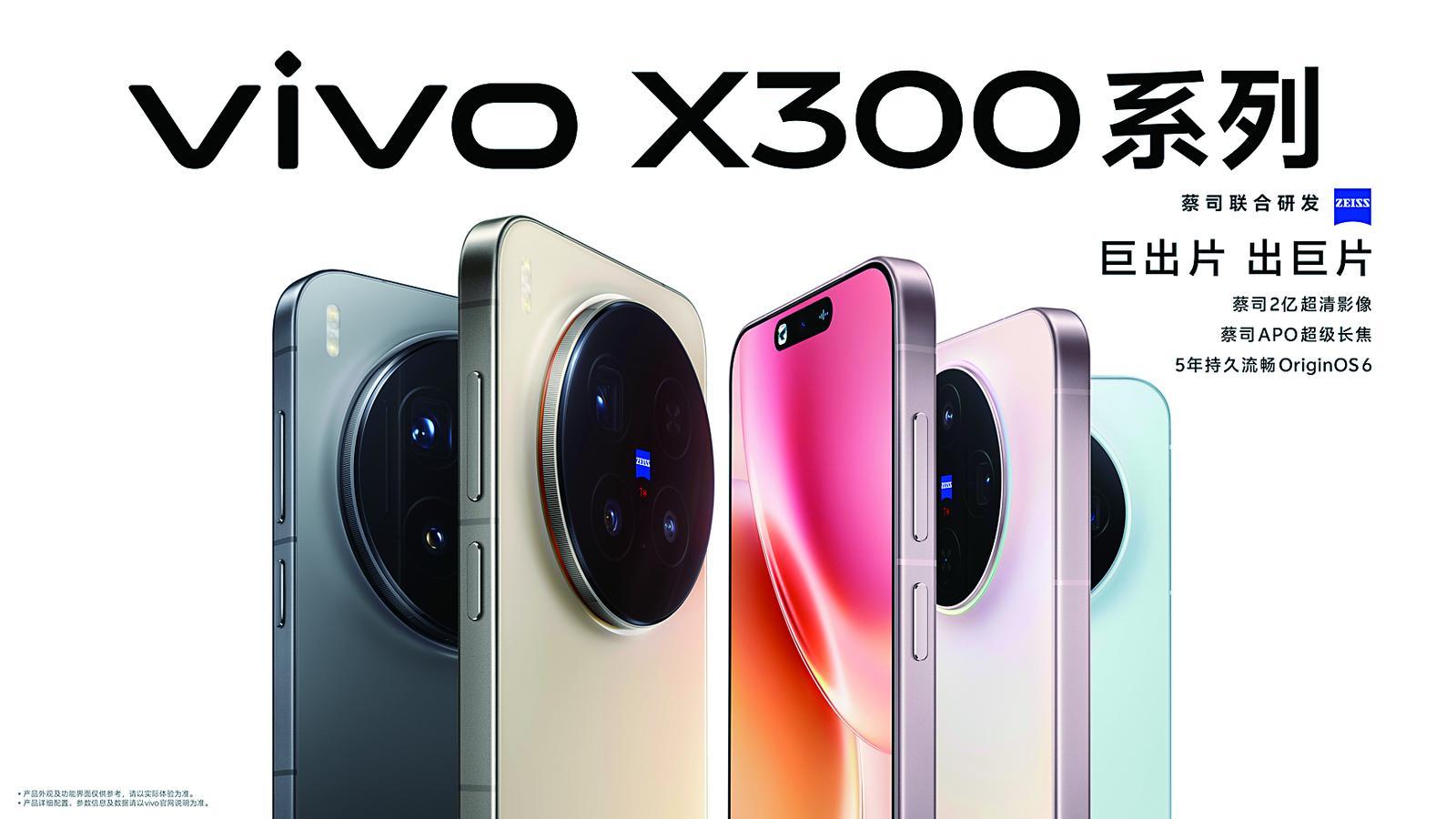
2025年度推荐榜——手机类 全能旗舰vivo X300系列
Xin Lang Cai Jing· 2025-12-29 17:12
Core Viewpoint - The launch of the vivo X300 series flagship smartphones establishes a new paradigm of "Zeiss 200 million imaging dual flagship," focusing on professional imaging and achieving comprehensive upgrades in performance, system, and design [2] Group 1: Product Features - The vivo X300 Pro is positioned as one of the "Zeiss 200 million imaging dual flagships," featuring the Zeiss APO 200 million super telephoto lens and a main camera developed in collaboration with Sony, utilizing the blueprint × LYT-828 sensor [2] - The series incorporates the self-developed blueprint imaging chip V3+ and the Dimensity 9500 flagship platform, enabling a comprehensive innovation in mobile imaging from parameters to scene experience [2] - All models are equipped with the second-generation semi-solid blue sea battery, offering battery life comparable to larger capacity models [2] Group 2: System and Performance - The new OriginOS 6, reconstructed with the "Blue River Smooth Engine," has received certification for "5 years of persistent smooth performance under heavy usage" and innovatively supports interconnectivity with the Apple ecosystem [2] - vivo has collaborated deeply with MediaTek to define the imaging super-efficient NPU of the Dimensity 9500, enhancing performance and energy efficiency [2] Group 3: Market Performance - vivo has maintained the top annual market share in China for four consecutive years and remains in the leading tier of the high-end market priced between 4000-6000 yuan [2] - The vivo X300 series has gained widespread market recognition and has been included in annual recommendation lists due to its outstanding product capabilities [2]
One Avantis ETF Beat Vanguard’s Biggest Funds in 2025 and Could Keep Running in 2026
Yahoo Finance· 2025-12-27 15:08
Core Viewpoint - The Avantis Emerging Markets Equity ETF (AVEM) achieved a 35% return in 2025, significantly outperforming major Vanguard funds, indicating a potential resurgence for emerging markets [1][2]. Group 1: Performance and Assets - AVEM holds $15.1 billion in assets and has a concentrated investment in Asian technology and financial sectors, particularly with 6.35% allocated to Taiwan Semiconductor [1][2]. - The fund outperformed the Vanguard S&P 500 ETF (VOO) and Vanguard Total Stock Market ETF (VTI) by approximately 17 percentage points in 2025 [1][2]. Group 2: Macro Factors - A key macroeconomic factor for AVEM in 2026 is the strength of the U.S. dollar; a 9% decline in the dollar during 2025 enhanced the attractiveness of emerging market assets [4]. - Continued dollar weakness is expected to provide tailwinds for AVEM, while monitoring the Federal Reserve's rate decisions and global growth expectations is crucial [5]. Group 3: China’s Economic Influence - AVEM's performance is heavily influenced by China's economic policies, with significant investments in Chinese tech giants and banks; supportive government measures in 2025 contributed to the fund's gains [6]. - If China's support for the private sector continues or accelerates in 2026, AVEM stands to benefit, but tightening policies or geopolitical tensions could pose risks [6]. Group 4: Sector Concentration and Risks - The fund's largest holding is Taiwan Semiconductor, and its returns are significantly driven by semiconductor stocks, which performed well due to increased AI chip demand in 2025 [7]. - This concentration in semiconductors creates vulnerability; any downturn in the semiconductor cycle or supply chain disruptions could adversely affect AVEM [7].