中航西飞

Search documents
企业竞争图谱:2025年商用无人机,头豹词条报告系列
Tou Bao Yan Jiu Yuan· 2025-10-14 13:57
Investment Rating - The report rates the commercial drone industry with a strong growth outlook, projecting a market size increase from 131.44 billion RMB in 2025 to 306.97 billion RMB by 2029, with a compound annual growth rate (CAGR) of 23.62% [46]. Core Insights - The commercial drone industry focuses on creating commercial value and enhancing operational efficiency through specialized equipment and integrated solutions [4][5]. - The market growth is driven by technological advancements, cost-effectiveness, and the emergence of new application scenarios such as low-altitude logistics and cultural tourism [4][49]. - The industry is characterized by high technical barriers compared to consumer drones, with a focus on long-term service cooperation rather than one-time sales [11][14]. Industry Definition - Commercial drones are defined as unmanned aerial vehicles designed to provide specialized services to enterprises and institutions, focusing on commercial value creation rather than personal entertainment [5]. Industry Classification - The commercial drone industry can be categorized into various application scenarios, including aerial photography, logistics delivery, agricultural protection, inspection and surveying, medical rescue, commercial performances, and derived commercial services [6]. Industry Features - The core demand of commercial drones is centered on "commercial value transformation," with a focus on addressing customer pain points [12]. - The technology requirements are higher than those for consumer drones, necessitating customized configurations and integrated solutions [13]. - The transaction model leans towards long-term service agreements, enhancing customer retention and profitability through ongoing service fees [14]. Development History - The industry has evolved through three main phases: the nascent phase (1990-2011), the startup phase (2012-2017), and the rapid development phase (2018-present), with significant technological advancements and market validation occurring in each stage [15][19]. Industry Chain Analysis - The industry chain consists of three segments: upstream (core components and key technology supply), midstream (drone manufacturing), and downstream (industry applications and operational services) [21][22]. - Upstream developments include advancements in materials and energy sources, such as carbon fiber and hydrogen technology, which enhance drone performance and reduce costs [23][30]. - Midstream challenges include limitations in battery energy density and signal transmission technology, which affect operational efficiency [24][38]. - Downstream applications are primarily in agricultural protection and surveying, with logistics delivery showing significant growth potential [43][44]. Market Size and Growth Drivers - The commercial drone market is expected to grow significantly, with agricultural protection projected to reach 30.93 billion RMB by 2025, accounting for 25% of the overall market [48]. - New application scenarios, such as low-altitude logistics and environmental monitoring, are expected to inject vitality into the market [49]. - The rise of the "Drone as a Service" (DaaS) model is lowering entry barriers for small and medium enterprises, further expanding the market [50].




可控核聚变或迎产业化加速推进
2025-11-04 01:56
Summary of Key Points from Conference Call Industry Overview - The conference call discusses the **controlled nuclear fusion** industry, particularly focusing on the **BEST project** and its implications for the market. The industry is entering a new phase with accelerated bidding for key components like power supplies and superconducting materials in the second half of the year [1][2][3]. Core Insights and Arguments - The **BEST project** has made significant progress, with the successful installation of the **Dewar base** into the main device, marking a new stage for the project [2][3]. - Other notable projects in the controlled nuclear fusion sector include those by **China Nuclear Group** and **Chengdu and Jiuyuan**, which are expected to have more bidding activities next year, impacting the market from 2026 onwards [1][4]. - The **controlled nuclear fusion supply chain** is centered around structural components such as vacuum chambers, divertors, blanket cold screens, magnets, and Dewars, along with upstream materials like low-temperature superconducting wires and tungsten materials [1][5]. - The **module power supply industry** is benefiting from the recovery of defense demand and the growth of AI applications, with the military market projected to reach **59 billion RMB** by 2028 [1][12][13]. - The demand for **AI servers** has significantly increased power consumption, leading to a need for high-performance, high-density, and reliable power supply systems, which in turn accelerates the application of modular and integrated power systems [1][14][16]. Additional Important Insights - The **magnet system** is crucial in controlled nuclear fusion, accounting for approximately **28%** of the experimental pile's value, with a shift towards high-temperature superconductors expected to reduce cooling requirements and costs [1][7]. - The **power supply system** plays a significant role, comprising about **8%** of the overall system, with domestic and international companies likely to secure contracts in upcoming bidding processes [1][8]. - The **controlled nuclear fusion supply chain** includes upstream materials, midstream equipment, and downstream research institutions, with key players identified in each segment [1][9]. - **West Superconducting** is a key supplier of low-temperature superconducting wires, with a projected market value of **500 million RMB** in 2025, despite currently lower market attention [1][10][11]. - The **module power supply industry** is expected to enter a high-growth cycle, driven by defense and AI applications, with the military module power supply market projected to exceed **10 billion RMB** by 2025 and **15 billion RMB** by 2028 [1][12][13]. - The global AI market is anticipated to exceed **11 trillion USD** by 2030, with related supply equipment markets growing even faster, indicating significant investment opportunities [1][17][18]. Conclusion - The controlled nuclear fusion industry is poised for growth with ongoing projects and increasing demand for related technologies. The module power supply sector is also expected to thrive due to rising defense and AI needs, presenting various investment opportunities in the coming years [1][12][13][17].
中航西飞:公司高度重视市值管理工作
Zheng Quan Ri Bao· 2025-10-13 13:16
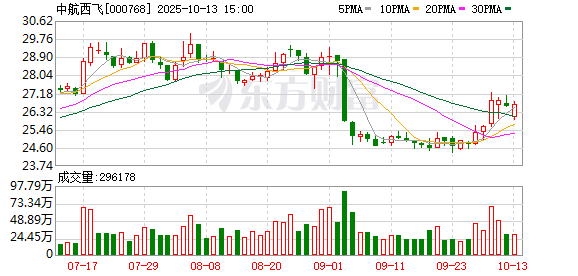
Core Viewpoint - The company emphasizes the importance of market value management and has detailed actionable steps to enhance its core business and investor communication [2] Group 1: Business Strategy - The company focuses on improving quality and efficiency in its core military and civil aircraft businesses by enhancing cost control and technological innovation to boost profitability [2] - The company integrates market value management into its AOS operational system to ensure effective implementation of measures [2] Group 2: Investor Communication - The company upgrades its communication mechanisms by building on existing performance briefings and research, participating in brokerage strategy meetings, and organizing events like "Investors Visiting Listed Companies" to proactively address market concerns regarding civil aircraft capacity and operational performance [2] Group 3: Commitment to Development - The company is committed to a high-quality development strategy and aims to actively convey its investment value to the capital market, enhancing investor understanding and recognition of the company [2]

中马联合军演临近,当前军工板块具有较高配置价值
Jianghai Securities· 2025-10-13 12:40
Investment Rating - The industry investment rating is maintained at "Overweight" [5] Core Viewpoints - The military industry is entering a medium to long-term layout turning point, with significant investment opportunities emerging due to international political turbulence and domestic military modernization efforts [4][5] - The recent unveiling of the J-35 aircraft production line indicates a continuous enhancement of national military strength, which is expected to lead to a rapid development phase in military trade [7] - The acceleration of satellite launches suggests that the commercial aerospace industry is poised for a new phase of rapid growth, benefiting related enterprises in the supply chain [7] Summary by Relevant Sections Recent Industry Performance - Over the past 12 months, the absolute return of the industry is 21.1%, while the relative return compared to the CSI 300 is 4.39% [3] Key Events - The "Peace and Friendship - 2025" joint military exercise between China and Malaysia is set to take place from October 15 to 23, involving over 1,000 personnel and more than 500 pieces of equipment [5] Investment Highlights - The military industry is expected to see a rebound after previous adjustments, with increasing investment value highlighted by the upcoming "14th Five-Year Plan" conclusion and ongoing geopolitical tensions [8] - The report suggests focusing on specific stocks such as AVIC Xi'an Aircraft Industry Group, AVIC Shenyang Aircraft Corporation, and others within the military sector [8]


自主可控逻辑崛起,国防军工ETF(512810)持续溢价交易!长城军工、奥普光电封死涨停板!
Xin Lang Ji Jin· 2025-10-13 06:54
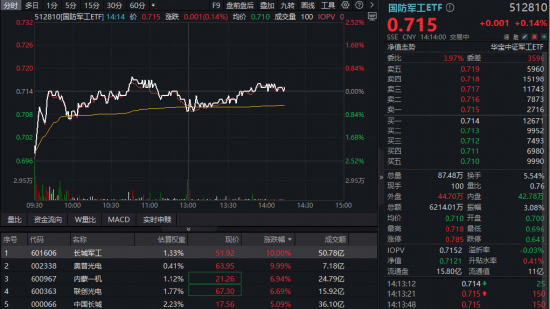
Group 1 - The defense and military industry showed resilience in the market, with the popular defense ETF (512810) experiencing significant trading volume of over 62 million yuan and multiple instances of premium pricing [1] - Key stocks such as Changcheng Military Industry and Aopu Optoelectronics reached their daily limit up, while Inner Mongolia First Machinery Group saw a rise of 6.94% [1] - The AG600 amphibious aircraft entered mass production, marking a breakthrough in domestic large civil aircraft self-supply, with the successful test flight of the second aircraft and the delivery of the third [3] Group 2 - The unveiling of the J-6 drone at the Changchun Airshow highlights the trend towards unmanned and intelligent equipment, which is expected to boost orders in upstream materials and electronics within the defense sector [3] - The defense industry is closely tied to national five-year plans, with upcoming significant meetings likely to clarify the focus areas for the 15th five-year plan, emphasizing the development of unmanned and intelligent equipment [3] - The defense and military sector is benefiting from industrial upgrades and the trend towards self-sufficiency, with sustained high demand for core equipment and an overall high industry prosperity [3] Group 3 - The defense ETF (512810) passively tracks the CSI Military Index, with its top ten weighted stocks including China Shipbuilding, AVIC Shenyang Aircraft, and Guoke Technology [3]

国防军工板块Q4行情可期,高端装备ETF(159638)回调蓄势,中国长城领涨成分股
Xin Lang Cai Jing· 2025-10-13 05:54
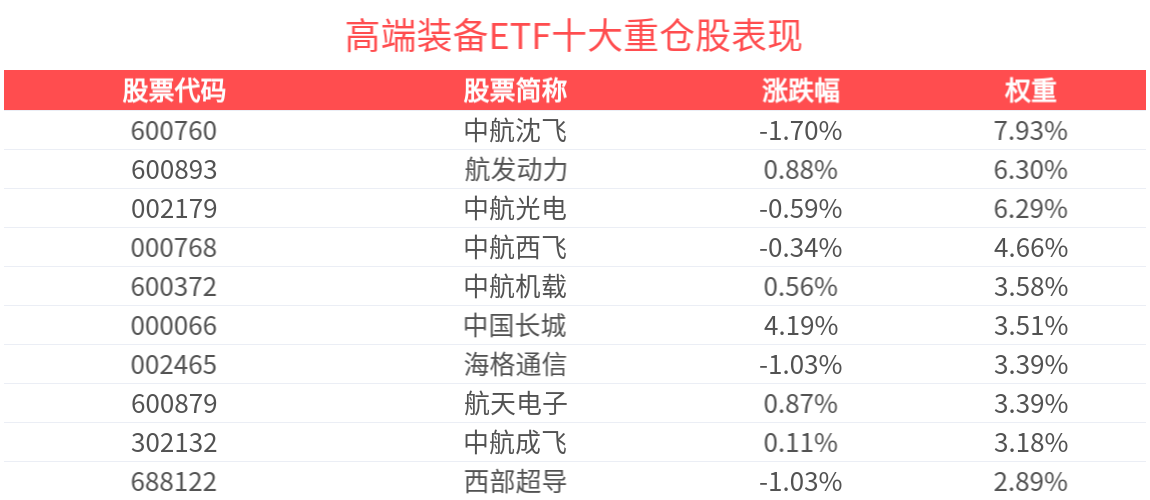
Core Insights - The China Securities High-end Equipment Sub-index 50 has seen a decline of 0.41% as of October 13, 2025, with mixed performance among constituent stocks [1] - The high-end equipment ETF (159638) has undergone adjustments, with a trading volume of 45.61 million yuan and a current scale of 1.103 billion yuan [1] - The high-end equipment ETF has recorded a net value increase of 21.10% over the past six months, with the highest monthly return since inception being 19.30% [1] - The defense and military industry sector is expected to perform well in Q4, with anticipated improvements in the third-quarter reports and upcoming events such as the 19th Dubai Airshow [1] Summary by Category Market Performance - The top ten weighted stocks in the China Securities High-end Equipment Sub-index account for 46.85% of the index [2] - Notable performers include China Great Wall, which rose by 4.19%, while Aviation Industry Corporation of China (AVIC) stocks showed mixed results [1][4] ETF Details - The high-end equipment ETF has a turnover rate of 4.16% and a total transaction value of 45.61 million yuan [1] - The ETF's performance metrics include a maximum monthly return of 19.30% and an average monthly return of 6.43% [1] Industry Outlook - The defense and military sector is expected to see a favorable Q4, driven by improved fundamentals and upcoming events that may catalyze order placements [1] - The "14th Five-Year Plan" framework is anticipated to provide further support to the sector [1]

我国战机在军贸市场有望取得新突破,火箭复用工厂建成后低轨卫星组网有望加速
Orient Securities· 2025-10-13 03:15
Investment Rating - The report maintains a "Positive" outlook for the defense and military industry in China [6] Core Views - China's military trade market is expected to achieve new breakthroughs, with the successful establishment of a reusable rocket factory accelerating the low-orbit satellite network [2][11] - The procurement of 20 J-10CE fighter jets by Bangladesh for $2.2 billion signifies the growing recognition of Chinese military products and the potential for market expansion [10][15] - The completion of the first reusable rocket factory in Wenchang, Hainan, marks a significant advancement in commercial aerospace infrastructure, paving the way for scalable and reusable rocket development [10][17] Summary by Sections Military Trade Developments - Bangladesh plans to invest $2.2 billion to purchase 20 J-10CE fighter jets, with the total procurement cost including training and logistics expected to reach $2.2 billion [10][15] - The international competitiveness of Chinese military equipment is increasing due to enhanced technology performance and cost-effectiveness, transitioning from a focus on individual product advantages to comprehensive solution capabilities [16] Commercial Aerospace Advancements - The first reusable rocket assembly and testing factory in Wenchang, Hainan, has been completed, which will significantly enhance the production capacity and testing capabilities for reusable rockets [10][17] - The factory is expected to lower launch costs and accelerate the progress of commercial low-orbit satellite networks [17] Current Market Outlook - The military industry has stabilized recently, with a focus on domestic demand and military trade developments as key growth drivers [20] - The report highlights the importance of upstream components and key materials in supporting the lifecycle of various military equipment, indicating potential benefits from demand amplification effects [20] - The report suggests continued optimism for the military sector, with specific investment recommendations for various companies within the industry [10][20]


激浊扬清,周观军工:第139期:可控核聚变或迎产业化加速推进
Changjiang Securities· 2025-10-13 01:41
Investment Rating - The report maintains a "Positive" investment rating for the industry [2] Core Insights - The report highlights the acceleration of industrialization in controllable nuclear fusion, with significant advancements in the BEST project, marking a new phase in construction [11] - The defense demand is steadily recovering, with AIDC accelerating construction, leading to a high prosperity cycle in the module power supply sector [33] - Bangladesh plans to procure 20 J-10CE fighter jets, emphasizing opportunities for high-end military trade manufacturers [74] Summary by Sections Section 1: Controllable Nuclear Fusion - The successful installation of the key component, the Dewar base, for the BEST device marks a critical breakthrough, with the project expected to demonstrate fusion energy generation by 2027 [11] - The current focus in the controllable nuclear fusion industry is on fusion devices and upstream material segments, which are expected to drive demand for upstream materials and midstream structural components [15] Section 2: Module Power Supply - Module power supplies are highly integrated power converters that offer flexibility, reliability, and efficiency, making them suitable for various high-tech applications [35] - The military module power supply market in China is projected to reach a total scale of 59 billion yuan from 2024 to 2028, with a compound annual growth rate of 14.7% [49] Section 3: Military Trade Opportunities - Bangladesh's procurement of J-10CE fighter jets represents a significant breakthrough in China's military trade, with a total contract value of $2.2 billion [74] - The report indicates that China's military aircraft have entered a new era of high-quality self-research equipment exports, with various models ready for international trade [78] - The report identifies key domestic companies involved in the nuclear fusion supply chain, including Shanghai Superconductor and West Superconductor, which are positioned to benefit from the growing demand in the fusion sector [21][24]
趋势研判!2025年中国信号模拟器行业特点、产业链、市场规模、重点企业及发展前景展望:技术突破驱动应用拓展,信号模拟器规模将增至52.5亿元[图]
Chan Ye Xin Xi Wang· 2025-10-09 01:17
内容概况:近年来,随着电子设备和通信技术的不断进步,我国对信号模拟器的需求日益增加。信号模 拟器凭借其高精度、灵活性和可编程性等特点,成为推动相关行业技术创新的重要工具。特别是在5G 通信、航空航天、汽车电子等领域,信号模拟器的应用日益广泛,市场需求持续增长。与此同时,国家 高度重视科技创新和产业升级,相继出台《关于加快科技创新 推动新质生产力发展的若干意见》《关 于加快推动科技创新和产业创新融合发展的若干政策措施》等措施推动科技产业的发展。在电子产业的 快速发展和政府对科技创新的大力支持下,中国信号模拟器行业市场规模不断扩大。数据显示,2018- 2024年中国信号模拟器行业市场规模从12.5亿元增长至44亿元,年复合增长率为23.34%。未来,随着国 内电子产业的持续扩张和5G、物联网等新兴技术的广泛应用,中国信号模拟器行业市场需求将持续增 长,预计2025年中国信号模拟器行业市场规模将达到52.5亿元。 相关上市企业:泓禧科技(871857)、思特威(688213)、云汉芯城(301563)、航天电子 (600879)、北京君正(300223)、晶晨股份(688099)、兆易创新(603986)、寒武纪 ...

探访运-20B:“胖妞”新款与运-20比有什么不同?
Yang Shi Xin Wen Ke Hu Duan· 2025-10-02 01:09
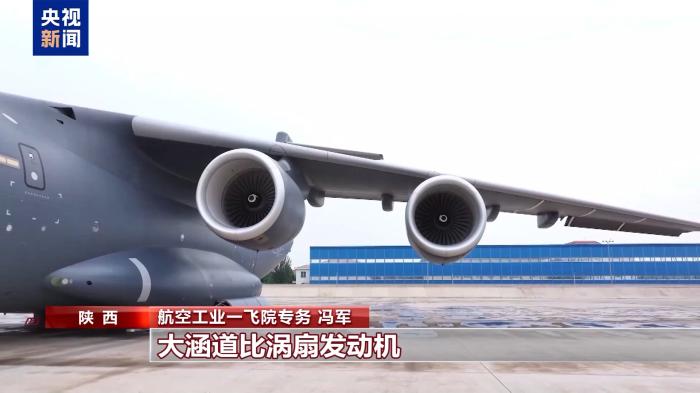
Core Viewpoint - The Y-20B, a large transport aircraft developed by China, has garnered significant attention due to its advancements over the previous Y-20 model, particularly in engine technology and operational capabilities [1][3]. Group 1: Aircraft Specifications - The Y-20B features a new self-developed high bypass ratio turbofan engine, which provides greater ground thrust and improved fuel efficiency compared to the Y-20A [3]. - Enhancements in fuel consumption, range, and payload capacity have been achieved with the Y-20B, making it more capable for strategic deployment [3]. Group 2: Operational Capabilities - The Y-20B has improved adaptability to harsh environmental conditions, allowing it to perform missions under more complex scenarios [3]. - The upgrades in power supply, hydraulic, and control systems accompany the new engine, further enhancing the aircraft's overall performance [3].