宇树科技

Search documents
春晚宇树四分半:全球人形机器人一哥的功夫梦
机器之心· 2026-02-19 12:07
Core Viewpoint - The article highlights the impressive advancements in humanoid robotics showcased by Yushu Technology during the Spring Festival Gala, emphasizing their unique technologies and the potential implications for various industries [3][5][6]. Group 1: Technological Advancements - Yushu Technology's humanoid robots, including the G1 and newly released H2 models, demonstrated high dynamic and collaborative autonomous control technology for the first time globally during a martial arts performance [5][12]. - The robots utilized 3D laser radar for scanning and positioning, enabling them to perform complex martial arts sequences while self-monitoring and quickly recovering from any anomalies [12][14]. - The performance showcased the robots' ability to execute high-difficulty stunts with centimeter-level landing precision and dynamic adjustments during high-speed movements [13][14]. Group 2: Practical Applications - The cluster control system demonstrated during the performance can be applied to industrial scenarios such as multi-robot collaborative inspections, warehousing, and assembly lines, enhancing operational efficiency [16][18]. - The robots' real-time fault tolerance capability allows them to adapt to external disturbances, making them suitable for precision assembly, heavy lifting, and domestic service tasks [18][21]. Group 3: Market Position and Financial Performance - Yushu Technology is the global leader in humanoid robot shipments, with over 5,500 units expected to be delivered by 2025, indicating a significant market advantage [25][26]. - The company has maintained profitability, contrasting with competitors like Boston Dynamics, which have faced financial challenges [23][25]. - Yushu's self-developed capabilities and supply chain integration have positioned it to rapidly bring robots to market, similar to the impact of the Ford Model T in the automotive industry [27][29]. Group 4: Future Outlook - The company is advancing in the field of embodied intelligence, aiming to integrate general AI capabilities into robots, allowing them to understand and interact with the real world autonomously [21][22]. - The anticipated growth in the embodied intelligence market could lead to a significant increase in industry activity, potentially surpassing previous technological revolutions [30].

这个春节,满眼都是机器人
Xin Lang Cai Jing· 2026-02-19 11:41
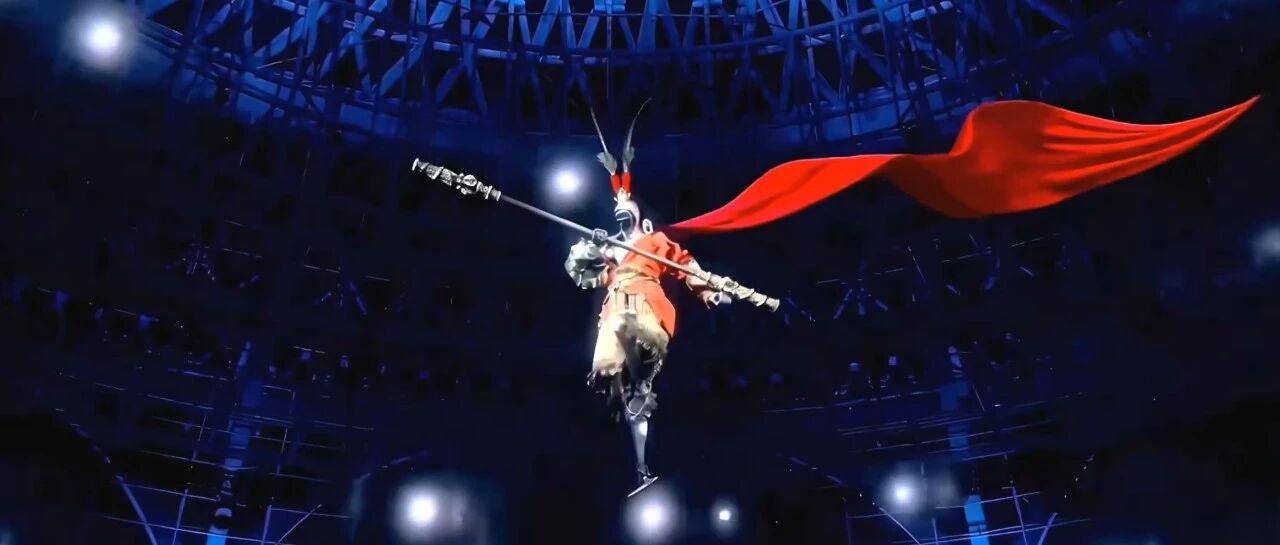
这个春节,机器人几乎无处不在。 人表演武术。截图自2026年春晚视频 与此同时,机器人的身影已活跃在我们身边:北京一家新开业的智能餐厅里,机器人往来穿梭,有的忙 着送餐,有的忙着送祝福;上海一家便利店前,机器人用欢快流畅的街舞表演为开业聚拢人气;浙江金 华市科技馆的新春主题活动上,机器人登台演绎传统婺剧;武侯祠成都大庙会上,机器人化身"赛博喜 神"精彩展演;广州白云迎春花市上,机器人穿着大花袄,踩着鼓点扭起秧歌。大年初一登上北京春晚 的机器人摇滚乐队"灵宝乐队",在舞台上实现多机协同、真实演奏,正月也将参加线下演出。 事实上,这些在舞台上攻克的技术难题,与真实场景中面临的挑战高度相通,具备明确的应用迁移路 径。 支撑机器人武术表演的集群自动控制系统,解决了数十台机器人在复杂队形下的实时调度与动作同步问 题。这一技术可迁移至工业场景中的多机器人协同巡检、仓储分拣、装配流水线等任务,实现规模化作 业的高效统筹。 今年春晚,银河通用展示了机器人从盘核桃、捡玻璃碎片、货架取物,到叠衣服、串烤肠等诸多应用能 力。而在全国近40家智慧零售药店中,这类机器人已实现24小时无人化盘点、拣选与配送交接,持续稳 定运行超过一年。 ...

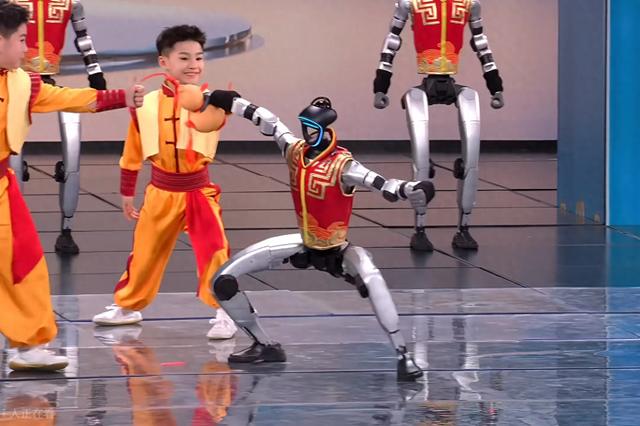
东吴证券:从《秧BOT》到《武BOT》,人形机器人从哪些方面完成“超进化”?
智通财经网· 2026-02-19 10:57
电子皮肤&3D视觉建议关注:【汉威科技】【福莱新材】【奥比中光】 东吴证券主要观点如下: 事件:人形机器人全面进军春晚,松延动力、宇树科技、魔法原子、银河通用四家机器人公司分别亮相 小品、武术、歌曲及微电影四大类节目 智通财经APP获悉,东吴证券发布研报称,机器人核心能力的长足进步是机器人春晚再度出圈的关键, 也是机器人能够真正从实验室走向工厂的关键。21-25年机器人产业链完成从0-1的发展,而展望26年特 斯拉&国内头部企业将同时开启大规模量产,开启1-10的新篇章。而在投资标的方面也会进一步收敛, 建议关注真正具备量产能力&进链的头部标的。 T链核心建议关注:①总成:【三花智控】【拓普集团】;②丝杠:【恒立液压】【浙江荣泰】【新坐 标】【五洲新春】;③谐波减速器:【绿的谐波】【斯菱智驱】 宇树链核心建议关注:【首程控股】【长盛轴承】【美湖股份】 银河通用链核心建议关注:【天奇股份】 机器人在空中的每一秒都需要精确计算,包括旋转速度、角度调整以及落地缓冲等环节。通过融合视觉 传感器、六维力传感器和惯性测量单元,机器人能在空中实时计算重心偏移量,以每秒上百次的频率调 整全身关节的角度,并保持良好的误差控制。 ...

春晚广告位争夺战:四十年国民记忆与商业暗流
凤凰网财经· 2026-02-19 10:54
Core Viewpoint - The evolution of the Spring Festival Gala sponsorship reflects the transformation of China's economy and consumer behavior over the past 40 years, showcasing the shift from material scarcity to technological innovation and brand storytelling [4][5]. Group 1: 1980s to Early 1990s - The Era of Material Scarcity - The transition from a planned economy to a market economy in the 1980s led to a scarcity of goods, making items like watches and bicycles symbols of wealth and status [6][7]. - The first brand to sponsor the Spring Festival Gala was Kambas watches in 1984, which used 3,000 quartz watches as payment, marking the beginning of brand sponsorship in the event [7][9]. - Kambas became a household name, with production reaching 1.26 million units by 1987 and over 2 million by 1991, highlighting the impact of the Gala on brand visibility and market demand [9][10]. Group 2: Mid-1990s to Early 2000s - The Rise of Consumerism - The late 1990s saw a surge in consumer spending, with households moving from basic necessities to larger purchases like televisions and refrigerators [12][14]. - In 1995, Shandong Kongfu Banquet Wine became the first "advertising king" of the Spring Festival Gala, paying 30.79 million yuan, initiating a trend among liquor companies [12][14]. - The sales of Qin Pool Wine skyrocketed from 180 million yuan in 1995 to 950 million yuan in 1996 after winning the sponsorship, demonstrating the immediate impact of Gala advertising [17]. Group 3: 2000s to 2010s - The Era of Brand Awareness - The early 2000s marked a shift towards household appliances as the main consumer focus, with Midea becoming a prominent sponsor, securing 16 sponsorships from 2003 to 2019 [18][20]. - The cost of advertising during the Gala increased significantly, with Midea's sponsorship rising from 6.8 million yuan in 2005 to 57.2 million yuan in 2011, reflecting the growing value of the event [20]. - Brands began to focus on storytelling and emotional connections with consumers, as seen with Haier and Gree, indicating a maturation of brand marketing strategies [21]. Group 4: Mid-2010s to Present - The Digital Economy and Technological Innovation - The rise of internet companies has transformed the Spring Festival Gala into a platform for digital engagement, with WeChat's "red envelope war" in 2015 significantly increasing viewer interaction [24][26]. - The Gala has become a battleground for tech giants, with platforms like Douyin and Kuaishou participating in interactive sponsorships, showcasing the shift towards a two-way communication model [29]. - The introduction of robots and AI technologies in recent Galas reflects China's transition from manufacturing to intelligent manufacturing, highlighting the importance of innovation in the economy [31].


速腾聚创发布正面盈利预告,预计2025年Q4首度实现单季度盈利
Xin Lang Cai Jing· 2026-02-19 10:43
Core Viewpoint - SUTENG JUCHUANG (02498.HK) is expected to achieve its first quarterly profit in Q4 2025, with profits projected to be no less than RMB 60 million [1] Group 1: Financial Performance - The company anticipates a significant increase in sales, with laser radar sales in the robotics sector expected to exceed 303,000 units in 2025, representing a year-on-year growth of over 1100% [1] - Total sales for Q4 are projected to reach 459,600 units, with sales from robotics applications at 221,200 units, nearly equal to the ADAS business [1] Group 2: Partnerships and Collaborations - In the humanoid robotics sector, SUTENG JUCHUANG has established partnerships with over 20 key clients, including YUSHU Technology, ZHIYUAN Robotics, and GALAXY General [1]
春晚AI闪耀台前 海致科技(02706)以 “可信 AI” 守护团圆与产业安全
智通财经网· 2026-02-19 09:59
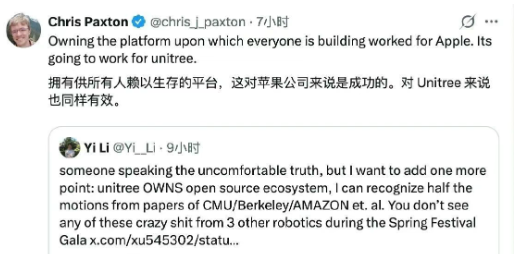
Core Insights - The 2026 CCTV Spring Festival Gala showcased China's AI industry, highlighting both the impressive capabilities of humanoid robots from Yushutech and the security risks associated with AI deepfakes, making "AI trust and safety" a key topic for the new year [1][4] Group 1: Yushutech's Innovations - Yushutech's humanoid robots received acclaim from top AI experts, with insights suggesting that the company has dominated the open-source humanoid robot ecosystem, similar to Apple's success in providing foundational development platforms [2][3] - Over the past five years, Yushutech has focused on developing reliable hardware and open-source software for humanoid robots, establishing a significant ecological barrier in the robotics field, with most cutting-edge research based on its G1 platform [3] Group 2: AI Safety Concerns - The skit "AI Partner" highlighted the risks of AI deepfakes, emphasizing that the challenges posed by AI-generated misinformation are now a pressing concern for the public, necessitating a shift in focus towards AI governance and content safety [4] - The emergence of AI safety as a critical issue has prompted the market to recognize the need for regulatory requirements and technological advancements to address these risks [4] Group 3: Haizhi Technology's Role - Haizhi Technology has been working on trustworthy AI solutions for over a decade, ensuring stability in essential services during the Spring Festival, such as transportation and electricity supply, by utilizing its unique technology [5][10] - The company's integration of graph-model fusion technology allows for real-time analysis and decision-making in critical sectors like transportation and energy, addressing the core challenges of AI safety and reliability [8][10] Group 4: Market Outlook - The contrasting presentations of Yushutech and Haizhi Technology illustrate the dual aspects of China's AI industry, with Yushutech representing the visible technological advancements and Haizhi Technology embodying the foundational support for societal needs [13] - Analysts suggest that the AI application market is far from over, with current market corrections providing a golden opportunity for quality investments in leading companies like Haizhi Technology, which has established a solid technological barrier and achieved scalable commercial applications [13][14]
春晚AI大乱斗:宇树稳了,豆包乐了
Xin Lang Cai Jing· 2026-02-19 09:56
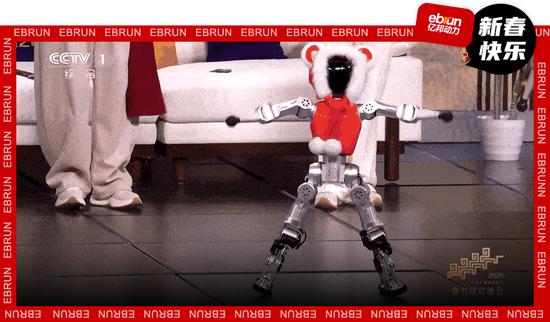
Group 1: Robotics Showcase - The 2026 Spring Festival Gala featured a record number of AI elements, showcasing four major robotics companies: Songyan Power, Galaxy General, Yushu Technology, and Magic Atom, each presenting unique performances [2][3][16] - Songyan Power's robots interacted with real actors in a skit, enhancing their realism by increasing motor control frequency by six times and adding three degrees of freedom for more natural movements [4][19] - Yushu Technology demonstrated advanced martial arts capabilities, performing complex maneuvers alongside human martial artists, showcasing significant advancements in motion control technology [4][18] - Magic Atom adopted an idol theme, performing with popular artists and demonstrating multi-robot collaboration in industrial tasks, marking a first for the Spring Festival stage [4][18] - Galaxy General's robots performed practical tasks, emphasizing their utility in household chores, thus appealing to everyday applications [5][18] Group 2: AI Model Competition - The competition in AI models is characterized by a "two strong divide," with ByteDance and Alibaba dominating the landscape [7][21] - ByteDance's Volcano Engine served as the exclusive AI cloud partner for CCTV, achieving 19 billion AI interactions and a peak of 633 billion tokens during the gala, showcasing its capacity to handle massive user engagement [7][22] - Alibaba's Qianwen secured exclusive partnerships with multiple regional TV stations, embedding itself deeply in content creation and addressing complex visual challenges in performances [8][23] - The strategies of both companies reflect a shift from early adopters to mainstream users, indicating a critical point in AI application adoption [8][21] Group 3: Market Implications - Yushu Technology reported over 5,500 units sold after last year's gala, indicating strong market demand and signaling potential for higher IPO valuations [10][24] - Songyan Power's focus on interactive capabilities suggests a promising path for robots in domestic and service sectors, with pre-sales exceeding 1,000 units [10][24] - Galaxy General's emphasis on cognitive capabilities positions it as a leader in practical applications, while Magic Atom focuses on engineering and mass production capabilities [10][24] - The competition in the AI model sector is more concentrated, with ByteDance and Alibaba capturing most resources, while Tencent and Baidu's roles remain more defensive [10][25]
春晚“假摔”以后,63万元机器人被秒抢
商业洞察· 2026-02-19 09:22
Core Viewpoint - The Chinese robotics industry is approaching a critical point, with significant market potential highlighted by the recent performance of robots during the 2026 Spring Festival Gala, showcasing advancements in technology and audience engagement [3][4]. Group 1: Industry Developments - The 2026 Spring Festival Gala featured a collaboration of four domestic robotics companies, marking a shift from individual showcases to a collective display of capabilities [7]. - The performance of robots, such as the self-standing action of Yushu Technology's robot, demonstrated advanced dynamic balance and captivated the audience, indicating a growing acceptance of robotics in entertainment [7][8]. - The immediate impact of the gala was evident in e-commerce, with significant sales spikes for featured robots, including a rapid sell-out of products from brands like Magic Atom and Yushu Technology [13][14]. Group 2: Market Dynamics - The Spring Festival Gala has been dubbed a "super roadshow" for robotics companies, with many preparing for IPOs, indicating a potential wave of public offerings in the near future [19]. - Despite the excitement, analysts caution that humanoid robots are still in their infancy, with limitations in their "brains" hindering commercialization [20]. - Current humanoid robot shipments are projected to grow from over 10,000 units in 2025 to approximately 30,000 in 2026, with expectations of reaching 150,000 units by 2030 and potentially exceeding 1 million by 2035 [21]. Group 3: Technological Challenges - The industry is facing challenges in meeting the practical needs of customers, with existing humanoid robots not fully satisfying market demands [20]. - The application of robots is expanding from entertainment to industrial and commercial services, but the complexity of tasks in service and home environments requires more advanced technology and cost considerations [22]. - Three main technological paths are emerging: VLA (Visual Language Action) models, world models, and layered decision-making, each with its own set of challenges related to performance, cost, and operational efficiency [22][23].

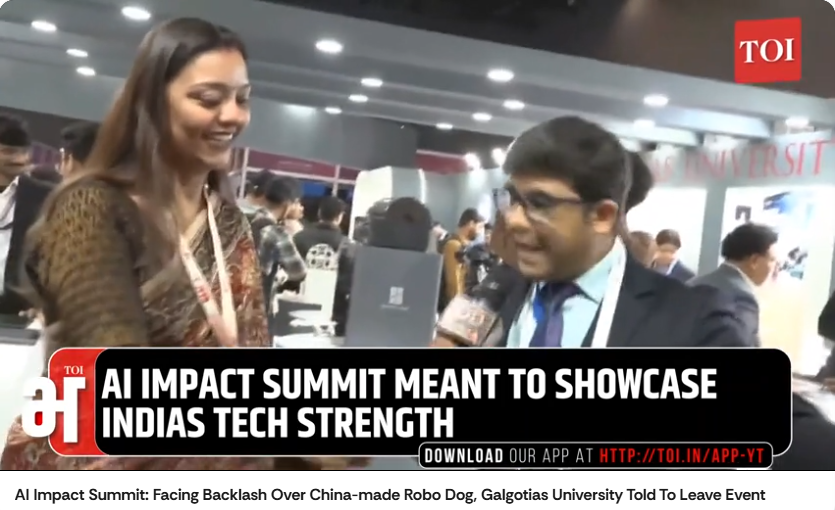
印度一大学被曝买中国机器狗冒充“自主研发”,被赶出国家级峰会,展位电源已被切断!校方回应:确实是从宇树买的
Mei Ri Jing Ji Xin Wen· 2026-02-19 09:04
据新华社援引《印度时报》等媒体18日报道,在新德里举办的印度人工智能影响力峰会期间,加尔戈蒂亚斯大学教授妮哈·辛格向媒体介绍一款名为"猎户 座"的四足机器狗,称其为该校研发成果。相关视频迅速在社交媒体发酵,有网友指出,该机器狗实际由中国企业研发,是一款在全球科研和教育领域广 泛使用的市售产品。 每经编辑|金冥羽 《印度时报》报道截图 印度电子和信息技术部长阿什维尼·瓦伊什瑙曾在社交媒体账号分享了这段视频,但发帖不久后就将其删除。 2月18日,印度反对党国大党在社交媒体平台X上发帖,称"莫迪政府在人工智能领域让印度沦为全球笑柄"。 据知情人士透露,主办方已经要求加尔戈蒂亚斯大学撤销展位、离开峰会,其展位电源已被切断。 值得一提的是,据新京报报道,该大学展示的一款由泡沫塑料制成的无人机模型也引发争议。有印度记者质疑这是四年级小学生的作业,还有网民要求撤 销该大学的办学资格。 当地时间2月18日,这所大学在社交平台X的官方账号发声明承认,展示的这台设备确实是从中国企业宇树科技采购的。声明还称,这台机器狗主要作为 学生学习和实验的工具使用,而非展品。 报道称,这款Unitree Go2型机器狗的售价约为20万至30万 ...
春晚广告位争夺战:四十年国民记忆与商业洪流
Xin Lang Cai Jing· 2026-02-19 07:21
Core Insights - The evolution of the CCTV Spring Festival Gala sponsorship reflects the transformation of Chinese society and economy over the past 40 years, showcasing the changing consumer demands and emerging industries [20][21]. Group 1: 1980s to Early 1990s - The Era of Scarcity - In the 1980s, as China transitioned from a planned economy to a market economy, consumer goods were scarce, leading to a high demand for basic commodities [22]. - The first brand to sponsor the Spring Festival Gala was Kambas watches in 1984, which used 3,000 quartz watches as payment, marking the beginning of brand sponsorship in the gala [22][23]. - Kambas became a household name, with production reaching 1.26 million units in 1987 and over 2 million by 1991, despite the high price of its watches relative to average incomes [23][24]. Group 2: Mid-1990s to Early 2000s - The Rise of Consumerism - The mid-1990s saw a shift in consumer spending from basic goods to electronics, with Shandong Kongfu Banquet Wine becoming the first "advertising king" by paying 30.79 million yuan for sponsorship in 1995 [26]. - The competition among liquor brands for sponsorship reflected the rise of "social consumption," where premium liquor became a status symbol for social gatherings [28]. - After winning the Spring Festival sponsorship, Qin Pool Wine's sales skyrocketed from 180 million yuan in 1995 to 950 million yuan in 1996, demonstrating the immediate impact of gala sponsorship [29]. Group 3: 2000s to Early 2010s - The Home Appliance Boom - The early 2000s marked a shift towards home appliances as the primary consumer focus, with Midea becoming the most frequent sponsor, securing 16 sponsorships from 2003 to 2019 [30]. - The cost of advertising during the gala increased significantly, with Midea's sponsorship fee rising from 6.8 million yuan in 2005 to 57.2 million yuan in 2011, an increase of 840% [30]. - Midea's revenue grew from 17.5 billion yuan in 2003 to over 140 billion yuan in 2014, reflecting the effectiveness of its gala sponsorship strategy [12][30]. Group 4: Mid-2010s to Present - The Digital Economy and Technological Innovation - The rise of internet companies has transformed the Spring Festival Gala into a platform for digital engagement, with WeChat's "red envelope war" in 2015 significantly boosting viewer interaction [15][35]. - The gala's advertising has evolved from one-way promotion to interactive engagement, with platforms like Douyin and Kuaishou participating in sponsorships [16][35]. - The presence of technology companies has increased, with innovations such as AI and robotics showcased during the gala, indicating a shift from traditional advertising to technology-driven marketing [19][37].