欧莱雅

Search documents
双十一17岁,流量盛宴更拼增量
2 1 Shi Ji Jing Ji Bao Dao· 2025-10-31 00:13
Core Insights - The necessity of the Double Eleven shopping festival is affirmed by industry leaders, viewing it as a significant commercial milestone despite the rise of live commerce and other sales channels [1][2] - Data from major platforms like Tmall, JD, and Douyin indicates strong sales performance during the event, with Tmall reporting over 80 brands achieving sales exceeding 100 million yuan and JD seeing over 5.2 million brands with sales up over 300% year-on-year [1][2] - The focus of Double Eleven has shifted from merely achieving high GMV to fostering long-term brand growth and customer loyalty, reflecting a more strategic approach to sales [2][9] Sales Performance - Tmall's opening night saw 80 brands surpassing 100 million yuan in sales, with 30,000 brands doubling their sales figures [1] - JD's promotions from October 9 to October 20 reported over 5.2 million brands with sales growth exceeding 300%, and over 3,300 categories experiencing doubled sales [1] - Douyin reported over 41,000 merchants achieving a 500% year-on-year sales increase through live streaming, with the number of merchants surpassing 100 million yuan in sales increasing by 900% [1] Changing Dynamics - The Double Eleven event is evolving from a chaotic sales frenzy to a more measured approach, with brands focusing on sustainable growth rather than just short-term sales spikes [2][3] - Consumers are showing fatigue towards complex discount mechanisms, leading platforms to adopt simpler pricing strategies such as direct discounts and no-threshold coupons [3][4] - The emphasis is now on customer lifetime value (LTV) rather than just GMV, indicating a shift in how platforms measure success [4] Brand Strategy - Brands are increasingly relying on their own live streaming channels rather than depending solely on top influencers, with significant growth in self-broadcasting sales [6][7] - The rise of brand self-broadcasting is supported by platforms offering tools and training, allowing over 200,000 small and medium-sized businesses to grow through self-broadcasting [7] - Successful marketing strategies during Double Eleven include leveraging celebrity endorsements and tailored promotions, leading to substantial sales increases for brands [8] Future Outlook - The Double Eleven festival is becoming a strategic node for brands to enhance their market presence and customer engagement throughout the year, rather than just a peak sales event [9] - The simplification of promotional mechanisms and the integration of instant retail are shifting the competitive landscape among platforms, focusing on ecosystem development rather than just promotional tactics [9]

Estee Lauder beats quarterly estimates on robust growth in fragrance business
Yahoo Finance· 2025-10-30 14:47
Core Insights - Estee Lauder exceeded Wall Street expectations for Q1 sales and profit, driven by strong demand for Le Labo and Tom Ford fragrances, alongside a recovery in China demand [1][5] Group 1: Financial Performance - The company reported quarterly sales of $3.48 billion, surpassing analysts' estimates of $3.38 billion [5] - Adjusted profit for the quarter ending September 30 was 32 cents per share, significantly above the estimated 18 cents per share [5] - Organic net sales increased by 3% compared to a 5% decline a year ago [3] Group 2: Market Trends and Consumer Sentiment - There is an improvement in consumer sentiment in China, although it remains subdued and has not fully recovered from historical lows [3] - The fragrance category experienced a 13% growth in organic sales, with a 9% increase in the China and Asia Pacific regions [4] Group 3: Strategic Initiatives - Under CEO Stephane de La Faverie, the company is focusing on luxury launches, streamlining its supply chain, and enhancing innovation and marketing efforts to revive sales [2] - The company is shifting production closer to key markets to adapt to changing trade policies affecting the retail industry [2] Group 4: Industry Context - Other luxury brands, including L'Oreal, LVMH, and Hermes, have also reported improvements in China, indicating a potential revival in the luxury market [4] - Despite the positive trends, sales in the Americas continue to slow down [5]

欧莱雅集团考虑独立或联合投资阿玛尼;海底捞将开汉堡店
Sou Hu Cai Jing· 2025-10-30 13:51
Group 1: L'Oréal and Armani Group - L'Oréal's CEO Nicolas Hieronimus expressed willingness to negotiate with Armani Group as per the late Mr. Armani's will [3] - The will stipulates that heirs must sell 15% of Armani Group's shares within 18 months and transfer an additional 30%-54.9% within 3-5 years to the same buyer [3] - L'Oréal recently acquired Kering Beauty for €4 billion and has sufficient cash reserves, indicating capability for independent or partnered investment in Armani [3] Group 2: Brownes Dairy - Brownes Dairy plans to seek buyers or investors next year, with the sale process already underway [5] - The company has garnered significant interest from potential investors and aims for an IPO in 2026 [5] - Brownes Dairy was previously put up for sale after a loan recovery by Mengniu, amounting to AUD 200 million (approximately RMB 92 million) [5] Group 3: Qingdao Beer - Qingdao Beer terminated its plan to acquire 100% of Jimo Yellow Wine due to unmet conditions in the share transfer agreement [7] - The acquisition was expected to enhance Qingdao Beer's market position and open new growth avenues [7] Group 4: KKR and Costa Coffee - KKR is among a few companies negotiating to acquire Costa Coffee from Coca-Cola [10] - Costa Coffee, the largest coffee chain in the UK, has seen a reduction in store numbers in China since its acquisition by Coca-Cola for £3.9 billion in 2018 [10] - KKR's expertise in the food supply chain and digital integration could enhance Costa's business model and cash flow if the acquisition proceeds [10] Group 5: Haidilao - Haidilao is set to open its first hamburger store, "Xiao Hai Ai Zha hiburger," in Hunan, indicating a shift towards expanding its product line [13] - The new store is an upgrade from an existing brand and aims to attract younger consumers with its hamburger offerings priced between RMB 28-39.9 [13] Group 6: 7-Eleven Japan - 7-Eleven Japan will launch hydrogen-roasted coffee in collaboration with UCC, using hydrogen as a heat source for roasting [17] - The new coffee product is priced at 149 yen (approximately RMB 7), slightly higher than regular hot coffee [17] - This initiative aims to enhance 7-Eleven's brand image and attract a more niche consumer base through an environmentally friendly narrative [17] Group 7: IKEA - IKEA's global retail sales fell by 1% in the 2025 fiscal year, marking the second consecutive year of decline [19] - Despite the sales drop, product sales and customer numbers increased by 3%, with 66 new sales points opened globally [19] - IKEA continues to implement a pricing strategy aimed at attracting more consumers amid intense market competition [19] Group 8: Moutai Group - Moutai Group announced a significant leadership change, appointing Chen Hua, the former head of Guizhou Energy Bureau, as the new chairman [22] - This marks the fourth leadership change in five years for the liquor giant, with expectations for Chen to drive expansion into new consumer segments [22] Group 9: Wahaha - Reports indicate that Zhu Lidan, a core executive at Wahaha, has left the company, with her office vacated [25] - This departure follows a leadership transition at Wahaha, where Zong Fuli took over, leading to the exit of several long-standing executives [25] - The loss of Zhu, known for her cost control expertise, may impact the company's operational efficiency and negotiation capabilities [25] Group 10: Alexander McQueen - Alexander McQueen announced a three-year strategic review, initiating a restructuring plan that includes cutting approximately 55 jobs, or 20% of its London headquarters staff [27] - The brand aims to simplify its international market structure to restore growth confidence [27] - The restructuring reflects a shift towards a more pragmatic approach for the luxury brand, known for its unique niche [27]







美团闪购推全套增长解决方案 为电商品牌“流量内卷”提供针对性解法
Zheng Quan Ri Bao Wang· 2025-10-30 13:45
Core Insights - Meituan has launched a comprehensive growth solution for domestic and international brands, addressing the challenges faced by e-commerce brands lacking offline channels and traditional platforms' traffic competition [1][2] - The "Brand Official Flagship Lightning Warehouse" initiative aims to provide brands with infrastructure for warehousing, distribution, and digital systems, enabling them to achieve lower costs, stronger brand recognition, larger scale, and more stable repurchase rates [1] - Over a hundred brands, including Sony PlayStation, Proya, Logitech, Kingston, and L'Oreal, have already joined the "Brand Official Flagship Lightning Warehouse," allowing consumers in major cities to shop at these brands' official stores on Meituan [1] Industry Trends - Meituan is also introducing various digital tools aimed at enhancing operational efficiency and accelerating product innovation for mature fast-moving consumer goods (FMCG) brands, while investing more in research and development for all retail sectors [2] - The competition in the instant retail sector has gained significant attention, with Deloitte reporting that traditional offline retail in China is expected to underperform by 2025, while instant retail is rapidly growing [2] - The industry's focus is shifting towards how instant retail can assist brands in innovating their operational strategies, with a trend emerging for e-commerce brands to accelerate their layout in new channels like instant retail [2]

Estee Lauder beats quarterly estimates on robust growth in fragrances
Yahoo Finance· 2025-10-30 12:23
Core Insights - Estee Lauder exceeded Wall Street expectations for Q1 sales and profit, driven by strong demand for Le Labo and Tom Ford fragrances, alongside a recovery in China [1][4] - The company's shares rose approximately 7% in premarket trading following the announcement [1] Group 1: Financial Performance - Estee Lauder reported quarterly sales of $3.48 billion, surpassing analysts' estimates of $3.38 billion [4] - The adjusted profit for the quarter ending September 30 was 32 cents per share, significantly above the estimated 18 cents per share [4] - Organic net sales increased by 3% after a decline of 5% in the previous year [3] Group 2: Strategic Initiatives - Under CEO Stephane de La Faverie, the company has focused on luxury product launches, supply chain optimization, and enhanced marketing efforts to revive sales [2] - The company is shifting production closer to key markets to adapt to changing trade policies that have impacted the retail industry [2] Group 3: Market Trends - The fragrance category experienced a notable organic sales growth of 13% in the latest quarter [3] - Sales in China and the Asia Pacific regions rose by 9%, indicating a positive trend in these markets [3] - Analysts suggest that the worst of the luxury slump in China may be over, positioning the company for long-term growth [4]
美团闪购推全套增长解决方案,称将为电商品牌"流量内卷"提供针对性解法
Ge Long Hui· 2025-10-30 12:22
Core Insights - Meituan has launched a comprehensive growth solution for domestic and international brands through its "Brand Official Flag Lightning Warehouse" initiative, aimed at e-commerce brands lacking offline channels and mature fast-moving consumer goods (FMCG) brands [1][4] Group 1: Meituan's Initiatives - Meituan's "Brand Official Flag Lightning Warehouse" provides targeted solutions by building infrastructure such as warehousing, distribution, and digital systems for brands, enabling them to achieve lower costs, stronger brand recognition, larger scale, and more stable repurchase rates [4] - Over a hundred brands, including Sony PlayStation, Proya, Logitech, Kingston, and L'Oreal, have already joined the "Brand Official Flag Lightning Warehouse," allowing consumers in major cities like Beijing, Shanghai, and Guangzhou to shop at these brands' official flagship stores on Meituan [4] Group 2: Industry Trends - The competition in the instant retail sector has garnered significant attention this year, with Deloitte reporting that traditional offline retail in China is expected to underperform by 2025, while instant retail and new business models are rapidly growing [5] - The focus of leading instant retail platforms, such as Meituan, is on helping brands find incremental growth, indicating a trend where e-commerce brands reliant on traditional channels are accelerating their expansion into instant retail and new channels [5]
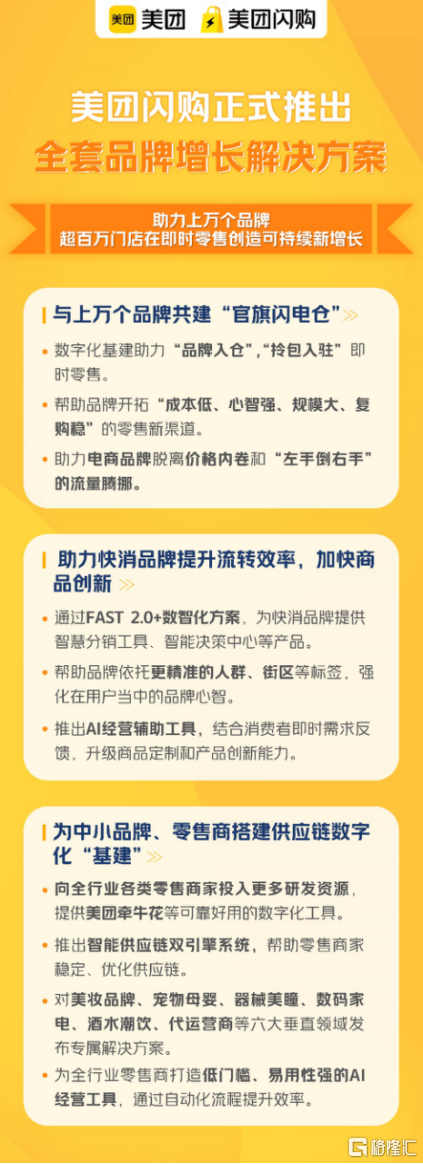
集齐了行业最重磅研发机构,上海大宁要做全球美妆科技的“发动机”
Xin Lang Cai Jing· 2025-10-30 12:22
Core Insights - The Jing'an District in Shanghai aims to establish the Danning Functional Area as a global hub for the beauty and health industry, focusing on technology, product launches, and talent aggregation [1] Industry Development - The beauty industry in Jing'an is supported by four core elements: brand building, basic research, R&D production, and market marketing [2] - Shanghai has the highest number of leading color cosmetics brands, with 17 brands headquartered in the city listed in the "2025 CBE·Hurun China Color Cosmetics Brand TOP50" [2] - In the first half of 2025, the retail sales of cosmetics in Shanghai reached 68.5 billion yuan, accounting for approximately one-third of the national total [2] - The "Several Measures to Further Promote the High-Quality Development of the Cosmetics Industry" was released, emphasizing technology empowerment, digital intelligence, and regulatory efficiency [2] Innovation and Collaboration - The "Meichuang Jingjie" beauty and health innovation ecosystem community is a key initiative for establishing Shanghai as a highland for the cosmetics industry [2][3] - The community aims to gather top research institutions to address skin issues specific to Chinese consumers, providing a collaborative platform for cosmetic companies [2][3] - A hackathon co-initiated with L'Oréal aims to attract young talent to explore cutting-edge technology applications [3] Infrastructure and Services - The first phase of "Meichuang Jingjie" covers 10,000 square meters, focusing on R&D and incubation, with plans for expansion to 30,000 square meters in the second phase and 50,000-100,000 square meters in the third phase [3] - The community will establish five service platforms, including public services, professional services, financial services, resource services, and talent services, to create an integrated beauty technology ecosystem [3] Partnerships and Global Outreach - Collaborations with Fudan University and local hospitals will enhance research and development capabilities in cosmetics [4][5] - "Meichuang Jingjie" will participate in the upcoming China International Import Expo to expand global business and collaborate with international partners [5]
美妆消费占国内三分之一,上海不只想当“美妆消费第一城”
Xin Lang Cai Jing· 2025-10-30 12:19
Core Insights - The global beauty industry is experiencing rapid development driven by technological innovation and consumer upgrades, with significant growth in the light medical beauty market [1] - China has become the largest cosmetics market globally, with the beauty industry expected to exceed 1,073.82 billion yuan in 2024 and 1,100 billion yuan by the end of 2025, indicating strong growth momentum [1] - The safety of medical beauty procedures and the difficulty in securing investments for innovative medical research companies remain challenges for industry development [1] Industry Development - The Chinese beauty industry has evolved beyond a single market dividend logic, integrating multiple disciplines such as medicine, bioengineering, and fine chemistry, focusing on product safety, effectiveness, and cultural value [3] - Shanghai is emerging as a core area for the beauty industry's development, with the city accounting for approximately one-third of the national retail sales of cosmetics, reaching 68.5 billion yuan in the first half of 2025 [3] - The "Meichuang Jingjie" beauty health innovation ecosystem community in Shanghai is actively capturing development opportunities in the beauty industry, integrating beauty technology, clinical transformation, and first-release economy [3][4] Policy Support - The Jing'an District government is committed to creating an efficient, orderly, and law-based business environment to support the beauty industry's development through various measures, including market access reforms and strengthening property rights protection [4] - The "Jing'an District Action Plan for Promoting High-Quality Development of the Beauty Health Industry (2025-2028)" aims to establish a 100 billion yuan beauty health industry cluster by 2028, fostering leading enterprises and international brands [5] Innovation Ecosystem - The "Meichuang Jingjie" initiative has attracted over 40 local beauty companies with core technologies and professional talent, creating an ecosystem for efficient innovation and market transformation [7] - The collaboration between research institutions and market needs is emphasized, with "Meichuang Jingjie" providing a platform for researchers and companies to exchange ideas and accelerate the commercialization of scientific achievements [7][8] Financial Support - The establishment of the "Kaihui Chuangmei Future Fund" aims to support new-generation beauty enterprises with effective scientific characteristics, providing financial backing for innovation [9] - The beauty industry is undergoing a technological transformation, with AI and biotechnology identified as key drivers for future development [9] Future Outlook - Experts suggest that technological innovation and globalization will be crucial for the future development of China's beauty industry, with increasing influence in Southeast Asia and Europe [10] - Predictions indicate significant growth in production capacity, technology research centers, and raw material manufacturing centers in the next five years, with a focus on global market expansion [11]
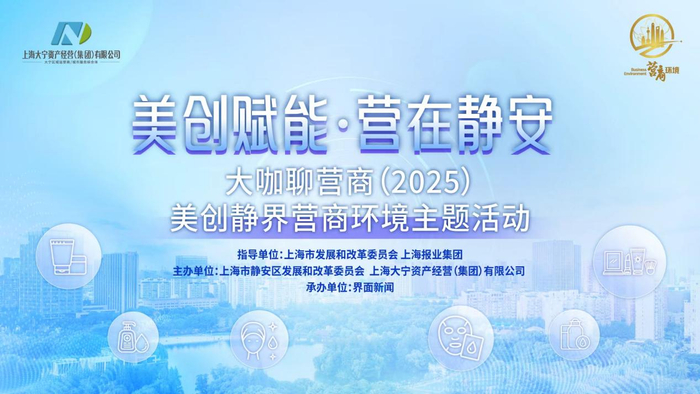
美团闪购推全套增长解决方案,称将为电商品牌“流量内卷”提供针对性解法
Xin Lang Ke Ji· 2025-10-30 12:09
Core Insights - Meituan has launched a comprehensive growth solution called "Brand Official Flag Lightning Warehouse" aimed at e-commerce brands lacking offline channels and mature fast-moving consumer goods (FMCG) brands, as well as retailers across various industries [1] - The solution addresses the issue of e-commerce brands being trapped in traditional platform traffic competition and lacking channel expansion opportunities, allowing brands to achieve lower costs, stronger brand recognition, larger scale, and more stable repurchase rates [1] - Over a hundred brands, including Sony PlayStation, Proya, Logitech, Kingston, and L'Oreal, have already joined the "Brand Official Flag Lightning Warehouse," enabling consumers in major cities to shop at these brands' official flagship stores on Meituan [1] Industry Developments - Meituan plans to introduce multiple digital tools aimed at enhancing circulation efficiency and accelerating product innovation for mature FMCG brands [1] - The company will invest more research and development resources to provide digital infrastructure and AI-assisted instant retail management tools to various retail businesses [1] - Notable domestic and international brands such as Yili, Qingdao Beer, Pepsi, Sofy, and Procter & Gamble have engaged in deep cooperation with Meituan's related business segments [1]
研报丨全球多肽化妆品竞赛,TOP3是谁?
FBeauty未来迹· 2025-10-30 11:29
Core Viewpoint - The cosmetics industry is undergoing a strategic transformation from basic moisturizing to efficacy-driven and scientific approaches, with peptides emerging as key active ingredients in anti-aging skincare products [3][4]. Market Size and Growth Trends - The global peptide cosmetics market is rapidly growing, with projections indicating a market size of $2.566 billion in 2024, expected to reach $5.716 billion by 2031, reflecting a compound annual growth rate (CAGR) of 12.3% during the forecast period [6][8]. - In 2024, over 55 million consumers are expected to use peptide skincare products, with 68% targeting wrinkle reduction and skin tightening [9]. Regional Market Performance - The Asia-Pacific region is the largest market for peptide cosmetics, accounting for 36% of global sales, with South Korea alone selling over 12.7 million units in 2023 [10][11]. - North America follows closely, representing 34% of global sales, with the U.S. having over 16.2 million active peptide skincare users [12][13]. - Europe contributes 28% of global sales, with Germany, the UK, and France leading the market [11][12]. Segment Market Performance - Serums are the largest segment, accounting for 38% of global sales, with over 480 peptide serums launched in 2023 [15]. - Moisturizing repair creams hold a 26% market share, while anti-aging creams account for 17% [15]. - Eye creams represent 11% of the segment, with 95 peptide SKUs recorded in 2023 [15]. Sales Channel Performance - Online sales dominate the market, accounting for 46% of total sales, with over 37 million peptide products sold through e-commerce platforms in 2023 [16]. - Specialty cosmetics stores contribute 27% to global sales, while supermarkets account for 18% [16]. Capital Flow and Investment Trends - In 2023, the global peptide cosmetics market attracted over $1.12 billion in funding, primarily directed towards R&D, clinical trials, and sustainable packaging [18][19]. - North America received over $360 million in investments, focusing on biotechnology-based peptide platforms [18]. Product Innovation - Over 110 new peptide products were launched globally between 2023 and 2024, showcasing a trend towards multi-peptide formulations and precision delivery systems [20]. - Brands are increasingly integrating AI for personalized skincare solutions, with over 145 brands utilizing AI skin diagnostic systems [20]. Competitive Landscape - The competitive landscape is shifting, with L'Oréal leading the market, followed by Estée Lauder and emerging brands like Han Shu [21][22]. - Han Shu's Red Waist 2.0 series achieved remarkable sales, emphasizing innovative raw material development and effective marketing strategies [22][25]. Raw Material Market Expansion - The peptide manufacturing market is projected to reach $2.574 billion by 2025, with a CAGR of 5.4% from 2025 to 2035 [26]. - There is a growing trend towards sustainable sourcing of peptides, with plant-based peptides gaining traction [26]. Challenges and Development - High costs and stability issues remain significant challenges, with 41% of brands reporting delays in product launches due to packaging and preservation difficulties [27]. - Regulatory fragmentation is also a concern, with only 27 countries having established guidelines for peptide ingredients [27]. Conclusion - The global peptide cosmetics market is in a phase of high growth and innovation, driven by technological advancements and evolving consumer demands, with a competitive landscape characterized by both established leaders and emerging players [29][31].