
Synopsys

Search documents
Arteris Accelerates AI-Driven Silicon Innovation with Expanded Multi-Die Solution
GlobeNewswire News Room· 2025-06-17 13:00
Core Viewpoint - Arteris, Inc. is expanding its multi-die solution to meet the increasing computational demands of AI, transitioning from traditional monolithic die designs to chiplet-based architectures, which are essential for high-performance computing and automotive applications [2][8]. Industry Impact - The semiconductor industry is experiencing a shift towards multi-die systems as Moore's Law slows down, necessitating architectural innovation to enhance performance and efficiency, particularly for AI workloads [2][8]. - Arteris' technology reduces design time for chiplets and SoCs, optimizing power, performance, and area bottlenecks through key Network-on-Chip (NoC) IP technology [3][8]. Technological Capabilities - The expanded multi-die solution supports the Universal Chiplet Interconnect Express (UCIe) specification and various protocols, ensuring robust ecosystem compatibility [4][5]. - Key capabilities include non-coherent FlexNoC IP, cache-coherent Ncore NoC IP, and optimized automation for SoC assembly and integration, which collectively enhance the development process and reduce risks [6][7]. Strategic Collaborations - Arteris is collaborating with major players in the silicon value chain, including Arm, Cadence, Renesas, and Synopsys, to enable next-generation AI and automotive platforms [6][7]. - These partnerships aim to accelerate the journey to chiplet-based systems, optimize performance metrics, and ensure seamless interoperability across multi-die designs [7]. Market Relevance - The expanded multi-die solution is crucial for semiconductor firms to compress development cycles, scale modular architectures, and deliver differentiated AI performance, aligning with evolving industry demands [8].



Synopsys Stock Falls on China Ban, But Long-Term Outlook Holds
MarketBeat· 2025-06-14 13:14
Core Viewpoint - Synopsys is a crucial player in the semiconductor industry, particularly in electronic design automation (EDA) software, despite recent challenges and a decline in share performance [1][2]. Financial Performance - Synopsys reported a 10% increase in sales and a 22% increase in adjusted earnings per share (EPS) compared to the previous year's quarter [3]. - The company's shares have decreased approximately 13% over the past 52 weeks, with a notable drop of nearly 10% on May 28 due to U.S. government restrictions on sales to China [2][3]. Impact of Trade Restrictions - Approximately 10% of Synopsys's revenue came from China last quarter, and the recent restrictions are significant but not catastrophic, as revenue from China has already declined from 15% in fiscal Q2 2024 to 10% [2][5]. - The company has faced declining sales growth in China for years due to previous trade restrictions, which has softened the impact of the latest restrictions [6]. Acquisition of ANSYS - Synopsys announced a $35 billion acquisition of ANSYS in January 2024, but is still awaiting regulatory approval, particularly from Chinese regulators [7]. - There is speculation that the acquisition could be approved soon, as Synopsys will no longer be doing business in China, but the company has pushed back against moving forward without China's approval [8][9]. Stock Forecast and Analyst Ratings - The 12-month stock price forecast for Synopsys is $607.14, indicating a potential upside of 26.79% based on 13 analyst ratings [11]. - Analysts at KeyCorp set a price target of $540, suggesting an 8% upside from the June 11 closing price, reflecting moderate upside potential [11]. Long-Term Prospects - Despite near-term uncertainties, Synopsys's long-term prospects remain strong, particularly with the anticipated approval of the ANSYS deal and recovery in non-AI end markets [12]. - The ongoing trend of developing advanced chips across various markets positions Synopsys for long-term success [12].


Silvaco Group, Inc.(SVCO) - 2025 FY - Earnings Call Transcript
2025-06-11 21:00
Financial Data and Key Metrics Changes - The company reported a 10% increase in revenue and a 13% growth in bookings for 2024 [6][8] - The annual contract value (ACV) grew by 21% from Q1 2024 to Q1 2025, indicating strong underlying business growth [24][25] - Gross margins are forecasted to be in the range of 83% to 86%, with last year's margin at 86% [26] Business Line Data and Key Metrics Changes - The company operates three main product lines: TCAD, EDA, and silicon-based IP, with TCAD being the foundational business [5][6] - The introduction of FTCO has expanded the total addressable market (TAM) from $3.3 billion to $4.4 billion [20] - The company added nine new customers in AI photonics, contributing to 23% of bookings in Q1 [11] Market Data and Key Metrics Changes - The company is focusing on fast-growing markets, particularly power, photonics, and memory, with significant opportunities in automotive and IoT devices [13][14] - The photonics market is described as being larger than the semiconductor market, with the company positioned to provide solutions for digital twin simulations [40][41] - The company anticipates that 10% to 15% of its revenue will come from China, with potential to exceed this forecast [51] Company Strategy and Development Direction - The company aims to differentiate itself through strategic acquisitions, such as TechX and OPC, to enhance its product offerings and market reach [7][17] - The focus is on expanding in the foundry market and enhancing capabilities in photonics and advanced CMOS technology [32][34] - The company is leveraging AI to improve design processes and manufacturing efficiency, aiming for a future where chip design and manufacturing are integrated through digital twin models [79] Management's Comments on Operating Environment and Future Outlook - Management expressed confidence in the company's forecasts despite macroeconomic uncertainties [8][9] - The company has been proactive in managing risks associated with the China market, maintaining transparency with regulatory bodies [49][50] - The management highlighted the importance of adapting to market changes and learning from past experiences to mitigate risks [51][52] Other Important Information - The company has achieved ISO 9001 certification, enhancing its credibility in the market [6] - The FTCO product is a patented technology aimed at optimizing fab processes, which is expected to drive significant future revenue [54][61] Q&A Session Summary Question: What are the biggest opportunities in your total addressable market? - The company focuses on fast-growing markets, particularly power, photonics, and memory, with significant potential in the foundry business [30][31] Question: How is the company positioned in the TCAD market? - The company is the number two player in the TCAD market, with a strong focus on expanding its market share through strategic initiatives [36][37] Question: What is the outlook for the China market? - The company expects to derive 10% to 15% of its revenue from China, with plans to close delayed orders in the upcoming quarters [51][52] Question: Can you explain the FTCO product offering? - FTCO is a patented technology aimed at bridging the gap between design and fab processes, enhancing yield and efficiency in chip manufacturing [54][61] Question: How is AI impacting the company's operations? - The company is utilizing AI to enhance design processes and manufacturing efficiency, aiming for a future where all steps in chip manufacturing are integrated [79]
计算机行业周报20250603-20250606:Circle美股上市需求火爆!EDA国产替代加速-20250607
Shenwan Hongyuan Securities· 2025-06-07 13:32
Investment Rating - The report maintains a positive outlook on the EDA industry, highlighting the acceleration of domestic substitution due to increased export controls from the U.S. [4][5] Core Insights - The report emphasizes the booming demand for stablecoins, particularly following Circle's successful IPO, which raised $1.05 billion with a first-day closing price increase of 168% [4][6] - The U.S. Senate's recent approval of a stablecoin bill is expected to significantly boost the stablecoin market, with major players like Visa entering the ecosystem [7][6] - The report discusses the impact of new EDA export restrictions from the U.S. on Chinese firms, suggesting that this could open up opportunities for domestic EDA companies [4][20] Summary by Sections Stablecoin Market - Circle, the issuer of the second-largest stablecoin USDC, went public on June 5, 2025, with a final IPO price of $31 per share, significantly higher than initial expectations [6] - The stablecoin market is anticipated to grow rapidly due to legislative support and increased participation from major financial institutions [7] - Circle's revenue model relies heavily on interest from reserve assets, with projected revenues of $736 million, $1.431 billion, and $1.661 billion from 2022 to 2024 [12] EDA Industry - The U.S. Department of Commerce has imposed new export restrictions on EDA tools to China, which may accelerate the domestic substitution trend [20][21] - Demand for EDA tools is expected to shift as consumer-grade chip manufacturers may face challenges due to these restrictions, potentially increasing the market for domestic EDA products [23] - Domestic EDA companies are experiencing growth, with significant mergers and acquisitions occurring to enhance product offerings and market share [26] Investment Opportunities - The report identifies several key investment targets in the stablecoin and EDA sectors, including companies like ZHONGAN Online, LianLian Digital, and various Web3.0 service providers [20] - Specific companies highlighted for their potential in the AIGC and digital economy sectors include Kingsoft Office, Hikvision, and Huada Jiutian [39]


手机芯片,大变局
半导体行业观察· 2025-06-07 02:08
Core Viewpoint - Leading smartphone manufacturers are facing challenges related to local generative AI, standard smartphone functionalities, and increasing data interactions between mobile devices and the cloud, which put pressure on computing and power consumption [1][3]. Group 1: Mobile SoC Design Challenges - High-end smartphones utilize heterogeneous architectures in their System on Chip (SoC) designs, where multiple modules perform different tasks collaboratively [3]. - The rapid evolution of AI networks and diverse AI model requirements complicate mobile SoC design, necessitating support for both large-scale cloud models and efficient local models [3][4]. - The integration of AI capabilities into chips is becoming less challenging due to advancements in tools and processes over the past five to ten years [6]. Group 2: AI Processing and Architecture - The design focus is shifting towards optimizing power consumption in parallel processing of graphics, general computing, and AI operations [5]. - AI accelerators in mobile SoCs may include GPUs, NPUs, or high-end ASICs, with NPU becoming central for low-power tasks [7][8]. - The rise of multimodal models and generative AI tools adds complexity to design, requiring flexible and efficient computing structures [10]. Group 3: Local vs. Cloud Processing - Local processing of AI applications, such as facial recognition and photo editing, is preferred to reduce latency and enhance data privacy [13]. - Despite the increase in local AI processing, some tasks still need to be executed in the cloud due to battery and power limitations [13]. - The balance between local and cloud processing will be an ongoing challenge as AI models become more efficient [13]. Group 4: Key Trends in Mobile SoC Design - Three key trends driving changes in mobile SoC design include rising analog demands, the proliferation of visual and AI applications, and the high-performance computing requirements of modern applications [15]. - Designers must consider both hardware and software perspectives to remain competitive, emphasizing the need for collaborative efforts across disciplines [15].

Synopsys (SNPS) Conference Transcript
2025-06-04 22:40
Synopsys (SNPS) Conference Summary Company Overview - **Company**: Synopsys (SNPS) - **Date of Conference**: June 04, 2025 Key Points Industry Context - The discussion revolves around the Electronic Design Automation (EDA) industry and its current challenges, particularly regarding regulatory restrictions impacting sales to China [4][10][14]. Recent Developments - Synopsys received a notification from the Bureau of Industry and Security (BIS) regarding regulatory restrictions on selling certain products to China, leading to a halt in shipments [9][10]. - The company had to pull its guidance due to the potential material impact of these restrictions on its business [10][11]. Financial Performance - In the most recent quarter, Synopsys experienced a **28% year-over-year decline** in revenue from China, a significant drop from a previous growth rate of **25%** [16][17]. - The company is currently assessing the impact of these restrictions on its overall revenue and operational expenditures [29]. Regulatory Environment - The regulatory restrictions are seen as atypical due to the lack of a comment period, which is usually provided to understand the intent and implications of such regulations [19][28]. - Synopsys is working with legal teams and government relations to clarify what products can still be sold and to ensure compliance with the new regulations [12][39]. Market Dynamics - The EDA industry is experiencing a shift as the market for AI and high-performance computing (HPC) chips in China has contracted due to these restrictions [21][22]. - Synopsys is pivoting towards automotive, IoT, and industrial markets, which are growing but do not match the revenue potential of the AI market [21][22]. AI Integration - Synopsys has been integrating AI into its products, with significant improvements in efficiency for junior and mid-level engineers, achieving up to **40% efficiency gains** [44][45]. - The company is developing a new product, AgenTic, which aims to automate design engineering workloads, although it is still a few years away from full deployment [46][48]. Customer Relationships - Synopsys maintains strong relationships with key customers, including Intel, despite leadership changes at Intel [55][56]. - The company is optimistic about the potential for increased spending from Intel as they focus on building leadership products [60]. Competitive Landscape - There is a notable difference in trading multiples between Synopsys and its competitor Cadence, attributed to historical profit margins and the ongoing acquisition of ANSYS [66][67]. - Synopsys aims to improve its operating margins, targeting mid-forties post-ANSYS acquisition, which would position it competitively within the industry [66][67]. Future Outlook - The company is cautiously optimistic about resolving regulatory issues and restoring its ability to sell in China, which was previously a significant growth market [26][54]. - Synopsys is focused on maintaining operational efficiency and exploring new revenue opportunities while navigating the current regulatory landscape [30][29]. Additional Insights - The conversation highlighted the importance of collaboration within the industry to address regulatory challenges, as companies like Synopsys and its peers work together to navigate these complexities [12][13]. - The potential for AI to transform the EDA industry is significant, but the company acknowledges the need for careful implementation due to the high stakes involved in design engineering [47][49].
美国断供中国EDA软件 业内人士:推动中国整个生态链建设
Xi Niu Cai Jing· 2025-06-04 11:51
美国再度升级对华半导体技术封锁。日前,美国商务部工业和安全局(BIS)向全球三大EDA软件巨头—Cadence、Synopsys和Seimens EDA(简称"三巨 头")发出通知,全面停止向中国出口芯片设计软件。 如果说材料和设备是"芯片之父",那么EDA软件就是"芯片之母"。据机构测算,2024年全球EDA市场规模约为157.1亿美元,预计2026年将达到183.34亿美 元,从市场规模而言本身并不算大,但正是这个小小的环节,却能直接影响数千亿美元的半导体产业运转。 EDA(电子设计自动化)是利用计算机辅助设计软件完成集成电路芯片功能设计、验证及物理设计全流程的技术体系。作为晶圆制造的前置环节,EDA与 半导体材料和相关设备的重要性不相上下。 与此同时,国产EDA行业也走上了加速发展的快车道,尤其是随着概伦电子、华大九天先后发起并购,国产EDA企业的集中度进一步增加,相关覆盖业务 链也不断完善。 3月31日,华大九天公告披露,拟收购芯和半导体100%股权。4月11日晚,概伦电子公告称,拟通过发行股份及支付现金的方式取得锐成芯微100%股权及纳 能微45.64%股权。 停止向中国出口EDA软件,意味着美国开 ...


自主可控重要性愈发凸显,软件ETF(159852)近1周规模增长显著
Sou Hu Cai Jing· 2025-06-04 03:29
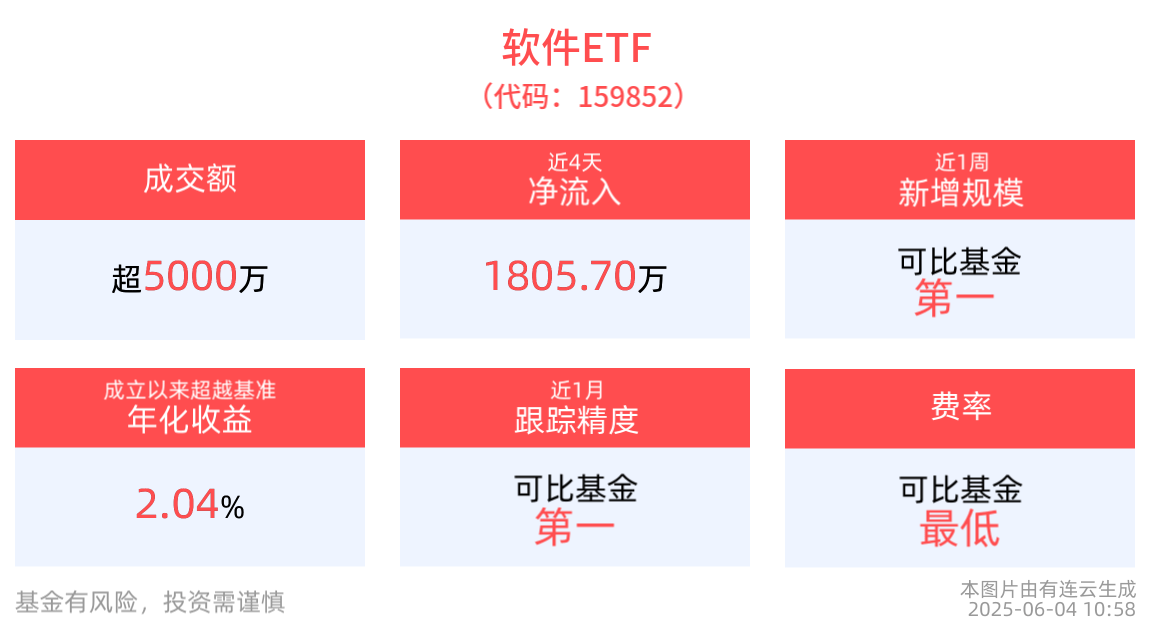
Group 1 - The software ETF has shown significant liquidity with an intraday turnover of 1.83% and a transaction volume of 52.98 million yuan, ranking first among comparable funds in terms of average daily trading volume over the past week at 177 million yuan [3] - The software ETF has experienced a notable scale increase of 67.23 million yuan over the past week, also ranking first among comparable funds in terms of new scale [3] - In terms of capital inflow, the software ETF has attracted a total of 18.06 million yuan over the last four trading days [3] Group 2 - According to Straits Research, the global EDA software market is projected to reach approximately 17.42 billion USD by 2025, while the Chinese EDA market is expected to be around 18.49 billion yuan [3] - The global EDA market is predominantly dominated by three major US companies, which hold over 80% of the domestic EDA market share in China, highlighting the importance of self-sufficiency and the need for domestic EDA companies to enhance their product offerings through mergers and acquisitions [3] - Huaxin Securities notes that the global EDA market is characterized by a tripartite structure, with Synopsys, Cadence, and Siemens EDA holding a dominant position, capturing 70% of the market share in mainland China [3] Group 3 - As of May 30, 2025, the top ten weighted stocks in the CSI Software Service Index include companies such as iFlytek, Kingsoft Office, and Tonghuashun, collectively accounting for 59.85% of the index [4] - Investors can also consider the software ETF linked fund (012620) to capitalize on AI software investment opportunities [4]
计算机行业周报:国产EDA有望加速发展,产业空间广阔
Guoyuan Securities· 2025-06-03 04:15
Investment Rating - The report maintains a "Recommended" investment rating for the computer industry [6] Core Viewpoints - The computer (Shenwan) index rose by 1.77% during the week of May 26 to May 30, 2025, reversing the downward trend of the previous two weeks, ranking fifth in terms of growth [4][11] - The EDA sub-sector performed exceptionally well, with companies like Gelun Electronics, Guangli Micro, and Huada Jiutian seeing growth rates exceeding 10% [21][22] - The U.S. government has effectively cut off certain American companies from selling semiconductor design software to China, which may accelerate the domestic EDA industry's development [22] Summary by Sections Index Performance - The computer (Shenwan) index increased by 1.77%, ranking fifth in growth, while the Shanghai Composite Index fell by 0.03%, the Shenzhen Component Index by 0.91%, and the ChiNext Index by 1.40% [11] - The sub-sector indices for computer equipment, software development, and IT services showed increases of 2.14%, 2.04%, and 1.18%, respectively [13] Major Events - The report highlights significant events such as the release of new AI products and acquisitions in the tech sector, indicating ongoing innovation and competition [16][17] Key Announcements - Newguo announced a stock option incentive plan involving 19 million shares, representing 3.35% of the company's total share capital, with a strike price of 25 yuan per share [2] - Hehe Information plans to issue H shares and list on the Hong Kong Stock Exchange to enhance its global strategy and competitiveness [2] Investment Insights - The report suggests that the domestic EDA market, which reached 12 billion yuan in 2023 and is expected to grow to 13.59 billion yuan in 2024, is likely to expand further due to increased domestic production rates [22] - The domestic EDA localization rate was 17.61% in 2023 and is projected to rise to 18.52% in 2024, indicating a shift away from reliance on foreign EDA giants [22]
EDA限制措施的潜在受益方
2025-06-02 15:44
Summary of Empyrean Technology Co Ltd Conference Call Company and Industry Overview - **Company**: Empyrean Technology Co Ltd (Ticker: 301269.SZ) - **Industry**: Greater China Technology Semiconductors - **Market Cap**: Rmb63,122.4 million - **Stock Rating**: Equal-weight - **Price Target**: Rmb115.00 - **Current Price (as of May 28, 2025)**: Rmb116.26 - **Average Daily Trading Value**: Rmb495 million Key Points and Arguments 1. **Impact of EDA Restrictions**: The Trump Administration has reportedly requested leading Electronic Design Automation (EDA) companies, including Synopsys and Cadence, to stop shipping tools to China. This has led to significant stock declines for these companies, with Cadence down 10.7% and Synopsys down 9.6% [1][2] 2. **Market Share Dynamics**: In 2024, Cadence, Synopsys, and Siemens held 82% of China's EDA market share, while Empyrean Technology accounted for 10%. If U.S. export restrictions tighten, it may accelerate the adoption of local EDA tools in China, potentially benefiting Empyrean [2] 3. **Financial Projections**: - **Revenue Estimates**: - 2024: Rmb1,222 million - 2025: Rmb1,558 million - 2026: Rmb2,000 million - 2027: Rmb2,666 million - **EPS Estimates**: - 2024: Rmb0.20 - 2025: Rmb0.66 - 2026: Rmb1.16 - 2027: Rmb1.65 [4] 4. **Valuation Methodology**: The base case value is derived from a residual income model, assuming a constant cost of equity at 8% and medium-term growth rates of 25% [6] 5. **Risks**: - **Upside Risks**: Faster-than-expected breakthroughs in digital IC EDA, fewer restrictions on semi equipment access, and an increase in local EDA talent [8] - **Downside Risks**: Slower breakthroughs in EDA, more restrictions on semi equipment access, and a drought in local EDA talent [8] Additional Important Information - **Earnings Growth**: The company is expected to see significant earnings growth, with EPS projected to increase from Rmb0.20 in 2024 to Rmb1.65 by 2027 [4] - **Market Position**: Empyrean's current market position may improve if local EDA tools gain traction due to geopolitical tensions affecting foreign EDA companies [2] - **Analyst Coverage**: The report includes multiple analysts from Morgan Stanley, indicating a robust research backing for the company's outlook [3] This summary encapsulates the critical insights from the conference call regarding Empyrean Technology Co Ltd and the broader semiconductor industry context.