
爱玛科技

Search documents
老总来了!第三届天津电商节“双12”专场解锁“嗨购”新体验
Sou Hu Cai Jing· 2025-12-12 18:25
天津北方网讯:12月12日,气温骤降,但在津云中央厨房和津云抖音直播间里却"热气腾腾"。13时30分 至21时30分,一场海河MCN主播联动30位品牌老总的"直播盛宴"在津云抖音直播间里以走播和坐播的 形式持续开播8小时,激活津城消费新活力,展现天津老字号的独特魅力,让广大网友在"嗨购"中解锁 消费新体验! 由市委宣传部、市委网信办指导,市商务局、海河传媒中心主办,津云新媒体集团、海河MCN承办, 市工业和信息化局、市文化和旅游局、市国资委、市农业农村委支持的第三届天津电商节"双12"专场 以"'总'有好价——'双12'嗨购节"为主题,不仅带来了68个品牌、337款精选产品,更有多款新品在天津 电商节面向国内外市场集中首发,"老总天团"现场互动、带来专属福利价格等丰富内容,为消费者呈现 了一场兼具"天津特色"与"创新活力"的年终购物狂欢。 津牌好物开场 多款新品在天津电商节首发 13时30分,直播准时开始。首环节"津牌好物 '卫'你而来"中,天津海鸥表业集团公司党委副书记施婷婷 率先登场带来了与海河MCN的新品联名盲盒。 天津海河乳品有限公司党委书记、董事长邹旸首次面向市场发布了毛绒绒系列的暖手袋及书包挂件。 ...


雅迪站在了新国标岔路口?
3 6 Ke· 2025-12-12 11:19
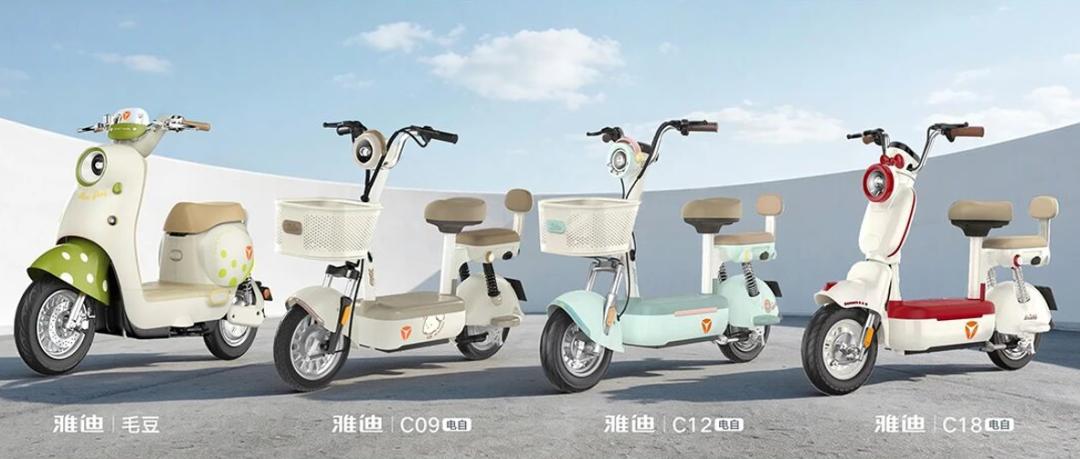
Core Viewpoint - The "Mao Dou" incident highlights the challenges faced by the electric two-wheeler industry during its transformation, indicating a shift from a subsidy-driven growth model to a compliance-focused era with new national standards [1][3][12]. Industry Overview - The electric two-wheeler industry is at a historical turning point, with the end of subsidy programs and the implementation of stringent new national standards marking the end of an era reliant on subsidies and scale expansion [3][12]. - By April 2025, the domestic electric two-wheeler ownership is projected to exceed 420 million units, indicating a saturated market where competition is intensifying [4][12]. Company Performance - Yadea, as the industry leader, reported a 33.1% year-on-year revenue growth to 19.186 billion yuan and a 59.5% increase in net profit to 1.649 billion yuan in the first half of 2025, selling 8.7935 million units [11]. - Despite strong sales, the company faces challenges adapting to new standards and consumer expectations, as evidenced by the backlash against the "Mao Dou" model [12][14]. Competitive Landscape - The competitive environment has evolved into a three-way contest among Yadea, Aima, and Tailg, with new entrants like Ninebot and Niu rapidly gaining ground [7][8]. - Aima has carved out a niche by targeting young female consumers with lightweight designs and appealing aesthetics, while new players are leveraging smart technology to penetrate the high-end market [7][8]. Consumer Trends - Consumer preferences are shifting from merely owning a vehicle to seeking an enjoyable travel experience, emphasizing smart interaction, personalized design, and emotional value [5][12]. - The "Mao Dou" incident reflects a disconnect between Yadea's product offerings and the fundamental needs of Chinese family users for practical features [12][19]. Strategic Imperatives - Yadea must undergo a transformation from a scale-driven approach to a value-driven strategy, focusing on user insights and enhancing the overall customer experience [19][22]. - The company is implementing standardized trial experiences in stores to shift its focus from product-centric to user-centric strategies, aiming to leverage its extensive retail network for better customer insights [21][22]. Future Outlook - The new national standards present an opportunity for the industry to innovate and redefine its competitive landscape, moving beyond price wars to focus on technology and user value [13][23]. - Yadea is positioned to leverage its experience in global markets to adapt and promote its new standards and technological solutions internationally, potentially leading the global green mobility revolution [23][24].

共享单车概念下跌1.58%,主力资金净流出8股
Zheng Quan Shi Bao Wang· 2025-12-12 08:42
Group 1 - The shared bicycle concept sector declined by 1.58%, ranking among the top declines in the concept sector, with significant drops from companies like Xinlong Health, New Day Shares, and Shanghai Phoenix [1] - Among the shared bicycle stocks, only two saw price increases, with Keli Yuan and Boshi Jie rising by 1.54% and 1.07% respectively [1] - The sector experienced a net outflow of 197 million yuan in principal funds, with eight stocks seeing net outflows, and five stocks exceeding 10 million yuan in outflows, led by Xinlong Health with a net outflow of 76.34 million yuan [2] Group 2 - The top net outflow stocks in the shared bicycle concept included Xinlong Health (-10.05%), Siwei Tuxin (-0.49%), and Zhongbei Communication (-0.13%), with respective outflows of 76.34 million yuan, 75.22 million yuan, and 22.89 million yuan [2] - Conversely, the stocks with the highest net inflows included Keli Yuan (1.54%), Hemei Group (-1.00%), and Boshi Jie (1.07%), with net inflows of 11.94 million yuan, 4.87 million yuan, and 1.45 million yuan respectively [2]


宝武镁业(002182) - 2025年12月12日投资者关系活动记录表
2025-12-12 07:58
Group 1: Magnesium Alloy Demand in Electric Vehicles - The implementation of the new safety standards for electric bicycles has led to an increased demand for magnesium alloys, with significant adoption by leading manufacturers like Aima, Yadea, and Niu [1] - During the 14th Five-Year Plan period, the usage of magnesium in electric two-wheelers is expected to grow rapidly, driven by policy changes, lightweight requirements, and technological advancements [1] - The market for magnesium alloys in electric bicycles is projected to expand significantly in the coming years due to rising penetration rates and the diversification of application components [1] Group 2: Magnesium Alloy Penetration in the Automotive Sector - The price of magnesium has remained below that of aluminum, accelerating the penetration of magnesium in automotive lightweighting, particularly in the new energy vehicle sector [2] - Current usage of magnesium in certain vehicles has reached approximately 20 kg per vehicle, with potential future usage increasing to between 50-100 kg as larger magnesium die-cast components are integrated [2] - The application scope for magnesium alloys in automotive parts is broadening, with components like instrument panel brackets and electric drive housings seeing increased development [2] Group 3: Company Advantages and Production Capacity - The company has established a complete magnesium industry chain, from raw magnesium mining to alloy production and recycling, enhancing cost control and product competitiveness [3] - The company operates three raw magnesium supply bases and four magnesium alloy supply bases, optimizing resource allocation to meet regional market demands [3] - Continuous investment in technological innovation and new product development is a core strategy, with proprietary advancements in magnesium smelting and alloy processing technologies [3]

“一周没卖出去一辆”,新国标“电驴”遇冷
第一财经· 2025-12-11 16:01
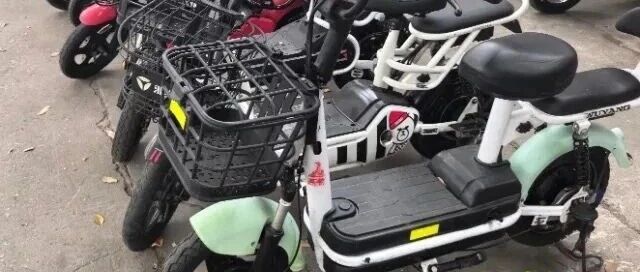
Core Viewpoint - The transition period following the ban on old standard electric bicycles has led to a significant decline in sales of new standard electric bicycles, with consumers exhibiting a wait-and-see attitude due to concerns over product performance and pricing [3][4]. Market Conditions - Many electric bicycle dealerships report a sharp drop in sales, with some stores not selling any new standard electric bicycles in the first week after the ban, compared to previous sales of 6-7 units per day [3]. - The new standard electric bicycles are facing criticism for their higher prices, which have increased by 500 to 1000 yuan compared to old models, and for not meeting consumer needs, particularly in terms of seating capacity and performance [5][6]. Consumer Feedback - Consumers, including delivery riders and parents, are opting for second-hand old standard electric bicycles due to the new models' limitations, such as speed restrictions and inadequate seating for families [4][6]. - Specific concerns include the inability of new standard bicycles to meet the demands of delivery work and the lack of suitable models for families with children [4][5]. Industry Response - The China Bicycle Association has acknowledged the public's concerns regarding the new standards and indicated that some manufacturers are not adequately prepared for the new regulations, leading to misunderstandings among consumers [6][7]. - Major manufacturers like Yadea have issued apologies for the confusion surrounding their new models, clarifying that many of the criticisms stem from misinterpretations of the new standards [7][8]. Product Specifications - The new standards include safety features such as a speed limit of 25 km/h, which causes the bicycle to cut power, and restrictions on the use of plastic materials, which have raised questions about safety and practicality [6][7]. - Manufacturers are working to address these issues by developing models that cater to different consumer needs, including family-oriented designs [8].
“一周没卖出去一辆” 新国标“电驴”遇冷
Di Yi Cai Jing· 2025-12-11 12:52
Core Viewpoint - The market for electric bicycles is experiencing a transitional phase due to the new national standards, leading to low sales and consumer hesitation towards new models [1][2]. Group 1: Market Conditions - Many electric bicycle dealerships report a significant decline in sales, with some stores not selling any new standard models in the first week after the new regulations took effect [1]. - The introduction of new models has not yet resulted in increased consumer interest, as many potential buyers are opting for second-hand old standard bicycles instead [2]. - The new standard models are perceived to be more expensive, with prices increasing by 500 to 1000 yuan compared to old models, which is a deterrent for consumers [2][3]. Group 2: Consumer Feedback - Delivery riders express concerns that the new models, which cut power at speeds over 25 km/h, do not meet their work requirements [2]. - Parents with multiple children find that most new models only accommodate single riders, making them unsuitable for family use [2]. - There are complaints regarding the performance of new models, particularly in uphill scenarios where some bikes lack sufficient power [2]. Group 3: Industry Response - The China Bicycle Association acknowledges the public's concerns regarding the new standards and emphasizes that some criticisms stem from misunderstandings of the regulations [3][4]. - Manufacturers, including Yadea, have issued statements clarifying that many new models do include features for family use, such as rear seats, and that the concerns about safety and functionality are often based on misinterpretations [4][5]. - Yadea has apologized for the confusion caused by the rollout of their new models and is working to address consumer needs by introducing various versions of their products [5].
“一周没卖出去一辆”,新国标“电驴”遇冷
Di Yi Cai Jing· 2025-12-11 12:44
Core Viewpoint - The electric bicycle market is experiencing a transitional phase due to the new national standards, leading to low sales and consumer dissatisfaction with new models [1][2][3] Group 1: Market Conditions - Many electric bicycle dealerships report a significant drop in sales, with some not selling any new standard models in the first week after the new regulations took effect [1] - Consumers are largely hesitant to purchase new standard electric bicycles, often opting for second-hand old models instead [2] - The new standard models are perceived as more expensive, with price increases ranging from 500 to 1000 yuan compared to old models [2][3] Group 2: Consumer Feedback - Delivery riders express concerns that the new standard bicycles do not meet their work requirements due to speed limitations and higher costs [2] - Parents with multiple children find that most new standard models only accommodate single riders, which does not meet their family needs [2] - There are complaints about insufficient power in new models when climbing hills, leading to safety concerns [2][3] Group 3: Regulatory and Manufacturer Responses - The new national standards include safety features such as a speed limit of 25 km/h, which has raised questions about potential emergency braking issues [3][4] - The China Bicycle Association acknowledges consumer concerns and clarifies that many new models do include features like rear seats for children, contrary to public perception [4] - Manufacturers like Yadea have issued apologies for misunderstandings regarding the new models and are working to address consumer needs with various versions of their products [5]
新国标电动车限定时速25公里到底能不能偷偷改:九号、爱玛、雅迪等确认了!
Xin Lang Cai Jing· 2025-12-11 05:23
Group 1 - The new national standard for electric bicycles has been implemented since December, enforcing a speed limit of 25 km/h that cannot be unlocked [1] - Manufacturers face strict penalties for violating the new regulations, leading to the complete closure of speed unlocking channels [1] - Multiple electric bicycle brands confirm that the speed limit is secured by a triple anti-tampering mechanism, making it impossible to unlock [1] Group 2 - The new standard includes built-in Beidou positioning systems in electric bicycles to monitor speed, replacing previous brand-specific navigation systems [1] - Industry insiders indicate that consumers needing higher speeds must switch to electric motorcycles, which require a license and registration [1] - Due to price increases in electric bicycles, some users may consider directly purchasing electric motorcycles instead [1]


新国标电动自行车为何纷纷提价?每经记者调查:未来有降价空间
Mei Ri Jing Ji Xin Wen· 2025-12-10 14:37
Core Viewpoint - The implementation of the new national standard for electric bicycles has led to the discontinuation of old models, resulting in increased prices for new models due to higher manufacturing costs and enhanced safety requirements [1][5][10]. Price Increase - Many companies have confirmed that new models under the national standard are generally more expensive than old models, with price increases ranging from 150 to 400 yuan per unit [4][10]. - The price of new models varies significantly based on configuration, materials, and technology, with costs for simpler models increasing by approximately 200-300 yuan and more complex models by 400-600 yuan [4][5]. Manufacturing Cost Factors - The rise in prices is attributed to increased manufacturing costs, necessitating upgrades in raw materials, core components, and production processes [5][8]. - The new standard mandates a reduction in plastic use, leading to the adoption of more expensive materials like magnesium alloy and metal sheets, which significantly raise production costs [5][6][8]. Production Process Changes - Transitioning from plastic to magnesium alloy or metal sheets complicates the manufacturing process, increasing labor and material costs [6][7]. - The cost of molds for magnesium alloy production is significantly higher, with costs rising from around 2 million yuan for plastic molds to nearly 10 million yuan for magnesium alloy molds [6][8]. Safety Enhancements - The new standard includes stricter safety requirements, such as improved fire resistance and braking systems, which contribute to higher costs [8][9]. - Companies are investing in smart monitoring modules and enhanced testing protocols, further increasing the cost of compliance with the new regulations [8][9]. Future Price Trends - As production scales up and processes mature, there is potential for prices to decrease in the future [10][11]. - Companies are planning to increase production volumes significantly in the coming months, which may lead to cost reductions as economies of scale are realized [11][12]. Material Innovations - Some companies are exploring new composite materials that could offer cost advantages while meeting safety standards, although these materials are not yet widely implemented due to a lack of clear regulations [12].
新国标电动自行车为何纷纷提价? 每经记者调查:未来有降价空间
Mei Ri Jing Ji Xin Wen· 2025-12-10 14:07
Core Viewpoint - The implementation of the new national standard for electric bicycles has led to the discontinuation of old models, resulting in increased prices for new models due to higher manufacturing costs and enhanced safety requirements [1][5][10]. Price Increase - Many companies have confirmed that new models under the national standard are generally more expensive than old models, with price increases ranging from 150 to 400 yuan per unit [4][10]. - The price adjustments are attributed to various factors, including the need for upgraded materials and manufacturing processes [5][8]. Manufacturing Costs - The transition to new materials, such as magnesium alloy and sheet metal, has significantly raised production costs. For instance, the cost of magnesium alloy exceeds 20,000 yuan per ton, compared to about 10,000 yuan per ton for plastic [5][6]. - The complexity of manufacturing processes has also increased, with new requirements for molds and production techniques leading to higher costs [6][7]. Safety Enhancements - The new standard imposes stricter safety requirements, including improved fire resistance and braking systems, which contribute to the overall cost increase [8][9]. - Companies are investing in new technologies and materials to meet these safety standards, which further drives up costs [8][12]. Future Price Trends - As production scales up and manufacturing processes mature, there is potential for prices to decrease in the future [10][11]. - Companies are planning to increase production volumes significantly in the coming months, which may lead to cost reductions [11][12]. Material Innovations - Some companies are exploring new composite materials that could offer cost advantages while meeting safety standards, although these materials are not yet widely implemented [12].