OPPO

Search documents
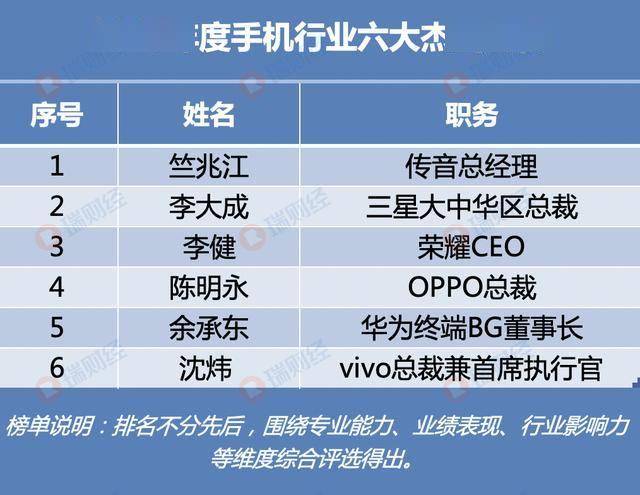
华为终端BG董事长余承东入选“2025年度手机行业六大杰出人物”
Sou Hu Cai Jing· 2026-01-16 04:10
Core Insights - The "2025 Outstanding Figures in the Mobile Industry" list was released, featuring Huawei's terminal BG chairman Yu Chengdong as a notable figure [2] - The selection criteria for the list included professional capability, performance, and industry influence [2] Group 1 - Yu Chengdong, born in 1969 and a graduate of Tsinghua University, has held various significant positions at Huawei since joining in 1993 [2] - His roles have included 3G product director, vice president of wireless product marketing, and CEO of the terminal BG [2] - In 2025, under Yu's leadership, Huawei is set to launch the HarmonyOS intelligent framework, enhancing its all-scenario ecosystem [3]

2025华为手机出货量5年来重回中国第一
日经中文网· 2026-01-16 03:05
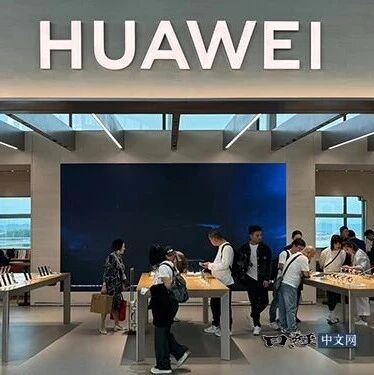
Core Viewpoint - Huawei is projected to lead the Chinese smartphone market in 2025 with a shipment of 46.7 million units, despite a slight decrease of 1.9% from 2024, primarily due to the decline of competitor Vivo [3][5]. Group 1: Huawei's Performance - Huawei's flagship Mate series and budget nova series are performing well, both equipped with self-developed Kirin semiconductors [6]. - The company has managed to recover from a decline in sales caused by U.S. sanctions that limited semiconductor procurement, leading to a drop in product performance since 2019 [1][6]. - The latest model, Mate 80, launched in November 2025, features enhanced performance and AI capabilities while being priced lower than its predecessor, aiming to increase the user base of the HarmonyOS [6]. Group 2: Competitor Analysis - Apple ranks second with a shipment of 46.2 million units, showing a growth of 4%, bolstered by strong sales of the iPhone 17 series launched in September 2025 [6]. - Vivo, which held the top position in 2024, saw a significant decline of 6.6%, resulting in a shipment of 46.1 million units in 2025 [3][5]. - Xiaomi and OPPO follow with shipments of 43.8 million and 43.4 million units, respectively, with Xiaomi experiencing a growth of 4.3% and OPPO a modest increase of 2.1% [5]. Group 3: Market Overview - The overall smartphone shipment in China for 2025 is projected to be 284.6 million units, a decrease of 0.6% year-on-year, marking the first decline in two years [6]. - Government incentives for trade-ins have had a positive impact, but some regions have exhausted their subsidy quotas, leading to a slowdown in demand [6]. - IDC forecasts a further decline in shipments to 278 million units in 2026, continuing the downward trend [6].
万咖壹联20260115
2026-01-16 02:53
Summary of WanKa YiLian Conference Call Company Overview - WanKa YiLian has expanded its services to iOS, HarmonyOS, and Android, holding approximately 50% market share in its niche, leading the industry [2][4] - The company has established close partnerships with major smartphone manufacturers including Apple, Huawei, Xiaomi, OPPO, vivo, and Honor, with 90% of media placements focused on these manufacturers [2][5] - Since its IPO in 2018, WanKa YiLian has seen significant revenue growth, achieving a 30% increase in 2024 and projected to reach 50% growth in 2025 [2][5] Business Model and Revenue Streams - The company operates three technology standard alliances: 1. **Hardcore Alliance**: Unifies Android app store standards, enhancing market efficiency [6][7] 2. **Quick Application Alliance**: Integrates mini-program functionalities across HarmonyOS and Android [6] 3. **Gold Standard Alliance**: Details not provided [6] - Revenue generation is primarily through advertising and game distribution, with significant contributions from partnerships with major gaming developers like Tencent and NetEase [5] Industry Dynamics - The introduction of Generative Content (GEO) as an AI search technology poses a significant challenge to traditional search engines like Baidu, which rely on bidding and click-based revenue models [2][8] - The shift towards AI-driven search engines is expected to disrupt existing market structures, with companies needing to adapt to new content quality and utility standards [4][13] Advertising and Marketing Changes - The advertising logic has shifted from repetitive exposure to precise targeting, with click-through rates potentially increasing to 33% in the AI search recommendation era [14] - AI enhances ad placement by reducing irrelevant ads and improving user experience through intent recognition and question rewriting [11] Future Outlook - The GEO market is anticipated to surpass traditional browser markets due to its advanced capabilities in multimedia content delivery and user interaction [21][22] - Apple's plan to launch its own AI search engine could significantly impact the market, as evidenced by a 9% drop in Google's stock following the announcement [20] Key Performance Indicators - In app store optimization, key metrics differ from traditional SEO, focusing on exposure, click conversion rates, downloads, registrations, and recharge rates [23] - The decision-making process in AI search is streamlined, eliminating many traditional metrics and focusing on direct user engagement and purchasing behavior [23] Revenue Optimization Strategies - Domestic companies primarily rely on traffic monetization, emphasizing high ROI on advertising spend [24][25] - WanKa YiLian's business model includes advertising commissions and revenue sharing with clients, with discussions on profit-sharing ratios occurring when ROI exceeds 150% [25]
美团也要卖车了;贾国龙回应西贝关闭102家;千问App接入支付宝,上线AI付款;雷军:新一代小米SU7将提供9款配色丨邦早报
Sou Hu Cai Jing· 2026-01-16 00:44
Group 1: Company Developments - Xibei Restaurant confirmed the closure of 102 stores, which accounts for 30% of its total outlets, and assured customers that stored value cards can be used at other locations or refunded [1] - Thunder restarted litigation against former CEO Chen Lei, claiming damages of up to 200 million yuan due to alleged hidden asset extraction through a shadow company [3] - Xiaomi's new SU7 model will offer nine color options and is expected to launch in April 2026 with a starting price of 229,900 yuan [4] - Ideal Auto appointed Zhan Kun to lead the base model business, focusing on the development of the VLA (Vision-Language-Action) model [5] - Meituan entered the car sales market by signing a strategic cooperation agreement with Shanghai Xiche Future Intelligent Technology [5] - Wang Jian's company, Bawang Tea, is suing a netizen for defamation related to personal matters, with a court date set for March 3 [5] - Citigroup's CEO Jane Fraser indicated potential layoffs as part of efforts to improve company culture and profitability [7] - Former CEO of Weilong, Sun Yinan, has joined Dayao as CEO [7] - OpenAI's former research vice president is returning to the company following a leadership change at Thinking Machines [7] Group 2: Market Trends and Financial Data - The pickup market in China is projected to sell 589,000 units in 2025, reflecting a year-on-year growth of 11.8% [12] - Omdia's research indicates a slight decline of 1% in China's smartphone market for 2025, with Huawei regaining the top position with 46.8 million units sold [12][13] - The total smartphone shipments in China for 2025 are estimated at 282.3 million units, with Huawei, Vivo, and Apple leading the market shares [13]






AI应用的三个真相:革命未至,真金浮现
3 6 Ke· 2026-01-15 13:47
Core Insights - In 2025, AI applications are at a critical juncture, with a lower-than-expected success rate for AI agents but entering a phase of value realization. The ROI is becoming clearer, indicating a shift from the trough of disillusionment to a steady growth phase according to the Gartner technology maturity curve [1] Group 1: Consumer vs. Enterprise Applications - Consumer applications of AI are more easily perceived, such as mobile assistants and generative video tools, while enterprise applications are accelerating with stronger willingness to pay, indicating underestimated market potential [2][3] - AI assistants and AIGC tools are leading consumer applications, with significant user engagement. For instance, the top five applications have weekly active users of 155 million, 81.56 million, 20.84 million, 10.25 million, and 8.72 million respectively [2] - The enterprise sector is expanding its AI applications across various industries, including automotive, finance, agriculture, and pharmaceuticals, with AI being used for tasks like risk control and drug development [3][10] Group 2: AI's Evolution and Market Dynamics - Despite rapid advancements, AI has not yet achieved a "revolution," as it has not produced a decisive new species of technology. However, 2026 is anticipated to be a year of significant scale benefits for AI [6][7] - The market is witnessing a competitive landscape in generative video, with multiple players vying for dominance, indicating a potential for commercialization [7] - The enterprise market is expected to be larger than the consumer market, driven by higher willingness to pay and the complexity of applications, despite the consumer market having higher token consumption [4][5] Group 3: AI in Key Industries - The U.S. has integrated AI into its pillar industries such as research, biomedicine, and finance, while China is urged to accelerate AI adoption in manufacturing, new energy, agriculture, and the internet to enhance efficiency and GDP growth [11][12] - The manufacturing sector is viewed as a critical battleground for AI, with expectations for AI to drive high-end manufacturing and address skilled labor shortages [12][14] - The Chinese manufacturing industry faces challenges in AI adoption due to varying levels of digitalization and the need for high-quality data and knowledge systems [14] Group 4: Future Developments - A new wave of model iterations is expected soon, which could lead to breakthroughs in multi-modal, coding models, and world models, potentially driving a surge in application development [15]
给颗小“甜枣”对冲降温 台积电(TSM.US)超预期带火科技硬件
Zhi Tong Cai Jing· 2026-01-15 13:35
Market Overview - The regulatory signals have led to market adjustments, with A-shares experiencing significant declines, while Hong Kong stocks saw a minor drop of 0.28% [1] - Ctrip (09961) faced a sharp decline of over 19% due to regulatory scrutiny [1] - The geopolitical situation in Iran is escalating, prompting the U.S. to reposition military assets and leading to increased tensions in the region [1] Gold Market - Domestic gold jewelry prices have risen, surpassing 1435 CNY per gram, with some brands reaching 1439 CNY [2] - Sixi Group (00590) has successfully leveraged marketing strategies, including collaborations with popular IPs, resulting in a sales increase and a stock price rise of over 6% [2] - The People's Bank of China announced a 0.25 percentage point reduction in relending and rediscount rates, signaling a potential easing of monetary policy [2] Real Estate Sector - Hong Kong's real estate market is showing strong activity, with a record high of 80,702 property sale agreements registered in 2025 [3] - New World Development (00017) saw a nearly 10% increase in stock price due to acquisition rumors and positive valuation adjustments [3] - Vanke (02202) is proposing differentiated options for bondholders, which has positively impacted its stock price, rising nearly 7% [3] Foreign Investment and Industry Trends - Foreign investors remain optimistic about the Chinese stock market, citing low valuations and supportive policies as reasons for increased capital inflow [4] - The lithium battery sector is experiencing a surge in demand due to export incentives, with companies like Ganfeng Lithium (002460) and Tianqi Lithium (002466) seeing stock increases of over 6% [4] - Hydrogen fuel technology is gaining traction, with Yihua Tong (02402) reporting successful international deliveries of fuel cell products [4] Semiconductor Industry - TSMC reported a 35% increase in Q4 profits, exceeding expectations, and plans significant capital expenditures for 2025 and 2026 [5] - Semiconductor companies like Huahong Semiconductor (01347) and SMIC (00981) are benefiting from TSMC's positive outlook, with stock increases of over 6% and nearly 2% respectively [5] Autonomous Driving and Technology - Shanghai's government has launched a plan to scale up high-level autonomous driving applications by 2027, positively impacting companies like Zhejiang Shibao (002703) [6] - Apple is expected to introduce new products, including the iPhone 17E and AI glasses, which may drive growth in the supply chain [6] - Companies like Sunny Optical Technology (02382) are benefiting from advancements in optical technology for smartphones and autonomous vehicles [8][9] Supply Chain Developments - There is a reported shortage of high-end glass fiber cloth, prompting major tech companies to seek new suppliers, benefiting companies like Kingboard Laminates (01888) [7] - Kingboard Group (00148) is also expected to gain from the increased demand for glass fiber products [7]



根植中国 联通世界: 银联手机Pay的无界支付生态实践
Sou Hu Wang· 2026-01-15 12:01
在数字支付持续演进的浪潮中,一个值得思考的命题是:支付工具的价值,究竟应如何衡量?或许,答 案不仅在于技术的迭代速度,更在于其能否真正理解并服务于人的真实需求——跨越场景的阻隔,包容 多样的选择,并最终融入生活的脉络。 伴随着中国数字经济的澎湃步伐,在产业各方、合作伙伴与亿万用户的共同参与、塑造与检验下,银联 手机Pay的实践与演进,为我们理解当代支付工具如何从一项功能进化为一种服务生态,提供了一个真 切的观察窗口。 繁荣共生的合作伙伴生态:构建开放包容的技术底座 科技发展的终极目标是普惠。在移动支付领域,普惠意味着尊重市场上所有品牌与机型的用户,保障他 们平等享受前沿支付科技的权利。 2026年1月9日,银联国际与三星电子将基于"卡码合一"手机Pay方案推出联合支付服务。合作落地后, 境外居民在三星手机上绑定银联卡,即可灵活选择使用手机NFC支付或二维码支付。不止三星,银联手 机Pay始终坚持"生态中立"与"广泛兼容"的开放策略,与华为、vivo、OPPO、小米、魅族等国内外主流 安卓手机厂商均建立了深度合作关系。这意味着,中国市场上绝大多数安卓智能手机用户,在拿起手机 的那一刻,就已经拥有了使用银联手机P ...
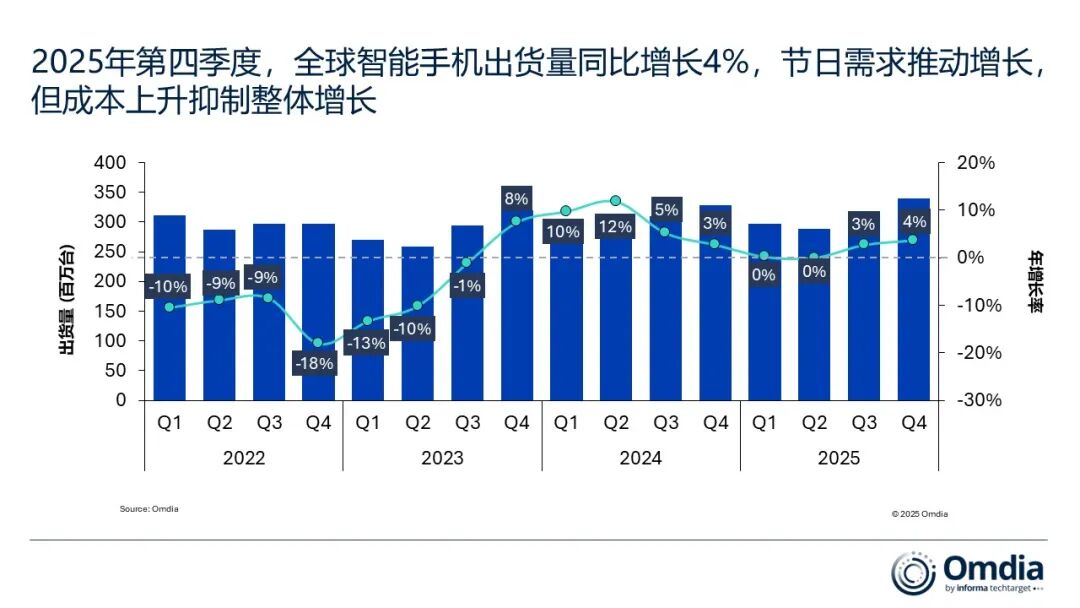
Omdia:2025年全球智能手机出货量12. 5亿部 同比增长2%
智通财经网· 2026-01-15 11:27
Core Insights - The global smartphone market is projected to grow by 4% year-on-year in Q4 2025, driven by seasonal demand recovery and improved inventory management, despite some manufacturers facing rising component costs [1][2] - Apple leads the market with a 25% share, benefiting from strong demand for the iPhone 17 series, achieving record quarterly shipments and maintaining its position as the largest smartphone manufacturer for three consecutive years [1][5] - Samsung ranks second with an 18% market share, primarily due to strong sales of models priced under $300, particularly the Galaxy A17 series [1] - Xiaomi holds the third position with an 11% market share, although it experienced a decline in key markets during Q4 [1][2] - Vivo achieved an 8% market share, bolstered by its leading position in the Indian market, while OPPO returned to growth, re-entering the global top five [1][2] Market Performance - In 2025, global smartphone shipments are expected to increase by 2% year-on-year, reaching 1.25 billion units, reflecting a steady market recovery, although performance varies across regions [2] - The first half of 2025 showed weak performance, while the second half benefited from strong demand in emerging markets and positive responses to flagship model launches [2] Cost Pressures and Strategies - DRAM supply constraints are significantly impacting the smartphone industry, with expectations that this will be a key factor influencing market trends in 2026 [5][7] - Rising semiconductor costs and a slowing replacement cycle are anticipated to affect shipment momentum, prompting manufacturers to optimize configurations and align new product launch strategies with component supply [7] - Manufacturers are increasingly focusing on price control, profitability, and operational efficiency in response to rising cost pressures, with trends indicating consolidation efforts, such as realme's integration into OPPO, to maintain competitiveness [7]
Omdia:2025年中国大陆智能手机市场出货量2.823亿台 华为时隔五年重夺第一
智通财经网· 2026-01-15 11:19
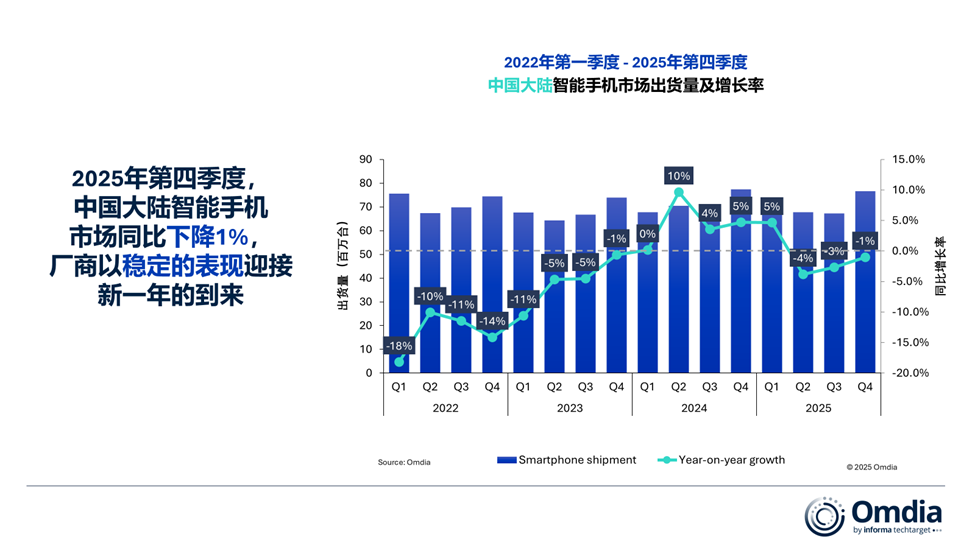
Core Insights - The Chinese smartphone market is projected to see a slight decline in shipments, with a total of 282.3 million units expected in 2025, representing a 1% decrease from 2024 [9] - Huawei leads the market with 46.8 million units shipped, capturing 17% market share, followed closely by Vivo and Apple [9] - Apple shows significant growth, particularly in Q4 2025, where it achieved 22% market share with 16.5 million units shipped [6][9] Market Performance - In Q4 2025, the overall smartphone market in China saw a 1% year-on-year decline, with total shipments of 76.4 million units [9] - Apple ranked first in Q4 shipments with 16.5 million units, while Vivo and OPPO followed closely [9] - Huawei's performance in Q4 was weaker, with 1.11 million units shipped, placing it fourth [9] Company Strategies - Apple is leveraging product differentiation and an upgraded product mix to drive sales, with the iPhone 17 series receiving positive consumer feedback [4] - Huawei is investing heavily in its HarmonyOS ecosystem, committing 1 billion RMB to support innovation in AI and its operating system [4] - Xiaomi is strategically launching its flagship model earlier to compete effectively against rivals [4] Future Outlook - Analysts predict that rising costs will pose significant challenges for smartphone manufacturers in both China and globally in 2026 [8] - Despite cost pressures, companies are expected to continue investing in long-term value areas such as channel upgrades and AI development [8] - The market is anticipated to maintain a foundation for steady growth and product innovation in 2026 [6][8]

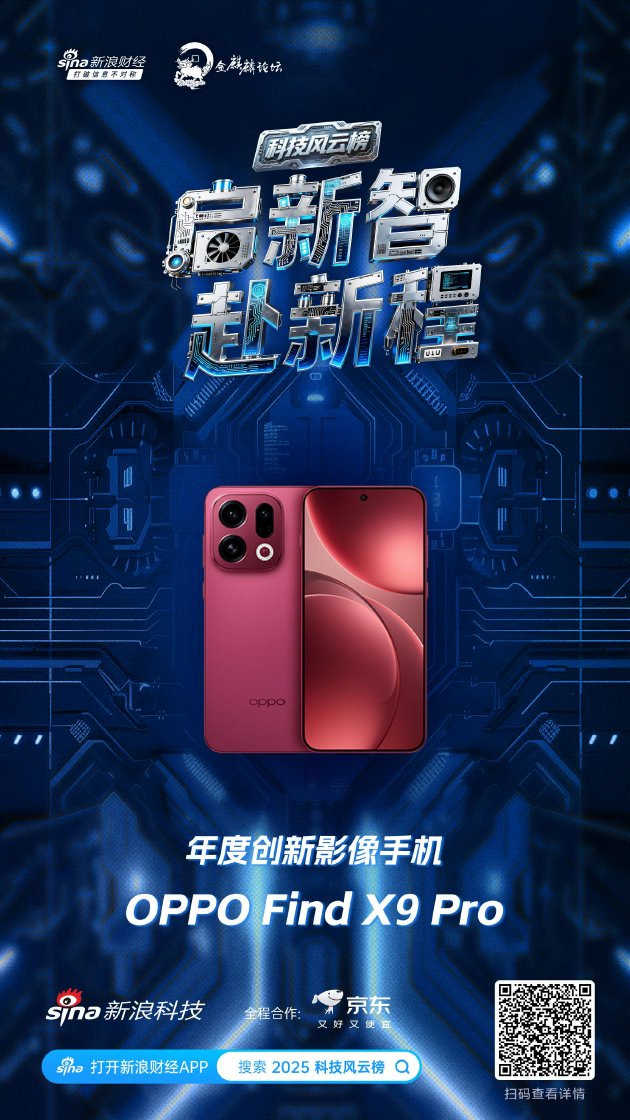
OPPO Find X9 Pro获新浪2025科技风云榜年度创新影像手机奖
Xin Lang Cai Jing· 2026-01-15 09:32
专题:2025科技风云榜 新浪科技讯 1月15日下午消息,由新浪财经客户端、新浪科技联合主办的"2025科技风云榜"年度盛典今日开幕,今年 活动主题为"启新智,赴新程"。 活动现场,行业精英、科研先锋与产业代表共同探讨AI技术的落地实践与未来方向,助力产业智能化转型迈入新征 程!活动同时为洞悉机遇、勇于创新、缔造价值的企业和独具匠心的科技产品颁发奖项荣誉。 今年是"科技风云榜"第十三年,、中国工程院资深院士金涌、欧 洲科学院院士金耀初、GSMA大中华区总裁斯寒等近20位重磅嘉 宾带来分享,欢迎持续关注。 专题:2025科技风云榜 其中,OPPO Find X9 Pro获得新浪2025科技风云榜——年度创新影像手机。 新浪科技讯 1月15日下午消息,由新浪财经客户端、新浪科技联合主办的"2025科技风云榜"年度盛典今日开幕,今年 活动主题为"启新智,赴新程"。 今年是"科技风云榜"第十三年,、中国工程院资深院士金涌、欧洲科学院院士金耀初、GSMA大中华区总裁斯寒等近 20位重磅嘉宾带来分享,欢迎持续关注。 活动现场,行业精英、科研先锋与产业代表共同探讨AI技术的落地实践与未来方向,助力产业智能化转型迈入新征 程 ...