药明生物

Search documents
脑机接口2026迎来量产!恒生医药ETF(159892)飙涨6%,“脑机接口”含量超20%·医疗器械ETF (562600)涨5.6%
Ge Long Hui· 2026-01-05 06:56
Group 1 - The brain-computer interface sector experienced a strong surge on the first trading day of A-shares in 2026, with stocks like Botao Bio, Sino Medical, and Xiangyu Medical hitting the daily limit of 20% increase, leading to a 5.6% rise in the medical device ETF [1] - Elon Musk announced on social media that his brain-computer interface company Neuralink will begin "mass production" of brain-computer interface devices in 2026 [1] - In 2025, China approved 76 innovative drugs for market launch, significantly surpassing the 48 approved in 2024, marking a historical high [1] Group 2 - The medical device ETF (562600) rose by 5.65%, tracking the CSI All-Share Medical Device Index, with a high industry representation of 89% and a brain-computer interface content of 23.14%, outperforming other medical ETFs [1] - The Hang Seng Medical ETF (159892) increased by 6.07%, with a latest scale of 5.564 billion yuan, featuring top-weighted stocks such as BeiGene, WuXi Biologics, and CanSino Biologics [2] - The Hong Kong Stock Connect Medical ETF (520510) rose by 5.72%, leading the market in CXO concentration, with key stocks including WuXi Biologics, MicroPort, and JD Health [2]
港股迎2009年以来最强“开门红”,港股科技ETF(513020)大涨近4%
Mei Ri Jing Ji Xin Wen· 2026-01-05 04:53
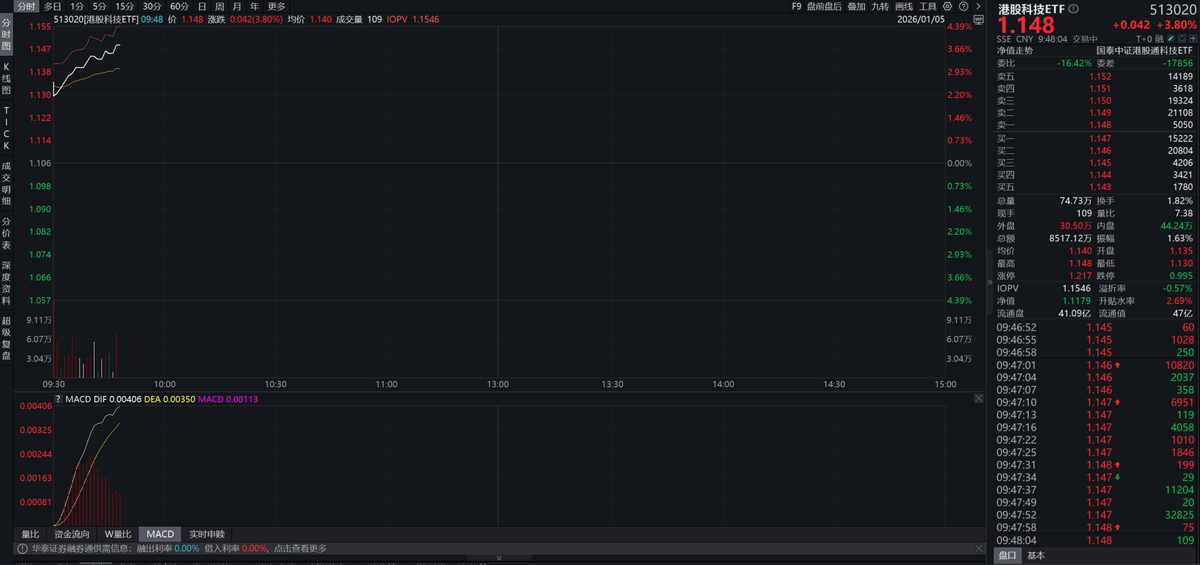
Core Viewpoint - The Hong Kong stock market experienced a strong start in 2026, with the Hang Seng Index rising by 2.76%, marking the best opening performance since 2009, and the Hang Seng Tech Index increasing by 4% [1] Group 1: Market Performance - The Hong Kong stock market saw significant inflows, with over HKD 10 billion in southbound capital purchases, setting a new annual record [1] - The Hong Kong Technology ETF (513020) rose nearly 4% during intraday trading, with a net inflow exceeding HKD 100 million over the past 20 days [1] Group 2: Sector Highlights - The Hong Kong Technology ETF (513020) tracks the CSI Hong Kong Stock Connect Index, encompassing leading stocks in sectors such as internet, chips, innovative pharmaceuticals, and new energy, including Alibaba, Xiaomi, Tencent, Meituan, BYD, and SMIC [3] - The Hong Kong Stock Connect Technology Index has outperformed the Hang Seng Tech Index and the Hong Kong Stock Connect Internet Index, with a cumulative increase of 45.19% from 2018 to the present, while the Hong Kong Stock Connect Internet Index decreased by 13.08% and the Hang Seng Tech Index fell by 0.61% during the same period [5][6] Group 3: Future Outlook - The development of AI in North America is expected to enhance the attractiveness of Hong Kong tech stocks, with leading internet companies leveraging their data and technology advantages to gain a competitive edge in AI model training [8] - Traditional internet platform companies are anticipated to shift focus from user growth to efficiency and overseas expansion in 2026, with AI technologies expected to improve profit margins and drive growth in cross-border e-commerce and digital content [9] - AI is projected to address long-standing challenges in various sectors, including smart driving, smart manufacturing, and innovative drug development, potentially leading to significant advancements in these areas [9] Group 4: Investment Opportunities - Investors are encouraged to consider the Hong Kong Technology ETF (513020) to capitalize on investment opportunities within the Hong Kong tech sector, which reflects a diversified representation of core technology assets and the overall performance of leading tech companies in the market [10]

北海康成董事长薛群:深耕罕见病创新药“蓝海”,双核驱动迈向全球创新
Zhong Guo Zheng Quan Bao· 2026-01-05 04:11
Core Viewpoint - The rare disease innovative drug market is described as a "blue ocean within a blue ocean," with significant unmet clinical needs in China, and the company aims to leverage its dual-core strategy to enhance global innovation and provide hope to more patients [1][2]. Group 1: Company Background and Development - The company, Beihai Kangcheng, has established itself as a global biopharmaceutical firm focused on rare diseases, with three approved products and seven drugs in development [2]. - The founder, Xue Qun, has over ten years of experience in the rare disease sector, identifying significant unmet clinical needs as a fertile ground for entrepreneurship [2]. - Initial challenges included financing difficulties, leading the company to focus on oncology before pivoting to rare diseases after a pivotal policy shift in 2018 [2]. Group 2: Product Portfolio and Clinical Impact - The company's three approved products address multiple clinical gaps, including treatments for Mucopolysaccharidosis Type II and Alagille Syndrome, and the first domestically developed enzyme replacement therapy for Gaucher disease, expected to be approved by May 2025 [3][4]. - The successful launch of the core product, Gorenin, was facilitated by innovative regulatory policies that allowed for segmented production, overcoming high-cost barriers in drug development [4][5]. Group 3: Policy Support and Market Opportunities - Regulatory innovations, such as the segmented production pilot program approved by the National Medical Products Administration, have been crucial in enabling the company to navigate high development costs and enhance production capabilities [5]. - Gorenin's inclusion in the first version of the "Commercial Insurance Innovative Drug Directory" is seen as a significant opportunity to broaden payment channels and enhance the company's innovation drive [6]. Group 4: Strategic Partnerships and Future Plans - The company is entering a 3.0 development phase, implementing a dual-core strategy to solidify its leadership in the domestic rare disease market while expanding internationally [7]. - A strategic partnership with Baiyang Pharmaceutical aims to enhance commercialization efforts and leverage each other's strengths, with Baiyang's extensive sales network significantly exceeding the company's own [7][8]. - The company is actively seeking additional strategic partners in the diagnostic field to create a synergistic ecosystem that combines rare disease diagnostics with genetic sequencing [8].
港股高开上行,医药股表现强势,港交所科技100指数涨超1%
Xin Lang Cai Jing· 2026-01-05 03:48
Core Insights - The Hong Kong Stock Exchange Technology 100 Index (HKEXT100) has risen by 1.14% as of January 5, 2026, with most of the top ten weighted stocks showing positive performance [1] - The index tracks the performance of the 100 largest technology companies listed on the Hong Kong Stock Exchange, covering six major innovative themes [1] - The launch of the HKEXT100 index highlights the key role of the Hong Kong market in promoting the development of emerging industries [1] Stock Performance - Kuaishou-W increased by 10.87% - Innovent Biologics rose by 6.15% - BeiGene gained 5.47% - WuXi Biologics went up by 3.69% - Alibaba-W saw an increase of 2.48% - SMIC rose by 2.33% - Tencent Holdings increased by 0.48% - Meituan-W decreased by 0.10% - BYD Company fell by 1.87% - Xiaomi Group-W dropped by 2.33% [1] Index Features - The HKEXT100 index includes companies involved in artificial intelligence, biotechnology and pharmaceuticals, electric vehicles and smart driving, information technology, internet, and robotics [1] - All constituent stocks meet the qualifications for southbound trading, providing investors with an effective and comprehensive investment tool [1] - The index aims to help investors seize opportunities in technology and emerging sectors [1]
港股通创新药ETF嘉实(520970)涨超5%!2025年我国批准上市的创新药达76个,创历史新高!
Jin Rong Jie· 2026-01-05 03:37
Group 1 - The core viewpoint of the news is that the A-share and Hong Kong markets are experiencing a collective rise, with the Shanghai Composite Index surpassing 4000 points, indicating positive market sentiment [1] - The Hong Kong Stock Connect innovative drug index increased by 3.85%, with notable individual stock performances such as Zhaoyan New Drug rising over 11% and Tigermed and Kelun-Bio rising over 6% [1] - According to a report by Changjiang Securities, Zhaoyan New Drug is expected to see a 60% year-on-year growth in offshore outsourcing orders in 2024, driven by domestic safety evaluation demand recovery and resource scarcity [1] Group 2 - The China National Medical Products Administration reported that 76 innovative drugs have been approved for market in China by 2025, setting a historical record [1] - The total amount of authorized transactions for innovative drugs in China has exceeded $130 billion, with over 150 transactions, also a historical high [1] - Currently, China's pipeline of new drugs accounts for approximately 30% of the global total, ranking second worldwide [1] Group 3 - The Hong Kong Stock Connect innovative drug ETF managed by Harvest (520970) has a management and custody fee of 0.60% per year, making it suitable for both retail investors as a long-term investment tool and for professional investors seeking flexible trading options [2]
2025年我国已批准上市创新药数量创历史新高,港股创新药50ETF(513780)盘中涨超5%
Xin Lang Cai Jing· 2026-01-05 03:05
Group 1 - The A-share market experienced a collective rise on the first trading day of 2026, with significant gains in sectors such as medical services and CRO [1] - The Hong Kong Innovation Drug Index surged by 3.86%, with notable individual stock performances including Zhaoyan New Drug up 11.32% and Tigermed up 7.07% [1] - The Hong Kong Innovation Drug 50 ETF saw a 5.30% increase, with a cumulative rise of 67.18% over the past year as of December 31, 2025 [1] Group 2 - In 2025, China approved 76 innovative drugs for market entry, significantly surpassing the 48 approved in 2024, marking a historical high [1] - The total value of innovative drug licensing transactions in China exceeded $130 billion in 2025, with over 150 transactions, also a record high [1] - Open Source Securities highlighted the emergence of multiple doubling stocks in various pharmaceutical segments driven by innovation, particularly in chemical preparations, biological products, and CXO sectors [2] Group 3 - The Hong Kong Innovation Drug 50 ETF tracks the Hong Kong Innovation Drug Index, which has a current P/E ratio of 31.23, indicating it is at a historical low compared to the past three years [2] - The index includes leading companies such as WuXi Biologics and Innovent Biologics, with nearly 90% weight in biological products and chemical pharmaceuticals, facilitating efficient investment in the high-volatility Hong Kong innovation drug sector [2] - The fund has established off-market connection funds for investors to maintain focus on the sector [2]
广发证券26年港股策略展望:日积跬步,水涨船高
Xin Lang Cai Jing· 2026-01-04 23:25
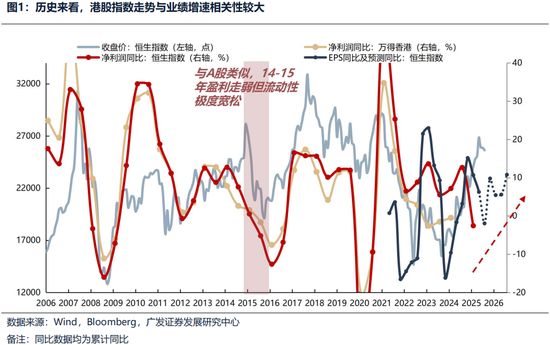
Group 1 - The current rise in Hong Kong stocks is supported by fundamentals, with signs of structural recovery in profitability starting from the second half of 2024 due to stabilization in both domestic and external demand and macroeconomic policy support [1][24] - The Hang Seng Index is transitioning from traditional economic cycles to focus on hard technology sectors such as AI applications, new energy, and semiconductors, with the weight of new economy sectors in the index increasing from 17% to nearly 50% [1][34] - The performance of Hong Kong stocks is expected to shift from being liquidity-driven to being driven by both profitability and liquidity, with earnings growth projected to rebound to 10.8% in 2026 [1][25] Group 2 - The current low valuation levels of quality companies in Hong Kong stocks highlight their growth potential, and the market sentiment has likely adjusted to current liquidity and emotional factors [6][24] - The structural recovery in profitability is evident, with emerging industries experiencing rapid growth while traditional sectors are still stabilizing [28][29] - The performance of individual stocks correlates positively with earnings growth, with high-growth companies significantly outperforming those under profit pressure [33] Group 3 - The upcoming liquidity improvements, including potential dovish signals from the new Federal Reserve chair and a decrease in HIBOR rates, could provide upward momentum for Hong Kong stocks [52][70] - The AH premium is expected to decline further due to increased investment from insurance funds in H-shares and the growing convenience for foreign capital to allocate resources in Hong Kong [71][74] - The spring market rally in Hong Kong stocks has historically shown a high probability of positive returns, indicating a potential opportunity for investors [56][60]




北海康成董事长薛群:深耕罕见病创新药“蓝海” 双核驱动迈向全球创新
Zhong Guo Zheng Quan Bao· 2026-01-04 22:15
Core Insights - The company, Beihai Kangcheng, has established itself as a global biopharmaceutical firm focused on rare diseases, with three approved products and seven in development [1][2] - The founder, Xue Qun, emphasizes the unmet clinical needs in the rare disease sector as a significant opportunity for growth and innovation [4] Company Development - Beihai Kangcheng was founded in 2012 after Xue Qun's decade-long experience in the rare disease field, initially focusing on oncology due to funding challenges [1] - A pivotal moment for the company was in 2018 when the Chinese government released a rare disease directory, leading to strategic partnerships and significant funding [1][3] Product Portfolio - The company has three marketed products that address clinical gaps in conditions such as MPS II and ALGS, with the first domestically developed enzyme replacement therapy for Gaucher disease, Gorenin, expected to be approved by May 2025 [2][4] Policy Support - Government policies have played a crucial role in alleviating challenges in rare disease drug development, particularly through the segmented production pilot policy that supports innovative biopharmaceuticals [3][5] - Gorenin's successful development benefited from this policy, allowing for a segmented production model that meets clinical needs while navigating regulatory hurdles [3][5] Market Strategy - The company is entering a 3.0 development phase, implementing a "dual-core drive" strategy to solidify its leadership in the domestic rare disease market while expanding internationally [7] - A strategic partnership with Baiyang Pharmaceutical aims to enhance commercialization efforts and leverage each other's strengths in the rare disease sector [7][8] Future Outlook - The company anticipates a significant market expansion for rare disease drugs, particularly with the inclusion of Gorenin in the first commercial insurance innovation drug directory set to take effect in January 2026 [5][6] - Xue Qun envisions a collaborative ecosystem that integrates diagnostics and patient education to improve awareness and treatment of rare diseases [8]
医疗服务行业周报2025.12.29-2026.1.2:英矽智能港股挂牌,AI制药潜力大-20260103
Xiangcai Securities· 2026-01-03 14:54
Investment Rating - The report maintains a "Buy" rating for the medical services industry [5][66]. Core Insights - The medical and biological sector experienced a decline of 2.06% this week, ranking 28th among 31 primary industries [1][11]. - The AI pharmaceutical company Insilico Medicine was listed on the Hong Kong Stock Exchange, raising HKD 2.277 billion, marking it as the highest fundraising biotech IPO in 2025 [4][63]. - AI technology is significantly reducing the time and costs associated with drug discovery and clinical trials, with potential savings of approximately USD 26 billion annually in compound screening and clinical trial costs [5][65]. Summary by Sections Industry Performance - The medical services sector's PE (ttm) is 31.28X, with a PB (lf) of 3.17X, showing a decrease of 0.52X in PE and 0.05X in PB from the previous week [3][30]. - The medical services II sub-industry index closed at 6363.18 points, down 1.40% [22][23]. Company Performance - Top-performing companies in the medical services sector include: - Purui Eye Hospital (+5.3%) - Sanbo Brain Science (+4.7%) - Puris (+3.0%) - Tigermed (+2.9%) - Baicheng Pharmaceutical (+2.2%) - Underperforming companies include: - Bid Pharmaceutical (-6.6%) - Sunshine Nuohua (-6.1%) - Zhaoyan New Drug (-5.2%) - International Medicine (-4.0%) - Kanglong Chemical (-3.5%) [2][28]. Investment Recommendations - The report suggests focusing on high-growth areas such as ADC CDMO and peptide CDMO in the pharmaceutical outsourcing services, with companies like WuXi AppTec, Haoyuan Pharmaceutical, and WuXi Biologics being highlighted [9][66]. - It also recommends looking at third-party medical testing laboratories and consumer healthcare sectors, particularly in ophthalmology and dentistry, with companies like Aier Eye Hospital and Dean Diagnostics [9][66].
突然,集体暴涨!特朗普,发出威胁→
Qi Huo Ri Bao· 2026-01-03 00:24
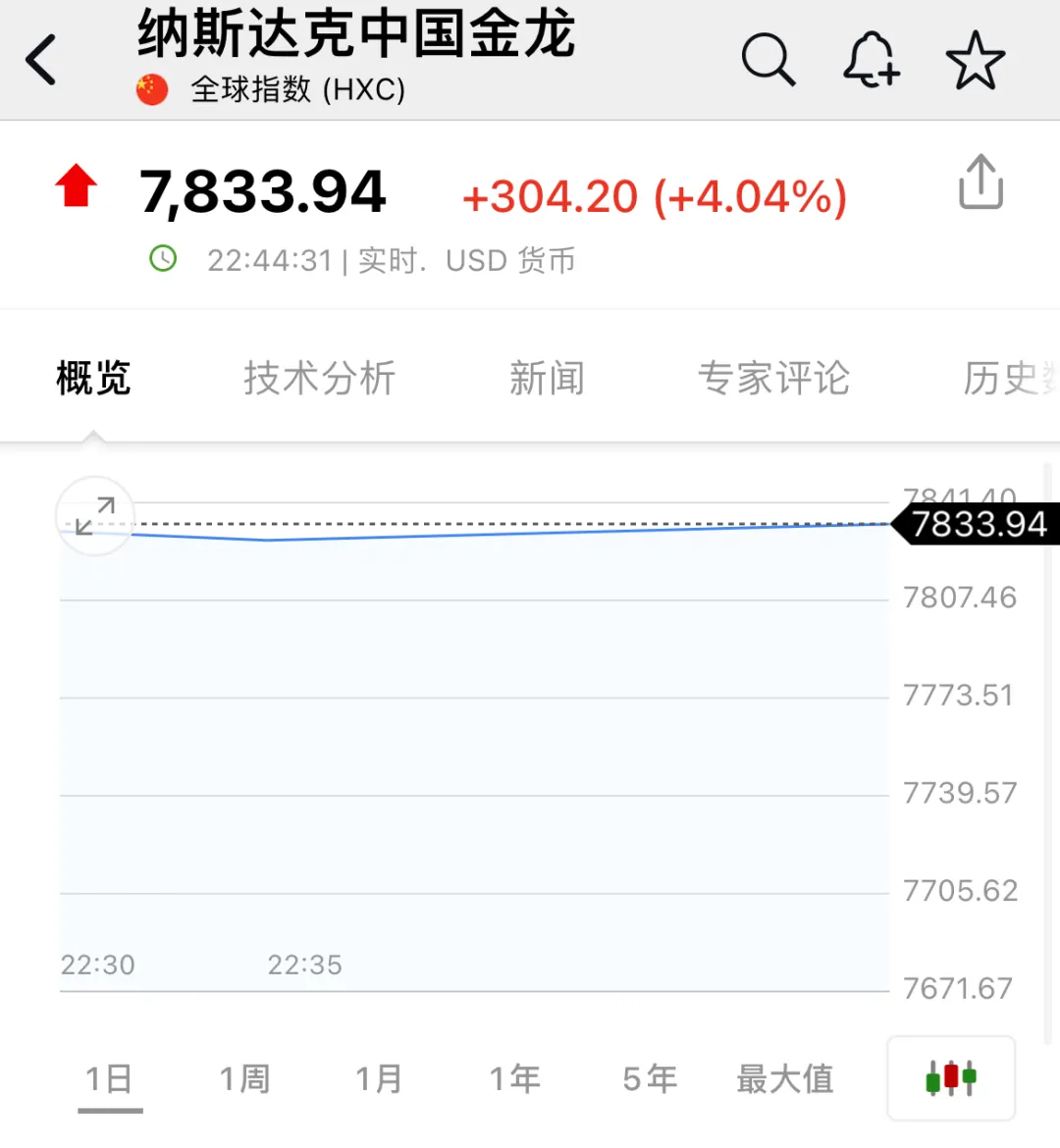
Market Overview - On January 2, US stock indices opened higher, with the Dow Jones up 0.19%, S&P 500 up 0.58%, and Nasdaq up 1.03% [1] - The Philadelphia Semiconductor Index saw significant gains, with ASML rising over 7% and Micron Technology up nearly 6% [1] - Chinese concept stocks surged, with the Nasdaq Golden Dragon China Index soaring 4%, and notable gains in Baidu (up 11.35%) and others [1] Performance Summary - By market close, US indices showed mixed results; Nasdaq fell 0.03%, while S&P 500 rose 0.19% and Dow Jones increased by 0.66% [3] - Notable tech stocks had varied performances, with ASML and Micron reaching historical highs, while Tesla and Microsoft dropped over 2% [3] - The Nasdaq Golden Dragon China Index closed up 4.38%, with Baidu gaining 15% and other major Chinese stocks also performing well [3] Sector Highlights - Semiconductor stocks like Hua Hong Semiconductor and SMIC saw significant increases, with Hua Hong up over 9% [5] - The innovative drug sector also performed well, with notable gains in companies like Innovent Biologics and Hengrui Medicine [5] - The solar energy sector experienced a boost, with GCL-Poly Energy rising over 22% [5] Future Market Outlook - Goldman Sachs predicts a 38% upside potential for the Chinese stock market by the end of 2027, citing factors like easing core risks and favorable regulatory environments [6] - Analysts expect a "spring market" in A-shares, driven by improved market sentiment and increased trading volumes [7][8] - The A-share market has shown signs of recovery, with the Shanghai Composite Index breaking a previous downtrend and trading volumes rising above 2 trillion yuan [9][10] Investment Sentiment - Analysts note that the current market environment is more favorable compared to previous periods, with expectations of continued liquidity and supportive macro policies [10][11] - The anticipated "spring rally" is supported by historical trends and positive macroeconomic signals, with a focus on sectors like commercial aerospace and military [12][13]