阿里巴巴

Search documents
A股晚间热点 | AI调用量首超美国!国产大模型霸榜全球
智通财经网· 2026-02-26 15:27
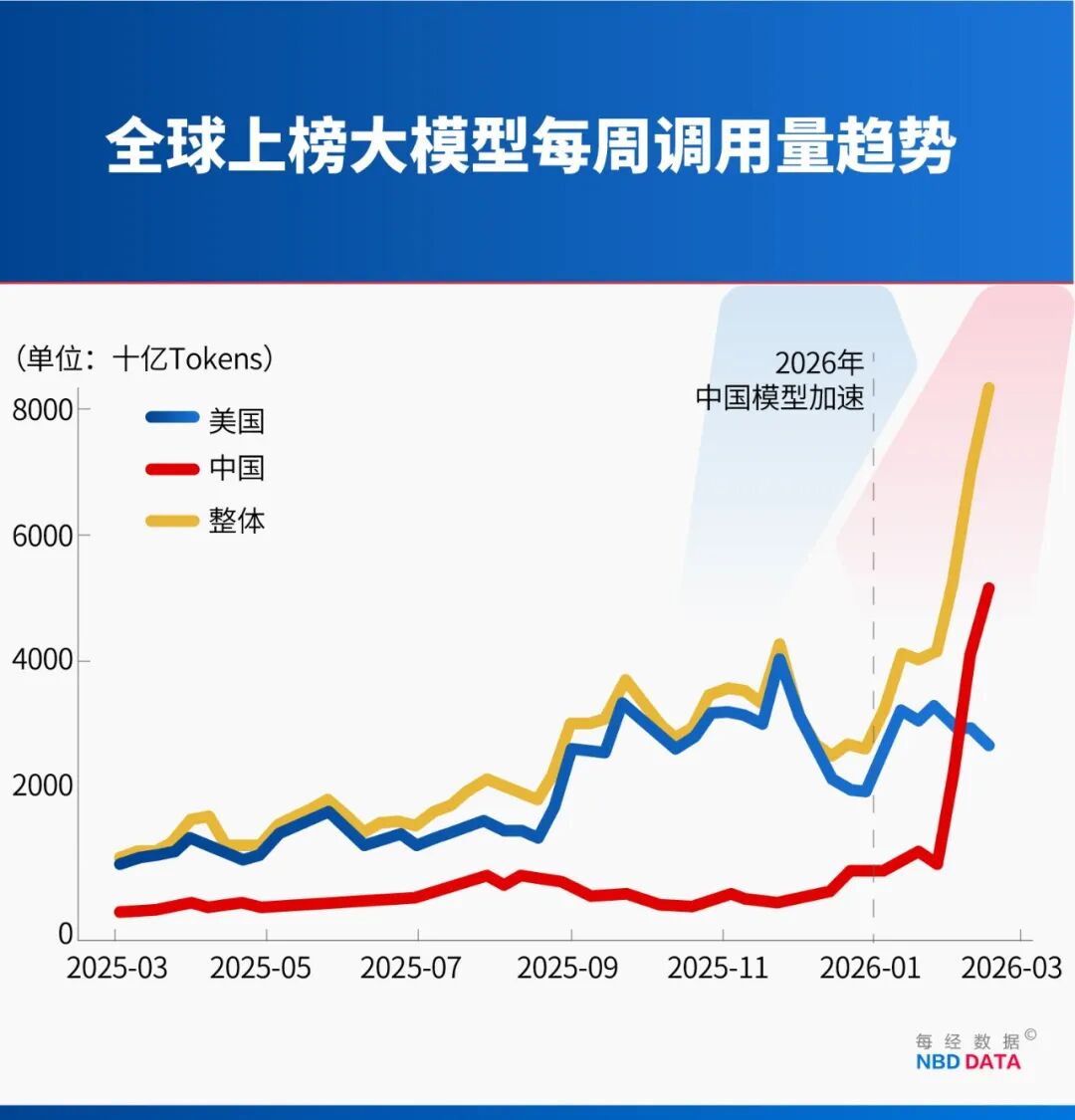
Group 1: AI Industry Developments - In February, China's AI model invocation volume surged, surpassing the US for the first time, with 41.2 trillion tokens compared to the US's 29.4 trillion tokens during the week of February 9-15 [1] - The following week, China's model invocation further increased to 51.6 trillion tokens, marking a 127% rise over three weeks, while the US's invocation dropped to 27 trillion tokens [1] - Four out of the top five global AI models are from China, indicating a collective rise of Chinese AI firms rather than reliance on a single product [1] Group 2: Financial Market Trends - The Hang Seng Tech Index fell by 2.87%, reaching a new low since July, down over 23% from its peak in October [2] - UBS analysts suggest that concerns over AI may create buying opportunities, as Chinese tech giants' capital expenditures are currently lower than their US counterparts [2] - UBS increased its weight on Tencent by 3 percentage points and adjusted weights for other companies like Bilibili and Meituan, while reducing allocations for Vipshop and Alibaba [2] Group 3: Corporate Earnings - Baidu reported Q4 revenue of 32.74 billion RMB, slightly above market expectations, with a quarter-on-quarter growth of 5% and an annual total revenue of 129.1 billion RMB [4] - The intelligent cloud infrastructure segment showed significant growth, with Q4 revenue reaching 5.8 billion RMB and AI high-performance computing subscription revenue increasing by 143% year-on-year [4] Group 4: Currency and Trade - The offshore RMB rose for three consecutive days, surpassing 6.83 against the USD, attributed to improved US-China trade relations and a weaker dollar due to investigations into the Federal Reserve [7] - The recent appreciation of the RMB is also linked to the release of accumulated settlement demand from high export growth [7] Group 5: Lithium Market Insights - Zimbabwe's mining department announced a temporary suspension of all raw and lithium concentrate exports, but industry analysts expect exports to resume within 1 to 4 weeks, with companies reporting sufficient raw material inventories [8] Group 6: Regulatory Changes - The State Administration for Market Regulation has issued new regulations to combat ghost restaurants and false qualifications in the food delivery sector, mandating real-name registration and substantive checks on food business licenses [9]


默茨访华大合影,哪些中德企业出镜?
Zhong Guo Xin Wen Wang· 2026-02-26 15:11
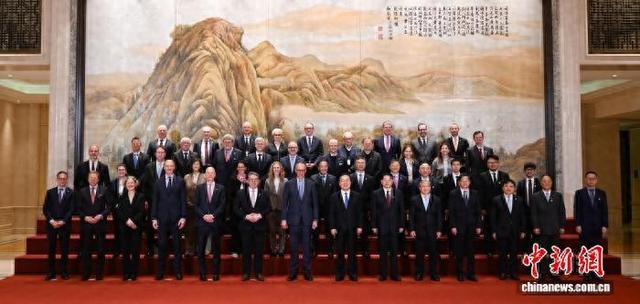
Group 1 - DHL Group's CEO expressed a strong willingness to deepen practical cooperation with China, highlighting the active e-commerce sector in Hangzhou [1] - The visit of German Chancellor Merz to Hangzhou included a large group photo with nearly 30 representatives from German companies, showcasing the latest high point in Sino-German economic cooperation [3] - The photo featured prominent German companies such as BMW, Mercedes-Benz, Siemens, and Adidas, alongside Chinese firms like Alibaba and Geely, indicating a robust partnership between the two nations [3][4] Group 2 - The cooperation between China and Germany in the automotive sector is characterized by multi-layered and multi-dimensional collaboration, with joint ventures like the smart brand established by Geely and Mercedes-Benz [4] - Chinese companies are recognized for their strengths in core components of new energy vehicles, while German firms excel in brand and manufacturing, creating a complementary relationship [5] - The collaboration extends beyond automotive to traditional sectors like chemicals, with calls for re-inventing cooperation methods to adapt to a rapidly changing world [5] Group 3 - Innovative Chinese companies like Yushutech and Qiangnao Technology are collaborating with German industrial giants, indicating a new direction in Sino-German cooperation towards future industries [6] - The visit of Chancellor Merz is seen as an excellent opportunity to establish broader cooperation in the global smart robotics industry [6] - The alignment of China's 14th Five-Year Plan with Germany's new development strategy emphasizes the mutual expectation for pragmatic cooperation to achieve win-win outcomes [7] Group 4 - Lingban Technology's founder noted that Germany is its largest market in Europe, highlighting extensive collaborations with major German automotive companies [8] - The emphasis on green and low-carbon cooperation between the two manufacturing powerhouses is seen as a promising area for future economic collaboration [8] - The visit concluded with Merz expressing positive impressions and the need for both sides to work together on various tasks, marking a meaningful engagement between China and Germany [9]
德系车企三巨头随德国总理访华 释放这些新信号
Xin Jing Bao· 2026-02-26 14:35
Core Insights - German automotive giants are deepening their integration into China's innovation ecosystem, recognizing the market's irreplaceable role in global economic growth and business success [1][4][7] - The strategic positioning of German car manufacturers in China is shifting from a focus on manufacturing to becoming a core market and innovation hub that drives global competitiveness [2][5] Group 1: High-Level Visits and Collaborations - German Chancellor Merz's visit to China included top executives from BMW, Mercedes-Benz, and Volkswagen, highlighting the importance of the Chinese market [1] - Significant collaborations were established during the visit, including BMW's partnership with CATL to reduce the carbon footprint of electric vehicles and Mercedes-Benz's agreement with Momenta to enhance future mobility solutions [1][3] Group 2: Investment and Localization - China has been the largest single market for Mercedes-Benz, BMW, and Volkswagen, accounting for about one-third of their global sales [5] - BMW has invested over 120 billion yuan in its Shenyang production base and established four R&D innovation centers in China [5][6] - Mercedes-Benz plans to invest over 14 billion yuan with local partners in 2024 to expand its localized product offerings [6] Group 3: Technological Collaboration - German car manufacturers are increasingly focusing on technological collaboration in China, moving from traditional manufacturing partnerships to innovation-driven cooperation [3][7] - Mercedes-Benz has deepened its collaboration with Momenta and invested in Qianli Technology, while BMW is working with Huawei and Alibaba to develop smart applications and AI engines [6][7] Group 4: Market Transformation - The Chinese automotive market is evolving from being merely a consumer market to a leading force in electric and intelligent vehicle innovation [2][3] - German car manufacturers view China as a critical source of innovation and competitive advantage, emphasizing the need for a robust local presence to succeed globally [4][7]
2月26日南向资金追踪:美团-W、东方电气、小米集团-W净买入额居前,分别为3.11亿港元、1.25亿港元、0.18亿港元


Jin Rong Jie· 2026-02-26 13:32
证券简称成交金额净买入额收盘价涨跌幅美团-W 036907.27亿港元3.11亿港元80.45港元-2.72%东方电气 010728.00亿港元1.25亿港元40.50港元15.52%小米集团-W 0181025.12亿港元0.18亿港元35.18港元-1.18%优必选 098808.88亿港元0.17亿港元121.00港元-5.39%快手-W 010248.08亿港元-0.06亿港元63.60港元-4.14%泡泡玛特 099929.55亿港元-2.46亿港元225.20港元-3.26%华虹半导体 0134720.79亿港元-2.84亿港元97.85港元-4.82%中芯国际 0098128.71亿港元-2.99亿港元67.60港元-3.22%中国人寿 026286.08亿港元-4.36亿港元31.38港元-4.10%腾讯控股 0070065.62亿港元-5.49亿港元512.00港元-2.01%长飞光纤光缆 0686935.97亿港元-6.25亿港元135.20港元2.97%阿里巴巴-W 0998888.68亿港元-8.88亿港元143.00港元-3.57%中国海洋石油 0088324.57亿港元-8.94亿 ...
中国跑得最快的这群人
3 6 Ke· 2026-02-26 13:01
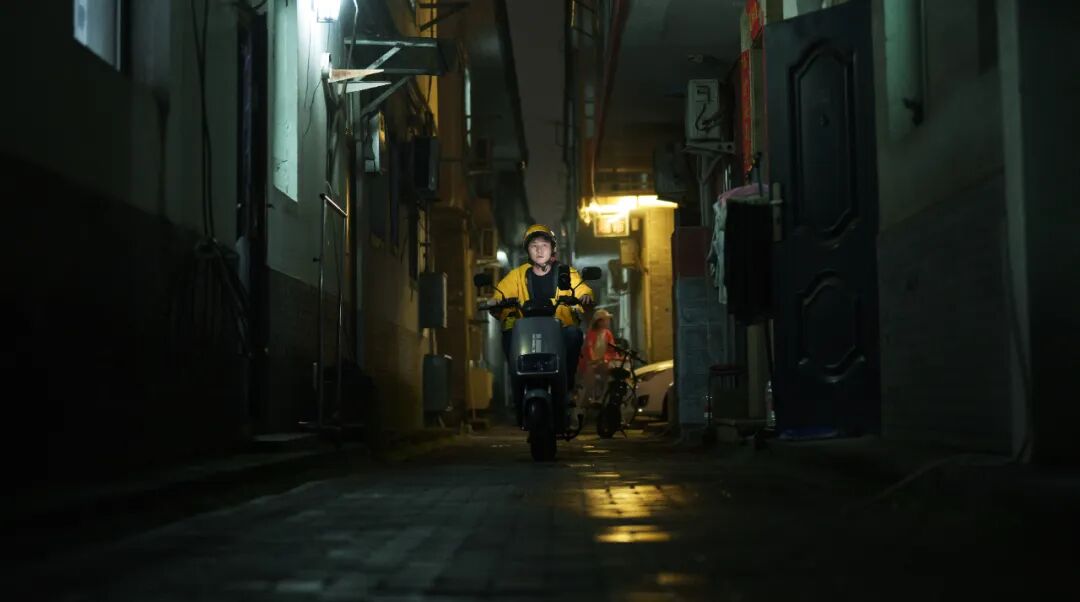
约2000万名快递员和骑手,每秒钟送出6300个快递、933份外卖。 他们是中国"跑得最快"的一群人。 他们撑起外媒惊叹的24小时不间断的外卖配送,撑起哪儿哪儿都送的快递服务,撑起中国遥遥领先全球的物流配送网络,撑起自己的家,也撑起我们的日 常生活。 01 艰难的奔跑 深夜,河北邯郸的外卖骑手小于抢到一个"大单",配送费5块2,外加2块深夜补贴。 他按导航抵达时,却被客户告知地址填错了,要改送到另一小区的7号楼,语气中毫无歉意。小于辗转五六公里来到小区时,门卫大爷却告诉他:"这里没 有7号楼"。他只好再次拨打电话,对方表示不在这个小区,是另一个。 又跑了四五公里,还是没找到。小于第三次拨打电话,对方才告知:"不在小区里面,在外面"。小于彻底懵了,这下范围大了,上哪去找? 此时已经半夜11点,还好比较幸运,有位热心人把他带到了目的地。为这一单,小于已经耗费近一个小时,如果换作其他单子,早就赚二三十块了。他跟 着一位住户蹭进了单元门,终于把外卖送到门口,和客户碰了面。 小于被对方质问得满脸通红,但他还是忍住了,说了句:"用餐愉快。" 7块2,买断了他的时间,也买走了他的尊严。做外卖前,他是个一点委屈都受不了的人, ...
春节AI红包大战收官:“烧”了45亿,谁抢到了“超级入口”?
3 6 Ke· 2026-02-26 12:53
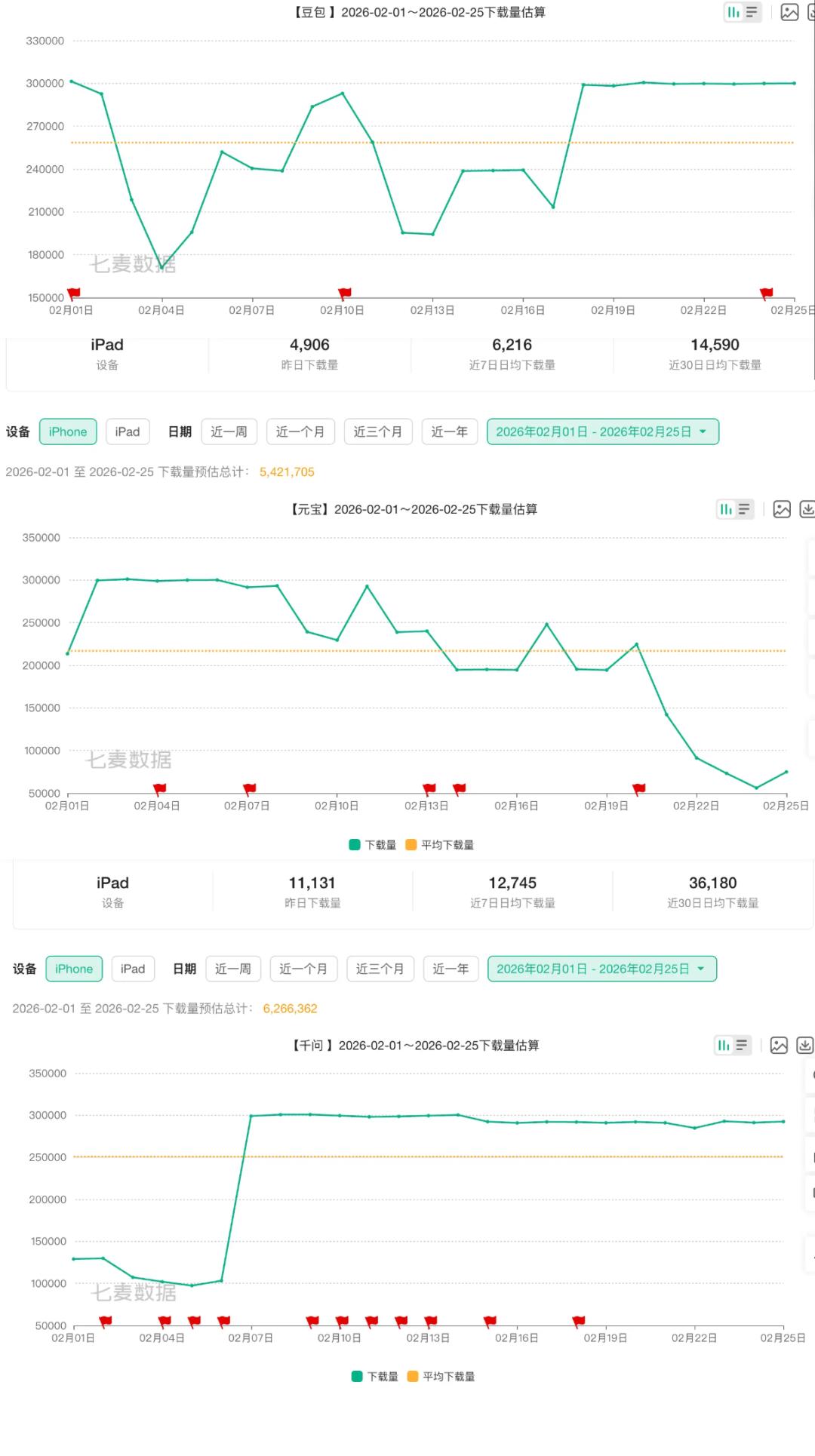
春晚舞台之外,腾讯元宝、阿里的千问、百度的文心一言等,在这个春节至少直接发放了45亿元红包用 于产品推广。但在互联网流量早已见顶的当下,各家在今年的推广策略全然不同。本质是不同商业逻辑 的"对赌",也折射出全球C端AI产品商业化的集体焦虑与突围尝试。 马年春节假期结束了。这个春节,AI成为了"最显眼"的主角。你可能抢了红包、用AI生成了拜年图、甚 至让AI帮你买了奶茶和订电影票。这场热闹背后,是一场史无前例的商业豪赌。 40多年来,春晚舞台从未如此一致地指向同一个行业。从1984年"康巴斯钟表为您报时"开始,春晚冠名 广告商的变迁就是一部浓缩的中国产业演进史:90年代是白酒,00年代是家电和乳业,2015年微信、支 付宝将红包玩法推向热潮。谁站在这个舞台上,谁就代表着中国经济引擎的下一个十年。 2026年,轮到了AI。 中国的AI企业在春晚的舞台上完成了一次历史性的集体亮相。 比如火山引擎成为央视春晚"独家AI云合作伙伴"、豆包的身份是"核心AI互动伙伴",阿里旗 下千问则包揽了东方卫视、浙江卫视、江苏卫视、河南卫视四大马年春晚的独家冠名;元宝 合作了辽宁卫视春晚;百度宣布成为2026年北京电视台春晚首席AI ...



豪掷80亿后发现,AI大战的胜负不靠红包
3 6 Ke· 2026-02-26 12:50
Core Insights - The AI red envelope battle during the Spring Festival saw over 8 billion yuan invested, making AI and large models accessible beyond first-tier cities, reaching elderly users and lower-tier markets [1][11] - Major tech giants like ByteDance, Alibaba, Tencent, and Baidu engaged in a strategic competition, each with distinct approaches to integrate AI into everyday life [2][4][11] Group 1: Industry Dynamics - The AI applications experienced a surge in user engagement during the Spring Festival, with ByteDance's Doubao achieving 1.9 billion interactions on New Year's Eve, while Alibaba's Qianwen attracted over 130 million first-time AI shoppers [4][11] - Despite the initial success, post-festival user retention rates dropped significantly, with average 30-day retention at only 12.8%, indicating challenges in maintaining user engagement after promotional activities ended [6][10] Group 2: Company Strategies - Doubao replicated WeChat's successful model by partnering with CCTV for the Spring Festival, integrating AI features like avatar generation and greeting videos into user interactions [3][4] - Alibaba's strategy focused on leveraging its ecosystem, converting 3 billion yuan in subsidies into practical AI experiences across various consumer scenarios, enhancing user engagement through familiar platforms [4][13] - Tencent utilized social engagement tactics, offering cash rewards through its Yuanbao app to encourage users to interact with AI features, aiming to create habitual usage patterns [4][12] Group 3: User Experience and Retention - The initial excitement from the red envelope promotions led to a significant influx of users, but many were driven by short-term incentives, resulting in a high churn rate post-festival [6][10][12] - Users expressed dissatisfaction with the complexity of tasks and low perceived value of rewards, leading to a rapid decline in app usage after the promotional period [6][10] - The effectiveness of AI applications in retaining users is closely tied to their integration into daily activities, as seen with Alibaba and ByteDance's strategies of embedding AI into existing services [13][14]
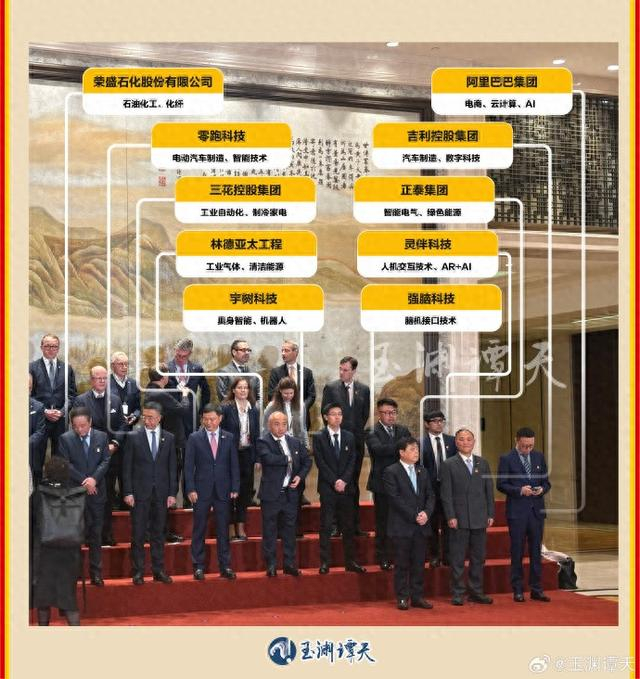
德国总理来杭州见了哪些中方企业,一张合影透露不少信息
Xin Lang Cai Jing· 2026-02-26 12:28
Group 1 - The meeting between German Chancellor Merz and local entrepreneurs in Hangzhou highlights the evolving landscape of Sino-German cooperation, showcasing a diverse range of industries from traditional manufacturing to internet technology and AI [1] - The list of participating Chinese companies includes notable names such as Zhejiang Chint Group, Geely Holding Group, Alibaba Group, and others, indicating a strong representation across various sectors [1] - This gathering reflects the trajectory of China's industrial exploration and suggests potential new directions for collaboration between China and Germany [1]




投资加速背景下,基于盈亏平衡框架的研究IDC企业信用特征研究
Lian He Zi Xin· 2026-02-26 11:53
Investment Rating - The report indicates a high investment rating for the IDC industry, driven by the explosive demand for AI computing power and accelerated investments in the sector [1][3]. Core Insights - The IDC industry is entering a high-growth phase characterized by a collaborative layout of "Eastern Core + Western Low Cost," with policies focusing on energy consumption and efficiency [1][3]. - The total computing power in China is projected to reach 280 EFLOPS by the end of 2024, with AI computing power accounting for over 30% [3][5]. - The report highlights a significant differentiation in credit levels among IDC companies, with top-tier firms exhibiting high utilization rates (above 60%) and low Power Usage Effectiveness (PUE) (below 1.3), indicating lower investment risks [1][37]. Industry Overview and Competitive Landscape - The IDC industry benefits from the explosive demand for AI computing power, with ongoing investments leading to a "quantity and quality" expansion phase [3][4]. - The competitive landscape includes telecom operators, third-party IDC providers, and cloud service providers, each leveraging their unique resources for differentiated competition [4][5]. - The market share distribution shows telecom operators holding approximately 40%, third-party IDC providers at 35%, and cloud service providers at 25% [4]. Investment Trends - IDC industry investments have been on the rise, with total investments from the three major telecom operators expected to reach approximately 85.9 billion yuan in 2024, a 25% increase year-on-year [5][6]. - Major cloud service providers like Alibaba and Tencent are projected to have capital expenditures exceeding 100 billion yuan in 2025, focusing on AI [5][6]. Policy Environment - The "East Data West Computing" initiative and stringent "dual carbon" targets have raised industry entry barriers, mandating a minimum overall utilization rate of 60% and an average PUE below 1.5 by the end of 2025 [7][8]. - The report emphasizes the importance of energy efficiency as a core competitive factor, with PUE becoming a hard constraint for project approvals [7][21]. Key Factors Influencing Profitability - The report identifies key variables affecting the breakeven point for IDC companies, including utilization rate, PUE, electricity prices, and depreciation policies [8][10]. - High utilization rates directly influence revenue and cost distribution, with a higher rate leading to lower unit costs and quicker attainment of breakeven [11][19]. - PUE is highlighted as a critical cost variable, with lower PUE values indicating higher energy efficiency and lower operational costs [21][23]. Industry Differentiation and Credit Characteristics - The report concludes that companies maintaining a utilization rate above 60% and a PUE below 1.3 exhibit strong operational stability and lower investment risks [37]. - Conversely, companies with low utilization rates and high PUE face significant risks of deteriorating profitability and potential debt defaults, warranting a cautious investment approach [37].
2月井喷!中国AI调用量首超美国 四款大模型霸榜全球前五 国产算力需求正经历指数级增长
Mei Ri Jing Ji Xin Wen· 2026-02-26 11:40
Core Insights - In February, China's AI model API call volume surged, surpassing that of the United States for the first time, with 41.2 trillion tokens compared to the U.S.'s 29.4 trillion tokens during the week of February 9-15 [1][7] - The following week, China's model call volume increased to 51.6 trillion tokens, marking a 127% growth over three weeks, while U.S. model calls dropped to 27 trillion tokens [1][7] - Four out of the top five models in global API call volume are from Chinese companies, indicating a collective rise of Chinese AI manufacturers rather than reliance on a single product [1][10] Token Call Volume Growth - The global model token call volume has experienced explosive growth, increasing from 12.4 trillion tokens in the week of March 3-9, 2025, to 139.5 trillion tokens by mid-February 2026, a tenfold increase in less than a year [6] - In early February 2026, China's model call volume reached 22.7 trillion tokens, signaling a strong competitive push against U.S. models [6][7] Leading Models and Their Performance - The top five models by call volume during the week of February 16-22, 2026, included four from Chinese manufacturers, contributing 85.7% of the total call volume [10] - MiniMax's M2.5 model, launched on February 13, 2026, quickly became the top model, contributing 14.4 trillion tokens to the total call volume of 32.1 trillion tokens during the week of February 9-15 [10] Cost Competitiveness - Chinese models are significantly cheaper than their U.S. counterparts, with MiniMax's M2.5 and Zhiyu's GLM-5 priced at $0.3 per million tokens for input, compared to $5 for Claude Opus 4.6, making Chinese models approximately 16.7 times cheaper [15][16] - For output, MiniMax's M2.5 costs $1.1 per million tokens, while Claude Opus 4.6 costs $25, representing a cost difference of about 22.7 times [16][17] Technological Innovations - The "Mixture-of-Experts" (MoE) architecture is a key factor in reducing inference costs for Chinese models, allowing for significant reductions in memory usage and increases in throughput [18] - Chinese AI companies are also pursuing vertical integration to optimize costs further, combining model algorithms, cloud infrastructure, and AI chips for better efficiency [19] Market Trends and Future Projections - The demand for tokens is expected to grow exponentially, with a projected compound annual growth rate of 330% from 2025 to 2030 in China [19] - The concept of "Token inflation" reflects a structural increase in token consumption per user, driven by deeper engagement with AI tools for complex tasks [20] - Future AI service pricing is anticipated to become highly customized and flexible, influenced by task complexity and resource consumption [22]