Temu

Search documents
非洲电商终于也快被中国人“占领”了
Hu Xiu· 2025-06-16 03:56
Core Insights - The article discusses the increasing presence of Chinese cross-border sellers in the African e-commerce market, particularly through platforms like Jumia and Takealot, as U.S. market conditions become challenging for these sellers [1][4]. Group 1: Market Dynamics - Jumia, Africa's largest e-commerce platform, reports that over 80% of its 12,000 international sellers are from China, contributing one-third of its GMV with a year-on-year growth rate of 60% [2]. - Takealot, South Africa's largest e-commerce platform, is also seeing a rise in Chinese ownership and has relaxed its registration fees, which previously reached 30,000 RMB [3]. - The number of e-commerce users in Africa grew to approximately 387 million in 2022, with a penetration rate of 32%, expected to reach 500 million users and a penetration rate of 39.5% to 40% by 2025 [5]. Group 2: Challenges for Chinese Sellers - Chinese sellers face challenges in profitability due to the low average order value of products sold on platforms like Jumia and Takealot [7]. - The logistics of shipping from China to Africa typically take 15 to 21 days, which is not appealing to African consumers who prioritize delivery speed [8]. - South African government policies pose risks for Chinese cross-border e-commerce, including investigations into companies like SHEIN for potentially evading import duties [10][11]. Group 3: Local Platform Advantages - Local platforms like Takealot have a logistics advantage, with the ability to offer same-day or next-day delivery due to their local warehouses [14]. - Chinese sellers must maintain inventory in Africa, which increases operational costs, as local warehousing can cost around 60,000 ZAR (approximately 24,000 RMB) per month for a 1,000 square meter facility [17]. - High logistics and inventory costs make it difficult for Chinese sellers to profit from low-priced items, with products priced above 200 ZAR (approximately 80 RMB) being more competitive on Takealot [19]. Group 4: Performance of Local Platforms - Despite the advantages, local platforms like Jumia and Takealot face significant challenges, including Jumia's continuous losses since its inception in 2012 and a 13% decline in revenue in Q3 2024 [24]. - Takealot's GMV growth dropped from 72% in 2021 to 15% in 2022, and it reported a loss of 22 million USD (approximately 408 million ZAR) in 2023 due to slowing consumer demand [26]. - The entry of Chinese platforms like SHEIN and Temu has intensified competition, with SHEIN capturing 35% of the online women's clothing market in South Africa [28].


不再做“美国梦”,跨境巨头涌向欧洲
虎嗅APP· 2025-06-15 13:58
Core Viewpoint - The "American Dream" of major Chinese cross-border e-commerce platforms is collectively shattering due to unstable tariff policies and new regulations on small packages, leading to a significant shift in focus towards European and Latin American markets [3][4][5]. Summary by Sections Tariff Impact - As of May 12, the U.S. has reduced tariffs on Chinese goods to 30%, but the instability of tariff policies continues to cast a shadow over cross-border e-commerce platforms [3]. - Starting May 2, 2025, packages from mainland China and Hong Kong valued under $800 will no longer enjoy tariff exemptions, facing a 120% tariff or a fixed fee of $200 per order, which is seen as a major challenge for cross-border e-commerce [4][5]. Market Shift - Major platforms are seeking growth opportunities outside the U.S., with Europe and Latin America becoming key focus areas [5][6]. - Data shows that in April 2025, Temu's traffic allocation had only 4% in North America, while Europe accounted for 49% and Latin America for 16% [6]. Temu's Strategy - Temu's business volume in the U.S. dropped by 40% from March to April 2025 and by 72% compared to its peak in 2024, prompting a shift in strategy to focus on non-U.S. markets [10]. - In Brazil, Temu surpassed Shopee to become the second-largest e-commerce platform, achieving a market share of 9.9% in April 2025 [12][34]. SHEIN's Challenges - SHEIN has been facing challenges in the U.S. market even before the tariff changes, with a significant portion of its core user base being under 30, which does not align with the primary consumer demographic in the U.S. [18][19]. - Despite a 120% revenue increase in 2024, SHEIN's strategies have not yielded sufficient ROI, leading to a strategic pivot towards Europe, where it aims to develop a product structure tailored to local preferences [20][28]. European Market Focus - Both Temu and SHEIN are heavily investing in the European market, with Temu aiming to double its revenue in Europe by reallocating resources from the U.S. [23][24]. - Temu's strategy includes enhancing local supply chains and increasing the number of local suppliers in Europe, while SHEIN has already established a unique product offering tailored for the European market [25][28]. Latin American Expansion - Temu has set ambitious sales targets for Latin America, contributing significantly to its overall revenue goals for 2025, despite facing regulatory challenges in Brazil [33]. - SHEIN is also focusing on Latin America, particularly Brazil and Mexico, with plans to enhance local operations and product offerings to adapt to high tariffs and market conditions [35][36]. TikTok's Involvement - TikTok is increasing its investment in Europe and Latin America, with plans to expand its workforce and operations, although it faces challenges in user retention and market entry due to high operational costs [31][40].

不再做“美国梦”,跨境巨头涌向欧洲
Hu Xiu· 2025-06-15 13:14
Core Viewpoint - The "American Dream" of major Chinese cross-border e-commerce platforms is collectively shattering due to unstable tariff policies and new regulations on small package tariffs, prompting a shift towards European and Latin American markets [1][2][10]. Group 1: Impact of Tariff Policies - As of May 2, 2025, packages from mainland China and Hong Kong valued under $800 will no longer enjoy tariff exemptions, facing a 120% tariff or a fixed fee of $200 per order, significantly impacting cross-border e-commerce operations [1][2]. - Temu's business volume in the U.S. dropped by 40% from March to April 2025 and by 72% compared to its peak in 2024, with daily active users decreasing by 58% in May due to the end of small package tariff exemptions [2][5]. Group 2: Strategic Shifts in Market Focus - Major platforms are reallocating resources to European and Latin American markets, with Temu's traffic allocation showing only 4% to North America and 49% to Europe as of April 2025 [1][2]. - Temu aims to double its revenue target in Europe for 2025 compared to 2024, redistributing resources from the U.S. market and increasing local supplier partnerships [11][12]. Group 3: Challenges in the U.S. Market - TikTok Shop's sales target for 2024 in the U.S. is $17 billion, but internal reports indicate consistent underperformance, with a 20% drop in weekly orders following tariff implementation [5][6]. - SHEIN has been reducing its U.S. market presence since 2024, facing challenges in penetrating the core consumer demographic compared to competitors like Temu [9][10]. Group 4: Growth in European and Latin American Markets - Temu's market share in Brazil reached 9.9% in April 2025, surpassing Shopee, while SHEIN also targets significant growth in Latin America, with an expected 80% increase in revenue from Brazil and Mexico in 2024 [20][21]. - TikTok Shop is expanding in Latin America, focusing on local operations due to high tariffs, with daily sales in Mexico at approximately $700,000 and $110,000 in Brazil [21].
TikTok Shop美国大换血!营收不达标,改用中国管理层;韩国一家电商公司要来中国开店,首站上海丨Going Global
创业邦· 2025-06-15 11:15
Core Insights - The article highlights significant developments in the global expansion of various companies, particularly focusing on TikTok's strategic adjustments in the U.S. and its investments in the UK, as well as the growth of e-commerce platforms in Southeast Asia and the Middle East [1][3][5][7][12]. TikTok Developments - TikTok Shop's U.S. operations are now managed by Chinese executives, aiming to replicate Asian market success after a disappointing sales performance, with 2024 sales expected to reach $9 billion, significantly below the $17.5 billion target [3]. - TikTok plans to expand its investment in the UK, establishing a new office in London and increasing its workforce to 3,000, with a total investment of approximately £140 million (around ¥1.36 billion) [5]. - The Southeast Asia TikTok Shop has relaxed entry requirements for sellers, leading to a GMV growth of over 200% in Thailand, surpassing the U.S. market [7]. E-commerce and Logistics Expansion - Temu is preparing to restore its full-service model in the U.S. by the end of July, with sellers advised to increase stock levels by 30%-40% in anticipation of order growth [9]. - AliExpress has launched a car sales business in the Middle East, focusing on Chinese electric vehicles, leveraging its existing automotive parts user base [12]. - JD Logistics has commenced operations in Saudi Arabia, recruiting over a thousand local employees to support its logistics network [14]. Travel and Tourism Sector - Trip.com, under CEO Sun Jie, aims to double its overseas revenue share in the next 3-5 years, reflecting a strategic shift towards international markets [19]. International Market Entries - Korean fashion e-commerce platform Musinsa plans to open stores in China and Japan as part of its global expansion strategy [28]. - Grab has publicly stated that it is not currently in discussions for a merger with GoTo, despite ongoing speculation [30]. Technology and Innovation - Ant Group's international division is seeking stablecoin licenses in Singapore and Hong Kong to enhance its blockchain business [17]. - Alibaba's international station launched the OKKI AiReach, an AI marketing tool that significantly improved marketing efficiency and customer engagement [21]. Investment and Financing - Glean, an AI startup, achieved a valuation of $7.2 billion in its latest funding round, marking a 57% increase [40]. - Disney plans to acquire full control of Hulu for approximately $4.39 billion, concluding a lengthy negotiation process [40].

2025年中国跨境电商SaaS市场行业报告
艾瑞咨询· 2025-06-15 03:51
Core Insights - The article emphasizes the rapid growth of China's cross-border e-commerce, which has become a key driver for optimizing export structures and enhancing the quality of foreign trade [10][7][19] - The cross-border e-commerce SaaS market is highlighted as a solution for overseas sellers facing challenges such as geopolitical tensions and diverse e-commerce platforms [1][29] Group 1: Global Economic Context - Global consumption is recovering, but the pace varies by region, with future growth relying on structural reforms and policy stability [2] - Between 2020 and 2024, global e-commerce is expected to grow at a compound annual growth rate (CAGR) of 9.8%, with emerging markets driving the majority of this growth [5][4] - China's export trade is projected to maintain a CAGR of approximately 9.2% from 2020 to 2024, with ASEAN becoming China's largest trading partner [7][21] Group 2: Cross-Border E-Commerce Growth - China's cross-border e-commerce exports are expected to grow at a CAGR of 17.0% from 2020 to 2024, increasing its share of total exports from 26.0% to 35.3% [10] - The article notes that by 2024, over 900,000 new sellers are expected to join Amazon, with Chinese sellers accounting for over 50% of top sellers [15][13] Group 3: E-Commerce Platforms and Seller Dynamics - Amazon remains the dominant platform for Chinese sellers, with significant market penetration in the U.S. and Mexico [15] - Emerging platforms like TikTok Shop and Temu are gaining traction, offering tailored services that leverage China's supply chain advantages [18][16] Group 4: ERP Systems in Cross-Border E-Commerce - ERP systems are positioned as the "operational brain" for cross-border sellers, facilitating comprehensive management across various business functions [29][31] - Different types of sellers have distinct ERP needs based on their operational characteristics, with factory sellers requiring efficient production coordination and trade sellers focusing on rapid SKU response [36][34] Group 5: Challenges and Opportunities - The article discusses the need for sellers to adapt to changing U.S.-China trade policies, emphasizing the importance of agile supply chain management [19][23] - The rise of AI applications in cross-border e-commerce is highlighted, with potential to enhance decision-making and operational efficiency across multiple business areas [25][26] Group 6: Future Trends in Cross-Border E-Commerce - The "bonded + ERP" regulatory model is seen as a way to enhance customs efficiency and facilitate trade [48] - The shift towards semi-managed models is expected to drive the development of overseas warehouses and WMS systems, improving logistics efficiency [50]


乌兹别克斯坦电商蓝海:中国玩家如何在这片热土上书写增长传奇?
Sou Hu Cai Jing· 2025-06-14 15:34
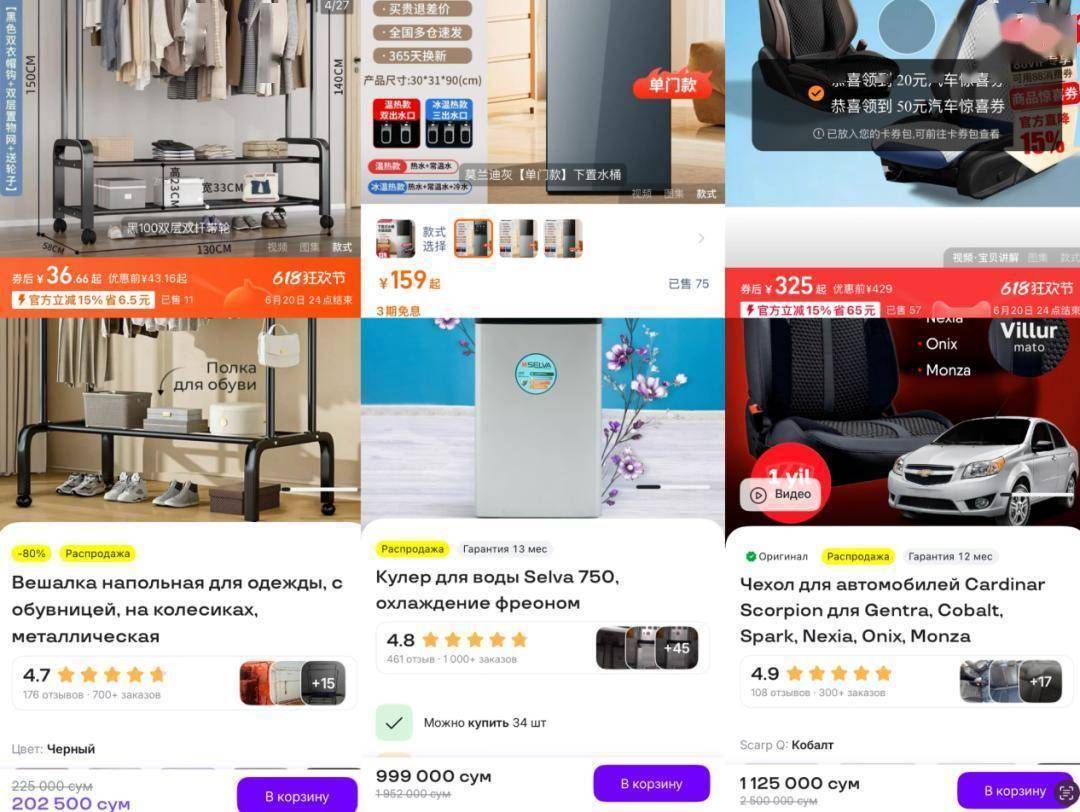
Core Insights - The e-commerce market in Uzbekistan is experiencing a significant transformation, with Uzum, the largest local platform, predicting a fivefold revenue increase by 2027 [1] - The e-commerce sector has shown an impressive compound annual growth rate (CAGR) of 122% in recent years, with expectations of maintaining over 40% annual growth in the coming years [1] - The penetration rate of online shopping has surged from 1%-2% in 2020 to 7%-8% in 2023, indicating substantial growth potential compared to China's over 64% [1] Market Dynamics - Uzum's product variety has recently surpassed one million, while Chinese platforms had significantly higher SKU counts a decade ago, highlighting the growth trajectory of Uzbekistan's e-commerce [1] - The high-profit margins in Uzbekistan's e-commerce sector are notable, with some products priced significantly higher than in China, creating a lucrative environment for local entrepreneurs [3] - Entrepreneurs in sectors like baby products and small appliances report gross margins exceeding 100%, with net margins around 50%, showcasing the profitability of the market [3] Historical Context - The e-commerce landscape in Uzbekistan faced challenges from 2017 to 2020, with limited success from local supermarkets and competition from Russian platforms hindered by inefficient logistics and payment systems [3] - The COVID-19 pandemic acted as a catalyst for e-commerce growth, allowing Uzum to leverage existing infrastructure and improve payment success rates significantly [3] Competitive Landscape - Uzum is actively enhancing its logistics, developing price monitoring tools, and implementing policies to attract Russian sellers, aiming to expand its product offerings and market share [5] - New entrants like Yandex and Temu are emerging, with Yandex targeting the high-end market and Temu employing aggressive strategies to penetrate the market [5] Future Outlook - Local entrepreneurs express optimism about Uzum's future, emphasizing the importance of leveraging Chinese supply chain experience to capture market opportunities [7] - The potential for long-term value lies in aligning product offerings with local consumer preferences, as there is a demand for better choices in the market [7]
字节深圳电商工区被传关停倒计时,员工可选珠海/上海转岗或N+1离职
Sou Hu Cai Jing· 2025-06-13 12:03
Group 1 - ByteDance has mandated its international e-commerce team in Shenzhen to relocate by mid-June, with options to move to Shanghai or Zhuhai, offering N+1 compensation for those who refuse the transfer [2] - The Zhuhai option includes attractive incentives such as a personal income tax reduction to 15% until the end of 2025 and a one-time subsidy equivalent to 5.5 months' salary [2] - The closure of the Shenzhen office coincides with the implementation of strict management regulations, including the cancellation of traditional lunch break policies and the establishment of an anonymous reporting mechanism for violations [2] Group 2 - ByteDance's overseas e-commerce strategy continues to expand, with investments in logistics companies like iMile in the Middle East and service providers in Europe and the US, aiming to build a cross-border delivery network [2] - TikTok Shop's GMV in the US has only reached 51% of its annual target, approximately $9 billion, while the Southeast Asian market shows strong growth [2] - The shift to Zhuhai may reflect operational efficiency issues, as the company seeks to reduce labor costs through favorable tax policies [2] Group 3 - Employee dissatisfaction has emerged regarding the "reporting management" system, which is perceived as limiting personal freedoms while attempting to prevent abuse of benefits [3] - Signs of reduced employee benefits have been noted, including the cancellation of the Spring Festival bonus and other perks starting in 2025, interpreted as a move towards cost-cutting and efficiency [3] - This trend aligns with similar strategies observed in other leading internet companies, such as Kuaishou's plan to cut administrative expenses by 17% in 2024, indicating a broader shift towards refined operational management in the industry [3]

UniUni向左,纵腾向右
雷峰网· 2025-06-13 11:18
Core Viewpoint - The article discusses the evolving relationship between UniUni and Zongteng, highlighting their transition from partners to competitors in the North American last-mile delivery market, driven by market dynamics and strategic shifts [4][30]. Group 1: UniUni's Development and Challenges - In 2022, UniUni faced significant challenges, including failed fundraising efforts and cash flow issues, leading to a critical moment for the company [2][7]. - After securing investment from Zongteng, UniUni experienced initial growth, leveraging Zongteng's resources for business expansion and order acquisition [3][12]. - Despite rapid growth, UniUni struggled with profitability until late 2023, facing skepticism from investors due to its reliance on external funding and market competition [7][9]. Group 2: Market Dynamics and Competition - The emergence of platforms like Temu and SHEIN significantly increased demand for last-mile delivery services in North America, benefiting UniUni as it capitalized on its early market entry [15][16]. - By October 2023, UniUni's daily order volume in the U.S. exceeded 100,000, indicating a successful market penetration [16]. - Zongteng, recognizing the saturation of cross-border small package demand, began to explore its own last-mile delivery operations, leading to a competitive landscape between the two companies [20][21]. Group 3: Strategic Shifts and Future Outlook - As UniUni established its own team in China to attract direct clients, it aimed to reduce dependency on Zongteng, signaling a shift towards greater autonomy [19][30]. - Zongteng's strategy involved enhancing its last-mile delivery capabilities to compete with major players like USPS and FedEx, indicating a long-term vision for growth [26][29]. - The article concludes with the notion that both companies, while currently competitors, may still find opportunities for collaboration in the fragmented North American market [32][34].

亮点纷呈!2025黄河流域跨境电商博览会在青岛开幕
Sou Hu Cai Jing· 2025-06-13 04:20
Core Insights - The 2025 Yellow River Basin Cross-Border E-Commerce Expo opened in Qingdao, covering an area of 23,000 square meters with nine exhibition zones, showcasing over 15,000 products, a 15.4% year-on-year increase [1] - Since 2022, the expo has successfully hosted three sessions, attracting 33,000 domestic and international buyers and achieving a trade matching amount exceeding 1.5 billion yuan [3] - The expo has become a high-level open platform that supports national strategies and integrates the Yellow River Basin's industrial belt into the global value chain [3] Exhibition Highlights - The expo features 40 global e-commerce platforms, including major players like Amazon, Alibaba, eBay, and 12 emerging platforms, covering key markets such as Europe, Southeast Asia, the Middle East, Latin America, Africa, and Russia [3][4] - A special Source Factory Pavilion was established, showcasing over 400 source factories with nearly 10,000 product categories, allowing sellers to reduce procurement costs by over 20% [4] - The expo organized six specialized trade negotiation events targeting different global markets, facilitating precise connections between 400 source factories and potential buyers [4] Regional Economic Impact - In 2024, Shandong Province achieved a foreign trade import and export volume of 3.38 trillion yuan, a growth of 3.5%, with the eight provinces along the Yellow River showing a 6.9% increase in trade through Shandong ports [5] - Qingdao City leverages its geographical advantages to enhance economic cooperation with the Yellow River Basin, achieving significant results in high-quality economic development [5]
阿里自曝被DeepSeek逼急了,春节加班搞研发;曝中金系高管加盟蔚来,或将负责融资找钱;Temu美区全托管7月底将全面恢复运营
雷峰网· 2025-06-13 00:43
Key Points - The article discusses various significant developments in the automotive and technology sectors, highlighting the challenges and strategic moves of companies like NIO, Alibaba, and others in response to market pressures and competition [4][5][8][21]. Group 1: NIO's Financial Challenges and Leadership Changes - NIO has appointed Bagrin Angelov as Vice President of Capital Markets, aiming to enhance its financing capabilities amid severe financial challenges, including a net loss of 6.27 billion yuan in Q1 and a cash reserve of only 26 billion yuan [4][5]. - The company's gross margin has dropped to 10%, and it is actively seeking external funding to support operations over the next 12 months [5]. Group 2: Alibaba's Response to Competition - Alibaba's leadership, under Chairman C. Z. Cai, has acknowledged a crisis triggered by competitor DeepSeek, leading to a decision to have engineers work through the Spring Festival to accelerate development of their AI models [8]. - The company has launched the Qwen series of models in response to competitive pressures, emphasizing the importance of open-sourcing to enhance AI adoption and support its core cloud computing business [8]. Group 3: Automotive Industry Developments - Neta Auto has announced a shift to remote work and entered a restructuring process, indicating significant operational challenges [9]. - GAC has unveiled its first mass-produced flying car, priced under 1.68 million yuan, as part of a broader strategy to enter the low-altitude economy, with other companies like Xpeng and Geely also accelerating their efforts in this area [21]. Group 4: Regulatory and Market Responses - Temu is set to fully restore its operations in the U.S. by the end of July, following adjustments to its logistics and promotional strategies amid regulatory scrutiny [26]. - Tesla's CEO Elon Musk has urged European regulators to expedite the approval of its Full Self-Driving (FSD) technology, citing safety benefits compared to traditional driving [27][28].